Is paternity leave paid? The short answer is yes, but for UK businesses and their employees, the reality is a bit more complicated. While the government sets a legal minimum for financial support, known as Statutory Paternity Pay (SPP), this is just the starting line.
Understanding Paternity Pay in the UK

Think of Statutory Paternity Pay as the legal floor, not the ceiling. For small businesses, it’s the non-negotiable baseline. But let's be frank—the payment is modest and often creates a real financial gap between an employee's usual salary and what they take home on leave.
The current SPP rate is either £184.03 per week or 90% of the employee's average weekly earnings, whichever is lower. For most families, this sum simply doesn’t stretch far enough to cover the bills, forcing a tough choice between bonding with a new child and keeping financially afloat.
To give you a clearer picture, here's a quick breakdown of the statutory requirements.
Statutory Paternity Pay at a Glance
| Component | Details for Small Businesses |
|---|---|
| Weekly Rate | £184.03 or 90% of average weekly earnings (whichever is less). |
| Duration | Up to 2 consecutive weeks. |
| Basic Eligibility | Employee must have worked for you for at least 26 weeks by the 15th week before the baby is due. |
This table shows the minimum you must provide, but the story doesn't end here.
The Paternity Leave Gap
This financial squeeze is what creates the "paternity leave gap." Many new parents who are legally entitled to the time off feel they simply can't afford to take it. This has a knock-on effect on everything from family well-being to gender equality in caregiving.
A revealing 2025 Koru Kids Paternity League report found that a staggering 76% of UK fathers and non-birthing parents only get the statutory minimum of two weeks' leave. When this is the norm, it puts immense pressure on new families right from the start. You can read the full research on the paternity league to see the wider impact.
Understanding this gap is crucial. It’s not just about a legal requirement; it’s about recognising the real-world financial challenges your employees face. A policy that only meets the minimum may be compliant, but it may not be truly supportive.
For a small business, this is where you can really stand out. While providing SPP is a must, choosing to go beyond the baseline can be a powerful way to attract and keep great people. It shows you're invested in your team's well-being and positions you as a modern, family-friendly place to work. This guide will walk you through how to manage the essentials and why a more generous policy might be one of the best decisions you make.
Navigating Statutory Paternity Pay and Eligibility Rules
Figuring out if an employee qualifies for Statutory Paternity Pay (SPP) doesn't have to be a headache. The best way to think about it is as a simple checklist you need to run through for each request.
The first and most important hurdle is the continuous employment rule. To get SPP, an employee must have worked for you continuously for at least 26 weeks leading up to any day in the "qualifying week." This qualifying week is a crucial bit of jargon; it's simply the 15th week before the baby is expected to be born.
Think of the qualifying week as a snapshot in time. An employee’s right to pay is essentially locked in based on their employment status and earnings during that specific period.
The Essential Eligibility Checklist
To make it crystal clear, here are the main conditions an employee has to meet to receive SPP from your business:
- Employment Status: They must be legally classified as an 'employee'.
- Continuous Service: They need to have racked up 26 weeks of continuous service by the end of the qualifying week.
- Earnings Threshold: Their average weekly earnings need to be at least £123 (this is the Lower Earnings Limit for National Insurance).
- Proof and Notice: They have to give you the correct notice and provide proof of the pregnancy if you ask for it.
This little checklist is the backbone of managing SPP. While these rules set a clear path, you’ll notice they share a family resemblance with other types of statutory leave. You can see how this compares by reading our guide on what is Statutory Maternity Pay.
Recent Changes and Increased Flexibility
Some recent updates to the law have brought in much-needed flexibility for how new parents can take their paternity leave. It used to be a rigid system where employees had to take their one or two weeks all in one go.
The new rules, which kicked in for births from April 2024, now let eligible employees take their two weeks of statutory leave as two separate, non-consecutive one-week blocks. This leave can be taken any time within the first 52 weeks after the birth.
This is a pretty big deal for everyone involved. For fathers and partners, it offers the freedom to split their leave – maybe they’ll take one week right after the birth and save the second for a few months down the line.
For your business, it means your scheduling and payroll processes need to be nimble enough to handle these split leave periods. Without a robust system, trying to manage these fragmented requests can quickly turn into a logistical nightmare, especially for a small business. Proper tracking is absolutely essential to stay compliant and manage everything with confidence.
Why So Few Fathers Take Their Full Paternity Leave
Just because paternity leave is a legal right doesn't mean every eligible father can actually afford to take it. For many families across the UK, it's a tough balancing act, weighing the priceless opportunity to bond with a newborn against the very real pressure of keeping a steady household income.
This is the heart of the matter when we look at why the uptake of paternity leave is still surprisingly low. While the law guarantees the time off, the modest rate of Statutory Paternity Pay (SPP) throws up a massive financial hurdle. For a lot of new dads, seeing their weekly earnings drop for two weeks just isn't an option, forcing them back to work much sooner than they'd like.
The Financial Squeeze
Picture a new father, excited to support his partner and welcome his child. He's entitled to two weeks of leave, which sounds great on paper. But when he realises the statutory pay won't come close to covering the mortgage, rising energy bills, and all the new costs that come with a baby, he’s stuck. He has to make a difficult choice: create those irreplaceable early memories with his child or make sure his family is financially secure.
This isn't a rare scenario; it's playing out in homes all over the country. It shines a light on a huge gap between what the law provides and what families actually need. This financial pressure is the main reason why so many fathers take very little, or even none, of their entitled leave.
The Numbers Tell the Story
The statistics paint a pretty stark picture. A major 2025 UNISON survey found that only 31.8% of eligible men took paternity leave. While new mothers often took 9-12 months for maternity leave, dads were overwhelmingly taking just one or two weeks. The survey revealed that 35% of fathers pointed directly to affordability as the main reason for not taking their leave. You can find more insights in the UNISON Parental Leave Survey Report 2025.
This isn't just a personal problem for individual families; it's a systemic one. When paternity leave is financially out of reach, it reinforces old-fashioned caregiving roles and puts a heavier burden on mothers. This has a knock-on effect on gender equality, both at home and in the workplace.
Beyond the Paycheque
While money is undeniably the biggest factor, workplace culture also plays a subtle but powerful role. In some companies, taking paternity leave isn't actively encouraged or seen as normal. Fathers might worry that they'll be viewed as less committed to their careers, or that they'll fall behind on important projects and be overlooked for promotions down the line.
Understanding the whole journey of becoming a father, from pregnancy through to postpartum, helps to show just how valuable paternity leave is. For a comprehensive guide for soon-to-be dads that covers everything they need to know, resources like this can be a great help. For small businesses, getting this right is key. Your paternity leave policy is more than just a legal box to tick—it's a statement about your company's values and a direct investment in your employees' well-being and loyalty.
How to Calculate and Manage Paternity Leave Payments
Once you've ticked the eligibility box, it's time to get down to the brass tacks: the numbers and the admin. While calculating Statutory Paternity Pay (SPP) might seem straightforward, it’s the little details that can trip you up. Small slip-ups can easily lead to compliance headaches or, worse, a frustrated new parent—especially now that dads can take their two weeks as separate, non-consecutive blocks.
Getting the SPP calculation right is your first hurdle. The payment is always the lower of two amounts: either the flat weekly statutory rate (£184.03 for 2024/25) or 90% of the employee's average weekly earnings (AWE). For most of your team, it'll simply be the statutory rate. But for your lower-paid staff, you absolutely must do the AWE calculation to make sure you're paying them the correct, legally required amount.
A Worked Example of SPP Calculation
Let's walk through it with a simple example. Say your employee, Tom, is getting ready to take his two weeks of paternity leave.
- Check His Earnings: First up, you need to look at what Tom earned during the "relevant period," which is usually the eight weeks just before the qualifying week. Let's say he earned a total of £4,800 over those eight weeks.
- Calculate Average Weekly Earnings (AWE): Now, just divide his total earnings by the number of weeks: £4,800 ÷ 8 = £600. That's his AWE.
- Find 90% of AWE: Next, work out what 90% of that average is: 0.90 x £600 = £540.
- Compare and Pay: Finally, you compare that figure (£540) to the current statutory weekly rate (£184.03). Since £184.03 is the lower amount, that's exactly what Tom will receive for each week of his paternity leave.
Nailing this calculation means you're meeting your legal duties perfectly. But honestly? The admin side of things is where most businesses feel the pinch.
Trying to track all this on a spreadsheet is a recipe for disaster, especially when people start splitting their leave or changing dates at the last minute. One simple typo could mean an incorrect payment, causing a load of stress for a new parent and a payroll nightmare for you.
This is a real concern for new fathers. As the infographic below shows, financial worries and workplace friction often play a huge part in their decision-making process.
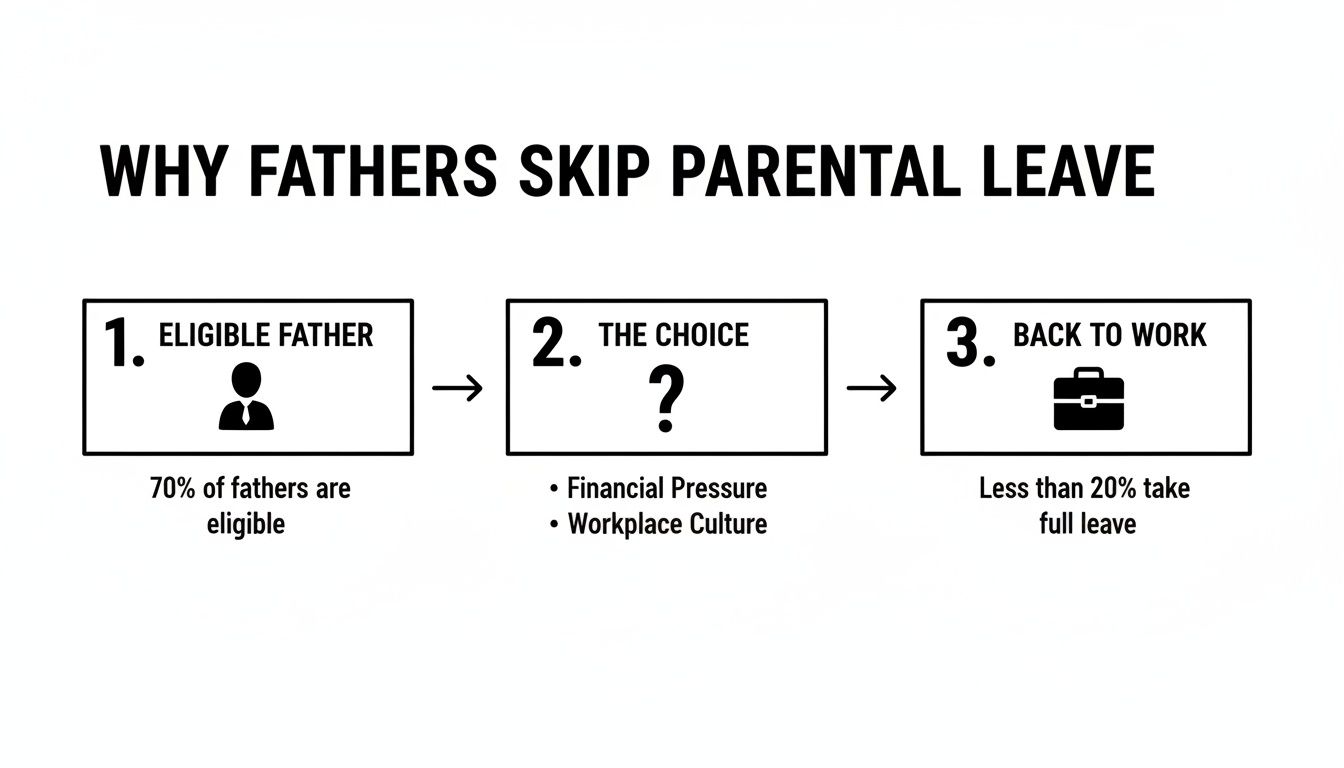
The journey from checking eligibility to actually taking the time off shows just how critical smooth admin and clear payment calculations are. It directly impacts whether an employee feels they can afford to take their full entitlement.
Ultimately, managing these payments well is about more than just crunching numbers. It's about giving your employees a seamless, supportive experience during one of the biggest moments of their lives. A solid system stops payroll errors in their tracks, helps you keep tabs on those non-consecutive leave blocks, and makes sure every new dad gets the right pay, on time, every single time.
Building a Paternity Leave Policy That Attracts Top Talent
Meeting your legal obligations for paternity leave is really just the starting point. The real opportunity for your business is to move beyond that statutory baseline and create a policy that becomes a powerful tool for attracting and keeping exceptional people.
Think of an enhanced paternity leave policy not as an expense, but as a strategic investment. When you offer more than the legal minimum, you send a clear message: you value your employees as whole people, with lives and families outside of work. This builds an incredible amount of goodwill and loyalty that you just can't measure on a spreadsheet.
Models for Enhancement
Creating a standout policy doesn't have to mean breaking the bank. There are several practical models you can adapt to fit your business's size and budget:
- Full Pay for Statutory Leave: The simplest upgrade is to offer two weeks of leave at the employee’s full salary instead of the modest statutory rate. This alone removes the financial barrier that stops many new fathers from taking their full entitlement.
- Extended Leave Duration: Why not offer three or four weeks of paid leave instead of the standard two? That extra time for family bonding can be a huge draw for potential candidates weighing up their options.
- Flexible Leave Options: You could also allow new parents to use their enhanced leave more flexibly over the first year. Maybe they could take it in smaller blocks to better support their family as different needs crop up.
Developing these guidelines from scratch can feel a bit daunting. To get started, you can explore our detailed guide on how to write HR policies that are clear, compliant, and actually work in the real world.
An enhanced policy is a tangible expression of your company culture. It demonstrates a commitment to gender equality, supports the well-being of your team, and helps normalise caregiving roles for all parents.
Sample Policy Language
When you're drafting your policy, clarity is everything. Here's a simple example you can adapt to get the ball rolling:
“At [Company Name], we support our employees during important life events. Eligible employees are entitled to four weeks of Enhanced Paternity Leave, paid at their full contractual salary. This leave can be taken in a single four-week block or as two separate two-week blocks within the first year of the child's birth or adoption placement.”
This straightforward language removes any ambiguity and shows prospective and current employees exactly what they can expect. By investing in more generous paternity leave, you're not just supporting new parents; you're building a stronger, more loyal workforce and a reputation as an employer of choice. It’s a competitive advantage that pays dividends in morale and retention.
How to Automate Paternity Leave Management
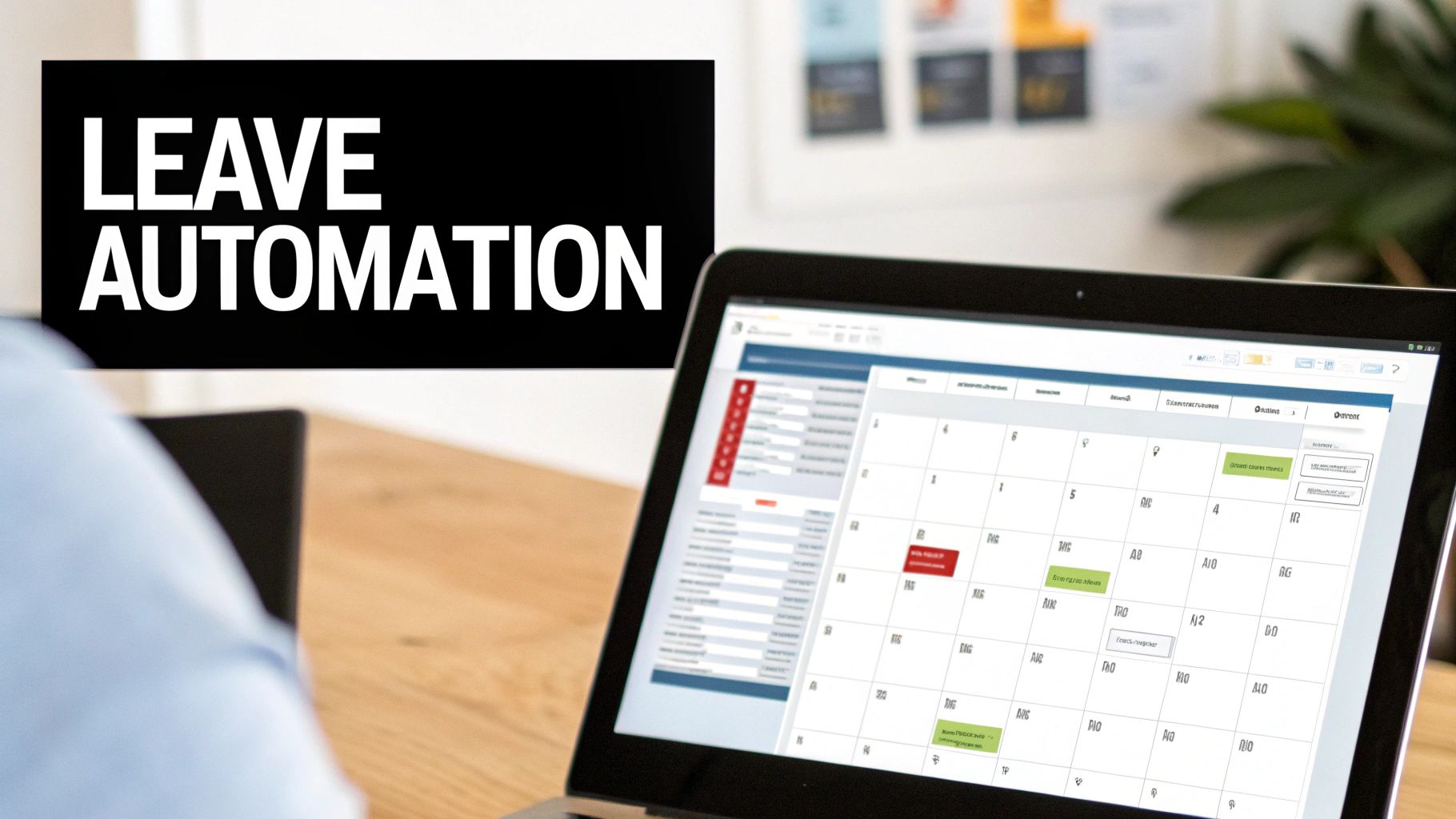
Managing paternity leave properly is about more than just ticking a compliance box. It’s about creating a smooth, supportive experience for your people during one of the most significant moments of their lives. But let's be honest—the admin can be a real headache, especially for smaller businesses. Tracking requests, calculating entitlements, and keeping calendars updated can quickly turn into a messy, time-consuming task.
This is where automation completely changes the game. Forget about wrestling with spreadsheets and digging through email chains, which are just invitations for errors and delays. By using dedicated software, you can transform a complicated administrative chore into a simple, organised workflow.
Key Benefits of an Automated System
A modern leave management system like LeaveWizard takes the most tedious parts of paternity leave admin off your plate. This frees up your HR and finance teams to focus on work that actually requires a human touch.
The biggest advantages are clear:
- Automatic Entitlement Calculations: The system does the maths for you, calculating leave allowances based on your company policy and current UK law. This completely removes the guesswork and the risk of costly miscalculations.
- Employee Self-Service: Your team members can pop in a leave request through a simple portal or mobile app. This empowers them and cuts down on the endless back-and-forth emails for HR.
- Centralised Visibility: A shared calendar gives managers an instant, at-a-glance view of who’s in and who’s off. It makes planning for absences and approving requests a breeze, without causing scheduling chaos.
When you automate these processes, you create a workplace that feels more transparent, efficient, and supportive. It guarantees every request is handled consistently and fairly, which is a massive boost for employee morale.
For small business owners, trying to juggle complex calculations and approvals by hand often ends in mistakes. Automated platforms make compliance straightforward by keeping track of entitlements in real-time. By building your policies right into the dashboard, HR managers get a clear picture of all absences, slashing the admin burden and helping build a fairer workplace. To dig deeper, you can explore further insights on parental leave challenges.
Ultimately, automation doesn't just keep you on the right side of the law. It actively shows your team you’re committed to supporting them, turning administrative headaches into a reliable process that works for everyone.
Common Questions About Paid Paternity Leave
When you're navigating the world of paternity leave, a lot of specific, practical questions tend to pop up. Getting the details right isn't just about staying compliant; it's about properly supporting your team members during a huge moment in their lives. Let's clear up some of the most common queries.
Can an Employee Change Their Paternity Leave Start Date?
Yes, they can, but the key is giving you enough notice. Under the latest flexible rules, an employee needs to give at least 28 days' notice before any period of leave they plan to take or change.
For a small business, trying to manage these last-minute shifts without a proper system can be a real headache. An automated platform can track these requests, ping the right managers, and keep your calendars accurate, heading off scheduling nightmares before they even start.
Are Employees on Zero-Hours Contracts Eligible for Paternity Pay?
They might be. It all comes down to whether the person is legally classified as an 'employee' and if they tick all the standard eligibility boxes.
This includes things like:
- Having 26 weeks of continuous service.
- Earning above the Lower Earnings Limit.
Working out their average weekly earnings can get tricky with fluctuating hours. This is where a reliable system becomes essential for making sure your calculations are accurate and you’re staying on the right side of the law.
Key Takeaway: Eligibility for paid paternity leave isn't just for salaried staff. It's crucial to assess each case based on legal employment status and earnings, not the type of contract they have.
Can My Small Business Reclaim the Cost of Statutory Paternity Pay?
Yes, absolutely. Most businesses can reclaim 92% of the Statutory Paternity Pay (SPP) they pay out.
Even better, if your business qualifies for Small Employers' Relief (which means your Class 1 National Insurance payments were £45,000 or less in the last tax year), you can get back 100% of the cost plus an extra 3%. This is all handled through your payroll software when you report your PAYE to HMRC. The whole landscape of parental leave can feel complex; our guide offers more details on what you need to know about unpaid and paid parental leave.