
Understanding UK Holiday Entitlement Fundamentals

Let's be honest, figuring out UK holiday entitlements can be a headache. The statutory minimum of 5.6 weeks (28 days for a typical five-day work week) sounds straightforward enough, right? But trust me, I've seen firsthand how tricky it gets when you're juggling different work patterns and contracts. Getting these basics right is absolutely crucial.
Learn more about statutory holiday entitlements.
The UK's generous holiday allowance exists for a good reason: to protect employee wellbeing and prevent burnout. This focus on work-life balance is a big deal and plays a significant role in attracting and keeping great employees.
But this seemingly simple entitlement can quickly become complicated. How do you calculate leave for part-time staff, or someone on a zero-hour contract? These are the kinds of questions that can trip up even experienced HR professionals.
Why Accuracy Matters
Getting holiday calculations wrong can have serious repercussions. Underpaying holiday entitlement can damage morale and even lead to legal issues. Overpaying, while seemingly less of a problem, can impact your budget and create inconsistencies across your team. A reliable holiday entitlement calculator can be a lifesaver here. Later on, we'll look at some options and how they can simplify this whole process.
Modern Working Patterns
The rise of flexible working adds another layer of complexity. How do you ensure fairness when employees' hours fluctuate? This is where understanding pro-rata calculations and best practices becomes essential. Not keeping up with these changing work patterns can create resentment and legal challenges.
Let's take a look at a breakdown of how holiday entitlements vary based on working patterns. This table clarifies how the 5.6 weeks statutory minimum translates into actual holiday days for different work schedules:
UK Holiday Entitlement Breakdown by Working Pattern
Description: Comparison of holiday entitlements for different working patterns and contract types
| Working Pattern | Days Per Week | Weekly Entitlement | Annual Days | Notes |
|---|---|---|---|---|
| Full-Time | 5 | 5.6 days | 28 | Standard full-time entitlement |
| Part-Time | 3 | 3.36 days | 16.8 | Pro-rata calculation based on 3/5 of full-time entitlement |
| Part-Time | 4 | 4.48 days | 22.4 | Pro-rata calculation based on 4/5 of full-time entitlement |
| Zero-Hour Contract | Variable | 5.6 weeks | Calculated based on hours worked | Requires careful tracking of hours to ensure accurate entitlement |
This table illustrates how the number of working days directly impacts the annual holiday allowance. It highlights the importance of accurate pro-rata calculations for part-time employees. Zero-hour contracts, with their variable hours, require especially diligent record-keeping. Understanding these nuances is key to fair and compliant holiday management.
So, let's dive deeper into the practicalities of calculating these entitlements. In the next section, we'll explore specific examples and clear formulas to help you navigate these sometimes confusing calculations.
Mastering Part-Time Holiday Calculations That Actually Work
Figuring out holiday entitlement for part-time employees can be a real headache. It's definitely not as straightforward as just scaling down the full-time allowance. Fairness is the name of the game – you want to make sure part-timers get holiday time that's proportional to their full-time counterparts. I've chatted with HR pros who've learned this the hard way, unfortunately, ending up in tribunals because of miscalculations.
One common trap is treating part-time holiday as a simple fraction of the full-time allowance. For instance, someone working three days a week might incorrectly get three-fifths of the full-time entitlement. It seems logical on the surface, but this method often misses key details. Holiday entitlement is usually calculated based on hours worked, not just days. Part-timers accrue leave pro-rata, reflecting their actual working hours. Discover more insights here.
Accurately tracking those worked hours is crucial, especially when schedules are variable.
Handling Variable Hours
Think about a zero-hours worker picking up extra shifts, or an employee whose hours fluctuate weekly. A good holiday entitlement calculator becomes your best friend in these situations. You might be interested in: UK Annual Leave Calculation Formula Guide. These tools take the pain out of pro-rata calculations, saving you time and stress. Doing it manually can get messy and error-prone, increasing the risk of disputes. Imagine trying to track and calculate holiday accrual for a whole team with varying hours – yikes!
Avoiding Costly Errors
Another tricky spot is managing transitions between contract types mid-year. An employee switching from full-time to part-time (or the other way around) requires a careful recalculation of their holiday entitlement. Errors here can be expensive, both financially and for employee morale. To understand UK Holiday Entitlement better, check out this helpful guide covering the basics of employment law: Employment Basics.
Using a reliable system, whether it's a calculator or dedicated software, helps ensure accuracy and consistency. This promotes fairness and transparency across your team. Remember, accurate holiday calculations aren't just about following the law; they're about building trust and showing your employees you value their time.
Why Holiday Entitlement Calculators Save Your Sanity

Let's be honest, managing holiday entitlements can be a real headache. Spreadsheets crammed with formulas and manual calculations are practically begging for errors. And it's not just about making things easier for yourself. A solid holiday entitlement calculator is essential for staying on the right side of the law and keeping your team happy. I've chatted with countless HR pros who've been down this road, wrestling with tricky scenarios that eat up hours of their time.
Think about trying to work out carry-over for employees on different contracts. Or how about those times when someone's hours change mid-year? These are the real-life situations that make manual calculations so time-consuming and error-prone. Automated tools handle this complexity with ease, freeing you up for more important HR work.
The Hidden Costs of Errors
Mistakes in holiday calculations can hit you where it hurts – your wallet. Underpaying entitlements can lead to legal battles and reputational damage. Overpaying, while seemingly less of a problem, can mess with your budget and create unfairness within your team. A reliable holiday entitlement calculator quickly pays for itself by preventing these expensive slip-ups.
The use of holiday entitlement calculators in the UK is becoming increasingly common. They help both employers and employees accurately figure out available leave. These calculators usually factor in things like hours worked, full-time or part-time status, and the specifics of each employment agreement. Discover more insights here. Investing in the right tools upfront is a smart business decision that protects you from disputes and creates a better work environment.
Protecting Your Business
Picking the right holiday entitlement calculator is key. Look for features that handle the tricky stuff: part-time workers, fluctuating hours, and carry-over rules. A good calculator should also integrate with your current payroll and HR systems to truly streamline your processes.
By automating these calculations, you're not just saving time and minimizing mistakes. You're also making sure you're meeting your legal requirements. That's a win for everyone involved. At the end of the day, a holiday entitlement calculator is an investment in peace of mind, allowing you to focus on what truly matters – your people and your business.
Manual Calculation Methods From The Trenches
Sometimes, you just have to roll up your sleeves and calculate holiday entitlements the old-school way. Whether you're double-checking a software calculation, dealing with a truly unique situation, or simply want to understand the nuts and bolts of the process, knowing the manual methods is like having a secret weapon in your HR arsenal. Trust me, I've been there!
Handling Tricky Scenarios
Let's be honest, real-world HR isn't always neat and tidy. Think about it: the new hire who starts mid-year with a fluctuating schedule, the employee returning from an extended leave, or the team member whose hours change every quarter. These are the scenarios that can make a standard holiday entitlement calculator feel a bit… inadequate.
We'll dive into real-life examples, mirroring the kinds of head-scratchers you encounter daily. From the straightforward calculations to the truly complex, we'll cover it all. For a good overview on the basics, check out this helpful guide: How To Calculate Holiday Pay.
The infographic below provides a visual snapshot of annual leave entitlement for various working patterns, comparing full-time and part-time scenarios.
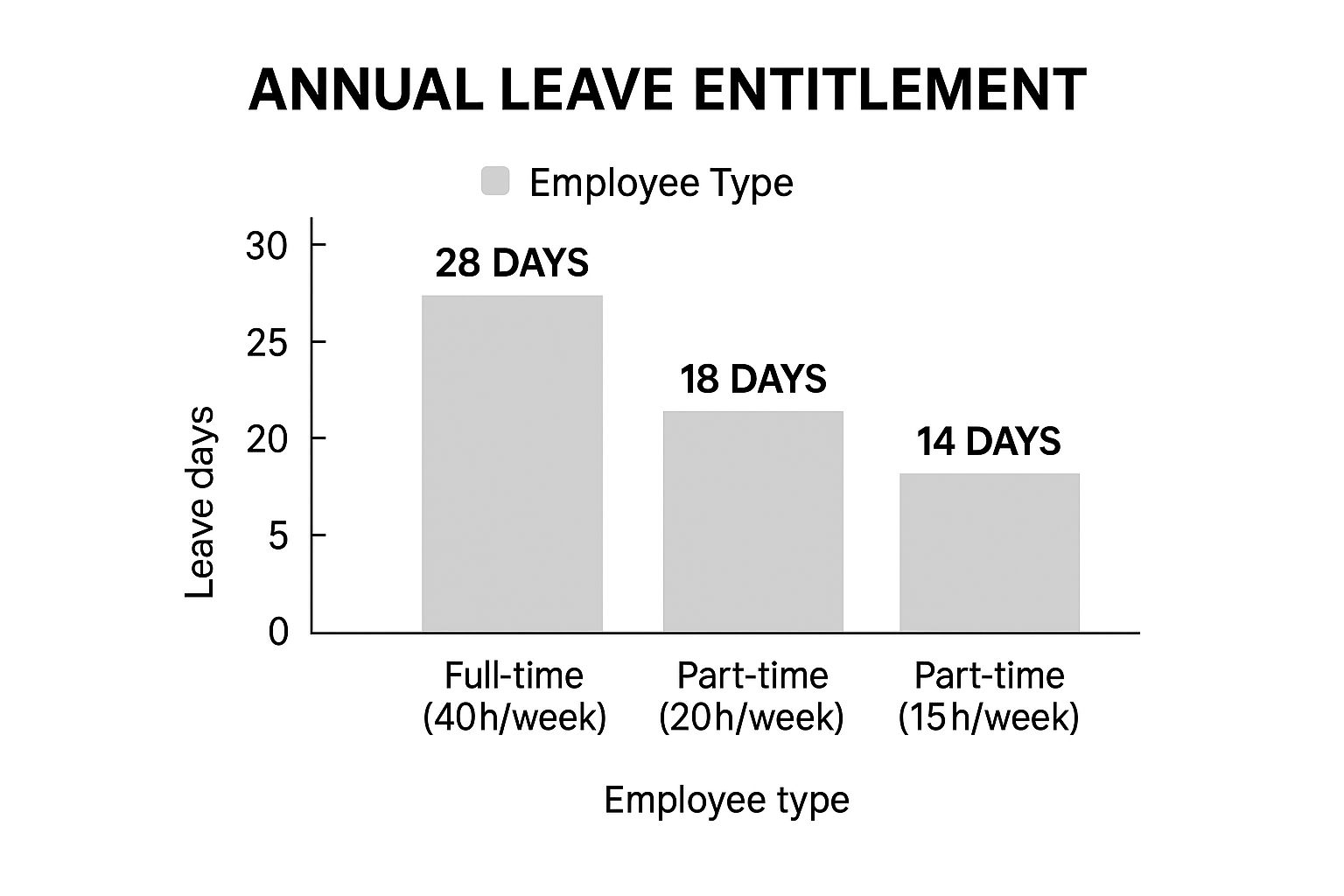
Notice how a full-time employee working 40 hours a week receives 28 days of leave. Part-time employees receive a pro-rata amount. For example, someone working 20 hours a week gets 18 days, and a 15-hour a week employee gets 14 days. This really highlights how crucial it is to factor in actual hours worked.
Verifying for Accuracy
One of the biggest advantages of manual calculations? Verification. I always double-check, especially with complex situations. Catching those little errors before they become big headaches is crucial for accurate record-keeping and, frankly, maintaining trust with your employees. Something as simple as making sure the holiday pay aligns with average earnings can prevent a world of pain down the line.
Now, before we go any further, let's talk formulas. Having a handy reference can make all the difference. The table below outlines the key formulas you'll need.
Holiday Entitlement Calculation Formulas
Essential formulas for calculating different types of holiday entitlements manually.
| Scenario | Formula | Example Calculation | Result |
|---|---|---|---|
| Full-Time Employee (5 days/week) | 5.6 weeks x Working Days per Week | 5.6 weeks x 5 days/week | 28 days |
| Part-Time Employee | (5.6 weeks x Working Days per Week) x (Part-Time Hours / Full-Time Hours) | (5.6 weeks x 5 days/week) x (20 hours / 40 hours) | 14 days |
| Irregular Hours Employee | (Average Weekly Hours x 5.6) / Full-Time Hours per week x Full-time Holiday Entitlement | (25 hours x 5.6) / 35 hours x 21 days | 21 days |
As you can see, having these formulas readily available helps simplify the process, no matter the scenario.
Mastering these manual calculation methods gives you the confidence to handle any holiday entitlement curveball. It's about building a deep understanding of the principles and being able to verify the results from those automated tools. This kind of expertise is incredibly valuable in the sometimes-challenging world of HR. It’s like having a superpower!
Navigating Complex Scenarios That Break The Rules
Real-world holiday entitlement calculations rarely go as smoothly as the textbook examples suggest. From my own experience, I know how tricky it can get. Think about common situations like employees calling in sick during their holidays, or switching from full-time to part-time mid-year. Even company restructures can throw a wrench in the gears. These are the kinds of curveballs that can send even seasoned HR professionals scrambling for a caffeine fix.
Maternity Leave and Holiday Entitlement
Maternity leave adds another layer of complexity. How does it affect holiday accrual? And can employees actually take holiday during their maternity leave? These are critical questions, and the answers can depend on the individual's situation. Getting this wrong can create a lot of unnecessary headaches for everyone involved. You might find this helpful: The Impact of Brexit and COVID-19 on Holiday Entitlement.
Redundancy and Holiday Payouts
Redundancy is another area prone to confusion. Calculating the holiday payout for someone being made redundant isn't always straightforward. How do you factor in accrued but untaken leave? Accuracy here is vital to ensure both legal compliance and fairness during what can be a stressful time.
Carry-Over Complications
Carry-over rules can also present a real challenge. What happens if an employee is unable to take all their holiday due to illness or unforeseen circumstances? Understanding the legal limits and company policies around carry-over is key to avoiding disagreements and ensuring everyone gets the time off they're due.
Industry-Specific Challenges
Different industries often face their own unique hurdles. Consider the healthcare sector with its complicated shift patterns, or education with its academic year and term-time contracts. A one-size-fits-all holiday calculator simply won't work in these cases. You need a tailored approach and a solid understanding of the specific regulations.
Learning From The Best
One of the most effective ways to navigate these tricky situations is to tap into the experience of others. Talking to employment law specialists and seasoned HR professionals can offer invaluable perspectives. See how leading employers in your industry handle these challenges. They've likely already wrestled with the same problems and found solutions. Sharing this knowledge can save you time, money, and a whole lot of frustration. By understanding these complexities and adopting best practices, you can ensure fair and compliant holiday management, which creates a more positive and productive work environment. Remember, getting holiday entitlement right isn't just about avoiding legal issues; it's about valuing your employees and their time.
Building Holiday Management Systems That Actually Function
Getting holiday calculations right is just the foundation. Effectively managing those entitlements is where your business truly benefits. I've witnessed firsthand the chaos that erupts without a robust system. Let's explore how successful companies handle holiday requests, approvals, and administration smoothly.
Establishing Clear Policies
Your holiday policy should balance business needs with employee well-being. Managing peak holiday periods – those times everyone wants off – can be a real headache. A clear, well-communicated policy minimizes conflict and sets expectations upfront. Accurate record-keeping is crucial for compliance and protects you in disputes.
Maintaining accurate records also simplifies things when it comes to those tricky partial-year calculations. Trust me, it's a lifesaver during audits.
Effective Communication is Key
Open communication between managers and employees is paramount. Ensure everyone understands the holiday policy, how to request time off, and the process for handling overlapping requests. This transparency prevents confusion and builds trust within the team. I've found regular check-ins can be invaluable, especially during busy periods.
Technology Solutions
Technology can be your best friend here. A solid holiday management system streamlines the entire process: automated requests, approvals, and even calendar integration. These systems also flag potential conflicts or entitlement issues before they become major problems. Think of it as a proactive headache preventer and a major time-saver. For instance, LeaveWizard is a popular option many HR teams rely on.
Historically, the UK's holiday entitlement has been influenced by European Union regulations, setting a minimum standard of four weeks paid annual leave. The UK adds 1.6 weeks for public holidays, totaling 5.6 weeks, or 28 days for a standard full-time employee. Discover more insights.
Building in Flexibility
While structure is important, flexibility is also key. Consider options like flexible working hours or carrying over holiday days (within legal limits, of course). This boosts your workplace appeal and caters to individual needs. However, be careful that flexibility doesn't create unfairness or compliance issues. It's a tightrope walk, but it’s worth it.
From my experience, offering even a small degree of flexibility can drastically improve employee morale. It shows you value their individual needs.
Learning From Others
Don't reinvent the wheel. Successful HR teams have already developed strategies to simplify holiday management. Learn from their experiences – what technology they use, how they communicate policies, and how they handle tricky situations. Implementing these best practices can transform holiday management from a dreaded chore into a well-oiled machine that benefits everyone. Look at industry blogs and forums for practical tips. You'd be surprised how much you can learn from shared experiences.
Key Takeaways For Holiday Entitlement Mastery
Getting holiday entitlements right isn't just about compliance; it's about creating a positive and fair environment for your team. In my experience, these takeaways are crucial:
Essential Checklists
A few simple checklists can save you a lot of headaches down the line. Think of them as your first line of defense against holiday entitlement confusion:
-
New Starter Checklist: This one's all about getting the basics right. Confirm the start date, contract type (full-time, part-time, zero-hours), and agreed working hours. This helps you calculate that initial entitlement and make sure it's crystal clear to your new team member.
-
Part-Time Employee Checklist: Part-time schedules can be tricky. Double-check the actual hours worked, especially if they vary. Make sure your pro-rata calculations are spot on and fairly reflect full-time equivalents.
-
Leaver Checklist: When someone leaves, it's important to calculate their outstanding holiday pay accurately, including any accrued but untaken leave. Good documentation here is key for a smooth exit. Consider how tools like document automation software can streamline this whole process.
Warning Signs of Trouble
Sometimes, things go wrong despite our best efforts. Here are a few red flags to watch out for:
-
Employee Complaints: If you're hearing grumbles about holiday calculations, don't ignore them. Investigate and address any issues before they escalate. A little proactive communication goes a long way.
-
Inconsistent Calculations: If similar employees have wildly different holiday entitlements, your process needs a review. Inconsistency creates resentment and can even lead to legal problems.
-
Manual Spreadsheet Errors: We all know spreadsheets can be error-prone. If you're relying on them heavily, implement some serious verification checks or consider switching to dedicated software.
Benchmarks for Success
Here's what a successful holiday entitlement system looks like:
-
Automated Calculations: Ditching the manual spreadsheets for automated tools is a game-changer. It dramatically reduces errors and frees up your time for more important things.
-
Clear Communication: Make sure your holiday policy is easy to understand and accessible to everyone. Transparency builds trust and minimizes confusion.
-
Regular Reviews: Don't just set it and forget it. Review your holiday management system annually to ensure it's aligned with the latest legislation and best practices. Getting feedback from your team is valuable too.
Ready to make holiday management a breeze? LeaveWizard offers intuitive tools that can automate calculations, streamline approvals, and ensure you're always compliant. See how LeaveWizard can transform your holiday management.


