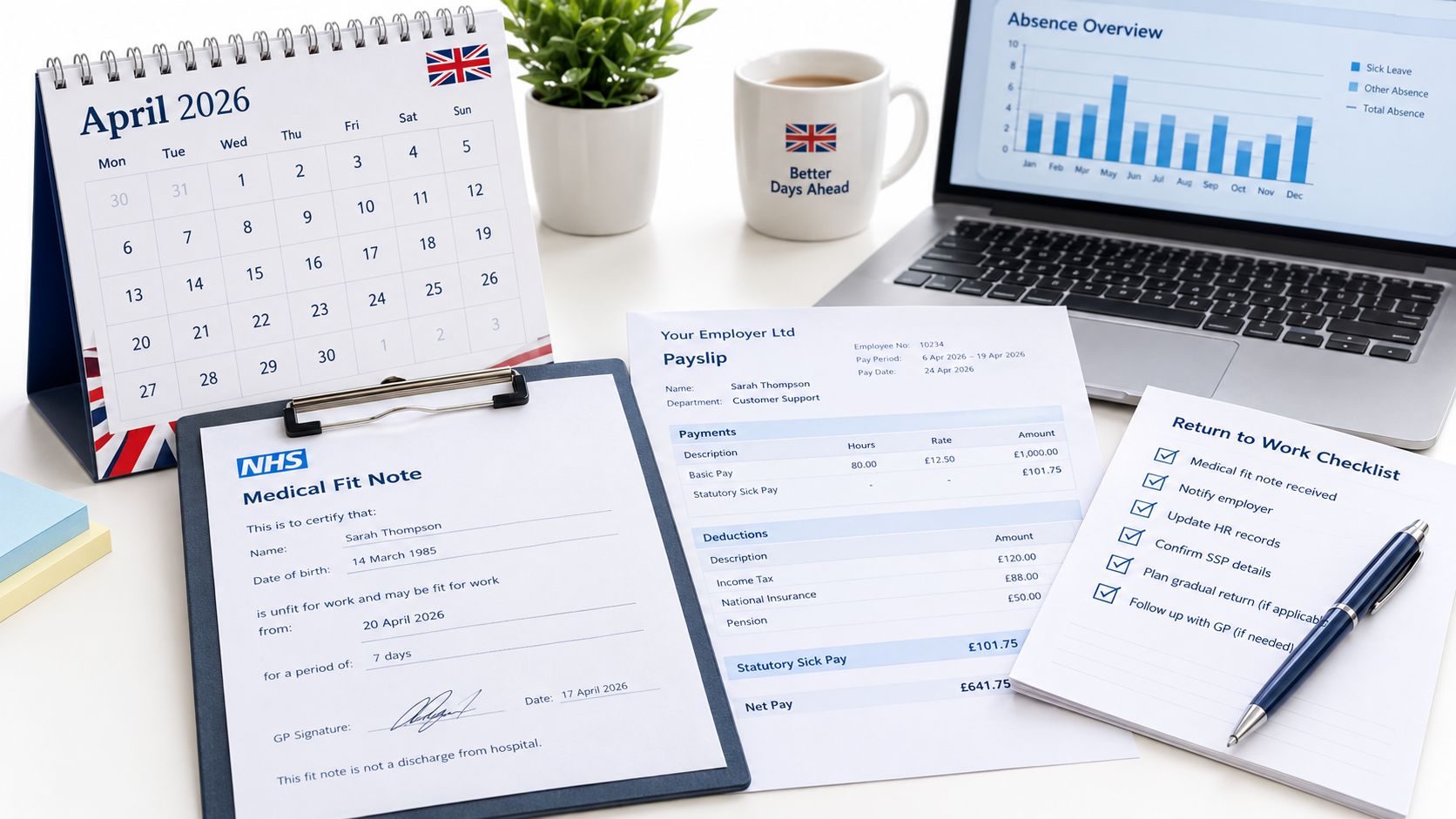
Ever found yourself buried under a mountain of paperwork for a simple holiday request? Or spent half an hour chasing HR for last month’s payslip? It’s a familiar story in many businesses, a constant back-and-forth that drains time for everyone. This is where Employee Self Service (ESS) comes in, and it's simpler than it sounds.
Think of it like this: ESS is basically online banking for an employee's job. It's a secure, online portal where your team can handle their own basic HR admin—booking time off, checking payslips, updating their address—without needing to fill out a form or send an email.
Understanding Employee Self Service

Let’s picture the old way of doing things. An employee wants a day off, so they email their manager. To update their home address, they have to track down someone in payroll. For a copy of their P60, they need to contact the HR department.
Each of these small interactions creates a ripple effect of administrative work. Time is spent writing emails, chasing approvals, and manually entering data into different systems. It's inefficient for your team, your managers, and your HR staff.
An Employee Self Service portal flips this entire model on its head. It shifts the ownership of these simple tasks directly to the employee, turning HR from a gatekeeper into a facilitator. Your staff get a central, easy-to-use platform they can access whenever and wherever they need it.
From Manual Requests to Instant Access
At its heart, what is employee self service is about empowerment through technology. It’s about ditching the clunky, paper-based processes for a slick, automated workflow. This isn’t just a nice-to-have for convenience; it's a smart move that boosts your operational efficiency and accuracy.
For example, when an employee needs to update their bank details, they can log in and do it themselves. The information goes straight into the system, which dramatically cuts down the risk of typos or data entry errors from manual re-keying.
This digital approach creates a single source of truth for all employee data, which helps everyone:
- Employees get instant access to the information they need and can manage their own details on their own schedule.
- Managers can approve holiday requests with a single click, without digging through an overflowing inbox.
- HR teams are liberated from the grind of repetitive admin, freeing them up to focus on the bigger picture—like recruitment, training, and nurturing a great company culture.
By providing a "single pane of glass" for employees to handle their own HR, IT, and facilities needs, companies can create a more seamless and efficient workplace experience. This saves time, reduces frustration, and allows support teams to concentrate on more complex issues.
Ultimately, this modern approach treats your team members like the capable adults they are, trusting them to manage their own information. It’s a crucial first step toward building a more agile, transparent, and engaged workforce.
Right, let's stop talking in abstract terms and see what an employee self-service (ESS) portal actually looks like in the real world. To get a proper feel for it, let's walk through a super common situation: an employee wanting to book some time off.
Meet Sarah. She’s planning a week away for a family holiday. In a world without an ESS portal, this kicks off a familiar, clunky process. She'd have to hunt down a paper form, fill it in, and hope her manager spots it on their desk. Or maybe she’d fire off an email, crossing her fingers it doesn't get buried in a crowded inbox, then wait around for HR to get back to her about her remaining holiday balance.
Now, let's rewind and give Sarah a self-service system. The whole experience changes. During her lunch break, she just logs into the company’s portal on her phone. What used to be a tedious paper chase is now sorted with a few simple taps.
The Request and Approval Workflow
The first thing Sarah sees inside the portal is her up-to-date leave balance. No need to ask anyone, no waiting for a confirmation email. The information is right there, giving her the confidence to plan her time off properly.
Next, she pulls up the shared team calendar. This is a game-changer. She can instantly see if her requested week clashes with anyone else’s time off, massively boosting the chances of her request getting a quick 'yes'.
She picks her dates, types a quick note, and hits submit. The entire thing takes less than two minutes.
At its heart, this is what an ESS portal does best. It cuts out the admin friction by automating routine jobs and putting accurate, live information directly into employees' hands. It's about swapping guesswork for clarity and speeding things up for everyone.
Automated Updates and Notifications
The second Sarah hits submit, the system gets to work. An automatic notification pings straight to her manager, David. He gets an alert on his phone or computer, so he can deal with it right away, not when he finally gets a moment to sift through his emails.
David can see the request, check the team schedule is clear for that week, and approve it with a single click. No forms to sign, no emails to chase up.
As soon as he approves it, the portal automatically does three things:
- Updates Sarah's Record: Her remaining holiday balance is instantly recalculated.
- Populates Calendars: The approved time off appears on the shared team and company calendars.
- Notifies Stakeholders: Sarah gets a confirmation, and the information is flagged for the next payroll run.
This smooth, automated flow is a huge time-saver. It slashes the risk of human error and makes sure everyone is working from the most current information. The old manual back-and-forth is gone, freeing up everyone’s time for work that actually matters.
Essential Features of a Modern ESS Portal
When you start looking at employee self-service systems, you'll quickly realise they aren't all built the same. A modern portal is so much more than a digital filing cabinet; it's an active tool designed to uncomplicate HR, keep you compliant, and give your team a real sense of ownership. For small to medium-sized UK businesses, certain features are simply non-negotiable if you want to see genuine value.
The shift to these systems is well underway. As of early 2025, over 19,000 UK organisations had already moved to cloud-based HR systems that include ESS portals. This isn't just a trend; it's a fundamental change in how businesses operate. Some companies even report a remarkable 40% increase in employee adoption within just three months of going live, which shows just how ready staff are for these tools.
Core Employee Functionalities
At its heart, a great ESS portal must give employees easy access to their personal and financial information. This is the bedrock of both employee empowerment and administrative efficiency. Think of it as giving each team member a secure, personal dashboard for their entire employment life.
Here are a few of the absolute must-haves:
- Personal Information Management: Staff should be able to securely view and, more importantly, update their own details—things like home address, emergency contacts, or bank details. This simple feature puts an end to the constant back-and-forth emails and dramatically cuts down on the risk of typos and data entry errors.
- Instant Access to Financial Documents: The ability to download payslips, P60s, and other key financial statements whenever needed is a massive win. It’s not just about convenience for your employees; it also boosts data security compared to the risky practice of emailing sensitive documents around.
This diagram shows just how simple the flow of information becomes.
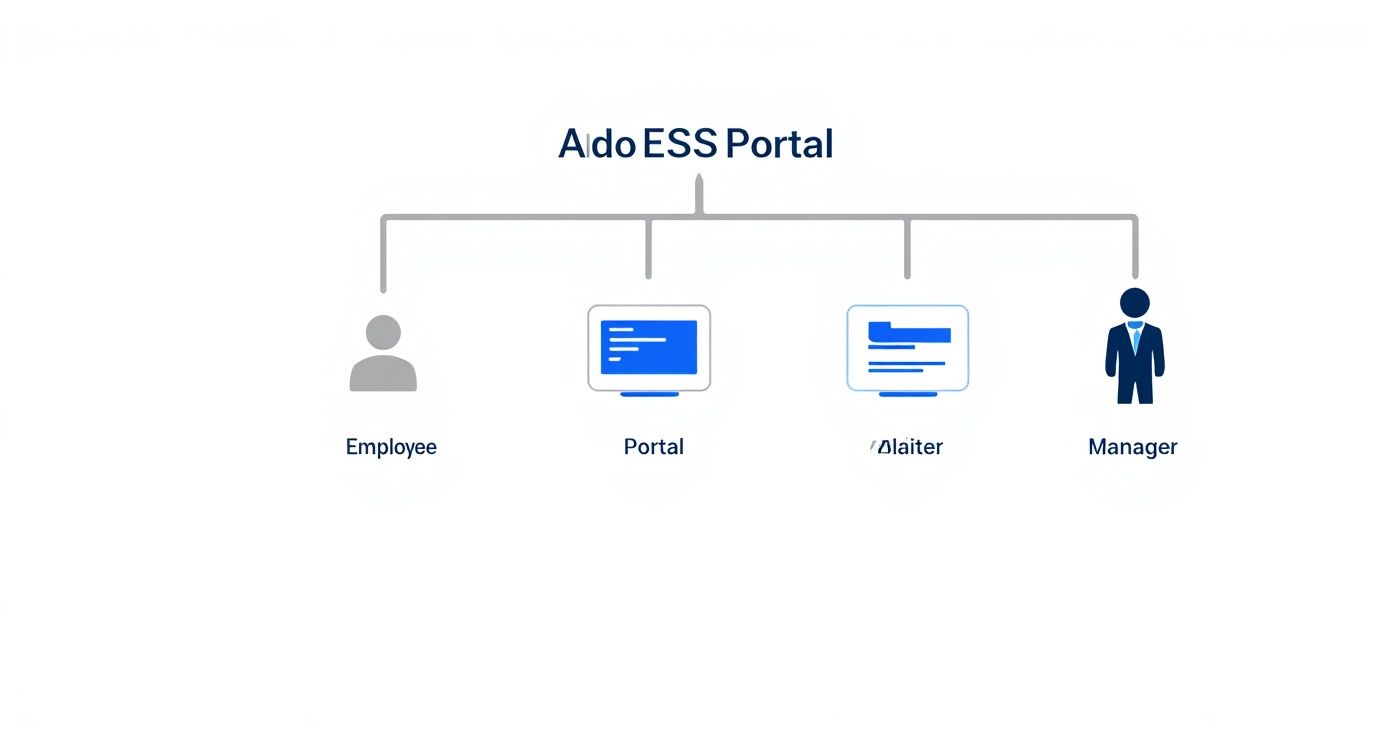
As you can see, the portal acts as that central hub, empowering the employee to manage their own information and removing HR from being the constant go-between.
Leave and Compliance Management
Beyond personal data, a top-tier portal really shines when it comes to managing time off and navigating the tricky waters of UK-specific compliance. This is where an ESS system truly starts to claw back precious time for managers and HR staff.
A comprehensive leave and absence management tool is vital. It enables easy holiday requests, tracks balances in real-time, and provides managers with a clear view of team schedules to approve requests confidently and avoid clashes.
On top of that, UK compliance needs to be baked right in. This means the system should help you manage right-to-work documentation, track that everyone has read and acknowledged new company policies, and keep a clear, auditable trail. This ensures your business stays on the right side of regulations. Our guide to employee self service software dives much deeper into these critical management tools. Many modern portals also connect with other specialised tools, like financial wellness apps and platforms, adding even more value for your team.
Essential ESS Portal Features and Their Business Impact
To really understand what to look for, it helps to connect specific features to the direct benefits they bring. The right tools don't just add convenience; they deliver tangible results for everyone in the business.
| ESS Feature | Employee Benefit | HR/Business Benefit |
|---|---|---|
| Holiday & Leave Requests | Submit and track time off requests 24/7 from any device. Clear view of remaining holiday balance. | Centralised dashboard for approvals, reduces email traffic. Prevents scheduling conflicts and ensures cover. |
| Payslip & P60 Access | Secure, on-demand access to financial documents without having to ask HR. | Eliminates the administrative burden of printing and distributing payslips. Enhances data security. |
| Personal Detail Updates | Easily update address, bank details, or emergency contacts, ensuring records are always current. | Reduces data entry errors for HR. Empowers employees and ensures payroll/contact info is accurate. |
| Company Document Hub | A single place to find the employee handbook, policies, and important company-wide updates. | Ensures consistent communication and easy distribution of key documents. Creates an auditable trail of acknowledgements. |
| Sickness Reporting | Simple, direct way to report an absence, with clear guidelines on what's required. | Standardises the absence reporting process. Provides managers with real-time data on team availability. |
These features work together to create a system that’s not just efficient but also fosters a more transparent and empowering work environment. It’s about giving people the tools they need to manage their work life, freeing up HR to focus on more strategic initiatives.
The Real Business Benefits of Adopting ESS

While the list of features in an Employee Self-Service (ESS) portal is often impressive, the real story is the strategic impact it has on your business. Bringing in an ESS system isn't just about modernising a few processes; it's a direct investment in your company's productivity, staff engagement, and ultimately, your bottom line.
So, let's break down the tangible benefits this technology actually delivers day-to-day.
Boosted HR Productivity
Think about a typical day for your HR team. It’s often swamped with small, repetitive tasks: answering emails about holiday balances, updating an employee’s address, or digging out an old payslip. These might seem minor, but they add up, eating away at hours that could be spent on strategic work like staff development or recruitment.
An ESS portal simply automates these routine queries. By giving employees direct access to their own information, you dramatically cut down the administrative noise for your HR people. In fact, analysis shows self-service tools can reduce HR time spent on admin tasks by 40-60%. This isn’t just a time-saver; it’s a productivity multiplier, freeing up your HR function to focus on high-value activities that actually drive the business forward.
An Empowered and Engaged Workforce
People today expect a certain level of digital convenience and autonomy in all parts of their lives, and work is no exception. Providing them with the tools to manage their own data shows you trust and respect them — two cornerstones of any positive workplace culture.
When employees can instantly check their leave balance on their phone, access payslips whenever they want, or update their details without having to wait for someone else, they feel more in control and valued. This sense of empowerment is directly linked to higher job satisfaction and engagement.
Today's workforce places a huge value on user experience. A poor digital experience at work is just as frustrating as a clunky app at home. A seamless, intuitive ESS portal is no longer a "nice-to-have"; for many, it's a key factor in attracting and keeping top talent.
Superior Data Accuracy and Compliance
Let's be honest, manual data entry is a recipe for mistakes. A misspelled name, an incorrect bank detail, or a miscalculated leave balance can cause real headaches for both the employee and the business.
With ESS, employees manage their own information, making them accountable for getting it right. This simple shift massively reduces the chance of costly errors. What's more, a secure, centralised portal is far better for GDPR compliance than scattered paper files. All the data is encrypted, access is tightly controlled, and there’s a clear audit trail for every change made, significantly strengthening your data security.
You can learn much more about the specific employee self-service benefits that can transform your workplace in our detailed guide.
Tangible Cost Reductions
Finally, let's talk about the money. The financial benefits are clear and direct. By moving processes online, you get rid of the costs that come with printing, distributing, and securely storing paper documents like holiday forms and payslips.
This drop in administrative overhead adds up quickly, especially for a growing business. When you look at how self-service portals can significantly boost adoption and streamline operations, it becomes obvious that this kind of technology investment pays for itself through measurable savings and a much smoother-running operation.
How to Successfully Implement an ESS System
Introducing an Employee Self-Service (ESS) system isn't just about flicking a software switch; it’s about guiding your team through a positive change. A successful launch always puts people first, making sure everyone understands the benefits and feels confident using the new tool right from day one.
The journey starts with picking the right partner. You’ll want a provider that gets the nuances of UK businesses, offering a system that’s not just powerful but genuinely intuitive. A clunky, complicated portal is a recipe for resistance, whereas a clean, user-friendly interface encourages people to jump right in. The goal is to make managing HR tasks feel as easy as using a favourite smartphone app.
Fostering Employee Buy-In
Good communication is the absolute cornerstone of a smooth rollout. You need to clearly and consistently explain the "what's in it for me" for every single employee. Don't just announce a new system is coming; show them how it will make their work lives easier.
Focus on the practical wins they'll feel immediately:
- Instant Access: "You'll be able to see your holiday balance and download your payslip anytime, without waiting for an email."
- Faster Approvals: "Holiday requests can be submitted and approved in minutes, not days."
- Greater Control: "You can update your own bank or contact details securely, ensuring your information is always correct."
This kind of proactive communication helps turn potential hesitation into genuine anticipation. It reframes the ESS portal not as another corporate task, but as a valuable tool designed to give them more control.
A successful ESS implementation hinges on demonstrating clear value to the end-user. If employees see the system as a genuine time-saver and a source of empowerment, adoption will follow naturally. The human element is paramount.
Training and Leading by Example
Even the most intuitive system benefits from a bit of guidance. Think about creating short, accessible training materials—brief video tutorials or simple one-page guides showing how to complete common tasks. This removes any initial uncertainty and builds confidence from the get-go.
Leadership adoption is also a massive factor. Managers need to lead by example, using the portal for their own requests and encouraging their teams to do the same. This sends a clear message that the ESS system is now the standard way of doing things.
Recent UK survey data really drives this point home, showing that the top drivers for new technology adoption are leadership capability (41%), demonstrable effectiveness (40%), and employee skillsets (39%). This just underscores that a successful transition is a joint effort between management and staff. To get a better sense of how an employee self-service HR system works in practice, exploring the core functionalities is a great next step. By prioritising clear communication, simple training, and visible leadership support, you can ensure your new ESS system becomes a welcome and valued asset for the entire business.
Common Questions About Employee Self Service
It’s completely normal to have questions when you're looking at bringing new tech into your business, no matter how clear the benefits seem. UK business owners, in particular, often ask about the same things: security, ease of use, and how it all connects. Let's tackle those concerns head-on so you can get a clearer picture of what an ESS system can really do for your company.
Here are some of the most common questions we hear.
Is Employee Self Service Secure for Sensitive Data?
Absolutely. In fact, this is the number one priority for any ESS provider worth their salt. A modern portal isn't just a digital filing cabinet with a password; it’s a fortress built with multiple layers of bank-level security to guard your team's sensitive information.
Think of it like this:
- Data Encryption: Every piece of information, whether it's sitting on a server or being sent across the internet, is scrambled into an unreadable code.
- Strict Access Controls: Your team members can only ever see their own personal data. Managers can only view the information that’s relevant to their direct reports. No one gets a key to a door they shouldn't open.
- Multi-Factor Authentication (MFA): This adds an extra padlock, requiring a second step of verification (like a code sent to a phone) to prove it’s really them logging in.
When you compare this to paper files in a cabinet or sensitive documents flying back and forth over email, a modern, GDPR-compliant ESS system is a far more secure and auditable way to manage your employee data.
Will Less Tech-Savvy Employees Struggle with an ESS System?
That's a very common worry, but modern ESS platforms are designed specifically for people who aren't tech wizards. The goal is to make them as intuitive and straightforward as the apps we all use on our phones every day. We're talking clean layouts, obvious buttons, and simple processes.
The convenience of instantly accessing a payslip on a Sunday evening or booking a holiday in under a minute usually wins over even the most hesitant team members very quickly.
The trick is to pick a user-friendly platform and maybe offer a quick video tutorial when you launch it. Most people get the hang of it in no time once they see how much easier it makes their own lives.
Can ESS Integrate with Our Existing Payroll Software?
Yes, and this is where the magic really happens. A quality ESS solution is built to 'talk' to other essential business software, especially popular UK payroll and accounting systems. This isn't just a nice-to-have; it's crucial for building a genuinely efficient workflow.
This means when a manager clicks 'approve' on a holiday request in the portal, that information can flow directly into your payroll system. Nobody has to manually type it in again. This connection slashes the risk of human error, stops time-consuming double-data entry, and creates a seamless, connected hub for your business operations.