Understanding Employee Self-Service HR Beyond The Hype
Imagine checking into a hotel and needing to call the front desk to adjust the thermostat or get a copy of your bill. A little inconvenient, right? Many employees feel the same way when they need HR's approval for simple tasks like downloading payslips or requesting time off. Employee self-service HR (ESS) empowers employees to handle these tasks independently, but not every ESS implementation is successful. Let's explore how ESS can truly transform HR, separating the practical benefits from the passing fads.
This shift towards employee empowerment isn't just a perk; it's a necessary adaptation to the changing workplace. The rise of ESS platforms, particularly in the UK, reflects a broader trend towards automation and digital solutions in HR. By 2022, the global HR software market had already topped $10 billion, with significant growth projected for the UK due to its rapid digitization. The compound annual growth rate (CAGR) for digital HR solutions has consistently exceeded 10% in recent years, highlighting the growing demand for more efficient HR processes. For a deeper dive into UK payroll and HR trends, check out this resource: Discover more insights.
Moving Beyond Digitization: Solving Real Pain Points
Many ESS implementations miss the mark by simply digitizing existing, clunky processes. Think of it like scanning a paper form and calling it "digital transformation." True transformation requires understanding and addressing actual employee pain points. Consider the everyday frustrations: hunting down payslips, deciphering complicated leave policies, or struggling to update personal information. A well-implemented ESS system should alleviate these issues.
This screenshot from the Wikipedia page on Human Resource Management Systems illustrates the typical scope of HR functions:

The diagram shows a broad range of HR activities, from recruitment and onboarding to performance management and payroll. Effective ESS doesn't simply digitize these functions; it integrates and streamlines them to create a positive user experience for employees.
Recognizing the Warning Signs: Avoiding Expensive Digital Filing Cabinets
Another common trap is choosing a vendor that over-promises and under-delivers. A platform overloaded with features that employees can't or won't use becomes an expensive digital filing cabinet. Prioritize intuitive navigation, mobile accessibility, and features that directly address employee needs. For example, instead of a confusing system for requesting leave, a good ESS platform should provide a simple, mobile-friendly process that integrates smoothly with employee calendars. This user-focused approach distinguishes effective ESS from costly disappointments. In the following sections, we'll explore the specific features and implementation strategies that lead to successful ESS adoption and deliver real business value.
Why Smart UK Organisations Are Racing To Implement ESS
Imagine your HR team swamped with endless, repetitive questions: "Where's my P60?" "How much holiday do I have left?" "Can I update my bank details?" Now, imagine them free from this administrative mountain, focusing instead on strategic work that truly boosts the business. That's the power of employee self-service HR (ESS). It's not just about going digital; it's about empowering employees and transforming HR into strategic partners.
This shift towards ESS is driven by strong financial incentives. Think of the cost savings from reducing admin overhead. Consider the productivity boost when employees can access information and complete tasks instantly. These benefits are no longer "nice-to-haves"—they're essential for staying competitive. You might be interested in: Check out our guide on employee self-service portals.
Regulatory Changes Driving Digital Transformation
Recent regulatory changes are adding to the pressure. UK businesses are rapidly adopting employee self-service HR to keep up with evolving workforce needs and new regulations. For example, the April 2025 updates to UK payroll law—including a 6.7% National Minimum Wage increase and a rise in employer National Insurance Contributions from 13.8% to 15%—have made clear, timely payroll communication crucial. Discover more insights. ESS platforms offer an ideal solution for sharing this information efficiently and ensuring compliance.
From Administrative Gatekeepers to Strategic Business Partners
Forward-thinking HR leaders are using ESS to redefine their roles. They're moving from administrative gatekeepers to strategic advisors who contribute directly to business growth. By automating routine tasks, HR can focus on talent development, employee engagement, and other strategic initiatives that directly impact the bottom line.
This change isn't just about saving money; it's about creating a more agile and responsive HR function. With ESS, HR can quickly adapt to evolving business needs and equip employees with the tools and information they need to thrive. This leads to greater employee satisfaction, improved productivity, and stronger overall business performance.
To understand the return on investment of ESS, let's look at a cost-benefit analysis. The following table illustrates how the cost of implementing ESS compares to the potential value it brings to your organization.
ESS Implementation Benefits: Cost vs. Value Analysis
A comprehensive comparison of implementation costs against measurable business benefits including time savings, reduced HR workload, and employee satisfaction improvements
| Benefit Category | Typical Improvement | Estimated Cost Savings | Implementation Timeframe |
|---|---|---|---|
| Reduced HR Workload | 20-30% | £10,000 – £50,000 per year (depending on company size) | 3-6 months |
| Time Saved on Routine Tasks | 10-15 hours per employee per year | £5,000 – £20,000 per year | 1-2 months |
| Improved Employee Satisfaction | 10-15% increase | Increased retention and productivity (difficult to quantify directly) | Ongoing |
| Compliance Improvements | Significant reduction in errors and associated penalties | Potentially substantial, depending on previous compliance issues | 2-4 months |
As you can see, the benefits of implementing ESS often significantly outweigh the costs. While implementation time can vary, the long-term gains in efficiency, employee satisfaction, and compliance make a compelling case for adopting ESS.
Essential Features That Actually Make A Difference
Let's be honest: many employee self-service (ESS) platforms feel like relics from the past. Think endless menus, PDFs that refuse to open on your phone, and a password scramble just to access your own information. But successful ESS implementations flip this frustrating script. By looking at what works and listening to employees who use these systems every day, we can identify the features that make ESS truly valuable. This isn't about checking off boxes; it's about building a system that genuinely helps employees and HR. A mobile-first design is crucial now, mirroring the smooth user experiences we all expect in our daily lives.
The infographic below visualizes best practices for implementing ESS, focusing on User Training, System Configuration, and Ongoing Support.
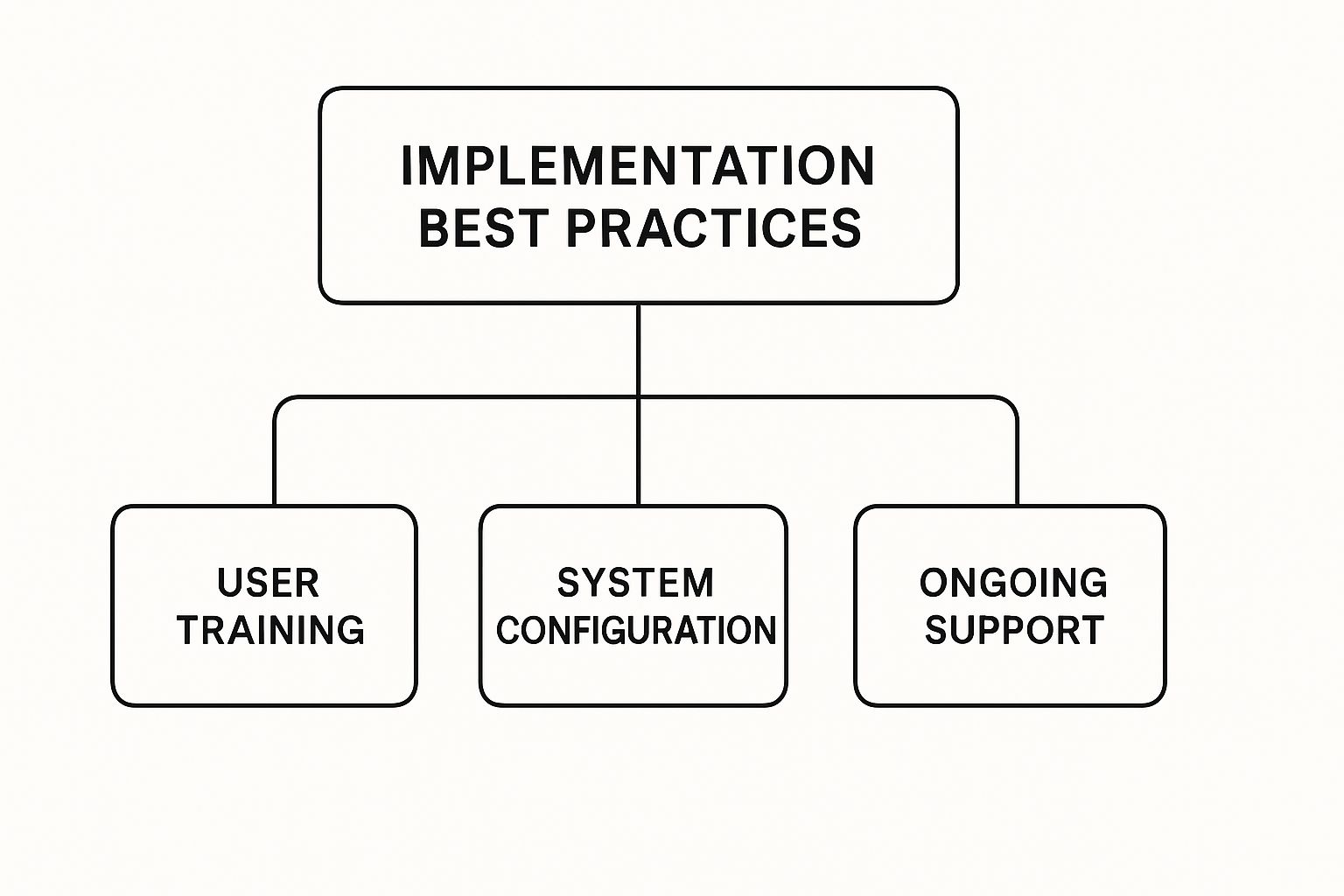
As the infographic illustrates, successful implementation hinges on a three-pronged approach. Even the best system will falter without proper training. Configuration needs to prioritize ease of use, and ongoing support ensures the system stays effective and adapts to changing needs. For organizations considering ESS, ensuring employees have a solid online presence is also important; resources like LinkedIn Profile Tips can be valuable.
Key Features for a Seamless Employee Experience
So, what features should you look for in an ESS system? It's not about a laundry list of features, but about functionalities that truly address employee needs. Think of it like a well-organized toolbox: every tool has its purpose and is easy to find.
-
Simple Leave Requests: Imagine requesting time off in seconds, right from your phone. No more paper forms or chasing down approvals. A good system integrates with calendars and automates notifications.
-
Easy Payslip Access: Accessing payslips should be as simple as checking your bank balance. Secure, instant access, available anytime, anywhere.
-
Personal Information Updates: Updating your address or emergency contact information shouldn't require an HR intervention. Empower employees to manage their own data.
The screenshot below from BambooHR showcases a clean and intuitive ESS interface:
The clear layout, prominent search bar, and easy-to-understand icons demonstrate the user-friendly design essential for a successful ESS platform. Employees can quickly find what they need without extensive training. This leads to higher adoption rates and a more positive user experience.
These seemingly simple features make a huge difference in employee satisfaction and free up valuable HR time. They form the foundation of a truly effective ESS system.
To help you prioritize features during implementation, the following table outlines essential vs. nice-to-have functionalities.
Essential ESS Features: Must-Have vs. Nice-to-Have
A detailed breakdown of core ESS functionalities ranked by importance and implementation complexity for UK organisations
| Feature | Priority Level | Employee Benefit | HR Impact | Implementation Complexity |
|---|---|---|---|---|
| Simple Leave Requests | Must-Have | Reduced admin, faster approvals | Streamlined processes, less paperwork | Low |
| Easy Payslip Access | Must-Have | 24/7 access, reduced inquiries | Reduced admin, improved compliance | Low |
| Personal Information Updates | Must-Have | Greater control, improved accuracy | Less data entry, fewer errors | Low |
| Performance Management Tools (Self-Reviews, Goal Setting) | Nice-to-Have | Increased engagement, career development | Data-driven insights, improved feedback | Medium |
| Learning Management System Integration | Nice-to-Have | Easy access to training, skill development | Improved tracking, targeted development | Medium |
| Company News and Announcements | Nice-to-Have | Increased awareness, improved communication | Centralized communication, wider reach | Low |
This table highlights that core features like leave requests, payslip access, and personal information updates are relatively easy to implement and provide significant benefits to both employees and HR. More advanced features, while valuable, can be phased in later.
Transforming ESS Into Your Employee Development Hub
Imagine your company's employee self-service (ESS) system. Instead of a dusty digital filing cabinet, picture a vibrant, buzzing career command center. That's the potential of a truly effective ESS. Forward-thinking UK organizations are transforming basic self-service portals into thriving development ecosystems. These aren't just places to check holiday balances; they're places where employees chart their skill growth, access relevant training, and proactively map their career paths. This not only helps close the ever-present skills gap but also shows your team you're invested in their growth.
This shift is a natural evolution in the UK, where employee self-service HR dovetails with the broader HR focus on reskilling and upskilling. In fact, a whopping 29.3% of UK employers now rank upskilling and reskilling as their biggest HR hurdle, even surpassing employee wellbeing (27.7%) and talent acquisition (28%). To get a better grasp of the increasing importance of skills development in UK HR, explore this research.
Fostering Growth and Addressing the Skills Gap
This change addresses a critical business need: bridging the skills gap. By giving employees the tools to own their development, companies empower them to acquire in-demand skills for future roles. This benefits both the individual and the organization, leading to a more flexible and future-proof workforce. Think of it as giving each employee a personalized GPS for their career journey.

Leveraging ESS Data for Strategic Insights
Smart companies don't just offer development tools; they use ESS data to gain valuable insights. This data reveals trends in skill development, flags potential retention risks, and informs the design of personalized learning paths. For example, if a lot of employees are seeking training in a particular area, it could point to a wider skills gap needing attention. If employees aren't using available learning resources, it might be time to rethink the delivery methods or content. This data-driven approach makes sure development initiatives are both relevant and effective.
Creating Personalized Learning Pathways
Imagine a learning experience perfectly suited to each employee's unique needs and goals. That's the power of a development-focused ESS. Instead of generic training programs, employees access personalized learning paths aligned with their career aspirations. This focused approach boosts engagement and ensures development efforts produce tangible results. It's about moving away from one-size-fits-all training towards customized development journeys. These personalized pathways nurture a culture of continuous learning, supporting employee growth and ultimately driving organizational success. This forward-thinking approach positions your company as a leader in employee development and sets the stage for long-term prosperity.
Implementation Strategies That Actually Work
Let's be honest: just purchasing employee self-service (ESS) HR software and hoping employees will use it is a recipe for failure. It's similar to buying a fancy gym membership and expecting to miraculously get in shape. True change requires a well-thought-out plan. We'll discuss the important distinction between true adoption and forced compliance, revealing the keys to successful ESS rollouts.
Effective implementation often hinges on a strong team culture. For valuable insights on fostering a positive and collaborative atmosphere, check out this resource: improve team culture. This foundation is vital for any major change initiative.
Managing Change Effectively: Avoiding Overwhelm
Successful implementations prioritize managing the change process. Introducing any new system can be disruptive, so it's essential to address employee concerns and provide ample support. This involves communicating clearly about the advantages of ESS, providing comprehensive training, and offering readily available help during the transition. Think of it like learning a new route to work; it takes time for everyone to adjust. We'll explore why some companies achieve 90% adoption within weeks, while others struggle with resistance and low usage rates.
There are some excellent tools and software systems available that address change management in depth such as monday.com work os, which has features to support and track the adoption process.
Training That Sticks: Moving Beyond Frustration
Effective training is more than a quick overview of the software. It needs to focus on practical use and address the specific requirements of each employee. For example, show employees how ESS can simplify their everyday tasks, like requesting time off or accessing payslips. This hands-on approach makes training more engaging and helps employees see the real value. Also, make sure to provide ongoing support even after the initial training to answer any remaining questions. This reinforces what they've learned and ensures long-term adoption.
This screenshot from Workday shows the clean and user-friendly interface of their employee self-service platform:
The straightforward design and clearly visible features make it easy for employees to navigate and use. This user-friendly approach is crucial for encouraging adoption and reducing frustration. These design choices contribute to a more positive overall experience. You might also want to see how LeaveWizard can help: Transform your workplace with ESS.
Measuring Real Success: Beyond Surface-Level Metrics
Simply looking at login numbers doesn't give you the complete picture. Real success is seen in the measurable impact on HR's workload, employee satisfaction, and the business's overall efficiency. For example, track the decrease in HR questions about routine tasks, measure employee satisfaction with the new system, and assess the impact on overall productivity. This comprehensive view gives a more accurate understanding of the system’s effectiveness and demonstrates real return on investment. We’ll also look at the problems of having too many features and the importance of making improvements based on how employees are actually using the system. This constant refinement ensures your ESS system adapts to the changing needs of your workforce and business. By focusing on these key strategies, you can avoid costly mistakes and guarantee your ESS implementation provides real value.
LeaveWizard In Action: Real-World ESS Excellence
Sometimes, the best way to grasp a concept like employee self-service (ESS) is to see a real-world example. Let's look at how LeaveWizard, a major ESS provider in the UK, makes everyday HR tasks simpler. A good onboarding experience is often key to successful ESS adoption. For more on that, check out these remote onboarding best practices. LeaveWizard's approach focuses on solving specific problems effectively, rather than trying to be a one-size-fits-all solution.
Streamlined Holiday Booking: Saving Time and Reducing Hassle
Imagine booking holidays as easily as ordering dinner online. LeaveWizard lets employees request time off quickly, right from their phone or computer. The system automatically calculates holiday entitlements based on company policies and individual time-off balances. No more paper forms or endless email chains – a win-win for both employees and HR.
Transparent Absence Tracking: Clarity for Everyone
Ditch those confusing spreadsheets and outdated systems. LeaveWizard provides a clear, real-time view of all absence information. Employees can see their own leave history, remaining balances, and pending requests. Managers get an instant overview of team absences, which helps with workforce planning and prevents scheduling conflicts. This transparency builds trust and eliminates confusion.
Automated Approval Workflows: Smooth and Efficient
LeaveWizard automates approvals, routing requests to the correct managers based on pre-set rules. This removes bottlenecks and speeds up decisions. Employees receive instant notifications, and managers can approve or reject requests from anywhere, anytime. The result? Improved efficiency and less administrative work.
Mobile-First Design: Access From Anywhere
Today's employees expect easy-to-use tools. LeaveWizard's mobile app puts ESS right in their hands. Employees can manage leave, view payslips, and update personal information from any device, anywhere. This flexibility boosts employee satisfaction and empowers them to manage their own HR needs.
Integration and User Experience: Prioritizing User Needs
LeaveWizard understands that a great ESS solution is about more than just features; it's about the user experience. Seamless integration with existing HR and payroll systems ensures data accuracy and reduces admin. The user-friendly interface requires minimal training, so employees can quickly adopt the system and take control of their HR information. This makes ESS a tool employees actually want to use, not one they're forced to. By focusing on practical solutions and user needs, LeaveWizard demonstrates how effective ESS can truly be.
Measuring Success Beyond Login Statistics
Monthly active users are a vanity metric. They look good on a presentation slide, but do they really tell you how well your employee self-service HR (ESS) system is performing? True success isn't about how many people log in, it's about the actual difference it makes to your HR team, your employees, and your company's bottom line. Think less paperwork, happier staff, and a more efficient operation. This is about real, tangible change.
Identifying True Success Metrics
So, if logins aren't the key, what should you be tracking? Focus on metrics that show real engagement and value.
-
Reduced HR Inquiries: Are your HR folks getting fewer questions about routine things? That's a good sign employees are finding the information they need themselves.
-
Improved Employee Satisfaction Scores: Happy employees are productive employees. Run surveys and gather feedback to see how they're experiencing the new system.
-
Measurable Business Impact: Is ESS actually boosting productivity? Look for concrete results like faster processing times, fewer errors, and better compliance.
For example, if your HR team isn't bogged down with simple questions, they can focus on more strategic work, like developing talent or boosting employee engagement. This translates directly into business value. You can learn more about managing absences and their associated costs here: Learn more in our article about reducing absence costs.
Spotting Warning Signs of Underperforming Systems
Catching problems early is key. Don't wait for a small issue to snowball into a major headache. Watch out for these red flags:
-
Low Adoption Rates: If employees aren't using the system, something's wrong. Is it too difficult to navigate? Does it lack important features? Find out why it's not catching on.
-
Negative Feedback: Listen to your employees. Their feedback is invaluable for pinpointing areas for improvement and preventing widespread dissatisfaction.
-
Lack of Measurable Impact: If you're not seeing positive changes in HR workload, employee satisfaction, or business results, it's time to rethink your approach.
Using Analytics to Drive Continuous Improvement
The best companies use data to get better. Analyze how your ESS is being used to find areas to optimize. Are some features gathering dust? Are there bottlenecks in certain processes? This data-driven approach, like regularly tuning a car engine, keeps your ESS running smoothly and efficiently.
Demonstrating ROI to Stakeholders
Finally, you need to show your leadership team the value of your ESS. Focus on metrics that matter to them, like cost savings, productivity gains, and improved compliance. A clear ROI story justifies the investment and ensures continued support for your ESS initiative. It's about showing how ESS contributes to the bigger picture.
Ready to see the benefits of effective employee self-service? Discover how LeaveWizard can transform your HR processes.