
Lieu days off, often called Time Off In Lieu (TOIL), are a pretty straightforward way to reward your salaried employees for putting in extra hours. Instead of paying overtime, you simply give them that time back to use as a day off later. It's a flexible way to handle work done outside of normal contracted hours.
Unpacking Time Off In Lieu

Think of TOIL as a "time bank" for your team. When someone stays late to hit a deadline or handles an urgent project over the weekend, they "deposit" those extra hours. Later on, they can "withdraw" that time as paid leave, giving them a well-earned break without complicating your payroll.
This approach is especially handy for salaried staff who typically don't qualify for hourly overtime pay. But it's really important to draw a clear line between lieu days off and standard annual leave. Annual leave is a legal right for rest and recovery, while TOIL is a specific reward for going above and beyond.
Why a Formal Policy Is Non-Negotiable
Trying to manage lieu days without a formal, written policy is a recipe for disaster. An informal "we'll sort it out later" approach almost always leads to confusion, arguments over unrecorded hours, and inconsistency across the team. A clear policy makes things fair for everyone, protects your business, and sets expectations from the get-go.
Offering a structured TOIL system is a great addition to any modern benefits strategy. It shows you value your team's commitment. In fact, you'll often see TOIL featured in essential employee benefit package examples that are designed to attract and keep top talent.
A well-defined TOIL policy isn’t just about bureaucracy; it’s about showing your team you see their extra effort and value it. That’s how you build trust and keep morale high.
Managing all types of leave is more critical than ever, especially with the latest data showing a worrying trend. The average UK employee took only 33.9 days of annual leave last year, a sharp drop from 38 days in 2020. This trend points to a real risk of burnout, making it vital for businesses to manage all time off—including lieu days—to support their team's wellbeing.
Ultimately, putting a clear framework in place saves you from administrative headaches and ensures the system works as it should: as a fair reward. Our comprehensive guide explains more about what a day in lieu is and how it functions in more detail.
Navigating the Legal Rules for TOIL in the UK

When you start offering lieu days off, the first thing to grasp is that there's no automatic legal right to it here in the UK. Unlike statutory holiday pay, Time Off In Lieu (TOIL) is a completely discretionary arrangement between you and your employee.
This means for a TOIL agreement to be clear and legally sound, it must be written into the employment contract. Without that crucial clause, you're leaving the door wide open for disputes over unrecorded hours and confusion about how time is earned and used.
Think of a well-drafted contract clause as your first line of defence. It establishes clear, enforceable ground rules right from the start.
Staying Compliant with Working Time Regulations
One of the biggest legal tripwires with TOIL is the Working Time Regulations. These regulations state that an employee cannot work more than an average of 48 hours per week over a 17-week period, unless they've willingly signed an opt-out agreement.
If the extra hours an employee works pushes them over this 48-hour limit, simply offering TOIL doesn't make the problem disappear. You have to meticulously track total hours worked to ensure you're not accidentally breaking the law. This is a non-negotiable part of managing any kind of overtime, including arrangements for lieu days off.
The core principle is simple: TOIL is a method of compensation, not a loophole to bypass working time limits. Your policy must operate within the legal framework that protects employee wellbeing.
As you get to grips with these rules, it's also smart to keep an eye on broader trends. Watching the evolving landscape of employment laws, such as Australia's 'Right to Disconnect' laws, gives you valuable insight into the global shift towards protecting employees' personal time.
National Minimum Wage Considerations
Here's another critical legal point: the National Minimum Wage (NMW). An employee's average hourly pay must never, ever dip below the NMW for their age group.
When an employee works extra hours without immediate pay, holding them as TOIL, their average hourly rate for that pay period effectively drops. It's your responsibility to check that even with these additional hours, their pay still meets the legal minimum. Getting this wrong can lead to hefty financial penalties.
A crucial part of compliance is understanding how different types of leave interact. For instance, UK employees are entitled to a minimum of 28 days of paid annual leave per year. Knowing this statutory baseline helps you create fair and legal policies for additional leave like TOIL.
Ultimately, a clear and legally watertight policy protects both your business and your team. For a deeper dive, you can explore our detailed guide to implementing a proper system for managing time in lieu.
How to Create a Fair and Effective Lieu Day Policy
Now that we’ve got the legal side of things sorted, it’s time to build a clear, fair, and effective Time Off In Lieu (TOIL) policy. A well-written policy is your single most important tool for preventing mix-ups and making sure everyone’s on the same page. It’s what turns an informal handshake deal into a proper, professional process.
The aim here is to draft a document that makes sense to everyone, from the newest starter right up to senior management. It needs to be airtight, leaving no room for guesswork about how an employee earns, requests, and uses their lieu days off.
Defining Eligibility and Scope
First things first, your policy needs to spell out exactly who is covered. Is TOIL for everyone, or is it just for certain roles or departments? A common approach is to offer it to salaried staff who aren't eligible for paid overtime, while hourly workers who are paid for extra hours are excluded.
You have to be specific to avoid any claims of unfairness. Clearly list which job titles or employee groups are eligible to earn time off in lieu. Getting this right from the start is the foundation of a fair system.
- Specify roles: "This policy applies to all full-time salaried employees."
- Set expectations: "Hourly-paid staff are not eligible for TOIL and will be compensated for extra hours via the company's standard overtime pay procedure."
This section also has to define what actually counts as "extra hours." Are we talking about working through lunch, or only time tacked on before or after the standard workday? The secret here is pre-approval.
Your policy must state that all extra hours require prior authorisation from a direct manager to be eligible for TOIL. This one simple rule gives managers control over workloads and stops employees from racking up hours without a real business need.
Setting the Accrual and Expiry Rules
With eligibility locked down, your policy now needs to get into the nitty-gritty of how the time is earned and used. This is where most informal arrangements fall apart, leading to a whole lot of confusion and frustration. Be precise.
The accrual rate is probably the biggest source of confusion. The standard, and simplest, approach is a straight hour-for-hour swap. If someone works two extra hours, they get two hours of TOIL. Simple.
Just as important is the expiry period. Letting lieu days pile up forever can quickly become a massive headache and a hidden liability for the business. A "use-it-or-lose-it" rule is pretty standard for a reason.
- Accrual Rate: State clearly that time is earned on a 1:1 basis—one hour worked equals one hour of TOIL. If you decide to offer a better rate for weekends or bank holidays, make sure you define it right here.
- Expiry Date: A reasonable window is usually between three to six months from when the hours were worked. This nudges employees to take regular breaks and stops them from hoarding a huge, unmanageable balance of days off.
- Booking Process: Explain how people should request to use their time. It should be the exact same process as booking annual leave, using your company’s leave management system. This keeps everything organised and ensures managers can plan for cover.
Nailing down these points ensures the system is manageable and fair for both the employee and the business. It builds a culture of transparency where everyone knows exactly where they stand.
Tracking and Calculating Lieu Days Without the Headaches
Managing time off in lieu, or TOIL, can quickly get out of hand, spiralling into an administrative mess. Lots of businesses start out using manual spreadsheets or even just scraps of paper. It seems simple enough at first, but it’s a system packed with problems that end up creating more work, not less.
Human error is the biggest culprit here. A single typo could credit an employee with too much or too little time, which immediately creates fairness issues and can easily lead to disputes. This manual approach also has zero real-time visibility. Neither managers nor employees can get a quick, clear answer on the current balance of lieu days off, kicking off a constant cycle of emails and interruptions.
The real problem with manual tracking isn't just the mistakes; it's the hidden time cost. Every minute you spend updating a spreadsheet, double-checking a balance, or fixing an error is a minute you're not spending on actually growing your business.
This administrative drain is a huge, but often overlooked, burden. It takes what should be a straightforward employee benefit and turns it into a source of friction for everyone involved.
A Simple Guide to TOIL Calculation
The good news is that calculating TOIL doesn't have to be complicated. The most common—and fairest—method is a simple hour-for-hour exchange. This just means for every extra hour an employee works (with prior approval, of course), they earn one hour of time off in lieu.
Let’s walk through a quick example:
- Scenario: Sarah is contracted for a 40-hour week.
- Overtime: She stays late on a Tuesday and works an extra 5 hours to get an urgent client report over the line.
- Calculation: 5 extra hours worked x 1 (the accrual rate) = 5 hours of TOIL earned.
- Result: Sarah can now book a half-day off (say, 4 hours) and will still have 1 hour of TOIL left in her balance.
This direct calculation is easy for everyone to get their heads around and apply consistently, which is absolutely vital for making any policy work.
Before you even start tracking, though, you need to define the rules of the game. This flowchart breaks down the three core things you need to establish for a solid policy foundation.
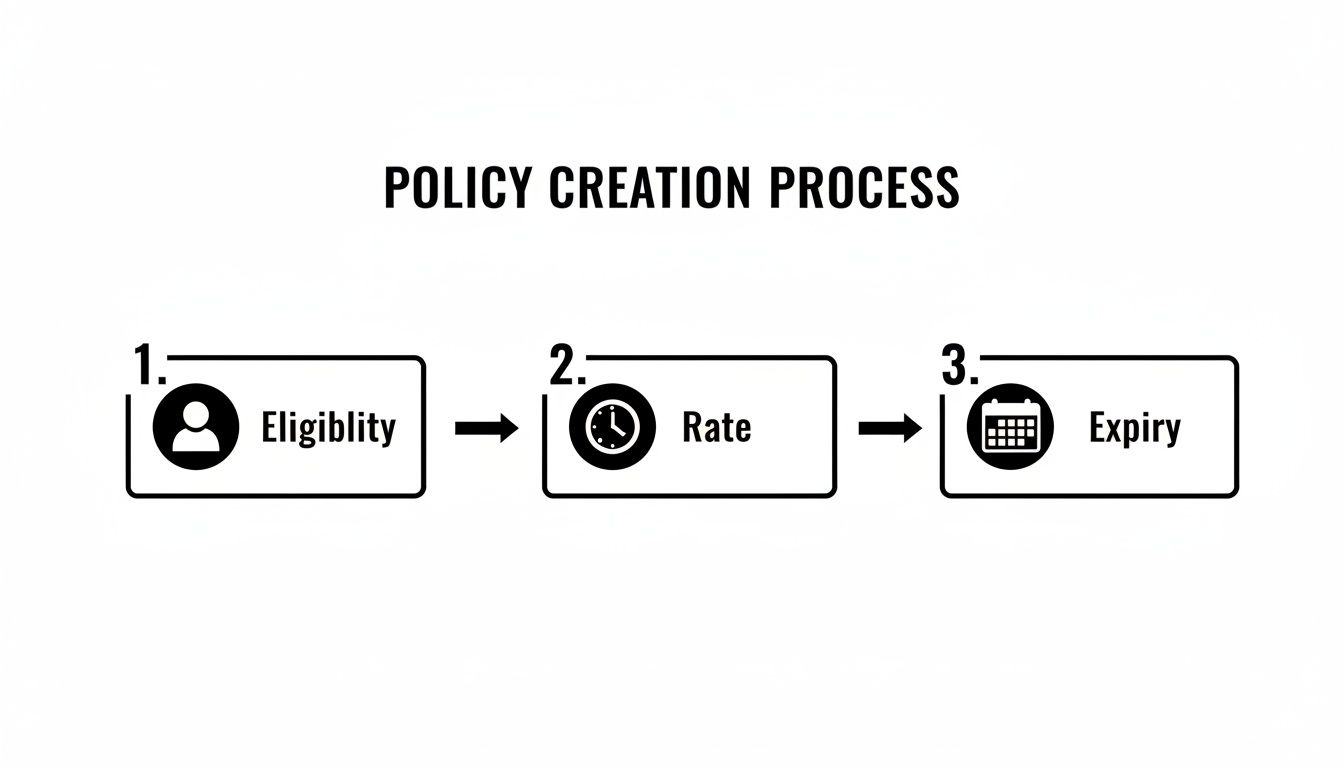
As you can see, getting clear on who is eligible, how they earn time, and when it expires is the bedrock of a system that won’t give you headaches later on.
Automating the Process for Total Transparency
Honestly, the best way to get rid of these problems for good is to automate the whole workflow. Modern leave management software crunches these numbers for you automatically. It creates a transparent, real-time record that both employees and their managers can see anytime.
A dedicated system gives you an at-a-glance view of everyone’s leave and balances, all in one place. You get immediate insight into who is off and when, with TOIL fitting in seamlessly alongside annual leave and sick days.
By ditching the spreadsheets, you're not just preventing costly errors—you're giving your team a sense of ownership. Employees can check their own balances and pop in requests through a self-service portal, freeing up a massive amount of your managers' time.
If you’re ready to stop the administrative drain, looking into dedicated staff holiday tracking systems is a brilliant next step. Making that switch from manual to automated gives you a robust, error-free process you can actually trust.
Common Lieu Day Pitfalls and How to Avoid Them
Even with a solid policy in place, managing lieu days off throws up some tricky real-world challenges. Getting ahead of these common pitfalls is the key to keeping things fair and manageable, without creating administrative headaches or frustrating your team down the line.
One of the most frequent issues we see is people banking huge balances of time off. This isn't just a hidden liability for the business; it can cause real staffing shortages if several people try to cash in their hours at once. It also completely defeats the purpose of TOIL, which is meant to provide timely rest and recovery.
The Risk of Unmanageable Balances
To stop a massive build-up of unused lieu days off, your policy needs a clear "use-it-or-lose-it" clause. Setting a reasonable expiry date—say, three to six months from when the hours were earned—nudges employees to take their well-deserved breaks on a regular basis.
This simple step prevents TOIL from becoming a long-term liability hanging over the company. While recent data shows UK employees are getting better at taking their statutory leave, managing other types of leave is just as crucial. Unused holiday days per employee fell by an impressive 71% between 2019 and 2024, but unmanaged TOIL can still be a fast track to burnout if that extra time worked is never taken back. You can dig into more leave trends and statistics in the UK for deeper insights.
Disputes and Unrecorded Hours
Another classic problem is the dispute over unrecorded or unapproved extra hours. An employee might feel they're owed time for work a manager didn't even know they were doing. That's a recipe for friction and a feeling of unfairness.
The solution is simple but has to be non-negotiable: all overtime must be pre-approved by a manager to qualify for TOIL. Make this a cornerstone of your policy. Using a digital leave management system makes this easy, as managers have to approve the extra hours before they're added to an employee's TOIL balance. This creates a clear, indisputable record.
A clear approval process isn't about micromanagement; it's about transparency. It ensures that every hour of TOIL is accounted for, justified, and visible to everyone involved, preventing misunderstandings before they start.
Handling TOIL When an Employee Leaves
Finally, you absolutely need a plan for accrued TOIL when someone resigns. If you don't have a rule, you could find yourself in some awkward negotiations during their notice period. Your policy has to spell out exactly what happens to any leftover balance.
You have a few straightforward options here:
- Payment in Lieu: You can choose to pay out the value of their remaining hours in their final payslip.
- Mandatory Use: You can require the employee to use up their accrued lieu days off during their notice period.
- Forfeiture: The policy can simply state that any unused TOIL is forfeited upon termination.
Whichever route you take, the most important thing is to define it clearly in both the employment contract and your company handbook. This ensures the process is consistent, legally sound, and protects your business from potential claims, allowing you to end the working relationship on professional, clear terms.
Your Questions About Lieu Days Answered
Even with a crystal-clear policy, specific questions about lieu days off are bound to pop up. This section cuts straight to the chase, giving you quick and practical answers to the most common queries we hear from managers and business owners.
Think of it as your rapid-reference guide. It’s here to help you handle those day-to-day situations with confidence and keep your Time Off in Lieu (TOIL) system running smoothly.
Are We Legally Required to Offer Lieu Days Off?
In a word, no. There's no law in the UK that forces you to offer TOIL. It's an entirely discretionary arrangement you can provide as an extra benefit to your team.
But here’s the crucial part: if you do decide to offer it, the terms must be clearly laid out in the employment contract. This simple step makes the whole arrangement legally binding and is your single best defence against any future misunderstandings or disputes.
What Is a Fair Expiry Period for Accrued Lieu Days?
A common and fair window is somewhere between three to twelve months from the date the hours were worked. This strikes a sensible balance, giving employees plenty of flexibility to use their earned time off without letting it pile up into an unmanageable liability for the business.
An expiry period isn't about taking something away from employees; it's a practical tool to encourage regular rest and prevent a huge build-up of leave liability for the business.
Whatever timeframe you land on, make sure it’s stated explicitly in your written TOIL policy. This ensures everyone knows the score and can plan their time off accordingly. No surprises.
Should We Pay Out Unused Lieu Days When Someone Leaves?
This all comes down to the rules you set out in your employment contract and official TOIL policy. There’s no single legal answer here—the decision is yours, but it has to be documented.
You've got three main routes you can go down:
- Pay it out: You can calculate the value of their remaining TOIL and add it to the employee's final payslip.
- Require usage: Your policy can state that employees must use up any accrued lieu days off during their notice period.
- Forfeit the balance: You can stipulate that any unused TOIL is forfeited once their employment ends.
The most important thing is having a clear, written rule in place from the start. It saves you from tricky last-minute negotiations and ensures every departing employee is treated fairly and consistently.
How Do We Prevent Unauthorised Overtime for TOIL?
The simplest, most effective way to keep this under control is to make managerial pre-approval a non-negotiable step. Your policy must be firm on this: all extra hours require authorisation from a manager before they are worked to be eligible for TOIL.
This is where a formal leave management system really shines. It forces the process. A manager has to physically approve the overtime request before it ever gets converted into an employee's time-off balance. This gives you complete oversight of workloads, stops employees from racking up unauthorised hours, and makes sure every hour of TOIL is justified and properly accounted for.


