
Time in lieu, or TOIL as it's often called, is a pretty straightforward concept. Instead of paying employees overtime for extra hours they put in, you give them that time back as paid leave. It’s a simple trade: a few extra hours worked this week for a morning off next month. This offers a far more flexible way to handle overtime compared to just paying cash.
Understanding How Time in Lieu Works

The best way to think about time in lieu is like a ‘flexibility bank’ for your team. When someone works past their contracted hours to hit a deadline, they aren't seeing extra money on their payslip. Instead, they’re ‘depositing’ those surplus hours into their personal leave account.
Down the line, they can ‘withdraw’ this banked time as paid time off. This gives them the freedom to take an extra day when they really need it. It’s a powerful tool for managing the natural ebbs and flows of business without sending your payroll costs through the roof.
The Mutual Benefits of TOIL
When it's managed properly, a time in lieu system really is a win-win. For employers, it’s a brilliant cost-control tool, especially when you hit an unexpectedly busy patch. Instead of a sudden spike in overtime payments, you're offering a non-monetary reward that actually boosts your team's wellbeing.
For employees, the biggest plus is a better work-life balance. Honestly, an extra day off to go to a child's school play or just to recharge the batteries can be worth much more than the cash equivalent of a few hours' work. This kind of flexibility is a cornerstone of a modern, supportive workplace.
To get the full picture, it helps to see how TOIL fits into an employee's total compensation package, which is about much more than just the monthly salary.
Is Time in Lieu Legal in the UK?
One of the first questions we hear from UK employers is whether TOIL is actually legal. The short answer is yes, it is, but only if it's managed correctly and agreed to by everyone involved. There’s no specific "Time in Lieu Act," so any policy has to work within existing employment law.
The big one to watch is the Working Time Regulations 1998. Your TOIL scheme must never let an employee's average pay, when calculated over the reference period, dip below the National Minimum Wage.
This means you absolutely have to track hours with pinpoint accuracy to stay compliant. Best practice is to get it all down in writing in the employment contract, spelling out exactly how TOIL is earned and taken. For a deeper dive, our guide explains in full detail what TOIL leave is and the right way to set it up. Without a clear, written policy, you're leaving yourself wide open to disputes and legal headaches.
Navigating the Legal Rules of TOIL in the UK
One of the biggest myths about time in lieu is that there’s a dedicated ‘Time in Lieu Act’ in the UK. Spoiler alert: there isn’t one. Instead, any TOIL scheme has to operate within the wider framework of existing employment laws. Getting this right isn’t just good practice; it's a legal must-have.
Think of it like adding an extension to your house. You don't need a special "extension law," but you absolutely must follow all the current building regulations, planning permissions, and safety codes. In the same way, your TOIL policy has to fit neatly within the UK’s foundational employment laws to be lawful.
The two big players you really need to pay attention to are the Working Time Regulations 1998 and the National Minimum Wage Act. These act as the legal guardrails for your policy, keeping things fair and protecting both you and your staff from landing in hot water.
The Working Time Regulations Checkpoint
At its core, the Working Time Regulations are about protecting employee health and safety. They put a cap on working hours and make sure people get proper rest. The headline rule here is the 48-hour average working week, which is usually calculated over a 17-week period.
Your TOIL setup must not push an employee over this average, unless they’ve formally signed an opt-out agreement. It's easy to see how letting TOIL hours pile up without the time being taken off could accidentally tip an employee over this legal limit, creating a real compliance headache for your business.
A couple of other key points to keep in mind here:
- Rest Periods: Taking TOIL shouldn't get in the way of an employee’s right to their daily and weekly rest breaks. The whole point is to promote rest, not just shuffle working hours around on a spreadsheet.
- Annual Leave: TOIL is completely separate from statutory annual leave. It can't ever be used to replace or eat into an employee's legal holiday entitlement.
The National Minimum Wage Safeguard
This is probably the most critical legal test for any TOIL scheme. Here’s the deal: an employee’s pay, when averaged out over all the hours they worked in a pay period, must never dip below the National Minimum Wage (NMW) or National Living Wage (NLW).
Let's break that down. Imagine an employee earns £12 per hour and works an extra 10 hours one month. They take this as 10 hours of TOIL instead of getting paid overtime. In that month, they've worked more hours for the exact same salary. You have to check if their average hourly rate for that pay period still meets the NMW.
For example, say their normal 160 hours plus the 10 extra hours means their average pay drops to £11.35 per hour. If the NMW is £11.44, you have broken the law. This is a classic tripwire for businesses managing TOIL, especially for lower-paid staff.
This makes meticulous, accurate hour tracking an absolute non-negotiable. Without it, you’ve got no way to prove you’re compliant.
Your Best Defence is a Written Policy
The single most effective thing you can do to protect your business and create clarity is to have a formal, written TOIL policy built into your employment contracts. A solid policy gets rid of any ambiguity and sets clear, fair expectations for everyone.
A legally sound policy should spell out:
- Agreement: That the employee agrees to a TOIL arrangement as an alternative to paid overtime. This has to be a mutual decision, not something forced on them.
- Accrual Rate: Exactly how TOIL is earned (e.g., a straight hour-for-hour exchange).
- Usage Rules: The process for how and when employees can request to use their banked hours.
- Expiry Dates: A reasonable time limit for using up TOIL to stop unmanageable balances from building up.
Without this written agreement, you're operating in a grey area where disagreements are far more likely, and your legal footing is weak. A clear contract is your best friend.
The Reality of Overtime and Unpaid Work
The whole concept of time in lieu really comes from a bigger, often unspoken, truth about work in the UK: we have a deep-rooted culture of overtime. Many businesses count on their teams to put in the extra hours to hit deadlines. The problem is, this extra effort often isn't paid, creating a huge gap between the hours people actually work and what they take home.
This is where giving time back instead of money—time off in lieu, or TOIL—comes into the picture. It sounds like a fair solution, but when it’s handled informally and not tracked properly, it can cause more headaches than it solves. This is especially true in sectors where long hours are just part of the job.
The Scale of Unpaid Hours in the UK
To really grasp why a proper time in lieu system is so important, you need to see the sheer scale of the unpaid work problem. A massive number of UK employees regularly work past their contracted hours for no extra pay. We’re not talking about the odd late night here and there; this is a systemic issue affecting millions.
The numbers are pretty stark. According to the Trades Union Congress (TUC), a staggering 3.8 million people worked unpaid overtime in 2024. For those workers, that adds up to an average of 7.2 unpaid hours every single week. Over a year, this means they're losing out on an average of £8,000 each. You can dig into these findings over on the TUC website.
That’s a phenomenal amount of goodwill and extra effort that isn't being recognised, either in people's pay packets or through properly managed time off.
Why Informal TOIL Often Fails
Faced with this, many companies fall back on a casual "give and take" approach to TOIL. A manager might say something like, "Just take a few hours off next Friday to make up for staying late." It’s usually well-intentioned, but these informal deals are flimsy and tend to fall apart when things get busy.
There are a few classic reasons why this happens:
- Lack of Tracking: With no formal system, there's no official record of the hours someone has built up. This is a recipe for disagreements, forgotten promises, and a growing sense of unfairness when an employee feels their extra effort has simply vanished.
- Operational Pressure: When the next big project lands, that promised time off suddenly becomes impossible to take. The "right time" to claw back a few hours never seems to materialise, and the employee's banked time just disappears.
- Inconsistency: Different managers will have different ideas of what's fair, leading to feelings of favouritism and damaging team morale. What one person gets approved as an early finish, another finds their request is completely ignored.
This infographic hits on some of the key legal points that a formal policy helps you get right, making sure everything is fair and above board.
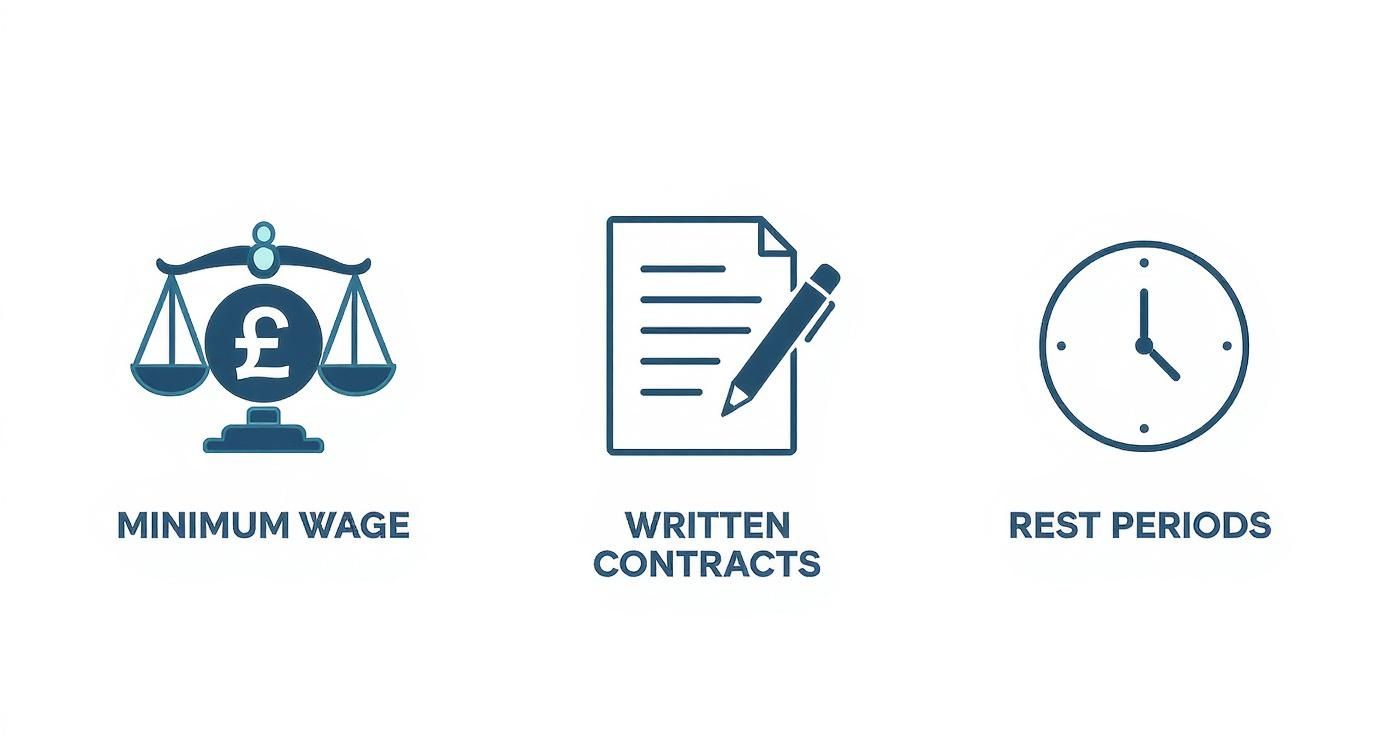
As you can see, a structured approach isn't just about being organised—it's essential for meeting your legal duties around pay, contracts, and your team's wellbeing.
An informal nod and a handshake are not a substitute for a clear, written policy. When it comes to something as important as an employee’s time, ambiguity is the enemy of fairness.
This problem is particularly bad in sectors like healthcare, education, and the creative industries. Here, passionate employees are often expected to go the extra mile simply because they love what they do. Their dedication can accidentally create a culture where unpaid overtime is the norm, and informal TOIL is just a sticking plaster over a much deeper wound.
Without a proper structure, all that goodwill eventually turns into burnout and disengagement. Putting a formal time in lieu process in place is the first real step towards building a system that’s both transparent and fair for everyone.
How to Create a Fair and Effective TOIL Policy

A vague, unwritten approach to time in lieu is a recipe for disaster, often leading to confusion and disputes down the line. To make TOIL work for your business and your team, you absolutely need a formal, written policy that is clear, consistent, and fair.
Think of it as the official rulebook that everyone can refer back to. This simple step removes any grey areas and helps build trust. When employees see a transparent system that properly rewards their extra effort, they feel valued, which is a huge boost for engagement and motivation. A solid policy also protects your business legally and shows you're committed to your team's wellbeing.
So, let's walk through the essential bits and pieces of a robust time in lieu policy to make sure you've got all your bases covered.
Define What Counts as Overtime
First things first: you have to establish a crystal-clear definition of what actually constitutes overtime at your company. Ambiguity here is your worst enemy. You need to specify the exact point when the clock for earning TOIL starts ticking.
Is it any time worked beyond an employee’s contracted daily hours? Or does it only kick in after they’ve put in their full weekly hours? Be precise. For instance, your policy could state that TOIL is only accrued for pre-approved work done outside of the standard 9:00 am to 5:30 pm working day.
A critical piece of the puzzle is authorisation. Your policy must make it plain that all overtime has to be approved in advance by a line manager. This stops employees from deciding on their own to work late just to bank hours, giving you proper control over workloads and costs.
This pre-approval step is your main lever for managing why and when extra hours are worked, making sure it always aligns with genuine business needs.
Set a Clear Accrual Rate
Once you've nailed down what overtime is, you need to state exactly how time in lieu is earned. This is your accrual rate, and honestly, simplicity is your best friend here. The most common and straightforward approach is a simple one-to-one ratio.
- Hour-for-Hour: For every single hour of approved overtime an employee works, they earn one hour of TOIL. It’s the easiest system for everyone to understand and for you to manage.
Some businesses offer a little extra, like time-and-a-half, especially for work done on weekends or bank holidays. While this can be a fantastic incentive, just be aware that it adds another layer of complexity to your tracking. Whichever rate you decide on, it must be stated explicitly in the policy.
Establish Rules for Using TOIL
Banking hours is only half the story; your team also needs to know the rules for taking that time back. Your policy should map out a clear process for requesting and taking TOIL, which should ideally mirror your existing annual leave procedure.
Specify how much notice an employee needs to give, and make it clear that all requests are subject to a line manager's approval based on business needs. This is just practical—it prevents the whole team from trying to book the same crucial day off. You'll also want to decide on the minimum block of time that can be taken. Can someone take a single hour off, or does it have to be a half-day or a full day?
For a deeper dive into policy specifics, our guide on creating a time off in lieu policy offers some extra valuable insights.
Implement an Expiry Date
Letting TOIL build up indefinitely is a massive risk. It can lead to huge leave liabilities on your books and turn workforce planning into a complete nightmare. That's why a key feature of any sustainable policy is a "use it or lose it" clause.
Set a reasonable expiry period for all accrued TOIL—this is typically somewhere between three to twelve months from the date it was earned. An expiry date gently encourages employees to take regular breaks, which is vital for preventing burnout and keeping productivity high. It also ensures your company's leave balances remain manageable and predictable.
Time in Lieu vs Paid Overtime: A Quick Comparison
Deciding between TOIL and paid overtime really comes down to your business model, cash flow, and overall company culture. To help you figure out what's best for you, this table breaks down the key differences.
| Feature | Time in Lieu (TOIL) | Paid Overtime |
|---|---|---|
| Compensation Type | Time-based (paid leave) | Financial (extra wages) |
| Impact on Payroll | No immediate cost; managed as leave | Immediate increase in wage costs |
| Main Employee Benefit | Increased flexibility and work-life balance | Immediate financial reward for extra hours |
| Administrative Need | Requires precise tracking of hours earned/taken | Requires accurate payroll calculations |
| Best For | Roles with fluctuating workloads; cost-conscious firms | Businesses needing staff for specific shifts |
At the end of the day, a clear, well-communicated policy is the foundation of any successful TOIL system. It transforms what could be a messy, informal arrangement into a professional and effective tool for managing workloads and rewarding your team’s dedication.
Solving Common Time in Lieu Management Challenges
While a well-structured time in lieu scheme offers fantastic flexibility, managing it can feel like a constant balancing act. Without a firm grip on the process, what starts as a benefit can quickly turn into a source of frustration, leading to disputes, administrative headaches, and even burnout.
Navigating these pitfalls requires a bit of foresight. Many of the hurdles in TOIL management pop up from poor tracking, inconsistent rules, and a workplace culture that subtly discourages people from actually taking their time off. When managed carelessly, the system can feel less like a reward and more like an obligation to work extra hours for free.
The Hidden Risk of Leave Liability
One of the sneakiest challenges is the slow creep of ‘leave liability’. This is what happens when employees build up huge balances of TOIL that they never seem to use. Think of it like a growing financial debt; every hour of unused TOIL is an hour of paid leave your business owes its team.
If several employees rack up weeks of time off, it creates a serious operational risk. What happens when they all want to take it at once? This unchecked growth can lead to major staffing shortages and put a real financial strain on the business if you ever need to pay out those hours when someone leaves.
A poorly managed TOIL system can inadvertently create a culture of overwork. If the pressure to perform means employees can never find a "good time" to take their leave, the policy's purpose is completely defeated, leading to disengagement and burnout.
Many of these issues are rooted in inefficient workload planning. Adopting effective time management strategies can help managers and employees alike get a better handle on schedules, reducing the need for excessive overtime in the first place.
Inaccurate Tracking and Painful Disputes
Another classic pitfall is relying on manual or inconsistent ways to track hours. Using spreadsheets or scribbled notes is a recipe for errors and arguments. When an employee’s memory of their overtime doesn’t match the company’s records, it chips away at trust and can lead to formal disputes that poison team morale.
Without a single, accurate source of truth, you’re left wrestling with questions like:
- Was the overtime pre-approved? Without a clear record, it’s just one person’s word against another’s.
- How many hours were actually worked? Disagreements over even 30 minutes can build resentment over time.
- Has the accrued time expired? Manually keeping tabs on expiry dates for multiple employees is an administrative nightmare waiting to happen.
The Culture of Unused Leave
Perhaps the most subtle challenge is a workplace culture that stops people from using the time off they’ve earned. This isn't unique to time in lieu; it’s the same problem we see with annual leave.
Even when they're entitled to a break, employees often feel they are too busy or that taking time off will be seen as a lack of commitment. This is a big problem in the UK. For instance, research shows that in 2024, the average UK worker left 5 days of their annual leave unused—that’s nearly 20% of their statutory entitlement just sitting there.
This pattern shows how powerful workplace pressures can be, stopping staff from taking the rest they deserve. A TOIL scheme can easily fall into the same trap. Tackling these challenges head-on with clear policies and solid systems is the key to turning your TOIL scheme into a genuine success.
Best Practices for a Successful TOIL System
A clear policy is the blueprint for your time in lieu system, but its real success hinges on how you bring it to life day-to-day. Even the most carefully crafted rules can fall flat if they aren’t managed with consistency and clarity. To get it right, you need to be proactive, focusing on transparent tracking, open communication, and fostering a culture that genuinely values employee rest.
Think of it like tending a garden. The policy is your plan—what to plant and where. But the daily practices of watering, weeding, and providing the right conditions are what make sure everything thrives. Without this ongoing effort, you risk cultivating a system that creates more headaches than it solves.
Let's dig into the essential practices that will turn your TOIL system into a genuine asset for everyone.
Embrace Accurate and Transparent Tracking
The absolute cornerstone of any fair TOIL system is meticulous record-keeping. Guesswork and informal "I owe you one" agreements are a recipe for disputes and shattered trust. You need a single, reliable source of truth that tracks every hour earned and taken, which is easily accessible to both managers and employees.
This is where manual methods like spreadsheets often come up short. They’re prone to human error, a pain to maintain, and just don't offer the transparency needed to build confidence. Modern leave management software like LeaveWizard automates this entire process, taking the guesswork out of the equation.
- Automated Accrual: Hours are logged and converted to TOIL automatically based on your specific policy rules, which means no more manual calculations.
- Clear Audit Trail: Every request, approval, and adjustment is recorded, creating an indisputable history that protects both the company and the employee.
- Real-Time Balances: Staff can see their TOIL balance at any time, empowering them to manage their well-earned leave proactively.
Champion Clear and Consistent Communication
Having the right tech is a great start, but it isn’t enough on its own. Managers need to communicate the rules of the game clearly and consistently. Staff must know exactly when overtime is required and how to get it authorised. Just as importantly, they must understand the process for booking their earned time in lieu.
Clear communication sets expectations and stops the system from being misused. Managers should regularly remind their teams about expiry dates and actively encourage them to book their time off, reinforcing the message that rest is a valued part of the company culture.
This proactive approach stops TOIL from becoming an forgotten benefit and transforms it into something tangible and respected. For more ideas on this, you might find our article on how to maximise your days in lieu and balance work with life helpful.
Connect Rest with Genuine Productivity
A well-managed TOIL system does more than just track hours; it actively contributes to a healthier, more productive work environment. When employees are encouraged and able to take the rest they’ve earned, they come back to work more focused and engaged. This directly tackles the startling gap between time spent at work and actual output.
Consider this: UK workers produce £46.92 of output per hour, but a recent survey revealed the average employee is only productively engaged for about 2 hours and 53 minutes of their 8-hour day. You can read more about the UK's weekly work hours on Statista. A robust TOIL system helps close this productivity gap by ensuring that extra effort is rewarded with proper rest, preventing the very burnout that leads to disengagement in the first place.
Any Lingering Questions About Time in Lieu?
Even with the clearest policy on paper, you’re bound to get questions about how time in lieu works in practice. It’s only natural. Getting ahead of these common queries helps build a culture of trust and makes sure everyone is on the same page from day one.
Let’s tackle some of the most frequent questions we hear from both managers and their teams.
Can an Employer Force an Employee to Take TOIL?
In a word, no. An employer can't force someone to take time in lieu instead of getting paid for overtime if their contract doesn't allow for it. Any arrangement for TOIL has to be a mutual agreement, and it needs to be clearly laid out in the employment contract.
If the contract promises paid overtime, that’s the default. You can’t just decide to swap it for TOIL without the employee’s consent. It has to be an agreed-upon choice.
What Happens to My Accrued TOIL if I Leave the Company?
This is exactly why a detailed TOIL policy is so important. A well-thought-out policy will spell out precisely what happens to unused hours—whether they’re paid out in the employee's final salary or if they must be taken before their last working day.
Without a clear rule, this becomes a messy, last-minute negotiation. Defining the process for leavers protects everyone, ensuring a clean break without any bad feelings or potential disputes.
Having this clarity upfront avoids arguments and keeps the departure process smooth and professional.
Is There a Time Limit for Using Accrued TOIL?
Yes, and for good reason! Most companies will set a sensible expiry date on any accrued time in lieu. This is typically somewhere between 3 and 12 months from the date the hours were earned.
This simple rule stops leave from piling up indefinitely, which can quickly turn into a headache for scheduling and a financial risk for the business. The time limit has to be clearly stated in your TOIL policy and, crucially, applied fairly and consistently across the board.


