Yes, you can absolutely reclaim your annual leave if you get sick just before or during your time off. It’s a common question, and the answer is a firm yes. UK law makes a clear distinction between annual leave (for rest and relaxation) and sick leave (for recovery). If you're unwell and can't actually enjoy your holiday, you have the right to get those days back.
Your Rights When Sickness Derails Your Holiday
It’s a situation we’ve all dreaded. You’ve planned your trip, packed your bags, and counted down the days, only to be hit by illness right when you’re supposed to be switching off. It’s incredibly frustrating.
The good news? The law is on your side. If you fall ill before or during your holiday, you're entitled to claim back that annual leave.
The logic is simple. The whole point of annual leave is to have a proper break for rest and leisure. Sick leave, on the other hand, is specifically for when you need to recover. If you’re genuinely too sick to enjoy your time away, the law recognises that you haven't received your rightful break.
The Legal Foundation for Reclaiming Your Leave
This isn't just about your employer being nice; it's a legal right backed by major court rulings. A landmark decision by the European Court of Justice back in 2009 set the precedent.
The court established that an employee who is too sick to enjoy their holiday should be able to take that annual leave at a different time. You can’t be on sick leave and annual leave at the same time because they serve completely different purposes. This principle was later strengthened to confirm it applies even if you fall ill during your holiday.
For employers, respecting this right is a fundamental part of being a fair, supportive, and legally compliant workplace. Getting this wrong can quickly lead to grievances or even legal disputes, so understanding this regulation is key to avoiding risk.
Annual Leave vs Sick Leave At A Glance
To understand your rights and your employer's obligations, it's helpful to see the core differences between these two types of leave. They're designed for very different situations and have their own rules for entitlement and pay, which are legally distinct.
| Attribute | Annual Leave | Sick Leave |
|---|---|---|
| Purpose | Rest, relaxation, and leisure. | Recovery from illness or injury. |
| Entitlement | 5.6 weeks statutory paid leave per year for most workers. | No statutory entitlement to a set number of paid sick days. Governed by company policy and Statutory Sick Pay (SSP) rules. |
| Pay | Paid at your normal rate of pay. | Can be unpaid, paid at company sick pay rates, or eligible for Statutory Sick Pay (SSP) if criteria are met. |
This table shows why the law treats them so differently. You can't substitute a period of illness for a period of rest, which is what your holiday time is for.
Statutory vs Contractual Leave: What You Need to Know
In the UK, the vast majority of workers are entitled to 5.6 weeks of paid holiday each year. This is your statutory annual leave, and the right to reclaim it when you're sick applies directly to these weeks. Adhering to this is a non-negotiable legal requirement for employers.
However, many companies offer more holiday time than the statutory minimum. This extra time is known as contractual leave. How this additional leave is handled when you're sick will come down to what's written in your employment contract or company handbook.
Key Takeaway: Your right to reclaim annual leave when sick is legally protected for your statutory 5.6 weeks. For any extra contractual leave, your employer's policy is what counts, so it pays to know what your company handbook says to ensure compliance.
Understanding the pay you might receive during sickness is also crucial. For a deeper dive into what you're entitled to when you're off sick, a good guide on understanding Statutory Sick Pay can be incredibly helpful.
Navigating your full holiday allowance can feel complicated, especially when you factor in things like bank holidays or part-time work schedules. If you want to get a complete picture, you can learn more about annual leave entitlement in our article. Knowing your rights empowers you to get the restorative break you’ve earned and helps your employer manage their obligations fairly and legally.
How to Report Sickness and Reclaim Your Leave
So, you know you have the right to reclaim your holiday if you fall ill. That’s the easy part. Actually going through the process correctly can feel a bit daunting, especially when you’re not feeling 100%.
The secret to a smooth, no-fuss reclaim is simple: act fast and follow your company’s procedures to the letter. This ensures you are acting in line with company policy and strengthens your position, making it straightforward for your employer to approve your request in a compliant manner.
First things first: you need to tell your employer you’re ill as soon as you know you can’t enjoy your leave. Don’t put it off until you’re back at work. You should treat it exactly like you would any other sick day, even if you’re technically already on holiday. A quick call or email to your manager is usually all it takes to get the ball rolling.
This simple flowchart breaks down the journey from planned holiday to sickness, and finally, to getting that precious leave back.

As you can see, the process is just a logical sequence of events. Your holiday is unfortunately cut short by illness, which then kicks off a formal process to reclaim those days.
Notifying Your Employer Correctly
When you report your sickness, be clear and direct. Your company’s sickness absence policy is your guide here—it will tell you exactly how to notify them. It might be a phone call by 9 a.m., an email, or an update in your company's HR system. Following these instructions is non-negotiable for ensuring a compliant process.
Your first message should cover the basics:
- Your name and department.
- A clear statement that you are unwell and unable to use your annual leave.
- The date your sickness started.
- How long you expect to be off, if you have an idea.
This initial contact creates an official record and starts the clock on converting your holiday time into sick leave. If you don't follow the company policy, you could risk losing the right to get those days back, as employers are entitled to enforce their own reasonable procedures. For some extra pointers, our guide on crafting the perfect sick leave message has you covered.
Having a watertight process has never been more critical. The Office for National Statistics (ONS) recorded a staggering 148.9 million working days lost to sickness in 2024. On top of that, a recent CIPD report found that employees now take an average of 9.4 sick days per year—a 15-year high. These figures really drive home why a clear, legally sound process for reclaiming leave is a must-have for both staff and businesses. The government's final report on UK working habits offers more insight into these trends.
Providing the Right Evidence
For a short illness, your word is usually enough. If you’re off for seven days or less (and that includes weekends and other non-working days), you can 'self-certify'. This just means you’ll fill out a simple form or provide a written statement explaining your illness when you return.
However, things are different for longer absences. If your illness stretches beyond seven consecutive days, you will need to provide medical evidence. This is a standard and legally accepted requirement.
You must get a statement of fitness for work, more commonly known as a 'fit note', from a doctor or another qualified healthcare professional. This is the official document that confirms you are not fit for work, and it's an essential requirement for reclaiming leave on longer absences.
Think of the fit note as the key that unlocks the process. It's the proof your employer needs to officially and compliantly change those holiday days into sick days in their system. Without it, they have every right to refuse your request.
Putting Your Request in Writing
Once you're back at work—and you have your fit note, if one was needed—it's time to submit a formal, written request to reclaim your leave. An email is perfect for this, as it creates a clear paper trail and prevents any crossed wires, providing evidence for both parties.
Keep your message polite, professional, and to the point, making sure to mention your initial notification.
Here’s a simple template you can adapt:
Subject: Request to Reclaim Annual Leave – [Your Name]
Dear [Manager's Name],
Following up on my phone call from [Date of notification], I'm writing to formally request to reclaim the annual leave I was unable to take due to sickness.
My illness started on [Start date], and I was fit to return to work on [End date]. As this period overlapped with my pre-booked holiday, I would like to have [Number] days credited back to my annual leave balance.
As my absence was longer than seven days, I have attached my doctor's fit note for your records.
Please could you let me know once my leave balance has been updated? Thank you for your understanding.
Best regards,
[Your Name]
A clear and simple message like this gives your manager or HR everything they need to process your request in line with legal and company procedures. It shows you're on top of the process and makes it easy for them to give you a quick and positive resolution.
Creating a Fair and Compliant Sickness Policy
For any business owner or HR manager, dealing with employees claiming back annual leave when they fall sick can feel like a minefield. A clear, well-written sickness policy isn't just about ticking a compliance box; it's your first line of defence against disputes, legal headaches, and accusations of treating staff inconsistently. It protects both the business and your team by making sure everyone is on the same page from day one.
Without a solid policy, you’re left making decisions on the fly. That's a recipe for claims of unfairness, which can quickly poison team morale and open the door to legal challenges. Getting this right means everyone knows the process, from how to report an illness to what proof they need to provide, ensuring full compliance with employment law.

Essential Elements of Your Sickness Policy
Think of your policy as a practical, no-nonsense guide. It needs to walk both managers and employees through every step, so there's zero ambiguity when a pre-booked holiday is ruined by a bout of flu. This ensures consistent application and legal protection for the business.
Your document should spell out the following in plain English:
- Notification Procedure: Who should the employee contact? How should they do it (a phone call, not a last-minute text)? And by what time on the first day of sickness? This demonstrates a clear and fair process.
- Evidence Requirements: Be specific about when a self-certification form is enough (typically for seven days or less) and when you'll require a doctor's fit note (for anything over seven days). This aligns with statutory guidelines.
- Reclaiming Leave Process: Detail the exact steps an employee needs to follow once they're back at work to formally ask for their annual leave days to be put back in their balance. This creates a auditable trail.
This level of clarity is your best tool for regulatory compliance. It creates a fair, consistent standard that applies to everyone, stopping potential misunderstandings before they even start. For a much deeper dive, you can check out our guide on creating a professional sick leave policy.
This isn't just an administrative issue; it's a real-world problem. In the UK, research from the Work Foundation found that over 1.15 million low-paid workers don't earn enough to qualify for Statutory Sick Pay (SSP). This reality often forces people to choose between working while ill or taking a financial hit, making fair, compliant policies for reclaiming holiday an absolute must-have for compassionate employers.
Addressing Leave Carry-Over Rules
One of the stickiest situations is what to do with reclaimed leave, particularly if the sickness happens near the end of your holiday year. Your policy absolutely must have clear rules on carrying this leave over to avoid chaos and legal trouble later on.
UK law is clear: employees are entitled to carry over statutory leave they were unable to take due to sickness. However, as an employer, you can—and should—set reasonable limits within your policy to ensure operational stability.
Key Takeaway for Employers: Your policy should specify a deadline by which any carried-over leave must be used in the next holiday year. A common and legally sound approach is to require it to be taken within the first few months, preventing leave balances from spiralling out of control.
This strikes a fair balance between an employee's legal right to their holiday and the business's need to manage staffing. Without a firm rule, you could find yourself with operational nightmares and potential claims of unfairness as multiple people try to use up old leave all at once. For longer or recurring absences, your policy could also mention when an occupational health assessment might be needed to help support the employee's return in a legally appropriate manner.
Communicating Your Policy Effectively
Writing the perfect policy is only half the job. If your team doesn't know it exists or doesn't understand it, it's practically useless from a compliance standpoint. Don't just dump it on a shared drive and hope people find it.
Make your sickness policy a key part of your new-starter onboarding. It's also a great idea to send out annual reminders and ensure it's easy to find on your company intranet or HR system. The goal is to build a culture where the rules are known, respected, and applied fairly by everyone. That kind of proactive communication builds trust and shows you're serious about meeting your legal obligations as a supportive employer.
Navigating Complex Scenarios and Grey Areas
Real life rarely fits neatly into a policy document, does it? Even with a perfect sickness policy, tricky 'what if' situations pop up all the time, leaving both employees and managers scratching their heads. Knowing how to handle these grey areas is what separates a fair, legally sound workplace from one heading for trouble.
It's these edge cases that often cause the most friction, mainly because the rules can seem blurry. By tackling them head-on with clear advice, we can stop small misunderstandings from blowing up into major disputes. The trick is to apply the core legal principles consistently, even when the situation feels unusual, to ensure every decision is defensible and compliant.
Sickness While on Holiday Abroad
Falling ill is frustrating enough, but it feels ten times worse when it happens on a long-awaited holiday abroad. The good news? Your rights don’t change just because you’re in another country. You are still entitled to report your sickness and ask to have your annual leave reinstated.
However, the practical steps are slightly different, and this is where people often get tripped up, potentially undermining their claim.
- Tell your employer immediately. Don't wait until you're back home. Follow your company’s usual sickness reporting procedure. An email or a quick call is all it takes to create an official, time-stamped record of when your sickness started.
- Get local medical evidence. This is absolutely the most critical step for a legally sound claim. You'll need proof of your illness from a local doctor, clinic, or hospital. Make sure you keep all the paperwork – from prescriptions to a doctor’s note confirming you were genuinely unfit for your planned holiday activities.
- Be prepared for language barriers. If your medical note is in Spanish, Greek, or another language, your employer can reasonably ask for a certified translation to verify the evidence. This cost might fall on you, so it's worth checking your company policy or even your travel insurance to see if it's covered.
Failing to get that local medical proof is the biggest hurdle. Without it, your employer has perfectly valid grounds to reject your request, as there’s no way to formally verify your illness in line with standard procedure.
What About Minor Illnesses Like a Cold?
This is a really common point of contention. Can you reclaim a day of your holiday for a common cold or a nagging headache? The legal test here is whether the illness was severe enough to prevent you from actually taking your annual leave and enjoying a period of rest and relaxation.
A sniffle that doesn’t stop you from sightseeing probably won’t cut it. On the other hand, a nasty flu that leaves you bedridden for two days of your week-long break absolutely would.
Your employer is well within their rights to question whether a minor ailment genuinely stopped you from enjoying your leave. This is where honesty and clear communication are vital. If you were truly too unwell to benefit from your break, you have a valid claim that meets the legal definition.
When an Employer Disputes a Claim
So, what happens if you’ve followed all the steps, provided your evidence, but your manager still says no? This is an incredibly stressful situation, but don't panic – you have clear options defined by employment law.
First things first, ask for a clear reason for the refusal, and ask for it in writing. This requires the employer to justify their decision based on either company policy or statutory law. If their reasoning seems unfair or directly contradicts your employment contract, your next move is to raise a formal grievance.
The grievance process is a structured, legally recognised way to resolve workplace disputes. It gives you a chance to formally state your case and have it reviewed by someone more senior, usually in HR or higher management. Most disagreements over reclaiming annual leave are sorted out at this stage, preventing escalation to external bodies.
Personal Sickness vs Caring for a Sick Dependant
This is a crucial distinction that trips a lot of people up. Your right to reclaim annual leave only applies if you personally are sick.
If you have to cut your holiday short to fly home and care for a sick child or another dependant, the rules are different. This situation falls under the right to 'time off for dependants', which is a separate legal protection.
While employers must allow you reasonable unpaid time off to deal with an emergency like this, it does not convert your annual leave into sick leave. Any holiday days you used for this purpose cannot be reclaimed. It’s a tough distinction, but legally, the focus is entirely on your own fitness to rest and relax. For businesses, making this clear in your policy is key to managing expectations and staying compliant with both sets of regulations.
Making Sure It All Adds Up: Getting Your Leave Process Right
If you’re still wrestling with spreadsheets to track sickness, holidays, and reclaimed leave, you know the feeling. It’s a messy, time-consuming headache. Every email chain and manual calendar update is a chance for a mistake—a mistake that could easily turn into a staff dispute or a legal nightmare, especially around complex rules like claiming back annual leave if sick.
As an HR manager or small business owner, you're constantly chasing paperwork, double-checking calendars, and manually adjusting leave balances. It’s not just inefficient; it’s a constant drain on your time and energy, and it creates significant compliance risks.

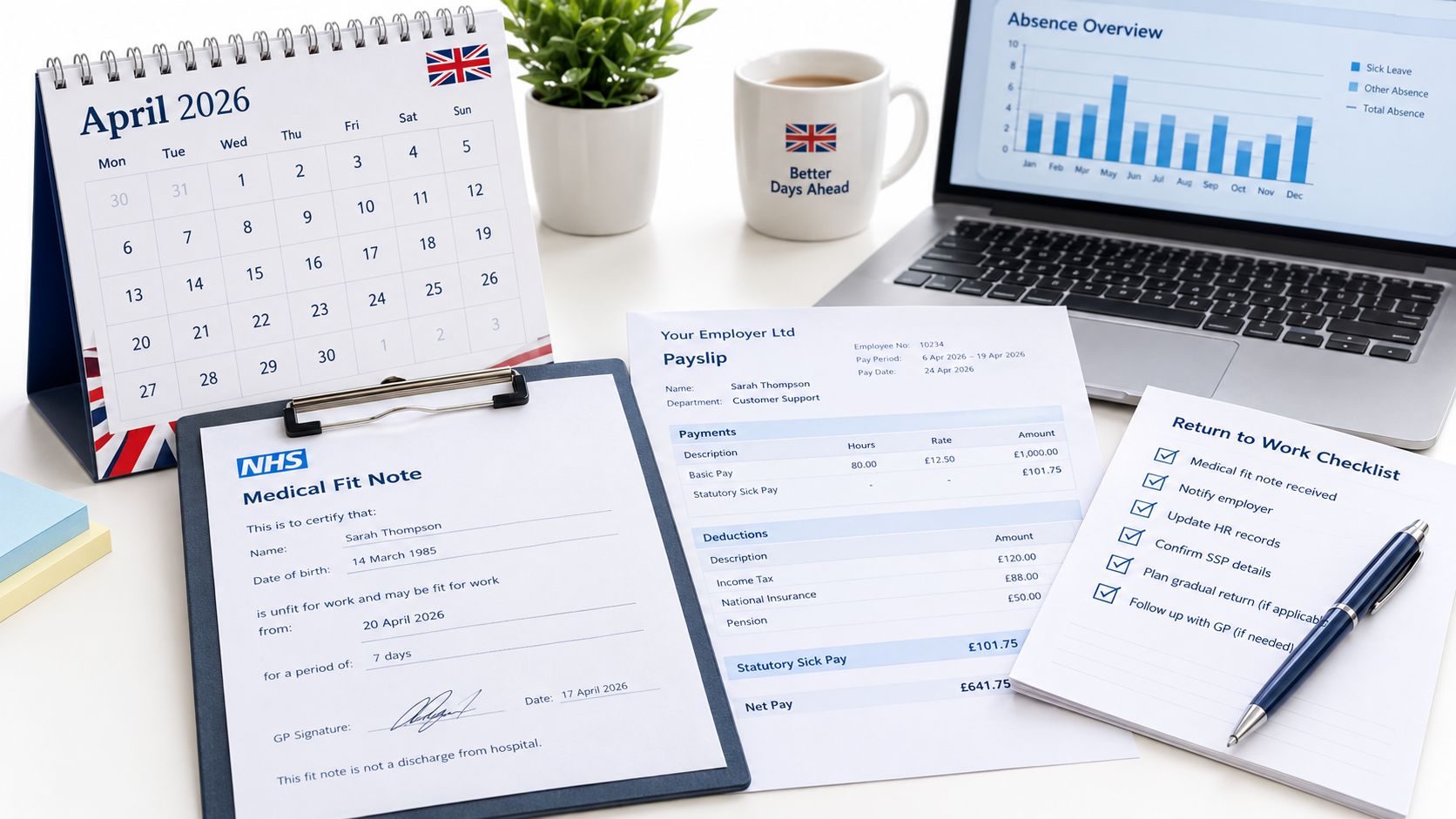
The mix of digital calendars and traditional fit notes is the reality of modern leave management. Bringing these elements together in an organised, compliant system is the key to moving past the chaos of paper trails and scattered emails.
Escaping the Spreadsheet Maze
The real danger of doing all this by hand isn't just the time it eats up; it's the complete lack of a clear, auditable trail. Think about it. When an employee asks to reclaim holiday days, can you instantly pull up their first sickness notification, see when the fit note arrived, and prove their leave balance was adjusted correctly? For most businesses using spreadsheets, that simple question kicks off a frantic search through inboxes and jumbled files, leaving you vulnerable in a dispute.
This is where dedicated software like LeaveWizard completely changes the game. It’s not about adding yet another tool to your plate. It's about creating one single, reliable source of truth for everything to do with leave, ensuring every action is recorded and compliant.
This simple shift helps you handle every request for claiming back annual leave if sick the exact same way, every time. That consistency is absolutely vital for being fair and staying on the right side of employment law.
A Central Hub for Complete Control
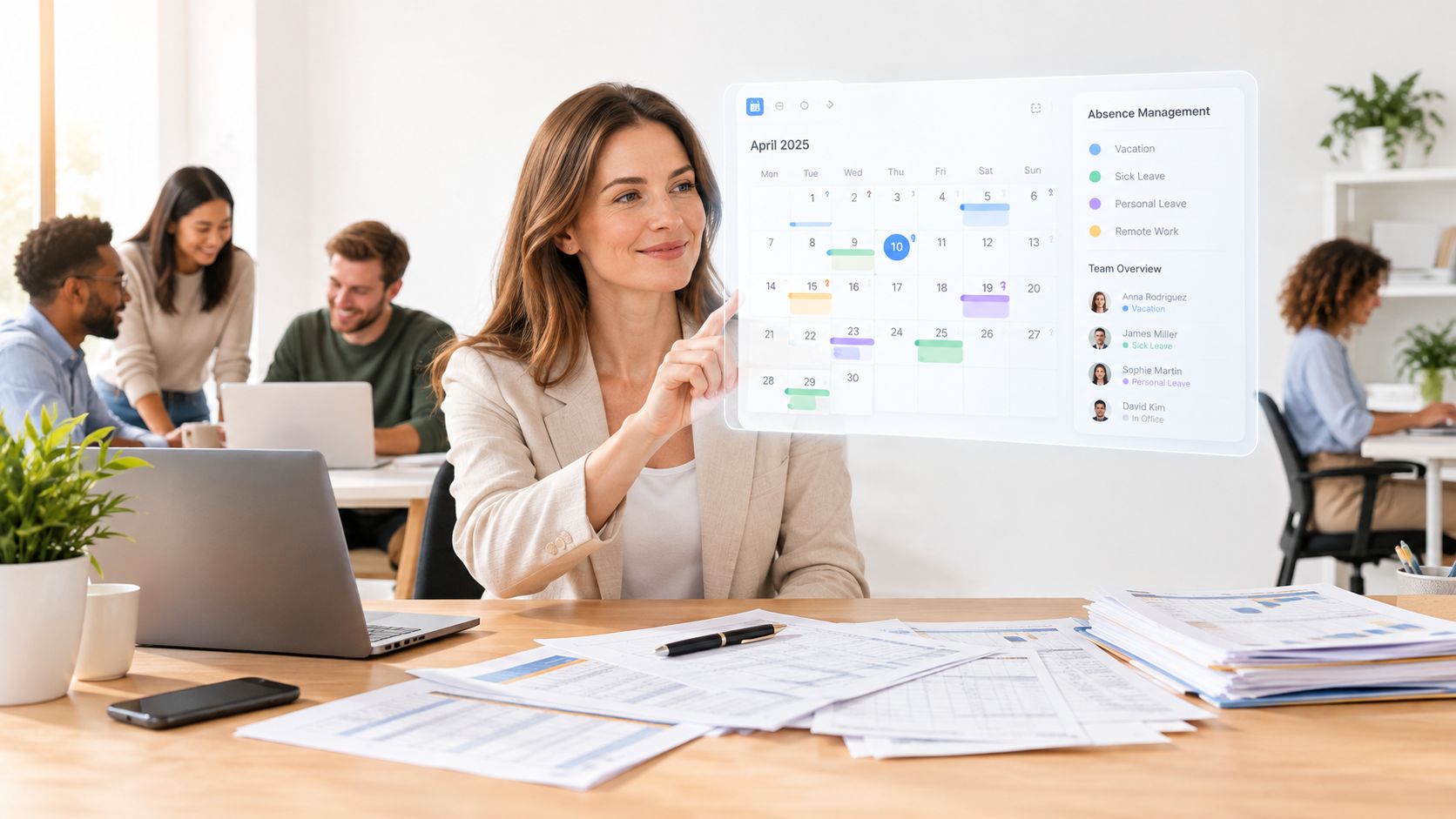
Imagine a world where you’re no longer the gatekeeper for every single holiday booking or sickness report. A proper leave management system gives you and your line managers a central dashboard with a bird’s-eye view of all team absences, all while enforcing your policies automatically.
Instead of trying to make sense of a colour-coded spreadsheet, you get a straightforward, compliant view of:
- Real-time leave balances for every person on the team, updated automatically.
- A single calendar showing who is off, when they’re off, and why.
- A complete, time-stamped history of every request, approval, and conversation, all in one place, providing a full audit trail.
By automating these core tasks, you slash the risk of admin errors. Getting someone's leave entitlement wrong or simply forgetting to process a request can cause genuine frustration and lead to formal grievances. A good system is designed specifically to stop that from happening by ensuring compliance at every step.
For anyone managing budgets or operations, this real-time data is gold. You can see how absences are hitting team capacity at a glance and make smart decisions without having to chase HR for a report.
Empowering Your Team and Bullet-Proofing Your Policies
One of the biggest wins of moving to a system like LeaveWizard is how it empowers your staff while reinforcing your company's rules in a legally sound way. When people can manage their own leave through a simple app, it benefits everyone.
This creates a few key advantages for compliance:
- Instant Sickness Reporting: An employee who gets ill on holiday can log their sickness right away through the app. This creates an immediate, time-stamped record which satisfies your notification policy.
- Simple Evidence Uploads: They can snap a picture of their fit note and upload it directly to their request. All the necessary paperwork is then securely attached and stored in one place—no more lost emails or GDPR risks.
- Total Transparency: Staff can see the live status of their request to reclaim annual leave, which cuts down on all those "just checking in" emails and calls to you.
This isn’t just about convenience. It’s about building a structured, foolproof process that guides everyone—employees and managers alike—through the right steps, every single time. It ensures that when someone is claiming back annual leave if sick, the request is handled properly from the second it's made. This automation frees you up to focus on your people, not their paperwork, and gives you complete peace of mind that your leave process is fair, accurate, and legally sound.
Frequently Asked Questions
Even when you think you've got a handle on the rules, real-life situations always throw up tricky questions. When you're ill on holiday, you need clear, simple answers to ensure you act in a way that protects your rights. Let's get into some of the most common queries we see.
How Much Notice Do I Need to Give If I'm Sick on Holiday?
You need to report your sickness as soon as you reasonably can, using your company’s normal procedure for calling in sick. Don't wait until you're back in the country or due to return to the office.
Think of it like this: if you were at home and too ill for work, you'd have to phone your manager by a certain time, maybe 9 a.m. The same logic applies whether you're in bed at home or in a hotel in Spain. Sticking to your employer’s reporting process is the first, most crucial step to ensure a compliant claim.
Key Takeaway: If you don't report your illness according to your company's policy, your employer could have grounds to refuse your request to reclaim the holiday. They need to know you're sick at the time, not find out about it weeks later, to meet their own procedural requirements.
Can My Employer Refuse My Request to Reclaim Annual Leave?
Yes, but they can't just say no without a very good, legally sound reason. A refusal is usually only justified if you haven’t followed the correct procedure, which is why following the rules is so important.
Here are a few common, legally justifiable reasons a request might be turned down:
- You didn't report your illness properly: As we just covered, you have to follow the company’s rules for sickness notification.
- You didn't provide evidence: If you’re off for more than seven days, a fit note is a must. If you're abroad, this means getting proper medical evidence from a local doctor.
- The illness wasn't genuine: An employer might challenge a claim for a very minor issue that didn't genuinely stop you from taking your holiday as planned.
If your request is refused and you're certain you've done everything by the book, ask for the reason in writing. If you're still not satisfied, you might need to raise a formal grievance, which is a legally defined process.
What Happens If I Can't Use My Reclaimed Leave By The End of The Year?
This happens a lot, especially if you fall ill late in your company's leave year. UK law is quite clear here: if sickness stopped you from taking your statutory holiday entitlement, you have the right to carry it over to the next leave year.
However, your employer can set some ground rules. For example, the company policy might state that any leave carried over must be used within the first few months of the new year. This is a completely legal and common approach to manage workforce planning.
This rule helps balance your right to rest with the company's need to manage staffing. It stops a huge amount of leave from building up and causing operational headaches later on, while still being compliant with the law.
Do I Still Get Paid for The Sick Days I Took During My Annual Leave?
Yes, but it's important to understand how the pay works to ensure everything is above board. Once your holiday is successfully reclaimed, those days are re-categorised from annual leave to sick leave. You'll be paid for them based on your company’s sick pay policy, not your usual holiday pay rate.
Depending on your contract and eligibility, this might mean you get:
- Company Sick Pay: If your employer offers a contractual sick pay scheme.
- Statutory Sick Pay (SSP): As long as you meet the government's criteria.
- No pay at all: If you aren't eligible for either company or statutory pay.
The annual leave days themselves are then put back into your allowance. You can then take them later and get paid your normal wage for them. It’s a two-part process that keeps everything fair and legal.