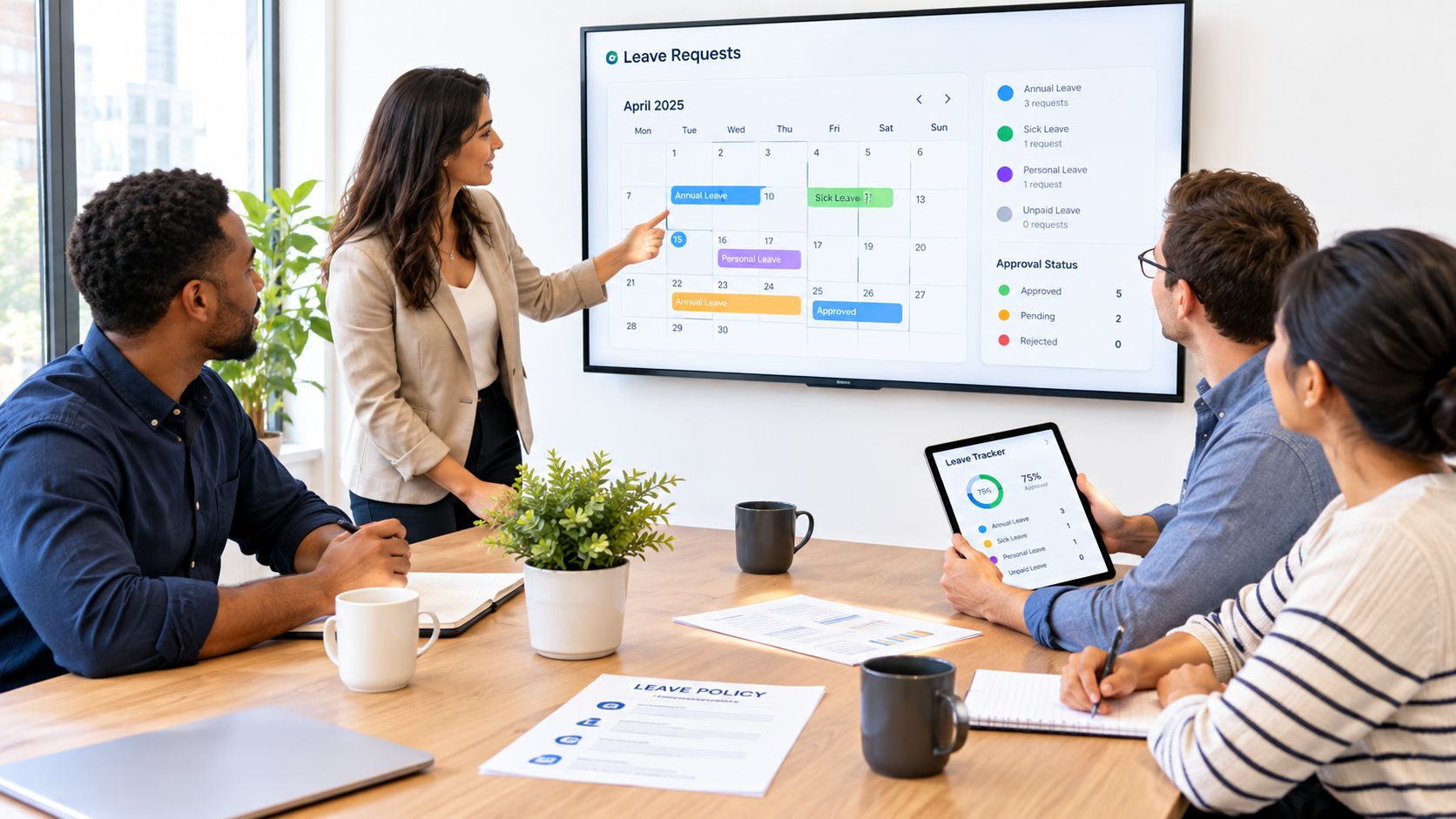
Calling in sick can feel awkward, but it doesn’t have to be. A well-crafted sick leave message maintains professionalism, ensures smooth workflow continuity, and respects both your need for privacy and your manager’s requirement for essential information. In the modern workplace, where remote and hybrid arrangements are common, clear and concise communication is paramount for effective team coordination. Getting this message right builds trust and demonstrates responsibility, even when you are unwell.
This guide moves beyond generic advice to provide six distinct, actionable templates designed for various real-world scenarios. We will cover everything from a sudden, unexpected illness to a pre-planned medical appointment or the need to care for a family member. For each template, we will break down the underlying strategy, offering tactical insights on what information to include, what to omit, and how to strike the perfect professional tone for each situation.
You will learn how to communicate your absence effectively, manage expectations regarding your availability, and provide necessary details for handovers without oversharing. For managers and small business owners, understanding these nuances helps formalise policies and foster a supportive environment. This ensures that when an employee sends their sick leave message, the process is transparent, efficient, and supportive for everyone involved.
1. The Brief Professional Sick Leave Message
The brief professional sick leave message is the cornerstone of workplace communication when you’re unwell. Its primary function is to inform your manager and team of your absence clearly and efficiently, without oversharing personal health information. This approach respects professional boundaries while fulfilling your responsibility to notify your employer promptly. It prioritises clarity over detail, ensuring the message is understood and actioned immediately.
This type of message is effective because it focuses only on the essential information your employer needs: the fact of your absence, the expected duration, and any immediate handover notes. It projects professionalism and reliability, even when you are unable to work. For organisations, having clear guidelines for such communications is vital, and a well-defined sick leave policy can provide the necessary framework. You can explore best practices for creating a sick leave policy to ensure your company’s approach is both supportive and efficient.
When to Use This Approach
This direct style is almost universally applicable and is the default for most situations. It is especially ideal for:
- Short-term illnesses: Perfect for common ailments like a cold, flu, or a migraine where you anticipate a quick recovery.
- Sudden onset of illness: When you wake up feeling unwell and need to notify your manager quickly before the workday begins.
- Privacy concerns: If you prefer to keep your medical details confidential, this format is ideal as it doesn’t require any disclosure.
- Company cultures that value directness: In fast-paced or formal environments, a concise message is often appreciated.
Example Templates & Analysis
Here are two effective examples of a brief professional sick leave message and a breakdown of why they work so well.
Email Example:
Subject: Sick Leave – [Your Name]
Dear [Manager’s Name],
Please accept this email as notification that I will be unable to come to work today, [Date], due to illness.
I anticipate being able to return to work tomorrow. I will check my emails periodically for any urgent matters.
Best regards,
[Your Name]
Strategic Breakdown:
- Clarity: The subject line is direct and informative, allowing a manager to grasp the email’s purpose instantly.
- Brevity: The message is just two sentences but contains all necessary information.
- Actionable Information: It provides an expected return date, which helps with team planning.
- Professionalism: The tone is formal, and the offer to monitor emails (if you feel up to it) shows commitment without overpromising.
SMS/Team Chat Example:
“Good morning. I’ve woken up feeling unwell and need to take a sick day. I will keep you updated on my return. I’ve handed over the urgent client report notes to Sarah.”
Strategic Breakdown:
- Immediacy: Ideal for quick communication platforms like Slack, Teams, or SMS.
- Conciseness: Straight to the point, which is crucial for mobile messaging.
- Proactive Handover: Mentioning that a key task is covered demonstrates responsibility and minimises disruption for the team.
Download our Sick Leave Message Pack (Email, SMS, WhatsApp)
Get the full pack + a UK sick leave policy template.
2. The Detailed Explanatory Sick Leave Message
The detailed explanatory sick leave message provides more context than its brief counterpart. It is designed to give your manager a clearer picture of the situation, especially when your absence might extend beyond a single day. This approach balances professionalism with transparency, offering specific but not overly graphic details about your illness to help with workload planning and management.
This type of message is valuable when a simple “I’m unwell” might not suffice. By providing a bit more information, you manage expectations regarding your availability and potential recovery timeline. This can be particularly reassuring for your team, as it allows them to organise cover and adjust deadlines accordingly, minimising disruption. A well-crafted detailed message demonstrates foresight and accountability.
When to Use This Approach
While not for every instance of illness, this more descriptive style is highly effective in certain scenarios. It is especially ideal for:
- Extended absences: When you anticipate being out for more than one day due to something like flu or a doctor’s recommendation for rest.
- Specific company policies: Some organisations require employees to state the general nature of their illness for HR or record-keeping purposes.
- High-impact roles: If your absence directly affects critical projects or client deadlines, providing more context helps your manager reallocate resources effectively.
- Building trust: In team cultures that value open communication, a little more detail can foster understanding and support.
Example Templates & Analysis
Here are two effective examples of a detailed explanatory sick leave message, along with a breakdown of why they work so well.
Email Example:
Subject: Sick Leave Notification – [Your Name]
Dear [Manager’s Name],
I am writing to inform you that I will be unable to work today, [Date], as I have woken up with severe flu symptoms, including a high fever and persistent cough.
I have a doctor’s appointment scheduled for this morning and will provide an update on my expected return to work afterwards. Based on my current condition, I anticipate needing at least a couple of days to recover. I have already forwarded my notes for the morning’s project meeting to Alex.
Kind regards,
[Your Name]
Strategic Breakdown:
- Relevant Detail: It specifies the nature of the illness (flu symptoms) which justifies a potentially longer absence without oversharing.
- Proactive Next Steps: Mentioning a doctor’s appointment and promising an update sets clear expectations for future communication.
- Impact Mitigation: Stating that important notes have been passed on shows you’ve considered the impact on the team.
- Realistic Timeline: The message provides a realistic, albeit tentative, recovery timeline, which is crucial for planning.
SMS/Team Chat Example:
“Hi team, I won’t be in today. I’m experiencing a severe migraine which makes looking at a screen impossible. I hope to be back tomorrow but will confirm this evening. All urgent tasks are listed in our shared project board.”
Strategic Breakdown:
- Concise but Informative: The message is brief enough for a chat platform but clearly explains the reason for absence and its direct impact on work ability.
- Manages Expectations: Stating a plan to confirm later in the day is a professional way to handle an unpredictable illness.
- Directs to Resources: Pointing colleagues to a shared resource for task management is a highly efficient way to ensure continuity and prevent workflow bottlenecks.
—–
Need help communicating sick leave fairly?
Many organisations use LeaveWizard’s self-service portal to streamline sick leave requests.
——
3. The Urgent Last-Minute Sick Leave Message
The urgent last-minute sick leave message is a critical communication tool for when illness strikes unexpectedly and immediately before or during the workday. Its purpose is speed and damage control, prioritising the instant notification of your absence and the delegation of time-sensitive tasks. This approach is less about formality and more about functional, immediate action to prevent disruption. It focuses on what your team needs to know right now to keep critical projects moving forward in your absence.
This message is essential because it addresses the most disruptive type of absence- one that leaves no time for planning. A well-crafted urgent message demonstrates foresight and responsibility even in a difficult situation. It shows you are thinking about the team’s workflow and taking steps to mitigate the impact of your sudden departure, which builds trust and reinforces your reliability.
The decision tree below outlines the core steps to follow when sending an urgent last-minute sick leave message.
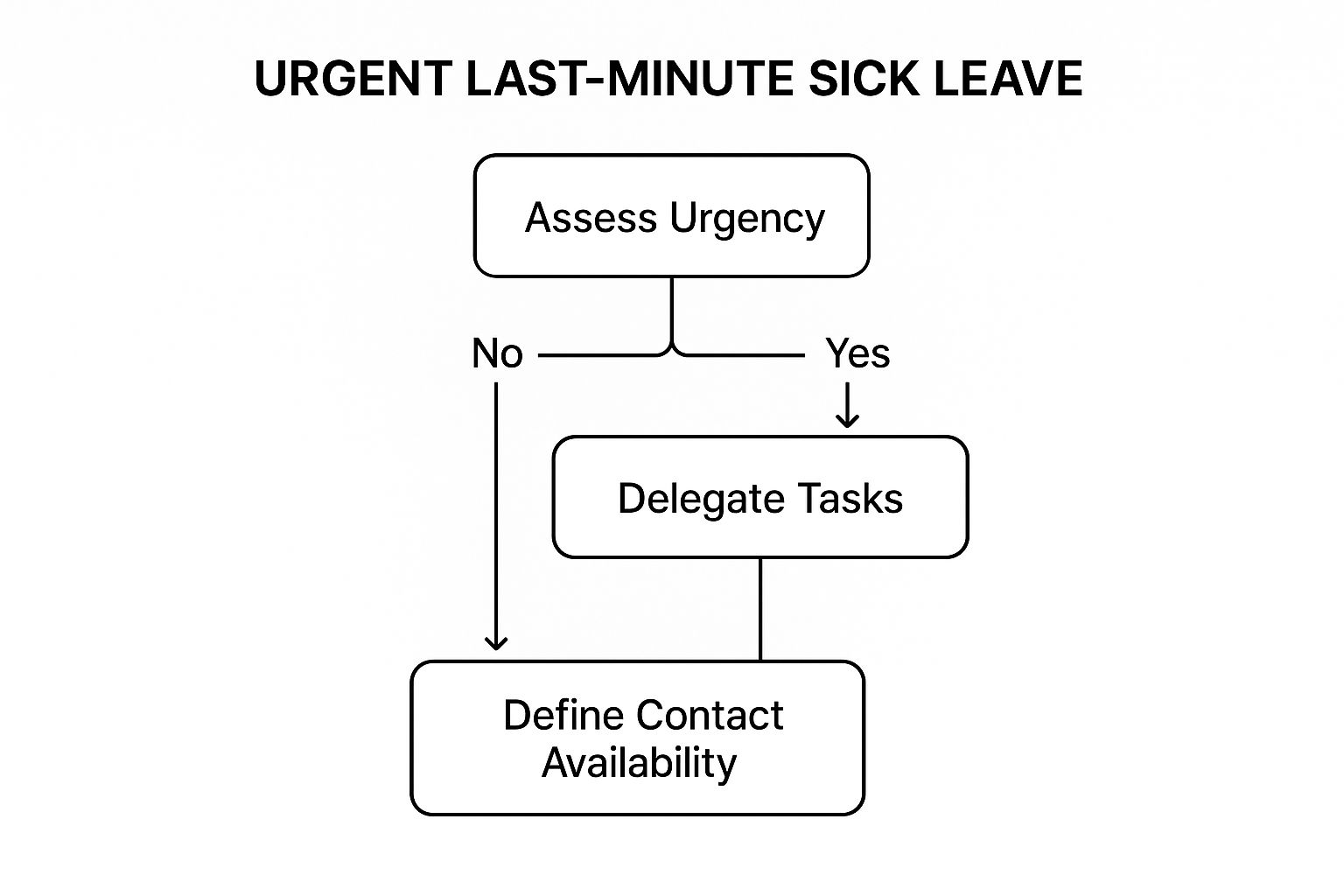
This flow clarifies that your primary focus should be on assessing what absolutely must be done today, delegating it clearly, and then setting firm boundaries for communication to allow for recovery.
When to Use This Approach
This direct, action-oriented style is necessary in specific, high-pressure circumstances. It is ideal for:
- Sudden severe illness: When you wake up with a severe migraine, food poisoning, or flu that makes working impossible without any prior warning.
- Illness during the workday: If you become unwell at the office and need to leave immediately.
- Deadline-critical days: When your absence directly impacts a project deadline, client meeting, or major delivery scheduled for that day.
- Roles with high interdependence: If your tasks are a bottleneck for other team members, this approach is crucial to unblock their work.
Example Templates & Analysis
Here are two effective examples of an urgent last-minute sick leave message and a breakdown of why they work so well.
SMS/Team Chat Example:
“Woke up too ill to work today. John has access to the Morrison files needed for today’s 11am deadline. Available by phone for emergencies only. Will provide an update this afternoon.”
Strategic Breakdown:
- Directness: The message gets straight to the point, conveying the necessary information without delay.
- Specific Delegation: It names a person (John) and the specific task (Morrison files), eliminating ambiguity and allowing the team to act immediately.
- Boundary Setting: “Available by phone for emergencies only” is a crucial line that protects your recovery time while providing a lifeline for true crises.
- Follow-Up Commitment: Promising an update manages expectations and shows continued accountability.
Email Example:
Subject: URGENT: Sick Leave – [Your Name] – [Project/Meeting Name]
Hi [Manager’s Name],
I am writing to inform you that I have become suddenly unwell and cannot continue working today.
Please can my 2pm client meeting be reassigned to Sarah? I have forwarded her the meeting notes. All other urgent tasks are noted in our shared project planner.
I will be offline to rest but will call you by noon with an update on my condition.
Regards,
[Your Name]
Strategic Breakdown:
- High-Visibility Subject: Using “URGENT” and including the project name ensures the email is opened and actioned immediately.
- Clear Call to Action: It explicitly asks the manager to reassign a specific meeting, making the next step obvious.
- Proactive Problem-Solving: Stating that notes have been forwarded shows you have already taken steps to ensure a smooth handover.
- Defined Communication Plan: It clearly states when and how the next communication will happen (“call you by noon”), which helps the manager plan.
4. The Family/Caregiving Sick Leave Message
A family or caregiving sick leave message is used when you need to be absent from work to care for an unwell family member. This could be a child, spouse, or an elderly parent. This type of message serves a similar purpose to a personal sick leave notification but often involves different considerations, such as company policies on dependant leave and potential legal protections. It requires a clear, professional approach that communicates the necessity of your absence while respecting family privacy.
This message is crucial because it informs your manager about an absence that isn’t due to your own illness, which can have different implications for pay and leave entitlement. It signals that your focus is on a family emergency, helping your team understand the situation and arrange necessary cover. For employers, understanding the nuances of such requests is key, and it’s important to be aware of your legal obligations regarding time off for dependants.
When to Use This Approach
This specific sick leave message format is necessary in situations involving the health of a family member. It is most appropriate for:
- Caring for a sick child: When your child is ill and cannot attend school or daycare, requiring your direct care.
- Supporting a spouse or partner: If your partner is unwell, has had a medical procedure, or needs assistance.
- Assisting an elderly relative: This applies when an elderly parent or relative has a sudden illness, a fall, or a medical emergency.
- Long-term care situations: For absences that may extend beyond a day or two and might require formal arrangements like family medical leave.
Example Templates & Analysis
Here are two effective examples for a family/caregiving sick leave message, with a breakdown of why they are effective.
Email Example:
Subject: Absence for Family Emergency – [Your Name]
Dear [Manager’s Name],
I am writing to inform you that I will be unable to work today, [Date], as my child has woken up with a high fever and cannot attend school. I need to stay home to care for them.
I will be monitoring my emails for urgent matters and will provide an update this evening regarding my availability for tomorrow. All urgent tasks for today have been handed over to [Colleague’s Name].
Best regards,
[Your Name]
Strategic Breakdown:
- Clear Subject Line: Immediately clarifies the reason for the absence is a family issue, not personal illness.
- Concise Explanation: Provides just enough context (sick child) without oversharing private details.
- Sets Expectations: Clearly states the plan for communication and a timeline for updates, which is vital for team planning.
- Demonstrates Responsibility: Mentioning the handover of urgent tasks shows proactive management of your workload.
SMS/Team Chat Example:
“Hi team, I need to take today off for a family emergency. My elderly parent has had a fall and I need to assist them. I’ll be intermittently available on my phone but will be largely offline. Please direct any urgent queries to Mark. Thanks for your understanding.”
Strategic Breakdown:
- Direct and Urgent: Suited for the immediacy of chat platforms, conveying the seriousness without excessive detail.
- Manages Availability: Setting the expectation of being “largely offline” is crucial for managing team expectations.
- Clear Delegation: Naming a specific point of contact for urgent matters prevents confusion and workflow bottlenecks.
- Professional Tone: Maintains a professional and appreciative tone despite the stressful personal situation.
5. The Mental Health Sick Leave Message
Acknowledging the need for mental health leave is a crucial aspect of modern workplace wellbeing. The mental health sick leave message is used to inform your employer that you are taking time off to care for your psychological health, just as you would for a physical ailment. This approach signals a shift towards destigmatising mental health, recognising it as a valid reason for absence and essential for long-term productivity and employee wellbeing.
This type of message can be tailored to your comfort level and company culture. You can be direct about needing a “mental health day” or frame it more generally as “feeling unwell”. The key is to communicate your absence professionally while prioritising your health. For those seeking support, understanding therapeutic approaches like Cognitive Behavioral Therapy (CBT) can be beneficial. It is important for organisations to create a supportive environment where employees feel safe to take such leave, as detailed in guides on handling sick leave for mental health.
When to Use This Approach
This message is appropriate when you need to step away from work to manage stress, burnout, anxiety, or other psychological challenges. It is particularly useful for:
- Preventing Burnout: When you feel overwhelmed and need a day to reset before stress escalates.
- Managing a Known Condition: If you have an ongoing mental health condition that requires occasional time off for appointments or self-care.
- High-Stress Periods: After a particularly demanding project or a difficult week, taking a day to recover can be a proactive health measure.
- Supportive Company Cultures: In workplaces that openly encourage and support mental health, being transparent is often welcomed.
Example Templates & Analysis
Here are two effective examples of a mental health sick leave message and a breakdown of why they work.
Email Example:
Subject: Absence Today – [Your Name]
Dear [Manager’s Name],
Please be advised that I will be taking a sick day today, [Date], as I am not feeling well enough to work.
I expect to be back in the office tomorrow and will respond to urgent emails then. I have briefed [Colleague’s Name] on my immediate tasks.
Thank you for your understanding.
Best regards,
[Your Name]
Strategic Breakdown:
- Privacy-Focused: This template uses general “unwell” language, which is appropriate if you are not comfortable disclosing the specific reason. It meets your professional obligations without sharing private health information.
- Reassurance: By mentioning an expected return date and a handover, you reassure your manager that work will not be significantly disrupted.
- Professional Boundary: The message is polite and professional, maintaining a clear boundary between personal health and work.
SMS/Team Chat Example:
“Hi team, I’m taking today off to focus on my health. I’ll be offline but have passed my urgent project notes to David. Should be back tomorrow, refreshed.”
Strategic Breakdown:
- Modern Language: “Focus on my health” is a contemporary, accepted way to allude to mental wellness without oversharing. “Refreshed” frames the leave positively, focusing on the productive outcome.
- Team-Oriented: The message is direct and acknowledges the team’s needs by confirming a handover.
- Sets Expectations: It clearly states you will be “offline”, managing expectations about your availability and allowing you to disconnect fully.
Download our Sick Leave Message Pack (Email, SMS, WhatsApp)
Get the full pack + a UK sick leave policy template.
6. The Chronic Condition Management Message
Managing a chronic health condition while maintaining a career requires a specialised approach to communication. The chronic condition management message is designed for employees who have ongoing health issues that may necessitate periodic or scheduled absences. Unlike sudden illnesses, these situations often allow for pre-planning and are best handled with transparency and established protocols in coordination with a manager and HR. This sick leave message focuses on activating a pre-arranged plan rather than providing a new explanation for each absence.
This approach is built on a foundation of trust and prior communication. It allows an employee to manage their health effectively without needing to re-explain their circumstances each time a flare-up or scheduled treatment occurs. For employers, understanding and accommodating these needs is crucial for supporting and retaining valuable team members. This demonstrates an organisation’s commitment to employee wellbeing and legal obligations regarding reasonable adjustments.
When to Use This Approach
This specific communication style is essential for managing absences related to long-term health issues. It is best used for:
- Flare-ups of a known condition: When a previously disclosed chronic illness, like arthritis or Crohn’s disease, unexpectedly worsens and prevents you from working.
- Scheduled medical appointments: For regular, recurring treatments such as physiotherapy, infusions, or specialist consultations that are part of an ongoing care plan.
- Pre-arranged recovery days: When a treatment is known to cause side effects, you might have pre-approved sick days for recovery.
- Mental health management: For employees who have arrangements to take time off for therapy appointments or to manage severe episodes of a diagnosed mental health condition.
Example Templates & Analysis
Here are two effective examples of a chronic condition management message and a breakdown of why they work.
Email Example:
Subject: Sick Leave – [Your Name]
Dear [Manager’s Name],
This is to notify you that I need to take a sick day today, [Date], due to a flare-up of my ongoing health condition, as we’ve previously discussed.
I have already briefed [Colleague’s Name] on my urgent tasks for the day. I will not be checking emails but will be in touch tomorrow with an update.
Thank you for your understanding.
Best regards,
[Your Name]
Strategic Breakdown:
- References Prior Agreement: The phrase “as we’ve previously discussed” is key. It immediately frames the absence within an established context, eliminating the need for new details.
- Sets Clear Boundaries: Stating “I will not be checking emails” is a crucial act of self-care that’s appropriate for managing a significant health issue. It manages expectations effectively.
- Maintains Privacy: It notifies the manager without disclosing specific, private medical information in the message itself.
- Demonstrates Responsibility: Mentioning the handover to a colleague shows proactivity and minimises workplace disruption.
SMS/Team Chat Example:
“Hi team. Just a heads-up, I will be offline this morning for my scheduled medical appointment and will be back online around 1 PM. Everything is on track for the project deadline.”
Strategic Breakdown:
- Proactive and Informative: This message is ideal for planned absences, providing a clear timeline for the team.
- Reassuring Tone: By mentioning that project work is on track, it pre-empts any team anxiety about deadlines and shows commitment.
- Efficiency: It’s concise and perfectly suited for a quick platform like Slack or Microsoft Teams, getting the essential information across without unnecessary filler.
Sick Leave Message Type Comparison
| Sick Leave Message Type | Implementation Complexity 🔄 | Resource Requirements ⚡ | Expected Outcomes 📊 | Ideal Use Cases 💡 | Key Advantages ⭐ |
|---|---|---|---|---|---|
| The Brief Professional Sick Leave | Low – quick, concise | Minimal – requires basic communication tools | Clear, professional notification with privacy | Standard illnesses, professional settings, privacy maintenance | Respects privacy, fast to send, universally accepted |
| The Detailed Explanatory Sick Leave | Medium – detailed message writing | Moderate – may require medical info access | Transparent justification, aids planning | Extended absences, serious conditions, policy compliance | Provides clear justification, helps coverage planning |
| The Urgent Last-Minute Sick Leave | High – rapid, priority-based communication | Moderate – immediate delegation needed | Minimizes disruption, enables urgent handoffs | Sudden illnesses, time-sensitive projects, high-responsibility | Facilitates smooth operations, shows responsibility |
| The Family/Caregiving Message | Medium – requires legal and personal info | Moderate – possible documentation | Legal protection, clear family caregiving reason | Child/elder care, family medical emergencies | Legally protected, supports family responsibility |
| The Mental Health Sick Leave | Medium – sensitive language and timing | Minimal to moderate – depends on disclosure | Promotes wellness, supports mental health needs | Mental health, workplace wellness cultures | Addresses legitimate medical needs, reduces stigma |
| The Chronic Condition Management | Medium to High – ongoing communication | Moderate – coordination with HR and records | Predictable absences, better long-term planning | Chronic illnesses, disability accommodations | Enables planning, reduces stigma, legal protections |
Streamlining Leave for a Healthier Workplace
Navigating the nuances of professional communication when unwell can feel daunting, but as we’ve explored, a well-crafted sick leave message is a powerful tool. It’s not just a formality; it’s a critical component of maintaining workflow, managing team expectations, and fostering a culture of trust and respect. From the brief, professional notification to the more detailed message for chronic condition management, the core principles remain the same: clarity, timeliness, and providing the necessary information for your team to adapt.
The examples provided throughout this guide demonstrate that context is king. An urgent, last-minute SMS serves a different purpose than a detailed email outlining handover notes for a planned absence. By mastering these different templates, you empower yourself to communicate effectively, minimise disruption, and, most importantly, prioritise your health without adding professional stress to the mix.
Key Takeaways for Effective Communication
To truly refine your approach, let’s distil the most critical insights from our analysis:
- Clarity Over Detail: Your manager doesn’t need a medical diagnosis. They need to know your status (unavailable), the expected duration (if known), and the impact on your work. This is the foundation of every effective sick leave message.
- Proactivity is Professionalism: Informing your team as early as possible is a mark of respect for their time and workload. This allows for smoother reassignments and planning, even when your absence is unexpected.
- Set Clear Boundaries: Your message should signal your unavailability. Phrases like “I will not be checking emails” or “Please contact [Colleague’s Name] for urgent matters” are essential for allowing you to focus completely on recovery.
- Adaptability is Crucial: The message for a sudden cold differs from one for a dependent’s care or a mental health day. Recognising this and tailoring your communication shows emotional intelligence and situational awareness.
From Employee Action to Organisational Strategy
For managers, HR professionals, and small business owners, these individual messages are data points that inform a larger strategy. A disorganised approach to tracking leave can lead to payroll errors, project delays, and a decline in team morale. The goal is to move from a reactive system of managing absences to a proactive one.
This strategic shift involves creating a clear, simple sick leave policy that everyone understands. When employees know exactly how and when to report an absence, ambiguity is removed, and the process becomes frictionless. This clarity, combined with the right tools, transforms absence management from an administrative burden into a streamlined function that supports both employee wellbeing and business continuity. Ultimately, a robust system for handling leave demonstrates an organisation’s commitment to its people, building a more resilient, supportive, and well-organised workplace where everyone can thrive.
Download our Sick Leave Message Pack (Email, SMS, WhatsApp)
Get the full pack + a UK sick leave policy template.
FAQ
1. Do I need a doctor’s note to call in sick in the UK?
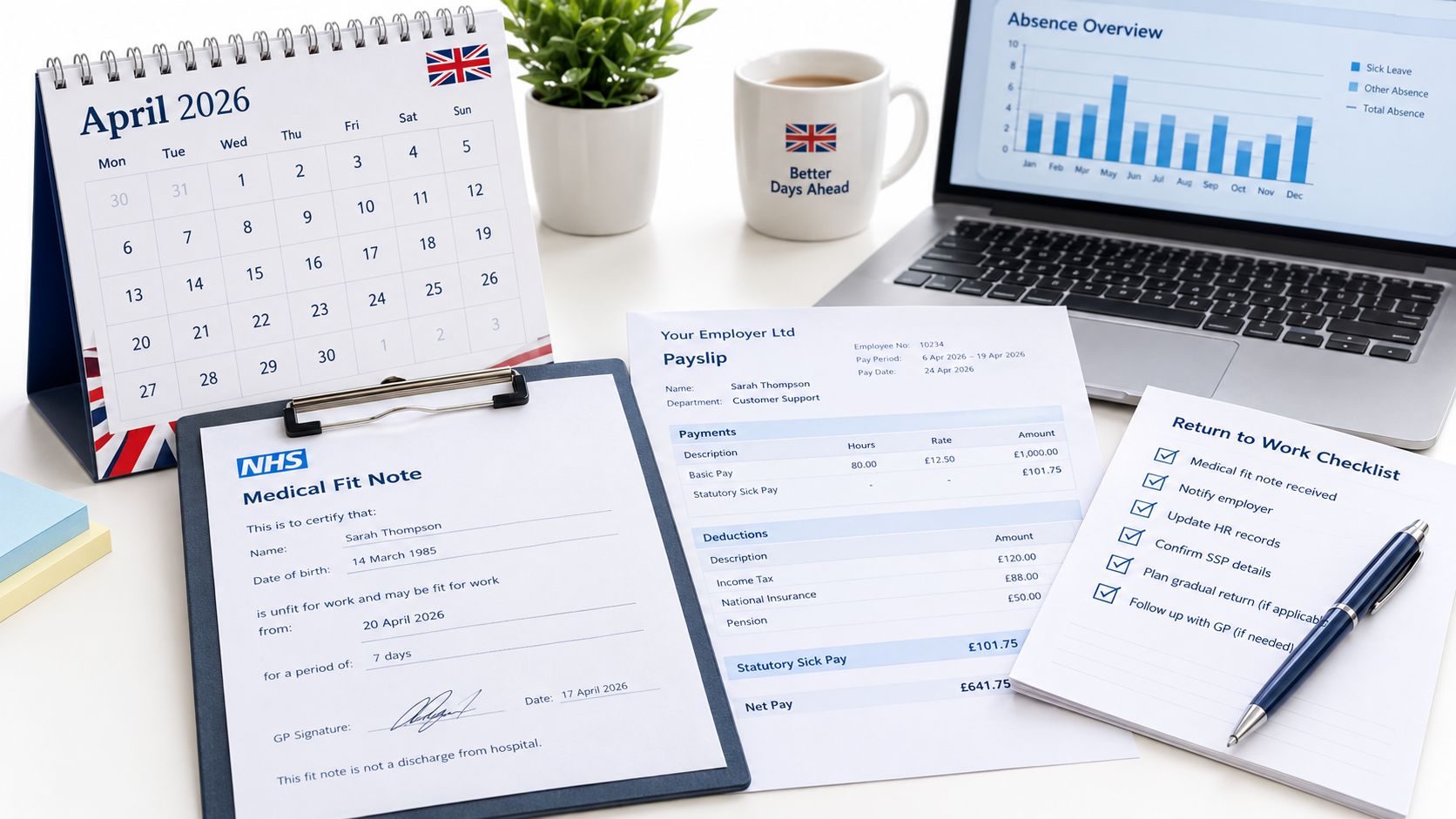
No. A GP fit note is only required after 7 days of sickness.
2. What is self-certification?
For sickness lasting 1–7 days, employees can self-certify without a medical note.
3. How soon should I notify my employer?
Ideally before your normal start time or as soon as possible.
4. Can my employer ask for details about my illness?
Only general information. You don’t need to disclose sensitive medical details
5. What’s the 48-hour rule for stomach bugs?
NHS recommends staying off work for 48 hours after the last episode of vomiting/diarrhoea.
6. How can employers reduce confusion around sick leave?
Clear policies + consistent processes + a dedicated absence management system like LeaveWizard.
7. How should sick leave be recorded?
Organisations should track sick leave in a centralised system, including dates, duration, and any self-certification or fit notes.
Ready to replace chaotic email chains and messy spreadsheets with a streamlined, compliant system? See how LeaveWizard simplifies everything from submitting a sick leave message to generating attendance reports. Discover a smarter way to manage absence by exploring LeaveWizard today.
——-
Stop managing sick leave through texts and spreadsheets
LeaveWizard gives employees a simple way to report absence — and gives managers clarity.