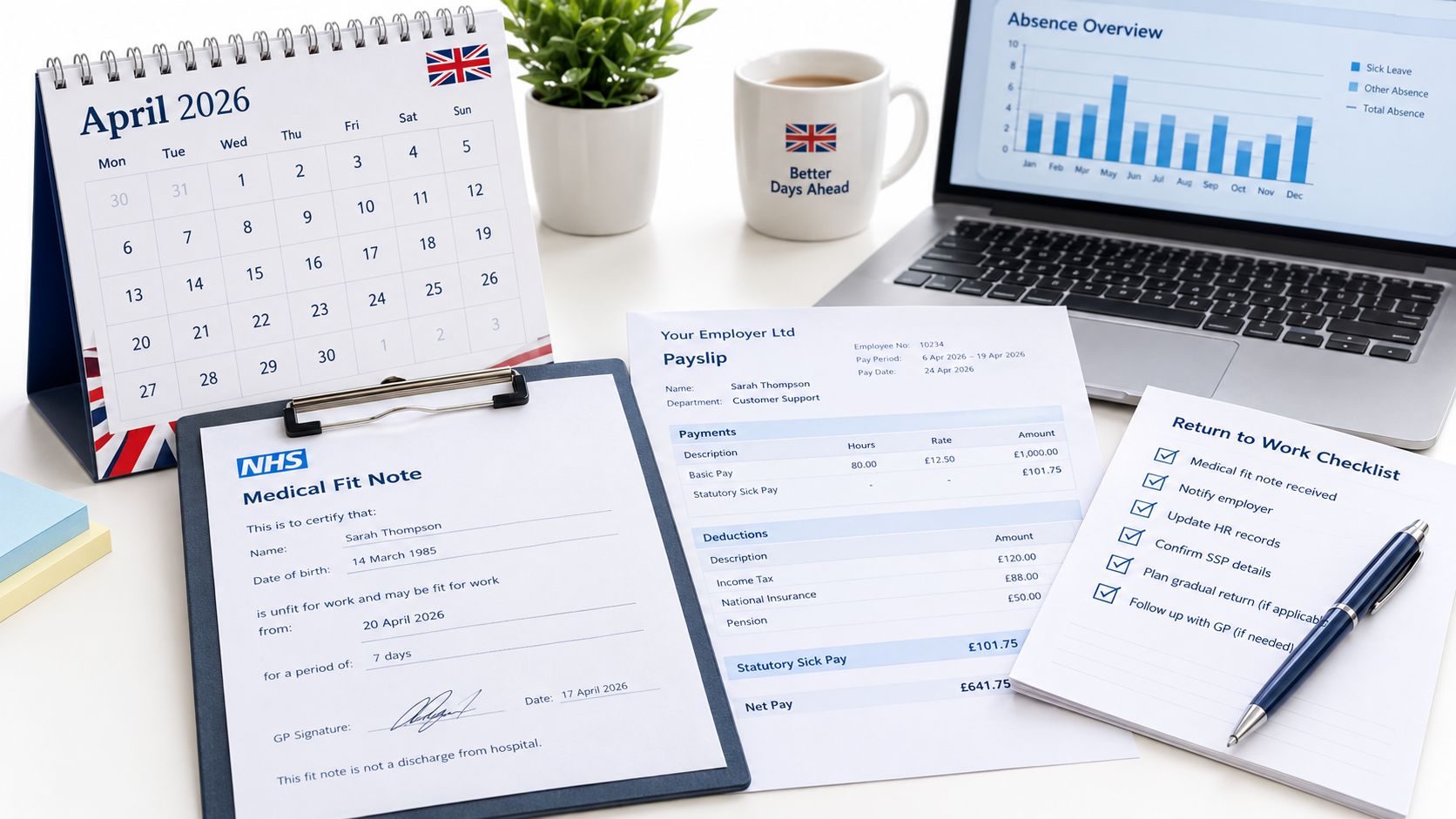
Annual leave isn't just a nice-to-have perk; it's your legal right to paid time off from work. In the UK, the law sets a statutory minimum of 5.6 weeks per year for almost every worker. If you're working a standard five-day week, that works out to 28 days. It's a fundamental protection, put in place to help you rest and prevent burnout.
What Annual Leave Entitlement Actually Means For You

Think of your annual leave entitlement less like a bonus and more like a built-in 'recharge period'—an essential part of your employment package. This is the time you’re paid to properly step away from your job, rest up, and focus on your life outside of work. Getting this balance right is critical for staying healthy, productive, and happy in your role long-term.
And this right isn’t just for full-time, permanent staff. It covers nearly everyone, including:
- Full-time employees
- Part-time workers
- Workers on zero-hours contracts
- Agency workers
The core principle is about fairness. The amount of leave you get is directly linked to the time you put in.
The Statutory Minimum Explained
Here in the United Kingdom, the law is very specific. All workers are legally entitled to a minimum of 5.6 weeks of paid annual leave each year. As mentioned, for a full-time employee on a five-day week, this equals 28 days.
How this includes bank holidays can vary. An employer might give you 20 days of leave plus the standard 8 bank holidays. Or, they might roll the bank holidays into the 28-day total, giving you 28 days to book as you please. It’s vital to check your employment contract to see how your company handles it. For a deeper dive into how UK leave policies work, it's worth reviewing the official government guidance on holiday entitlement.
This entitlement is a floor, not a ceiling. While 5.6 weeks is the legal minimum, many employers offer more generous leave allowances as a competitive benefit to attract and retain talent.
To give you a clearer picture, here’s a quick breakdown of the statutory minimums.
UK Statutory Annual Leave at a Glance
| Worker Type | Minimum Entitlement (Weeks) | Minimum Entitlement (Days for 5-day week) | Includes Bank Holidays? |
|---|---|---|---|
| Full-Time Employee | 5.6 weeks | 28 days | Depends on the employer's policy. Can be included in the 28 days or given on top. |
| Part-Time Worker | 5.6 weeks (pro-rata) | Calculated based on days worked (e.g., 16.8 days for a 3-day week) | Yes, entitlement is proportional to hours worked. |
| Irregular Hours Worker | 5.6 weeks (pro-rata) | Calculated as 12.07% of hours worked | Yes, accrual is based on actual hours. |
| Agency Worker | 5.6 weeks (pro-rata) | Accrued from day one of the assignment | Yes, accrued based on hours worked. |
This table shows the baseline everyone is entitled to, but remember to always check your contract for your specific allowance.
How Different Workers Qualify
Understanding how this entitlement works for different work patterns is key. For part-time staff, the 5.6 weeks are applied on a pro-rata basis. It’s a simple calculation: if you work three days a week, your leave is 5.6 weeks multiplied by three days, which equals 16.8 days of paid leave per year.
For those with irregular hours, like people on zero-hours contracts, a different method is used to keep things fair. Their holiday entitlement is typically calculated as 12.07% of the hours they have worked. Where does that number come from? It's the standard 5.6 weeks of leave divided by the remaining 46.4 working weeks of the year (52 – 5.6).
With this foundational understanding of what annual leave covers, we can start to explore how to calculate your specific balance, how leave builds up over time, and what a fair and compliant company policy looks like in practice.
Calculating Holiday for Every Work Pattern
Trying to calculate annual leave entitlement can feel a bit like you’re navigating a maze, especially when you have team members on all sorts of different work patterns. But once you get the hang of the right formulas, it becomes a surprisingly straightforward process that keeps everything fair and compliant for everyone.
Let’s start with the most common scenario—your full-time employees—and then we’ll branch out into the more varied work arrangements you might have.
Full-Time Employee Calculation
This one is the simplest of the lot. For a standard full-time employee working five days a week, the statutory minimum holiday they're entitled to is 5.6 weeks of paid time off.
- Formula: 5.6 (weeks) x 5 (days worked per week) = 28 days of annual leave.
It's important to remember this figure includes bank holidays. Your company can either grant these on top of the 28 days or have them count as part of that total entitlement. Just make sure your employment contract makes this crystal clear.
The image below gives a basic idea of how to think about confirming these entitlements.
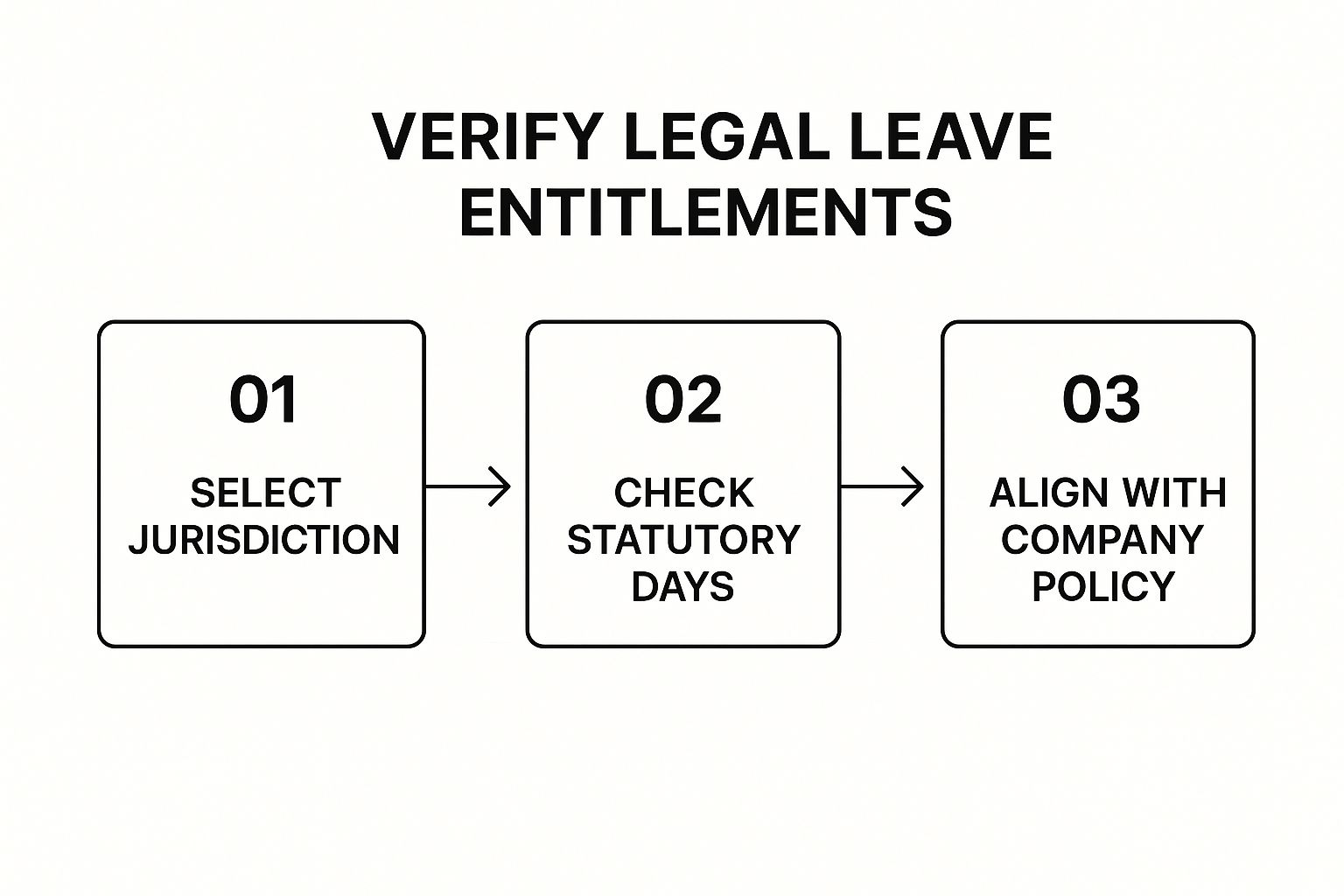
As you can see, the process always starts with the law, moves to the legal minimum, and finishes with your own specific company policies.
Part-Time Employee Pro-Rata Method
For your part-time staff, that core principle of 5.6 weeks still applies. The difference is that their entitlement is calculated on a pro-rata basis. This is just a fair way of making sure their holiday allowance is directly proportional to the hours or days they work.
Example Calculation (Working by Days):
Let's say you have an employee who works three days a week.
- Formula: 5.6 (weeks) x 3 (days worked per week) = 16.8 days of annual leave.
Most businesses find it easier to round this up to the nearest half or full day to keep things simple. In this case, you'd likely give them 17 days.
Example Calculation (Working by Hours):
What if an employee works 20 hours a week, and a full-time week in your company is 37.5 hours? The calculation just has a couple of extra steps.
- Calculate total full-time holiday hours: 28 (days) x 7.5 (hours per day) = 210 hours.
- Find the part-time percentage: (20 hours / 37.5 hours) = 0.533.
- Apply that percentage to the total hours: 210 hours x 0.533 = 112 hours of annual leave.
Irregular and Zero-Hours Contracts
Figuring out leave for casual or zero-hours contract workers needs a different approach because their hours can fluctuate so much. For these situations, the 12.07% method has become the widely accepted standard.
Where does that number come from? It’s derived from the statutory 5.6 weeks of holiday. There are 52 weeks in a year, and if you take away the 5.6 holiday weeks, you're left with 46.4 working weeks.
(5.6 weeks / 46.4 weeks) x 100 = 12.07%
To work out the holiday entitlement, you just multiply the total hours they've worked in a given period by this percentage.
Example Calculation:
If a worker on a zero-hours contract puts in 60 hours in a month, their holiday accrual for that period would be:
- Formula: 60 (hours worked) x 0.1207 = 7.24 hours of paid holiday earned.
This method guarantees their annual leave is always tied directly to the work they’ve done, which keeps things fair across all your different employment types. For a deeper dive, you might find our complete UK annual leave calculation formula guide helpful.
Leave Accrual in the First Year
During their first year with your company, a worker's holiday entitlement builds up—or accrues—as they go. They basically earn it at a rate of one-twelfth of their total annual entitlement each month they work.
- Full-Time Example: A new starter with a 28-day entitlement would accrue 2.33 days of leave per month (28 / 12). After 3 months, they would have earned about 7 days of holiday.
This accrual system is really practical. It prevents a new employee from taking their entire year's worth of holiday right after they start, ensuring the leave they take is in line with the time they've actually been with the business.
How Your Annual Leave Builds Up Over Time

It's a common misconception that your annual leave entitlement is just handed to you in one big lump on your first day of the year. Instead, think of it more like a savings account for your time off; you earn it bit by bit as you work. This method is called accrual, and understanding it is key to figuring out how holiday balances grow.
This system is all about fairness, especially for people who join or leave a company part-way through its leave year. It stops a new starter from booking four weeks of holiday in their first month, and it also makes sure someone leaving the business gets paid for the leave they've rightfully earned but haven't had a chance to take.
For most employees on regular hours, it’s quite straightforward. The total annual leave allowance is divided by twelve, and they earn one-twelfth of it with each passing month. It’s a core feature of UK employment law, designed to be simple and fair.
The Monthly Accrual Method in Action
Let’s walk through a typical scenario. Say a new employee starts at your company on the 1st of January. If your leave year runs from January to December and they get the statutory minimum of 28 days, here’s how it builds up:
- Monthly Accrual Rate: 28 days / 12 months = 2.33 days per month.
- After 1 Month (end of January): They will have accrued 2.33 days of leave.
- After 3 Months (end of March): Their balance would be just shy of 7 days (2.33 x 3).
- After 6 Months (end of June): They'd have earned exactly half of their total entitlement, which is 14 days.
This incremental approach makes sure that leave is earned in direct proportion to the time someone has worked. The system is designed to work for everyone, from full-time staff to casual workers, and it applies from their very first day on the job. If you want to dive deeper into these structured systems, you can find more detail on the UK's approach to annual leave on day-off.app.
Handling Starters and Leavers
The accrual method is absolutely vital when an employee joins or leaves mid-year. This is where you’ll need to do a pro-rata calculation to stay compliant and treat everyone fairly.
For a New Starter:
If someone begins work on 1st July and your leave year is January-December, they only have six months left in that leave period. So, they’re entitled to half of the full annual allowance.
- Calculation: (28 days / 12 months) x 6 months = 14 days for the rest of the year.
For an Employee Leaving:
It works the same way for leavers. If an employee with a 28-day entitlement hands in their notice and their last day is 30th September, they've worked for nine months of the leave year.
- Calculation: (28 days / 12 months) x 9 months worked = 21 days.
- You'd then check how much leave they’ve already used. If they've taken 15 days, you owe them payment for the remaining 6 days in their final payslip.
Accrual During Statutory Leave
One point that often trips employers up is what happens to holiday accrual during long absences. The law on this is crystal clear: an employee’s statutory annual leave continues to build up even when they aren't actively at work due to specific types of leave.
Key Takeaway: During statutory leave, an employee's contract of employment is still active. Because of this, their right to accrue paid holiday continues just as it would if they were at work.
This rule applies during any period of:
- Maternity Leave
- Paternity Leave
- Adoption Leave
- Parental Leave
- Long-term Sick Leave
So, if an employee is on maternity leave for an entire year, they will still accrue their full holiday entitlement during that time. It's good practice to encourage them to take this accrued leave before their maternity leave begins or allow them to carry it over to the next leave year if that's not possible.
Crafting a Fair and Compliant Leave Policy

Knowing the statutory rights and how to do the calculations is one thing, but translating all that into a clear, written policy is what makes your annual leave entitlement system actually work in the real world. A well-defined policy is your playbook. It gets rid of guesswork, heads off disputes before they even start, and shows you're committed to being fair and transparent.
Think of your policy as the bridge between legal must-dos and day-to-day operations. Without it, you're stuck managing leave with inconsistent verbal chats, which can quickly spiral into confusion and make your team feel like things aren't fair. It’s all about being proactive, not reactive.
A solid policy gives everyone—managers and employees alike—a single source of truth to turn to. That clarity is absolutely essential for keeping morale high and making sure everyone knows the rules of the game.
Core Components of Your Leave Policy
For your policy to be worth the paper it's written on, it needs to cover a few non-negotiable elements. These form the backbone of a system that’s both compliant and practical, leaving no room for anyone to get the wrong end of the stick. Getting these details locked down from day one will save you countless hours of admin headaches later on.
Here’s a quick checklist of what every policy should have:
- Defining the Leave Year: State clearly when your company's leave year begins and ends (e.g., 1st January to 31st December or 1st April to 31st March). This is the bedrock for all accrual and entitlement sums.
- Total Holiday Entitlement: Be specific about the exact number of days or hours of leave an employee gets. You also need to clarify whether this figure includes bank holidays or if they are given on top of the core allowance.
- Booking and Approval Process: Lay out exactly how employees should request time off. This should cover the required notice period (a common rule is that notice should be twice the length of the leave requested), who they send requests to, and what tool they need to use.
- Rules for Overlapping Requests: Explain how you’ll handle those times when multiple people want the same popular dates, like over Christmas or during the school holidays. A first-come, first-served approach is often the fairest and simplest way to manage this.
These ground rules create a predictable and fair framework that everyone can work with.
A well-structured policy does more than just tick a compliance box; it builds a foundation of trust. When employees see the rules are clear and applied consistently to everyone, they feel more secure and valued.
Addressing More Complex Situations
Beyond the basics, a truly robust policy will also think ahead and cover those trickier situations that will inevitably pop up. Planning for these scenarios now shows real foresight and helps you manage them fairly and consistently when they happen.
Think about including clauses that cover these points:
- Carrying Over Unused Leave: What’s the deal with untaken holidays? Specify if employees can carry leave over into the next year, set a limit on how many days, and give a deadline for when they must be used. For instance, you might allow up to five days to be carried over, but they must be used by the 31st of March.
- Payment in Lieu of Holiday (PILOH): Your policy must state that when an employee leaves the company, any accrued but unused statutory holiday entitlement will be paid out. This is a legal requirement. It's also wise to clarify that you don't offer PILOH to current employees, as the whole point of leave is for rest and wellbeing.
- Leave During Extended Absences: Reiterate that holiday entitlement continues to build up during statutory absences like maternity, paternity, or long-term sick leave. You should also explain how this accrued leave can be taken, paid, or carried over.
Building out these details might feel like a big job, but effective annual leave policies boost employee success by setting crystal-clear expectations. This proactive approach helps to create a supportive work environment where everyone knows exactly where they stand. By thinking through these scenarios now, you’re giving your managers the guidance they need to handle complex situations with confidence and consistency.
Right, so you've got your annual leave policy written down. That’s the easy part. The real challenge comes when you have to apply it day-to-day, navigating all the real-world issues that pop up.
A clear policy is your foundation, but managing your team's annual leave entitlement means getting good at spotting and handling common problems. One of the biggest headaches? Team members not taking all the holiday they're owed. It’s bad for them, and it’s a sure-fire way to damage your company culture.
This isn't a rare occurrence; it’s a huge trend. Even with a legal right to paid time off, many people just don't fully switch off. Getting to grips with why this happens is the first step to building a healthier, more sustainable approach to leave in your business.
Recent UK data tells a pretty clear story. The statutory minimum for full-time work is 28 days, but in 2024, the average employee still had about five unused holiday days. That gap between what people are entitled to and what they actually take points to some deeper issues, whether it's unmanageable workloads or a workplace culture where taking a break feels like a career risk. You can dig into more of these leave usage statistics at timetastic.co.uk.
Fostering a Proactive Leave Culture
To really fix this, you have to do more than just allow leave—you have to actively encourage it. A positive leave culture doesn't see time off as a disruption. It sees it as essential for keeping your team productive, healthy, and switched on. When people rest properly, they come back to work sharper and more motivated. Simple as that.
The trick is to be proactive. Don't wait until the mad December rush to find out half your company has weeks of holiday to burn through. Instead, build systems and habits that make taking breaks a normal, expected part of the year.
Here are a few practices that genuinely work:
- Encourage Regular Breaks: Promote taking holidays throughout the year, not just hoarding them for one big trip. A few shorter breaks can be just as good for preventing burnout as a single long holiday.
- Use a Transparent Booking System: Get a clear, easy-to-use system for requesting and tracking leave. Tools like LeaveWizard create a central calendar so everyone can see what’s happening, which helps managers approve requests quickly and lets staff plan their time without hassle.
- Communicate Policies Proactively: Your leave policy shouldn't be a dusty document nobody reads. Send out reminders each quarter about remaining leave balances. Get managers to chat about holiday plans in their one-to-one meetings.
Handling Tricky Scenarios
Even with a brilliant policy, you're going to face some tricky situations. Thinking about these in advance and having a plan will help you handle them fairly every time, which is crucial for building trust.
Managing Peak Holiday Seasons
The summer holidays and Christmas are always a battleground for time off. A simple "first-come, first-served" rule, stated clearly in your policy, is usually the fairest way to go. Just make sure you set deadlines for these popular periods to avoid last-minute chaos.
Dealing with Last-Minute Requests
Your policy needs a notice period. But, of course, life happens. For a real emergency, you need to be flexible. For everything else, sticking to your notice period rule teaches people to plan ahead.
Employees Who Resist Taking Time Off
You'll always have those dedicated people who feel like taking a holiday is letting the side down. As a manager, it's your job to help them see it differently.
Best Practice: Frame taking leave as a benefit to the business. A well-rested employee is more creative, productive, and less likely to burn out. Make it clear that taking their full annual leave entitlement is an expectation, not just a nice-to-have.
These issues have only gotten more complicated with recent global events. If you want to dive deeper, we've got a whole article on the impact of Brexit and COVID-19 on holiday entitlement.
By building a supportive culture and managing these scenarios with a bit of fairness and foresight, you can transform your annual leave policy from a simple rulebook into a powerful tool for improving morale and driving your business forward.
Your Annual Leave Questions Answered
Even with clear rules and calculations, specific questions about annual leave entitlement pop up all the time. Real-world situations often have nuances that a general policy might not cover directly. This section tackles some of the most common queries we see from both employers and employees across the UK.
We’ve picked practical, everyday scenarios to help clear up those lingering points of confusion. Think of this as your go-to Q&A for handling those tricky, "what if" moments with total confidence and compliance.
Can My Employer Tell Me When to Take Holiday?
In short, yes. Your employer does have the right to tell you when to take some, or even all, of your annual leave. This is most common for things like a company-wide shutdown, such as closing the office between Christmas and New Year.
However, they can't just spring this on you. There's a clear rule for giving notice: an employer must provide notice that is at least double the length of the leave they are making you take.
- Example: If they want you to take a full week off (five working days), they have to give you at least ten working days' notice beforehand.
This right should always be clearly stated in your employment contract or the official employee handbook. A well-written policy makes sure everyone is aware of this from day one, preventing any nasty surprises down the line.
What Happens to My Holiday During Long-Term Sick Leave?
This is a critical point that many people get wrong. While you're on sick leave, no matter how long the absence, you continue to build up your statutory annual leave entitlement just as you would if you were at work.
If you're too unwell to use this accrued holiday within the current leave year, you are legally allowed to carry it over to the next one. You also have the choice to take paid holiday during your sickness period, where you would get your normal holiday pay instead of statutory sick pay.
Here's a crucial detail: If you fall ill just before or during a pre-booked holiday, you can choose to count that time as sick leave instead. The holiday can then be reclaimed and rescheduled for later, ensuring you don't lose out on your well-deserved rest.
This protection is in place to make sure that illness doesn't unfairly penalise you or take away your right to paid time off.
Do I Get Paid for Unused Leave When I Quit My Job?
Absolutely, yes. When your employment comes to an end, you are legally entitled to be paid for any statutory holiday you've accrued but haven't taken. This is worked out on a pro-rata basis right up to your final day.
Let's imagine your leave year runs from January to December and you leave at the end of June. Having worked for half of the leave year, you've earned half of your total annual leave entitlement.
Your employer must check how many days you've already taken. If there's any outstanding balance from what you've earned, the value of those days must be paid out in your final payslip. This is a statutory right, and a "use it or lose it" clause in your company policy cannot overrule it when you leave.
Can My Annual Leave Request Be Denied?
Yes, an employer can refuse a specific holiday request, but they need to have a solid business reason for doing so. They can't just say no without a good cause.
Common and legitimate reasons for turning down a request include:
- Staffing Shortages: Your requested dates fall during a critically busy period for the business.
- Overlapping Requests: Too many other team members have already booked the same time off, and the company needs to maintain operational cover.
- Insufficient Notice: You haven't given the amount of notice required by the company's annual leave policy.
While an employer can deny your request for specific dates, they cannot stop you from taking your statutory minimum leave at some point during the leave year. A fair employer will have a clear, transparent process for this and will explain any refusal constructively, often suggesting alternative dates that work better for the business.