
The Bradford Scale of Sickness is a simple HR formula that helps measure the real-world impact of employee absences. Its central idea is straightforward: frequent, short-term absences are far more disruptive to a business than a single, long-term period of leave. This tool gives you a score that helps managers spot potentially problematic attendance patterns that might otherwise fly under the radar.
What Is the Bradford Scale and How Does It Work
Think of your business as a finely tuned machine. A single, planned shutdown for maintenance (a long-term absence) is something you can prepare for and manage. But what happens when small, unexpected breakdowns (short-term absences) keep popping up? The whole operation grinds to a halt, again and again. This is exactly the kind of disruption the Bradford Scale is designed to highlight.
It works by putting a greater weight on frequent, unplanned leave compared to longer, continuous absences. A single 10-day absence for someone to properly recover is less disruptive than ten separate one-day absences spread over a few months, even though the total number of days lost is identical.
Identifying Disruptive Patterns
The main purpose of the Bradford Scale isn’t to penalise people. It’s about providing objective, data-driven insights that help managers move beyond gut feelings about attendance and focus on tangible patterns. When a high score flags an issue, it’s an opportunity to have a supportive conversation and get to the root of the problem.
These patterns can often point to underlying issues, such as:
- Low employee morale or disengagement.
- High levels of stress or potential burnout.
- Underlying chronic health conditions that need support.
- Workplace issues that need to be addressed.
The Bradford Factor is a popular HR tool in the UK precisely because it measures this disruptive effect. By focusing on frequency, it helps businesses keep their workflow consistent and operations stable.
The scale turns abstract attendance records into a concrete score, making it much easier to apply absence management policies consistently and fairly across all your teams. It’s meant to be a starting point for a conversation, not a final judgement.
To get a quick overview of how the Bradford Scale breaks down, the table below summarises its key components, what they mean, and why they matter for your business.
Bradford Scale Key Concepts at a Glance
| Component | Description | Business Impact |
|---|---|---|
| S (Spells) | The total number of separate absence periods, regardless of their length. | Highlights the frequency of disruption. A higher number of spells indicates more frequent interruptions to workflow and team coordination. |
| D (Days) | The total number of days an employee has been absent across all spells. | Measures the total time lost but is less impactful on its own in the Bradford calculation. |
| Bradford Score | Calculated as S x S x D. The "spells" are squared to heavily weight frequency. | Provides a single, objective score that quantifies the disruptive nature of an employee's absence pattern. |
This table shows how the formula is designed to escalate the score based on the frequency of absence, giving managers a clear indicator of when to step in.
Understanding how the Bradford Scale fits into a wider workplace health strategy means grasping the core principles of occupational hygiene. This broader context ensures the tool is used to support employee wellbeing, not just to track numbers. At the end of the day, it's a diagnostic instrument—one that helps maintain business continuity while opening the door to conversations that can genuinely improve employee health and engagement.
How to Calculate Bradford Scale Scores Accurately
Calculating a Bradford Scale score is surprisingly simple, turning raw attendance data into a number that tells a clear story. The formula itself is straightforward, but its real genius is how it flags frequent, short-term absences—the kind that often cause the most disruption to a business.
The core formula you’ll need is:
S² x D = Bradford Score
Let's break that down.
- S stands for “Spells,” which is just the number of separate times an employee was off sick.
- D represents the total number of Days the employee was absent across all those spells.
This calculation is usually done over a rolling 52-week period. A "spell" is a single, continuous period of absence. It doesn't matter if someone is off for one day or five consecutive days; it still only counts as one spell.
The Formula in Action: A Practical Example
To really see the Bradford Scale in action, let's look at two employees. Both have been off for a total of ten days this year, but their situations are very different.
- Employee A took one continuous absence of 10 days to recover from a minor operation.
- Employee B had 10 separate absences, each lasting just 1 day, scattered throughout the year.
Now, let's plug their numbers into the formula.
Employee A's Calculation:
- Spells (S) = 1
- Days (D) = 10
- Formula: 1 x 1 x 10 = 10 points
Employee B's Calculation:
- Spells (S) = 10
- Days (D) = 10
- Formula: 10 x 10 x 10 = 1000 points
The difference is staggering. Even though both employees missed the same amount of work, Employee B’s score is 100 times higher. This is by design. The scale highlights that their pattern of frequent, unplanned leave is far more disruptive to team workflows and project planning.
Doing this manually for every employee can be a real headache, which is why most businesses use a dedicated Bradford Factor calculation tool to automate the process and keep the numbers accurate.
The infographic below shows how spotting these patterns of frequent absence can lead to more informed and supportive management.
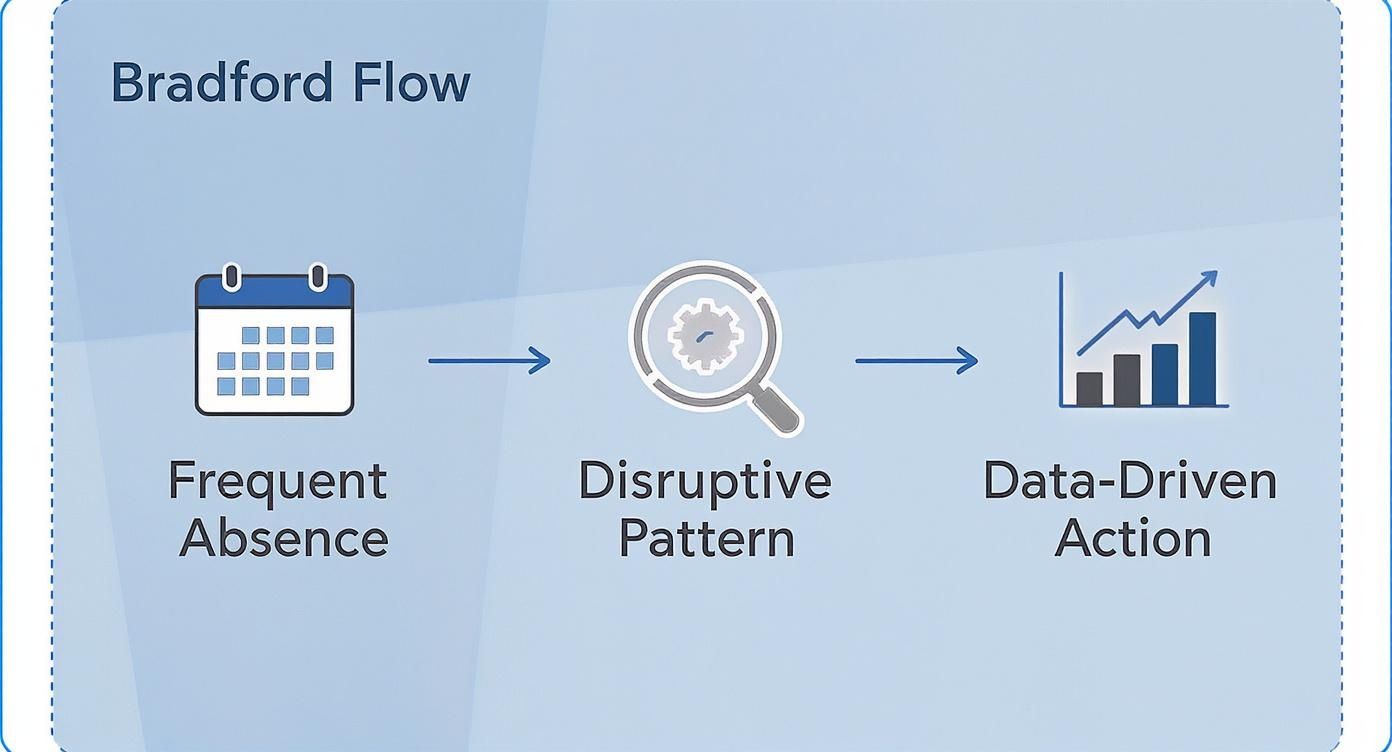
Ultimately, the goal isn't just to score people. It's about using data to start meaningful conversations and offer the right support when it's needed.
Setting Trigger Points and Interpreting the Scores
A raw Bradford Scale score is just a number. It only becomes a powerful tool when you give it some context. This is where trigger points come into play.
Think of them not as automatic penalties, but as signposts. Each one prompts a specific, pre-planned management response. Setting these thresholds is what turns the Bradford Scale from a simple metric into a structured, fair, and transparent way to manage absence.
The real goal here is to create a tiered system where the response escalates with the score. A low score might just mean a supportive, informal chat is needed. A persistently high score, on the other hand, could lead to a more formal review. This framework ensures every employee is treated consistently, taking the guesswork and potential bias out of the equation.
Building a Fair Trigger System
Deciding on your trigger points is one of the most critical steps when you start using the Bradford Scale of Sickness. While there isn't a legally mandated scale you have to follow, most companies adopt a pattern of escalating concern and action. This makes sure your response is always proportionate to the level of disruption the score indicates.
A well-designed system will usually have several tiers:
- First Trigger (Low Score): This prompts an informal return-to-work chat. The tone should be supportive, aiming to understand if there are any underlying issues or ways the company can help.
- Second Trigger (Medium Score): This might lead to a more formal meeting to discuss the attendance pattern. It’s a chance to review the absence policy together and set clear expectations for improvement.
- Third Trigger (High Score): At this stage, a formal written warning might be on the table. The conversation will be documented, clearly outlining the impact of the absences and what happens if the pattern continues.
- Final Trigger (Very High Score): This threshold is for persistent and highly disruptive absence patterns. It could result in a final warning or, in some cases, even dismissal proceedings.
A high score is not an accusation; it's an invitation to investigate. It signals that a conversation is needed to uncover the root cause, which could be anything from chronic illness and stress to low morale or workplace issues.
The table below gives you a practical example of how you could structure these triggers. If you want to dig deeper into setting these levels, feel free to explore our detailed guide on Bradford Factor trigger points for more specific examples and advice.
Example Bradford Scale Trigger Point System
Here’s a look at a sample tiered system. This kind of structure helps organisations create a consistent and fair process for managing absence.
| Score Range | Suggested Action | Objective |
|---|---|---|
| 0 – 100 | No action required. | Monitor attendance as part of standard practice. |
| 101 – 200 | Informal Chat and Review | Open a supportive dialogue to understand the reasons for absence and offer support. |
| 201 – 400 | Formal Verbal Warning | Clearly communicate concerns about the disruptive pattern and set expectations for improvement. |
| 401 – 600 | First Written Warning | Document the issue formally and create an action plan with the employee. |
| 601+ | Final Warning or Dismissal | Take serious disciplinary action in line with your company’s absence policy. |
By defining and communicating these trigger points clearly from the outset, you create a system that is not only effective for managing absences but is also seen as fair and consistent by your entire team.
The Pros and Cons of Using the Bradford Scale
No HR tool is perfect, and the Bradford Scale is certainly no exception. While it can be a powerful way to get a quick, numerical snapshot of absence patterns, it's vital to understand both its strengths and its weaknesses. Using it smartly means appreciating what it does well and, just as importantly, where its limitations lie.
On one hand, the scale gives managers an objective, data-driven starting point for tackling absenteeism. It’s particularly good at spotting those disruptive patterns of frequent, short-term sickness that might otherwise fly under the radar. This numerical approach helps ensure you're applying absence policies fairly across different teams, removing personal bias from the equation.
Key Benefits of the Bradford Scale
The main advantage is clarity. The Bradford Scale turns abstract attendance records into a simple score, making it much easier to see when a conversation might be needed.
- Objective Measurement: It provides a clear, mathematical way to assess absenteeism, taking the guesswork and subjectivity out of initial reviews.
- Highlights Hidden Patterns: It truly shines a light on frequent, short-term absences, which are often far more disruptive to a business than one longer period of leave.
- Ensures Consistency: By using defined trigger points, every employee is managed under the same framework. This promotes a real sense of fairness.
- Prompts Conversation: A high score isn't a verdict; it's a catalyst. It's the perfect trigger for a supportive chat to find out what's really going on before a small issue becomes a big one.
But here’s the catch: the scale's biggest strength—its beautiful simplicity—is also its greatest weakness. The formula is a blunt instrument. It has no capacity to understand context or nuance, and that can lead to some serious problems if it’s not handled with care.
Significant Limitations to Consider
Relying solely on the Bradford Scale score can backfire and create unintended negative consequences. Its inability to tell the difference between a string of minor colds and a serious underlying health issue is a major drawback. For example, it doesn’t account for disabilities or chronic conditions protected under the Equality Act 2010, and applying it rigidly in these situations could easily veer into discrimination.
The scale can also inadvertently encourage ‘presenteeism’—that toxic culture where unwell employees drag themselves into work just to avoid hitting a trigger score. This not only puts their own health at risk but can also lead to illness spreading throughout the team.
At the end of the day, the Bradford Scale is a diagnostic tool, not a decision-making one. Think of it as a smoke alarm; it tells you there might be a fire, but it can't tell you what caused it or how to put it out. It provides the "what," but it's a manager's job to discover the "why" through empathetic conversation and genuine support.
Using the Bradford Scale Fairly and Legally in the UK

Wielding the Bradford Scale isn't just a numbers game; it's a delicate balancing act between data-driven insights and genuinely human management. A high score should never, ever be an automatic red flag for disciplinary action. Think of it as a tap on the shoulder—a signal to open up a supportive and confidential conversation.
This approach is absolutely crucial in the UK, where employment law wraps staff in significant protections. Just blindly following the numbers without digging into the why can land you in serious legal hot water, especially when it comes to discrimination. The real key is to use a high score as the starting point for an investigation, not the final verdict.
Navigating the Equality Act 2010
One of the biggest legal hurdles to be aware of is the Equality Act 2010. This bit of legislation isn't just a suggestion; it places a firm legal duty on employers to make reasonable adjustments for employees with disabilities. A disability, in this context, is a physical or mental impairment that has a substantial and long-term negative effect on someone's ability to do normal daily activities.
It’s not hard to see how this connects to absence. Many disabilities can lead to frequent, short-term absences that the Bradford Scale is designed to flag. Applying the formula rigidly in these situations, without making any allowances, could easily be seen as discriminatory.
For instance, you really need to consider:
- Discounting absences that are directly linked to an employee's known disability.
- Adjusting the trigger points for team members who need regular time off for medical appointments.
- Making sure you handle absences related to pregnancy or maternity leave completely separately, as these are also protected characteristics.
Getting this wrong doesn't just foster an unfair workplace culture; it opens your business up to the risk of expensive and damaging employment tribunals. Your best defence? A transparent process that's documented every step of the way.
Creating a Supportive and Compliant Policy
For the Bradford Scale to work fairly and effectively, it needs to be part of a much bigger, more supportive absence management policy. And transparency is completely non-negotiable.
A policy that is clearly communicated and consistently applied helps build trust and ensures everyone understands the process. It should emphasise support and dialogue over punishment, outlining the steps managers will take when a trigger score is reached.
Your strategy must also include training for your managers. They need the tools to handle sensitive conversations with empathy, a solid grasp of the legal landscape, and the common sense to know when to bring HR into the loop. For a deeper dive into building a robust framework, our guide on creating a policy on sickness absence offers some fantastic insights.
A truly fair strategy also acknowledges the wider financial protections available to employees, such as accident and sickness insurance. Showing awareness of these options demonstrates a commitment to employee wellbeing that goes way beyond simply tracking attendance.
Got Questions About the Bradford Scale? We've Got Answers.
Even when you've got your head around the formula, putting the Bradford Scale into practice can throw up a few curveballs. It’s only natural for managers and HR teams to have questions about how to use it fairly and without causing more problems than it solves.
Think of this section as your go-to FAQ. We're cutting through the noise to give you straight answers to the most common queries we hear. This way, you can go from just understanding the theory to applying it with confidence, making sure it’s a tool that genuinely supports your people and your business.
Let’s get into it.
What Is a Good Bradford Scale Score?
This is probably the number one question people ask. But the truth is, there isn't a single "good" number. Instead, it’s more about setting a sensible threshold for when you need to pay closer attention.
Of course, the perfect score is zero, which means no disruptive, short-term absences at all. In the real world, though, that’s rarely going to happen.
Most businesses find that a score somewhere under 50-100 is perfectly acceptable and doesn't warrant any action beyond normal monitoring. The real takeaway here is that a "good" score is one that doesn’t ring any alarm bells. The goal isn't to punish employees for being ill, but to spot patterns that might need a supportive chat.
Should the Scale Be Applied to Everyone Equally?
In a word, no. While consistency is key to fair management, a rigid, one-size-fits-all approach to the Bradford Scale is a recipe for trouble. The formula itself is completely objective, but how you apply it needs a human touch. A blanket policy that ignores individual circumstances isn’t just unfair—it can land you in legal hot water.
A manager's judgement is crucial. The score should be a conversation starter, not the final word. An employee with a long-term health condition will naturally have a different absence pattern from their colleagues, and it's essential to take that into account.
How Do We Handle Legally Protected Absences?
This is a massive one for any UK business. You have to be incredibly careful with absences linked to protected characteristics under the Equality Act 2010, such as a disability or pregnancy. Applying the Bradford Scale blindly in these situations is a fast track to a discrimination claim.
Here’s what best practice looks like:
- Discounting absences that are a direct result of an employee's disability.
- Adjusting the trigger points for people who need regular time off for medical appointments or treatment.
- Separating any pregnancy-related sickness from the calculation entirely. It shouldn't be included, full stop.
The Bradford Scale is a helpful guide, but it never trumps the law. Always make sure its application aligns with your legal duties to make reasonable adjustments and prevent discrimination. This isn't just about protecting your employees; it's about protecting your organisation, too.
Is the Bradford Scale Still Relevant Today?
Absolutely, but with one major condition: it has to be used as intended. The core idea—that frequent, short-term absences are more disruptive than one longer spell—is as true today as it was in the 1980s. It’s still a brilliant diagnostic tool for spotting those underlying attendance patterns that often go unnoticed.
Where things have changed is in how it's used. Modern HR sees it as one piece of a much larger, more compassionate management toolkit, not as a disciplinary sledgehammer. When a high score triggers a supportive conversation instead of an automatic warning letter, it becomes an incredibly valuable way to improve employee wellbeing and tackle issues before they spiral.


