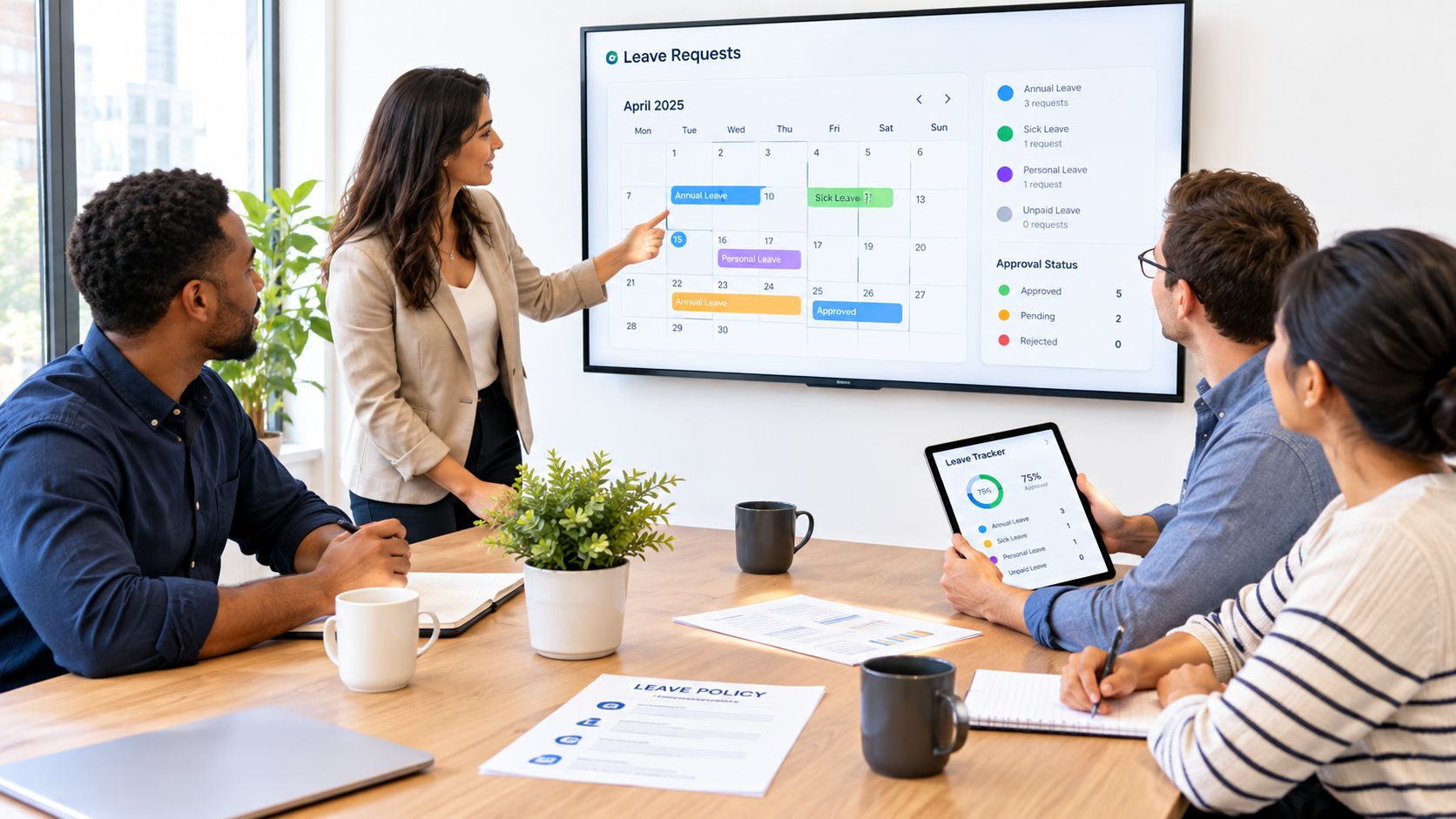
Most absence problems don't begin with a dramatic event. They begin when a manager avoids a short conversation, accepts an unclear message, or can't say whether an absence was reported, protected or already covered by policy. By the time someone asks what happened, the team may be short-staffed, payroll may be working from incomplete information, and the employee may feel judged rather than supported.
The right absence management questions give managers a consistent route through the situation. They help you establish the facts without demanding unnecessary medical detail, identify when HR needs to take over, and make sensible decisions about coverage and return to work. They also turn scattered messages, calendar entries and spreadsheets into a record you can use.
The sequence below starts with the first call-in and ends with a review of whether your data is accurate enough to guide decisions. Use the questions as conversation prompts, not as a script for interrogating people.
Table of Contents
- 1. When and how is absence reported, and what is the deadline?
- 2. Is this absence pattern a concern that needs a conversation?
- 3. Is this absence protected leave, and what legal obligations apply?
- 4. How much leave does the employee have left, and is the balance accurate?
- 5. What is the impact on coverage, and how can the team plan for it?
- 6. Are there underlying health or wellbeing concerns, and what support is available?
- 7. What return-to-work steps are needed after an absence?
- 8. Is our absence data accurate, compliant, and useful for decisions?
- 8-Point Absence Management Comparison
- Build the Questions Into Your Routine
1. When and how is absence reported, and what is the deadline?
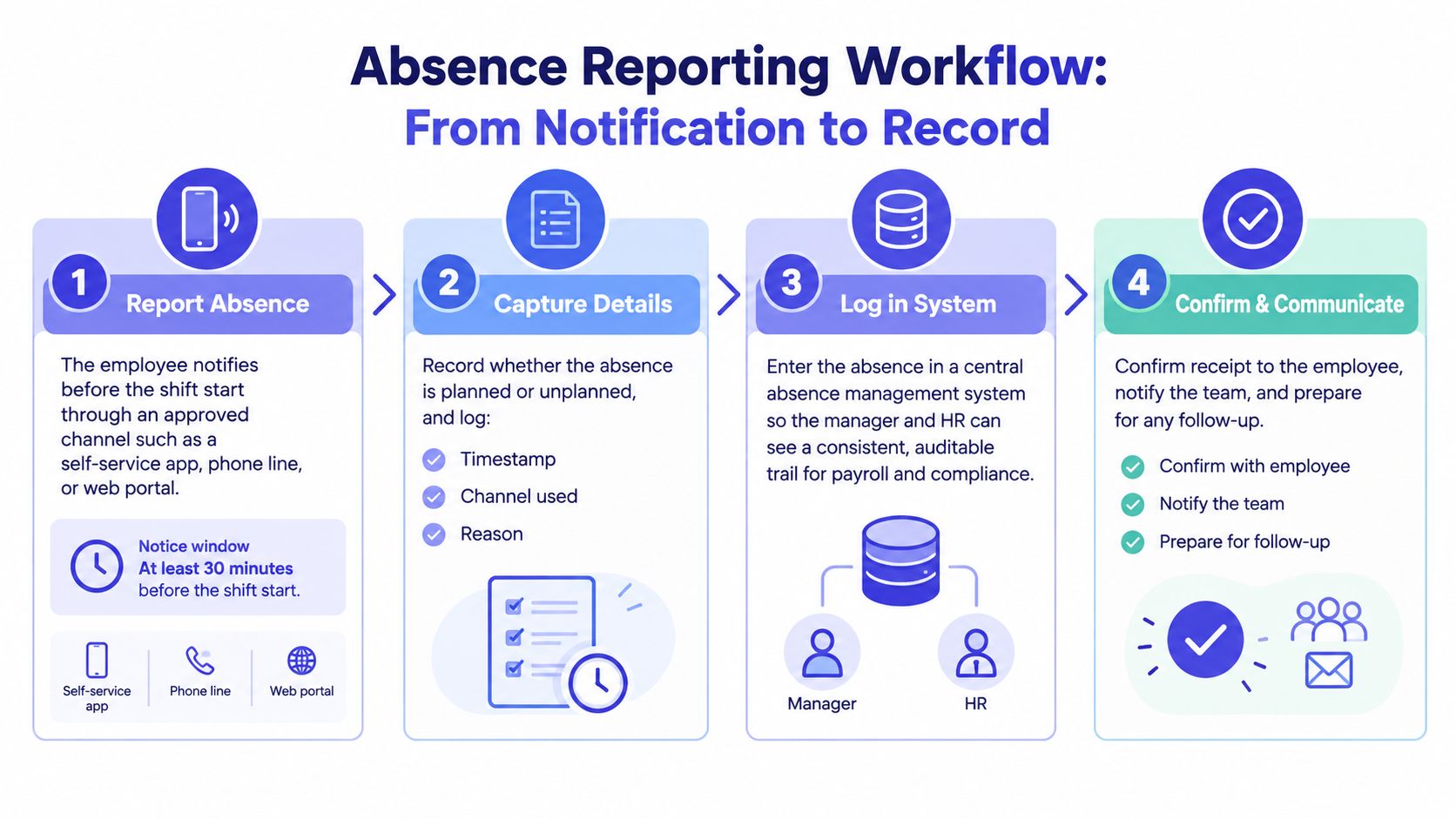
Start with the reporting facts. Ask, “When did you realise you couldn't work, how did you notify us, and who did you contact?” Then check whether the message arrived before the employee's shift, whether the chosen channel was permitted, and whether the manager recorded it promptly.
A clear process might require a phone call to the duty manager, an email to HR, or a mobile request through a self-service portal. The exact channel matters less than consistency. If one employee sends a message to a colleague and another uses the approved system, you may end up with different timestamps, missing details and uncertain cover arrangements.
UK employers should check their own sickness procedure before applying a deadline. For ordinary sickness absence, an employee generally needs to notify the employer by the deadline in that procedure. If no deadline exists, the default is within seven days, and a fit note can normally be requested only after more than seven consecutive days, including weekends and other non-working days. Employees can usually self-certify during the first seven days. See the GOV.UK guidance on notice and fit notes before setting a manager rule.
Practical rule: A sudden illness needs an emergency route. Don't treat a missed form in the same way as a deliberate failure to report.
Record the notification time, absence start date, expected return date and immediate cover requirement. A small retailer might use a shared app for store managers, while a distributed team may use one portal across time zones. With LeaveWizard, managers can view the timestamp and absence details after an employee submits a request from a phone or web portal.
Compliance flag: Route the matter to HR if the employee cannot follow the normal process because of an emergency, communication difficulty, hospital treatment or a possible protected reason. Don't make a final conduct decision from an incomplete notification record.
2. Is this absence pattern a concern that needs a conversation?
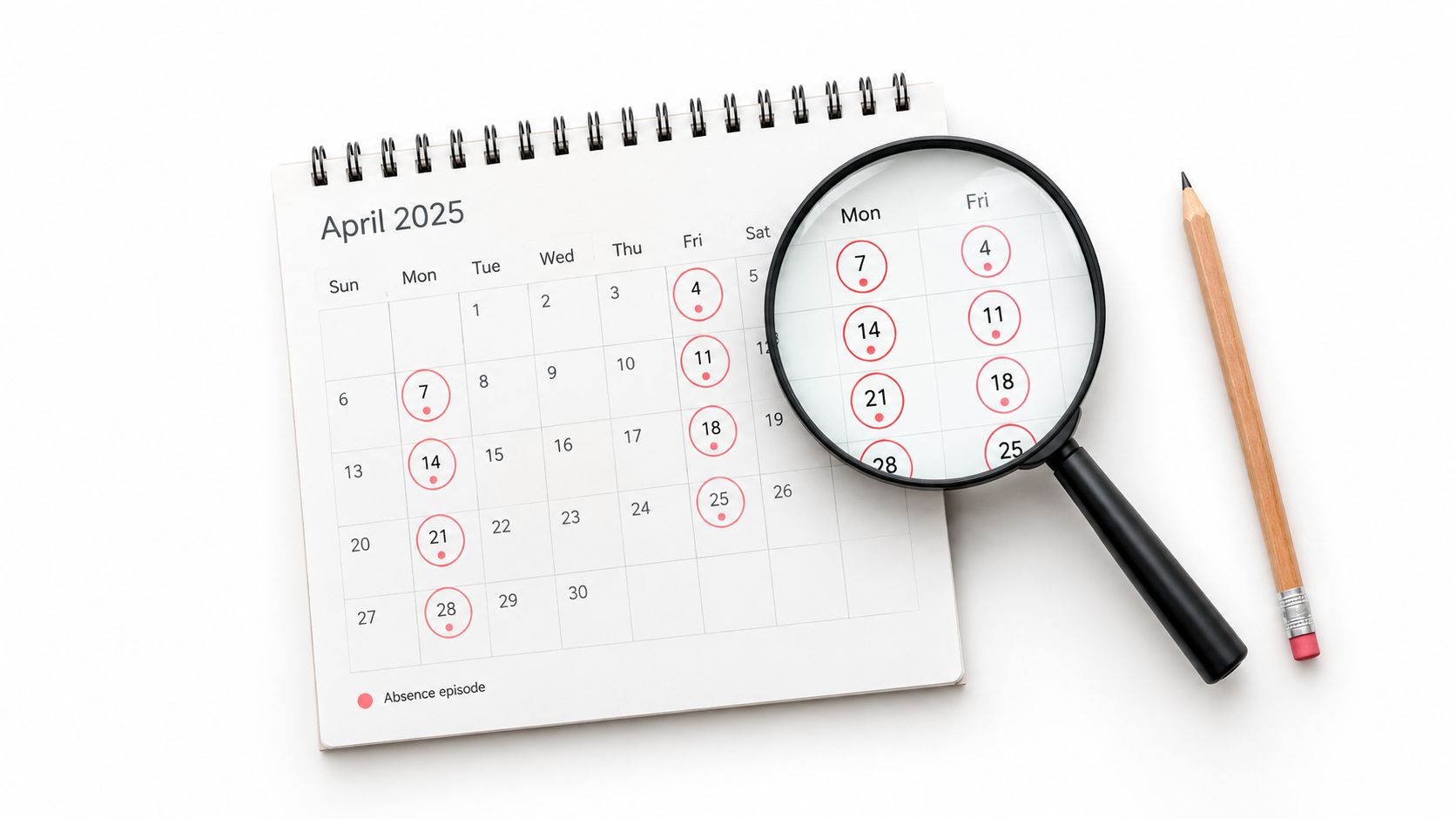
A single absence usually needs a clear record and appropriate support. A recurring pattern needs curiosity before judgement. Ask, “Have there been other absences or late starts that we should review together?” Look at frequency, duration and timing, including repeated days at the beginning or end of the working week.
The question isn't designed to produce an automatic penalty. It should help you identify a practical problem, a health concern, a work-related issue or a process failure. For example, repeated Monday absences on one shift might reveal unreliable transport. A series of short absences might indicate an untreated condition or work pressure that the employee hasn't felt able to discuss.
Some employers use a scoring method such as the Bradford Factor. That can make patterns easier to spot, but it can also give a false impression of objectivity. A score doesn't explain the reason for an absence, and it shouldn't override disability-related considerations, pregnancy-related absence or other protected circumstances.
Use triggers as prompts, not verdicts
Set a documented review point that tells managers when to arrange a conversation. The trigger might be based on repeated episodes, a long absence, or a noticeable change from the employee's normal attendance. Record why the review took place and what was discussed.
Use reports to examine absence by team, date, day of week and leave type. LeaveWizard can help managers see patterns without relying on several versions of a spreadsheet. For practical guidance on handling absence trigger points, make sure the trigger leads to a supportive review rather than an automatic sanction.
Compliance flag: HR should check whether an absence relates to a disability, pregnancy, family leave or another protected matter before it is included in a trigger. Get employment counsel involved before introducing or changing a points-based scheme.
3. Is this absence protected leave, and what legal obligations apply?
Before discussing attendance, ask, “Does this absence relate to a statutory entitlement, a family responsibility, a workplace injury, a disability or another protected reason?” Managers don't need to diagnose the issue. They do need to recognise when ordinary sickness coding may be unsafe.
Protected leave can include disability-related absence, pregnancy and maternity, family caregiving, bereavement, jury service, military service and certain health conditions. The applicable rules depend on the employee's location and circumstances. In the UK, the Equality Act 2010 and statutory family leave rules may be relevant. In the United States, FMLA eligibility and ADA accommodations may need to be considered.
The practical risk is often the manager's response. Saying, “You've already had too much time off,” before checking the reason can create avoidable harm. A better response is, “Thank you for telling me. I'll make sure HR explains the right process and any support available.”
Keep categories separate
Configure distinct absence and leave types for sickness, statutory leave and discretionary leave. Don't put sensitive medical detail in a team calendar. The manager needs the dates, work impact and agreed next step. HR may need confidential case information, eligibility evidence or an adjustment record.
A UK employer might code statutory family leave separately so pay, job protection and attendance reviews are handled correctly. A cross-border business may need different policies for different work locations. Review those settings when the law changes, rather than assuming last year's configuration still works.
For sensitive situations involving pregnancy or the postnatal period, HR teams may also consult resources such as this perinatal provider marketplace guide alongside formal legal advice.
Compliance flag: Send any possible protected-leave matter to HR or employment counsel before denying leave, applying a trigger, requesting medical detail or changing the employee's terms.
4. How much leave does the employee have left, and is the balance accurate?
An employee asks for time away. The manager checks a spreadsheet, finds two different balances and approves the request anyway. That familiar scenario creates problems for payroll, cover planning and trust.
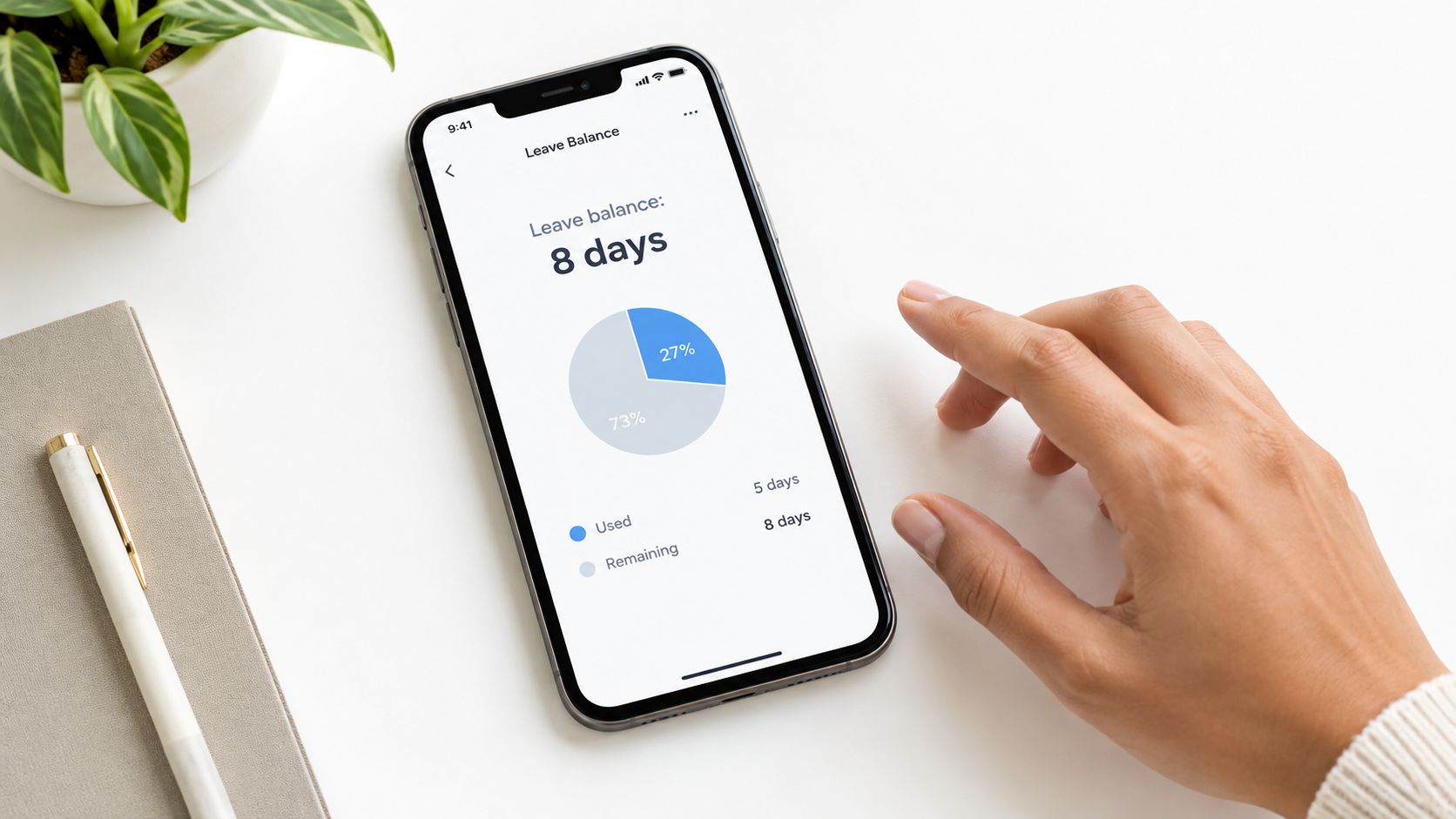
Ask, “What entitlement, accrual, carryover and approved leave should be included in the current balance?” Check pending requests, leave already taken, the relevant leave year and any regional or contractual rules. A balance isn't useful if it excludes a recent approval or includes a request that was cancelled.
The same discipline applies to sickness and statutory payments. SSP administration requires accurate qualifying workdays and sickness dates. Under the relevant GOV.UK guidance, an employee will usually need to have been off sick for at least one full working day to qualify, and SSP is paid only for days the employee normally works. The GOV.UK guidance on asking for SSP should be checked alongside the contract and internal procedure.
Replace assumptions with a visible record
Employees should be able to see their current balance and pending requests. Managers should see the information needed to approve leave without exposing unrelated health details. A small agency might reconcile balances each pay period, while a multi-site employer may need separate accrual rules for different regions.
LeaveWizard can calculate accruals, deduct approved requests and show live availability through self-service tools. That doesn't remove the need for a policy review. It gives the manager a more reliable starting point than a manually edited workbook.
Compliance flag: Ask HR or payroll to confirm entitlement, carryover, deductions and payment treatment where the balance is disputed or the employee is leaving. Don't promise payment or refuse leave from an unverified figure.
5. What is the impact on coverage, and how can the team plan for it?
Absence management isn't only an HR record. Someone still needs to serve the customer, open the site, answer urgent messages or complete a safety-critical task. Ask, “Which responsibilities are affected, who can cover them, and what work should wait?”
Start with the work rather than the person's medical reason. Identify the shift, deadline, client commitment or operational control that needs attention. Then choose cover that is realistic. Repeatedly passing work to the most reliable colleague may solve today's gap while creating tomorrow's absence risk.
A restaurant group could use a shared calendar to spot overlapping chef leave and arrange agency cover for specific gaps. A remote software team might use a skills matrix to identify who can handle urgent support tickets in another time zone. Neither approach requires managers to disclose medical details to colleagues.
Set a capacity boundary
Define the minimum safe cover for each team or shift. Before approving planned leave, check whether the request would breach that boundary. For unplanned absence, record the temporary decision, the owner of each task and the point at which the arrangement will be reviewed.
LeaveWizard's team calendar can show availability across locations and time zones. That makes it easier to identify clusters before approving leave and to coordinate temporary cover. Keep the team-facing information limited to what colleagues need, such as unavailable dates and cover arrangements.
Compliance flag: Involve HR when a proposed adjustment changes hours, duties, pay, contractual responsibilities or health and safety controls. Don't disclose the reason for sickness to the wider team unless the employee has clearly agreed and HR has confirmed that the disclosure is appropriate.
6. Are there underlying health or wellbeing concerns, and what support is available?
Ask this question with care. “How are you managing, what is making work difficult, and is there support or an adjustment that would help?” That invites useful information without asking the manager to diagnose a condition.
Absence can relate to physical health, mental health, caring pressure, workload or workplace stress. Recorded absence may also hide presenteeism. In a UK government survey covering 2024 to 2025, 49% of workers had taken at least one sickness-absence period in the previous 12 months, while 58% had worked during that period when they didn't feel well enough to do so, according to the survey of employees and self-employed workers. That means a manager shouldn't assume that a person who remains online is coping well.
A useful check-in might sound like this:
- Ask about work impact: “Which parts of your work are hardest at the moment?”
- Discuss practical support: “Would a change to hours, workload, location or deadlines help?”
- Offer a route onward: “Would you like me to arrange an HR or occupational-health conversation?”
Don't ask for a diagnosis or press for intimate medical information. Record the agreed work adjustment and review date, not unnecessary clinical detail. Signpost an EAP or wellbeing service if one exists. Managers can also share relevant resources through a LeaveWizard self-service portal.

For additional context on work-related stress support, HR teams may review Uptown Psychology's stress support resource, while keeping individual decisions grounded in the employee's circumstances.
Compliance flag: Route possible disability, safeguarding, work-related illness, occupational-health or reasonable-adjustment matters to HR. Escalate urgently if the employee indicates an immediate risk to their safety or wellbeing.
7. What return-to-work steps are needed after an absence?
A return conversation should establish more than the date someone is back. Ask, “Are you fit to return fully, is there anything we need to adjust, and did anything at work contribute to the absence?”
Keep the first conversation private and proportionate. You don't need a medical history. You do need to know whether the employee can perform their duties safely, whether a phased return may help, and whether a temporary change is needed. A person returning after a long absence may need a structured plan rather than a full workload on the first morning.
A useful opening is, “Welcome back. How are you feeling about returning, and what would make the next few weeks manageable?” Follow with the agreed duties, hours, review date and owner. If the absence involved work pressure, staffing or an ergonomic problem, investigate that separately instead of treating the return interview as a formality.
Record the agreement, then revisit it
A return-to-work note should capture the return date, agreed adjustments, any referral and the next review point. Don't put unnecessary health details in a general attendance file. A follow-up after the plan has been in place gives both sides a chance to correct what isn't working.
LeaveWizard can link return dates and notes to the absence record, creating a consistent audit trail. Use this return-to-work interview guide to help managers prepare a focused conversation.
Before documenting the plan, tell the employee what will be recorded and who can access it. If the discussion involves a fit note, occupational-health recommendation or possible disability, pause any attendance action until HR has reviewed the information.
Compliance flag: HR should approve phased returns, altered duties, reasonable adjustments and any action where the employee isn't fully fit for their contractual role. A manager shouldn't interpret medical advice or reject an adjustment independently.
A short training video can help managers practise the tone and sequence of a return conversation.
8. Is our absence data accurate, compliant, and useful for decisions?
The final question is for the record itself: “Could we explain our absence figures, the source of every entry and the decision that followed?” If the answer is no, the organisation has a reporting problem as well as a people-management problem.
Start by separating the measures. The UK's official 2024 sickness-absence data recorded 148.9 million lost working days, an average of 4.4 days per worker, and a sickness-absence rate of 2.0% of all working hours, according to the Office for National Statistics sickness-absence analysis. These are different measures. A useful system should distinguish absence rate, days lost, episodes, duration, cause and workforce group.
Work-related causes also need separate attention. In Great Britain during 2024/25, work-related ill health accounted for 35.7 million working days lost, while non-fatal workplace injuries accounted for 4.4 million. Stress, depression or anxiety represented 22.1 million lost days, and musculoskeletal disorders represented 7.1 million, based on HSE working-days-lost data. Those figures support practical questions about workload, ergonomics, staffing and return-to-work support, not just payroll totals.
Make the dashboard answer a decision
Review missing reasons, duplicate entries, absent return dates, unapproved records and inconsistent categories. Limit access to health-related information. Set retention rules with legal advice. Small businesses should capture the employee, absence category, start date, expected and actual return dates, workdays lost and coverage impact.
Only 61% of Great Britain employers reported collecting and retaining sickness-absence data in 2024, while 36% did not, according to the employer survey on health, disability and workplace. Collection was reported by 49% of employers with two to four staff, 87% of those with ten to twenty-four staff and 100% of those with more than two hundred and fifty staff. For a growing SME, this is a prompt to build reliable capture before the organisation outgrows informal records.
Use absence and leave data to inform decisions by reviewing trends monthly, not only after a serious incident. LeaveWizard provides reports, calendars, notifications and absence records that can support those reviews. Operations and finance teams may also find it useful to compare absence records with seasonal staffing needs, as discussed in this H-2B planning guide.
Compliance flag: Ask HR, your data-protection lead or employment counsel to confirm access controls, retention periods, lawful handling of health information and the wording of any management report.
8-Point Absence Management Comparison
| Item | 🔄 Implementation complexity | ⚡ Resource requirements | 📊 Expected outcomes | 💡 Ideal use cases | ⭐ Key advantages |
|---|---|---|---|---|---|
| When and how is absence reported, and what is the deadline? | Low–Moderate, define notice windows and channels; timestamping needed. | Low, communication, training, optional self-service app. | Clearer coverage and auditable records; fewer disputes. ⭐⭐⭐⭐ | Shift-based teams, retail, distributed teams needing consistent reporting. | Predictable notification process; auditable trail; faster cover decisions. |
| Is this absence pattern a concern that needs a conversation? | Moderate, requires rolling metrics, pattern analysis and triggers. | Moderate, reporting tools, manager review time, occasional OH referrals. | Early problem detection and fair conversations; targeted interventions. ⭐⭐⭐ | Teams with recurring short absences or seasonal/pattern issues. | Objective data for supportive conversations; surfaces systemic issues. |
| Is this absence protected leave, and what legal obligations apply? | High, legal classification, separate leave types and ongoing monitoring. | High, HR expertise, legal counsel, compliant tracking systems. | Reduced legal risk and correct entitlements; clearer protections. ⭐⭐⭐⭐ | Multi‑jurisdiction employers, growing businesses, legally complex cases. | Ensures compliance; protects employee rights; limits liability. |
| How much leave does the employee have left, and is the balance accurate? | Moderate, accrual rules, carryover and adjustments must be implemented. | Moderate, HRIS/payroll integration, regular reconciliations. | Fewer disputes and payroll errors; accurate planning. ⭐⭐⭐ | Organisations with accrual-based leave, varied entitlements, part‑time staff. | Accurate live balances; prevents overapproval; improves trust. |
| What is the impact on coverage, and how can the team plan for it? | Moderate, team calendars, coverage ratios and forecasting required. | Moderate, shared calendars, cross‑training, possible temporary staff. | Reduced last‑minute gaps and burnout; better capacity decisions. ⭐⭐⭐ | Service industries, restaurants, small teams with little slack. | Proactive staffing; balanced workloads; informed approval decisions. |
| Are there underlying health or wellbeing concerns, and what support is available? | Moderate–High, manager training and referral pathways needed. | Moderate–High, EAP, occupational health, adjustment resources. | Addresses root causes; fewer long‑term absences and better retention. ⭐⭐⭐⭐ | High‑stress roles, organisations prioritising retention and wellbeing. | Supports employees; meets duty‑of‑care; reduces repeat absence. |
| What return-to-work steps are needed after an absence? | Low–Moderate, structured interview and recordkeeping processes. | Low, manager time, simple templates, possible OH input. | Smoother reintegration and reduced repeat absence. ⭐⭐⭐ | All employers; especially where repeat short absences are common. | Quick, documented intervention; clarifies adjustments and next steps. |
| Is our absence data accurate, compliant, and useful for decisions? | High, standard metrics, governance and privacy controls required. | High, reporting platforms, data controls, regular quality checks. | Evidence‑based workforce decisions; reduced audit and payroll risk. ⭐⭐⭐⭐ | Organisations needing strategic planning, finance reporting, audits. | Enables benchmarking; cost visibility; supports leadership decisions. |
Build the Questions Into Your Routine
These questions work best when they become part of normal management, not a special process used only after attendance has deteriorated. Ask the first question when the absence is reported. Ask the wellbeing and protected-leave questions as soon as the conversation suggests they may be relevant. Hold the return discussion on the first day back, then review the wider data during the monthly management cycle.
The order matters because each answer changes what you should do next. A late notification may be a process issue, or it may reflect an emergency. A recurring pattern may justify a supportive conversation, or it may relate to a protected condition. A long absence may require a phased return, temporary cover and HR involvement rather than a standard attendance warning.
Keep the record in one controlled place. Capture the absence category, notification date, start date, expected return date, actual return date, workdays lost, cover impact and agreed follow-up. Keep medical details and protected-leave information restricted to people who need them. Managers should see enough to manage work, not everything held by HR.
The data should also tell you whether the organisation is creating avoidable absence. If one team has repeated stress-related absences, examine workload, staffing and management practice. If remote employees remain online while unwell, check whether your culture rewards presenteeism. If returners need repeated adjustments, review whether the original plan was realistic.
Don't use a trigger or score as a substitute for judgement. Check the employee's circumstances, any protected reason, prior adjustments and the quality of the record before taking action. Employment counsel should review new scoring schemes, especially where they may affect disability-related absence or other statutory protections.
For small businesses replacing spreadsheets, a system such as LeaveWizard can bring self-service reporting, approval workflows, live availability, absence categories, notifications and management reports into one process. The tool won't replace a careful conversation. It can make sure the conversation starts with accurate dates, a visible audit trail and a clear next step.
Finally, train managers on the language they use. “How can we support a safe return?” opens a different conversation from “Why have you been off again?” Good absence management protects operational continuity while treating employees with dignity. Those aims reinforce each other when managers ask consistent questions, escalate sensitive matters early and use data to improve the work itself.