
The Hidden Costs of Poor Leave Management

Managing employee holiday leave in the UK can be a complicated process. Many businesses still rely on outdated methods like spreadsheets. These can quickly become difficult to manage and prone to errors. What seems like a simple administrative task can become a significant drain on resources, contributing to hidden costs that impact the bottom line.
One of the most obvious costs is the administrative burden. Manually tracking leave requests, checking for conflicts, and calculating remaining allowances takes valuable time away from more strategic HR tasks.
Errors are also common with manual systems. This can lead to scheduling conflicts, understaffing, and potential compliance issues, all impacting productivity and service delivery.
Imagine a small team using a shared spreadsheet. Two team members accidentally book the same week off, leaving the team short-staffed during a critical project deadline. This could lead to missed deadlines, stressed employees, and a negative business impact.
Keeping up with evolving UK employment law and ensuring accurate record-keeping for compliance can also become a nightmare with manual systems. Penalties for non-compliance can be substantial, adding another layer of financial risk.
A convoluted leave request process, coupled with scheduling conflicts and uncertainty around approvals, can negatively impact employee morale, leading to frustration and resentment.
Another hidden cost is unused holiday entitlement. A significant trend in the UK is that many workers don’t use their full annual leave allowance. In both 2022 and 2023, less than 40% of UK adults took all their annual leave. This means over 18 million workers out of 29.7 million didn’t use all their holiday days. This can contribute to employee burnout and decreased productivity in the long run. For more detailed statistics, see: Annual Leave Statistics
The Impact on Employee Wellbeing
The impact of poor leave management goes beyond financial and operational issues; it significantly affects employee wellbeing. When leave requests are difficult to manage, employees may hesitate to take time off, leading to increased stress and burnout. This can decrease productivity and even increase staff turnover. LeaveWizard’s sitemap offers additional insights.
For more general business and software solutions articles, see the Aidlify blog. Efficient leave tracking, like that offered by a dedicated holiday leave tracker, is essential for a healthy work-life balance and a positive work environment. Automating these processes frees up valuable HR time, reduces errors, and creates a more supportive and productive workforce.
What Makes a Holiday Leave Tracker Worth Implementing

Not all holiday leave trackers are created equal. Some offer basic functionality, while others provide a more complete set of features to manage leave requests. Choosing the right tracker is vital for maximizing its benefits within your organization. What differentiates a truly effective holiday leave tracker from a simple spreadsheet?
Key Features of a Worthwhile Holiday Leave Tracker
An intuitive interface is crucial. A user-friendly system encourages use throughout the organization, from employees submitting requests to managers approving them. This ease of use minimizes training needs and promotes consistent use. A clear dashboard displaying leave balances and pending requests simplifies the process for everyone.
Smart approval workflows are another important feature. Automated workflows route leave requests to the correct managers, eliminating manual steps and greatly reducing approval times. This can save managers a significant amount of time – some report saving 5+ hours each week. Automated notifications also keep everyone informed about the status of their requests, reducing follow-up questions.
Seamless calendar integration is essential for today’s teams. A holiday leave tracker that syncs with programs like Outlook or Google Calendar provides a real-time overview of team availability. This helps avoid scheduling conflicts and maintain adequate staffing levels. This integration also helps employees manage their own time and plan work around their leave.
Solving Business Challenges with the Right Tracker
The right holiday leave tracker can address specific business challenges. For companies with flexible work arrangements, a robust tracker can accommodate various leave policies and work patterns, ensuring fair and consistent application of leave rules.
Compliance with UK Working Time Regulations is another key concern. A good tracker automates many compliance checks, reducing the need for manual monitoring and minimizing legal risks. This is especially important for businesses in regulated industries. It also helps ensure employees take their entitled breaks and holidays, contributing to a healthier work environment.
Real-world examples highlight the positive impact of choosing the right tracker. One UK company implemented a system with a mobile app, increasing employee engagement with the leave management process. Another organization streamlined its approval process, reducing approval times from days to hours. These improvements show the tangible benefits of a well-designed tracker. LeaveWizard offers features designed to streamline holiday management.
Choosing the Right Tracker for Your Business
Selecting a holiday leave tracker requires careful consideration of your organization’s needs. A basic tracker might work for small businesses with simple leave policies. As businesses grow and their needs become more complex, a more advanced system may be necessary. Investing in a comprehensive holiday leave tracker often pays for itself through increased efficiency, lower administrative costs, and higher employee satisfaction.
To help you evaluate your options, the following table compares the features of different holiday leave trackers:
Essential Holiday Leave Tracker Features Comparison A comparison of must-have features across different holiday leave tracker solutions, from basic to advanced
| Feature | Basic Trackers | Mid-Range Solutions | Enterprise Systems | Business Impact |
|---|---|---|---|---|
| Leave Request Submission | Basic online forms | Customizable online forms, mobile app integration | Self-service portal, mobile app, integration with HR systems | Streamlined request process, reduced paperwork |
| Approval Workflows | Simple manager approval | Automated multi-level approvals, notifications | Customizable approval routing, delegation options, automated reminders | Faster approvals, improved efficiency |
| Calendar Integration | Basic calendar view | Synchronization with popular calendar platforms | Real-time calendar updates, team availability visibility | Reduced scheduling conflicts, better resource planning |
| Reporting & Analytics | Basic leave balance reports | Customizable reports on leave trends, absence rates | Advanced analytics, forecasting tools, compliance reporting | Data-driven insights for informed decision-making |
| Compliance | Basic compliance features | Support for various leave policies and regulations | Automated compliance checks, audit trails | Reduced legal risks, improved compliance posture |
This table summarizes the core features available in different tiers of holiday leave trackers and how they can positively impact your business. As you can see, the complexity and capabilities increase with the level of the solution.
Choosing the right tracker is an investment in a more efficient and streamlined approach to holiday leave management.
The Great British Holiday Drought: Why It Matters

The UK is facing a growing issue: employees aren’t taking enough holidays. This “holiday drought” has significant implications beyond missed vacations, impacting employee well-being and overall business performance. Several factors contribute to this trend, creating a situation where employees struggle to take the breaks they need.
One factor is the ever-present “always-on” digital culture. The constant influx of emails and messages makes it challenging to disconnect, even during official leave. This blurs the boundaries between work and personal time, making it difficult to relax and recharge. Employees often return from holidays feeling less rested and potentially more stressed.
Increased work intensity, particularly after the pandemic, is another key factor. Downsizing and restructuring have left teams smaller and under significant pressure. This makes taking time off seem impossible, fostering a culture where holidays are viewed as a luxury, not a necessity.
Adding to this is the prevailing “presenteeism” mindset in many British workplaces. This prioritizes being seen at work, even when unwell or needing a break, over rest and recovery. This can lead to burnout, reduced productivity, and a negative impact on the business. Employees may feel guilty or fear job insecurity if they take their full holiday entitlement.
The Business Cost of Untaken Holidays
The repercussions of this holiday drought are substantial. When employees don’t take enough breaks, productivity suffers. Tired and stressed employees are less focused, less creative, and more prone to errors. This can lead to lower quality work, missed deadlines, and a decline in overall business output. The average annual leave taken by UK employees has decreased in recent years. In 2020, employees took an average of 38 days off (including bank holidays). By 2022, this dropped to 36.7 days, and in 2023, further decreased to approximately 34 days. Find more detailed statistics here.
A lack of holidays also stifles innovation. Constantly working leaves little time for creative thinking and problem-solving. This can hinder a company’s adaptability and ability to develop new ideas, placing it at a disadvantage in a competitive market. This reduced creative capacity can significantly impact long-term business growth.
Beyond productivity and innovation, employee turnover rises when individuals feel overworked and undervalued. Burnout from insufficient rest can lead employees to seek new roles, increasing recruitment costs and disrupting team dynamics. This constant churn can be costly and detrimental to business stability.
Holiday Leave Trackers: A Strategic Tool
Forward-thinking companies are recognizing the strategic importance of holiday leave trackers. These systems go beyond simply monitoring absences; they’re essential tools for promoting a healthier work culture. By providing clear visibility of leave balances and encouraging employees to plan time off, these trackers actively combat the holiday drought.
These trackers can also send reminders to employees who haven’t taken a break recently. This helps break the cycle of overwork and encourages employees to prioritize their well-being. By making holiday planning more visible and accessible, businesses can create a culture that values rest and recuperation. This shift in perspective can lead to a more engaged and productive workforce. LeaveWizard offers features designed for UK businesses to manage employee holidays and promote a healthy work-life balance.
Implementing Your Holiday Leave Tracker: A Roadmap
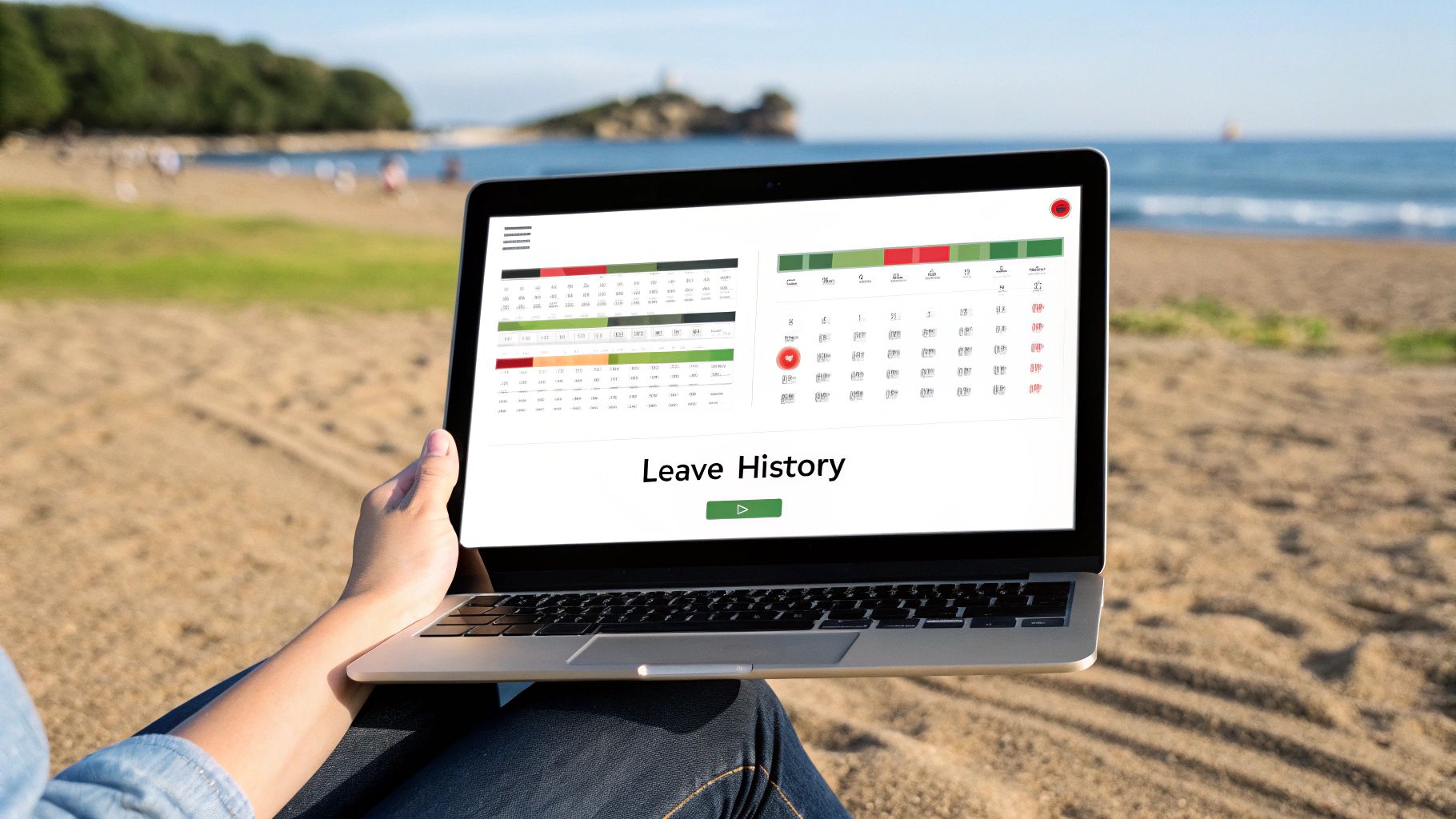
Moving from outdated methods to a modern holiday leave tracker involves more than just new software. It takes planning and careful implementation. This roadmap will guide you through a smooth transition and help you get the most out of your new system. We’ll cover everything from the initial setup to ongoing system maintenance.
Pre-Implementation: Laying the Groundwork
Before considering specific software, assess your current situation. Conduct stakeholder interviews with HR, managers, and employees. This helps highlight pain points and identifies the specific needs for the new system. Gathering these different perspectives ensures the holiday leave tracker meets the organization’s real-world requirements.
Next, document your current leave management procedures. Map every step from request submission and approvals to record keeping. This process map is crucial for configuring the new system. It allows you to replicate essential steps while improving inefficient processes within the new holiday leave tracker.
Finally, define clear success metrics. What are your goals for the new system? Are you aiming for reduced administrative time, better compliance, or improved employee satisfaction? These metrics become your benchmarks for evaluating the tracker’s effectiveness. Setting clear goals provides direction and a measurable target for the implementation process.
System Configuration and Data Migration
With the groundwork complete, you can configure your holiday leave tracker. Your documented process map is key here, making sure the system reflects your company’s workflows. Correct initial configuration is vital for smooth operation and user acceptance.
Data migration is often the biggest hurdle. It’s essential to accurately transfer all historical leave data into the new system. This might involve data cleaning and formatting. Thoroughly testing the migration process is essential to prevent data loss. Lost historical data can lead to incorrect leave balances and issues with compliance reporting.
Change Management: Driving Adoption
Successfully implementing a new system goes beyond technical setup. It requires effective change management to encourage user buy-in and adoption. Communicate the benefits of the holiday leave tracker to all users. Explain how it will simplify their tasks and increase efficiency.
Provide thorough training tailored to different user groups. Managers may require different training than employees. Offer various formats like online tutorials, in-person sessions, and quick reference guides. Addressing each group’s specific needs will ensure a smooth transition. LeaveWizard provides resources and support for UK businesses throughout this process.
Ongoing Maintenance and Optimization
Implementing a holiday leave tracker isn’t a one-time project. Regularly review usage data and gather user feedback to identify areas for improvement. This creates a continuous feedback loop and ensures the system adapts to evolving business needs. Regular updates with new features and enhancements will maximize its long-term value.
Building Flexibility Into Your Leave Management Framework
The modern UK workforce values flexibility. This desire for adaptable work arrangements presents challenges for businesses, especially regarding holiday leave management. A robust holiday leave tracker can be a key tool. It balances employee needs and business requirements by providing a configurable system for managing time off.
Adapting to Emerging Leave Arrangements
The traditional fixed annual leave model is changing. Innovative leave arrangements like compressed hours (longer workdays for a shorter week) and bought/sold leave schemes are gaining popularity in the UK. Some organizations are even exploring hybrid sabbatical programs, combining paid time off with reduced working hours. A flexible holiday leave tracker is crucial for managing these diverse arrangements.
A good holiday leave tracker supports flexible working with customizable leave types. For instance, it can easily record half-day annual leave requests without affecting other leave calculations. You might find more information on LeaveWizard’s sitemap.
Case Studies: Flexible Leave in Action
Many UK organizations are successfully using flexible leave frameworks. One company saw increased employee satisfaction and productivity after implementing a compressed hours scheme. Their holiday leave tracker managed the adjusted schedules and leave entitlements, ensuring accurate records. Another organization improved work-life balance by introducing a bought/sold leave policy, supported by their holiday leave tracker.
Implementing Flexible Frameworks
Creating a flexible leave framework is simpler than you might think. Start with a clear policy outlining available leave options. The holiday leave tracker becomes the backbone of this policy, managing and tracking various leave types. This system also ensures consistent application of leave rules across the organization, promoting fairness and preventing discrepancies. Integrating flexible leave options better aligns individual employee needs with business goals.
Addressing the Growing Demand for Unpaid Leave
Demand for unpaid leave is increasing, offering employees flexibility for personal needs like extended travel or caring responsibilities. This reflects a growing focus on work-life integration. A modern holiday leave tracker easily incorporates unpaid leave alongside standard entitlements, streamlining these requests. Beyond unused annual leave, interest in additional unpaid holiday days is rising. A recent survey revealed that 58% of UK workers would likely take up to five days of unpaid leave annually if offered. Find out more about holiday burnout here.
The following table shows the impact of different leave patterns on business metrics, highlighting the value of robust tracking features:
The table below provides insights into how different leave utilization patterns can affect key business metrics. Understanding these trends can help organizations optimize their leave policies and improve overall performance.
| Leave Pattern | Employee Wellbeing Impact | Productivity Effect | Staff Retention Rate | Recommended Tracker Features |
|---|---|---|---|---|
| Traditional Fixed Leave | Can lead to burnout if not managed effectively | Predictable but can be inflexible | Moderate | Basic leave request and approval workflow |
| Compressed Hours | Increased work-life balance, potentially reducing stress | Can improve focus during work periods | Potentially high | Ability to track non-standard work schedules and adjust leave accrual accordingly |
| Bought/Sold Leave | Increased control over time off, improves work-life balance | Can motivate employees and improve morale | High | Functionality to process leave purchases and sales, integrate with payroll |
| Hybrid Sabbatical Programs | Significant positive impact on well-being and reduces burnout | Can lead to refreshed and more engaged employees upon return | Very high | Support for extended leave periods, tracking of phased returns, and potential adjustments to work hours |
| Unpaid Leave | Can be crucial for addressing personal needs, promoting positive employee sentiment | May temporarily reduce capacity, but contributes to long-term retention | Positively impacts retention if managed well | Clear tracking and reporting of unpaid leave, ensuring compliance with legal requirements |
By understanding how different leave patterns impact these metrics, businesses can make more informed decisions about their leave management strategies. Using a comprehensive holiday leave tracker with the right features allows organizations to effectively manage various leave types while optimizing for employee well-being and business outcomes.
By integrating flexibility into your leave management framework with a comprehensive holiday leave tracker, you empower employees, improve morale, and build a more adaptable and resilient workforce. This, combined with maintained operational efficiency and compliance, contributes to a healthier and more productive work environment.
Unlocking Strategic Insights From Your Leave Data
A robust holiday leave tracker does more than just simplify administration. It provides valuable insights into organizational patterns, informing strategic decisions that can give your UK business a competitive edge. Analyzing leave data helps make better company-wide decisions. Let’s explore how forward-thinking businesses turn this data into actionable strategies.
Identifying Burnout Risks and Productivity Bottlenecks
Imagine spotting burnout risks before they become serious problems. Absence analytics, powered by a solid holiday leave tracker, makes this possible. Monitoring leave patterns helps identify individuals or teams consistently working long hours without breaks. This early warning system enables interventions, like encouraging time off or adjusting workloads, before burnout impacts productivity and employee well-being. See our guide on How to master… for more information.
Leave data can also uncover hidden productivity bottlenecks. For instance, a surge in leave requests within a specific department during a particular period might indicate unsustainable workloads or inefficient processes. This data-driven insight allows for targeted improvements, streamlining workflows and maximizing team performance.
Informing Succession Planning and Resource Allocation
Consider your holiday leave tracker a strategic tool for succession planning. Analyzing who takes leave and when provides a clearer understanding of essential personnel and potential skill gaps. This information is crucial for developing talent pipelines and ensuring business continuity during key staff absences.
This data also informs efficient resource allocation. Anticipating peak leave periods allows for proactive staffing level planning, preventing understaffing during critical times. This proactive approach minimizes stress on remaining team members and maintains operational efficiency.
Predictive Analytics and Proactive Planning
Modern holiday leave trackers offer predictive analytics, forecasting future leave trends based on historical data. This means anticipating seasonal absence patterns and planning accordingly, rather than reacting to last-minute requests. This proactive planning is essential for managing staffing levels, project timelines, and resource allocation more effectively.
This predictive capability extends to broader workplace strategies. For example, data revealing a significant increase in employees taking leave during summer allows for adjustments to office space requirements or the implementation of flexible work arrangements to accommodate reduced staffing.
Building Meaningful Dashboards for Stakeholders
Data is only valuable when presented clearly. A good holiday leave tracker enables the creation of customized dashboards for different stakeholders. Operations leaders can access staffing forecasts, well-being teams can monitor holiday utilization patterns, and HR can track overall leave trends. These tailored views provide everyone with the necessary information for informed decision-making.
Understanding and applying these insights from your holiday leave tracker provides a significant advantage. You shift from reactive management to proactive planning, creating a healthier, more productive, and more resilient workforce.
Streamline your leave management processes and unlock valuable insights with LeaveWizard. It’s the smart solution for modern UK businesses.


