
Effective tracking of employee attendance goes far beyond just clocking in and out. Think of it as a foundational business practice, one that directly shapes your company's productivity, payroll accuracy, and even team morale. Getting it right ensures fairness, keeps operations stable, and hands you the data you need for smart workforce management.
Why Smart Attendance Tracking Matters Now More Than Ever

Let's be honest, managing attendance isn't just about counting heads. It's a critical business function with real financial and cultural consequences, especially in the current climate. The old, reactive ways of tracking who’s in and who’s out just don't cut it anymore for the modern workplace.
An unplanned absence can send ripples across your entire organisation. Suddenly, projects are delayed, deadlines get missed, and the rest of the team has to pick up the slack. This doesn't just strain your resources; it can lead to burnout and slowly chip away at morale, especially when good attendance goes unrecognised while frequent absences are ignored.
The Rising Cost of Absenteeism in the UK
The financial hit is impossible to ignore. Recent data reveals a troubling trend: the employee absence rate in the UK climbed to a decade-long high in 2023. At 4%, this translates to an average of 4.8 days lost per employee each year. The main drivers behind long-term absences continue to be mental health challenges, stress, and musculoskeletal issues, which tells us a more supportive and proactive approach is needed.
This isn't just a number on a page; it’s a real headache for businesses. One in three UK employers have seen their absence rates increase, creating serious day-to-day operational challenges.
A robust system for tracking employee attendance isn't just bureaucratic paperwork—it’s a strategic tool. It helps you safeguard your business's financial health while genuinely supporting your team in today's demanding work environment.
Moving Beyond Manual Methods
Still relying on paper timesheets or chaotic spreadsheets? You're setting yourself up for inaccuracies and a mountain of admin work. These manual systems are magnets for human error, a nightmare to analyse for patterns, and nearly impossible to manage effectively if you have remote or hybrid teams. They simply lack the real-time visibility you need to make quick, informed decisions.
A modern approach, on the other hand, gives you a clear, accurate, and fair picture of attendance patterns. It empowers you to spot potential problems early, maintain compliance, and foster a culture built on accountability and trust. By adopting a smarter system, you stop just recording data and start using it as a valuable asset.
If you're ready to make this strategic shift, our https://www.leavewizard.com/employee-attendance-tracking-software-your-complete-guide-to-modern-workforce-excellence/ is the perfect place to start. It’s a vital move for any business looking to thrive.
Crafting an Attendance Policy That Actually Works
A good attendance policy is the bedrock of fair and consistent management. It’s one thing to have a system for tracking time off, but it’s another entirely to have a clear, well-communicated policy that sets expectations for everyone. Without one, you’re just opening the door to confusion, claims of unfair treatment, and a whole lot of potential legal headaches.
A solid policy is much more than a generic template you pull off the internet. It needs to be a practical, real-world guide that’s both comprehensive and fully compliant with UK employment law. Think of it as creating a framework that protects your business while treating your people with the fairness and respect they deserve.
When you're putting your policy together, it's vital to make sure it lines up with your broader small business compliance requirements. This step ensures your rules for absence and punctuality don't accidentally clash with other legal duties, creating a much stronger foundation for your operations.
Defining Your Terms with Clarity
First things first: get rid of any and all ambiguity. Your policy has to spell out what key terms mean so that both employees and managers are singing from the same hymn sheet. Never assume everyone has the same idea of what "late" or "absent" actually means.
Here’s what you need to nail down:
- Lateness: Is an employee late if they clock in one minute past their start time? Or is there a five-minute grace period? Be crystal clear.
- Absence: Define what counts as a full-day or half-day absence. Make a clear distinction between planned time off, like annual leave, and unplanned absences, like sudden sickness.
- No-Call, No-Show: State plainly that this is an unauthorised absence where the employee didn't follow the proper reporting procedure. You need to explain that it's treated as a very serious issue.
By spelling all this out, you create a single standard that can be applied consistently across the board. That consistency is absolutely crucial for being fair.
Establishing Simple Reporting Procedures
So, how should someone let you know they’re going to be late or absent? Your policy must lay out a simple, straightforward process. Overly complicated rules just make it harder for genuinely ill employees to do the right thing and, frankly, easier for others to claim they "didn't know" the procedure.
Imagine this real-world scenario: an employee wakes up with a blinding migraine. A policy that forces them to find their own cover before calling in sick is just impractical and completely unfair. The process should be simple.
Your policy needs to be specific: who to contact (e.g., their direct line manager), how to contact them (a phone call is often best for last-minute issues), and by when (e.g., at least one hour before their shift is due to start).
For remote and hybrid teams, this clarity is even more important. Specify exactly how they should communicate their status—perhaps by updating their online status to "Away" and dropping a message in a designated team channel, on top of the standard call to their manager.
Outlining Consequences Fairly
Finally, your policy must be transparent about the consequences of not following the rules. This isn't about being heavy-handed; it's about being clear and consistent. In the UK, a progressive disciplinary approach is often the most effective and legally sound way to go.
This usually looks something like this:
- Verbal Warning: A friendly, informal chat for a first-time or minor issue.
- Written Warning: A formal, documented warning if the problem continues.
- Final Written Warning: A more serious warning that makes it clear that dismissal could be next.
- Dismissal: The last resort for persistent problems or serious misconduct like abandoning their job.
When you communicate the policy clearly, train your managers on how to apply it fairly, and make sure it's easy for everyone to find, you build a culture based on accountability and mutual respect.
Right, you've got a solid attendance policy in place. The next piece of the puzzle is picking the right tool to actually track employee attendance. This can feel a bit daunting with all the options out there, from basic spreadsheets to sophisticated cloud-based software.
The secret is to find a system that fits the reality of your business. Think about your company's size, budget, industry, and how your team works. A small high-street shop with five employees has completely different needs than a 50-person tech company with a hybrid work schedule. One might do just fine with a simple method, while the other needs something far more robust and flexible. If you rush this decision, you could end up with a tool that just creates more admin, not less.
This image offers a quick look at how different attendance tools are being used in today's workplaces.
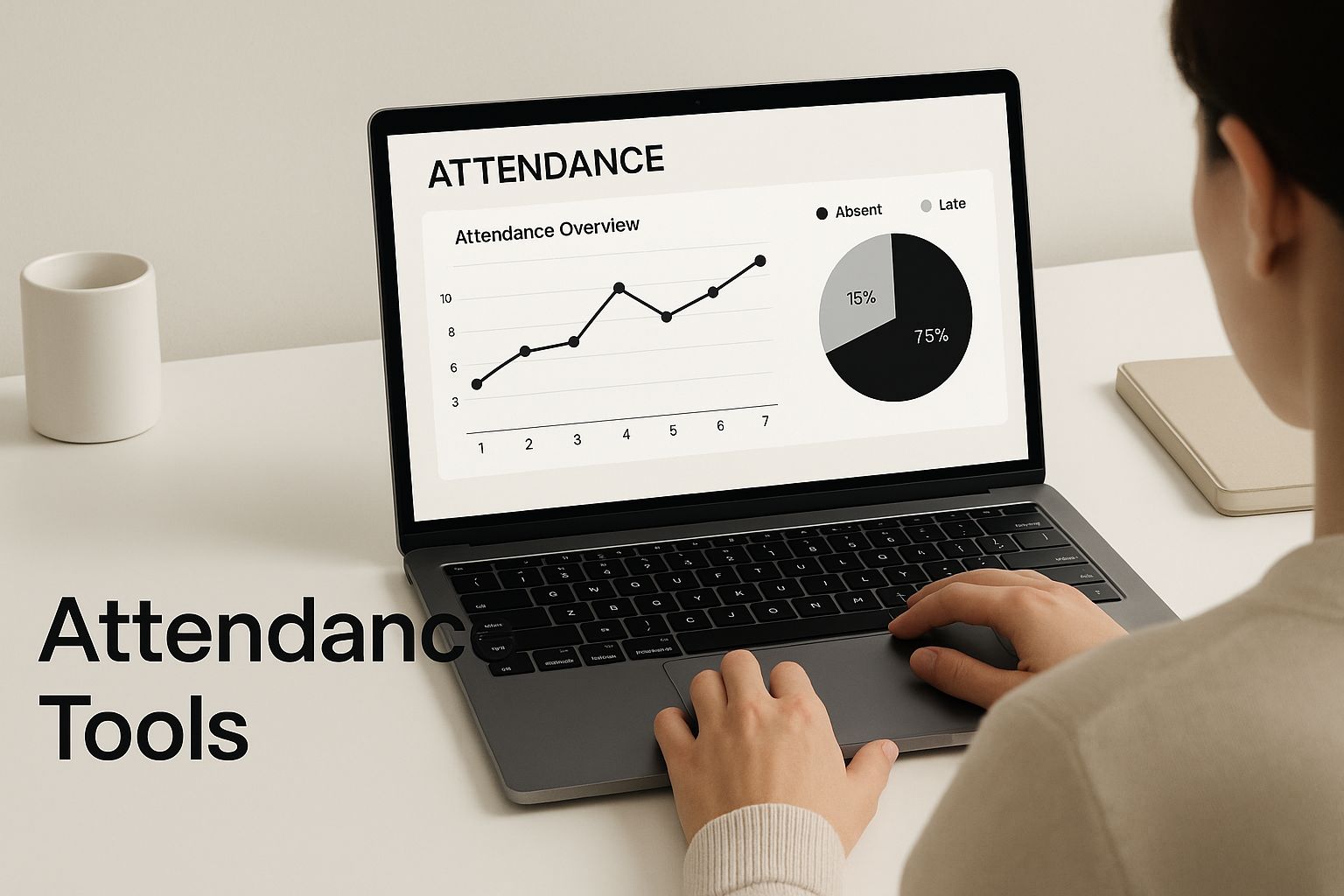
As you can see, the trend is clearly shifting away from old-school manual methods. Businesses are moving towards digital solutions that give them better accuracy and much deeper insights.
Comparison of Employee Attendance Tracking Methods
Choosing the right attendance tracking system is a crucial decision that impacts everything from payroll accuracy to employee morale. To help you navigate the options, we've put together a comparison table. It breaks down the most common methods, evaluating them against key criteria to help you find the best fit for your organisation.
| Method | Best For | Pros | Cons | UK Compliance Risk |
|---|---|---|---|---|
| Manual Timesheets/Spreadsheets | Very small teams or startups with tight budgets. | Low to no cost; simple to start. | Prone to errors; time-consuming; difficult for remote teams; no real-time data. | Medium: High risk of errors affecting pay and holiday calculations. |
| Biometric Systems | On-site work environments like manufacturing or construction where "buddy punching" is a concern. | Highly accurate; eliminates time theft. | Requires hardware investment; can raise employee privacy concerns; not suitable for remote work. | Low-Medium: Data privacy (GDPR) must be carefully managed. |
| GPS-Based & Mobile Apps | Businesses with field staff, sales teams, or fully remote workers. | Tracks location for accuracy; flexible for mobile teams; real-time updates. | Requires clear privacy policies; dependent on employee smartphones and connectivity. | Medium: Requires transparent communication and consent regarding location tracking to comply with GDPR. |
| Cloud-Based Software (SaaS) | Growing businesses, hybrid teams, and companies seeking an all-in-one solution. | Automates tracking, leave, and payroll; real-time data and reports; scalable; accessible anywhere. | Monthly subscription fee; can have more features than a very small business needs. | Low: Reputable providers stay current with UK employment law and data protection regulations. |
Ultimately, the best method is one that reduces your administrative workload while providing the data you need to manage your team effectively. As businesses grow and work models become more complex, integrated software solutions often provide the most value and long-term security.
Making the Right Choice for Your Business
So, how do you actually pick the best method for your company? Start by asking a few straightforward questions:
- How many employees do you have?
- Do they work on-site, remotely, or a mix of both?
- What’s your budget for a new system?
- How much time are you currently spending on attendance admin?
A construction company, for instance, could gain huge efficiencies from a GPS-based app to track workers across different job sites. On the other hand, a small, office-based consultancy might find that a simple cloud software solution like LeaveWizard strikes the perfect balance between features and cost.
The most effective approach for a growing business is often a dedicated software solution. It scales with you, provides invaluable data for decision-making, and significantly reduces the administrative burden on your team.
Remember, the goal isn't just to clock hours. It's to put a system in place that makes life easier for everyone, from employees to managers. A great attendance tool cuts down on errors, saves precious time, and gives you the clear insights you need to manage your workforce well.
How to Implement Your New Tracking System
You’ve chosen a new system for tracking employee attendance, which is a big step forward. But the real work? That starts now, with the rollout. I’ve seen it happen before – a clumsy implementation can breed confusion, erode trust, and sabotage the whole project before it even gets going.
The key to a smooth transition is a combination of clear communication, careful planning, and genuine team engagement. Your goal isn't just to install a piece of software. It’s to introduce a new way of working that everyone understands and, hopefully, supports. This means you need to be proactive, anticipating and addressing concerns head-on, especially around tricky subjects like privacy or fears of micromanagement.
Always frame the new system as a tool for fairness and efficiency, not surveillance.
Preparing for a Successful Launch
Before you breathe a word of this to your team, a bit of groundwork is essential. You need to get everything set up correctly behind the scenes to ensure a seamless handover from your old method to the new one.
- Initial Setup and Configuration: Don't skim over this part. Take the time to properly configure your new system. For a platform like LeaveWizard, this means setting up your company’s specific work patterns, defining the different leave types that match your policies, and assigning the right roles for managers and administrators. A system configured to reflect how your business actually operates is fundamental.
- Data Migration: If you’re moving from spreadsheets or another digital system, you need a solid plan for migrating existing data. Think about accrued holiday balances and other entitlements. A clean data transfer from day one is crucial for avoiding payroll errors and immediate employee frustration.
Don’t rush the technical setup. A system that is poorly configured will cause immediate problems and instantly undermine employee confidence in the change. Get the foundation right first.
Communicating the Change and Training Your Team
How you announce and explain the new system is probably the most critical part of the whole process. Your communication needs to be transparent, positive, and laser-focused on the benefits for employees, not just the business.
Explain the why behind the change. Is it to guarantee payroll is always accurate? To make booking leave quicker and easier? To give everyone a fair and clear picture of attendance? When people understand the reasoning, they are far more likely to get on board.
After the announcement, roll out comprehensive training. This shouldn't be a single, rushed meeting. People learn differently, so offer a few options:
- Group Sessions: Walk everyone through the new system together. Demonstrate core functions like clocking in, checking leave balances, and requesting time off.
- Manager-Specific Training: Your managers are your champions on the front line. Equip them with the knowledge to approve requests, view team calendars, and run the reports they need. They’ll be the first port of call for questions.
- Reference Guides: Not everyone will remember everything from a training session. Create simple, easy-to-find guides or short video tutorials that staff can look at whenever they need a refresher.
A well-planned implementation transforms a potentially disruptive process into a positive step forward for the whole company. For a more detailed breakdown, you can explore our advice on how to implement the best attendance control system and maximise efficiency.
Turning Attendance Data Into Business Insights

Collecting attendance data is one thing; using it strategically is another entirely. A good system for tracking employee attendance doesn't just churn out numbers—it generates powerful business intelligence. The real value is unlocked when you transform this raw data from a simple record into a diagnostic tool for your organisation's health.
Instead of just noting that an employee was absent, you can start asking why. By spotting patterns and looking deeper, you can shift from simply reacting to problems to proactively building a more productive and supportive workplace.
Identifying Key Attendance Metrics
To get started, you need to know what you’re looking for. Raw attendance data becomes much more meaningful when you analyse specific metrics that tell a story. It’s time to move beyond individual records and start looking at the bigger picture.
Here are a few powerful metrics to monitor:
- Departmental Absence Rates: Is one team experiencing significantly more absences than others? This could point to issues like unmanageable workloads, a lack of resources, or poor management within that specific department.
- Seasonal and Weekly Patterns: Do you see a spike in absences around public holidays or during certain seasons? Are unplanned absences more common on Mondays or Fridays? This insight can help you improve resource planning and staffing during peak times.
- Absenteeism by Leave Type: Understanding the breakdown between sick leave, personal days, and unauthorised absences helps you identify the primary drivers of time off. A rise in sick leave, for instance, might warrant a review of your company’s wellness initiatives.
The goal is to connect the dots between attendance data and deeper issues like burnout, low morale, or even workplace hazards. An unexpected rise in absences within your warehouse team, for instance, might be the first sign of an unaddressed safety concern.
Analysing Sector-Specific Trends
It's also crucial to understand how your data compares to broader industry benchmarks, as patterns can differ significantly. In the UK, for instance, there's a marked difference between public and private sectors. Data from 2022 revealed a sickness absence rate of 3.6% for public sector workers, compared to just 2.3% in the private sector.
This long-standing disparity is often linked to factors like job-related sickness risk and variations in sick pay policies. This context helps you set realistic internal benchmarks.
Understanding these nuances is a key part of effective employee absence management. Beyond just attendance, looking at a wider range of essential HR metrics can further enhance your business insights, allowing for a more complete view of your workforce performance. Armed with this knowledge, you can move from merely tracking employee attendance to making informed, strategic decisions that strengthen your business from the inside out.
Answering Your Top Attendance Tracking Questions
Let's be honest, navigating the nuances of employee attendance can feel like walking a tightrope. You're trying to balance legal duties with the practical, human side of management. Even when you have a solid policy and a great system, tricky situations will inevitably pop up.
Here, we’ll tackle some of the most common questions UK businesses have, offering clear, straightforward answers based on real-world experience.
Can I Discipline an Employee for Frequent Sickness?
The short answer is yes, but you absolutely must handle it with caution and fairness. Kicking off a disciplinary process shouldn't be your first move. Instead, start by digging into the reasons behind the absences.
Hold return-to-work interviews after each sickness spell. They're a simple but powerful way to understand what’s really going on. You need to be aware that frequent sickness could be linked to an underlying medical condition, potentially qualifying as a disability under the Equality Act 2010. Disciplinary action should always be the last resort, only considered after you've explored all possible supportive measures.
It's also crucial to remember the strong link between absence and well-being. Mental health issues alone cost UK employers an estimated £42 billion to £45 billion each year, much of it from absence and lower productivity. Understanding this connection is key to managing attendance with both compassion and effectiveness. For more detail, it's worth reviewing the government's findings on health and work.
What Are My GDPR Obligations?
When it comes to the UK General Data Protection Regulation (GDPR), you need to treat attendance records as what they are: personal data. That means you have a legal duty to handle this information lawfully and transparently.
Your legal footing for processing attendance data is usually to fulfil your end of the employment contract—things like running payroll and planning resources. The golden rule is to always be upfront with your staff about what data you’re collecting and why.
Make sure the data is:
- Stored securely, with confidentiality front of mind.
- Only accessible to people who truly need it (like HR and direct line managers).
- Not held onto for any longer than is absolutely necessary.
Having a crystal-clear privacy notice that explains these points isn't just good practice; it's a legal must-have.
How Should I Handle a No-Call No-Show?
An employee simply not turning up for work without any contact is a serious issue. Your attendance policy needs to have a specific clause for this, defining what a "no-call, no-show" is and what the consequences are.
Your first step? Try to get in touch. Use every contact method you have for the employee, including their emergency contact. Crucially, document every single attempt you make. While this kind of absence can be grounds for gross misconduct, it’s vital not to jump to conclusions. There could be a serious reason they haven't been in touch. Always carry out a full investigation and stick to your disciplinary process before making any final decisions about their future with the company.


