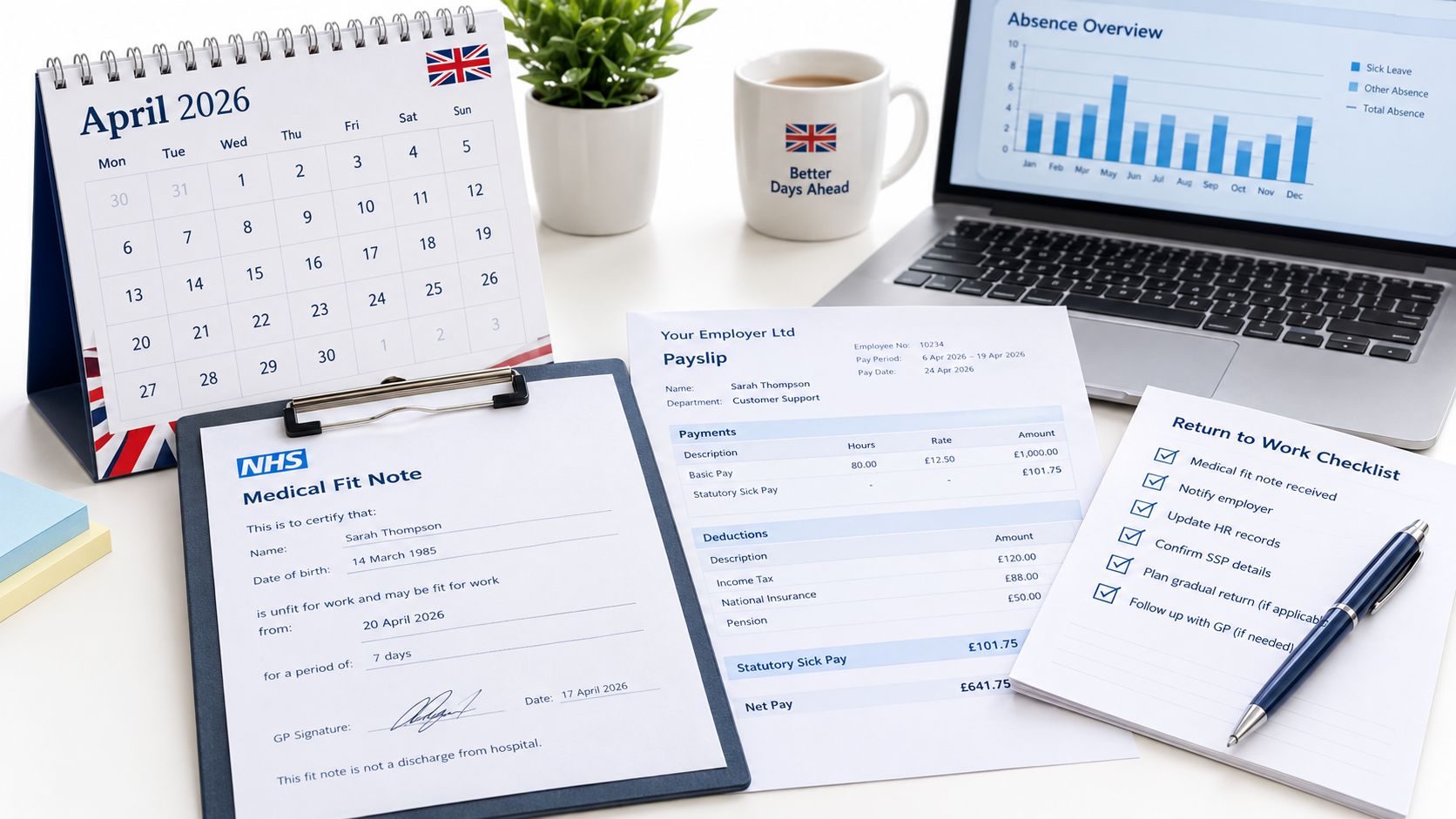
Let's be honest, for many businesses, managing staff holidays feels like a constant juggling act. You know the drill: conflicting email requests piling up, an out-of-date spreadsheet that only one person really understands, and last-minute scrambles to make sure you have enough cover.
This manual approach isn't just inefficient; it's a surefire recipe for costly mistakes and frustrated employees. A staff holiday tracker cuts through that chaos. It's a dedicated system that takes the entire process—from requests and approvals to tracking team availability—and puts it all in one clean, simple, and central place. Everyone gets a clear, real-time view of who's off and when.
Moving Beyond Clunky Spreadsheets
Think about what it takes for a manager to approve a simple holiday request the old way. They have to hunt down the master spreadsheet (hoping it's the right version), cross-reference it with the rest of the team's approved leave, manually calculate the employee's remaining balance, and then update everything.
It's a slow, clunky process that's wide open to human error. For the employee asking for the time off, it's a black box—they have no idea what's happening or when they'll get an answer.
The Old Way vs. The New Way
A dedicated staff holiday tracker completely transforms this workflow. It becomes your single source of truth, wiping out the confusion and admin headaches of manual systems. Instead of that error-prone spreadsheet, you get an intelligent platform built specifically for one job: managing leave.
The real magic of a modern tracker is how it shifts leave management from a reactive, paper-pushing chore into a proactive, strategic tool. It gives managers their time back to focus on leading their teams, not getting bogged down in admin.
This infographic breaks down just how much better a modern tracker performs against manual methods when it comes to speed, accuracy, and keeping your team happy.
The numbers don't lie. Automation doesn't just make things faster; it makes them more accurate and significantly boosts team morale.
Making the Switch Smoothly
Of course, the idea of ditching a system you've used for years—even a flawed one—can feel a bit daunting. The secret is finding a solution that makes this jump as painless as possible.
If you're moving away from spreadsheets, look for a tracker that has solid spreadsheet import features. This lets you bring all your historical leave data across seamlessly, ensuring nothing gets lost and your team can hit the ground running without a hitch.
The comparison below really highlights the night-and-day difference between clinging to old habits and embracing a purpose-built tool.
Manual Holiday Tracking vs Automated Staff Holiday Tracker
The table below starkly contrasts the old way of working with the benefits of a purpose-built tool. It shows a clear picture of the administrative burdens you leave behind and the efficiencies you gain.
| Feature | Manual Tracking (Spreadsheets/Paper) | Automated Staff Holiday Tracker |
|---|---|---|
| Request Process | Manual via email, paper forms, or verbal requests. | Automated requests and approvals through a central portal. |
| Data Visibility | Siloed and often out-of-date. Only one person has access. | Centralised, real-time calendar visible to the whole team. |
| Balance Calculation | Prone to human error; must be updated manually. | Accurately calculated and updated automatically after each request. |
| Reporting | Time-consuming and difficult to generate meaningful insights. | Instant reports on leave patterns, balances, and staffing levels. |
Looking at them side-by-side, it's clear that one method is stuck in the past while the other is designed for the modern workplace. Moving to an automated system isn't just an upgrade; it's a fundamental improvement in how your business operates.
Why Accurate Leave Tracking Is Non-Negotiable
For any UK business, managing staff holidays correctly is much more than just an admin task. It’s a critical part of running the company, with serious legal and cultural consequences if you get it wrong. Inaccurate tracking isn't just an inconvenience; it can expose a company to major risks and really damage team morale.
Think about a small business owner—let’s call her Sarah—who manages her team's leave on a colour-coded spreadsheet. It seems fine, until two key people book the same crucial week off because the shared file wasn't updated properly. All of a sudden, Sarah is staring down the barrel of a project delay and a very awkward conversation.
This kind of scenario is incredibly common. Without a solid system in place, it’s all too easy to lose track of who’s entitled to what, leading to mistakes that ripple through everything from project deadlines to payroll.
The High Cost of Getting It Wrong
The stakes are much higher than just avoiding a few scheduling mix-ups. Here in the UK, accurate holiday tracking is a matter of legal compliance. Mismanage it, and you could be facing costly tribunals and a serious dent in your company's reputation.
The legal framework is crystal clear. Employment law mandates a minimum of 5.6 weeks of paid time off for employees each year. Without a proper staff holiday tracker, employers can easily deny staff their legal entitlement or fail to record leave correctly, opening the door to legal disputes.
This legal requirement is the absolute baseline. Failing to meet it isn't just poor management; it's breaking the law.
A reliable staff holiday tracker is your first line of defence. It provides an auditable, accurate record that proves you are meeting your legal obligations, protecting your business from potential claims and investigations.
But it’s not just about avoiding the courtroom. Poor leave management sends a terrible message to your team: that their time and wellbeing aren’t a priority. This can quickly erode trust and lead to a disengaged workforce—a far greater long-term cost than any software subscription.
More Than Just a Legal Shield
While compliance is non-negotiable, the benefits of an accurate system go much deeper, right into the heart of your company culture. A great staff holiday tracker is also a powerful tool for proactively supporting employee wellbeing and preventing burnout.
Burnout is a genuine threat to productivity and retention. It often builds quietly, as employees feel they can't or shouldn't take the time off they need to recharge. A tracker gives you the data you need to spot this happening.
- Spotting Burnout Risks: Reports can instantly show you which team members have a large bank of unused holidays. This is a clear red flag, giving you the chance to step in and encourage them to take a well-deserved break.
- Promoting Fairness: Automation ensures that leave policies, like accrual and carry-over rules, are applied consistently to everyone. This gets rid of any perception of favouritism and helps build a culture of fairness.
- Empowering Employees: When staff can easily see their own leave balance and check team availability, they feel more in control of their work-life balance. That transparency empowers them to plan their time off without confusion or guilt.
Making this shift from reactive fire-fighting to proactive support is fundamental. To move past manual tracking and keep things running smoothly, adopting strategies for effective remote workforce management is essential. A solid tracker provides the bedrock of clarity, ensuring your business not only follows the law but also fosters a culture that truly values rest, recovery, and respect.
What Makes a Holiday Tracker Great?
So, what really separates a basic digital calendar from a tool that genuinely changes how you work? When you're looking for a staff holiday tracker, it’s easy to get bogged down, but the secret is to look past the simple stuff. The best systems are built with smart, specific features designed to fix the most common and frustrating parts of managing leave.
These aren't just flashy add-ons. They're the core of the machine, the parts that deliver real value by saving you time, preventing costly mistakes, and giving you a strategic view of your workforce. Think of them as the vital organs of your leave management system – each one doing a specific job to keep the business running smoothly. Let's break down the features you absolutely can't do without.
A Central, Visual Team Calendar
At the heart of any worthwhile staff holiday tracker is a central, visual team calendar. I'm not talking about a boring list of names and dates. This is your command centre, giving you a complete overview of who’s in and who’s out across every team, all at once.
Imagine trying to approve a holiday request without seeing the full picture. You're flying blind. You could easily create a massive staffing gap or have to unfairly deny someone's request because you didn't spot an overlap.
A colour-coded, real-time calendar gets rid of the guesswork. It instantly shows you potential clashes, letting managers make informed decisions in seconds, not hours. This one feature alone solves the biggest headache in holiday scheduling.
This kind of visual clarity is fundamental. It means everyone, from managers to employees, is looking at the same, always-correct information. That builds a foundation of transparency and trust.
Automated Holiday Accrual
Manually calculating holiday entitlement is an absolute minefield. It’s a recipe for mistakes, especially when you throw part-time staff, new starters, or complex carry-over rules into the mix. That's why automated holiday accrual is non-negotiable. It completely removes this administrative nightmare and all the risks that come with it.
A great system will do the heavy lifting for you, automatically calculating each person's entitlement based on the rules you set. This should cover:
- Pro-rata calculations for part-time employees, making sure everything is fair and legally sound.
- Adjustments for new hires who join part-way through the leave year.
- Automatic handling of carry-over rules at the year's end.
- Tracking other leave types, like sickness or parental leave, without messing up their holiday allowance.
This automation means everyone's balance is always accurate. It saves HR and managers countless hours and gives employees a clear, trustworthy view of their remaining leave, which means fewer questions and arguments.
Streamlined Request and Approval Workflows
The endless back-and-forth of emails and paper forms is not just slow; it's a mess to keep track of. A modern staff holiday tracker sweeps away that chaos with a seamless request and approval workflow. It puts the power in the right hands and keeps the whole process moving.
Here’s what that perfect workflow looks like:
- Employee Self-Service: An employee logs into a simple portal or mobile app. They can see the team calendar to check for clashes themselves, then submit their request in a couple of clicks.
- Instant Manager Notification: Their manager gets an immediate alert with all the info they need—the employee's remaining balance and any potential team overlaps.
- One-Click Approvals: The manager can approve or deny the request straight from that notification. The system then automatically updates the calendar and the employee's balance. Job done.
This efficiency is a game-changer. It frees up managers from tedious admin, gives employees a quick, clear answer, and creates a perfect, documented trail for every single leave request. If you want to dig deeper into this, you can explore how to transform your team with a smarter holiday leave tracker and see how these workflows boost productivity and morale.
Powerful Reporting and Analytics
Finally, a top-tier staff holiday tracker isn't just about day-to-day management; it gives you robust reporting and analytics tools. A calendar shows you what’s happening now, but reports help you understand why it's happening and plan for what's next. This is where you turn raw leave data into real business intelligence.
Look for a system that can pull reports on things like:
- Bradford Factor Scores: To help you spot patterns of frequent, short-term absences that might point to bigger problems.
- Leave Patterns: To see your busiest holiday periods and plan staffing levels more effectively for the year ahead.
- Unused Leave Liability: To get a handle on the potential cost of untaken holidays and encourage staff to take those well-deserved breaks.
These insights are invaluable. They help with strategic workforce planning, managing costs, and supporting your team's wellbeing. This is what turns a simple admin tool into a true strategic asset for your business.
How to Plan Leave Strategically

A staff holiday tracker is so much more than a digital filing cabinet for leave requests. When you start to use it properly, it becomes one of your most powerful tools for workforce planning. It helps you shift from simply reacting to requests to proactively shaping the year for success.
Instead of just approving or denying requests as they hit your inbox, you can use the data from your tracker to get ahead of the game. This means your business stays fully staffed during its most important periods, and your employees still get the well-deserved breaks they need. It’s all about finding a balance that works for everyone.
Analysing Leave Patterns to Avoid Crunches
First things first: dig into the data. Use your tracker’s reporting features to look back over the last year or two and spot the trends. When does everyone seem to request time off at once? Is there a mad dash in August, a logjam around Christmas, or a last-minute scramble before the leave year resets?
Once you’ve identified these peak times, you can take action. Let's say your business has a predictable quiet spell in the spring. You can actively encourage your team to book some of their holiday then, spreading the absence load more evenly and preventing those pile-ups during your busiest seasons.
This simple step maintains productivity and takes a huge amount of pressure off managers who would otherwise be scrambling for cover. This is a fundamental part of any effective guide to managing employee time-off requests, turning holiday planning into a shared, collaborative goal.
A smart staff holiday tracker gives you the data to ask the right questions. Instead of just asking, "Who wants time off?" you can start asking, "How can we best schedule time off to keep everyone rested and the business strong?"
This shift in mindset—from passive approval to active planning—is where you’ll find the real value. You can guide leave decisions in a way that aligns with business goals without coming across as restrictive.
Forecasting and Filling Staffing Gaps
Beyond spotting busy holiday periods, a good staff holiday tracker acts as your early warning system for potential staff shortages. The central calendar gives you a crystal-clear visual forecast of who is available for months to come.
Imagine you see that three members of your five-person marketing team have booked the same week off six months from now. That’s not a problem; it’s an opportunity. With that much notice, you have plenty of time to react and ensure the wheels keep turning.
Here’s what you can do with that kind of foresight:
- Identify Cross-Training Opportunities: If you see a recurring gap in one department, that’s a clear sign you need to build skills elsewhere in the team. Use this insight to plan cross-training so someone is always ready to step in.
- Plan Temporary Cover: For absolutely critical roles, advance notice gives you more than enough time to arrange for temporary cover if needed. This helps you avoid last-minute panic and the premium costs that come with it.
- Stagger Senior Staff Leave: You can introduce simple, fair rules, like ensuring no more than one senior team member is on holiday at any given time. A tracker makes it easy to see this at a glance and enforce the policy consistently.
This proactive approach transforms your tracker from a simple admin tool into a strategic asset for building a more resilient, versatile workforce.
Navigating UK Public Holiday Complexities
For any business operating in the UK, managing leave comes with an extra layer of complexity: public holidays that differ across the home nations. A bank holiday in Scotland can be a normal working day in England, which is a recipe for confusion and administrative headaches.
A modern staff holiday tracker handles these regional variations automatically. For example, it will know that employees in Scotland have different bank holidays from those in England and Wales, ensuring entitlements are always calculated correctly. It also helps everyone plan smarter; by booking just a couple of days off around a public holiday, employees can get a much longer break.
This automation is a huge relief. It guarantees that calculations are accurate and compliant across England, Scotland, Wales, and Northern Ireland. It removes a major administrative chore and ensures every employee gets their correct entitlement, which goes a long way in building trust and a fair workplace culture.
Choosing and Launching Your First Tracker
Ready to leave the spreadsheet chaos behind? Picking and introducing a new staff holiday tracker doesn’t have to feel like a huge project. Think of it less like a complex system overhaul and more like a smooth 'moving day' for your HR processes, where a little planning ensures everything finds its perfect place.
The secret is to start with a clear picture of what your business actually needs. A system that’s perfect for a 200-person corporation will be overkill for a team of 15. Your goal is to find the right fit that solves your specific problems without adding unnecessary complexity or cost. A well-chosen tracker will feel like it was designed just for you.
Assessing Your Unique Business Needs
Before you even start browsing software options, grab a pen and paper. Answering a few straightforward questions about your organisation is the most critical step you can take. Getting this right now stops you from paying for features you'll never touch or, even worse, picking a tool you’ll quickly outgrow.
Start by asking these fundamental questions:
- Team Size and Structure: How many employees do you have? Are they all full-time, or do you have a mix of part-time staff, freelancers, or remote workers with different requirements?
- Leave Policies: Are your policies simple, or do you need to manage complex rules like pro-rata entitlement, time off in lieu (TOIL), or unique carry-over policies?
- Budget: What’s a realistic monthly or annual budget? Most systems charge on a per-user, per-month basis, which makes it easy to calculate your total costs.
- Integrations: Which other tools are essential to your daily workflow? A tracker that links with Slack, Outlook, or Google Calendar can save a massive amount of admin time.
Answering these questions gives you a clear shopping list. For instance, if your team lives and breathes in Slack, a tracker with a solid Slack integration moves from a 'nice-to-have' to a 'must-have'.
Questions to Ask Potential Vendors
Once you’ve defined your needs, you can start weighing up potential systems. Don't get distracted by flashy websites; focus on how each staff holiday tracker actually performs against your checklist.
Have this list of questions ready when you're looking at different options:
- Is it user-friendly? Can your least tech-savvy employee figure it out without needing a manual? A complicated system just won't get used, simple as that.
- How customisable are the leave policies? Can you easily set up different rules for different teams or even specific individuals?
- What does the mobile experience look like? Can your people request leave and managers approve it just as easily from their phones?
- What level of customer support is included? If you run into a problem, how quickly can you get help?
When considering solutions, it's worth exploring how flexible tools can be adapted to your needs. Some businesses have found success by leveraging flexible platforms like Notion for team management, showing the real value of adaptable software.
Rolling Out Your New System Successfully
Choosing the right tool is only half the battle. A successful launch is all about great communication and getting your team on board. If a new system is forced on people without any explanation, you’re likely to be met with resistance.
Think of the rollout in three clear phases:
- Migrate Your Data: Before you announce a thing, get your existing data ready. A good staff holiday tracker will make it easy to import current leave balances and any future bookings from a spreadsheet, ensuring a clean start for everyone.
- Communicate the 'Why': Announce the new system to your team, but focus on the benefits for them. Explain that it will make booking holidays quicker, more transparent, and give them instant access to their own leave balance.
- Provide Simple Training: Hold a brief, informal training session. Walk everyone through how to request time off and how to see the team calendar. Keep it short and focused on the tasks they’ll use most often.
A smooth launch sets the tone for how the new tool will be perceived. By making the transition easy and highlighting the employee benefits, you ensure your new staff holiday tracker is adopted enthusiastically from day one, quickly becoming an indispensable part of your operations.
Building a Better Workplace Culture

Let's be honest, a staff holiday tracker is about so much more than just counting days off. Think of it as a tool for shaping the very culture of your workplace, building a foundation of trust, transparency, and genuine respect for your team's wellbeing. It sends a clear signal: we value your time, and we know that proper rest is non-negotiable.
When leave management is a confusing mess, it breeds uncertainty and a sense of unfairness. Employees start to second-guess asking for time off, worried it will be seen as an inconvenience. A straightforward, clear system does away with this "leave-shaming," empowering people to take the breaks they've earned without any guilt, knowing the process is fair for everyone.
Fostering Genuine Work-Life Balance
A healthy work-life balance isn't just a trendy phrase; it's the bedrock of a sustainable and productive team. Yet, so many employees find it hard to properly switch off, often leaving a chunk of their holiday allowance unused every year. This is a massive red flag that your workplace culture might be heading towards burnout.
Recent data tells a very clear story here. A 2024 analysis of over 250,000 UK workers showed that despite having a solid average leave allowance of 22-23 days, employees left an average of five days on the table. That’s an entire working week of essential rest and recovery just gone, highlighting a real gap between what people are entitled to and the time they actually take. You can dig into these trends and see how the UK stacks up by exploring the full 2024 leave statistics on timetastic.co.uk.
A staff holiday tracker gives you the insight to tackle this problem head-on. By spotting who hasn't had a proper break in a while, managers can proactively nudge team members to book some time off. It reinforces the message that rest isn’t just allowed—it's expected.
An Investment in Your People
Seeing a holiday tracker as just another admin tool completely misses the point. It's a direct investment in your most important asset: your people. When you provide a system that's transparent, fair, and simple to use, you're showing that you trust your employees to manage their own time responsibly.
A business that actively encourages and simplifies taking holidays is a business that retains its best people. It demonstrates a commitment to preventing burnout and creating an environment where employees feel valued and respected.
This kind of investment pays you back in spades through better loyalty, morale, and long-term success. A well-rested team is a more creative, engaged, and productive one. The clarity that an annual leave tracker can boost time off efficiency and directly contribute to a healthier, more positive workplace. At the end of the day, nurturing this culture of wellbeing isn't just a nice thing to do for your employees—it's one of the smartest business decisions you can make.
Frequently Asked Questions
Even when you're sold on the benefits, it's completely normal to have a few practical questions before bringing a new tool into your business. Here are the answers to the most common queries we hear about getting started with a staff holiday tracker.
What Does a Staff Holiday Tracker Typically Cost?
In the UK, the cost for a staff holiday tracker usually works on a per-user, per-month basis. For most small to medium-sized businesses, you're looking at a range from a couple of pounds up to about £5 per employee each month. It’s a genuinely affordable investment.
But remember, the cheapest option isn't always the best value. It’s far more important to find a solution that can grow alongside your business. Always check that there are no hidden setup fees or extra charges for core functions like reporting. What you want is clear, predictable pricing that makes budgeting a breeze.
Can These Trackers Handle Complex Leave Policies?
Absolutely. In fact, this is one of their biggest strengths. Modern systems are built from the ground up to be flexible. The best trackers are designed to manage all sorts of leave policies with ease, so you can be sure everything is fair and accurate for your whole team.
You’ll be able to configure policies for:
- Pro-rata leave for your part-time staff, all calculated automatically.
- Custom carry-over rules that perfectly match your company's year-end policy.
- Time Off In Lieu (TOIL), letting employees bank any extra hours they’ve worked.
- Other absence types like sickness or parental leave, which are tracked separately from annual holiday allowance.
This kind of adaptability means the system finally works for you, not the other way around.
How Quickly Can We Set Up a New System?
Getting up and running is much faster than most people expect. For the majority of small businesses, you can get everything done in just a few days. That includes the initial account setup, importing your employee data, and getting the team comfortable using it.
A good staff holiday tracker is designed for a quick and seamless transition. The aim is to get you operating more efficiently with minimal disruption to your daily workflow, delivering value almost immediately.
This swift setup means you can ditch the spreadsheets and start enjoying the benefits of an automated system without getting bogged down in a long, complicated rollout.