
Understanding Return To Work Interviews In Today's Workplace

Return to work interviews are no longer a simple formality. They've become essential for helping employees transition back to work after a period of absence. This change recognizes the link between employee well-being, productivity, and a company's overall success. It means shifting from strict evaluations to a more compassionate approach.
After a leave of absence, interviews help ensure a smooth return. In the UK, employment rates reached 75.1% between December 2024 and February 2025. Understanding this context is important for return-to-work interviews, as employers need to gauge an employee's preparedness. The most effective interviews feel less like interrogations and more like supportive dialogues. Find helpful statistics at: Job Interview Statistics.
Creating A Supportive Environment
A supportive approach begins the moment an employee arrives. A relaxed, welcoming atmosphere can significantly affect the interview. Offering a beverage or engaging in friendly conversation can ease anxiety. A private and comfortable setting also encourages open communication. This creates a space for productive discussion. Learn more here: How to Master Return to Work Interviews.
The Power Of The Return To Work Interview Template
A well-designed return to work interview template provides structure. However, it shouldn't be rigid. Instead, it should adapt to individual needs. This flexibility allows for personalization, addressing each employee's specific concerns. A flexible template can be the key to a truly supportive and successful return-to-work process.
Essential Components of an Effective Return to Work Template
A well-structured return to work interview template is vital for successfully reintegrating employees. It promotes consistency, gathers necessary information, and creates a supportive environment for open communication. This process goes beyond simple checklists; it's about building a strong foundation for a positive return.
Key Elements of a Return to Work Interview Template
A comprehensive template should encompass these key elements:
-
Opening Statement: Start by creating a welcoming atmosphere and clearly explaining the interview's purpose, highlighting its supportive nature.
-
Absence Summary: Briefly review the absence period, confirming dates and reasons to ensure everyone is aligned from the outset.
-
Employee Well-being: Inquire about the employee's overall well-being and their feelings about returning to work. This offers an opportunity to provide support and address any concerns.
-
Job Role Discussion: Discuss the employee's role and responsibilities, including any changes that occurred during their absence, to help them feel prepared and informed.
-
Support and Adjustments: Proactively ask about any necessary support or adjustments, like flexible hours or modified duties, demonstrating care and valuing the employee's needs.
-
Return to Work Plan: Collaboratively develop a plan outlining a phased return if needed, and setting clear expectations for a structured and smooth transition.
-
Closing and Next Steps: Summarize key discussion points, confirm agreed-upon actions, and explain the next steps to provide clarity and reinforce support.
The infographic below visually outlines the key components of a well-designed return to work interview template, demonstrating the flow of a typical interview from beginning to end.
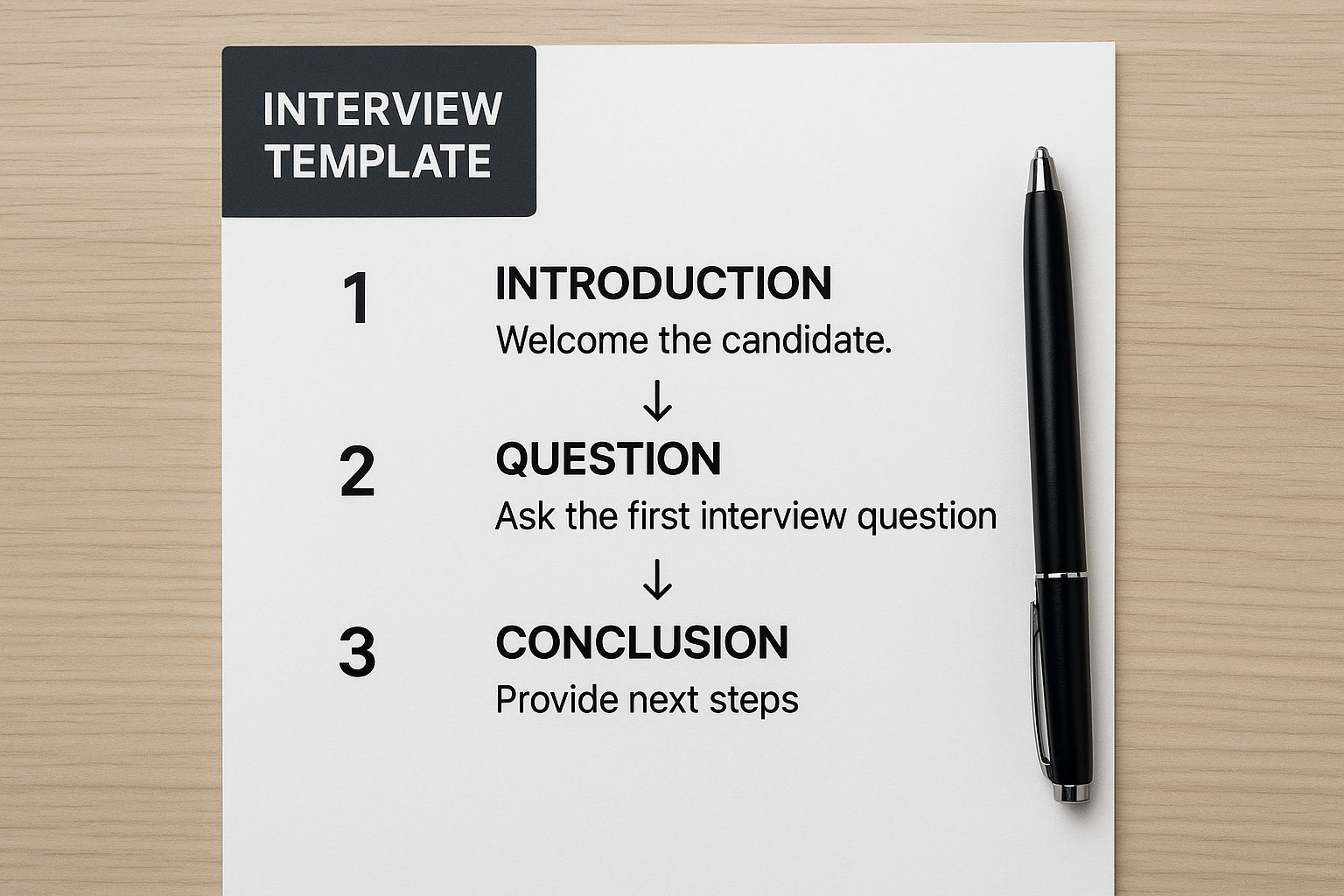
This visual representation reinforces the importance of a structured approach, moving from the initial welcome and absence review to discussions about well-being, job roles, and support, ultimately leading to a defined return-to-work plan.
Building Trust and Encouraging Open Communication
A robust return to work interview template is more than just a checklist; it's a tool for building trust. By structuring the conversation supportively, employees feel more comfortable sharing their needs and concerns. This open dialogue fosters a more successful return and minimizes the likelihood of future absences.
Practical Considerations for Template Development
When creating your template, consider both legal compliance and best practices. UK employment law emphasizes fairness and non-discrimination. Ensure your questions are relevant and avoid anything intrusive. Balancing information gathering with respect for employee privacy is crucial.
To further illustrate the components of a return to work interview template, let's examine the following table:
Return to Work Interview Template Components
| Component | Purpose | Legal Requirement | Best Practice Notes |
|---|---|---|---|
| Opening Statement | Sets a welcoming tone and explains the interview's purpose. | N/A | Emphasize the supportive nature of the interview. |
| Absence Summary | Reviews the period of absence, confirming dates and reasons. | N/A | Ensure accurate record-keeping. |
| Employee Well-being | Checks on the employee's overall health and feelings about returning. | N/A | Offer support and resources as needed. |
| Job Role Discussion | Discusses the employee's role, responsibilities, and any changes during absence. | N/A | Ensure clarity and address any questions. |
| Support & Adjustments | Asks about any support or adjustments the employee might need. | Reasonable Adjustments where applicable | Proactively offer adjustments and ensure accessibility. |
| Return to Work Plan | Creates a plan outlining a phased return and setting clear expectations. | N/A | Collaboratively develop the plan with the employee. |
| Closing & Next Steps | Summarizes key points and explains the next steps in the process. | N/A | Reinforce the supportive nature of the interview and provide clear next steps. |
This table provides a detailed overview of the crucial components and their respective purposes within a comprehensive return to work interview template. It highlights the importance of a structured approach for successful reintegration. By following these guidelines, you can create a template that supports both your employees and your organization.
Adapting Templates for Remote and Hybrid Work Arrangements

While traditional return-to-work interviews often happen in person, the increase in remote and hybrid work requires a new approach. We need to consider how a return-to-work interview template works in virtual settings. This shift offers both challenges and opportunities for supporting employees as they reintegrate.
Navigating the Virtual Landscape
Remote interviews need careful planning, especially regarding technology. Make sure everyone has good internet and feels comfortable with the platform. When designing your template, consider questions similar to those used in virtual assistant interviews. Resources like VA phone interview questions can be helpful. Clear instructions sent beforehand, including software downloads or login details, will minimize disruptions. This proactive approach helps create a smoother, more focused conversation.
Building Connection Through Screens
Connecting personally in a virtual setting can be tricky. Start with informal conversation to ease anxiety and build rapport. Ask about their time off or general well-being before the formal part of the return-to-work discussion. Pay attention to non-verbal cues like facial expressions and tone of voice, just as you would in person. These small gestures can significantly impact the interview.
Choosing the Right Format
The reason for the absence and the employee's preferences should guide the interview format. Sensitive conversations, especially those involving health information, might be best suited for video calls where non-verbal cues are visible. For shorter absences or simpler situations, a phone call or an online questionnaire might be enough. A short-term absence for a minor illness doesn't require the same discussion as extended leave for a serious health issue. The UK working landscape has changed, with approximately 16% of workers exclusively working from home as of January 2025. This impacts return-to-work interviews, especially regarding flexibility and the use of technology. More statistics can be found here: Flexible Work Statistics – Facts UK. Ultimately, flexibility is crucial for a comfortable and productive return-to-work experience.
Legal Compliance and Best Practice Guidelines
A successful return to work interview requires a good understanding of UK employment law. It's a balancing act: you need information, but you also need to respect employee rights and maintain confidentiality. This creates a supportive and legally sound process.
GDPR and Data Protection
All interview records, both digital and physical, are covered by the General Data Protection Regulation (GDPR). You must have a lawful reason to process this sensitive data, such as employee consent or a legal obligation. Secure storage and restricted access are crucial, along with clearly defined data retention periods. For more on managing remote and hybrid teams, check out Leading in the Hybrid Workplace.
Avoiding Discrimination
Your return to work interview template should be free of all discrimination, both direct and indirect. Questions should focus on the employee's ability to do their job and any required adjustments. Avoid questions about health details beyond what's relevant for reasonable adjustments. This ensures a fair and equal process for everyone.
Reasonable Adjustments
The Equality Act 2010 requires employers to make reasonable adjustments for employees with disabilities. This could mean changes to the workplace, equipment, or working practices. The return to work interview provides a chance to discuss these adjustments and meet the employee's needs.
Documentation and Confidentiality
Documenting the interview thoroughly is vital. It creates a record of agreed actions and supports future decisions. However, this documentation must be kept confidential and accessible only to authorized personnel. This protects both the employee and the organization.
Involving Occupational Health
When dealing with complex health matters, consider bringing in Occupational Health services. They can advise on reasonable adjustments, fitness for work, and support strategies. This collaboration ensures informed decisions.
Coordinating with HR Processes
Return to work interviews should be part of your wider HR processes, such as absence management and performance reviews. This ensures consistency and avoids conflicting information. The interview can inform adjustments to performance targets, for example.
Balancing Legal Requirements and Employee Welfare
Sometimes, legal requirements and employee well-being might seem at odds. You need information about the absence, but pressing a distressed employee for details can be counterproductive. Prioritize employee welfare. Focus on providing support and creating a safe space for discussion. This builds trust and leads to positive outcomes. By understanding and using these guidelines, you can create a return to work process that’s both legally compliant and supportive of your employees. This balanced approach benefits everyone and promotes a healthy, productive work environment.
Customizing Templates for Different Absence Types and Industries
A return-to-work interview template provides a helpful structure. However, adapting it to each employee's situation is essential. This ensures the interview remains relevant and supportive, no matter the reason for the absence or the employee's role. A one-size-fits-all approach rarely works effectively in diverse workplaces.
Tailoring Your Template to Absence Types
Different absence types require different approaches. A short-term absence due to illness is different from an extended medical leave. A short-term absence might focus on immediate work tasks and catching up. A longer leave might involve phased return plans and adjustments. A stress-related absence requires a sensitive approach, focusing on well-being and support. This differs from a return from annual leave. This nuanced approach strengthens employee support. You might be interested in: How to master your absence policy template.
Industry-Specific Considerations
Industry factors greatly impact return-to-work interviews. In safety-critical roles, confirming fitness for duty is paramount. Questions should focus on any lingering health issues impacting safety. Customer-facing roles require a different focus. Perhaps addressing customer interactions and service delivery ensures a smooth transition back to these duties. High-pressure environments might require discussions about workload management and stress reduction strategies. Acknowledging specific roles and industries contributes to a healthier, more productive workforce. The UK's labor market is dynamic, with 192,000 work visas granted in the year ending March 2025. This influx of workers might affect return-to-work processes. Find more detailed statistics here: UK Immigration Statistics.
Addressing Recurring Absences and Ongoing Health Conditions
Recurring absence patterns often require a more structured approach. The return-to-work interview can explore underlying causes and identify solutions. These solutions might include reasonable adjustments or access to support services. For employees with ongoing health conditions, discussions should focus on managing their condition in the workplace. This includes any necessary adjustments and support. This ensures a consistent and fair approach while considering individual needs.
Adapting to Different Employee Levels
Your return-to-work interview approach should also consider employee levels. A frontline staff member's interview might focus on practical tasks and team integration. A senior manager’s interview might address strategic objectives and leadership responsibilities. Tailoring questions to the employee’s role and responsibilities ensures the interview is relevant and productive. This shows respect for the individual's contribution and position. By thoughtfully customizing your template, you create a supportive and effective return-to-work process for all employees. This ensures every employee feels valued and understood. Flexibility and empathy are key to successful reintegration.
Implementing Your Template and Measuring Success
Rolling out a successful return-to-work interview template involves more than simply creating a document. It requires careful implementation, comprehensive training for managers, and ongoing refinement based on feedback and results. This ensures the template remains a valuable tool for supporting employees and cultivating a healthy work environment.
Training and Implementation: A Step-by-Step Approach
Effective implementation of your template involves a systematic approach:
-
Manager Training: Equip your managers with the necessary skills to conduct supportive and informative interviews. This includes training on active listening, handling sensitive conversations, and understanding legal requirements.
-
Template Distribution: Provide easy access to the template, both digitally and in print. This guarantees all interviewers have the necessary guidance readily available.
-
Pilot Program: Consider initiating a pilot program to test the template with a small group before a full rollout. This allows for early feedback and the identification of necessary adjustments.
-
Communication and Feedback: Encourage open communication regarding the new process. Gather feedback from both interviewers and interviewees to pinpoint areas for improvement.
Measuring Success: Key Performance Indicators
To evaluate the effectiveness of your return-to-work interview template, track these key performance indicators (KPIs):
-
Re-absence Rates: A decrease in re-absence rates suggests the interviews are helping employees return to work sustainably.
-
Employee Satisfaction Scores: Utilize surveys to measure employee satisfaction with the return-to-work process. Positive feedback signals a supportive and effective approach.
-
Manager Confidence Levels: Evaluate how confident managers feel conducting the interviews. Increased confidence suggests improved skills and comfort with the process.
To learn more about effectively managing absence, you can check out this helpful resource: How to master absence management with an efficient system.
The following table summarizes the key metrics for evaluating the template's success. It provides a framework for ongoing review and improvement.
Return to Work Interview Success Metrics
| Metric | Measurement Method | Target Range | Review Frequency |
|---|---|---|---|
| Re-absence Rates | Track employee absences after return-to-work interviews | Reduction of 10-15% | Quarterly |
| Employee Satisfaction Scores | Post-interview surveys for returning employees | 4.0 or higher on a 5-point scale | Bi-Annually |
| Manager Confidence Levels | Manager surveys and feedback sessions | 80% or higher expressing confidence | Annually |
This table outlines the specific methods for measuring each KPI, along with target ranges and review frequencies. Regular monitoring of these metrics is crucial for continuous improvement.
Gathering Feedback and Continuous Improvement
Feedback is crucial for refining your template. Implement regular feedback loops:
-
Post-Interview Surveys: Short surveys for both interviewers and interviewees can provide valuable insights.
-
Focus Groups: Assemble small groups of employees and managers to discuss their experiences with the process.
-
Data Analysis: Regularly analyze the KPIs mentioned above to identify trends and areas needing improvement.
Addressing Common Challenges
Implementation challenges are common. Here's how to address a few:
-
Manager Resistance: Address concerns through training and clear communication about the template's benefits.
-
Employee Reluctance: Emphasize the supportive nature of the interview and the confidentiality of shared information.
-
Template Rigidity: Ensure the template allows for flexibility and adaptation to individual circumstances.
By implementing these strategies, your return-to-work interview template will become a valuable tool in supporting your employees and fostering a positive work environment. This proactive approach contributes to a healthier and more productive workforce. Continuous improvement is the key to long-term success.
Common Pitfalls and How To Avoid Them
Even with the best intentions, return-to-work interviews can sometimes create more problems than they solve. Understanding common mistakes is key to building a successful return-to-work interview template that truly supports your employees. This careful approach ensures a smoother transition back into the workplace.
Overly Rigid Templates
A rigid, inflexible template can feel impersonal and insensitive. Instead of a one-size-fits-all approach, adapt your template to individual circumstances.
For instance, a return from bereavement leave requires a different tone and focus than a return from maternity leave. This individualized approach shows employees you value their unique situations.
Inadequately Trained Managers
Managers need training on how to conduct these sensitive interviews effectively. Without proper training, interviews can become interrogations, damaging trust and hindering open communication.
For example, a manager focusing solely on the absence's impact on productivity, rather than the employee's well-being, can create a negative experience. Investing in manager training creates a supportive environment.
Ignoring Warning Signs
Not all employees are comfortable voicing their concerns directly. Managers must be trained to recognize subtle warning signs.
Perhaps an employee's hesitancy to discuss their absence or changes in their behavior could indicate underlying issues. Addressing these proactively is key to supporting a successful return.
Handling Challenging Situations
Sometimes, an immediate return to work isn't feasible. Perhaps a phased return or further medical assessment is necessary. Other times, employees might be reluctant to engage in the process.
Having clear procedures for handling these situations, including involving Occupational Health when appropriate, ensures a smooth and supportive process. This safeguards both the employee's well-being and the company's interests.
Maintaining Employee Trust
Building and maintaining trust is paramount. Ensure employees understand the purpose of the return-to-work interview and how the information shared will be used. Confidentiality is crucial.
Transparency about the process helps alleviate concerns and fosters open communication. This strengthens the employee-employer relationship.
A well-structured return-to-work process benefits everyone. By avoiding these common pitfalls, you can create a truly supportive experience for your employees, minimizing disruption and promoting a healthy return to work. For a powerful tool to streamline your return-to-work process and enhance employee management, explore LeaveWizard.


