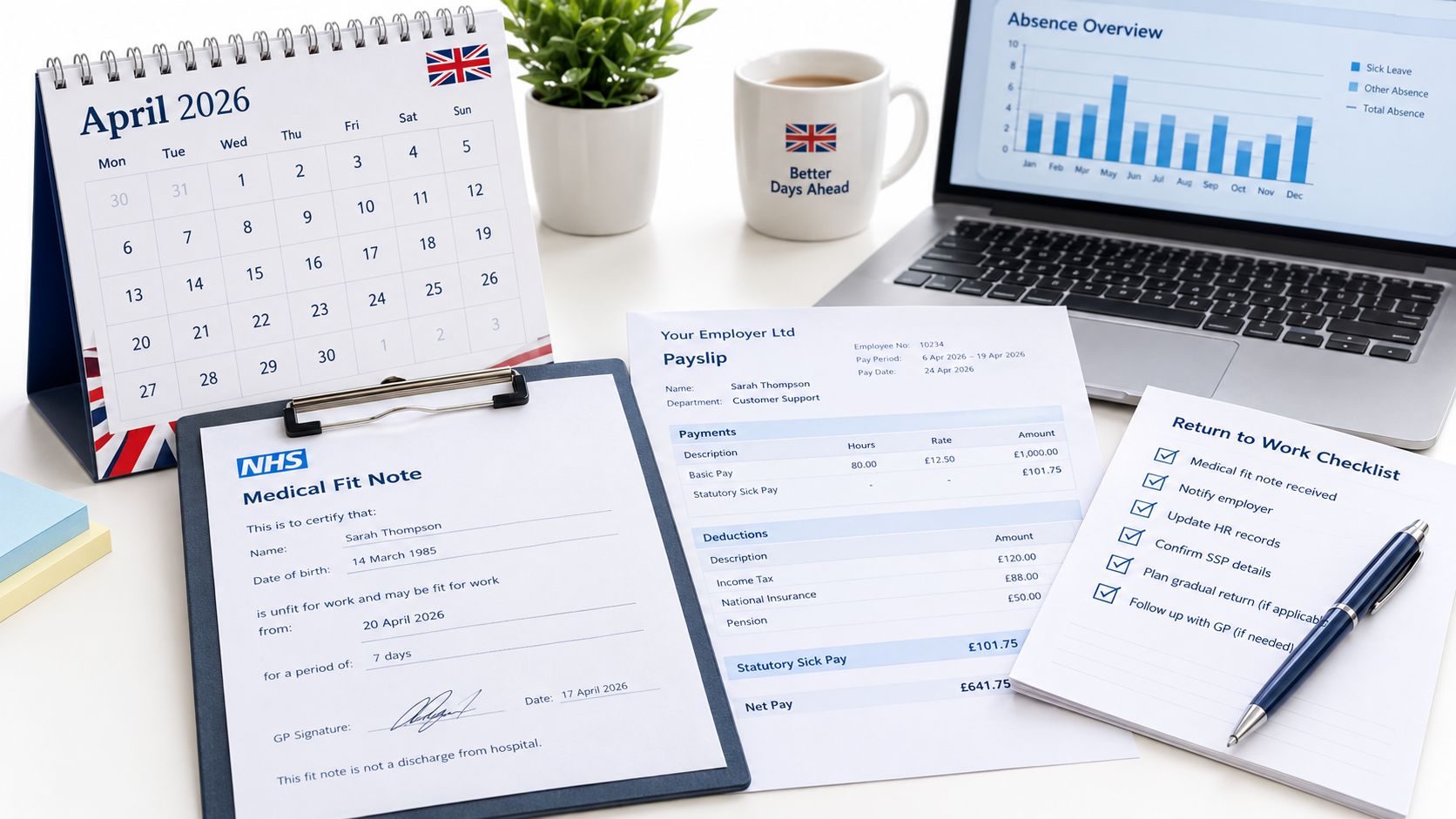
Let’s be honest, how do you currently handle time off requests? If it’s anything like how most small businesses start out, it probably involves a flurry of emails, a shared calendar that’s barely holding on, and someone—probably you—manually updating a spreadsheet. It’s a messy, time-sucking process that’s just begging for mistakes to happen.
This old-school way of doing things isn't just frustrating; it can lead to some real headaches, like accidental holiday overpayments or finding yourself short-staffed during a critical project.
This is where employee leave management software steps in. It’s designed to completely get rid of that administrative nightmare. Think of it as a central hub where your team can request leave, managers can approve it with a single click, and everyone gets a real-time, bird's-eye view of who’s in and who’s out. It turns a tedious chore into a smart, strategic part of running your business.

From Chaos to Clarity
Imagine having a digital command centre for everything related to employee absence. Instead of bits of information scattered across inboxes and spreadsheets, you get one unified system that handles it all. It’s like swapping a crumpled paper map for a live GPS for your workforce planning. This clarity stops scheduling clashes before they start and keeps the workflow smooth.
Switching to a proper system brings a few game-changing benefits:
- A Single Source of Truth: No more confusion or "he said, she said" situations. Everyone, from your newest hire to senior management, sees the same up-to-date information.
- Automated Policy Enforcement: The software automatically calculates leave balances based on your company's rules. It ensures everyone is treated fairly and consistently, without you having to be the policy police.
- More Autonomy for Your Team: Staff can check their own holiday allowance and see the team calendar before they even make a request. This empowers them and cuts down on the constant back-and-forth questions.
At its heart, employee leave management software is about creating a transparent, fair, and efficient system that respects your team's time off while protecting your business's ability to run smoothly.
A Growing Market in the UK
This isn't just a fleeting trend; it’s a fundamental shift in how modern businesses get things done. Here in the United Kingdom, the move to digital HR tools really picked up speed with the rise of hybrid and remote working.
Globally, the market for this software is now worth around $2.5 billion, and cloud-based systems make up over 80% of that. Why? Because they’re flexible and easy to access for teams that are spread out. You can dig into the numbers in this market report on leave management systems. This growth proves that businesses are realising that automating leave isn't just about saving time—it’s about actively managing their workforce more intelligently.
Core Features Your Business Cannot Ignore
When you start digging into leave management software, it’s easy to get lost in a sea of features. Every platform seems to have a laundry list of tools and functions, but let's be honest, not all of them are going to change your life. The key is to cut through the noise and zero in on the core features that deliver real, practical value from day one.
Think of it like buying a new car. The panoramic sunroof and ambient lighting are nice perks, but it's the engine, brakes, and safety systems that actually matter. The same logic applies here. Certain features are the non-negotiable engine of any decent leave system, the ones that will genuinely automate your tedious admin and prevent costly slip-ups.
The image below shows the most common headaches businesses face when they're stuck tracking leave manually. As you'll see, the right software features are designed to solve these exact problems.
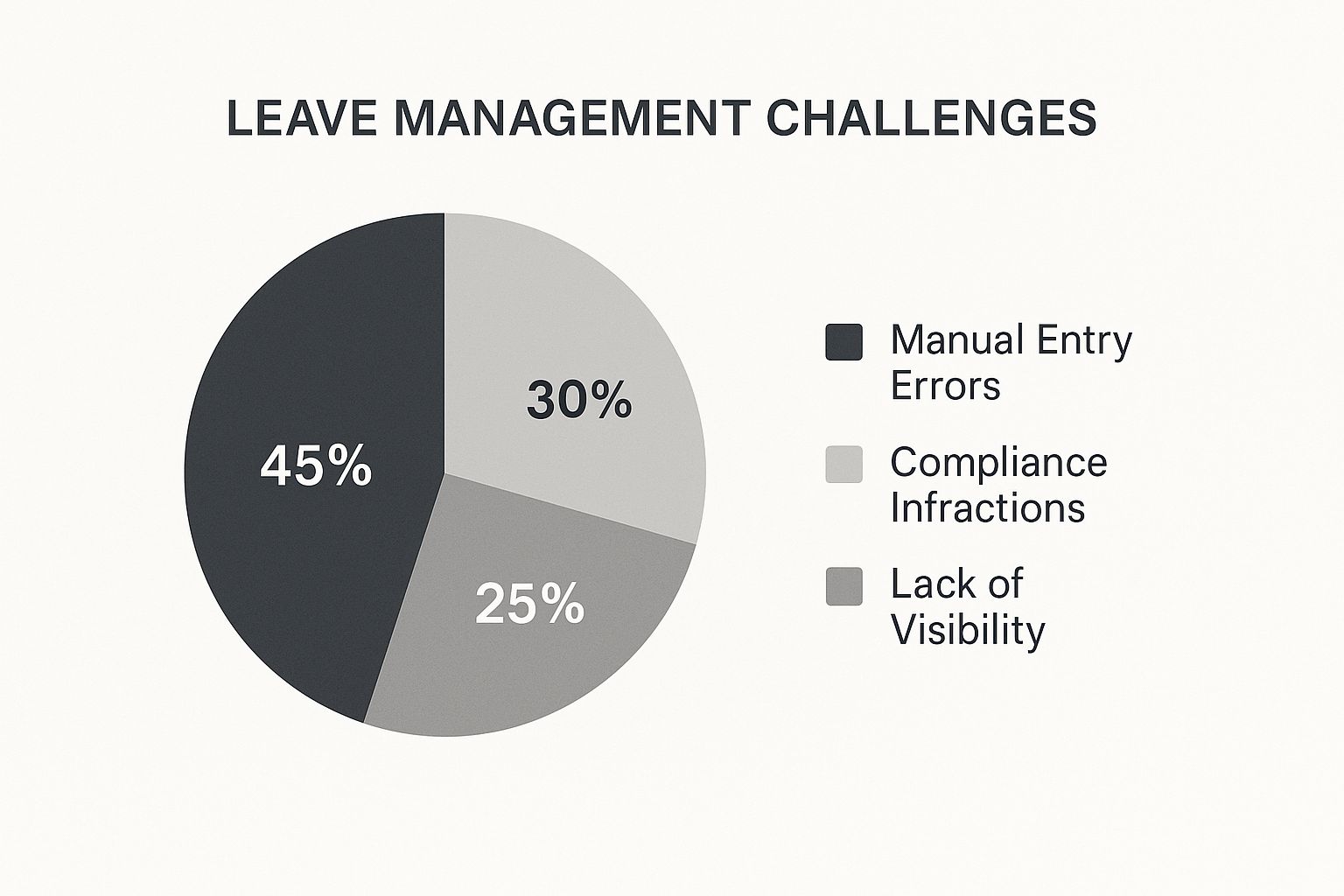
It’s clear that simple human error is the biggest pain point for most businesses. That really drives home why automation and accuracy are so critical in any system you choose.
To help you understand what really makes a difference, let’s break down the essential features of a solid leave management system and what they mean for your business in practical terms.
Essential Features of Employee Leave Management Software
| Feature | What It Does | Why It Matters for Your Business |
|---|---|---|
| Automated Approval Workflows | Instantly routes leave requests to the right manager for a one-click approval or denial. | Eliminates endless email chains and the risk of requests getting lost. Creates a clear, documented audit trail. |
| Centralised Team Calendar | Provides a single, real-time view of who is off, when, and in what team. | Prevents accidental staff shortages and scheduling conflicts. Turns absence tracking into proactive workforce planning. |
| Customisable Leave Policy Engine | Lets you build your company’s unique leave rules directly into the system. | Ensures compliance with UK regulations, automates complex calculations like pro-rata leave, and guarantees fairness for all staff. |
| Employee Self-Service Portal | Gives staff their own login to check balances, view team calendars, and submit requests. | Drastically cuts down on HR admin time. Empowers employees with transparency and control, which boosts satisfaction. |
These core functionalities work together to create a system that’s not just efficient but also robust and reliable. Let’s take a closer look at how each one works in the real world.
Automated Approval Workflows
We’ve all been there: the endless back-and-forth of emails trying to get holiday approved. An employee sends a request, the manager misses the email, and HR is left chasing everyone down. Automated approval workflows put an end to that chaos for good.
Here's how it works: an employee submits their request through the software, and it’s instantly sent to the right manager. That manager gets a notification and can approve or deny it with a single click, often straight from their email or a mobile app. No more chasing, no more lost requests.
You can even set up custom, multi-step workflows. For example, a request might first go to the team leader, and once they approve it, it automatically goes to the department head for the final sign-off. The system handles the entire chain of command flawlessly.
A Centralised Team Calendar
One of the biggest blunders in leave management is accidentally leaving a team critically understaffed. A centralised calendar gives you a single source of truth—a real-time view of who is off and when, right across the business.
This is far more than just a simple calendar; it’s a strategic planning tool. Managers can spot potential overlaps and scheduling conflicts before they hit the approve button. This foresight is crucial for keeping projects on track and ensuring productivity doesn't dip. It stops situations like both of your senior graphic designers booking leave during the final week of a major product launch.
A shared calendar transforms absence management from a reactive chore into a proactive part of your workforce planning. It gives you the insight to keep the business running smoothly, no matter who's out of the office.
A Customisable Leave Policy Engine
Let's face it, UK leave regulations can be a minefield. You've got to juggle variable holiday entitlements for part-time staff, carry-over rules, and a whole range of statutory leave types. A flexible leave policy engine isn't just a nice-to-have; it's essential for staying compliant.
This feature lets you build your company's specific rules directly into the software. From there, the system automatically handles all the tricky calculations for leave balances, accruals, and deductions based on the policies you've set. It's a game-changer for maintaining accuracy and ensuring every employee is treated fairly.
Just think about the possibilities:
- Pro-Rata Entitlements: The system can automatically calculate the correct holiday allowance for part-time staff based on their exact contracted hours. No more manual spreadsheets.
- Accrual Rules: You can set up policies for how leave is earned—whether it's accrued monthly, quarterly, or based on hours worked.
- Leave Type Management: Effortlessly manage dozens of different leave categories, from statutory sick pay and maternity leave to unpaid days and training courses.
A top-tier system will often integrate with tools for UK Time Tracking for Remote Employees, making sure that all logged hours and absences are perfectly aligned and accounted for.
Self-Service Portals for Employees
Giving your employees a bit of autonomy is one of the quickest ways to slash your own admin workload. A self-service portal allows staff to manage their own leave without having to pester HR or their manager for basic information.
Through a secure portal or mobile app, employees can log in and instantly:
- See their current leave balance in real time.
- Check the team calendar to see who's already booked off.
- Submit new leave requests and see where they are in the approval process.
- Look up their history of past time off.
This kind of transparency doesn't just save your managers countless hours. It also makes your employees happier by giving them direct control and clear information, fostering a culture built on trust and responsibility.
The Strategic Perks of Automating Leave
Automating leave management does so much more than claw back a few admin hours each week. When you finally ditch the tangle of spreadsheets and email chains for a proper system, you start to see real, strategic advantages that genuinely affect your business's health—from your bottom line right through to team morale. It’s about flipping a necessary chore into a powerful business tool.
The first and most obvious win is cutting down on expensive payroll errors. Manually calculating holiday pay, especially for part-time staff or people on variable hours, is a minefield of potential mistakes. An employee leave management software handles all these tricky calculations automatically, ensuring accuracy every single time and stopping those accidental overpayments that can quietly chip away at your profits.
This kind of precision and fairness isn't just about the numbers; it builds a solid foundation of employee trust. When your team knows the system for booking time off is transparent, consistent, and completely impartial, it gets rid of any whispers or worries about favouritism. This helps create a much healthier, more positive workplace culture where everyone feels they're being treated fairly.
From Putting Out Fires to Planning Ahead
One of the biggest shifts you'll notice with automation is moving from constantly reacting to problems to proactively managing your workforce. Manual systems might tell you who's off today, but a good automated system gives you the data you need to plan for what's coming.
By looking at absence trends and patterns, you can uncover some incredibly useful insights. This data-first approach lets you:
- Anticipate Staffing Needs: Spot the busiest holiday periods or recurring absence patterns so you can arrange cover well ahead of time, avoiding those last-minute scrambles.
- Improve Project Planning: When mapping out project timelines, managers can see all approved future leave, which means more realistic deadlines and smarter resource allocation.
- Spot Early Signs of Burnout: A sudden jump in sick days for one person or a whole team could be a red flag for stress or burnout, giving managers a chance to step in and offer support.
This is where UK organisations really see the value. They lean heavily on the analytics and reporting from these systems to fine-tune their workforce planning and bring down absenteeism. In fact, well-managed leave policies can slash absenteeism by as much as 25%.
Boosting Morale and Keeping Your Best People
A fair, simple, and clear leave process has a direct line to employee happiness. When staff can easily check their leave balance, see the team calendar, and request time off without jumping through hoops, it cuts out a lot of friction and frustration. This smooth experience is a huge contributor to a better work-life balance and overall job satisfaction.
A streamlined and transparent leave process contributes significantly to employee satisfaction, playing a crucial role in efforts to reduce employee turnover. When employees feel their time is respected and processes are fair, they are more likely to be engaged and loyal.
Don't underestimate how much this improved employee experience matters. It makes your company a better place to work and is a key ingredient in retaining your top talent. The time saved on admin also frees up your managers to focus on what they should be doing: leading their teams and growing the business. By choosing the right system, you can learn how to boost productivity with an employee leave management system and create a slicker operation.
Ultimately, automating leave is an investment in your people and your processes, one that pays you back with a more organised, productive, and stable workforce.
Navigating UK Leave Compliance with Technology
Staying on the right side of UK employment law isn't just good practice—it's essential for survival. The rules around statutory leave are famously complex, full of tricky interpretations and frequent updates. For a busy small business, trying to manage this manually can feel like walking a tightrope, where one slip could mean tribunals, fines, and a damaged reputation.
This is exactly where employee leave management software steps in to become your compliance safety net. It takes the heavy lifting of complex calculations and rule-checking off your plate and gives it to a system built for accuracy. Think of it as having an expert legal assistant working 24/7 in the background, making sure every leave request and balance is handled by the book.
Automating Tricky Holiday Pay Calculations
One of the biggest headaches for UK employers is calculating statutory holiday pay, especially for staff on variable hours or zero-hour contracts. The law requires you to use a 52-week reference period to work out their average pay. Doing this with a spreadsheet is not only a massive time-drain but also incredibly easy to get wrong.
The right software completely automates this. It keeps a running tally of every hour worked and every pound earned, so when an employee takes a holiday, their pay is calculated perfectly based on the correct reference period. This gets rid of the guesswork and protects you from underpayment claims, which can be seriously costly.
On top of that, recent legal shifts and global events have changed how entitlements are handled. Staying current is vital, and our guide on the impact of Brexit and COVID-19 on holiday entitlement dives deeper into these complexities.
Managing Statutory Leave Types with Confidence
It’s not just about annual leave. UK law covers several other types of statutory time off, and each one has its own rulebook for eligibility, duration, and pay. A solid leave management system comes ready to handle all of them, bringing clarity and consistency to the whole process.
Here are a few key areas where the software provides critical support:
- Statutory Sick Pay (SSP): The system automatically tracks periods of absence, works out if an employee is eligible for SSP, and logs every payment, creating a perfect record.
- Maternity and Paternity Leave: It correctly calculates entitlements and helps you manage the required timelines and paperwork for Statutory Maternity Pay (SMP) and Statutory Paternity Pay (SPP).
- Shared Parental Leave: This is probably one of the most confusing areas of all. Good software helps you navigate the complex rules for sharing leave between partners, so you stay compliant.
- Other Leave Types: From compassionate leave to time off for dependents, the system lets you set up custom policies that match both the law and your company’s values.
The growing complexity of UK labour laws is a major reason why businesses are looking for automated solutions. Recent industry analysis shows a clear trend: companies are actively seeking systems to manage statutory entitlements correctly. You can learn more about the market trends driving this adoption.
By automating these processes, you're doing more than just saving time; you're building a powerful defence against legal challenges. The software creates an irrefutable, auditable trail for every single leave action.
Creating an Indisputable Audit Trail
If you ever face an employee dispute or an audit from HMRC, the burden of proof falls on you. You need to be able to show that you've handled every leave entitlement fairly and lawfully. A messy trail of emails and spreadsheets just won't cut it and can be incredibly hard to defend.
An employee leave management software solves this problem by creating a single, time-stamped record of everything. Every request, every approval from a manager, every policy tweak, and every balance adjustment is logged automatically. This gives you a transparent and easy-to-search audit trail. If a question ever comes up, you can pull up a complete history in seconds, giving you the clear, factual evidence you need to protect your business.
Choosing the Right Software for Your Team
Picking the right employee leave management software is a pretty big deal. It’s not just another monthly subscription; it’s a tool that will weave itself into the fabric of your daily operations. Get it right, and you'll save yourself countless hours and sidestep compliance nightmares. Get it wrong, and you're stuck with a frustrating system nobody wants to use.
The market is flooded with options, all claiming to be the perfect solution. To cut through the noise, you need a solid game plan. By zeroing in on a few key factors, you can confidently weigh your options and find something that genuinely fits your business, not just for now, but for the long haul.
Assess Your Current and Future Needs
Before you even think about watching a single demo, take a good look inward. What specific problems are you trying to fix right now? Are manual slip-ups causing payroll headaches? Is figuring out who's off on a given day a constant puzzle? Jot down a list of your most pressing pain points.
Next, think about where your business is heading. A system that works a treat for a team of 15 might start to creak and groan when you hit 50. Scalability is crucial. You need software that can grow with you, easily handling more employees, new departments, and trickier leave policies as your company expands. Don't just patch today's problems; pick a partner for your future growth.
Focus on the User Experience
A piece of software can be packed with every feature under the sun, but if it's clunky and a pain to use, your team simply won’t bother with it. The user experience (UX) is absolutely non-negotiable. The best systems feel intuitive and straightforward for everyone involved.
Think about it from these different angles:
- For Employees: Can they check their leave balance and request a day off from their phone in just a few taps? A simple, clean interface is a must.
- For Managers: Is the approval process quick and clear? Can they see the team calendar and sign off on a request in seconds, without needing a training manual?
- For HR/Admins: How easy is it to set up a new leave policy or pull a report? The back-end needs to be just as user-friendly as what your employees see.
The goal is to find software that makes life easier for everyone, not just the person in HR. A great user experience is the difference between a tool that’s tolerated and one that’s actually embraced.
One of the biggest decisions you'll face is whether to get a dedicated, standalone leave management tool or an all-in-one HR suite that includes leave management. Both have their pros and cons, and the right choice really depends on your company's size, complexity, and existing tech stack.
Choosing Your Software: Standalone vs Integrated Suite
| Consideration | Standalone Leave Software | Integrated HR Suite |
|---|---|---|
| Core Function | Highly specialised, often with deeper, more nuanced leave features. | Leave management is one of many functions (payroll, onboarding, etc.). |
| Simplicity | Generally easier and faster to set up and learn. Less clutter. | Can be more complex due to the number of features. Steeper learning curve. |
| Cost | Typically lower initial cost and monthly subscription fees. | Higher overall cost, but can be more cost-effective than buying many separate tools. |
| Integration | Must integrate with existing payroll/HRIS. Check compatibility carefully. | All modules are already connected, ensuring seamless data flow. |
| Best For | Small businesses or those with complex leave needs who are happy with their other systems. | Businesses looking for a single source of truth for all HR data and processes. |
Ultimately, a standalone tool offers surgical precision for a specific problem, while an integrated suite provides a comprehensive, unified platform. Think about whether you need a scalpel or a Swiss Army knife.
Prioritise Seamless Integration
Your leave management system doesn't exist in a bubble. It has to talk to the other tools you rely on every day, especially your payroll and HR software. This is where integration capabilities become a make-or-break factor. Manually keying in data from one system to another completely defeats the purpose of automation and is just asking for errors.
A system that integrates smoothly with your existing setup ensures data flows automatically. For a wider look at the process of comparing and selecting HR software, including other key evaluation points, this guide can be quite useful. In the UK, this kind of connectivity is particularly vital due to strict labour laws that demand precise leave calculations for pay and benefits.
Evaluate Support and Mobile Access
Finally, don't overlook two very practical, yet critical, elements: customer support and mobile access. When you have a question or hit a snag, you need to know that reliable help is just a call or an email away. Look for providers that offer responsive, helpful support—scour the reviews and see what their actual customers are saying.
In today's world of flexible work, mobile access isn't just a nice-to-have; it's a necessity. Your team, especially if they're remote or hybrid, needs to manage their leave on the go. A well-designed mobile app empowers employees and managers to handle requests and approvals from anywhere, ensuring the process never becomes a bottleneck. Choosing software with strong mobile functionality and dependable support will ensure it remains a valued tool for your entire organisation.
A Smooth Rollout for Your New System

Choosing the perfect employee leave management software is a massive step, but the real test is getting it up and running smoothly. A thoughtful implementation is what makes all the difference. Think of it like assembling flat-pack furniture; you can have all the right bits, but without a clear plan, you'll end up with a wobbly mess. A rushed rollout just causes confusion and resistance, completely undermining why you bought the software in the first place.
The first job is a clean data migration. You’ll need to get all your existing leave balances, past records, and future bookings out of those old spreadsheets and into the new system. Most software providers offer tools to help with this, but it’s absolutely vital to double-check that data for accuracy before you go live. One wrong number can shatter your team's trust from day one.
Next, you need to meticulously set up the system to reflect your company's actual leave policies. This means configuring holiday entitlements, figuring out accrual rules for part-time staff, and creating any custom leave types you offer. Getting this right is what allows the software to enforce your rules fairly and consistently.
Winning Over Your Team
Great tech is useless if people don't want to use it. That's why getting your team on board is priority number one. People are naturally wary of change, so you need to show them exactly what's in it for them.
Don't just announce a new system is coming. Frame it as an upgrade that makes everyone's life easier.
- For employees: Show off the self-service portal. Now they can check their balance and book time off from their phone in seconds, no more waiting for an email back from HR.
- For managers: Talk about the centralised team calendar and one-click approvals. They can instantly spot clashes and handle requests without drowning in admin.
By framing the new software as a tool that empowers everyone with more transparency and control, you transform the rollout from a top-down mandate into a shared upgrade that benefits the entire company.
Training and Ongoing Support
Even the most intuitive platform needs a bit of a walkthrough. Run short, practical training sessions designed for different people—one for managers that focuses on approvals and reporting, and another for employees that just covers making requests and checking the calendar.
It helps that today's mobile-friendly solutions fit perfectly with how we work. In the UK, over 90% of adults own a smartphone, making it easy to manage leave from anywhere. These tools slash administrative work and create a crystal-clear record of all time off, which does wonders for morale and helps UK businesses keep their best people. You can find more data on the UK's leave management software market here.
Finally, make sure everyone knows who to ask for help after the launch. Having a designated 'go-to' person or a simple FAQ guide gives people confidence and smooths out any little bumps in the road. Before you know it, your new system will be an indispensable part of how you work.
Frequently Asked Questions
Even after seeing all the benefits laid out, you probably still have a few practical questions knocking around. That's completely normal. Let's tackle some of the most common queries we hear from business owners and HR managers, so you can get the full picture.
Is This Software Really Worth It for a Small Business?
In a word, yes. For a small business, the time you get back from automating all that admin is gold. It’s time you can pour back into growing the company, not chasing down holiday requests.
It also acts as a safety net. Making a mistake with UK holiday pay or sick leave compliance can be a costly affair, and those kinds of hits are much harder for a smaller company to absorb. Modern systems are built to be affordable and grow with you, making them a smart investment, not just another expense.
The real cost isn’t the monthly subscription. It's the hidden price of manual errors, the hours sunk into admin, and the looming risk of non-compliance fines. Think of it as protecting your bottom line.
How Is the Pricing Usually Structured?
Most systems you'll find run on a simple subscription model, usually priced 'per employee, per month'. This is perfect for businesses that are growing because your costs scale up (or down) right alongside your team. You only ever pay for what you're actually using.
You might see some providers offering different tiers. Higher-priced plans often unlock more advanced features, like super-detailed reporting or the ability to build really complex leave policies. The trick is to be honest about what you actually need right now to avoid paying for bells and whistles you won't touch.
How Secure Is Our Employee Data in the Cloud?
This is a big one, and rightly so. Any reputable software provider sees security as a fundamental part of their service, not an add-on. They invest heavily in it.
We're talking about robust measures like full data encryption, secure UK-based data centres, and strict adherence to data protection laws like GDPR. It’s all designed to keep your team's information locked down tight. For a bit more on your own responsibilities, our guide to managing employee absences is a great resource.
When you're looking at different options, don't be shy. Ask them directly about their security protocols, their data protection policies, and any certifications they hold. It's the best way to ensure your sensitive employee data is in safe hands.