
The Hidden Costs That Are Draining Your Business
When you think about staff being off work, the first thing that probably comes to mind is the direct cost of sick pay. But that’s just the tip of the iceberg. The real cost of unmanaged absence spreads throughout your organisation in ways that don't always show up on a spreadsheet. It’s like a slow puncture in a car tyre; the initial hiss of air is noticeable, but the real damage is the strain on the wheel, the stress on the engine, and the risk of a full-blown breakdown on the motorway.
This "slow puncture" effect creates a cascade of stress. When an employee is unexpectedly absent, their work doesn't simply disappear. It falls onto the shoulders of their colleagues, who now have to stretch their own capacity to cover the gap. This can quickly lead to resentment, lower team morale, and increase the chances of burnout and errors. A single unplanned day off can throw project timelines into disarray, delay customer support, and compromise the quality of your service, potentially harming hard-won client relationships.
Beyond the Obvious Expenses
Often, the indirect costs of absence are far greater than the direct ones. Think about the time your managers spend reorganising rotas, reassigning tasks, and finding cover. This is valuable time that could have been dedicated to strategic projects or team development. Then there are the financial costs of bringing in temporary staff or paying for overtime, which can escalate quickly. These costs are magnified by a drop in overall team productivity as everyone adjusts to working short-staffed.
Ignoring these issues is like ignoring a persistent cough – what seems like a minor annoyance could be a symptom of a much larger problem that needs proper attention. The infographic below shows the split between short and long-term absences, both of which contribute to these rising costs.
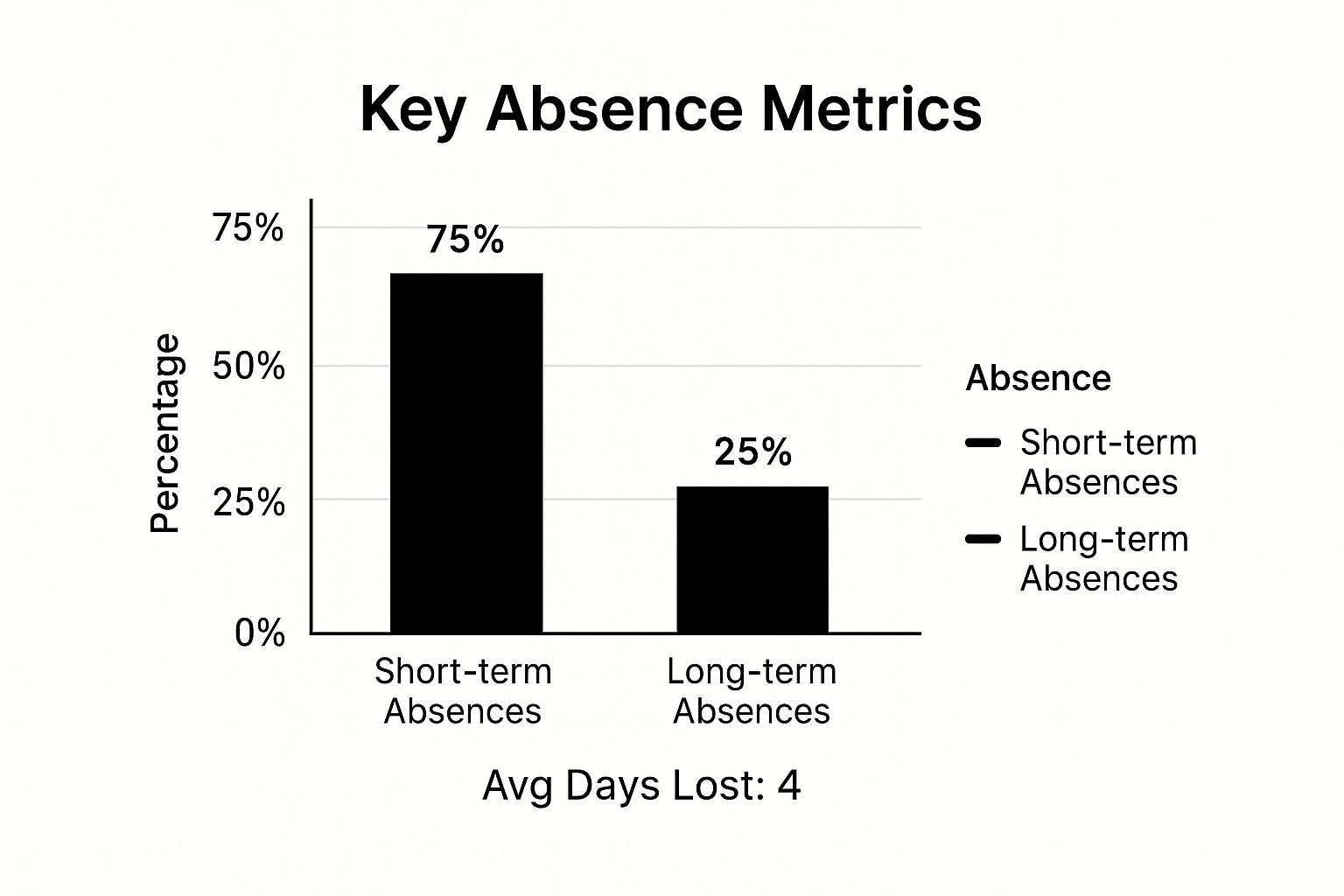
As the data shows, while most absences are for short periods, their cumulative effect creates significant disruption. Without a solid process for managing employee absences, these hidden costs will continue to mount, quietly draining your business resources.
The Staggering Financial Reality
The true scale of this problem is enormous. In 2023, the financial cost of sickness-related absence in the UK climbed to a shocking £103 billion. This is a significant increase from pre-pandemic levels, with UK employees now taking an average of 7.8 days off per year.
The impact also changes dramatically depending on the size of the business. To put this into perspective, we've broken down the average absence days and associated costs by company size.
Absence Costs by Company Size
Comparison of average absence days and costs per employee across different organisation sizes
| Company Size | Average Absence Days | Cost Per Employee | Key Challenges |
|---|---|---|---|
| Small (Under 50) | 5.0 | Lower individual cost, but higher impact per absence. | Each absence represents a larger percentage of the workforce, making cover difficult. |
| Medium (50-249) | ~7.8 (UK Average) | Moderate direct and indirect costs. | Growing complexity in tracking and managing different teams and roles. |
| Large (250-4,999) | ~9.5 | Higher overall cost due to scale. | Maintaining consistent policy application across departments becomes harder. |
| Very Large (Over 5,000) | 13.3 | Highest direct and indirect costs. | Complex logistics, higher rates of long-term sickness, and cultural challenges. |
As you can see, smaller businesses feel the strain of each absence more acutely, even though their average number of days is lower. As an organisation grows, so does the complexity and the overall financial burden of managing absence. This data highlights that no matter your size, a proactive approach is essential. To understand more about these figures, you can discover more insights into the real cost of absenteeism for UK employers and how they vary across industries.
Decoding Absence Patterns That Actually Matter
Just when you think you have a handle on attendance, the data can reveal a much more complex picture. Many managers believe they know the peak times for sickness, often pointing to so-called "National Sickie Day." However, effective managing of employee absences requires moving beyond gut feelings and digging into the real patterns within your own workforce. Think of it as being a detective; you’re not just looking at individual clues, but piecing them together to understand the full story of what’s happening in your organisation.

This detective work involves looking for trends that tell a story. For instance, recent UK data challenged the long-held belief that the first Monday in February is the most common day for calling in sick. The numbers actually showed that the highest single day of absences in 2024 was January 22nd, with 5,871 recorded instances. Across Great Britain, a staggering 33.7 million working days were lost in 2023/24 due to work-related issues, with clear seasonal spikes driven by flu, cold weather, and mental health challenges during winter months. You can discover more about the heat map for common sick days to better understand these national trends.
Suspicious vs. Significant Patterns
Looking at these patterns isn't about catching people out. Instead, it’s about learning to distinguish between potentially suspicious trends and those that highlight significant workplace issues. A savvy manager uses absence analytics to spot the difference.
- Suspicious Patterns: These might include repeated Monday/Friday absences or frequent, short, uncertified illnesses that seem to follow a predictable cycle. While not always a problem, this could suggest disengagement or simply a need for a supportive conversation about attendance expectations.
- Significant Patterns: These are broader trends, like high absence rates within a specific department, which could signal unmanageable workloads, poor management, or team conflict. A spike in stress-related leave across the entire company might point to a larger cultural issue or a need for better wellbeing support.
From Data to Actionable Insights
The ultimate goal is to use this information proactively. If you notice a team is consistently struggling with absences just before major project deadlines, it’s a clear indicator of potential burnout. This insight allows you to step in, reassess workloads, and provide support before productivity grinds to a halt. By decoding these signals, you move from a reactive management style to a strategic one, fostering a healthier, more resilient, and more present workforce.
Building Policies That Work In The Real World
Analysing patterns is a crucial first step, but those insights only become powerful when they shape a clear, fair, and practical absence policy. Many companies have employee handbooks filled with rigid, intimidating rules that nobody reads or fully understands. Today, managing employee absences effectively isn't about strict enforcement; it's about creating a supportive framework that marries genuine compassion with accountability. Think of your policy less as a rulebook and more as a mutual agreement that outlines how the company will support employees while clarifying what’s expected in return.
Official guidance, like the advice from Acas shown above, often puts fairness, communication, and proper procedure at the forefront. This reflects a significant move away from purely punitive measures towards an approach that is both supportive and legally sound.
Crafting a Clear and Compassionate Framework
The best absence policies are simple, easy to access, and communicated clearly from an employee's first day. They don't just list punishments; they explain the why behind the procedures. This means swapping dense legal jargon for plain English that everyone can grasp. For instance, instead of a cold, formal procedure for reporting an absence, a supportive policy might offer a simple flowchart that guides an employee through who to contact and when. This builds trust by showing the process is designed to help, not to catch people out.
A key part of this modern approach is the return-to-work conversation. When handled badly, it can feel like an interrogation. But when done well, it’s a vital opportunity to check on an employee’s wellbeing, discuss any support they might need, and help them settle back into the team smoothly.
Adapting Policies for the Modern Workplace
A one-size-fits-all policy rarely cuts it anymore, especially with the growth of flexible and remote work. A solid remote work policy template is a vital tool for any business that has embraced flexible working, as it directly shapes how employee presence and expectations are handled. The policy needs to distinguish between different types of leave and provide clear guidelines for each one.
Here are the essential components your absence policy should define:
- Reporting Procedures: Clear, step-by-step instructions on who to notify, how to do it (e.g., a phone call, not a text message), and by what time.
- Types of Leave: A clear separation between sick leave, personal days, holidays, and other forms of leave, along with any requirements for certification.
- Return-to-Work Process: An outline of what to expect from a return-to-work interview and a clear explanation of its purpose.
- Support Systems: Information on available resources like Employee Assistance Programmes (EAPs) or occupational health services.
By creating a policy that feels like a supportive guide rather than a list of penalties, you foster a culture built on mutual respect and responsibility. This approach is fundamental to reducing the costs linked to absenteeism. If this topic is on your radar, you can check out our guide on managing absenteeism to reduce its financial impact.
Navigating Long-Term Absences With Confidence
While short-term absences create frequent disruptions, a long-term sickness is a more complex and sensitive challenge for any business. Think of it like a key team member going on an unexpected, open-ended journey. Your immediate task isn't just to find a temporary replacement but to maintain a connection with that team member, support their eventual return, and keep the rest of the crew on course. This is a delicate balancing act that requires compassion, clear communication, and a solid plan.
The need for skilled managing of employee absences, particularly long-term ones, is becoming more urgent. A significant factor is the rise in chronic health conditions and mental health challenges affecting the UK workforce. According to recent health and employment reports, the UK lost an estimated 148.9 million working days in 2024 due to sickness or injury. This issue is particularly acute among younger demographics, with rates of sickness absence for young men nearly doubling in the last decade and illness now being the primary reason for young women to be out of work. You can discover more about the latest UK sickness absence rates to understand this growing trend.
Maintaining Contact and Planning for Return
The cornerstone of successfully managing a long-term absence is maintaining meaningful, supportive contact. This isn’t about pressuring an employee to come back; it’s about showing you care and keeping them connected to the workplace. A well-placed, sensitive call or email can make a huge difference, reassuring them that their role is secure and valued.
As the employee begins to recover, the focus shifts towards planning a realistic return. This process should be collaborative, flexible, and centred on what is possible. Key strategies include:
- A Phased Return: Instead of jumping back into a full-time schedule, an employee might start with reduced hours or fewer days per week, gradually increasing as their strength and confidence grow.
- Workplace Adjustments: This could involve modifying their role, providing ergonomic equipment, or changing their work location. The goal is to remove barriers and create a supportive environment for their return.
- Engaging Occupational Health: For complex cases, involving occupational health services can provide expert, impartial advice on an employee's fitness for work and recommend appropriate adjustments.
The final, crucial step is the return-to-work interview. This structured yet empathetic conversation is essential for understanding any lingering challenges and finalising the support plan. You can prepare for this important discussion with a helpful return to work interview template that ensures all key points are covered. By handling long-term absences with empathy and structure, you not only support your employee’s recovery but also protect your team’s stability and productivity.
Technology That Actually Makes Life Easier
Moving away from manual spreadsheets and tangled email threads is a huge leap forward in managing employee absences.## Technology That Actually Makes Life Easier
Moving away from manual spreadsheets and tangled email threads is a huge leap forward in managing employee absences. The right technology isn't just about impressive features; it’s about winning back precious time and making better-informed decisions. Think of it as swapping a paper map for a GPS. While the old map gets you there eventually, a GPS gives you live updates, finds the most efficient route, and helps you dodge traffic, making the whole trip smoother. Good software does the exact same thing for absence management.
An effective system does more than just track time off. It automates the monotonous work, like calculating leave allowances and flagging unusual patterns. This frees up managers to focus on supporting their teams instead of getting bogged down in administration. This automation is where the real value is found. Exploring tools like AI agents for HR shows how technology can take on the administrative load of absence management, making life easier for everyone.
From Data Entry to Strategic Insight
The main advantage of dedicated software is its ability to turn raw data into useful insights. Instead of spending hours pulling information together to spot a trend, a good platform displays it clearly on a central dashboard. This allows for proactive management rather than simply reacting to problems as they arise.
For example, this dashboard from BreatheHR provides a clear, at-a-glance summary of who is off now and who has leave coming up.

This kind of instant visibility helps managers plan cover more effectively and identify potential workload issues before they become serious. A centralised system ensures everyone is working from the same, up-to-date information, which is a massive improvement over disconnected spreadsheets.
Choosing Features That Truly Matter
It’s easy to get distracted by a long list of features when looking at different software options. However, the most helpful tools are often the ones that get the fundamentals right. For most small and medium-sized businesses, the core features to look for include:
- Self-Service Portals: Giving employees the power to request leave and check their own allowances reduces the number of queries to HR and managers.
- Automated Reporting: Generate reports on absence types, departmental trends, and individual records instantly, without any manual data work.
- Centralised Calendar: A single, shared view of who is in and who is out simplifies rota planning and project coordination.
- Policy Integration: The ability to embed your company’s specific absence rules directly into the system ensures they are applied consistently.
To help you compare what's available, we've put together a table of some popular absence management platforms. This can help you see which features best fit your organisation's unique needs.
| Software | Key Features | Best For | Price Range | Integration Options |
|---|---|---|---|---|
| BreatheHR | All-in-one HR software, self-service portal, detailed reporting, rota management, document storage. | Small to medium UK businesses looking for a complete HR solution. | £18 – £795+ per month (based on employee count) | Xero, QuickBooks, PensionSync, Zapier, and more. |
| LeaveWizard | Specialised leave management, real-time absence tracking, customisable policies, detailed reports. | Businesses of all sizes needing a focused and powerful absence management tool. | From £0.80 per user/month | Microsoft 365, Google Workspace, Slack, Xero. |
| e-days | Global absence compliance, advanced analytics, sickness case management, self-service. | Medium to large enterprises with complex or international needs. | Custom quote based on company size and requirements. | Major HRIS, payroll, and productivity tools. |
| Timetastic | Simple interface, public holiday integration, mobile app, wall chart view, burnout board. | Start-ups and small businesses wanting a straightforward, easy-to-use tool. | £1.50 per user/month | Google Workspace, Microsoft 365, Slack. |
Ultimately, the goal is to find a system that makes complex processes simple, not one that adds another layer of complication. Exploring different absence management systems can provide a clearer picture of what will work best for your team.
Creating Workplaces Where People Want To Show Up
Effective managing of employee absences often starts long before anyone even considers calling in sick. The most forward-thinking organisations have realised the best strategy isn’t just reacting to absences, but proactively building an environment where people genuinely want to be. This means tackling the root causes of unnecessary time off—like stress, disengagement, and a lack of support—rather than just treating the symptoms.
Think of it like tending a garden. You could spend all your time pulling out weeds as they appear, or you could focus on creating rich, healthy soil where strong plants thrive and naturally crowd out the weeds. A positive workplace culture is that healthy soil. When employees feel valued, supported, and psychologically safe, they are more resilient and engaged. This approach can improve attendance without ever needing to use strict, punitive measures. As work patterns change, it's also vital to consider how factors like the rise of remote work impact employee engagement and presence.
The Power of Proactive Wellbeing and Flexibility
Building this supportive culture relies on two key pillars: proactive wellbeing initiatives and genuine flexibility. It’s not enough to simply have an Employee Assistance Programme (EAP) buried deep within a handbook. It’s about openly discussing mental health, promoting a healthy work-life balance, and equipping managers to spot the early signs of burnout. A company that actively encourages its team to take proper breaks and use their annual leave is investing in their long-term health, which reduces the chance of stress-related absences down the line.
Flexibility is just as crucial. When an organisation shows it trusts its employees to manage their work alongside their lives—whether through flexible hours, hybrid models, or understanding when someone needs to attend a personal appointment—it builds immense goodwill. This trust is often repaid with loyalty and a team that is less likely to take a full day off for a minor issue that a little flexibility could have easily solved.
Cultivating Psychological Safety and Supportive Conversations
One of the most powerful tools for reducing unnecessary absence is psychological safety. This is the shared belief that team members feel safe to take interpersonal risks. In practice, it means creating an environment where employees feel comfortable discussing health concerns or personal challenges with their manager without fearing judgement or negative consequences. When people feel safe to say, "I'm struggling a bit," small issues can be addressed before they snowball into major problems that require extended time off.
This requires training managers to go beyond their traditional roles and learn how to have supportive, empathetic conversations. The goal isn't for managers to become therapists, but to learn how to listen actively, show genuine care, and know when to point an employee towards professional support. By mastering this delicate balance between professional boundaries and authentic human connection, organisations build a foundation of trust that is far more effective at managing employee absences than any policy could be on its own.
Your Roadmap To Absence Management Success
Putting a robust system in place for managing employee absences can feel like a huge project, but you don't need to change everything overnight. The best way forward is a steady, step-by-step journey, not a frantic sprint. Think of it like building a house: you need a solid foundation before you can think about decorating the rooms. This roadmap will walk you through reviewing your current methods, getting some easy victories, and finally, creating a lasting system that helps both your team and your business.
Step 1: Conduct a System Audit (Weeks 1-2)
The first move is to take an honest look at where you currently stand. You can't improve what you don't fully understand. Start by pulling together all your existing policies, procedures, and any data you have on employee absences from the last 12 months. This isn't just about crunching numbers; it's about seeing the human story behind them.
Your audit should investigate:
- Policy Review: Is your current absence policy clear, easy to find, and applied fairly to everyone? Do team members know exactly what steps to take when they need to report an absence?
- Data Analysis: Start looking for patterns. Are absences more frequent in certain departments or during specific times of the year? What are the most common reasons given for time off?
- Manager Feedback: Have a chat with your line managers. What are their biggest frustrations when dealing with absences? Where do they feel they need more support?
Success Metric: By the end of this phase, you should have a clear, written summary of your organisation's strengths and weaknesses. This audit report is the blueprint for all your future improvements.
Step 2: Implement Quick Wins (Weeks 3-4)
With your audit done, you can now pinpoint some high-impact changes that don't require a lot of effort. These "quick wins" create momentum and show your team that you're serious about making things better. For instance, if your audit showed that employees are confused about how to report an absence, creating a simple, one-page flowchart and sharing it can make a significant difference.
Other quick wins could include:
- Clarifying the process for return-to-work interviews.
- Sending out a reminder about available support, like an Employee Assistance Programme (EAP).
- Standardising the reporting method (e.g., all absences must be reported via a phone call, not by text message).
Success Metric: You'll see a clear drop in procedural mistakes and an increase in positive feedback from managers who find the new process much easier to manage.
Step 3: Build for the Long Term (Ongoing)
Now it’s time to construct the lasting framework. This means formalising your policies, providing dedicated training for managers, and selecting the right tools to support your system. This is the stage where you might consider adopting a specialised absence management platform to automate tracking and reporting, which frees up valuable admin time. This long-term strategy is all about fostering a supportive culture where clear expectations and employee wellbeing are prioritised, turning absence management from a reactive task into a strategic asset.
Success Metric: A measurable fall in overall absence rates and a rise in employee engagement scores over the next 6-12 months.
Ready to take control of your absence management with a tool that grows with you? Explore how LeaveWizard can simplify your processes and give you back valuable time.


