
Managing and recording employee time off, from annual leave to bank holidays, is what employee holiday tracking is all about. But let's be honest, those manual methods like spreadsheets are often a complete mess. They're inefficient, riddled with errors, and create administrative headaches that directly hurt team morale and the business itself.
Why Manual Holiday Tracking Is Holding You Back

That shared spreadsheet for tracking holidays is causing more problems than it solves, isn't it? It starts simple enough, but before you know it, it's a tangled web of colour-coded cells, clashing requests, and information that's probably out of date. This isn't just an administrative chore; it's a genuine business risk.
Old-school tracking methods are a major source of frustration for everyone involved. Managers waste precious time manually checking calendars and updating leave balances. Meanwhile, team members are left in the dark about how much leave they have left or if their request has even been seen.
The Hidden Costs of Inefficiency
The real damage from these manual processes goes way beyond just wasted time. They create significant operational and financial risks that many businesses don't even see until it's too late. The true cost of your paper-based or Excel leave management solution might be a lot higher than you think.
Think about these all-too-common scenarios:
- Accidental Understaffing: Two key people are approved for the same week off because their requests were handled in separate email chains. Now, a critical department is short-staffed right on a project deadline.
- Compliance Errors: Someone miscalculates a part-time employee's pro-rata entitlement. This small mistake leads to a compliance issue that takes time and resources to fix.
- Decreased Morale: An employee's holiday request gets buried in an inbox and forgotten. The result? Frustration and a feeling of being completely undervalued.
These aren't just hypotheticals; they are the daily reality for countless UK businesses still clinging to manual employee holiday tracking. For a broader look at how you can improve things, this guide on automating business processes is a great place to start.
The Growing Risk of Employee Burnout
Clunky, inefficient tracking also feeds into a more subtle but equally damaging problem: untaken leave. When the booking process is a hassle, employees are more likely to put off taking a break, which leads straight to burnout and a nosedive in productivity.
Research shows a worrying downward trend in annual leave taken by UK employees. The average employee took 33.9 days off in 2023, a drop of nearly 12% from 38 days in 2020. This points to a growing burnout problem.
This trend is alarming. A manual system makes it almost impossible for HR or managers to get a quick, clear picture of who is at risk of not taking their full holiday entitlement. You can find more insights in the UK annual leave report by PeopleHR. Bringing your approach into the 21st century isn't just a 'nice-to-have' anymore—it's a strategic necessity.
Crafting Your Annual Leave Policy
Before you even think about looking at software for employee holiday tracking, you need a solid foundation. A good annual leave policy isn’t just a formality; it's a clear agreement between you and your team. It sets expectations, stops disputes before they start, and makes sure everything is fair for everyone. Without one, even the best tracking tool is just a recipe for confusion.
I've seen it happen time and again. A small business manages leave with informal chats and a shared calendar. It works fine when there are five people. But as the team grows to fifteen, that casual approach starts to fall apart. Requests get lost, people accidentally book the same weeks off during summer, and nobody is quite sure what the actual rules are. This is exactly when a formal policy becomes non-negotiable.
Defining Your Core Rules
First things first, you need to establish the ground rules. These are the core bits and pieces that will govern how leave is earned, requested, and approved. A clear policy creates consistency and gives both managers and employees a single source of truth to rely on.
Here are the key elements you need to lock down:
- The Leave Year: Does your holiday year run from January to December? Or does it follow the financial year, from April to March? Be specific and put it in writing.
- Carry-Over Rules: Decide if employees can carry unused holidays into the next leave year. If they can, you need to state the maximum number of days and set a firm deadline for when they must be used.
- Notice Periods: How much notice does an employee need to give before taking leave? A common and fair rule is to require notice that is at least twice the length of the holiday they're requesting.
This infographic breaks down the basic framework for a compliant UK policy.
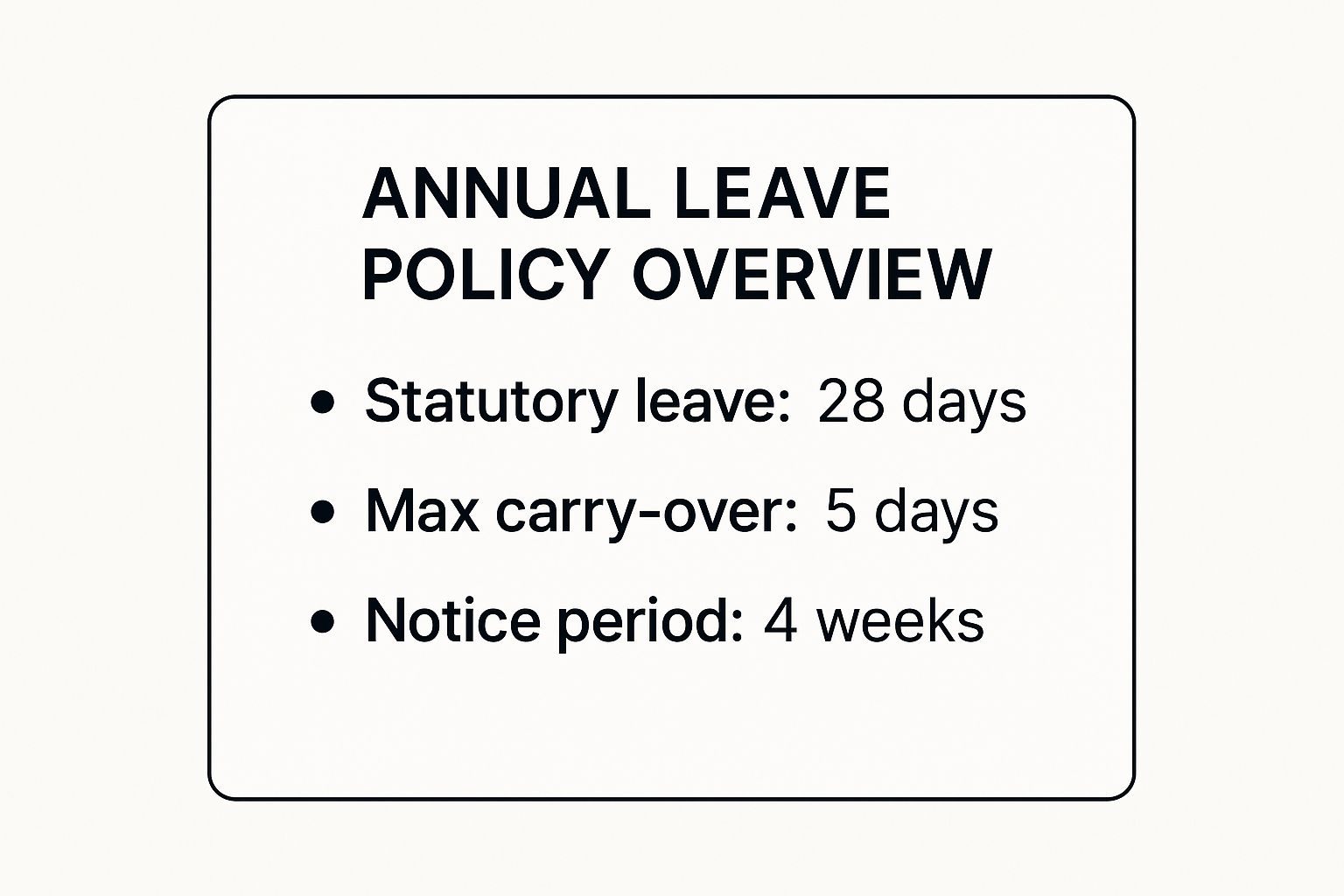
These three pillars—statutory entitlement, carry-over limits, and request notice—really are the backbone of a fair and transparent system.
Addressing Common Scenarios
A truly great policy anticipates the tricky situations before they crop up. Think about the specific questions that will inevitably be asked and tackle them head-on in the document. This proactive approach saves a ton of time and prevents a simple request from turning into a major headache.
For example, clearly outline your process for handling leave during an employee's notice period. You might specify that all accrued but untaken holiday will be paid out, or perhaps state that leave can't be taken during this time. Similarly, define your approach to extended holiday requests, like for a sabbatical or a once-in-a-lifetime trip. By setting these expectations upfront, you create a process that's both fair and predictable.
Think of your policy as the rulebook for your employee holiday tracking system. It has to be written in simple, clear language that anyone can understand. Ditch the legal jargon and focus on practical guidance that helps your team navigate the process with confidence.
In the UK, it's absolutely vital that your policy is legally compliant. Full-time employees are entitled to a minimum of 5.6 weeks of paid annual leave, which works out to 28 days. This figure can include bank holidays, but you must clarify in your policy whether they are part of this total or are given on top. For more detailed guidance on getting this right, our UK employee leave policy template provides a fantastic starting point.
Choosing Your Holiday Tracking Tool
With a solid policy in place, you’re ready to find the right system to bring it to life. The goal here is to pick a tool that genuinely fits your company's size, budget, and culture—not just one with the flashiest feature list. What works for a five-person startup will quickly create chaos for a growing team of fifty.
For the smallest teams, a well-organised spreadsheet can seem like a logical starting point. It’s free and everyone knows how to use one. But as your business expands, its limitations become glaringly obvious. There are no automated notifications, no easy way for employees to check their own balances, and the risk of formula errors or accidental data deletion is always lurking.
Moving Beyond Spreadsheets
When your spreadsheet starts to buckle under the weight of manual updates and constant version control issues, you know it’s time to upgrade. This is the point where most businesses look at dedicated HR software or a specialised employee holiday tracking system. These tools are built specifically to solve the problems that spreadsheets create.
They offer a central, accessible platform where everything is handled automatically.
- Automated Calculations: The software accurately works out leave balances for everyone, including complex pro-rata entitlements for part-time staff.
- Self-Service Portals: Employees can check their remaining leave and submit requests on their own time, which drastically cuts down on admin queries.
- Integrated Calendars: Team and manager calendars are updated in real-time, giving you instant visibility into who is off and when.
This shift from manual to automated isn’t just about saving time; it's about creating a more transparent and professional process for everyone. A good staff holiday tracker gives your team the clarity they need.
A common mistake is choosing a tool based purely on price. A system that frustrates your team and requires constant manual workarounds isn't a bargain—it's just a different kind of headache. Focus on value and how well it solves your specific pain points.
Evaluating Your Options Effectively
When you start looking at different solutions, it’s easy to get overwhelmed by all the choices. The key is to focus on the features that will genuinely make a difference in your daily operations. To see an example of a modern AI-powered system designed for efficiency, you might want to explore solutions like Parakeet AI's approach to leave management.
Before you commit, try running a small pilot with a few team members. Their real-world feedback is invaluable. Can they easily request leave? Does the mobile app work as expected? Getting their input ensures you choose a solution that people will actually use and appreciate.
To help you weigh up the different paths you can take, I’ve put together a simple comparison.
Comparison of Employee Holiday Tracking Methods
This table breaks down the common methods for tracking holidays, highlighting where each one shines and where it falls short. It's designed to help you quickly see which approach might be the best fit for your business right now.
| Tracking Method | Best For (Company Size) | Typical Cost | Key Advantages | Key Disadvantages |
|---|---|---|---|---|
| Spreadsheets | 1-10 Employees | Free | No initial cost; highly customisable. | Prone to errors; no automation; poor visibility. |
| HR Software | 25+ Employees | Per user/month subscription | Centralises all HR data; broad functionality. | Can be complex; may have features you don’t need. |
| Dedicated Tools | 10-100+ Employees | Per user/month subscription | Focused on leave; user-friendly; cost-effective. | Less comprehensive than full HR suites. |
Ultimately, whether you stick with a simple spreadsheet or invest in a dedicated tool, the right choice is the one that removes friction and gives everyone—managers and employees alike—clarity and confidence in the process.
Rolling Out Your New Holiday Tracking System
Here's a truth many forget: implementing a new system is far more about managing people than it is about configuring software. A successful launch hinges on clear communication and a smooth transition that brings your team along for the ride, rather than just forcing a new process on them. The real aim is to build confidence and show everyone the benefits from day one.
It all starts with getting the setup right. Your new system must perfectly mirror your company's annual leave policy. Every single rule, from carry-over limits to notice periods for booking time off, needs to be programmed in accurately. This is non-negotiable, as it ensures the tool consistently and fairly enforces the policies you’ve already established.
Preparing for a Smooth Launch
Once the system is configured to your rules, the next critical step is migrating the data. This means accurately importing all existing employee data, especially their current holiday balances. One slip-up here can instantly destroy trust in the new system before anyone has even logged in. Double-check everything. Then check it again.
With the backend sorted, your focus must shift entirely to your team. A common mistake is to simply ping an email out with a login link and hope for the best. That's a recipe for confusion and frustration. Instead, you need a phased and supportive rollout.
Here’s what works in practice:
- Create a Short Training Video: Forget lengthy user manuals. A simple, two-minute screen recording that walks staff through submitting a request and checking their balance is infinitely more effective.
- Run a Pilot Programme: Before going live for everyone, select a small, representative group of employees to test the system for a week or two. Their feedback is pure gold for catching any confusing bits before the full company-wide launch.
- Establish a Clear Cut-Off Date: Announce a firm date when the old method (be it a shared spreadsheet or random email requests) will be officially retired. This prevents chaos and ensures everyone moves over to the new platform together.
The goal of your rollout isn't just to replace a tool; it's to improve a process. You have to frame the change around how it makes life easier for the team—no more guessing leave balances, faster approvals, and a clear view of who's in and who's out.
Communicating the Change Effectively
Communication is the glue that holds this whole thing together. You need to clearly explain the 'why' behind the new system. Don’t just talk about features; talk about the benefits. Emphasise that you’re moving away from a clunky, frustrating process to one that’s transparent, fair, and easy for everyone to use.
Before launch day, hold a brief team meeting or a virtual Q&A session. This gives people a chance to ask questions and voice any concerns in an open forum, which helps get buy-in. Follow that up with clear, concise written instructions that reinforce the key messages and give people something to refer back to.
Your proactive approach here will make all the difference. It's what separates a new system that's seen as a welcome improvement from one that feels like just another administrative burden.
Using Your System to Manage Leave Strategically

So, you've got your leave tracking system set up and running. What now? The real magic happens when you stop seeing it as just a digital filing cabinet and start treating it like the strategic tool it is. A good employee holiday tracking platform gives you powerful clues about team capacity, wellbeing, and even the overall health of your business—if you know where to look.
The goal is to shift from a reactive approval process to a proactive management style. Instead of just rubber-stamping requests as they land in your inbox, you can use the system’s data to spot patterns, head off problems, and guide your team towards a healthier work-life balance that actually benefits the company.
From Data to Decisions
Your tracking tool is quietly collecting a goldmine of data every single day. The reports section is where you pan for that gold, turning raw information into smart decisions. One of the first things I always check is the outstanding leave balance for each person. A high number isn't a badge of honour; it's often a red flag.
Imagine you notice your lead designer still has 15 days of leave left in November. That’s a classic sign they could be heading for burnout. This insight gives you the perfect opportunity to step in, have a chat, and encourage them to book a proper break before the year ends. You're not just being nice; you're protecting their wellbeing and their long-term productivity.
Your tracking system's calendar isn't just for scheduling; it's a forecasting tool. Use it to visualise team coverage for the months ahead, identify potential staffing gaps during project deadlines, and ensure key skills are always available.
By making a habit of reviewing these trends, you start making smarter, data-driven decisions. Suddenly, leave management isn't just an admin headache—it's a core part of your business strategy for keeping your team resilient and well-rested.
Maximising Time Off Without Disrupting Workflow
A smart approach to leave also means helping your team get the absolute most out of their time off. This is where understanding the fine art of ‘leave stacking’ comes in, especially in the UK with our generous helping of bank holidays. It’s simply the practice of booking annual leave around public holidays to create a much longer, continuous break.
Your system’s calendar view makes it dead easy to spot these opportunities around Easter or the May bank holidays. By encouraging staff to plan their leave around these dates, they can get a more restorative break using fewer of their precious holiday days. It’s a massive morale booster.
In fact, strategic planning can make a huge difference. In 2025, UK employees could stretch 29 days of annual leave into an incredible 67 days off just by planning around bank holidays. You can discover how to stack leave effectively and share these tips with your team.
Of course, the key is managing this proactively. With a clear, shared view of all upcoming leave, you can avoid clashes and ensure you always have enough people on deck. You can approve stacked leave for some while making sure others are available, keeping everything running smoothly. This turns your tracking tool from a simple record-keeper into a powerhouse for strategic workforce planning.
Of course, even with the slickest system and a perfectly worded policy, you're always going to get those tricky, real-world questions cropping up. Being ready with clear, confident answers for these common challenges is what separates a smooth process from a messy one.
Let's walk through some of the most frequent queries we see from businesses across the UK. These are the scenarios that often sit just outside the day-to-day basics, so having a firm stance is absolutely essential.
How Should We Handle Holiday Entitlement for Part-Time Staff?
This one comes up all the time. For any part-time employee in the UK, their holiday entitlement is simply calculated on a pro-rata basis. They still get the full statutory 5.6 weeks of leave, but it's worked out in proportion to the days or hours they actually work.
For instance, if someone works three days a week, their entitlement is 16.8 days for the year (that's 5.6 weeks x 3 days). A good tracking system handles all this maths for you, which completely removes the risk of human error. Just remember, it’s a legal must to always round any fractions of a day up, never down.
The keyword here is proportionality. Whatever your full-timers get, your part-time team members get a proportional slice based on their work pattern. Trust me, a solid holiday tracking tool is your best friend for getting this right every single time without reaching for a calculator.
Can a UK Employer Refuse a Holiday Request?
In short, yes—but you absolutely must have a good business reason. You can decline a request if it clashes with a critical project deadline, if the rota is already looking thin with other approved leave, or if the employee hasn't given you enough notice as laid out in your policy.
The key is that your reasons must be genuine and communicated clearly and professionally. What you can't do is put a blanket ban on leave that stops an employee from taking their statutory entitlement within the leave year. Any refusal has to be reasonable and tied directly to real operational needs.
What Is a Fair Way to Manage Requests for Popular Periods?
When it comes to peak times like Christmas or the summer school holidays, you need a transparent and fair system to avoid any feelings of favouritism or frustration.
Here are a few solid approaches:
- First-Come, First-Served: This is easily the most common and accepted method. It's straightforward, fair, and simple to manage, especially when your tracking tool gives you a clear, time-stamped log of every single request.
- Set a Deadline: Get ahead of the rush by announcing a clear cut-off date for submitting requests for those high-demand periods. This nudges everyone to plan ahead and gives you a full picture to work from.
- Use a Shared Calendar: A visible team calendar is an absolute game-changer. It lets employees see who has already been approved for leave, which naturally cuts down on the number of clashing requests you have to deal with in the first place.
At the end of the day, fairness really boils down to having a clear, well-communicated policy that you apply consistently to everyone. It builds trust and makes the whole process so much smoother.


