
Let's be honest, figuring out the rules around annual leave can feel like a bit of a minefield. But at its heart, the principle is simple: UK law makes sure your team gets enough paid time off to rest and recharge. This isn't just a nice-to-have; it's a fundamental right baked into the Working Time Regulations.
For any employer, getting to grips with this is the first real step towards building a fair, compliant, and supportive workplace. Think of your annual leave policy as the official rulebook for time off in your company. A clear and accurate one stops confusion in its tracks and makes sure everyone knows where they stand.
This guide will walk you through everything you need to know, from the absolute basics to the trickier situations you might face.
The Legal Minimum Explained
So, what's the magic number? In the UK, the statutory minimum annual leave entitlement is 5.6 weeks of paid holiday per year.
For a typical full-time employee working a standard 5-day week, this works out to 28 days of paid leave. This right, confirmed by official sources like the GOV.UK website, is there to help people maintain a decent work-life balance, which in turn fuels productivity. This has been the baseline since April 2009, although many employers choose to offer more.
One of the most common questions we hear from businesses is whether bank holidays are included in this total. The answer is: they can be. The law allows you to include the UK's public holidays (usually eight per year in England and Wales) as part of the statutory 28 days.
For example: If your company closes for all eight bank holidays, you can count these towards an employee's 28-day entitlement. This leaves them with 20 days to book whenever they choose. The key is that this arrangement must be clearly laid out in their employment contract.
This official right to paid holiday covers nearly everyone, including agency staff and even those on zero-hours contracts. For a much deeper dive into the specifics, you can read our detailed guide on the minimum holiday entitlement UK.
To make it even clearer, let's look at how the minimum entitlement breaks down for different working patterns.
Statutory Annual Leave Entitlement at a Glance
Here’s a quick summary of the minimum paid holiday your team is entitled to, based on how many days they work each week.
| Days Worked Per Week | Minimum Weeks of Leave | Minimum Days of Leave |
|---|---|---|
| 5 days | 5.6 weeks | 28 days |
| 4 days | 5.6 weeks | 22.4 days |
| 3 days | 5.6 weeks | 16.8 days |
| 2 days | 5.6 weeks | 11.2 days |
| 1 day | 5.6 weeks | 5.6 days |
As you can see, while the number of days changes for part-time staff, the entitlement of 5.6 weeks remains the constant factor. This is crucial for making sure your calculations are always fair and legally sound.
Calculating Holiday for Different Work Patterns
Moving from theory to practice is where you really get a handle on the UK’s annual leave rules. While the 5.6-week rule is the foundation for everyone, how you apply it shifts depending on your team's working patterns. Think of holiday accrual like a savings account for time off—the more someone works, the more paid leave they build up.
Getting the maths right from the start helps you sidestep the common calculation errors that so often lead to compliance headaches and unhappy employees. Let's break down how to calculate holiday for each type of work pattern, so you can stop guessing and start managing leave with confidence.
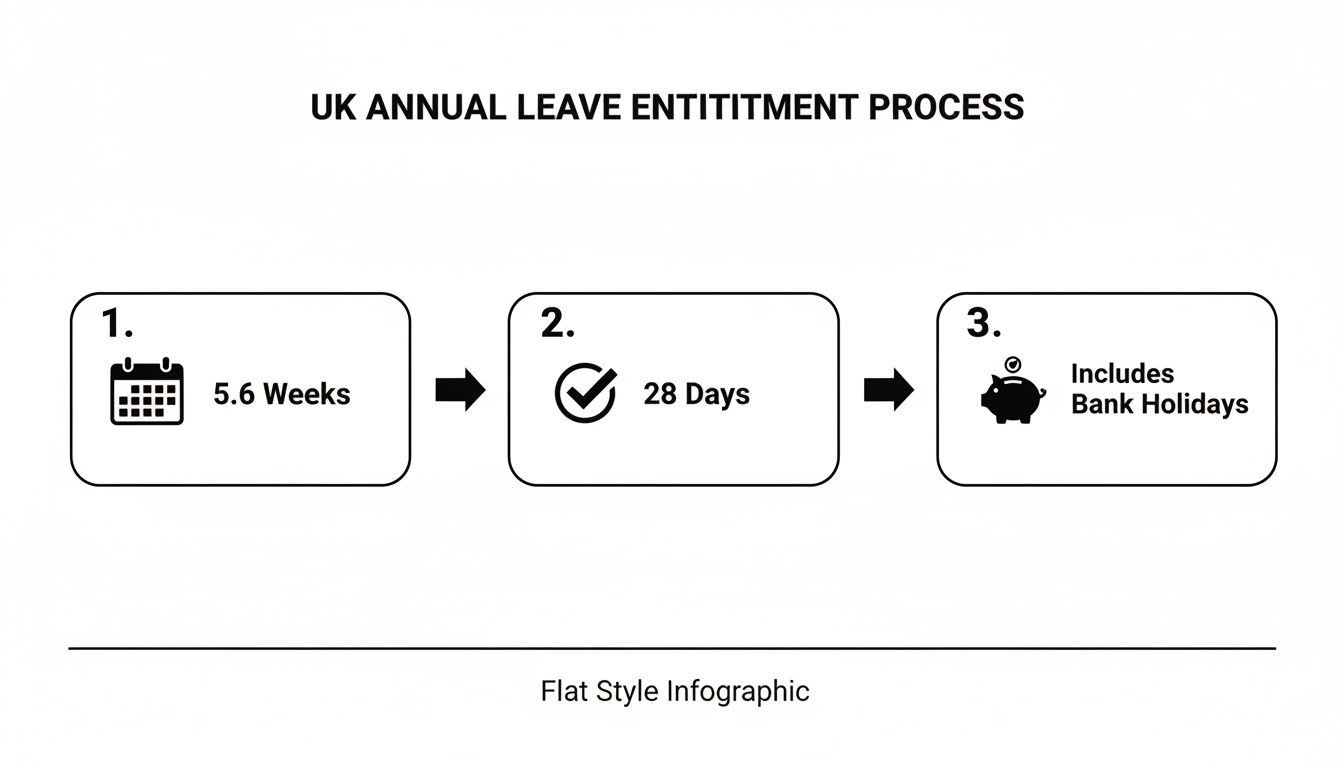
The key thing to remember is that 5.6 weeks is always your starting point, no matter how many days or hours an employee works.
Calculating for Full-Time Employees
Let's start with the most straightforward scenario: your full-time staff. These are the people who work a consistent number of days each week, which is typically five.
The formula couldn't be simpler. You just multiply the days they work each week by the statutory entitlement of 5.6 weeks.
Example Calculation
- An employee works 5 days a week.
- The calculation is: 5 days × 5.6 weeks = 28 days of paid annual leave.
This gives them the legal minimum of 28 days. If your company policy rolls bank holidays into this total, you'll subtract them to see how many days the employee can book freely. With eight bank holidays, for example, they’d have 20 days of flexible leave.
Calculating for Part-Time Employees
For part-time workers, the principle is exactly the same, but their entitlement is calculated on a pro-rata basis. This just means their holiday is proportional to the time they work, ensuring they get a fair deal compared to their full-time colleagues.
You use the very same formula—multiplying the days they work by the 5.6-week entitlement.
Example Calculation
- An employee works 3 days a week.
- The calculation is: 3 days × 5.6 weeks = 16.8 days of paid annual leave.
It's pretty common for these calculations to end up with a fraction of a day, like the 0.8 here. Legally, you can't round this down. You have two options: either round it up to the next half or full day (to 17 days, for instance) or let employees take the time in hours. For someone on an 8-hour day, 0.8 of a day works out to 6 hours and 24 minutes.
For a more detailed walkthrough, you can learn more about calculating holidays for part-time workers.
Calculating for Irregular and Zero-Hours Workers
Figuring out leave for staff on irregular or zero-hours contracts used to feel like a headache, but there's now a standard, government-approved method that makes it much clearer. Because their hours aren't fixed, their holiday entitlement grows as they work instead of being a set amount from day one.
The method uses a straightforward percentage based on the statutory leave allowance. Here’s how it works:
- A standard year has 52 weeks.
- Employees are entitled to 5.6 weeks of paid leave.
- This means the remaining working weeks in a year are 46.4 (52 – 5.6).
- To get the magic number, you divide the holiday weeks by the working weeks: (5.6 ÷ 46.4) × 100 = 12.07%.
That 12.07% is what you need to remember. For every hour someone on an irregular or casual contract works, they earn paid holiday equal to 12.07% of that time.
Example Calculation
- A zero-hours worker puts in 60 hours in one month.
- Their holiday accrual for that month is: 60 hours × 12.07% = 7.24 hours of paid leave.
This approach keeps things fair and compliant because the leave they earn is directly tied to the hours they’ve actually worked. As long as you keep good records of their hours, you can accurately calculate holiday for everyone on your team, no matter their contract.
Managing Key Holiday Rules for Your Business
Getting the numbers right on holiday allowance is one thing, but truly mastering annual leave means getting to grips with the rules that govern it day-to-day. You need to know how leave is requested, approved, and paid to stay compliant and keep your team happy.
Think of it as knowing the Highway Code for time off—it prevents messy collisions between what your employees expect and what the law demands. Nailing these details isn't just about ticking boxes; it’s about building a fair, transparent system that everyone in the business can trust.
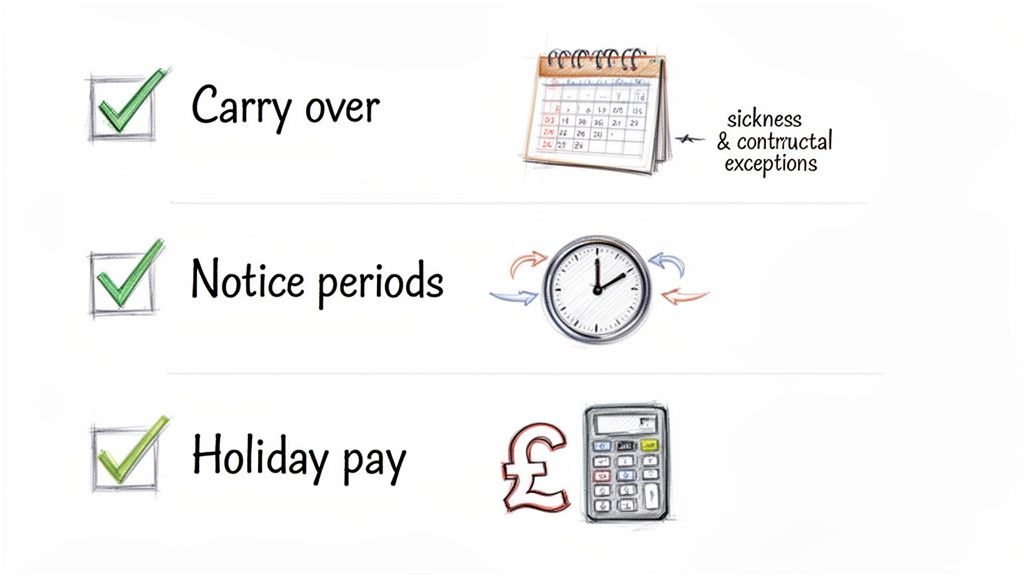
Let's break down three of the most crucial areas: carrying over unused leave, handling notice periods, and calculating holiday pay correctly every time.
Rules for Carrying Over Unused Leave
One of the most common questions from staff is what happens to holiday days they haven't taken by the end of the leave year. The default position in the UK is pretty straightforward: it’s a classic “use it or lose it” scenario.
Legally, the statutory 5.6 weeks of annual leave can't typically be carried over into the next year. However, if your company offers more than the minimum, you can let employees carry over any of that additional leave. For instance, if you offer 33 days (5 more than the 28-day statutory minimum), your contract could allow staff to carry over up to five of those days.
Of course, there are important exceptions where the law requires you to let staff carry over their statutory leave:
- Long-Term Sickness: If an employee couldn't take their holiday because they were on long-term sick leave, they must be allowed to carry it over.
- Maternity Leave: Holiday time continues to build up during maternity, paternity, and adoption leave. The employee has to be able to take all that accrued time when they return.
The core principle here is that employees must have a genuine opportunity to take their holiday. If an employer's actions, like constantly denying requests because of workload, prevent someone from taking their leave, a tribunal could rule that they have the right to carry it over.
Understanding Holiday Notice Periods
To stop the business grinding to a halt every time someone books a holiday, there are clear statutory rules on how much notice is needed. While these provide a solid baseline, you can—and absolutely should—define your own specific terms in your employment contracts and company handbook.
The basic legal rules are simple and work both ways:
- Employee Request: An employee must give notice that is at least twice as long as the holiday they want to take. So, for a one-week holiday, they need to give you two weeks' notice.
- Employer Refusal: If you need to turn down a request, you must give notice equal to the length of the holiday they asked for. For that same one-week holiday, you'd need to say no at least one week before it was due to start.
Having your own clear, formal policy is vital for managing staffing levels and keeping things running smoothly.
Calculating Correct Holiday Pay
Holiday pay seems simple enough for salaried staff who earn the same amount each month. But what about when an employee’s pay fluctuates? UK law is very clear: holiday pay must reflect what an employee would have normally earned if they had been at work. This means looking beyond their basic rate.
For staff with variable hours or earnings, you must calculate their average pay over the previous 52 paid weeks. Crucially, this average must include:
- Overtime payments (if it's regularly worked)
- Commission payments
- Bonuses that are directly linked to performance
This calculation ensures that someone who consistently works overtime isn't financially penalised for taking a well-deserved break. Forgetting to include these variable elements is one of the most common payroll mistakes and a frequent source of employee disputes, making it a critical aspect of managing annual leave entitlement United Kingdom.
Navigating Leave During Sickness, Maternity and Terminations
Employee leave can get tricky when big life and career events happen. While booking a standard holiday is usually simple enough, things like long-term sickness, maternity leave, or an employee leaving the company all come with their own set of rules you need to follow. Getting these special cases right is essential for avoiding legal headaches and treating your team fairly.
Think of an employee's annual leave entitlement as a pot of paid time off that keeps filling up, even when they aren't actively working due to illness or parental leave. The law protects this right to accrue holiday, making sure team members don’t lose out during these important periods. Here’s a clear roadmap for handling these situations correctly.
Holiday Accrual During Sick Leave
When an employee is off sick, their statutory holiday entitlement continues to build up just as it normally would. This is a crucial point that trips up many employers. You can't penalise an employee's holiday allowance for being unwell, no matter how long they're off.
For example, a full-time employee on sick leave for three months will still accrue their full 28 days of statutory leave over the course of the year. The real challenge comes when that period of sick leave crosses from one leave year into the next.
If someone is unable to take their holiday because of long-term sickness, you have to let them carry it over.
- Statutory Leave: They can carry over up to four weeks (20 days for a full-timer) of their leave.
- Time Limit: This carried-over leave must then be used within 18 months from the end of the leave year in which it was accrued.
Managing this properly demands sharp record-keeping. For more on this, check out our guide on managing sickness absence for some practical advice.
How Maternity Leave Affects Holiday Entitlement
Just like with sick leave, an employee’s full statutory and contractual holiday entitlement keeps on accruing throughout their entire maternity leave. This covers both Ordinary Maternity Leave (the first 26 weeks) and Additional Maternity Leave (the next 26 weeks).
Since an employee can't take annual leave while they're on maternity leave, it’s pretty common for them to come back with a hefty holiday balance. The best approach is to chat about this and make a plan before their leave even starts.
Key Takeaway: An employee on maternity leave for a full year will return with their entire annual holiday entitlement waiting for them. You must allow them to take this leave or, in some situations, agree to a payment in lieu, depending on your company policy and the leave year dates.
It's also interesting to see how different sectors handle leave. In 2023, the average leave taken (including bank holidays) swung from 35.5 days in consulting down to just 29.1 in hospitality. For small businesses especially, understanding these trends and how big events like maternity leave affect your holiday balances is vital for good resource planning. You can explore more UK annual leave patterns by industry on peoplehr.com.
Calculating Final Holiday Pay on Termination
When someone leaves your company, you have to calculate their final holiday pay with pinpoint accuracy. This ensures you part ways on clean, compliant terms—whether you owe them for untaken leave or they owe you for taking too much.
The entire calculation is based on how much statutory leave they’ve earned up to their very last day. First, you need to figure out what chunk of the leave year they’ve actually worked.
Step-by-Step Calculation Example
Let’s say an employee is leaving on 30th June, and your company's leave year runs from January to December.
- Calculate the proportion of the year worked: They've worked for 6 out of 12 months, which is exactly 50% of the year.
- Determine accrued entitlement: For a full-timer with 28 days' leave, they would have earned 50% of that total.
28 days × 0.50 = 14 days
- Compare accrued leave to leave taken: Now, you just check how many days of holiday they’ve already used.
- If they've only taken 10 days, you owe them payment for the remaining 4 days.
- If they've taken 16 days, they've used 2 days more than they earned. You can usually deduct this from their final pay, as long as this is clearly stated in their employment contract.
Your Essential UK Annual Leave Compliance Checklist
Getting annual leave wrong can land your business in hot water, leading to expensive employment tribunals and a serious dent in your reputation. But staying compliant isn’t just about dodging penalties. It's about creating a fair, transparent workplace where your team feels genuinely valued. This checklist is your practical guide to getting it right.
Think of this as the pre-flight check for your holiday policies. By walking through each area step-by-step, you can spot potential turbulence before it becomes a real problem. This turns compliance from a headache into a straightforward part of running a great business.
Getting the Basics Right
Before you get tangled up in complex scenarios, let's make sure the fundamentals are rock solid. These are the non-negotiables that form the foundation of your entire leave management system.
-
Keep Meticulous Records: You absolutely must keep accurate, up-to-date records of all holiday leave requested, approved, and taken. This isn't just good practice; it's your primary evidence of compliance if a dispute ever arises.
-
Have a Crystal-Clear Holiday Policy: Your employee handbook needs a clear, easy-to-find policy. It should spell out everything from how to request leave and required notice periods to the rules on carrying over unused days.
-
Pay the Correct Holiday Rate: This is a big one. Holiday pay must reflect an employee's normal pay. That means including regular overtime, commission, and performance bonuses—not just their basic salary.
Failing on these fundamentals is one of the quickest routes to a formal complaint. A clear policy that’s been properly communicated prevents most issues from ever escalating.
Common Pitfalls and How to Sidestep Them
Even with the basics covered, a few common tripwires can catch employers out. Knowing what they are is half the battle in staying fully compliant.
A frequent mistake is miscalculating pro-rata leave for part-time staff or messing up accrual for someone on maternity leave. Another classic error is incorrectly applying the 52-week average pay rule for staff on variable hours, which almost always leads to underpayment.
To get ahead of these issues, it's a smart move to start performing a comprehensive HR risk assessment as part of your overall compliance strategy.
Key Insight: The biggest compliance risks rarely come from your standard full-time employees. It’s the exceptions—part-timers, casual workers, and those on long-term leave—that need your closest attention.
A Quick Compliance Checklist
To make this even easier, here's a simple table to run through. Use it to audit your current processes and plug any gaps you find. It’s a small time investment that can save you a world of trouble later on.
| Compliance Area | Action Required | Common Pitfall to Avoid |
|---|---|---|
| Record-Keeping | Maintain accurate, accessible records of all leave requested, taken, and paid for every employee. | Using messy spreadsheets that lead to errors or lost data. |
| Holiday Policy | Ensure your policy is written in plain English, is in the employee handbook, and covers all key rules. | Having a vague or outdated policy that creates confusion. |
| Pay Calculations | Calculate holiday pay based on an employee's average weekly pay over the last 52 weeks worked. | Forgetting to include regular overtime, commission, or bonuses. |
| Part-Time & Irregular Hours | Use the correct pro-rata or percentage method (12.07%) to calculate leave for non-standard workers. | Applying a full-time entitlement to a part-time worker by mistake. |
| Leave During Sickness | Allow employees to accrue and take statutory leave while on sick leave. | Preventing an employee on long-term sick from using their holiday. |
| Termination | Calculate and pay for all accrued but untaken statutory leave in the employee's final payslip. | Incorrectly deducting pay for "excess" leave taken without a clear clause in the contract. |
Running through this checklist a couple of times a year will help keep your business protected and your team treated fairly.
Actionable Wording for Your Handbook
To help you put this into practice, here are a couple of sample clauses you can adapt for your employee handbook. Using clear, unambiguous language is your best defence against misunderstandings.
Sample Clause for Notice Periods:
"To request annual leave, you’ll need to give notice of at least twice the length of the holiday you want to take. For example, if you want one week off, please give us at least two weeks' notice. The company reserves the right to decline requests and will give notice equal to the leave period if we can't accommodate it."
Sample Clause for Leaving the Company:
"If you leave the company, you will be paid for any statutory annual leave you've accrued but haven't taken. If you've taken more leave than you've accrued by your final day, we reserve the right to deduct the value of that excess leave from your final salary payment."
How to Automate and Streamline Holiday Management
Let's be honest: manually tracking holiday requests, calculating entitlements for different work patterns, and making sure every single calculation is compliant can feel like a full-time job in itself. Juggling spreadsheets, paper forms, and endless email chains isn't just slow—it’s a recipe for human error, creating risks for your business and a whole lot of frustration for your team.
This is exactly where dedicated leave management software steps in. Think of it as an intelligent assistant that handles all the repetitive, fiddly tasks involved in managing your annual leave entitlement United Kingdom policies. It frees you up to focus on the work that actually matters.
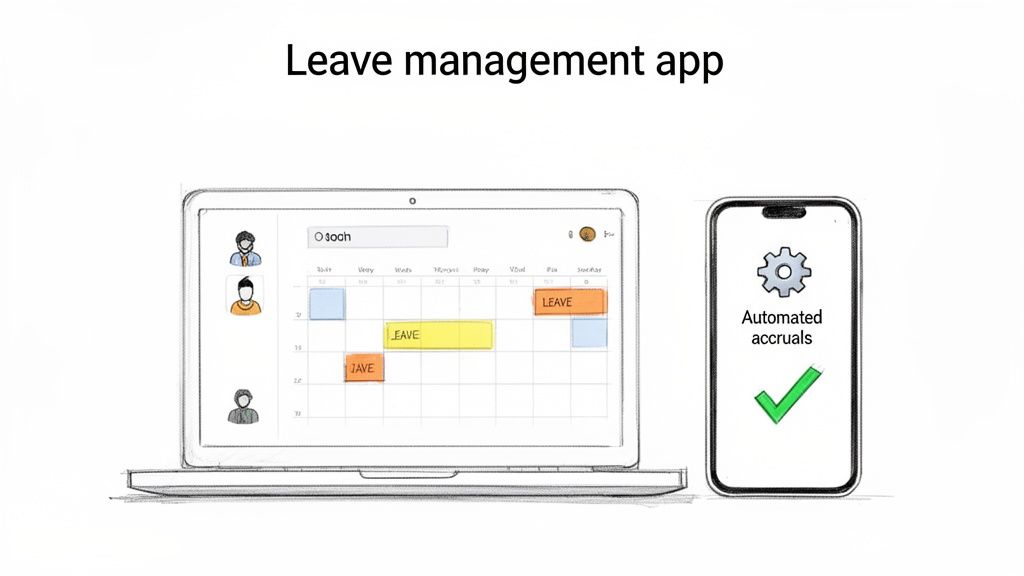
This kind of dashboard gives you a single, clear view of team availability and any pending requests. By swapping chaotic manual processes for one central system, managers get an instant snapshot for much smarter resource planning.
The Benefits for Your Whole Team
Automating leave management isn't just about saving HR a headache; the positive effects ripple out across the entire business, from line managers to individual employees. The impact is felt through better efficiency, spot-on accuracy, and total transparency.
Key advantages include:
- For HR Managers: The system automatically works out pro-rata, irregular hours, and sickness-related accruals. This puts an end to risky manual calculations and guarantees you’re always compliant with UK law.
- For Operations Managers: A real-time, shared calendar gives you immediate visibility into who is off and when. Planning projects and managing staffing levels without clashes suddenly becomes simple.
- For Finance Controllers: Accurate, automated tracking ensures that final holiday pay calculations for leavers are always correct, protecting the business from costly payroll mistakes.
The real win here is moving from reactive paperwork to proactive management. Instead of chasing forms, you have a system that gives employees self-service tools and gives managers the data they need to make smart decisions on the spot.
For businesses looking for more comprehensive support, exploring professional HR outsourcing services can be a great option. However, for most, an automated tool is the perfect first step toward bringing your leave processes into the 21st century.
Your Top UK Annual Leave Questions, Answered
Okay, you’ve got the basics down, but what about those tricky situations that always seem to pop up? Even the best holiday policy can’t cover every single scenario.
Let's tackle some of the most common questions we hear from business owners and HR managers. Getting these right is crucial for keeping things fair, compliant, and free from headaches.
Can We Tell Staff When to Take Their Holiday?
Yes, you absolutely can. This is a common practice for businesses that have a company-wide shutdown, like over the Christmas and New Year period.
The rule here is all about giving fair warning. You must give your staff notice that is at least twice the length of the leave period you want them to take.
So, if you plan to close for one week, you need to tell everyone at least two weeks beforehand. It's always a good idea to have this clause written clearly into your employment contracts so there are no surprises down the line.
How Do Bank Holidays Work for Part-Time Employees?
This is a classic source of confusion, but it doesn't need to be. Part-time workers get a pro-rata share of bank holidays, just like the rest of their annual leave.
The simplest and fairest way to handle this is to bundle the bank holidays into their total 5.6-week pro-rata entitlement right from the start.
That way, if a bank holiday falls on a day they'd normally be working, it's just deducted from their total allowance. If it falls on a non-working day, their holiday balance isn't touched. This approach ensures everyone gets their fair, proportional entitlement without any complicated maths each time a bank holiday rolls around.
Do We Have to Pay for Unused Leave if We Fire Someone?
Yes. You are legally required to pay for any accrued but untaken statutory holiday when an employee leaves, and this applies no matter why their contract ended. Even in cases of gross misconduct, this payout is non-negotiable.
This is a fundamental protection under the Working Time Regulations. Failing to pay it is a quick way to find yourself on the losing end of an employment tribunal claim.
Important Distinction: This legal mandate applies strictly to the statutory 5.6 weeks of leave. If you offer extra contractual holiday on top of this, you can set your own rules for it—but these terms must be crystal clear in your employment contract.
Is a "Use It or Lose It" Holiday Policy Legal in the UK?
For the most part, yes. A "use it or lose it" policy is perfectly legal for the statutory 5.6 weeks of annual leave. The key condition is that you must have given the employee a genuine and fair chance to take their holiday during the leave year.
You can't, for example, repeatedly deny all their requests because "it's too busy" and then tell them they've lost their leave at the end of the year. If the employer is the one preventing leave from being taken, the right to that holiday may be carried over.
There are also critical exceptions. If an employee can't take their holiday due to long-term sickness or because they are on maternity leave, they must be allowed to carry over any untaken statutory holiday.


