
Stress leave is a term we hear a lot, but what does it actually mean? It’s a specific type of sick leave people take when job-related pressure, anxiety, or depression simply becomes too much to handle.
While ‘stress leave’ isn’t an official legal term here in the United Kingdom, it's absolutely a legitimate reason for being off work. The key is that it's typically validated by a doctor's 'fit note' for mental health reasons.
Decoding Stress Leave in the UK

It’s easy to think of "stress leave" as its own formal category of time off, but in the UK, it falls squarely under the umbrella of sick leave. Think of it this way: if you break your leg, you take sick leave. If workplace pressure leads to severe anxiety, you also take sick leave. The cause is different, but the process is the same.
The real distinction is that this type of leave is specifically for psychological or mental health conditions that have been brought on, or made worse, by your job. This isn't just about feeling a bit stressed; it's about conditions like:
- Burnout: That state of complete emotional, physical, and mental exhaustion caused by long-term stress.
- Anxiety: Those persistent, excessive worries that just don't go away, even when the immediate stressor is gone.
- Depression: A serious mood disorder that causes a constant feeling of sadness and a loss of interest in things you once enjoyed.
The Role of the Fit Note
For any formal sick leave, including time off for stress, the cornerstone is the Statement of Fitness for Work, which everyone knows as a 'fit note'. This is the official document from a healthcare professional—usually your GP—that confirms you need time off.
A fit note for stress does more than just say you're unwell. It's a medical professional's assessment that your condition makes you unfit for work. It acts as the official bridge between your personal health and your professional responsibilities, giving your employer the necessary proof to authorise your absence.
Your fit note is your medical prescription for time and space. It legitimises your absence and triggers your employer’s duty of care, ensuring your leave is treated with the same seriousness as any physical illness.
The scale of this issue in the UK is staggering. Stress, depression, and anxiety are the top reasons for workplace absence, accounting for a massive 16.4 million lost working days each year. On average, employees with these conditions take about 21 days off per case, which really highlights the severe impact of workplace stress.
Is Stress a Disability?
Here’s a crucial point: how are severe mental health conditions seen in the eyes of the law? A temporary bout of stress isn't classed as a disability, but a long-term condition like chronic depression or severe anxiety certainly can be.
If a mental health issue has a "substantial and long-term adverse effect" on your ability to carry out normal day-to-day activities, it may be classified as a disability under the Equality Act 2010. This is an important layer of protection.
While this article is focused on the UK, it's helpful to see how other legal systems view this. For example, you can explore the criteria for when Is Depression a Disability in other frameworks. Recognising this potential classification underscores how serious the condition is and strengthens an employee's rights when it comes to getting reasonable adjustments upon their return to work.
How To Take Stress Leave: A Step-by-Step Guide
Feeling like you need to take stress leave can be daunting enough without having to worry about a complicated process. When you're already struggling, the last thing you need is more confusion. The good news is that the procedure is probably much more straightforward than you imagine.
Let's break it down into simple, manageable steps. By understanding the path ahead, you can quiet some of that anxiety and focus on what’s really important: your health and recovery. From recognising the signs to letting your manager know, here’s how it works.
Step 1: Recognise the Signs and Speak to Your GP
This is the most important step, and it starts with you. Acknowledging that you're not okay is the first hurdle. If work-related stress, burnout, or anxiety is taking a toll on your daily life, it's time to get some professional advice. Your General Practitioner (GP) should be your first port of call; they are your best ally in this process.
When you book your appointment, be ready to talk openly about how you’re feeling and how work is affecting your mental health. Don’t hold back on the symptoms, whether they're physical things like headaches and sleepless nights, or emotional struggles like constant worry or feeling low. Your GP is there to help you, not to judge.
Based on that conversation, your GP will assess whether you're medically unfit for work. If they agree that time off is necessary for your recovery, they'll issue a Statement of Fitness for Work, which most people know as a 'fit note'. This little piece of paper is the official key to starting your stress leave at work.
Step 2: Understanding Your Fit Note
So, what exactly is a fit note? Think of it as an official medical recommendation from your doctor. It will say one of two things:
- You are 'not fit for work': This is a clear signal from your GP that you should stay away from work entirely for a set period.
- You 'may be fit for work': This option means you could potentially return to work, but only with specific adjustments. Your GP might suggest things like a phased return, different hours, or a change in your day-to-day duties.
This document makes your absence official. It gives your employer the medical evidence they need to sign off on your sick leave, and it does so without you needing to share every sensitive detail of your condition.
Step 3: Informing Your Manager
With your fit note in hand, the next step is talking to your manager. This is the part that often causes the most anxiety, but it doesn't need to be a big, dramatic conversation. You are not legally required to disclose the ins and outs of your mental health condition unless you feel comfortable doing so.
Here’s a simple, professional way to get it done:
- Get in touch quickly: Follow your company’s usual process for reporting an absence, whether that's a phone call or an email.
- Keep it factual: Simply state that you are unwell and will be taking sick leave on the advice of your GP.
- Mention the fit note: Let them know you have a fit note and that you’ll send a copy over to them or HR, whatever your company policy dictates.
- Confirm the timeline: Tell them the start and end dates of the leave period written on your fit note.
Example Script: "Hi [Manager's Name], I'm getting in touch to let you know that I will be taking sick leave from today, as advised by my GP. I have a fit note that covers me until [End Date], and I will forward a copy to HR shortly. I'll keep you updated if anything changes."
This approach is professional, gives your manager everything they need to know, and protects your privacy.
Step 4: Maintaining Communication While on Leave
Once your leave is approved, your priority is to switch off and focus on getting better. That said, it’s a good idea to agree on a communication plan with your employer before you go. This helps manage expectations, stops you from feeling pressured to check your inbox, and keeps the company in the loop.
Agree on a sensible check-in schedule—maybe a short email once a week—just to update them on your progress and confirm your expected return date. This keeps the lines of communication open and professional, making your eventual return to work a much smoother and less stressful experience.
For anyone navigating this for the first time, having a clear checklist can make all the difference. It helps you stay organised and ensures you don't miss any crucial steps during a time when you might not be thinking clearly.
Here’s a simple checklist to guide you through the process:
Employee Checklist for Taking Stress Leave
| Step | Action Required | Key Consideration |
|---|---|---|
| 1. Self-Assessment | Honestly evaluate your symptoms. Are they affecting your daily life and ability to work? | Don't minimise your feelings. It's okay to not be okay. |
| 2. See Your GP | Book an appointment and openly discuss your work-related stress and symptoms. | Be specific. Explain how your work environment is impacting your health. |
| 3. Obtain a Fit Note | If your GP agrees, they will issue a Statement of Fitness for Work ('fit note'). | Check the dates and any recommendations for adjustments on the note. |
| 4. Notify Your Manager | Inform your manager promptly, following your company’s absence reporting policy. | You only need to share what's necessary: you're unwell, have a fit note, and will be on leave. |
| 5. Submit Paperwork | Send a copy of the fit note to your manager or HR department as required. | Keep a digital or physical copy for your own records. |
| 6. Agree on Communication | Discuss and agree on how and when you will check in during your leave. | This protects your time to recover and manages employer expectations. |
| 7. Focus on Recovery | Disconnect from work and prioritise activities that support your wellbeing. | Your only job during leave is to get better. |
| 8. Plan Your Return | Towards the end of your leave, think about your return. Will you need a phased return or other adjustments? | Communicate with your manager ahead of your return date to ensure a smooth transition. |
Following these steps methodically can help you take control of the situation and confidently manage the process of taking stress leave, allowing you to prioritise what truly matters—your wellbeing.
What Your Employer's Responsibilities Are
When you take stress leave, it isn't just a case of you being absent from your desk. It's a signal that activates a whole set of legal and ethical obligations for your employer. In the UK, every employer has a fundamental 'duty of care'. This is a legal requirement to do everything reasonably practical to protect the health, safety, and wellbeing of their staff.
Crucially, this duty goes far beyond physical safety—it absolutely includes your mental health. This means their responsibility isn't just to log your absence but to actively support you. This duty of care is the bedrock of how they should handle your stress leave, from the first day you're off right through to your return.
The Duty of Care in Practice
So, what does this duty of care actually look like when an employee takes stress leave at work? It’s not just a vague concept; it translates into several key actions that a responsible and supportive employer must take.
These actions are designed to protect your privacy, help your recovery, and make sure your return to work is a lasting success. They aren't optional extras; they are core parts of good, legally sound management.
Here are the essential responsibilities your employer has:
- Maintaining Confidentiality: Information about your health is incredibly sensitive personal data. Your employer is legally required to keep the details of your stress leave confidential, sharing it only with those who absolutely need to know, like HR or your direct manager.
- Regular, Supportive Contact: They should stay in touch with you during your leave in a way that feels appropriate. This isn't about hassling you to come back to work. It’s about checking in on your wellbeing and keeping you in the loop on any major work updates without adding to your stress.
- Following Sickness Absence Policies: A good employer will have clear procedures for managing any kind of sick leave. You can learn more about what a comprehensive policy on sickness absence should cover to get a better sense of the framework they should be using.
- Conducting a Risk Assessment: When you're ready to return, or even before, they should carry out a stress risk assessment. The goal is to pinpoint and tackle the workplace issues that contributed to your stress in the first place.
Reasonable Adjustments and Support
If your stress-related condition is considered a disability under the Equality Act 2010, your employer has a legal duty to make 'reasonable adjustments'. This is a vital concept. It’s all about removing barriers you might face at work because of your condition.
Think of reasonable adjustments as the mental health equivalent of building a ramp for a wheelchair user. It's about creating a more accessible work environment so you can thrive in your role.
An employer’s commitment to reasonable adjustments is a direct reflection of their commitment to employee wellbeing. It transforms a legal duty into a culture of genuine support, proving they value the person, not just their output.
This infographic shows the simple, initial steps an employee takes, which then triggers the employer's responsibilities.
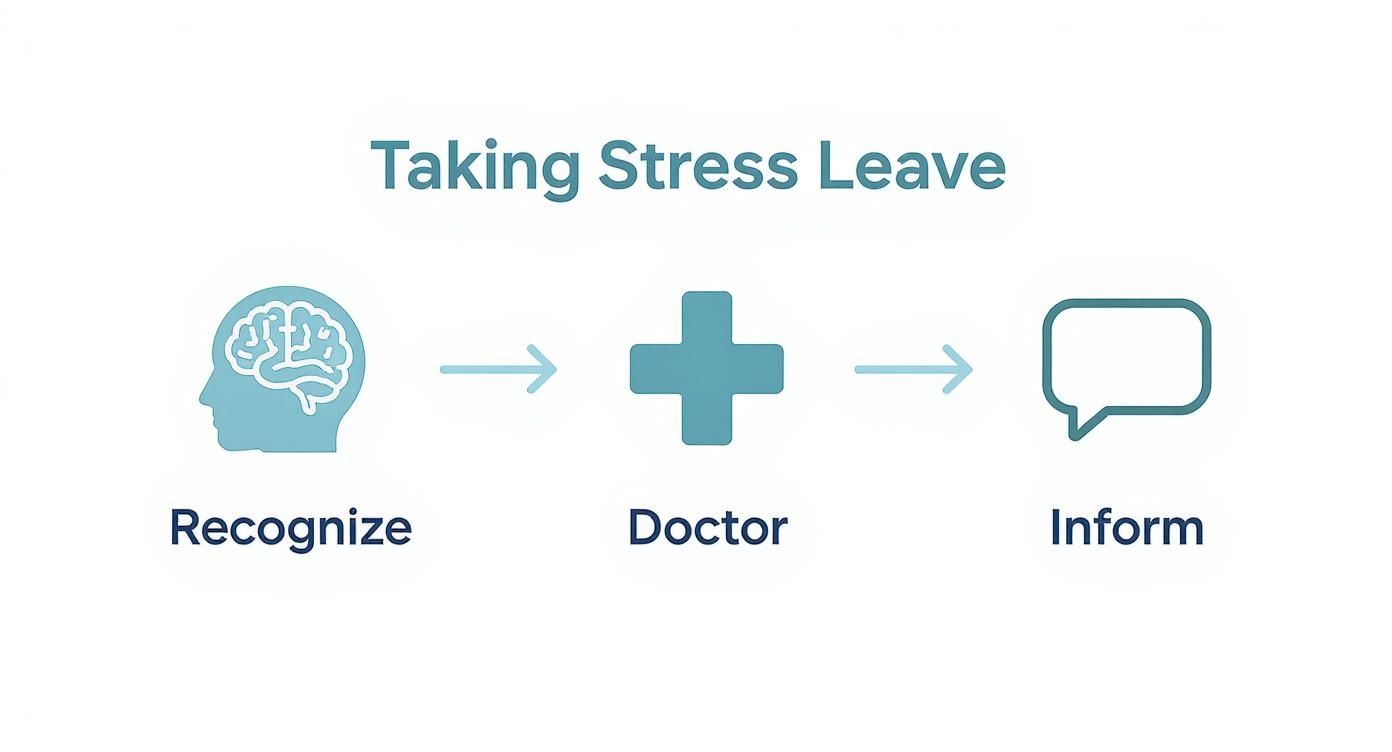
The journey starts with the employee recognising the problem and telling their employer. From that point on, the employer's duty of care kicks in.
Examples of reasonable adjustments could include:
- A Phased Return: Instead of jumping straight back into a full 40-hour week, you might start with three shorter days and gradually build back to your usual hours over a few weeks.
- Altered Duties: This could mean temporarily removing a particularly high-pressure task from your plate while you readjust. For instance, if tight deadlines were a major stressor, your workload could be re-prioritised.
- Changes to Your Work Environment: Sometimes, a simple change can make a huge difference. This could be moving your desk to a quieter part of the office or getting noise-cancelling headphones to help you focus.
- Flexible Working Hours: Allowing you to tweak your start and finish times to avoid a stressful commute or make it to therapy appointments can be a game-changer.
Understanding what your employer is responsible for is empowering. It means you know what to expect and what kind of support you're entitled to, helping you advocate for your own health as you navigate your recovery and return to work.
Understanding Your Pay and Benefits While on Leave
Financial worries are the last thing you need when you're taking time off to get your head straight. Figuring out what you’re entitled to financially is a massive part of planning for stress leave at work, as it lets you switch off and focus completely on your wellbeing.
The good news is, you won't be left high and dry. There are systems in place to give you some financial support, and your income will usually come from one of two places – or sometimes a mix of both.
Statutory Sick Pay (SSP) Explained
The absolute baseline for financial support when you're off sick in the UK is Statutory Sick Pay (SSP). This is a government-mandated payment, and most employers are legally required to pay it to their eligible employees.
Think of SSP as the minimum safety net. It’s a fixed weekly amount set by the government, which you can receive for up to 28 weeks. To get it, you need to be classed as an employee, have been unwell for at least four days in a row (this includes weekends), and earn over a certain amount each week.
It's really important to know that SSP is almost always less than your normal wages. That’s why you absolutely must check your employment contract to see if your company offers anything more on top. For a deeper dive, you can learn more about Statutory Sick Pay in our article.
Company Sick Pay Schemes
Looking beyond the legal minimum, many companies have their own, more generous sick pay schemes. You might see this called 'contractual' or 'occupational' sick pay in your contract.
A company scheme could offer things like:
- Full pay for a set period: You might get your full salary for the first four weeks you're off, for example.
- Half pay for a further period: After the full-pay period ends, your pay might drop to half for another few weeks.
These policies can vary wildly from one company to the next. Your contract or employee handbook is the only place to get the real story, so make that your first stop to get a clear picture of what to expect.
The Impact on Holiday and Pension
Taking a longer spell of stress leave can sometimes affect your other benefits, so it’s smart to get clued up on the rules.
When it comes to paid holidays, the law is firmly on your side. You continue to accrue your statutory holiday entitlement just as you normally would while on sick leave. This means your holiday days keep building up, and you can take them when you get back or, in some situations, carry them over into the next leave year.
Pension contributions are a bit more complicated and really depend on the specific rules of your pension scheme and your company's policy. Often, contributions from both you and your employer will continue, but they'll be based on the sick pay you're receiving, not your usual salary. The best advice here is to have a chat with your HR department or pension provider to get the exact details.
The sheer scale of stress-related absences really drives home why these financial protections matter so much. Data from the UK's Health and Safety Executive shows that work-related stress, depression, or anxiety accounted for 16.4 million lost working days in 2023/24. The average time off for each case was about 21.1 days. You can read the full statistics about work-related ill health to see the bigger picture.
By getting your head around SSP, your company’s sick pay policy, and the rules for holidays and pensions, you can take a lot of the financial uncertainty out of the equation. That clarity gives you the space to properly focus on your recovery, knowing your rights and benefits are looked after while you take the time you need.
How to Plan a Successful Return to Work
Coming back to your role after stress leave at work is a huge milestone in your recovery. But it’s a transition that needs a bit of thought and a solid plan to make sure it’s smooth and, more importantly, sustainable. Simply diving back into a high-pressure environment without any prep can feel overwhelming and might just undo all the good work you've put into getting better.
A successful return isn't just about clocking in on day one. It’s about creating the right environment for your long-term wellbeing. This should always be a team effort between you and your employer, with the goal being a gradual and supportive re-entry into your working life.
Embracing a Phased Return
One of the best ways to come back from stress leave is with a 'phased return'. Instead of going from zero to one hundred overnight, this approach lets you gently ease back into your tasks and the workplace atmosphere. Think of it like merging onto a motorway; you don't just swerve into the fast lane. You use the slip road to build up speed safely.
A phased return can be set up in a few different ways, depending on what works for you and your job.
- Reduced Hours: You might start with three days a week instead of five, or perhaps shorter days, slowly increasing your hours over a few weeks.
- Modified Duties: Your first tasks could be less demanding, giving you a chance to rebuild confidence without the pressure of a make-or-break project.
- Hybrid Model: Maybe you could begin by working from home a few days a week to ease back into the social side of the office.
This gradual re-entry helps you avoid the shock of jumping straight back into full-time duties, which can be a massive trigger for stress.
Creating a Formal Return to Work Plan
A casual chat and a promise to "take it easy" just won't cut it. A formal, written Return to Work plan is non-negotiable. This document, which you should create with your manager or HR, serves as a clear roadmap for your first few weeks back. It makes sure everyone is on the same page and that your needs are officially recognised and met.
Your plan should get right down to the specifics of how you'll be reintegrated.
A well-structured Return to Work plan is more than just a schedule; it's a mutual agreement that prioritises health alongside productivity. It transforms good intentions into concrete, supportive actions that prevent relapse and build a foundation for sustained wellbeing.
The plan must detail any reasonable adjustments being made to your role or work environment. This could mean changes to your workload, flexible hours for appointments, or even a different desk if things in your physical space were adding to your stress. As you get this plan together, don't forget to focus on yourself. Putting some actionable self-care strategies for burnout into practice is a brilliant way to build resilience for the future.
The Role of Supportive Check-ins
Regular, supportive communication is the glue that holds a successful return together. Make sure to schedule brief, informal catch-ups with your manager during your first few weeks back. These aren't performance reviews; they're safe spaces to talk about how you’re doing and if the plan needs any tweaks.
This ongoing conversation helps nip potential problems in the bud before they grow. It gives you a chance to adjust your workload or hours if you're feeling the pressure, making sure your return stays a positive experience. For managers, knowing how to handle these chats is vital. A properly managed return-to-work interview can set a positive tone for the entire process. Our return-to-work interview guide for proven strategies is a great resource for facilitating these crucial conversations.
At the end of the day, planning a successful return is about being proactive, not reactive. By setting out a clear plan with a phased approach, reasonable adjustments, and open communication, you can turn a potentially stressful event into a confident and positive step forward in both your career and your recovery.
Frequently Asked Questions About Stress Leave at Work
Let’s face it, navigating the rules around time off for mental health can feel like a minefield. To clear things up, we've put together answers to some of the most common questions people ask about taking stress leave at work here in the UK.
Can I Be Sacked for Taking Stress Leave?
This is a huge worry for many people, but the law is thankfully on your side. You cannot be legally dismissed just for taking sick leave for stress, especially when you have a valid fit note from your GP. An employer trying to do so could find themselves facing an unfair dismissal claim.
It goes further than that. If your stress is linked to a long-term mental health condition, it might be classed as a disability under the Equality Act 2010. In that situation, you have even stronger legal protection, and being sacked could be seen as disability discrimination.
Do I Have to Tell My Employer the Exact Reason?
No, you are not legally required to go into the specific details of your mental health condition. Your medical history is private.
All you really need to do is follow your company's standard procedure for reporting an absence. Let them know you're unwell and have been signed off by a doctor. The fit note itself is the medical validation your employer needs, without you having to share personal health details.
"Your right to privacy is paramount. A fit note confirms you are medically unfit for work; it does not require a full disclosure of your condition. This protects you while fulfilling your obligation to your employer."
Will Taking Stress Leave Affect My Career Prospects?
It's completely natural to worry about how taking time off for stress might look. A good, supportive employer, however, will see it as a responsible and necessary step towards looking after your health.
Think about it this way: recovering properly is far better for your long-term career than trying to push through burnout, which almost always leads to a drop in performance and can do more damage in the long run. A well-managed return, maybe with a phased plan and open communication, actually shows your professionalism and commitment to your wellbeing.
Can My Employer Contact Me While I Am on Leave?
Yes, your employer can make reasonable contact, but the key word here is reasonable. The goal should be to offer support, not to add pressure or create more work for you. It's a great idea to agree on a communication plan before your leave begins.
This plan might look something like this:
- A short, weekly check-in via email to see how you are.
- Updates on any essential company news you might need to know.
- Discussions about what your return-to-work plan might eventually look like.
This contact should never feel like you're being rushed back before you're medically ready. If it becomes excessive or demanding, it could get in the way of your recovery and even breach your employer's duty of care.


