
Figuring out your annual leave entitlement in the UK should be simple, right? For the most part, it is. Nearly every worker is entitled to a minimum of 5.6 weeks of paid holiday each year. This is your statutory right, and it's the foundation for any leave calculation.
Whether you're working a standard nine-to-five or have a more varied schedule, that fundamental rule is where everything starts.
Understanding Your UK Holiday Entitlement
Your total time off is really made up of two distinct parts: statutory leave and contractual leave. Getting your head around the difference is the first step to making sure you're getting the paid time off you're owed.
- Statutory Leave: This is the non-negotiable minimum set by the UK government. It’s fixed at 5.6 weeks for almost everyone, and yes, that includes part-time and zero-hours contract workers. It's the law.
- Contractual Leave: This is any extra holiday your employer decides to give you on top of the legal minimum. Think of it as a company perk, and you'll find the specific details in your employment contract.
This legal framework is there to ensure fairness. For someone working a typical five-day week, that statutory entitlement works out to 28 paid days (5.6 weeks x 5 days). The allowance scales down for different work patterns, so someone on a four-day week gets 22.4 days. In these cases, employers usually have to round this up to the nearest half or full day.
Key Distinctions to Remember
It's really important to separate what's legally required from what's offered as a company benefit. Your statutory leave is an absolute right, and no employer can offer you less than this.
Contractual leave, on the other hand, is entirely up to your employer. Some companies offer more holiday days as a reward for long service or to make their job offers more attractive. Before you start calculating anything, always check your contract to see what your full allowance is. You can learn more about how to navigate your full annual leave entitlement in our detailed guide.
One of the most common points of confusion is bank holidays. An employer can choose to include the eight annual bank holidays as part of your statutory 28 days, or they can offer them on top. Your employment contract is the final word on how your company handles this.
Calculating Leave for Different Work Schedules
The classic Monday-to-Friday, nine-to-five job is no longer the only way we work. With part-time roles, irregular shifts, and zero-hours contracts becoming more common, the old one-size-fits-all approach to calculating holiday just doesn't cut it. That's where a good leave entitlement calculator becomes an absolute necessity for getting the numbers right.
These tools are designed to handle complexity. They go beyond just asking for a start date, prompting you for things like the number of days you work each week or, for more fluid schedules, the total hours you've logged over a set period. This is the only way to make sure the final calculation is both proportional and fair for everyone.
This infographic breaks down the fundamental difference between the types of leave your entitlement is built on.
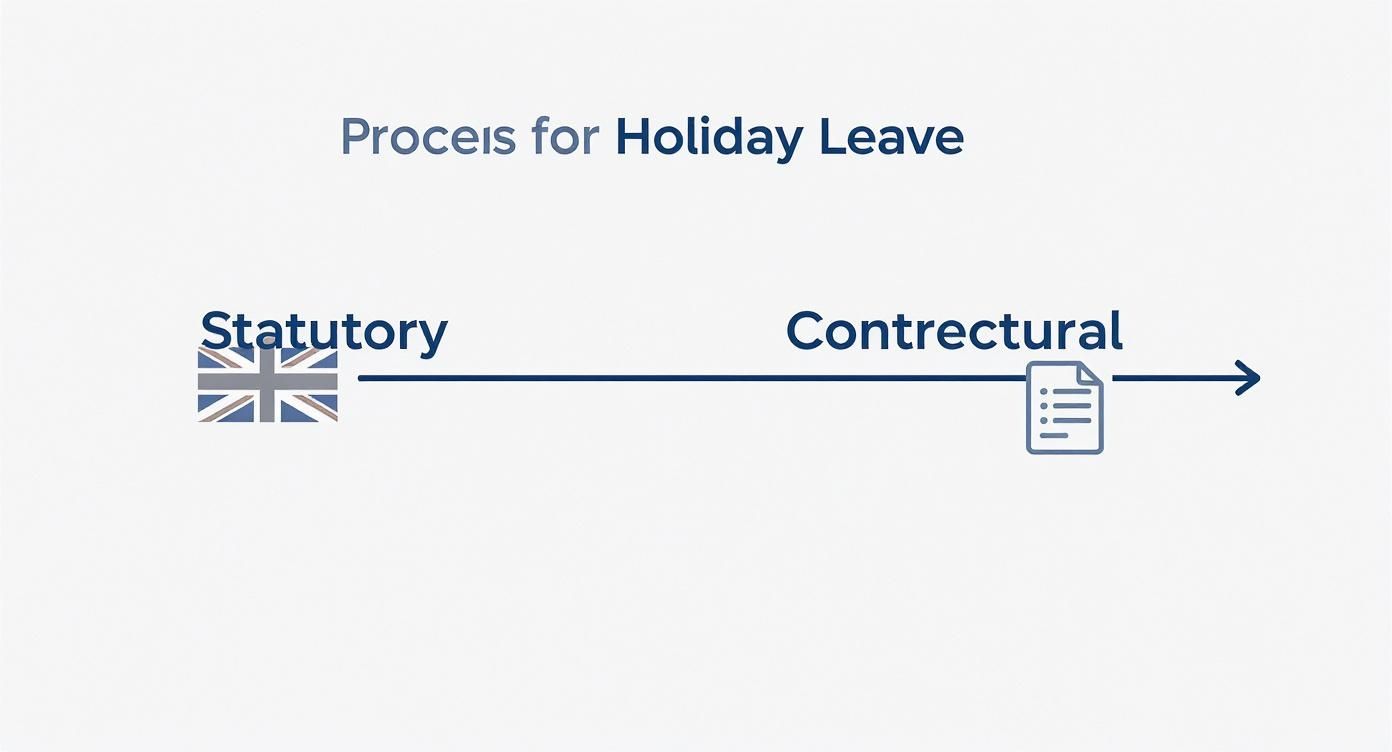
Before you can calculate anything, you need to be clear on whether your leave is statutory or contractual. Getting this first step right is crucial for ensuring your figures are accurate.
Dealing With Part-Time Staff
For part-time employees who work the same days each week, the maths is pretty straightforward. Their holiday entitlement is simply a pro-rata share of what a full-time colleague would get.
For example, someone working three days a week is entitled to 60% of the holiday allowance given to a five-day-a-week employee. If you want to dive deeper into the specifics of this, our guide on https://www.leavewizard.com/how-to-calculate-prorated-leave/ walks you through it.
To put this into perspective, here’s how the minimum statutory holiday entitlement breaks down for different part-time work weeks.
Holiday Entitlement for Part-Time Work Weeks
| Days Worked Per Week | Calculation (5.6 weeks x days) | Minimum Statutory Days |
|---|---|---|
| 1 | 5.6 x 1 | 5.6 |
| 2 | 5.6 x 2 | 11.2 |
| 3 | 5.6 x 3 | 16.8 |
| 4 | 5.6 x 4 | 22.4 |
| 5 | 5.6 x 5 | 28 |
This table clearly shows how the entitlement scales directly with the number of days worked, ensuring fairness across the board.
Handling Irregular Hours and Accrual
What about workers with less predictable schedules? For those on irregular hours, UK employment law often points to an accrual system. This is particularly relevant for people joining mid-year or working on flexible contracts.
Instead of a fixed number of days, holiday entitlement is built up based on the hours they work. The standard calculation uses a rate where 12.07% of hours worked converts into paid leave time. So, if you clock in 30 hours in a week, you've earned just under four hours of holiday.
The key thing to remember is that for every 100 hours an employee on a variable schedule works, they accrue just over 12 hours of paid holiday. This system is designed to prevent part-time or casual workers from being disadvantaged compared to their full-time colleagues.
Of course, managing your big annual leave is only part of the puzzle for staying productive and avoiding burnout. It's just as important to plan for regular, smaller breaks throughout your day. Using a simple tool like a Break Planner can help you manage your daily downtime effectively. When you properly schedule these smaller rests, you’ll find that your annual leave feels even more restorative when you finally take it.
Managing Leave When Starting or Leaving a Job

Holiday entitlement isn’t something you only think about mid-year; it’s a critical detail from an employee's first day right through to their last. When someone joins or leaves your company part-way through the holiday year, you can't just give them the full annual allowance. Their leave has to be calculated on a pro-rata basis.
This is just a straightforward way of saying their holiday allowance is proportional to the time they've actually worked within that leave year. For instance, if a new starter joins exactly halfway through the year, they are entitled to 50% of the full annual leave for that period. Getting these figures spot-on is where a reliable leave entitlement calculator becomes indispensable.
Calculating Final Holiday Pay
When an employee hands in their notice, one of the final housekeeping tasks is to sort out their holiday pay. UK employment law is clear: you must calculate the leave they've accrued right up to their final day.
Let's say a team member with a 28-day annual allowance leaves after six months. They will have earned 14 days of holiday. You simply deduct any leave they've already taken from this total, and the remaining balance must be paid out with their final salary.
But what happens if they've taken more holiday than they’ve accrued? In that scenario, you may be able to deduct the value of the excess leave from their final paycheque. However, this isn't automatic—it must be a clause that is clearly spelled out in their employment contract.
Manually crunching these numbers can be a real headache, especially when you have multiple people coming and going. It’s a process ripe for human error, which can lead to payroll mistakes and disputes that sour an employee's departure.
This is precisely why accurate, continuous tracking throughout the year is so important. If you find you regularly get stuck working out untaken holiday, it’s a strong signal that your current process needs a rethink.
Handling these transitions smoothly isn't just about ticking a compliance box. It’s about maintaining a professional, respectful relationship and ensuring fairness for both the business and your departing team member.
How Special Circumstances Affect Your Leave

Life doesn’t always run on a nine-to-five schedule, and major events can throw a wrench into the standard work year. It’s crucial to understand how these situations impact holiday allowance.
A common myth is that holiday entitlement simply pauses when someone is on long-term leave. That’s not how it works at all.
In the UK, an employee’s statutory holiday entitlement keeps building up, even when they’re off work for an extended time. This protection is a legal right during key life events.
Leave Accrual During Sickness and Parental Leave
Whether an employee is on maternity, paternity, adoption, or long-term sick leave, their right to accrue paid holiday stays intact. They are still legally entitled to their 5.6 weeks of statutory leave over the year, just as if they were at their desk every day.
This ensures someone returning from a significant absence isn’t penalised and still has paid time off waiting for them. Using a leave entitlement calculator helps you track this accrual accurately, so you stay compliant and avoid any nasty surprises down the line.
The real challenge comes up when an employee can't physically use their holiday because they're away. For instance, a team member who is on sick leave for the last four months of the holiday year won't have had a chance to take their remaining days.
Under UK employment law, if an employee can't take their statutory holiday due to being on sick leave, they can carry over up to four weeks into the next holiday year. This carried-over leave must then be used within 18 months.
The Role of Bank Holidays
Bank holidays often add another layer of complexity to the mix. There's no automatic legal right for an employee to have bank holidays off as paid leave. It all comes down to what’s written in their employment contract.
Your contract must clearly state one of two approaches:
- Inclusive: The employee's total holiday allowance (e.g., 28 days) includes bank holidays. This means if a bank holiday falls on their normal working day, it’s deducted from their total entitlement.
- Exclusive: The employee gets bank holidays as paid days off in addition to their statutory allowance. In this case, someone with 28 days of leave would also get the bank holidays on top, giving them a much more generous package.
Getting this distinction right is essential for calculating remaining leave correctly. When in doubt, always refer back to the contract—it’s the ultimate source of truth.
Of course, even with a handy calculator, small input mistakes can snowball into big compliance headaches. Overlooking simple rules is more common than you might think, and it’s often the root cause of unfair calculations and, frankly, avoidable employee disputes.
One of the most frequent errors I see is also one of the most clear-cut illegal ones: rounding down leave. If a calculation spits out 22.4 days, an employer cannot just round this down to 22. The law is clear—it must be honoured in full or rounded up to the nearest half or full day. That means giving the employee 22.5 or 23 days.
Another common pitfall is messing up pro-rata leave for new starters or those leaving the company. It's surprisingly easy to forget to account for bank holidays that fall within their specific employment period, which can easily short-change them on their final pay.
Mismanaging Part-Time Bank Holidays
This is where things can get particularly tricky. Handling bank holidays for part-time staff often trips people up. If a part-timer's normal working day falls on a bank holiday, they get the day off as you'd expect. The problem? This can create a real imbalance where some staff get more paid time off than others simply because of the days they happen to work.
To keep everything fair and consistent, the best practice is to calculate a pro-rata bank holiday entitlement for all part-time staff based on their total hours. This should be done regardless of which days they actually work. It’s the only way to prevent an unfair advantage and keep your calculations equitable across the board.
The government's own calculator is a great tool for seeing how different working patterns affect the final numbers.
Playing around with a tool like this really highlights how crucial accurate inputs are for getting a legally compliant result. To get a handle on the broader organisational risks, including those that stem from payroll inaccuracies, it’s worth exploring some strategies for human capital risk management.
Frequently Asked Questions About Holiday Entitlement
Even with the best tools at your fingertips, some specific questions about holiday rights always seem to pop up. A good leave entitlement calculator will do the heavy lifting with the numbers, but really understanding the rules behind those calculations is just as important.
Let's clear up some of the most common queries we hear.
A big one is whether your boss can actually tell you when to take your holiday. The short answer is yes, they can. For example, they might require everyone to take leave during a company-wide Christmas shutdown. The key thing is that they must give you proper notice—which is usually at least double the length of the holiday they want you to take.
Leave During Sickness and Long Service
Another area that causes confusion is what happens when you're on long-term sick leave. It’s crucial to know that you continue to build up your statutory holiday entitlement even while you're off sick.
If your illness stops you from using that leave, you are normally allowed to carry it over. You can carry forward up to four weeks into the next leave year, but you must take this carried-over leave within 18 months.
So, does your holiday allowance grow the longer you’re with a company? The statutory minimum of 5.6 weeks is fixed and doesn't increase with your length of service. That said, plenty of employers offer extra contractual leave as a loyalty perk, so it always pays to check your employment contract for these valuable extras.
One of the biggest points of confusion? Bank holidays. There is no automatic legal right to have them as paid days off. Your employer can include them as part of your statutory 5.6 weeks, or they might offer them on top. Your contract of employment is the final word on this.
Getting your head around these specific scenarios means you can look at the results from a leave calculator with total confidence. You'll know for sure that you're getting the full amount of rest you've rightfully earned.


