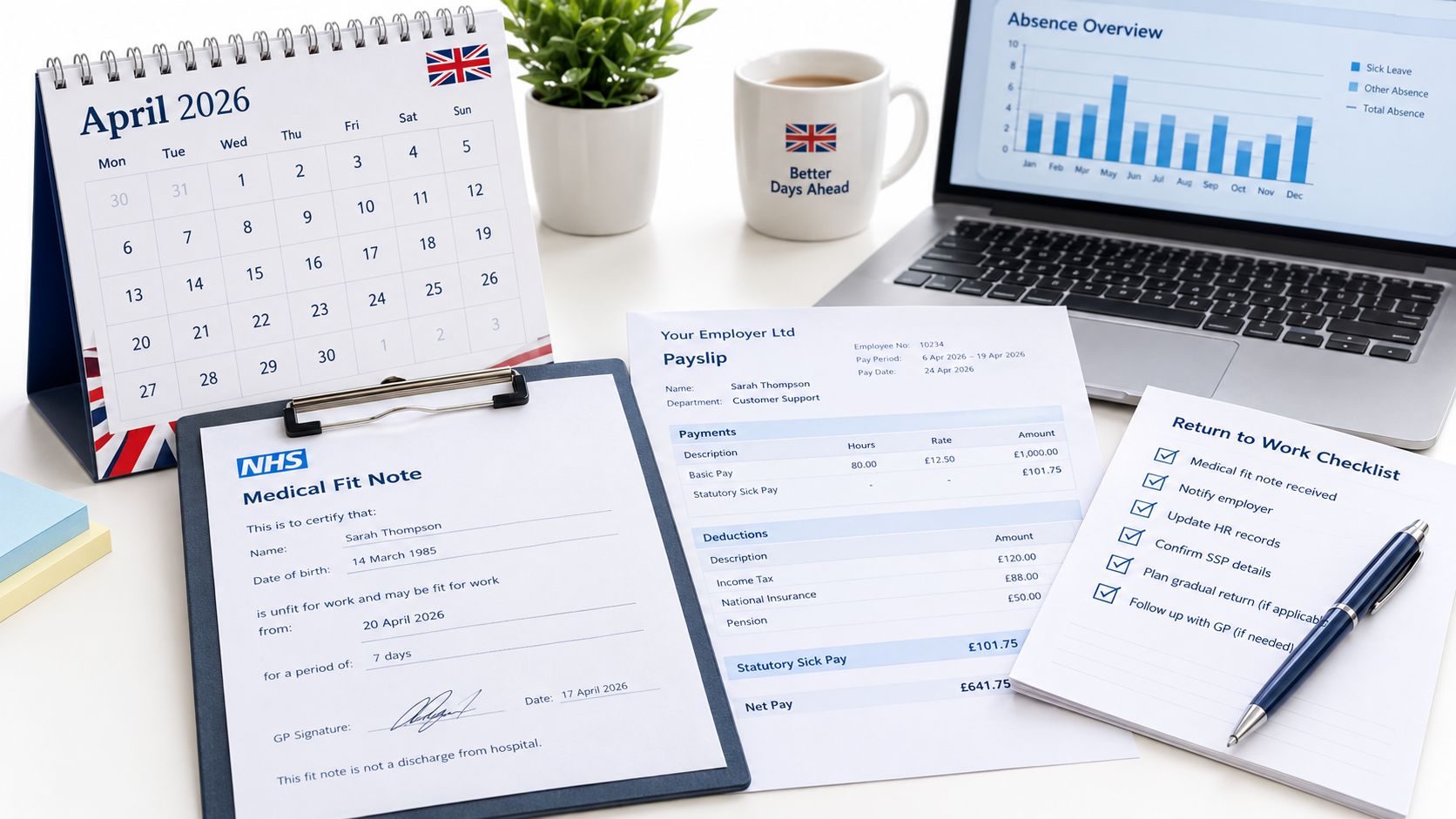
Getting your head around part-time holiday entitlement can feel a bit daunting, but it’s simpler than you might think. The bottom line in the UK is that every single worker has a right to 5.6 weeks of paid holiday. This is then scaled down (or 'pro-rata') to fairly match the hours or days your part-time staff actually work.
This whole system is designed to make sure part-timers aren't treated any less favourably than their full-time colleagues. It's about fairness, first and foremost.
What Part-Time Staff Are Entitled To

Let's start with the fundamentals. The core principle behind any holiday calculation for part-time workers is fairness. That term you hear all the time, 'pro-rata', just means "in proportion." It's about scaling holiday allowance correctly based on the amount of time an employee works.
This isn't just good practice; it's a legal must-have. The Working Time Regulations 1998 clearly state that all UK workers get a minimum of 5.6 weeks of paid holiday each year. For someone on a standard five-day week, this works out to 28 days. If you have a part-timer working three days a week, their entitlement would be 16.8 days (3 days × 5.6 weeks).
The Principle of Fair Treatment
The cornerstone of this legislation is to prevent what's known as "less favourable treatment." You can't give a part-time employee a smaller holiday allowance, on a proportional basis, than you give their full-time counterpart. This protection covers all aspects of their job, from pay rates to training opportunities.
Ensuring part-time staff receive their fair share of leave is not just about ticking a compliance box. It’s a vital part of fostering a supportive and equitable workplace where every team member feels valued, rested, and motivated.
Thinking beyond the bare minimum can do wonders for employee satisfaction. Alongside holiday leave, you might consider other perks. For instance, exploring available grants for workplace wellness programs can open up new ways to support your team and promote a healthier work-life balance for everyone.
To make the statutory requirement crystal clear, here’s a simple table breaking down how the 5.6 weeks of holiday translate into days for different work patterns. It’s a handy reference to make sure your baseline calculations are always spot on.
Statutory Holiday Entitlement at a Glance
| Days Worked Per Week | Weeks of Holiday | Total Holiday Days (Pro-Rata) |
|---|---|---|
| 5 Days | 5.6 | 28.0 Days |
| 4 Days | 5.6 | 22.4 Days |
| 3 Days | 5.6 | 16.8 Days |
| 2 Days | 5.6 | 11.2 Days |
| 1 Day | 5.6 | 5.6 Days |
As you can see, the calculation is a straightforward multiplication. This table provides a quick, at-a-glance confirmation that you’re meeting your legal obligations and treating all your employees fairly, regardless of their working hours.
Calculating Holiday for Staff on Set Days
When one of your part-time employees works the same days every week, figuring out their holiday entitlement is refreshingly straightforward. This is probably the most common scenario you'll come across, and getting it right from the start really helps build a positive relationship.
The whole process boils down to a simple, fair formula. You just multiply the number of days they work each week by the statutory entitlement of 5.6 weeks.
Formula: Days Worked Per Week × 5.6 Weeks = Total Annual Holiday Days
This calculation makes sure their holiday time is directly proportional to a full-time colleague's. It’s a clean and transparent way to work it out, which removes any guesswork or potential for frustrating errors.
Putting the Formula into Practice
Let's walk through a real-world example. Imagine you’ve just hired a new administrator, Sarah. She's agreed to work every Monday, Tuesday, and Wednesday—a consistent three days a week.
Let's plug her details into our formula:
- 3 (days worked per week) × 5.6 (weeks of statutory leave) = 16.8 days of paid holiday per year.
And that’s it. Sarah is entitled to 16.8 days of paid leave to take throughout the year. Of course, you’ll also need to know how to calculate holiday pay to ensure she receives the correct wages for each day she takes off.
Managing Bank Holidays Fairly
One of the biggest points of confusion for managers is how bank holidays fit into all this. That 16.8 days we calculated for Sarah is her total entitlement. It already includes her pro-rata share of bank holidays, so you don't need to add anything on top.
So, if a bank holiday like Good Friday falls on one of her normal working days (a Monday, in her case), she simply gets that day off, and you deduct it from her 16.8-day balance.
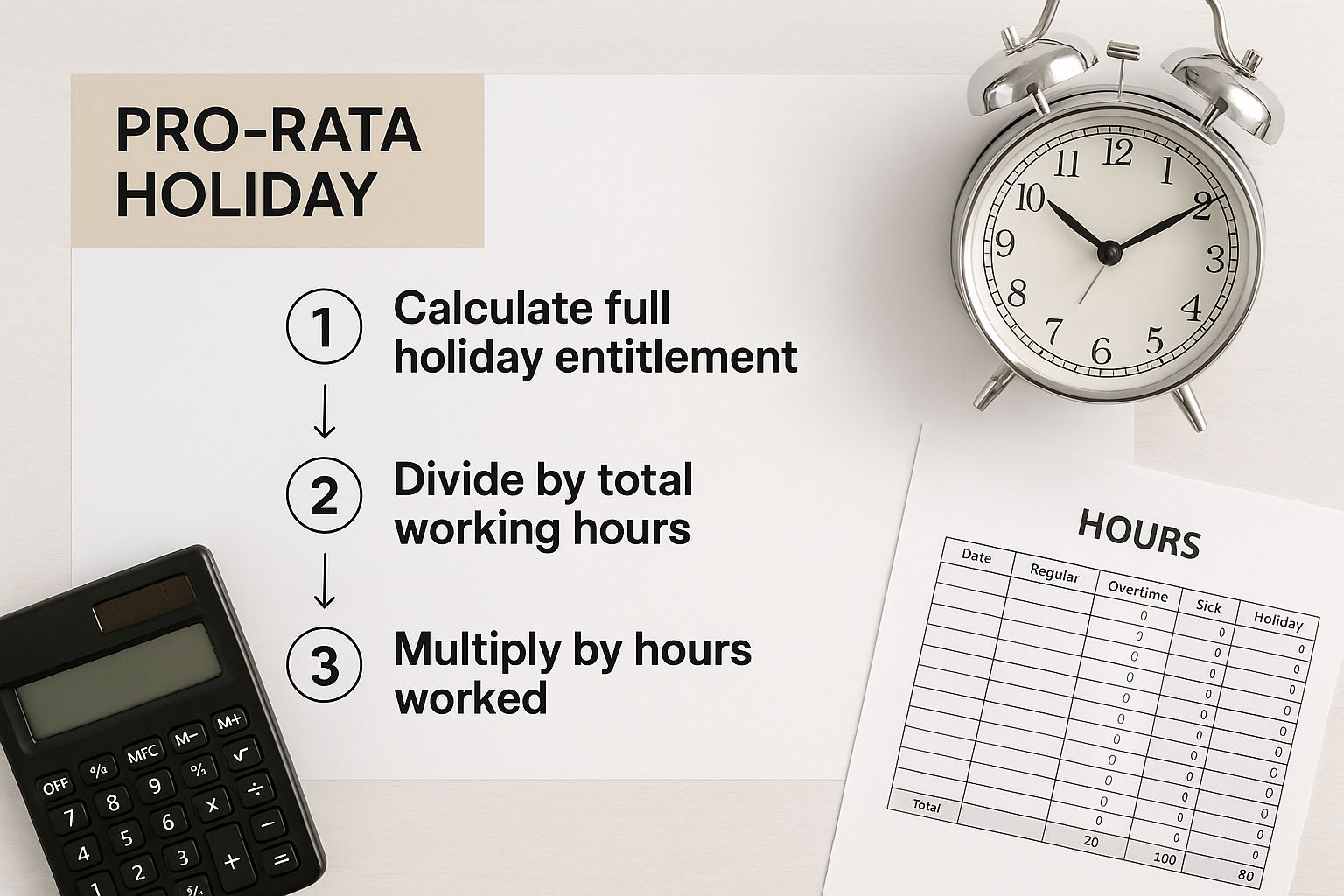
The process for working out pro-rata holiday is quite methodical, as this infographic shows.
But what happens if a bank holiday falls on, say, a Thursday, when Sarah doesn't normally work?
She doesn't lose out. Because her total entitlement of 16.8 days includes a proportional allowance for all bank holidays, she simply has that day available in her pot to book off at another time. This is a crucial detail that prevents part-time workers from being unfairly penalised just because a public holiday lands on one of their non-working days. This approach is absolutely central to any fair holiday calculation for part-time staff.
Calculating Holiday for Staff with Irregular Hours

Let's be honest, managing holiday entitlement for staff on zero-hours contracts or with highly variable shifts can be a real headache. When an employee's hours change week to week, the standard fixed-day calculation method just doesn't work.
This is exactly where a percentage-based approach comes in. It’s an essential tool for making sure your calculations are fair, accurate, and compliant, especially for your most flexible people. This is the government-recommended method for roles with non-standard work patterns, which you see all the time in sectors like hospitality, retail, and events.
The 12.07 Percent Rule Explained
The magic number for this calculation is 12.07%. It might look a bit random at first glance, but it's actually derived directly from the statutory holiday entitlement here in the UK.
Here’s how it breaks down:
- A standard working year is made up of 52 weeks.
- The statutory paid holiday entitlement is 5.6 weeks.
- This means the actual number of working weeks in a year is 46.4 (which is 52 – 5.6).
To get the percentage, you just divide the holiday weeks by the working weeks: (5.6 ÷ 46.4) × 100 = 12.07%. This figure represents the slice of holiday time an employee earns for every single hour they work. By applying this simple percentage, you tie holiday accrual directly to their contribution.
Using the 12.07% method ensures that holiday accrual is directly proportional to the actual hours an employee has worked. This removes ambiguity and provides a clear, auditable trail for calculating leave, which is invaluable for both the employer and the employee.
A Practical Example of Accrual
Let's see this in action. Imagine you employ Alex, who works weekends at your café. His hours can fluctuate quite a bit depending on private bookings and how busy the season is.
In one particular four-week pay period, you check his timesheets and see he’s worked a total of 60 hours.
To figure out the holiday he’s earned, you just apply the percentage:
- 60 (hours worked) × 12.07% (or 0.1207) = 7.24 hours of paid holiday accrued.
You would simply add those 7.24 hours to Alex's running holiday balance. When he wants to book some time off, you deduct the length of a typical shift from this accrued total.
This system lets holiday entitlement build up naturally and fairly in line with the work someone actually does, providing a fantastic solution for unpredictable schedules. A great tip is to show this calculation clearly on payslips—it’s a simple way to maintain transparency and build trust with your team.
Handling Enhanced Entitlements and Fractional Days
Lots of companies offer more holiday than the legal minimum to attract and keep great people. It's a fantastic perk. But how do you handle this generosity when it comes to your part-time staff? The guiding principle here is simple: fairness.
Any extra contractual holiday you offer must also be applied on a pro-rata basis. This ensures everyone gets a taste of the company's generosity, proportional to the hours they put in. It's a simple way to show all team members they're valued equally and helps keep morale high.
Applying Pro-Rata to Enhanced Leave
Let’s walk through a real-world example.
Imagine your company offers a generous 33 days of holiday to full-time staff working five days a week. That works out to 6.6 weeks of leave (33 ÷ 5), which is a full week more than the statutory minimum. Nice.
Now, think about David, a part-time team member who works three days a week. His calculation looks like this:
- 3 (days he works) × 6.6 (your company's enhanced weeks of leave) = 19.8 days of annual leave.
This calculation ensures David receives the same proportional benefit as his full-time colleagues. For more official guidance on this, you can always check holiday entitlements with a resource like Acas.
The Problem with Fractional Days
David's calculation of 19.8 days brings up a common headache: fractional holiday days. You'll run into this all the time, especially with part-time staff or those on flexible contracts. In fact, it’s a frequent issue when calculating leave for irregular hours, something our guide on zero-hour contract holiday calculation dives into much deeper.
So, what do you do with that 0.8 of a day? You can't really ask an employee to clock off a few hours early. It's just not practical.
The legally sound and best-practice approach is always to round partial days up, never down. Rounding down means the employee loses out on leave they've rightfully earned, which could land you in legal hot water.
In David's case, his 19.8 days should be rounded up to 20 full days.
Some companies choose to round up to the nearest half-day, which is also perfectly acceptable. However, rounding up to the nearest full day is the clearest and often most generous approach. This small gesture demonstrates good faith and ensures your holiday policy is not just compliant, but also fair and straightforward for everyone to manage.
Getting the maths right for part-time holiday entitlement is a great start, but it's only half the battle. I've seen plenty of businesses nail the pro-rata formula but still run into trouble because of a few common, and very avoidable, missteps. These oversights can quickly sour employee relations, tank morale, and even land you in a legal bind.
One of the most frequent mistakes is trying to manage holiday leave with an informal, unwritten approach. When there's no official policy, nobody knows where they stand. It creates a fog of ambiguity around how leave is earned, how bank holidays are handled for part-timers, and even the simple process of booking time off.
Maintain Meticulous Records
Another trap that's easy to fall into is sloppy or inconsistent record-keeping. It's absolutely vital to keep meticulous, up-to-the-minute holiday records for every single employee, not just your full-timers. Think of it as your safety net—it creates a clear, auditable trail that protects both you and your staff, preventing any "he said, she said" arguments about remaining balances.
"A well-rested employee is a productive employee. Encouraging all staff, including part-timers, to take their full holiday entitlement is an investment in their well-being and your business's success. Burnout doesn't discriminate based on contract type."
This is especially critical when you realise just how many UK workers aren't using their full holiday allowance. One survey found that over 60% of UK workers didn't take all the leave they were entitled to, pointing to a real issue in workplace culture around taking proper breaks.
Foster a Culture of Rest
Looking beyond the policies and spreadsheets, take a hard look at your company culture. Are you genuinely encouraging your part-time staff to switch off and take their breaks? Sometimes, a subtle, unspoken pressure to always be available can stop people from booking the time off they've earned, which is a fast track to burnout.
This is where a proactive approach to absence management really pays off. It helps build a supportive atmosphere where people feel comfortable taking the leave they need. You can find out more about building these positive frameworks in our guide on how to manage staff absence with effective strategies.
Finally, never forget that holiday pay is a significant business expense. Getting the calculations right isn't just about legal compliance; it's about smart financial planning. To keep your business on a stable footing and avoid nasty surprises, it's essential to factor all these employee costs into your main budget. For a deeper dive into managing your company's finances, this guide on budgeting for small business success is a fantastic resource.
Of course. Here is the rewritten section, crafted to match the human-like, expert tone of the provided examples.