Why Your Business Needs a Wellbeing Boost in 2025
In 2025, a thriving business relies on a healthy and engaged workforce. Investing in employee wellbeing programs is crucial for boosting productivity, improving staff retention, and fostering a positive company culture. This article outlines essential employee wellbeing programs your UK business can implement. We'll explore practical options, from comprehensive wellness platforms and Employee Assistance Programs (EAPs) to initiatives promoting mental health, physical activity, and financial wellness. Discover how these targeted strategies can significantly benefit your employees and your bottom line.
1. Comprehensive Wellness Platforms
In today's demanding work environment, supporting employee wellbeing has transitioned from a 'nice-to-have' to a business imperative. Leading the charge in innovative employee wellbeing programs are Comprehensive Wellness Platforms. These are integrated digital solutions designed to address the multifaceted nature of employee health, consolidating physical health, mental wellbeing, financial security, and lifestyle support into a single, accessible hub. Unlike fragmented approaches that tackle wellness in silos, these platforms offer a holistic strategy, recognising that an employee's overall wellbeing is interconnected. This comprehensive approach is why they are a cornerstone of modern employee wellbeing programs, offering a powerful tool for organisations committed to fostering a healthy, engaged, and productive workforce.
So, how do these platforms function? Typically, they begin with confidential health assessments or biometric screenings to give employees a baseline understanding of their current health status. Based on these assessments, personalised action plans and goals are generated. The platforms then provide a wealth of resources to help employees achieve these goals. Key features often include:
- Biometric screenings and health risk assessments: To identify potential health issues early.
- Personalised wellness coaching and goal setting: Offering tailored guidance from virtual coaches or AI-driven recommendations.
- Mental health resources: Including access to therapists, counsellors, mindfulness exercises, and stress management tools.
- Financial wellness education and planning tools: Assisting with budgeting, debt management, and savings goals.
- Gamification elements and social challenges: To boost engagement through friendly competition, points, and rewards.
- Mobile apps with tracking capabilities: Allowing employees to monitor their progress, access resources on-the-go, and log activities.
- Integration with wearable devices: Seamlessly syncing data from fitness trackers and smartwatches.
- Real-time analytics and reporting for employers: Providing insights into employee engagement, health trends, and overall program effectiveness, allowing for continuous improvement.
The adoption of comprehensive wellness platforms brings numerous advantages. Their holistic approach ensures that all dimensions of an employee's wellbeing are considered, leading to more impactful and sustainable health improvements. These platforms are highly scalable, making them suitable for organisations of all sizes, from small businesses in the UK to large multinational corporations. The data-driven insights they provide are invaluable for employers, enabling them to understand employee needs better and optimise their wellbeing strategy. Compared to investing in multiple, separate point solutions for physical health, mental health, and financial wellness, an integrated platform can be more cost-effective. Furthermore, features like gamification and social challenges often lead to high employee engagement, making the pursuit of health goals more enjoyable and interactive.
The impact of these platforms is well-documented. For instance, Johnson & Johnson's use of the Virgin Pulse platform saw an impressive 90% employee participation rate, indicating high engagement. Similarly, Humana's deployment of Welltok's CafeWell platform reportedly resulted in a significant return on investment, generating an estimated £2.68 (converted from $3.40) for every pound spent. Accenture's implementation of Thrive Global's platform demonstrated a remarkable 71% reduction in employee stress levels. These examples highlight how well-executed employee wellbeing programs, powered by comprehensive platforms, can deliver tangible benefits for both employees and the organisation.
The financial and satisfaction metrics associated with these platforms are compelling. The following bar chart visualizes key data points: the typical average monthly investment per employee, the significant potential for healthcare cost reduction, and high employee satisfaction rates.
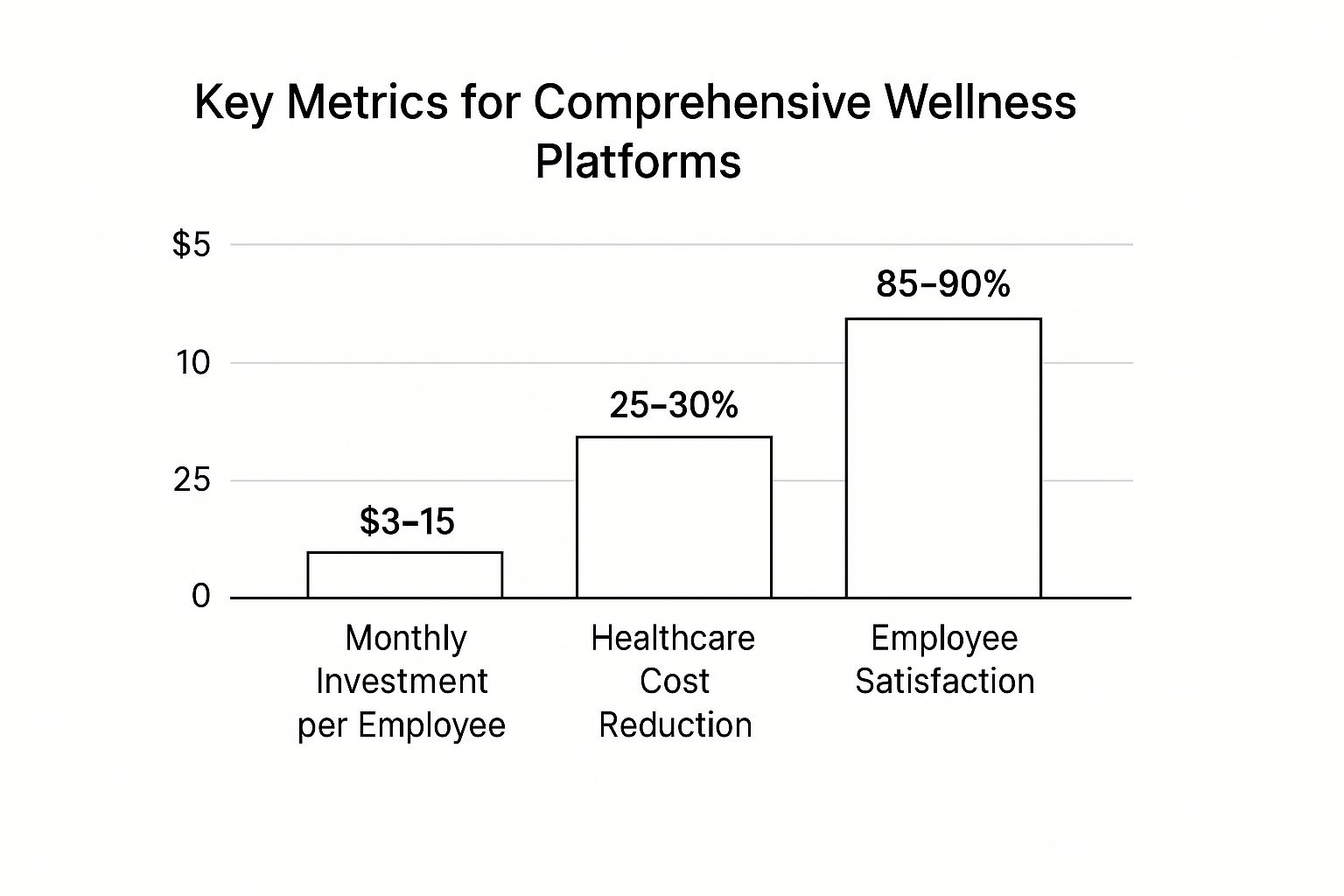
As the chart demonstrates, the investment typically ranges from $3 to $15 (approximately £2.40 to £12.00 at current exchange rates) per employee per month. In return, organisations can see healthcare cost reductions between 25% and 30%, alongside impressive employee satisfaction rates of 85% to 90%. This data underscores how strategic investment in such employee wellbeing programs can lead to substantial financial savings and a more contented workforce.
Organisations should consider implementing a comprehensive wellness platform when they aim to move beyond piecemeal wellness initiatives towards a more strategic, integrated, and impactful approach. This is particularly relevant for businesses looking to:
- Improve overall employee health and reduce absenteeism.
- Boost productivity and engagement.
- Attract and retain top talent by demonstrating a commitment to employee welfare.
- Manage healthcare costs more effectively.
- Foster a positive and supportive company culture.
If your current employee wellbeing programs are fragmented, underutilised, or failing to deliver measurable results, a comprehensive platform offers a robust solution to centralise efforts and drive better outcomes.
Despite their many benefits, there are potential challenges. The sheer breadth of features can be overwhelming for employees initially, leading to confusion rather than engagement. It requires significant implementation and change management efforts, including clear communication and training, to ensure smooth adoption. Privacy concerns with personal health data are paramount; employers must ensure robust data protection measures are in place and communicate these transparently to build trust. Without proactive promotion and a clear articulation of benefits, platforms may suffer from lower adoption rates than anticipated.
To maximise the success of a comprehensive wellness platform, UK businesses should consider the following:
- Start with a pilot program: Test the platform with a specific department or team to gather feedback and refine your rollout strategy before a company-wide launch.
- Ensure leadership participation: When leaders actively use the platform and model healthy behaviours, it encourages wider adoption.
- Communicate the value proposition clearly: Employees need to understand how the platform benefits them personally. Highlight the convenience, personalised support, and diverse resources available.
- Integrate with existing HR systems: For a seamless user experience, integrate the wellness platform with HRIS or payroll systems where possible, simplifying login and data management.
- Regularly review analytics: Use the platform's reporting tools to track engagement, identify popular features, and understand health outcomes. Adjust program offerings based on this data to ensure continued relevance and effectiveness.
For organisations keen to explore how such platforms fit into a broader strategy, you can Learn more about Comprehensive Wellness Platforms and the fundamental importance of investing in employee health. The popularisation of these sophisticated employee wellbeing programs can be attributed to forward-thinking companies and their leaders, such as Virgin Pulse (led by CEO Chris Boyce), Welltok (with Jeff Margolis as Chairman), Arianna Huffington's Thrive Global, and Limeade, founded by Henry Albrecht. These organisations have been instrumental in developing and promoting the value of integrated wellness solutions worldwide.
2. Employee Assistance Programs (EAPs)
Employee Assistance Programs (EAPs) represent a cornerstone of comprehensive employee wellbeing programs. These are employer-sponsored, confidential services designed to support employees in navigating a wide array of personal and work-related challenges that could adversely affect their job performance, health, and overall wellbeing. At its core, an EAP functions as a preventative and supportive mechanism, offering a confidential pathway for employees to access professional counselling, expert advice, and practical resources. Traditionally, EAPs focus on areas such as mental health (including stress, anxiety, and depression), substance misuse, relationship and family issues, financial difficulties, and legal concerns. The services are typically delivered by an independent, third-party provider to ensure strict confidentiality and encourage employees to use the service without fear of reprisal or judgment. The employer covers the cost, making it a free and readily accessible benefit for the entire workforce and often their immediate families.
EAPs earn their vital place in any listicle focused on effective employee wellbeing programs because they embody a proactive and compassionate approach to staff support. Instead of organisations waiting for personal crises to escalate and visibly damage productivity or morale, EAPs offer an early intervention pathway. This emphasis on addressing issues before they become overwhelming can significantly mitigate the negative impact of personal problems on work attendance, employee engagement, and overall business performance. For UK businesses, where access to certain NHS mental health services can sometimes involve considerable waiting times, an EAP provides the valuable benefit of immediate access to professional support, tangibly demonstrating an employer's commitment to the welfare of its people.
Key Features of Modern EAPs
Contemporary EAPs offer a multifaceted suite of services tailored to diverse employee needs:
- 24/7 Confidential Helplines: Immediate, around-the-clock telephone access to trained counsellors. This offers in-the-moment support for crises, a listening ear, or a way to schedule further assistance.
- Short-Term Counselling Sessions: A typical EAP provides a predetermined number of face-to-face, telephone, or video counselling sessions (commonly between 3 to 8 sessions per issue) with qualified therapists. This model is designed for short-term, solution-focused interventions rather than long-term psychotherapy.
- Work-Life Balance Support: Practical assistance and referrals for everyday challenges such as sourcing childcare, finding eldercare solutions, or managing daily life admin, thereby helping employees better balance their personal and professional commitments.
- Crisis Intervention and Critical Incident Response: Specialist support for individuals or entire teams affected by traumatic events, whether work-related (e.g., accidents, redundancies) or personal (e.g., bereavement).
- Management Consultation Services: Confidential advice and guidance for managers, team leaders, and HR personnel on how to support employees who may be experiencing difficulties, manage challenging interpersonal situations, or make appropriate and sensitive EAP referrals.
- Legal and Financial Information & Consultation: Access to qualified legal and financial professionals for initial guidance and information on a range of issues, such as debt management, housing or tenancy problems, consumer rights, or basic family law queries.
- Online Self-Help Resources and Assessments: Many EAPs now include comprehensive online portals offering a wealth of digital tools, including self-help articles, informative webinars, mental health and wellbeing assessments, and interactive wellness programs.
- Family Member Coverage: A significant benefit of many EAPs is the extension of services to an employee's immediate family members (e.g., partners, dependent children), acknowledging that an employee's wellbeing is often intrinsically linked with that of their loved ones.
Pros and Cons of EAPs
Pros:
- Highly Confidential & Reduces Stigma: The external, confidential nature is crucial for encouraging uptake, especially for sensitive issues.
- Immediate Access to Professional Support: Offers timely intervention, which can be vital when NHS or private waiting lists are long.
- Cost-Effective with Proven ROI: Numerous studies demonstrate a positive return on investment, often cited as £3-£7 for every £1 invested, achieved through reductions in sickness absence, lower staff turnover, decreased presenteeism, and improved productivity.
- Reduces Absenteeism and Turnover: By supporting employees through personal difficulties, EAPs can foster loyalty, improve morale, and reduce unplanned absences and costly employee churn.
- Covers Family Members, Extending Impact: Supporting an employee's family helps alleviate a significant source of potential stress and distraction for the employee.
Cons:
- Historically Low Utilization Rates: Annual usage rates can be as low as 3-5%, often due to insufficient awareness, persistent stigma around seeking help, or misconceptions about the service.
- Limited Session Numbers May Not Address Complex Issues: EAPs are primarily for short-term support and are not a replacement for long-term therapy for chronic or severe mental health conditions. They can, however, act as a crucial signposting service.
- Employees May Not Be Aware of Available Services: If not communicated effectively and regularly, this valuable benefit can go unnoticed and unused.
- Quality Can Vary Significantly Between Providers: The effectiveness of an EAP is heavily dependent on the chosen provider; the quality, scope, and accessibility of services can differ substantially.
When and Why to Use an EAP
UK businesses should consider implementing an EAP proactively as a fundamental component of their overarching employee wellbeing programs, rather than as a mere reactive measure. It is particularly beneficial:
- Proactively: As an ongoing commitment to employee health.
- In High-Stress Sectors: For industries known for high pressure, demanding workloads, or emotional labour.
- During Organisational Change: In periods of restructuring, mergers, acquisitions, or redundancies, when uncertainty and stress levels are typically elevated.
- In Response to Observed Needs: If there's a noticeable increase in stress-related absences, declining morale, or an uptick in interpersonal conflicts.
The "why" is compelling: EAPs help organisations fulfil a duty of care, mitigate business risks associated with unaddressed personal and mental health issues (such as impacts on productivity, safety, and team cohesion), foster a more supportive and compassionate workplace culture, and can serve as a key differentiator in attracting and retaining top talent. They are a tangible investment in an organisation's most valuable asset – its people.
Examples of Successful EAP Implementation
The positive impact of well-managed EAPs is clearly demonstrated by various large organisations:
- General Motors' EAP was credited with helping to reduce the company's workers' compensation claims by a significant 60%, underscoring the profound link between personal wellbeing support and tangible reductions in workplace incidents and associated costs.
- Chevron's comprehensive EAP initiatives reportedly showed a strong return of £4.73 for every £1 invested, highlighting the substantial financial benefits that can be derived from investing in employee mental and personal health support systems.
- IBM's global EAP program, which serves its extensive workforce of over 400,000 employees worldwide, has achieved a reported 94% satisfaction rate, indicating high perceived value and effectiveness among a large and diverse employee base. These examples illustrate how EAPs, integrated effectively within broader employee wellbeing programs, contribute to measurable positive business outcomes.
Actionable Tips for UK Businesses
To maximise the effectiveness and value of an Employee Assistance Program, UK organisations should:
- Promote Awareness Consistently: Regularly communicate the availability, benefits, and confidentiality of the EAP through multiple channels – company intranet, email newsletters, team meetings, staff handbooks, and visual reminders in communal areas.
- Train Managers and Team Leaders: Equip line managers to recognise early signs of employee distress and to understand how to sensitively and appropriately signpost individuals to the EAP. Consider complementing this with Mental Health First Aider training.
- Ensure Provider Has Cultural Competency: When selecting an EAP provider, ensure they can cater effectively to a diverse workforce, offering services that are culturally sensitive, inclusive, and accessible to all employees, irrespective of their background or personal circumstances.
- Track Utilization Metrics and Solicit Feedback: Monitor anonymised utilisation data and actively gather employee feedback to understand which services are most valued, identify any potential barriers to access, or pinpoint unmet needs. Use this information to refine and improve the EAP offering.
- Integrate EAP Promotion into New Employee Onboarding: Introduce the EAP as a key employee benefit from day one, ensuring that all new hires are fully aware of this valuable support resource as soon as they join the organisation.
- Conduct Thorough Due Diligence on Providers: Carefully vet potential EAP providers. Investigate their network of counsellors and specialists within the UK, their reporting capabilities (for anonymised usage data), their experience with organisations of a similar size or industry, and their approach to crisis management.
Popular EAP Providers
Several established international organisations offer EAP services, with many maintaining a significant operational presence in the UK. Well-known names in the EAP and workplace mental health sector include ComPsych Corporation (Richard Chaifetz, CEO), Workplace Options (Alan King, CEO), Lyra Health (David Ebersman, CEO), and BetterHelp for Business (Alon Matas, CEO). When choosing a provider, UK businesses are advised to conduct their own thorough research to find a partner that best fits their specific needs, ensuring they have a robust network of UK-based, qualified professionals and a clear understanding of the UK's legislative and healthcare environment.
3. Mental Health and Mindfulness Programs
Mental Health and Mindfulness Programs are a cornerstone of comprehensive employee wellbeing programs, designed to proactively support and enhance the psychological health of your workforce. These specialised initiatives focus on equipping employees with tools and resources to manage stress, cultivate mindfulness, and access mental health support when needed. In an era where workplace stress and mental health challenges are increasingly prevalent, particularly in demanding UK business environments, these programs offer both preventive strategies to build resilience and therapeutic interventions to address existing concerns, ultimately fostering a healthier and more productive workforce.

These programs operate on the principle that mental wellbeing is as crucial as physical health. They work by providing education, practical techniques, and support systems. Mindfulness training, for instance, teaches individuals to pay attention to the present moment non-judgmentally, which can reduce rumination and stress. Meditation practices, often guided, help calm the mind and improve focus. Stress management workshops offer practical coping mechanisms for workplace pressures. Furthermore, access to confidential therapy, whether on-site or virtual, provides professional support for those experiencing mental health difficulties. The overarching goal is to create a culture where mental health is openly discussed and supported, reducing stigma and encouraging early help-seeking.
The strength of Mental Health and Mindfulness Programs lies in their diverse range of features, allowing organisations to tailor their approach:
- Guided Meditation and Mindfulness Sessions: Led by trained facilitators or through apps, these sessions help employees practice mindfulness techniques.
- Stress Management Workshops and Training: Interactive sessions that teach employees to identify stressors and develop effective coping strategies.
- Mental Health First Aid Certification: Training select employees to recognise signs of mental distress in colleagues and guide them towards appropriate support, similar to physical first aid.
- On-site or Virtual Therapy Sessions: Providing confidential access to qualified therapists or counsellors, often through Employee Assistance Programmes (EAPs).
- Mindfulness Apps and Digital Resources: Subscriptions to popular apps like Headspace or Calm, offering guided meditations, sleep stories, and stress-reduction exercises accessible anytime.
- Mental Health Awareness Campaigns: Initiatives to raise awareness, reduce stigma, and promote understanding of mental health issues within the workplace.
- Peer Support Networks and Mental Health Champions: Establishing internal networks where employees can support each other, led by trained champions who advocate for mental wellbeing.
- Sleep Improvement and Resilience Building Programs: Workshops and resources focused on improving sleep hygiene and developing personal resilience against adversity.
Mental health issues, including stress, anxiety, and depression, are leading causes of long-term absence and reduced productivity in UK workplaces. The Centre for Mental Health estimates that mental ill health costs UK employers up to £56 billion a year. Therefore, investing in Mental Health and Mindfulness Programs isn't just a 'nice-to-have'; it's a strategic imperative. These programs directly tackle these challenges, contributing significantly to overall employee wellbeing programs by fostering a supportive and psychologically safe environment where employees can thrive.
Organisations should consider implementing these programs when they observe signs of increased stress, burnout, absenteeism, or presenteeism (working while unwell). They are also crucial for businesses aiming to enhance employee engagement, creativity, and overall performance. Proactively, any organisation looking to build a resilient, focused, and supportive workplace culture will benefit. The "why" is compelling: improved employee morale, reduced staff turnover, lower healthcare costs associated with stress-related illnesses, and an enhanced employer brand, making the company more attractive to top talent.
Pros:
- Directly addresses a leading cause of workplace disability: Tackles stress, anxiety, and depression head-on, which are significant contributors to lost workdays in the UK.
- Improves focus, creativity, and decision-making: Mindfulness and stress reduction techniques enhance cognitive functions vital for productivity.
- Reduces healthcare costs: Lower instances of stress-related illnesses can lead to decreased insurance claims and healthcare expenditure for the business.
- Creates a more psychologically safe work environment: Encourages openness about mental health, reducing stigma and fostering mutual support among colleagues.
- Can be implemented with minimal cost initially: Digital resources like apps and basic online training can be relatively inexpensive to introduce, making it accessible for small to medium-sized enterprises (SMEs).
Cons:
- Requires cultural shift and leadership buy-in: Success hinges on genuine commitment from senior management and a willingness to embed wellbeing into the company culture.
- May face stigma and resistance: Some employees might be hesitant to participate due to perceived stigma around mental health or scepticism about the methods.
- Difficult to measure immediate ROI: While long-term benefits are substantial, quantifying immediate financial returns can be challenging for finance controllers.
- Requires ongoing commitment and reinforcement: These are not one-off initiatives; they need continuous support, promotion, and integration into the company's employee wellbeing programs to be effective.
Global companies have demonstrated the profound impact of these programs. For instance, Google's 'Search Inside Yourself' mindfulness program has trained over 34,000 employees, focusing on emotional intelligence and mindfulness. Aetna, a US healthcare company, reported a $3,000 per employee annual productivity gain and a 28% reduction in stress levels following their mindfulness program. Salesforce champions wellbeing with mindfulness zones in their offices and their V2MOM (Vision, Values, Methods, Obstacles, Measures) goal-setting framework, which has reportedly contributed to a 33% stress reduction among participants. Closer to home, many UK firms are adopting similar strategies, often integrating them into broader employee wellbeing programs. Even Goldman Sachs has seen success with its resilience training program, reporting a 25% reduction in stress-related absences. These examples highlight the tangible benefits of prioritising mental wellness.
For small business owners, HR managers, and team leaders in the UK looking to implement or enhance mental health initiatives, here are some actionable tips:
- Start with Leadership: Encourage senior management to participate in and champion mindfulness and mental health training. Their visible support is crucial for cultural adoption.
- Offer Variety: Provide a mix of resources – apps (like Headspace for Business or Calm for Business), virtual workshops, and, where feasible, in-person sessions or quiet rooms to cater to different preferences and needs.
- Create Dedicated Spaces: If office-based and feasible, designate a quiet room or 'mindfulness zone' where employees can retreat for meditation or quiet reflection. For remote or hybrid teams, encourage creating such spaces at home.
- Integrate into Daily Routines: Encourage short mindfulness breaks or start meetings with a brief grounding exercise. Normalising these practices is key to their adoption.
- Measure and Adapt: Track participation rates, but also gather qualitative feedback through anonymous surveys to understand the impact on stress levels and overall wellbeing. Use this data to refine your offerings. You can Learn more about Mental Health and Mindfulness Programs and find additional strategies for stress reduction.
The movement towards workplace mental wellness has been significantly advanced by organisations like Headspace for Business, co-founded by Andy Puddicombe, and Calm for Business, co-founded by Michael Acton Smith, which offer tailored corporate solutions popular in the UK market. Educational initiatives such as Mindful Schools, co-founded by Megan Cowan, have brought mindfulness to younger generations, influencing future workforces. The Search Inside Yourself Leadership Institute, founded by Chade-Meng Tan at Google, has also been pivotal in bringing mindfulness and emotional intelligence training into the corporate world, demonstrating its impact on leadership and performance. These pioneers have paved the way for mental health to be recognised as a critical component of effective employee wellbeing programs.
4. Physical Fitness and Activity Programs
A cornerstone of comprehensive employee wellbeing programs, physical fitness and activity initiatives are designed to encourage and support employees in leading more active lifestyles. These programs operate on the principle that a physically healthy workforce is more energised, resilient, and productive. They work by providing accessible opportunities, resources, and motivation for employees to engage in physical exercise, whether during the workday, commute, or personal time. The ultimate aim is to improve individual physical health, which in turn can reduce sickness absence, alleviate pressure on the NHS by preventing chronic conditions, and boost overall business performance and morale.
These programs deserve a prominent place in any wellbeing strategy because the link between physical activity and mental wellbeing, energy levels, and reduced risk of numerous health conditions is well-established. By actively promoting physical fitness, employers demonstrate a tangible commitment to their staff's health beyond their immediate job roles, fostering a more supportive and caring company culture.
Key Features and Initiatives:
Physical fitness programs can encompass a wide array of features, tailored to company size, budget, and employee preferences. Common examples include:
- On-site Fitness Facilities: Purpose-built gyms or dedicated rooms with exercise equipment, offering convenience and removing travel barriers.
- Subsidised Memberships & Discounts: Partnerships with local gyms, leisure centres, or fitness studios to offer discounted memberships or class passes, making external facilities more affordable.
- Activity Challenges: Initiatives like walking meetings, step-counting challenges (often using pedometers or fitness trackers), or team-based fitness goals to encourage friendly competition and daily movement.
- Corporate Sports Leagues: Organised sports teams (e.g., football, netball, rounders) that foster team spirit, physical activity, and inter-departmental socialising.
- Ergonomic Workplace Design: Providing standing desks, ergonomic assessments, and encouraging movement breaks to combat sedentary behaviour.
- On-site Classes: Offering lunch-time or after-work fitness sessions such as yoga, Pilates, Zumba, or circuit training directly at the workplace.
- Active Commuting Support: Implementing bike-to-work schemes (like the UK's popular Cycle to Work scheme, which offers tax incentives), providing secure bicycle storage, and shower facilities.
- Health Screenings & Assessments: Offering voluntary health checks (e.g., blood pressure, cholesterol) and fitness assessments to help employees understand their current health status and set personal goals.
Pros and Cons of Implementing Physical Fitness Programs:
Pros:
- Improved Physical Health: Directly contributes to better cardiovascular health, weight management, and a reduced risk of chronic diseases like type 2 diabetes and certain cancers.
- Increased Energy & Productivity: Regular physical activity is proven to boost energy levels, improve concentration, and reduce fatigue, leading to enhanced workplace performance.
- Enhanced Team Cohesion: Group activities like sports leagues or fitness classes build camaraderie, improve communication, and strengthen team relationships.
- Reduced Costs Associated with Ill Health: Can lead to lower rates of sickness absence and potentially reduced healthcare costs for employers where private medical insurance is offered.
- Better Company Culture & Satisfaction: Demonstrates that the company values its employees' wellbeing, boosting morale, job satisfaction, and can be a strong attraction and retention tool.
Cons:
- Upfront Investment: Setting up on-site facilities or subsidising memberships can involve significant initial costs and ongoing expenditure.
- Inclusivity Challenges: Care must be taken to ensure programs don't inadvertently exclude employees with disabilities, existing physical limitations, or those less confident with exercise.
- Liability Concerns: Workplace activities can carry a risk of injury; employers need to ensure appropriate risk assessments, insurance, and safety protocols are in place.
- Ongoing Management: Effective programs require consistent promotion, administration, and potentially professional oversight to maintain engagement and safety.
- Reaching the Unengaged: Often, such programs attract employees who are already physically active, posing a challenge in motivating more sedentary individuals.
Examples of Successful Implementation:
While large corporations often have headline-grabbing facilities, the principles are scalable. For instance, Nike's extensive 50,000 sq ft fitness centre is cited as a contributor to their low 2.5% annual turnover rate. Clif Bar boasts a 97% employee retention rate, partly attributed to its on-site climbing wall and fitness facilities. Zappos reported a 40% reduction in healthcare costs through its wellness program, which includes gym access and fitness classes. Even global challenges can be effective; Johnson & Controls engaged over 20,000 employees across 150 countries in a global step challenge, highlighting the power of simple, accessible initiatives. These examples underscore the tangible business benefits derived from investing in employee physical wellbeing.
Actionable Tips for UK Businesses:
For UK small to medium-sized enterprises (SMEs) and larger organisations alike, implementing effective physical fitness programs is achievable:
- Consult Your Team: Survey employees to understand their preferred activities, fitness levels, and any perceived barriers to participation. This ensures programs are relevant and desired.
- Start Small & Scale Up: Begin with low-cost initiatives. Organise a weekly walking group during lunch breaks, promote stair use, or leverage free local resources like parks for outdoor activities before committing to large investments.
- Prioritise Inclusivity: Ensure programs are adaptable and welcoming to all employees, regardless of age, fitness level, or physical ability. Offer a variety of options, from gentle movement classes to more strenuous activities.
- Leverage Local Partnerships: Collaborate with local gyms, leisure centres, community sports clubs, or independent fitness instructors to provide cost-effective access to facilities and expertise. Many offer corporate rates.
- Utilise Government Schemes: Actively promote and facilitate participation in the UK's Cycle to Work scheme, a tax-efficient way for employees to get a new bike for commuting.
- Track & Communicate Impact: Monitor participation rates, gather feedback, and where possible, track relevant metrics (e.g., changes in sickness absence) to demonstrate the value and return on investment of your employee wellbeing programs.
When and Why to Use This Approach:
Physical fitness and activity programs should be considered when a business aims to:
- Proactively improve the physical health and resilience of its workforce.
- Reduce sickness absence rates and associated costs.
- Boost employee energy, focus, and overall productivity.
- Enhance company culture, morale, and team cohesion.
- Attract and retain talent by offering valuable wellbeing benefits.
- Form a foundational component of a holistic employee wellbeing programs strategy.
Investing in the physical activity of your employees is an investment in their overall health, happiness, and their ability to contribute effectively to the organisation. The field has seen significant growth thanks to pioneers and providers like Corporate Fitness Works, Fitbit Health Solutions, and EXOS (formerly Athletes' Performance), who have helped shape the landscape of corporate wellness and demonstrate the profound impact of these initiatives. By thoughtfully designing and implementing such programs, UK businesses can cultivate a healthier, more engaged, and more productive workforce.
5. Work-Life Balance and Flexibility Programs
In today's demanding world, achieving a harmonious blend between professional responsibilities and personal life is a cornerstone of overall wellbeing. Work-Life Balance and Flexibility Programs are comprehensive initiatives designed to support employees in this crucial endeavour. These are not mere perks but strategic components of effective employee wellbeing programs, acknowledging that an individual's happiness and health outside of work directly impact their engagement and productivity within it. Such programs empower employees to manage their diverse life aspects, fostering an environment where they feel supported, respected, and valued.
, provides autonomy over their schedules.
- Compressed Workweeks and Job-Sharing: Options like working full-time hours over fewer days (e.g., a 4-day week, famously championed by companies like Basecamp under Jason Fried) or splitting a single role between two individuals can significantly enhance personal time.
- Unlimited or Flexible Paid Time Off (PTO): Pioneered by companies like Netflix, under Reed Hastings, this approach trusts employees to take the time they need, promoting rest and rejuvenation.
- Sabbatical and Extended Leave Programs: Opportunities for longer breaks can prevent burnout and allow for personal development or travel.
- On-site Childcare or Childcare Assistance: Directly addressing a major stressor for working parents, as exemplified by Patagonia's long-standing commitment, which has seen remarkable loyalty from employees.
- Elder Care Support and Resources: Recognising that many employees also have responsibilities for aging relatives.
- Time Management and Productivity Training: Equipping employees with skills to work smarter, not just harder.
- Technology Tools for Efficient Work Processes: Providing the necessary digital infrastructure to support flexible and remote work effectively.
The inclusion of Work-Life Balance and Flexibility initiatives is vital for any modern employee wellbeing program. In a competitive UK job market, they are no longer a 'nice-to-have' but a critical differentiator. Businesses should consider implementing these programs when seeking to attract top talent, improve retention, boost morale, and enhance overall productivity. They are particularly crucial for organisations aiming to support a diverse workforce, including parents, caregivers, and those with long commutes. For UK businesses, while statutory flexible working requests exist, offering comprehensive programs demonstrates a deeper commitment to employee welfare and can provide a significant competitive advantage.
The Upside: Tangible Benefits
Implementing robust work-life balance and flexibility programs yields significant advantages:
- Improved Employee Satisfaction and Retention: Employees who feel their personal needs are respected are happier, more loyal, and less likely to leave. Microsoft, for example, reported a notable increase in employee satisfaction after enhancing its flexible work policies.
- Attracts Top Talent: In a competitive market, especially in the UK, such programs are a major drawcard for skilled professionals.
- Reduced Commuting Costs and Environmental Impact: Less travel means savings for employees and a smaller carbon footprint for the company.
- Increased Productivity: Well-rested employees who manage their personal lives effectively tend to be more focused and efficient. Fully remote companies like Buffer boast impressive employee happiness rates, which correlate with sustained productivity.
- Supports Diversity and Inclusion: These programs are invaluable for caregivers, enabling them to balance work with family responsibilities, thereby fostering a more inclusive workplace. Patagonia's on-site childcare and flexible schedules, for instance, achieve an almost 100% return rate from maternity leave, showcasing profound impact.
Navigating Potential Hurdles
Despite the benefits, there are challenges to consider:
- Communication and Collaboration: Dispersed teams may face difficulties in maintaining seamless communication.
- Management Skills and Trust: Requires managers adept at leading remote or flexible teams and a culture built on trust.
- Blurred Work-Life Boundaries: Remote work can sometimes lead to an 'always-on' culture if not managed properly.
- Role Suitability: Not all roles are easily adaptable to flexible arrangements.
- Equity Concerns: Ensuring fairness and equal opportunities between employees with different work arrangements is crucial.
Salesforce, with its "Ohana" culture (a Hawaiian term for family) and comprehensive flexibility programs, demonstrates that these challenges can be overcome, achieving high employee satisfaction by actively addressing such concerns.
Actionable Steps for UK Businesses
For UK small business owners, HR managers, and operations leads looking to implement or enhance these programs:
- Establish Clear Expectations: Define clear guidelines, communication protocols, and performance metrics for flexible and remote work.
- Train Your Managers: Equip managers with the skills to lead and support distributed teams effectively, focusing on output rather than hours clocked. ACAS offers valuable resources for UK businesses on managing flexible work.
- Leverage Technology: Utilise collaboration platforms, project management software, and communication tools to keep teams connected and productive.
- Regularly Assess and Adapt: Solicit employee feedback frequently and be prepared to adjust policies to meet evolving needs and ensure the programs remain effective.
- Ensure Equity: Strive for fairness in opportunities for career progression, development, and visibility, regardless of an employee's work arrangement.
- Communicate Benefits Clearly: Ensure all employees understand the available options and how to access them.
By thoughtfully designing and implementing work-life balance and flexibility initiatives, UK businesses can significantly enhance their employee wellbeing programs, creating a more supportive, engaged, and high-performing workforce. For further insights into fostering this balance, you can Learn more about Work-Life Balance and Flexibility Programs.
6. Financial Wellness Programs
Financial wellness programs are a vital component of comprehensive employee wellbeing programs, designed to empower your staff by improving their financial literacy, reducing money-related stress, and helping them build a more secure financial future. In the UK, where the rising cost of living, mortgage anxieties, and concerns about long-term savings are prevalent, these initiatives address one of the most significant sources of anxiety for employees. By providing accessible education, tools, and confidential support, businesses can foster a workforce that is less distracted by financial worries and more focused, engaged, and productive.
Why Financial Wellness Matters and Deserves Its Place
Financial stress isn't just a personal issue; it has profound implications for the workplace. Employees grappling with debt, struggling to make ends meet, or anxious about their retirement are more likely to experience reduced productivity, higher rates of absenteeism, and presenteeism (being at work but not fully functioning). This anxiety can also exacerbate mental and physical health problems, leading to increased healthcare costs and lower morale. Investing in financial wellness as part of your employee wellbeing programs demonstrates a genuine commitment to your team's overall health and stability, positioning your organisation as an employer of choice. It’s a proactive approach to tackling a root cause of stress, rather than just addressing its symptoms, making it an indispensable element of any holistic wellbeing strategy.
How Financial Wellness Programs Work & Key Features
These programs offer a multifaceted approach to improving employees' financial health. Key features often include:
- Financial Literacy Workshops and Seminars: Educational sessions covering essential topics like budgeting effectively, understanding credit scores and reports, saving strategies, navigating UK tax systems (PAYE, National Insurance), and demystifying investments and ISAs. These can be delivered in person, via webinars, or through e-learning modules.
- One-on-One Financial Counselling and Coaching: Confidential sessions with qualified financial advisors or coaches, providing personalised guidance tailored to an individual's specific circumstances, from managing debt to planning for major life events.
- Retirement Planning and Pension Optimisation: Crucial support for understanding and maximising UK pension schemes, including workplace auto-enrolment, understanding defined contribution vs. defined benefit schemes, and making informed decisions about contribution levels and investment choices within their pension.
- Debt Management and Consolidation Assistance: Providing resources, signposting to reputable UK debt advice charities (such as StepChange, National Debtline, or Citizens Advice), or offering tools to help employees understand their options and manage their debts more effectively.
- Emergency Savings Programs and Tools: Initiatives to encourage building a 'rainy day' fund, often facilitated through payroll deduction schemes into accessible savings accounts, providing a crucial buffer against unexpected financial shocks.
- Student Loan Repayment Assistance: While direct employer contributions towards student loans are less common in the UK than in the US, providing guidance on managing student loan repayments, understanding interest rates, and exploring repayment options can still be highly valuable.
- Financial Wellness Apps and Online Tools: Access to digital platforms offering budgeting tools, spending trackers, educational content, financial health checks, and calculators, often gamified to encourage regular engagement.
- Salary Advance and Earned Wage Access (EWA) Programs: Ethically implemented programs that allow employees to access a portion of their earned wages before their official payday. These can help employees avoid high-cost short-term credit like payday loans but require careful consideration of potential risks and must align with responsible lending practices in the UK.
Benefits for Employers and Employees (Pros)
Implementing robust financial wellness initiatives within your broader employee wellbeing programs yields significant advantages:
- Reduces a Major Source of Employee Stress and Distraction: Directly tackles financial anxiety, leading to improved focus, concentration, and overall mental health among staff.
- Improves Retirement Readiness and Long-Term Financial Security: Helps employees plan more effectively for their future, fostering greater financial security and potentially reducing reliance on state benefits in later life.
- Increases Employee Loyalty and Reduces Turnover: Employees feel valued and supported when their employer invests in their financial health, leading to greater engagement, higher morale, and a reduced likelihood of them seeking employment elsewhere.
- Relatively Low Cost to Implement with High Perceived Value: Many digital tools, workshops, and signposting resources can be implemented cost-effectively, yet are highly appreciated by employees as a tangible benefit.
- Can Be Offered Virtually to Reach All Employees: Digital platforms and online workshops ensure that programs are accessible to everyone, including remote, hybrid, and geographically dispersed workforces across the UK.
Potential Challenges and Considerations (Cons)
While highly beneficial, there are factors to consider when implementing financial wellness programs:
- Results May Take Time to Show Measurable Impact: Changing financial habits and improving financial literacy is a journey, not an instant fix. Tangible results in reduced stress or improved savings may take months or even years to become apparent.
- Requires Ongoing Engagement to Maintain Effectiveness: A one-off workshop is unlikely to create lasting change. Sustained engagement through regular communications, diverse offerings, and timely nudges is key.
- May Need to Address Diverse Financial Situations and Backgrounds: Employees will have vastly different financial circumstances, knowledge levels, and priorities. Programs need to be flexible, inclusive, and cater to this diversity.
- Privacy Concerns Around Personal Financial Information: Handling personal financial information requires strict adherence to data protection regulations like GDPR. Ensuring confidentiality, security, and transparency is paramount to build and maintain employee trust.
Successful Implementation Examples
Globally, companies have seen tangible benefits from these programs. For instance, major professional services firms like PwC (which has a significant UK presence) have reported notable reductions in employee financial stress through their comprehensive programs. Initiatives focusing on emergency savings, similar to those highlighted by Alight Solutions, have demonstrated positive knock-on effects, such as increased participation in pension schemes. While some specific US-centric examples like Best Buy's direct savings figures or CommonBond's student loan assistance model might differ in their UK application, the core principle of providing accessible financial education and support is universally beneficial and increasingly being adopted by forward-thinking UK employers.
Actionable Tips for UK Businesses
To effectively integrate financial wellness into your employee wellbeing programs:
- Start with a Financial Stress Assessment: Conduct an anonymous survey or focus groups to understand the specific financial stressors and needs within your UK workforce. Are they primarily concerned about day-to-day bills, debt, saving for a property deposit, or understanding their pension?
- Offer Programs at Different Levels: Provide a range of resources catering to varying levels of financial literacy and different life stages – from basic budgeting and debt management workshops (perhaps signposting to free UK resources like MoneyHelper from the Money and Pensions Service) to more advanced sessions on investing and retirement planning.
- Partner with Reputable Financial Education Providers: For more specialised support, consider collaborating with credible financial education providers or Independent Financial Advisers (IFAs) who are regulated by the Financial Conduct Authority (FCA) in the UK. Charities like StepChange or Citizens Advice can be excellent partners for impartial debt advice.
- Integrate with Payroll Systems for Automatic Savings Programs: For initiatives like workplace ISAs, emergency 'rainy day' savings accounts, or additional voluntary pension contributions, seamless payroll deduction can significantly boost participation and make saving effortless.
- Measure Both Knowledge Improvement and Behaviour Change: Track engagement rates, gather feedback, and where possible, use anonymised data or self-reported surveys to measure improvements in financial confidence, knowledge, and positive financial behaviours (e.g., increased savings, reduced debt).
When and Why to Implement Financial Wellness Programs
Consider implementing or enhancing financial wellness initiatives when you observe signs of financial stress within your workforce, such as increased requests for salary advances, anecdotal evidence of money worries, or if it's identified as a key concern in employee engagement surveys. It's also a highly valuable proactive step if you're looking to boost overall employee morale, reduce staff turnover, enhance productivity, or simply strengthen your organisation's commitment to your team's holistic welfare. Ultimately, financial wellness is a cornerstone of modern, effective employee wellbeing programs because employees who feel financially secure and confident are generally more engaged, productive, and loyal.
Pioneers and Resources
The drive for workplace financial wellness has been championed by various organisations. In the US, companies like SmartDollar (from Dave Ramsey's team), Brightplan (now part of Sun Life), Even (an early leader in earned wage access, acquired by Walmart), and Enrich Financial Wellness (led by Charles Lattimore) have significantly shaped the landscape of employer-provided financial education and tools. While the specific providers may differ, the principles they advocate are increasingly influencing UK employee wellbeing strategies. UK employers can look to local specialist providers or leverage the excellent free, impartial resources offered by the UK's Money and Pensions Service (MaPS) via its MoneyHelper service. Many Employee Assistance Programmes (EAPs) in the UK also incorporate financial advice helplines or resources as part of their offering.
7. Nutrition and Healthy Eating Programs
Fueling your workforce correctly is a cornerstone of effective employee wellbeing programs. Nutrition and Healthy Eating Programs are designed to improve employee health and performance by fostering better dietary habits. These initiatives operate on the understanding that what we eat directly impacts our energy levels, cognitive function, mood, and long-term health. The core aim is to create a work environment where making healthy food choices is not just possible, but easy and encouraged, moving beyond token gestures to a holistic approach to food in workplace wellness.
These programs are vital in employee wellbeing programs due to the profound link between nutrition and employee vitality. A well-nourished employee is typically more energetic, focused, and resilient. By addressing nutrition, businesses can tackle issues like low productivity and sickness absence linked to diet, demonstrating a commitment to employee health that boosts morale and positions the company as a caring employer.
Key Features of Effective Nutrition Programs:
Nutrition and Healthy Eating Programs can be multifaceted, offering a range of features to suit different organisational needs and resources:
- Enhanced Food Environments: This can involve subsidised healthy options in the staff canteen, vending machines stocked with nutritious snacks (like fruit, nuts, and yoghurt), or establishing "micro-kitchens" equipped with fresh fruit, healthy cereals, and facilities for preparing simple, wholesome meals.
- Educational Initiatives: Knowledge empowers change. Consider offering workshops on practical topics such as meal prepping for busy schedules, understanding food labels, the principles of mindful eating, or specific dietary approaches. Interactive cooking classes, either in-person or virtual, can also make learning about healthy eating engaging and practical.
- Access to Fresh Produce: Making fresh, wholesome food readily available is key. Some companies achieve this by organising on-site farmers' markets, partnering with local suppliers for regular fresh fruit and vegetable box deliveries to the office, or even developing "garden-to-table" schemes with on-site or community growing spaces.
- Expert Support and Personalisation: Providing access to consultations with qualified professionals, such as UK-registered dietitians (registered with the Health and Care Professions Council – HCPC) or Association for Nutrition (AfN) Registered Nutritionists, can offer employees personalised advice, support for specific health goals, or guidance on managing dietary conditions.
- Hydration Focus: Often overlooked, proper hydration is crucial. This includes ensuring easy and appealing access to fresh drinking water through well-maintained water coolers or stylish hydration stations, and offering healthier beverage alternatives to high-sugar drinks.
- Support, Engagement, and Challenges: Group support can be highly effective. This might include weight management programs with peer support elements or fun, inclusive nutrition challenges and healthy eating competitions (e.g., a "Team Smoothie Challenge" or "Healthy Recipe Swap") to encourage participation and build camaraderie.
Benefits for Employees and the Organisation:
Implementing robust nutrition initiatives as part of your employee wellbeing programs yields significant advantages:
- Improved Energy Levels and Cognitive Performance: A balanced diet provides sustained energy, fuelling both brain and body. This leads to increased alertness, better concentration, enhanced problem-solving abilities, and overall improved cognitive function throughout the workday, directly impacting productivity and quality of work.
- Reduced Risk of Chronic Diseases and Associated Costs: Healthy eating habits are fundamental in preventing a range of chronic conditions such as type 2 diabetes, heart disease, certain cancers, and obesity. In the long term, this can translate to lower healthcare costs for employees and potentially reduced sickness absenteeism for the business.
- Immediate Visible and Tangible Impact: Unlike some wellbeing initiatives where benefits accrue over time, changes to the food environment – such as providing healthier snack options or improving canteen choices – offer immediate, visible benefits that employees can experience and appreciate daily.
- Creation of a Positive Workplace Culture: Actively prioritising nutrition sends a powerful message that the company genuinely cares about the health and wellbeing of its staff. This can significantly boost morale, foster a supportive culture, and enhance employee loyalty.
- Accommodation of Diverse Needs and Preferences: Thoughtfully designed programs can and should cater to a wide spectrum of dietary restrictions (e.g., vegetarian, vegan, gluten-free, dairy-free, common allergies) and cultural food preferences, ensuring all employees feel included and considered.
Pros and Cons to Consider:
While highly beneficial, it's important to acknowledge potential considerations:
Pros:
- Directly improves employee energy, focus, and cognitive function.
- Contributes to reducing the risk of chronic diseases and long-term health costs.
- Many elements (e.g., healthy snacks, hydration stations) are relatively easy to implement with immediate visible benefits.
- Fosters a positive workplace culture centred around health and proactive wellbeing.
- Highly adaptable to accommodate diverse dietary needs, promoting inclusivity.
Cons:
- If not communicated sensitively, programs may be perceived as intrusive or judgmental by some employees.
- Sourcing high-quality, healthy food options can sometimes be more expensive than less healthy alternatives, requiring budget consideration.
- Requires ongoing commitment, creativity, and variety in offerings to maintain employee interest and engagement over time.
- Navigating diverse cultural backgrounds and deeply ingrained personal food preferences can be complex and requires careful, respectful planning.
Examples of Successful Implementation:
Globally, many forward-thinking companies have successfully integrated nutrition into their employee wellbeing programs:
- Google is renowned for its provision of free, gourmet-quality healthy meals and easily accessible "micro-kitchens" stocked with a wide variety of nutritious snacks and drinks. This comprehensive approach to food is widely reported to contribute significantly to employee satisfaction and overall well-being.
- Salesforce has incorporated mindful eating programs and made healthy snacks readily available, which they report helps boost afternoon productivity and maintain focus among their teams.
These international examples demonstrate that strategic investment in employee nutrition can yield tangible returns in satisfaction, productivity, and health outcomes. UK businesses, regardless of size, can draw inspiration from these models, adapting them to their specific context, scale, and available resources.
Actionable Tips for UK Businesses:
For UK Small Business Owners, HR Managers, Finance Controllers, and Operations Managers looking to implement or enhance nutrition within their employee wellbeing programs, consider these practical steps:
- Focus on Addition, Not Restriction: Emphasise providing a variety of appealing healthy options rather than banning "unhealthy" ones. A positive framing encourages uptake and avoids alienating employees.
- Educate and Empower: Combine healthy food offerings with accessible, credible nutrition information. This could be through internal newsletters, intranet resources, "lunch and learn" sessions, or workshops. Refer employees to trusted UK resources like the NHS Eatwell Guide.
- Make Healthy the Easy Choice: Ensure healthy options are convenient, visible, and attractive. Place fruit bowls in high-traffic areas, ensure water coolers are easily accessible and well-maintained, and consider pricing healthy canteen options competitively.
- Embrace and Accommodate Diversity: The UK workforce is wonderfully diverse. Actively seek input on dietary needs and preferences, including vegetarian, vegan, halal, kosher, and allergy-aware options. Consider celebrating cultural food diversity through themed healthy eating days.
- Partner for Credibility and Expertise: Collaborate with UK-registered dietitians (HCPC registered) or AfN Registered Nutritionists. They can provide evidence-based advice, deliver engaging workshops, help develop menus, and ensure your program is effective and well-received. Many offer corporate wellness packages tailored to business needs.
- Start Small, Pilot, and Iterate: You don't need to implement a comprehensive program overnight. Begin with manageable changes, such as introducing a weekly fruit box, upgrading vending machine snacks, or hosting a single nutrition workshop. Gather employee feedback, assess impact, and build incrementally from there.
When and Why to Implement Nutrition Programs:
Incorporating Nutrition and Healthy Eating Programs into your overarching employee wellbeing programs is beneficial at any stage but can be particularly impactful when:
- Your organisation observes dips in employee energy levels, focus, or productivity, especially during common "slump" periods like mid-afternoons.
- Sickness absence rates are a concern, and you are looking for proactive, preventative health measures to support your workforce.
- You aim to boost overall employee morale, engagement, and demonstrate a tangible commitment to their holistic health.
- Your organisation is looking to enhance its employer brand, attract top talent, and improve employee retention by showcasing a culture that values workplace wellness.
The "why" is compelling: a well-nourished workforce is demonstrably a more productive, engaged, resilient, and healthier workforce. The scientific connection between diet, physical health, and mental performance is undeniable, making nutrition a high-impact and often cost-effective area for wellbeing investment.
Popularized By and Further Inspiration:
While many organisations contribute to promoting workplace nutrition, some platforms and initiatives have notably popularized structured nutrition support within employee wellbeing programs:
- Foodsmart (which acquired Zipongo): This platform offers personalised nutrition guidance, meal planning tools, and even integration with grocery ordering services, making healthy eating more accessible for employees. (Website: foodsmart.com)
- Eat Real: Founded by Stephanie Barlow, Eat Real focuses specifically on corporate wellness nutrition, helping organisations implement effective, food-based wellbeing strategies.
- Rise (now part of Barilla's Good for You): Originally launched as a nutrition coaching app, its evolution and acquisition signify the growing corporate and consumer demand for accessible, tech-enabled nutrition support.
While some of these examples have strong US roots, their innovative models and approaches have influenced the global corporate wellness landscape. UK businesses can readily find similar services from local providers specializing in workplace nutrition or use these international pioneers as inspiration for developing their own bespoke programs, always ensuring alignment with UK dietary guidelines and public health priorities.
8. Social Connection and Community Building Programs
In today's evolving work landscape, particularly with the rise of hybrid and remote models across the UK, fostering a sense of belonging and connection among employees has become more critical than ever. Social Connection and Community Building Programs are integral components of comprehensive employee wellbeing programs, designed to nurture meaningful relationships, cultivate a strong workplace community, and actively combat feelings of isolation. These initiatives recognise the fundamental human need for social interaction and its profound impact on overall wellbeing, job satisfaction, and ultimately, business success. This approach deserves its prominent place in any wellbeing strategy because it addresses a core psychological need that, when met, unlocks significant individual and organisational benefits.
What Are They and How Do They Work?
At their core, these programs aim to create an environment where employees feel genuinely connected to their colleagues and the wider organisation. This isn't just about occasional after-work drinks; it's a strategic effort to weave a fabric of community through various touchpoints. They work by providing structured and informal opportunities for interaction, shared experiences, and mutual support.
Key features often include:
- Employee Resource Groups (ERGs) and Affinity Networks: These voluntary, employee-led groups are formed around shared characteristics, interests, or life experiences (e.g., Women in Tech, LGBTQ+ Network, Parents Network, Mental Health Allies). They provide safe spaces, foster inclusion, and give voice to diverse employee populations.
- Team-Building Activities and Social Events: Ranging from departmental lunches, escape rooms, and outdoor adventures to company-wide celebrations or even virtual pub quizzes, these activities are designed to break down hierarchical barriers and encourage informal bonding.
- Volunteer Programs and Community Service Opportunities: Offering paid time off for volunteering (VTO) or organising group community service days allows employees to connect over shared values and make a positive impact, strengthening team cohesion and company pride. Many UK businesses partner with local charities for such initiatives.
- Mentorship and Buddy Programs: Pairing new hires with seasoned employees ("buddies") or facilitating formal mentorship relationships helps integrate newcomers, transfer knowledge, and provide a supportive point of contact, reducing early-career anxiety.
- Cross-Departmental Collaboration Projects: Intentionally structuring projects that require input from different teams encourages individuals to meet and work with colleagues they might not otherwise interact with, breaking down silos.
- Social Spaces and Community Areas: Designing physical office spaces with comfortable breakout areas, well-equipped canteens, or even games rooms encourages spontaneous interactions. For remote teams, dedicated virtual social channels or regular informal video calls can serve a similar purpose.
- Celebration Programs for Milestones and Achievements: Recognising work anniversaries, project completions, personal achievements, or team successes fosters a culture of appreciation and shared joy.
- Peer Recognition and Appreciation Platforms: Tools that allow employees to easily acknowledge and thank colleagues for their help or good work amplify positive interactions and strengthen bonds.
The Upsides: Significant Benefits for Employees and the Business
Implementing robust social connection initiatives yields substantial rewards:
- Builds Strong Workplace Culture and Sense of Belonging: Employees who feel connected are more likely to feel valued and part of something bigger, leading to a more positive and supportive work environment.
- Improves Employee Engagement and Job Satisfaction: Social bonds are a key driver of engagement. Happy, connected employees are typically more motivated, productive, and satisfied with their roles.
- Reduces Turnover Through Stronger Workplace Relationships: When employees have strong friendships and feel a sense of loyalty to their team, they are less likely to seek opportunities elsewhere. This is particularly crucial in competitive UK job markets.
- Enhances Collaboration and Knowledge Sharing: Trust and rapport, built through social interaction, make employees more willing to collaborate, share ideas, and seek help from one another.
- Supports Diversity, Equity, and Inclusion (DEI) Initiatives: ERGs and inclusive social events can play a vital role in making everyone feel welcome, respected, and able to bring their whole selves to work.
Examples of Success:
While many large corporations champion these initiatives, the principles are scalable. Salesforce's "Ohana" culture (Hawaiian for family) and its extensive volunteer time off program see near-universal employee participation, fostering deep bonds. Microsoft's thriving employee resource groups provide support and community for tens of thousands globally. Patagonia links its profound environmental activism directly to employee engagement, creating a community around shared purpose. Even the famously fun culture at Zappos, pioneered by Tony Hsieh, demonstrated how social connection could drive referrals and a strong employer brand. These examples highlight how integrating social connection into the company DNA can yield powerful results.
Potential Pitfalls and Considerations (Cons):
Despite the benefits, there are challenges:
- May Feel Forced or Inauthentic: If activities are ill-conceived or don't align with the company culture, they can be perceived as a chore rather than a benefit.
- Requires Ongoing Planning and Resources: Effective programs need thoughtful planning, coordination, and often a dedicated budget.
- Respecting Personal Preferences: Some employees naturally prefer to keep their work and social lives separate and may resist mandatory fun.
- Risk of Cliques or Exclusion: If not managed carefully, social groups can inadvertently lead to cliques, making some feel left out.
When and Why Implement Social Connection Programs?
These programs are beneficial at any stage but are particularly crucial:
- During periods of high growth or organisational change to integrate new team members.
- To combat low morale, disengagement, or high staff turnover.
- When seeking to break down departmental silos and improve collaboration.
- As a foundational element of any holistic employee wellbeing programs, especially when hybrid or remote working is common.
- To actively strengthen DEI efforts and foster a more inclusive environment.
The "why" is simple: humans are inherently social. Workplace connections contribute significantly to mental health, reducing stress and burnout, and building team resilience. Ignoring this aspect of employee experience is a missed opportunity for fostering a thriving, productive, and loyal workforce.
Actionable Tips for UK Businesses:
- Ensure Inclusivity: Design a variety of activities catering to different personalities, interests, and cultural backgrounds. Consider time of day, accessibility, and whether alcohol is central to events.
- Mix Structured and Organic: Offer planned team-building days but also create spaces and opportunities for spontaneous, informal connections (e.g., interest-based Slack channels, coffee roulettes).
- Link to Values and Purpose: Connect social initiatives to your company's core values or CSR strategy. For example, team volunteering for a local UK charity can be very powerful.
- Seek Employee Input: Involve employees in planning activities. Employee-led initiatives often have higher engagement and authenticity. Use surveys to gauge interest and gather ideas.
- Measure and Adapt: Use engagement surveys or pulse checks to understand levels of social connectedness and the perceived value of existing programs. Be prepared to adapt based on feedback.
- Leadership Buy-in: Encourage leaders and managers to actively participate and champion these initiatives.
Pioneering thinkers like Tony Hsieh (Zappos), with his focus on company culture and happiness, Herb Kelleher (Southwest Airlines), who championed an employee-first culture, and the founders of Ben & Jerry's and Patagonia, who built communities around values and purpose, all understood the profound link between employee connection, wellbeing, and business success. By investing in social connection and community building, UK organisations can create more supportive, engaging, and ultimately more successful workplaces, making them a vital component of any effective employee wellbeing programs.
Employee Wellbeing Strategies Comparison
| Strategy | Implementation Complexity 🔄 | Resource Requirements ⚡ | Expected Outcomes 📊 | Ideal Use Cases 💡 | Key Advantages ⭐ |
|---|---|---|---|---|---|
| Comprehensive Wellness Platforms | High 🔄🔄 | Moderate to High ⚡ | 25-30% healthcare cost reduction, 85-90% satisfaction 📊 | Large organizations seeking holistic wellness | Holistic approach, scalable, data-driven insights ⭐ |
| Employee Assistance Programs (EAPs) | Moderate 🔄 | Low to Moderate ⚡ | ROI $3-7 per dollar invested, reduced absenteeism 📊 | Employees needing confidential mental health and personal support | Confidential, immediate professional support, cost-effective ⭐ |
| Mental Health and Mindfulness Programs | Moderate 🔄 | Low to Moderate ⚡ | 21% stress reduction, improved sleep 📊 | Workplaces addressing psychological well-being and stress | Direct impact on mental health, low cost, improves focus ⭐ |
| Physical Fitness and Activity Programs | High 🔄🔄 | High ⚡ | 25-30% lower healthcare costs, 27% fewer sick days 📊 | Organizations promoting physical health and productivity | Improves physical health, team cohesion, reduces costs ⭐ |
| Work-Life Balance and Flexibility Programs | Moderate 🔄 | Low to Moderate ⚡ | 40% lower turnover, increased satisfaction 📊 | Companies aiming to improve retention and attract talent | Enhances satisfaction, supports diversity, increases productivity ⭐ |
| Financial Wellness Programs | Moderate 🔄 | Low to Moderate ⚡ | 25-40% reduction in financial stress, ROI $3-5 📊 | Employers addressing employee financial stress and literacy | Reduces stress, improves loyalty, scalable and virtual-friendly ⭐ |
| Nutrition and Healthy Eating Programs | Low to Moderate 🔄 | Moderate ⚡ | 10-15% obesity reduction, 25% higher performance 📊 | Workplaces promoting healthier lifestyles and cognitive focus | Immediate benefits, improves energy, accommodates various needs ⭐ |
| Social Connection and Community Building Programs | Moderate 🔄 | Moderate ⚡ | 7x higher engagement, up to 40% turnover reduction 📊 | Companies seeking to improve culture and reduce isolation | Builds belonging, boosts engagement and retention ⭐ |
Investing in Wellbeing: Your Path to a Thriving Team
As we've explored, the landscape of employee wellbeing programs is rich and varied, encompassing everything from comprehensive wellness platforms and Employee Assistance Programmes (EAPs) to targeted initiatives for mental health and mindfulness, physical fitness, work-life balance, financial security, nutrition, and social connection. The crucial insight is that a holistic approach, addressing multiple facets of an individual's wellbeing, yields the most significant and lasting positive impact.
The most important takeaway for small business owners, HR managers, and operational leaders across the UK is that robust employee wellbeing programs are a direct investment in your company's most valuable asset: its people. These initiatives move beyond mere perks; they are foundational to creating a supportive, healthy, and productive work environment. By fostering mental resilience, promoting physical health, and supporting work-life harmony, you empower your employees to flourish both personally and professionally.
Mastering the implementation of effective employee wellbeing programs is invaluable. It translates into tangible benefits such as improved employee morale, increased engagement, reduced absenteeism, and lower staff turnover. Furthermore, a genuine commitment to wellbeing enhances your employer brand, making your organisation more attractive to top talent. Ultimately, these benefits cascade directly to your bottom line through enhanced productivity and a more resilient workforce capable of navigating challenges.
To begin your journey or enhance existing efforts, consider these actionable next steps:
- Assess Needs: Understand the specific wellbeing challenges and preferences of your team through surveys or informal discussions.
- Prioritise Initiatives: Based on your assessment and available resources, select the employee wellbeing programs that will offer the most immediate and impactful benefits.
- Integrate & Communicate: Seamlessly integrate chosen programs into your company culture and clearly communicate their availability and benefits to all employees.
- Evaluate & Adapt: Regularly review the effectiveness of your programs and be prepared to adapt them to meet evolving employee needs and business goals.
Embracing a comprehensive strategy for employee wellbeing is a powerful catalyst for building a thriving, dynamic, and successful team. The commitment you make to fostering a supportive environment through well-designed employee wellbeing programs will pay dividends in loyalty, performance, and overall business health.
Streamlining administrative tasks is another key way to reduce workplace stress and contribute to overall wellbeing. LeaveWizard simplifies staff leave and absence management, making it easier for employees to request time off and for managers to plan, thereby reducing administrative burdens and supporting a healthier work-life balance for everyone. This operational efficiency is a practical component of a successful employee wellbeing strategy.