
When a personal crisis hits, the last thing anyone wants to worry about is their job. That's where compassionate leave comes in, giving employees the breathing room they need to handle emergencies involving a loved one.
This right, officially known as Time Off for Dependants, covers unexpected events like a sudden illness, an injury, or the need to sort out urgent care arrangements. While UK law sets a minimum standard, many companies go much further with their own supportive policies.
What Is Compassionate Leave UK
Let's be honest, when you're in the middle of a family emergency, navigating workplace rules can feel like an impossible task. The term ‘compassionate leave’ gets used a lot, but it’s vital to understand the difference between what the law requires and what a good company policy offers. This is where most of the confusion comes from.

Think of the law as the ground floor—it's the absolute basic right you have. A company's own policy is the rest of the house built on top, transforming a legal checkbox into a genuine pillar of support for its people.
The Foundation: Your Legal Rights
At its heart, every employee in the UK has a legal right to take a reasonable amount of unpaid time off work. This isn't for planned appointments; it's specifically for dealing with unforeseen emergencies involving a dependant.
So, what does that cover? The law is pretty clear on the key situations:
- Helping a dependant who has fallen ill, been injured, or is giving birth.
- Arranging longer-term care for a dependant who is sick or hurt.
- Dealing with the death of a dependant.
- Coping with a sudden breakdown in childcare or other care plans.
- Handling an unexpected incident involving your child during school hours.
This legal safety net is there to ensure you can manage the immediate crisis without the added stress of risking your job.
The whole point of this statutory leave is to provide a short-term, emergency lifeline. It’s about giving you enough time to handle the immediate fallout of an event and get the first crucial arrangements sorted.
The Role of Company Policy
While the law gives you a starting point, it's often the company's own policy that truly shows you the level of support you'll receive. A forward-thinking policy moves beyond the unpaid legal minimum, often providing paid leave and being more flexible about who counts as a 'dependant'. You can dive deeper into this by reading this comprehensive guide to modern employee support.
When a policy is clear and well-communicated, it removes all the guesswork during an already stressful time. It's a powerful signal that a company genuinely cares about its team's wellbeing, fostering the kind of trust and mutual respect that every great workplace is built on.
Understanding Your Legal Entitlements
When a crisis hits, knowing exactly where you stand legally can make a world of difference. The starting point for compassionate leave in the UK is a legal right called Time Off for Dependants, which is part of the Employment Rights Act 1996. This isn't just a nice-to-have guideline; it's a statutory safety net designed to protect employees.
This right gives everyone—from their very first day on the job—the ability to take a ‘reasonable’ amount of time off to handle an unexpected emergency involving someone who depends on them. The one thing to keep in mind is that this particular statutory leave is unpaid.
Who Counts as a Dependant?
The term ‘dependant’ is much broader than you might think. It’s not just about your children. The law defines a dependant as anyone who reasonably relies on you for help during an emergency.
This usually covers:
- Your spouse, partner, or civil partner.
- Your children (of any age).
- Your parents.
- Someone who lives in your household (but isn't a tenant or lodger).
- Anyone who reasonably relies on you for care, like an elderly neighbour you often take to hospital appointments.
This flexible definition acknowledges that modern families and support networks are often complex. For a deeper dive into the specifics, check out our detailed guide on what dependant’s leave is.
What Qualifies as an Emergency?
This legal right is specifically for sudden, unforeseen events, not for things you can plan for, like a scheduled check-up. It’s all about giving you the breathing room to deal with the immediate fallout of a crisis.
Good examples of qualifying emergencies include:
- A dependant suddenly falls ill, gives birth, or gets injured.
- Your normal childcare arrangements fall apart unexpectedly.
- You need to make arrangements for longer-term care for an ill or injured dependant.
- Dealing with the death of a dependant, which includes things like arranging the funeral.
- An unexpected incident at your child’s school that means you have to be there.
The real purpose of this legal right is to offer a short-term fix. It’s there so you can take the necessary first steps—like getting your child to a doctor or setting up emergency care—before you head back to work.
The Evolving Legal Landscape
While the Employment Rights Act sets the baseline, the law around compassionate and bereavement leave is slowly changing to better reflect what people actually go through. A huge step forward was the Parental Bereavement (Leave and Pay) Act 2018, often known as 'Jack's Law'.
This law gives employed parents who lose a child under 18, or experience a stillbirth after 24 weeks of pregnancy, the right to two weeks of paid leave. This was a landmark change, finally recognising the profound impact of such a loss and providing some financial support during an impossibly difficult time.
More recently, the UK government has taken further steps. Reflecting a growing understanding of loss, amendments were introduced to the Employment Rights Bill proposing statutory bereavement leave for families who experience pregnancy loss before 24 weeks. This would grant a day-one right to unpaid leave for all employees in these circumstances. You can read more about the proposed changes to bereavement leave.
These legal shifts point to a clear trend: a greater recognition of the human need for time and space during periods of grief and crisis. While statutory rights offer crucial protection, they often represent the bare minimum, which is exactly why a company’s own supportive policy is so incredibly important.
Crafting a Supportive Company Leave Policy
Stepping beyond the legal minimums is what separates a good employer from a great one. A well-thought-out compassionate leave policy isn't just another document in the HR folder; it's a powerful statement about your company's values. It's a genuine commitment to your team's wellbeing during their toughest moments.
A great policy offers clarity and security when employees are feeling their most vulnerable. It turns a vague legal right into a tangible, supportive process that builds incredible trust and loyalty. People feel seen as human beings, not just job titles.
This is your blueprint for building a policy that truly supports your people while making your organisation stronger from the inside out.
Defining Your Policy's Scope and Reach
The first step is figuring out exactly who the policy covers. While the law has a pretty strict definition of a ‘dependant,’ a best-practice policy tends to look at relationships through a much more human lens.
You should seriously consider extending your policy to cover situations involving:
- A close friend who is practically family.
- An unmarried partner who doesn't live in the same house.
- Some forward-thinking companies even cover the loss of a beloved pet.
By broadening this definition, you acknowledge the diverse and modern support networks your employees rely on. This simple act of flexibility shows a deep level of empathy that really resonates with your team.
When designing a supportive policy, it's also crucial to think about the profound situations employees might find themselves in, like arranging support for a loved one nearing the end of their life. Understanding the various end-of-life care options can give HR leaders a clearer picture of the complexities involved and help them design a policy that offers meaningful support during such a difficult time.
Setting Clear Leave Allowances
Ambiguity is the enemy of a good policy. Instead of fuzzy promises of a ‘reasonable’ amount of time off, be specific and set clear leave allowances. This helps everyone—managers and employees alike—understand exactly what's available from the get-go.
For instance, your policy could clearly state:
- 5-10 days of paid leave for the death of an immediate family member (like a partner, child, or parent).
- 2-3 days of paid leave for the death of another close relative or friend.
- 1-2 days of paid leave for urgent care emergencies.
These figures act as a solid baseline, giving immediate clarity. A truly great policy will also include a clause that gives managers the discretion to grant additional unpaid leave if the situation calls for it. This ensures you can still offer a compassionate response to unique and especially difficult circumstances.
A clear, structured policy removes the awful burden of negotiation from a grieving employee. It replaces uncertainty with a reliable framework, allowing them to focus on their personal crisis without worrying about what’s happening at work.
The legal bedrock for this in the UK is the Employment Rights Act 1996. This act provides the foundation that modern, compassionate company policies are built upon.
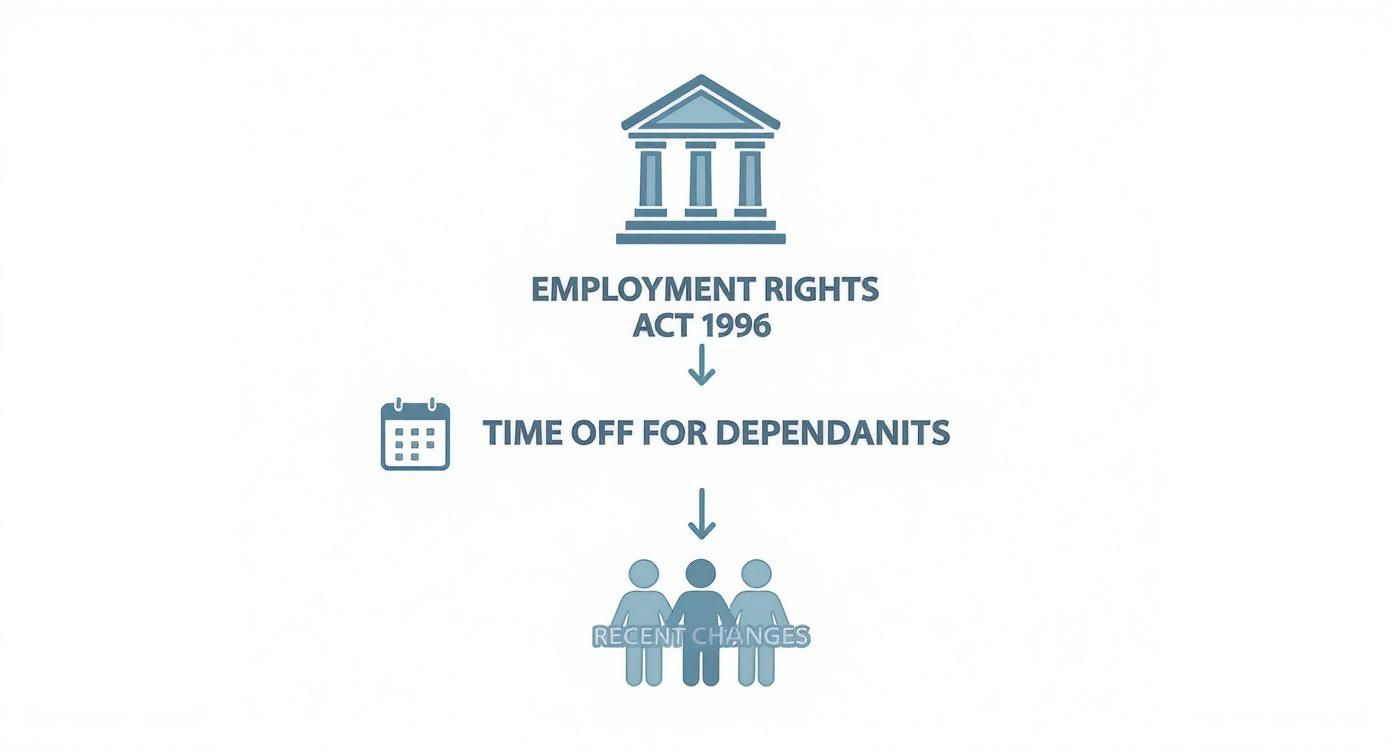
This flowchart shows how the statutory rights for dependants have evolved, which really underscores the need for companies to keep their own policies in step with modern expectations.
Moving From Basic Compliance To Best Practice
The difference between simply being legally compliant and adopting a best-practice policy is night and day. One does the absolute bare minimum, while the other actively invests in employee wellbeing. That investment pays for itself through better morale, higher retention, and improved productivity.
Let's put the two approaches side-by-side to see the difference.
Statutory Minimums vs Best-Practice Compassionate Leave Policy
Relying on the legal minimums might keep you out of trouble, but a dedicated company policy is what builds a truly supportive culture. The table below highlights the key differences.
| Feature | Statutory Right (Time Off for Dependants) | Best-Practice Company Policy |
|---|---|---|
| Payment | Unpaid | Typically paid, at least for a set period. |
| Scope | Limited to a strict legal 'dependant' | Often includes close friends, partners, and others. |
| Duration | A vague 'reasonable' amount of time. | Clearly defined allowances (e.g., 5 days for bereavement). |
| Process | Can be informal and inconsistent. | Clear, documented procedure for requests. |
| Focus | Managing the immediate emergency only. | Supports both the initial crisis and the return to work. |
As you can see, a best-practice policy is proactive, clear, and generous. It anticipates what employees will need and provides a robust support system, ultimately creating a stronger, more resilient workforce. This isn't just about being kind; it's a strategic decision that benefits everyone in the long run.
Deciding on the Right Amount of Leave
Figuring out how much time off is ‘enough’ is probably the trickiest part of creating a compassionate leave policy. The truth is, there's no magic number. The right amount of time is deeply personal and hinges entirely on what your employee is going through.
The time someone needs will depend on their relationship with the person involved, the nature of the crisis, and all the practical and emotional hurdles they’re facing. A sudden emergency with a child might just need a day or two to sort out. But losing a close family member? That’s a completely different story, involving a much longer and more complicated period of adjustment. The first few days are often just a whirlwind of paperwork and planning a funeral, all while trying to process the initial shock of grief.
Setting Realistic Benchmarks
While every situation is unique, your policy needs a clear starting point. Putting some solid benchmarks in place removes the awful burden of negotiation from an employee who is already in crisis. Many of the most supportive UK companies take a tiered approach, which gives everyone a fair and transparent guideline.
Here’s what you often see in practice:
- 5 to 10 days for the death of an immediate family member, like a partner, child, or parent. This gives them time for funeral arrangements and to navigate the immediate aftermath.
- 2 to 3 days for the death of another close relative, such as a grandparent, sibling, or grandchild.
- 1 to 2 days for an urgent care emergency, like a child’s unexpected illness or a sudden breakdown in care for an elderly relative.
These figures provide a structured, fair baseline. But a truly great policy doesn't stop there. It also gives managers the discretion to grant additional unpaid leave when things are especially tough, making sure you always put your people first.
The Gap Between Policy and Reality
It’s so important to remember that a few days off, while absolutely essential, is just the start. Grief doesn’t stick to a schedule, and the emotional fallout can linger for months, sometimes even years. The initial leave is for getting through the immediate crisis, not for ‘getting over’ the loss.
Recent data shows a telling trend: while more UK employees are taking compassionate leave, the average time they take is surprisingly short. Despite more people needing support, the average duration is just 1.6 days per instance. This disconnect suggests that even with a policy in place, employees might feel pressure to rush back—worried about money, their workload, or simply the workplace culture. You can dig deeper into how long compassionate leave usually lasts to understand this better.
A compassionate leave policy should be seen as the first step in a longer journey of support. The initial time off addresses the logistical storm, but true support continues long after the employee has returned to their desk.
This is where empathetic and well-trained managers become absolutely critical. Regular, gentle check-ins and a flexible plan for returning to work can make a world of difference.
Navigating Sensitive Conversations
For a manager, talking about how much leave someone needs requires a careful blend of empathy, fairness, and practicality. The conversation should always be about supporting the employee, not questioning their request.
Here are a few principles to guide those discussions:
- Lead with Empathy: Always start by expressing your sincere condolences or concern. The first thing you need to show is that you care.
- Refer to the Policy: Gently point the employee towards the company policy. This helps them understand what they’re entitled to and ensures everyone is treated consistently.
- Listen More Than You Talk: Ask open questions. "What do you need right now?" or "How can we best support you?" are great places to start.
- Offer Flexibility: Talk about what their return to work could look like. Maybe a phased start, temporarily flexible hours, or a lighter workload for the first week back could help ease the transition.
By handling these conversations with genuine care, you build a culture of trust and prove that your organisation is there for its people when life gets tough.
The Business Case for Paid Compassionate Leave
The question of pay is often the biggest sticking point when compassionate leave comes up. While UK law gives employees the right to take time off for a dependant's emergency, it doesn't force employers to pay for it. This can leave people in an impossible situation: having to choose between being there for their family and earning the money they need to live.
This financial pressure, piled on top of immense emotional strain, is a heavy burden. It can push people to come back to work long before they’re emotionally or practically ready, which helps no one—not them, and not the business. This is exactly why forward-thinking companies are starting to look at this differently. They see paid compassionate leave not as a cost to be avoided, but as a smart investment in their most valuable asset: their people.
An Investment in Loyalty and Retention
How you respond when an employee is going through a crisis is a moment they will never, ever forget. Offering financial stability during such a vulnerable time sends a powerful message. It tells them you see them as a human being, not just a number on a spreadsheet.
This single act of support builds incredible loyalty and goodwill. An employee who feels genuinely cared for is far more likely to be engaged, motivated, and committed to the company's future. In a tight job market, a strong, empathetic compassionate leave UK policy isn't just a nice-to-have; it's a key reason top talent will choose you over a competitor.
Providing paid leave isn't just about managing an absence; it's about investing in the long-term relationship with your employee. It’s a clear signal that you support them through life’s challenges, fostering a bond that goes far beyond a simple paycheque.
Boosting Productivity and Reducing Long-Term Absence
Let's be honest, an employee who comes back to work while still drowning in stress and grief isn't going to be at their best. Their focus will be shattered, their energy will be low, and the risk of mistakes will be much higher. This is known as presenteeism, and it can be far more damaging to a business than the absence itself.
By offering paid leave, you give your team member the space they need to handle their situation without the added anxiety of financial stress. This means that when they do return, they're more focused, more effective, and truly ready to be back.
On the flip side, failing to provide that support can have serious knock-on effects down the line:
- Increased Stress and Burnout: Piling money worries on top of grief is a fast track to complete burnout.
- Long-Term Sick Leave: Unresolved stress and trauma often bubble up later as physical or mental health problems, leading to extended sick leave.
- Higher Employee Turnover: Feeling unsupported during a crisis is a massive reason people start looking for a new job.
The economic fallout from bereavement and poor compassionate leave policies is staggering. Recent estimates suggest it costs the UK economy around £23 billion annually, a figure covering everything from lost productivity to the wider impact of insufficient support. You can read more about the economic costs of bereavement on leavewizard.com. This national data makes it clear: providing proper support isn't just the compassionate thing to do—it's the commercially smart one.
How to Manage Compassionate Leave Requests
When an employee gets in touch to ask for compassionate leave, that very first conversation sets the tone for everything. Your goal is to handle the process with efficiency and consistency, but above all, with genuine empathy. This isn't just another admin task; it's a critical moment of support for your team member.
Your first priority should be to simply listen and show you care. A sincere expression of sympathy is far more important than jumping straight into the practical details. It's not just about granting the time off, but also about supporting your people through their grief; you might find it helpful to learn how to appropriately offer condolences and support.
That initial human connection builds the trust you'll need to navigate the practical steps that follow.
Gathering Essential Information with Sensitivity
While empathy comes first, you do need some basic details to process the leave correctly. The trick is to ask only for what is absolutely necessary, always respecting the employee's privacy.
Typically, you'll need to know:
- The reason for the leave (in general terms, like "a family bereavement" or "a dependant's medical emergency").
- When they expect the absence to start.
- An estimated duration, if they have any idea.
It's really important to reassure them that you don't need any intrusive details. The focus is on confirming their entitlement under your company policy and making sure they have what they need. And, of course, handle all this information with the strictest confidentiality.
Ensuring Consistency and Fairness
One of the biggest challenges for any manager is applying the compassionate leave policy fairly across the board. If one person gets more support or flexibility than another in a similar situation, it can quickly breed resentment and a sense of unfairness.
A clear, well-documented policy is your best tool for ensuring fairness. When managers and HR use the same framework for every request, it removes ambiguity and ensures that every employee receives the same high standard of support.
This consistency is a two-way street—it protects both the employee and the business. It shows that your approach is based on fair, established principles rather than personal feelings, which is vital for a healthy and trusting workplace.
Planning for the Return to Work
Supporting an employee doesn't just stop when their leave ends. Coming back to work is a delicate phase that needs careful, compassionate management. It’s common for people to feel anxious or overwhelmed about stepping back into their role after dealing with a personal crisis.
A flexible and supportive return-to-work plan can make all the difference. Think about offering options like:
- A Phased Return: Letting them come back on reduced hours for the first week or two can really ease the transition.
- Temporary Flexible Working: Adjusting start and finish times might help them manage new responsibilities, like hospital visits or childcare arrangements.
- A Reduced Workload: You could temporarily reassign some non-critical tasks to prevent them from feeling immediately swamped.
Having an open conversation about these options shows you’re truly committed to their long-term wellbeing.
Using Technology to Simplify the Process
For growing teams, trying to manually track different types of leave can quickly become an administrative nightmare. It just adds unnecessary stress to an already sensitive situation. This is where dedicated leave management software can be a real game-changer.

A platform like LeaveWizard gives you a clear, central place for employees to request leave and for managers to approve it, making sure everything lines up with company policy.
This kind of system frees up HR and managers from chasing paperwork, letting them focus on what actually matters: providing genuine, human support to the employee when they need it most.
Common Questions About Compassionate Leave
When you're dealing with a difficult personal situation, the last thing you want is confusion about your rights at work. Let's clear up some of the most common questions that pop up around compassionate leave, so you know exactly where you stand.
Can I Use Compassionate Leave For A Pet or Close Friend?
The short answer, from a legal standpoint, is no. Your statutory right to ‘Time Off for Dependants’ is quite specific and doesn't cover friends or pets. The law is designed to help you care for someone who relies on you, like a child, partner, or parent.
But here’s the thing: many forward-thinking employers get that "family" isn't always strictly defined by blood or marriage. It's becoming more common for companies to extend their compassionate leave policies to include the loss of a close friend or even a beloved pet. This is entirely up to the employer, so the golden rule is to always check your specific company policy.
What Is The Difference Between Compassionate Leave and Sick Leave?
This is a really important distinction to grasp. Think of it this way:
Compassionate leave is for the immediate emergency. It’s the time you need to react, make urgent arrangements for care, or deal with the practicalities that follow a death.
Sick leave, on the other hand, is for when you are personally too unwell to work. Grief can absolutely take a physical and mental toll, leading to stress-related illness that makes working impossible. So, the initial day or two to handle the emergency would be compassionate leave, but if you're still unwell after that, it would typically shift to being managed under your company's sick leave policy.
What Can I Do If My Leave Request Is Rejected?
If you've requested statutory ‘Time Off for Dependants’ and feel it was unfairly rejected, your first port of call should be a conversation with your manager or HR department. Often, a simple chat can clear up a misunderstanding. If that doesn't get you anywhere, you can raise a formal grievance.
When it comes to discretionary leave offered under a company policy, your employer has more leeway. However, they still need to apply their own rules fairly and consistently to everyone. If you feel singled out or unfairly treated, ACAS offers fantastic free and impartial advice to help you figure out your next steps.


