
Bereavement leave is far more than just a line in the company handbook; it's a crucial period of time off—sometimes paid, sometimes unpaid—that you offer an employee after a loved one has passed away. This isn't just about giving them a day off for a funeral. It's about providing the space they need to grieve, sort out practical arrangements, and handle personal matters without the pressure of work piling up.
What Bereavement Leave Really Means in the Workplace

Think of bereavement leave as a core part of your workplace support system. It’s a clear signal that you understand no one can be expected to perform at their best while dealing with the huge emotional and logistical weight of a loss. To really get what bereavement leave means, you have to appreciate the emotional side of things, which includes understanding the complex role of loss in cancer care.
At its heart, this type of leave is a formal acknowledgement that grief is a profound human experience. It impacts every corner of a person’s life, especially their ability to focus and be productive. A well-thought-out policy gives employees a clear, compassionate way to ask for and take the time they desperately need.
Key Aspects of a Bereavement Policy
A solid bereavement leave policy will typically spell out a few core components, which helps to remove any confusion during an already difficult time. For you as an employer, defining these elements ahead of time creates a fair and consistent framework for everyone.
To help you get started, here is a quick overview of the key aspects typically found in UK bereavement leave policies.
Key Aspects of UK Bereavement Leave at a Glance
| Aspect | Common UK Practice |
|---|---|
| Eligibility | Usually covers immediate family (spouse, partner, child, parent, sibling), but many policies extend this to other close relationships. |
| Duration | Varies by relationship. Typically 3-5 days for immediate family and 1-2 days for other close relatives or friends. |
| Compensation | Often paid, especially for a set number of days, though this isn't always a legal requirement beyond Parental Bereavement Leave. |
| Flexibility | Many employers allow the leave to be taken non-consecutively to accommodate funerals, memorial services, or other needs. |
Defining these points clearly in your policy ensures that employees know exactly where they stand and what support they can expect.
Bereavement leave is fundamentally about empathy in action. It transforms a company’s values from a statement on a wall into a tangible form of support that shows employees they are valued as people, not just workers.
It's also worth noting that bereavement leave is closely related to, but not quite the same as, other time-off policies. You can explore a complete guide to understanding compassionate leave meaning to see how these concepts often fit together in modern businesses.
Ultimately, offering this leave isn't just about process; it's a cornerstone of building a supportive and truly human company culture.
Navigating UK Bereavement Leave Laws

If you're a UK employer, getting to grips with the legal side of things is your first port of call. But it's vital to realise that the official, statutory bereavement leave rights are far more limited than most people think. This is exactly why a clear and compassionate company policy is so essential.
The main piece of legislation to be aware of is the Parental Bereavement Leave and Pay Regulations, more commonly known as Jack's Law. It’s this law that provides a specific, legal right to time off for parents dealing with the unimaginable loss of a child.
Understanding Jack's Law
This landmark law, which came into effect in 2020, gives employed parents the right to two weeks of leave if their child under 18 passes away, or if they suffer a stillbirth after 24 weeks of pregnancy. This time can be taken all in one go or split into two separate one-week blocks.
The scope of Jack's Law has recently been expanded. It now also covers parents who experience a miscarriage or stillbirth at any point during pregnancy, a really significant change from the original 24-week rule.
The Reality for Most Bereavements
While this legal protection is incredibly important, it also shines a light on a huge gap in the law. For the majority of bereavements – like losing a parent, partner, sibling, or another close loved one – there is no automatic legal right to paid time off.
This is a critical point for employers: While your team members do have a right to a reasonable amount of unpaid "time off for dependants" to handle an immediate emergency, this doesn't come close to covering the actual grieving process. The legal framework leaves a massive gap that only a thoughtful company policy can fill.
This situation really brings home why a well-defined bereavement policy isn't just "good practice," but an absolute necessity. It allows you to move beyond the bare legal minimums and offer genuine, compassionate support when your employees need it most.
If you're thinking about what an appropriate amount of time off looks like, you might find our guide on how long compassionate leave should be helpful.
The Business Case for a Compassionate Leave Policy
Looking past the legal basics, putting a formal bereavement policy in place is one of the smartest moves a business can make. This isn't just about being a good employer; it’s a strategic decision that directly tackles the very real costs that come with employee grief.
The financial toll of bereavement on UK businesses is pretty staggering. When your team doesn't get the right support, you’ll see a rise in absenteeism, a dip in productivity, and a general lack of engagement from grieving employees. A government assessment actually put a number on it, finding that bereavement costs the UK economy around £23 billion every year in lost output. That figure alone should tell you just how critical structured support is. You can get the full picture by reading the government impact assessment on bereavement leave yourself.
Fostering Loyalty and Stability
A clear, compassionate policy does more than just cut those costs—it helps you build a stronger, more resilient team. When your employees feel genuinely supported during their toughest times, it creates a powerful sense of loyalty and trust. That support pays you back in higher morale and better staff retention, saving you the huge expense of constantly recruiting and training new people.
It also makes life much easier for your managers. Having a well-defined policy gives them a consistent roadmap to follow. It takes the guesswork and pressure off their shoulders, so they can offer support confidently and fairly. This way, every employee gets the same level of care, which protects your reputation and strengthens your company culture.
By formalising how you handle bereavement, you're connecting the dots between compassion and long-term business health. It sends a clear message that you value your team as people, not just workers, creating an environment where they’re far more likely to stay engaged and committed. This is what a modern bereavement leave policy is all about.
How to Build a Fair and Flexible Bereavement Policy
Crafting a clear and compassionate bereavement policy is one of the most important things you can do to support your team. When someone is grieving, the last thing they need is confusion or uncertainty. A good policy cuts through that, giving both employees and managers a clear path to follow. It’s all about creating a structure that is both fair and deeply human.
The first step is to nail down the core components. You’ll want to start by outlining who qualifies for the leave, how much time off is available, whether it’s paid, and the simple steps an employee needs to take to let their manager know. These elements are the backbone of any solid policy.
As a starting point, many companies offer between three to five paid days for the loss of an immediate family member—think a spouse, partner, parent, or child. For other close relationships, like a grandparent, sibling, or even a close friend, one or two days is fairly standard.
Core Policy Components
To build a policy that truly works, you need to be crystal clear on a few key areas. Defining these upfront prevents any mix-ups and makes sure everyone is treated consistently across the business.
- Eligibility: Spell out which relationships are covered. More and more policies are moving towards broader terms like "close loved one" to be more inclusive of modern family structures.
- Duration: Specify the number of days offered for different losses. It’s also a great idea to offer flexibility, allowing the days to be taken non-consecutively if needed for things like funeral arrangements or travel.
- Compensation: Be upfront about whether the leave is paid or unpaid. This is a critical detail for any employee trying to manage their finances during a difficult time.
- Notification Process: Keep it simple. Outline the basic steps an employee should take, like a quick email or a conversation with their line manager. The process should be as stress-free as possible.
The infographic below shows how this kind of structured support directly fuels positive outcomes for the business.
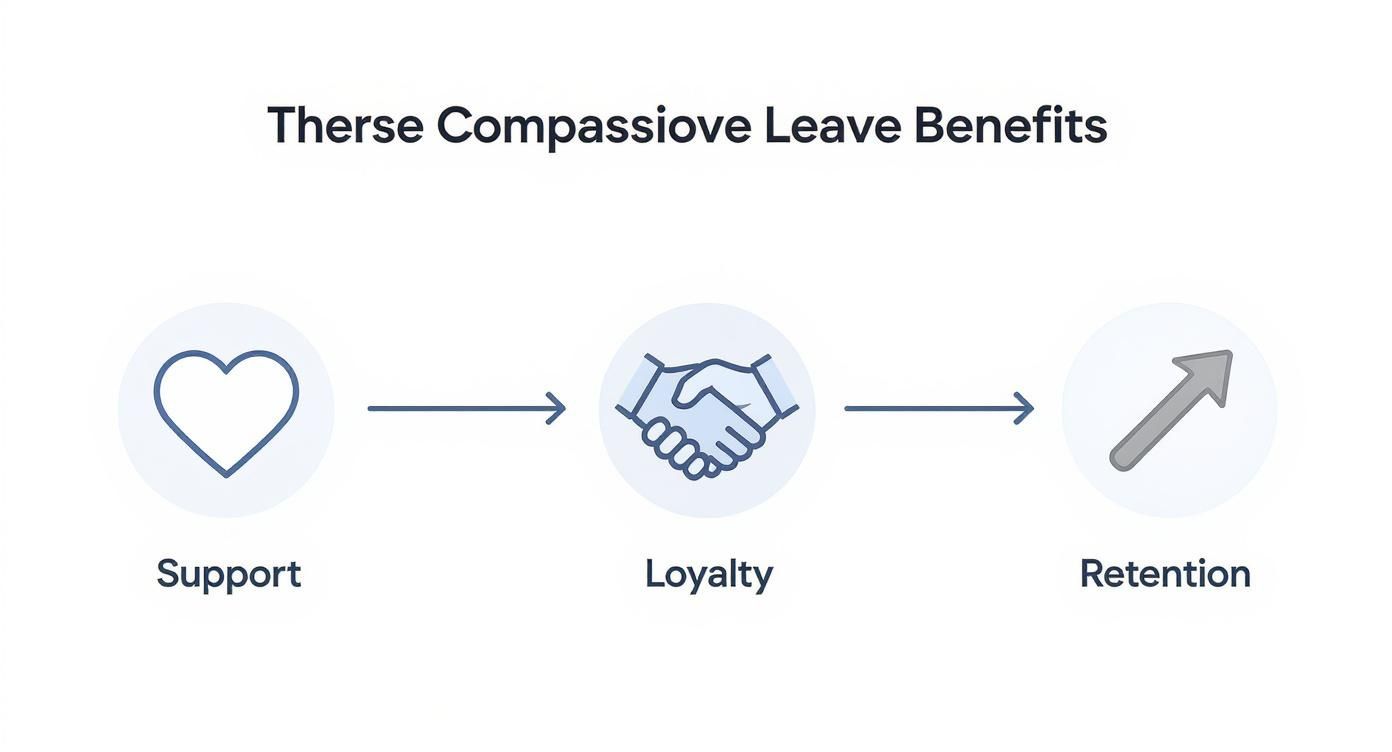
You can see a direct line from offering genuine support to building loyalty and improving retention. A compassionate policy isn't just the right thing to do; it's also a smart business strategy.
The Importance of Flexibility
Rigid, bureaucratic rules just add unnecessary stress when an employee is already struggling. The whole idea of bereavement leave meaning is shifting towards something much more flexible—a view overwhelmingly backed by the public. An Ipsos MORI survey found that a staggering 87% of UK adults think paid bereavement leave should cover close family and friends, not just a narrow legal definition.
Even more telling, 86% believe policies should be flexible enough to let managers adapt to individual needs. This tells us people want humanity, not red tape.
A truly effective policy empowers managers with discretion. It trusts them to handle unique situations with compassion, allowing for additional time or adjustments based on an employee's specific circumstances.
Ultimately, your goal is to create a supportive framework, not a restrictive rulebook. If you're looking for practical examples and templates to get started, have a look at our detailed guide to creating a bereavement leave policy that fits your company's culture. This approach ensures your policy is not just practical, but profoundly human.
Managing Bereavement Leave with Sensitivity
A great policy is only effective when it's managed with genuine care. The human side of handling bereavement leave is just as important—if not more so—than the formal guidelines in your handbook. How you respond in those first few moments can completely define an employee's experience.
It all starts with empathy. When a team member notifies you of a loss, the immediate response should be one of compassion, not a request for paperwork. Discussions about documentation can wait. Honestly, asking for a death certificate for a few days of leave often comes across as insensitive and can badly damage trust. A simple, confidential notification to a line manager should be more than enough.
Maintaining privacy is also non-negotiable. The details of an employee's loss are deeply personal and should only be shared on a strict need-to-know basis, like with HR for payroll purposes. Discretion is absolutely key.
Streamlining the Administrative Burden
Modern tools can help you balance that essential compassion with the necessary process. A dedicated leave management system lets you handle the administrative side quietly and efficiently, freeing up managers to focus on what really matters: supporting their people.
For example, having a pre-configured ‘Compassionate Leave’ type in your system allows an employee or manager to log the absence without any bureaucratic stress.
This ensures the request is recorded accurately for payroll while keeping the process simple and discreet. It neatly separates the necessary admin from the human interaction.
The goal is to blend supportive, human interaction with efficient, unobtrusive processes. Your employee should feel cared for, not just managed.
To further assist employees and their families during such a difficult time, consider pointing them toward resources that offer comprehensive bereavement and grief care. This small gesture shows your support extends beyond just time off. This kind of approach reinforces the true bereavement leave meaning: providing holistic support when it’s needed most.
Your Bereavement Leave Questions Answered
To help bring everything into focus, let's walk through some of the most common questions that pop up around bereavement leave. Getting clear, straightforward answers helps everyone—both managers and their teams—handle these tough situations with a bit more confidence.
Is Bereavement Leave in the UK Paid or Unpaid?
This is a big one. Outside of the specific rules for Parental Bereavement Leave, whether the time off is paid comes down to your company's policy. There's no sweeping law that forces employers to pay for time off when other relatives pass away.
That said, a good number of companies choose to offer a set number of paid days as part of their compassionate leave policy. They see it for what it is: an investment in their people's wellbeing and a way to build loyalty, not just another cost on the books.
Can an Employer Refuse a Request for Bereavement Leave?
When it comes to the legally protected Parental Bereavement Leave, the answer is no—an employer can't refuse it if the employee is eligible. For other situations, employees have a right to reasonable, unpaid 'time off for dependants' to deal with an emergency, and a death certainly counts.
But while the law covers the immediate practical stuff, flat-out refusing a reasonable request for a few days to grieve can wreck trust and morale. If you have a company policy, you're bound to follow it consistently for everyone.
The key takeaway here is that while the law provides a basic safety net, it's your company’s own policy that truly shows where you stand. Refusing a reasonable request often does far more long-term damage to your culture than the short-term inconvenience of having someone out of the office.
Do Employees Need to Provide a Death Certificate?
Asking for official paperwork like a death certificate for just a few days of leave usually feels heavy-handed and insensitive. It just adds another administrative headache at a time when an employee is already completely overwhelmed.
For short-term leave, a simple, confidential chat with a line manager should be more than enough. If someone needs an extended period off or is claiming statutory pay, some documentation might be required down the line, but the initial request for time off should never get bogged down in paperwork.


