
Losing a grandparent is a profound, often shattering, experience. The last thing you need when you’re grieving is the added stress of figuring out your rights at work. When it comes to bereavement leave for a grandparent in the UK, it all boils down to two key things: your statutory right to take time off, and your employer’s specific policy, which dictates whether you’ll be paid for that time. Getting your head around this distinction is the single most important first step.
Defining Bereavement Leave for Grandparents

The phrase ‘bereavement leave’ can feel a bit confusing when you’ve just lost a grandparent. It’s not just about getting a day off for the funeral. It’s about having the space to grieve, be there for your family, and handle all the practical things that come up without work pressures looming over you. But how this plays out in a UK workplace isn’t always cut and dried. The most crucial concept to grasp is the gap between what the law guarantees and what your company chooses to offer. Think of it as a bare minimum versus a thoughtful, supportive package.
- Statutory Leave (The Legal Minimum): This is the baseline right that every employer must honour. UK law gives all employees the right to take a ‘reasonable’ amount of unpaid time off to deal with an emergency involving a dependant. While the term ‘dependant’ has traditionally been narrow, its interpretation is broadening to better reflect modern families, including the significant role of grandparents. This is your safety net, ensuring you can’t be penalised for being absent for crucial reasons.
- Company Policy (The Supportive Package): This is where the real substance lies – details like pay and the number of days you can take. Your company’s compassionate or bereavement leave policy is what turns a basic right into meaningful support. Many forward-thinking companies recognise the importance of this and offer paid leave for the loss of a grandparent, often between one to five days.
Why This Distinction Matters
Understanding this difference puts you in a much stronger position. You know what your absolute legal rights are, but you also know that you need to check your employee handbook or contract for the specifics. The law gives you the right to be absent; it’s your employer’s policy that provides the financial and practical support that makes all the difference during such a painful time.
Grief isn’t a one-day event. It’s a process. It involves emotional healing, supporting family members, and dealing with practical tasks like funeral arrangements. A truly compassionate policy understands and respects this reality.
For instance, statutory leave ensures you can attend a funeral without facing disciplinary action. That’s the baseline. But a good company policy might offer three paid days, allowing you not just to attend the service but also to travel and be with your family without worrying about your next paycheque. As we dig deeper, you’ll see how this plays out in the real world and how you can confidently navigate your request for bereavement leave for a grandparent.
Understanding Your Legal Rights for Grandparent Loss
When you lose a grandparent, the last thing you want to be doing is trying to decipher legal jargon. It’s overwhelming. But taking a moment to understand your basic rights is the first step toward getting the time and space you need to grieve. So, what does UK law actually say about taking time off work when a grandparent passes away? Let’s break it down so you know exactly where you stand. Historically, UK bereavement leave was pretty narrow, focusing mainly on the tragic loss of a child. Thankfully, the legal landscape is catching up with the reality of family structures. A major update, effective from April 2025, significantly expands these rights. The big news? This change gives employees a day-one right to take a minimum of one week’s unpaid leave for each qualifying bereavement, and that now includes grandparents. This new legislation creates a vital baseline, making sure every single employee has a protected right to time off when they need it most.
Your Statutory Entitlement to Time Off
Here’s the most important thing to remember: you have a legal right to take time away from work. This isn’t a perk or a favour from your boss; it’s a statutory entitlement. That means your employer can’t legally refuse a reasonable request for time off to deal with the aftermath of a death. But there’s a crucial distinction to make: the right to leave isn’t the same as the right to pay. The law guarantees you can take the time, but it doesn’t force your employer to pay you for it. Whether you get paid for bereavement leave when a grandparent dies depends entirely on your company’s own policy.
Your statutory right is your legal safety net. It ensures you can be absent from work for a qualifying reason without facing disciplinary action. Your company’s policy is what determines the level of support you get—like pay—during that time.
Understanding this difference is key. The law provides the foundation, and your employment contract builds on top of it. To give you a clearer picture, here’s a quick snapshot of the core statutory rights for bereavement in the UK.
UK Statutory Bereavement Leave a Snapshot
| Provision | Entitlement Details |
|---|---|
| Parental Bereavement Leave | Employees have a right to 2 weeks’ leave if their child under 18 dies or is stillborn after 24 weeks of pregnancy. This is a day-one right. |
| Time Off for Dependants | A right to a ‘reasonable’ amount of unpaid time off to deal with an emergency involving a dependant. This can include making funeral arrangements. |
| Expanded Bereavement Leave (from April 2025) | A new day-one right to at least 1 week of unpaid leave for a qualifying bereavement, which now explicitly includes grandparents. |
This table shows the legal minimums, but many employers go above and beyond these requirements. Always check your company handbook first.
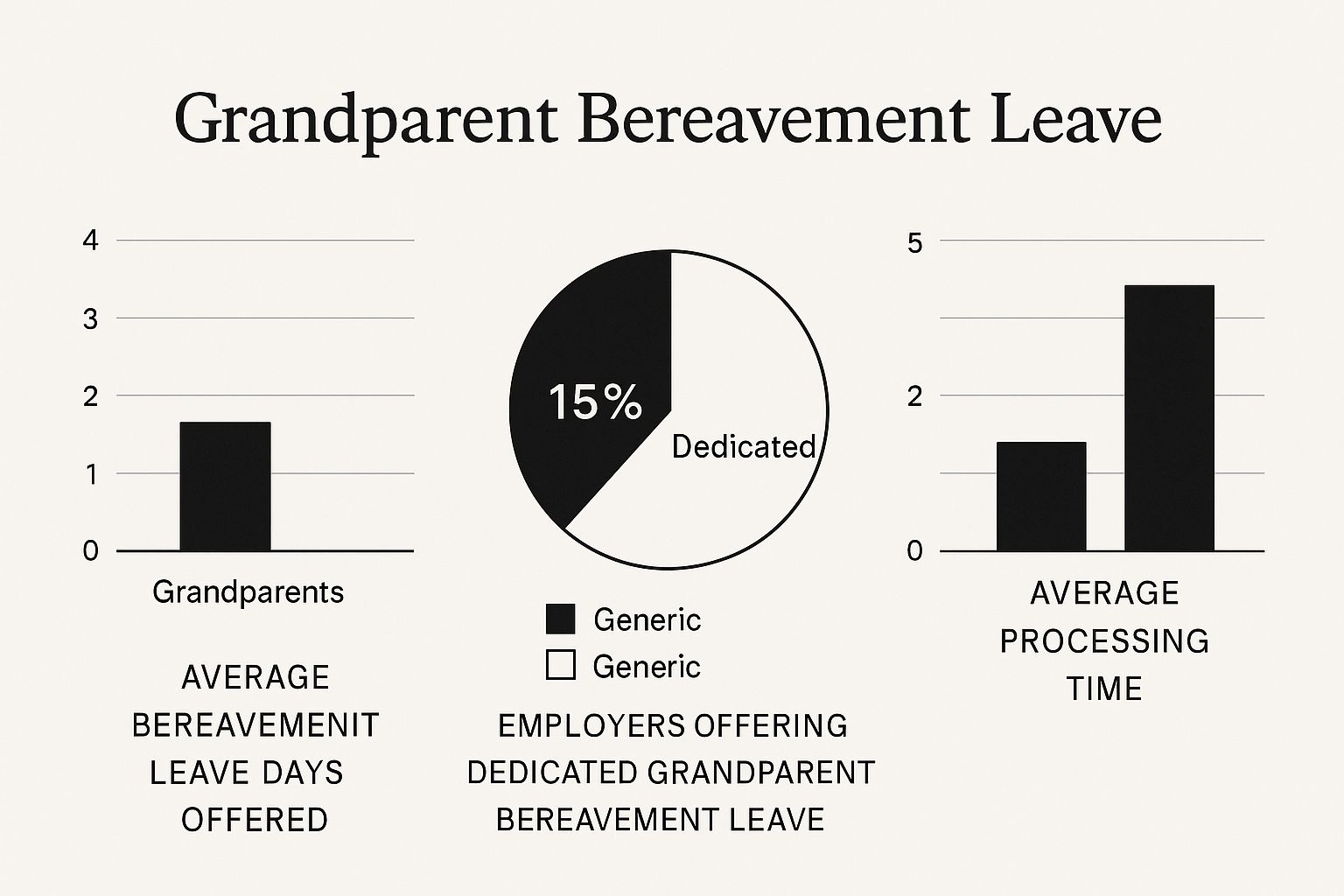
The infographic below shows how employers are currently handling grandparent bereavement leave, highlighting average leave days and the types of policies in place.
Download our Sick Leave Message Pack (Email, SMS, WhatsApp)
Get the full pack + a UK sick leave policy template.What Is a Qualifying Bereavement?
For your leave to be legally protected, it has to be for a ‘qualifying bereavement’. With the new regulations, the loss of a grandparent now clearly falls into this category. This formal recognition is a huge step forward, finally acknowledging the profound impact this kind of loss can have on a person. You’re entitled to this time off to handle necessary duties, such as:
- Arranging or going to the funeral.
- Registering the death.
- Sorting out administrative tasks related to their estate.
- Supporting other grieving family members.
Put simply, the time you take needs to be for purposes directly connected to the bereavement.
The Timeframe for Taking Leave
The law is also flexible about when you take this leave. You don’t have to use the full week all at once. This is a thoughtful detail, designed to accommodate the messy, unpredictable nature of grief and practical arrangements. For example, you might need a day off immediately to be with family, then a couple of days for the funeral the following week, and maybe another day the month after to help sort through personal belongings. The law supports this staggered approach, recognising that the needs following a loss rarely fit into a neat, single block of time. While the statutory right is often unpaid, many companies offer paid compassionate leave for varying lengths of time, so it’s always worth checking your internal policies to see what support is available.
What to Expect from Your Company Policy

While the law provides a basic safety net, your employer’s own policy is what really matters. It’s the difference between an abstract right to time off and tangible support, like paid leave and a clear process to follow. Knowing what’s in your company handbook is the key to navigating this difficult time with less stress. Traditionally, most UK employers would offer between three and five days of paid leave for an immediate family member, like a parent or spouse. The loss of a grandparent, however, often only qualified for a single day. Thankfully, this is starting to change as companies realise just how significant these family figures are. To get the full picture, you need to look past the legal minimums and dig into your internal policies; a great first step is understanding bereavement policy limitations.
How Policies Are Evolving
Modern companies are starting to offer more generous and inclusive bereavement policies, and it isn’t just out of goodwill. They’re seeing real business benefits. A supportive policy builds loyalty, cuts down on stress-related absence, and creates a culture where people feel truly looked after. When an employer shows compassion, employees repay it with commitment and engagement. This shift means more companies now count grandparents as “immediate family,” offering the same amount of paid leave as they would for a parent. It’s a progressive approach that accepts family structures and emotional ties are different for everyone.
A compassionate bereavement policy is a direct investment in your workforce’s well-being and loyalty. It sends a powerful message that the company sees its employees as whole people, not just workers.
The pressure to modernise is also mounting. With the legal change from April 2025 guaranteeing a week of unpaid leave, many organisations are reviewing their policies to stay both competitive and supportive.
Real-World Policy Examples
Company policies on bereavement leave for a grandparent vary wildly depending on the business’s size and culture. You’ll likely encounter one of these common scenarios:
- The Formal Corporate Policy: Big corporations usually have it all spelled out in the employee handbook. The policy will state the exact number of paid days for different family members. For example, it might say, “Employees are entitled to three days of paid bereavement leave for the loss of a grandparent.”
- The Flexible Small Business Approach: A smaller business might not have a rigid, written policy. Instead, they often handle requests case-by-case. Your manager might just say, “Take the time you need. Let’s touch base next week.” This offers flexibility but can also feel uncertain.
- The Hybrid Model: Many companies land somewhere in the middle. They might have a baseline policy (e.g., two paid days for a grandparent) but give managers the discretion to approve extra unpaid leave or let you use paid time off (PTO) based on your situation, like if you need to travel a long way for the funeral.
Knowing which of these models your company uses helps you set your expectations. If you work for a large company, the path is clear but might be rigid. At a smaller firm, you may have more wiggle room but will need to have a direct chat with your manager. For anyone looking to create or update their own internal guidelines, our guide on designing a bereavement leave policy has some valuable templates and advice.
How to Request Bereavement Leave with Confidence
Losing a grandparent is tough. Having to then ask for time off work while you’re still processing everything can feel completely overwhelming. It’s an emotionally draining combination, trying to navigate your own grief while keeping up with professional duties. This guide is here to walk you through it, step-by-step. We want to take the administrative stress out of the equation so you can focus on what really matters—your family. With a bit of preparation and a clear approach, you can communicate your needs with confidence and make sure your request is handled smoothly.
Step 1: Prepare Before You Communicate
Before you even think about talking to your manager or HR, take a few quiet moments to get your thoughts in order. A little bit of prep work now will make the actual conversation much less stressful and prevent you from being caught off guard by questions you haven’t considered. First things first, have a quick look at your company’s bereavement policy. You’ll usually find this in the employee handbook or on the company intranet. Specifically, look for any mention of bereavement leave for a grandparent, how many paid days are offered, and what the official process is for making a request. Next, try to map out the time you’ll need. This doesn’t have to be set in stone, but it helps to have a rough idea. Think about:
- Funeral Dates: Do you know when and where the service will be held?
- Travel Requirements: Will you need to travel a long way?
- Family Responsibilities: Are you needed to help with arrangements or support other family members?
Having a potential timeline makes your request much more concrete and easier for your manager to process.
Step 2: Inform the Right People Promptly
Once you’re ready, it’s time to let your employer know. The best approach is usually to tell your direct manager first. If you’re in the office, an in-person chat is ideal, but a phone call works just as well. A direct conversation feels more personal and lets you clear up any immediate questions on the spot. After that conversation, follow up with a formal written request, typically via email. This just creates a simple, clear record for everyone. Keep the email professional and to the point—provide the necessary details without feeling you have to share every personal detail. Your written request should cover these key points:
- A clear statement that you’re requesting bereavement leave.
- The reason for the leave (the passing of your grandparent).
- The specific dates you’re requesting off.
- A quick note on how any urgent work will be handled while you’re away.
If you’re not sure how to phrase it all, this guide on how to write a leave letter has some great advice that you can easily adapt for this situation.
Download our Sick Leave Message Pack (Email, SMS, WhatsApp)
Get the full pack + a UK sick leave policy template.Step 3: Know What to Share and What to Keep Private
When you make your request, remember that you only need to share the essential information. You are under no obligation to discuss the circumstances of your grandparent’s death or go into the details of your family’s grief. A compassionate and professional employer will understand and won’t press you for more.
Your request should be factual and direct. Simply state that your grandparent has passed away and you need bereavement leave to attend the funeral and be with your family. You do not need to justify your grief.
Some policies might ask for documentation, particularly if the leave is paid. This is fairly standard and is usually just to request reasonable proof, like an obituary, a funeral programme, or travel confirmation. If any request feels too intrusive, you have every right to raise your concerns with HR. Your privacy should always be respected, especially at such a sensitive time.
Step 4: Discuss Your Return and Work Handover
A key part of a smooth leave request is managing expectations for when you’ll be back. Be clear about your expected return date, but don’t be afraid to add that things could change. It’s perfectly fine to say something like, “I expect to be back on [Date], but I will definitely keep you updated if anything changes.” It also shows a great deal of professionalism to proactively suggest a plan for your essential duties while you’re out. This could involve:
- Setting up an out-of-office email auto-reply.
- Briefing a colleague on any urgent tasks they might need to cover.
- Letting key clients or contacts know you’ll be away.
Taking these small steps shows you’re being responsible and helps minimise any disruption, which makes it much easier for your manager to approve your request without a second thought. It’s a thoughtful touch that demonstrates your commitment, while still giving you the space you need.
Building a Modern and Compassionate Bereavement Policy

For any HR leader or manager, creating a bereavement policy isn’t just about ticking an administrative box. It’s a true reflection of your company’s values. A genuinely supportive policy acts as a blueprint for how you show up for your people when they’re at their most vulnerable. The key is to strike a balance between legal compliance and real human compassion. You need to build a framework that supports employees properly without adding another layer of stress to an already difficult time. The absolute foundation of a great policy is clarity. Vague language is the last thing anyone needs when they’re trying to process a loss. A truly modern policy also ditches the rigid, one-size-fits-all approach and embraces the flexibility needed to handle something as personal as grief.
Core Components of a Supportive Policy
To build a policy that actually works for people, it has to be comprehensive and dead simple to understand. This means clearly defining key terms and processes so there’s no room for confusion for either employees or their managers. Your policy should spell out:
- An Inclusive Definition of ‘Family’: Family structures today are beautifully diverse. Your policy should clearly state who is covered, ideally including grandparents, in-laws, domestic partners, and even close friends who are like family.
- Clear Leave Entitlements: Be specific about the number of paid days offered for different relationships. You might offer five days for a spouse but three for a grandparent, for instance. Be upfront about options for any additional unpaid leave, too.
- A Simple Request Process: Map out the exact steps an employee needs to take. Who do they notify first? Is a quick email okay? This removes all the guesswork and anxiety from the process.
This kind of structure ensures everyone is treated consistently and fairly, providing a reliable guide for the entire organisation.
A policy is not just a document; it is a promise of support. Its true value is measured by how it helps an employee navigate loss, not by how rigidly it enforces rules.
By moving away from a strictly hierarchical view of family, companies show they understand the deep emotional bonds that exist, like the one between an employee and their grandparent.
The Critical Role of Flexibility
While clear guidelines are essential, rigidity is the enemy of compassion. Grief isn’t a neat, linear process, and it certainly doesn’t stick to a timetable. The best policies bake flexibility right into their framework, empowering managers to make sensible decisions based on an individual’s situation. For example, an employee might need two days right away, another day for a funeral the following week, and a final day a month later to help with family affairs. A flexible policy allows for this kind of non-consecutive leave, recognising that practical and emotional needs change over time. For companies wanting to improve their support, exploring a comprehensive guide to bereavement leave policies can offer some fantastic ideas for designing these adaptable frameworks. The push for more humane policies is part of a bigger societal shift. The recent recognition of pre-24-week pregnancy loss rights, for example, shows a growing awareness of diverse bereavement needs. This trend really highlights how important it is to acknowledge all sorts of family relationships, including providing bereavement leave for a grandparent, a need that has often been overlooked.
Training Managers to Lead with Empathy
A policy is only as good as the people who have to implement it. Your managers are on the front line, and their response can make or break a grieving employee’s experience. Giving them the right training isn’t just a nice-to-have; it’s non-negotiable. Manager training should focus on three key areas:
- Understanding the Policy: They need to know the entitlements and processes inside and out.
- Leading Empathetic Conversations: This means teaching them how to talk to a grieving employee with sensitivity, kindness, and respect.
- Knowing Available Resources: Make sure they’re aware of any Employee Assistance Programmes (EAPs) or mental health support the company offers so they can signpost people effectively.
When managers are trained to handle these conversations with genuine empathy, it reinforces a culture of trust and support. It takes the policy off the page and turns it into a lived experience, showing every single employee that they are valued as a whole person, especially when life gets tough.
Download our Sick Leave Message Pack (Email, SMS, WhatsApp)
Get the full pack + a UK sick leave policy template.Your Questions About Grandparent Bereavement Leave Answered
Losing a grandparent is hard enough without having to worry about your rights at work. When you’re trying to process everything, figuring out company policy and legal entitlements can feel like the last thing you want to do. Let’s cut through the confusion. This section tackles the most common questions head-on, giving you clear, straightforward answers. We’ll cover everything from pay and proof to what to do if your request is denied, so you have one less thing to worry about.
Is Bereavement Leave for a Grandparent Paid in the UK?
This is usually the first question on everyone’s mind. The short answer? It depends entirely on your employer. Legally, the statutory right to take time off for a dependant (which now includes grandparents) is for unpaid leave. But that’s just the baseline. Many companies go above and beyond the legal minimum, offering paid compassionate or bereavement leave as a key part of their employee benefits. You’ll need to check your employment contract or the company handbook to see what your specific policy is.
- Statutory Leave: This is your legal right to be absent from work, but it doesn’t guarantee you’ll be paid for the time.
- Company Policy: This is where you’ll find out if your leave is paid and for how long. Many progressive employers offer between one to three paid days for the loss of a grandparent.
Always start by looking at your internal company documents to see what financial support you can expect.
Do I Need to Provide a Death Certificate?
Another common source of stress. Let’s be clear: for your statutory right to unpaid time off, you are not legally required to provide a death certificate. Your employer simply has the right to know why you’re absent and for roughly how long. However, if your company offers paid bereavement leave, it’s not unusual for them to ask for some kind of documentation. This is a pretty standard way for them to ensure the policy is applied fairly to everyone.
You are never obligated to share sensitive or personal details about your grandparent’s passing. A request for proof should be reasonable and never feel intrusive.
Often, one of these is more than enough proof:
- A link to an online obituary.
- A funeral service announcement or programme.
- A brief written note from the funeral home.
If a request for proof feels excessive or insensitive, it’s perfectly okay to have a quiet word with your manager or someone in HR.
What Should I Do if My Employer Denies My Request?
Hearing ‘no’ to a leave request, especially when you’re grieving, is incredibly upsetting. If this happens, it’s important to know what your rights are and what steps to take next. First, try to understand the reason for the denial. Is it a simple misunderstanding of the law, or does it clash with a specific company rule? If your employer denies your request for statutory time off for a qualifying bereavement, they could be on shaky legal ground. Here’s a simple way to approach it:
- Stay Calm and Professional: Start by politely pointing your manager or HR towards the official government guidance on time off for dependants.
- Put it in Writing: Follow up your conversation with a brief email. Summarise what you discussed and restate your request, mentioning your legal entitlement.
- Seek External Advice: If that doesn’t resolve things, you can get free, impartial advice from organisations like Acas (the Advisory, Conciliation and Arbitration Service). If you’re in a trade union, your representative is also a great person to talk to.
Remember, the law is on your side. You can’t be penalised for taking reasonable time off when you’re entitled to it.
Can I Take Leave for a Grandparent-in-Law?
This is a great question and one that really highlights how complex modern families are. From a strictly legal standpoint, the statutory right typically covers your own direct relatives—your biological or adoptive grandparents. But this is another area where company policy is often more compassionate than the law. Many modern businesses have expanded their definition of ‘family’ to include in-laws and the relatives of a partner. Your best bet is to check your company’s policy. Look for specific wording around “in-laws,” “partner’s family,” or “close family members.” If the policy isn’t clear, just have an honest chat with your manager. Most will be flexible and understanding, recognising that the loss of a grandparent-in-law can be just as deeply felt.


