
An annual leave request is simply the formal way you ask for paid time off from work, drawing from your yearly holiday allowance. It's the first step for anything from a two-week summer getaway to just a single day off for a doctor's appointment.
Breaking Down the Annual Leave Request Process
The best way to think about your annual leave entitlement is like a bank account, but for time off. At the start of your company's "leave year," you get a fresh deposit of holiday hours or days. Every time you submit an annual leave request that gets the green light, you're making a withdrawal from that account.
The whole system is there to strike a balance between your need for a well-deserved break and the company's need to keep things running smoothly.
This process is built on UK employment law, which guarantees most full-time workers at least 5.6 weeks of paid holiday per year. This is your statutory holiday entitlement. If you work a typical five-day week, that works out to 28 days. Part-time workers get the same amount, just calculated on a pro-rata basis.
The Lifecycle of a Request
From start to finish, the journey of a leave request is pretty straightforward, with clear steps for both you and your manager. It’s a simple back-and-forth that keeps everyone in the loop.
Here's a quick look at how a request typically moves from submission to confirmation:
The Lifecycle of an Annual Leave Request
| Stage | What the Employee Does | What the Manager Does |
|---|---|---|
| Submission | Checks their remaining leave and the team calendar, then sends the request using the company's system (like an online portal or form). | Receives a notification about the new request. |
| Review | Waits for a decision. | Looks at the request. They'll consider team cover, project deadlines, and how much notice was given. |
| Decision | Receives a notification that the leave is approved or denied. | Approves the request, which automatically updates calendars and deducts the time from the employee's balance. Or, they might deny it, usually with a reason and a suggestion for other dates. |
This simple flow shows how everything fits together, ensuring the process is clear and fair for everyone involved.
The infographic below paints a clear picture of this simple three-step flow.
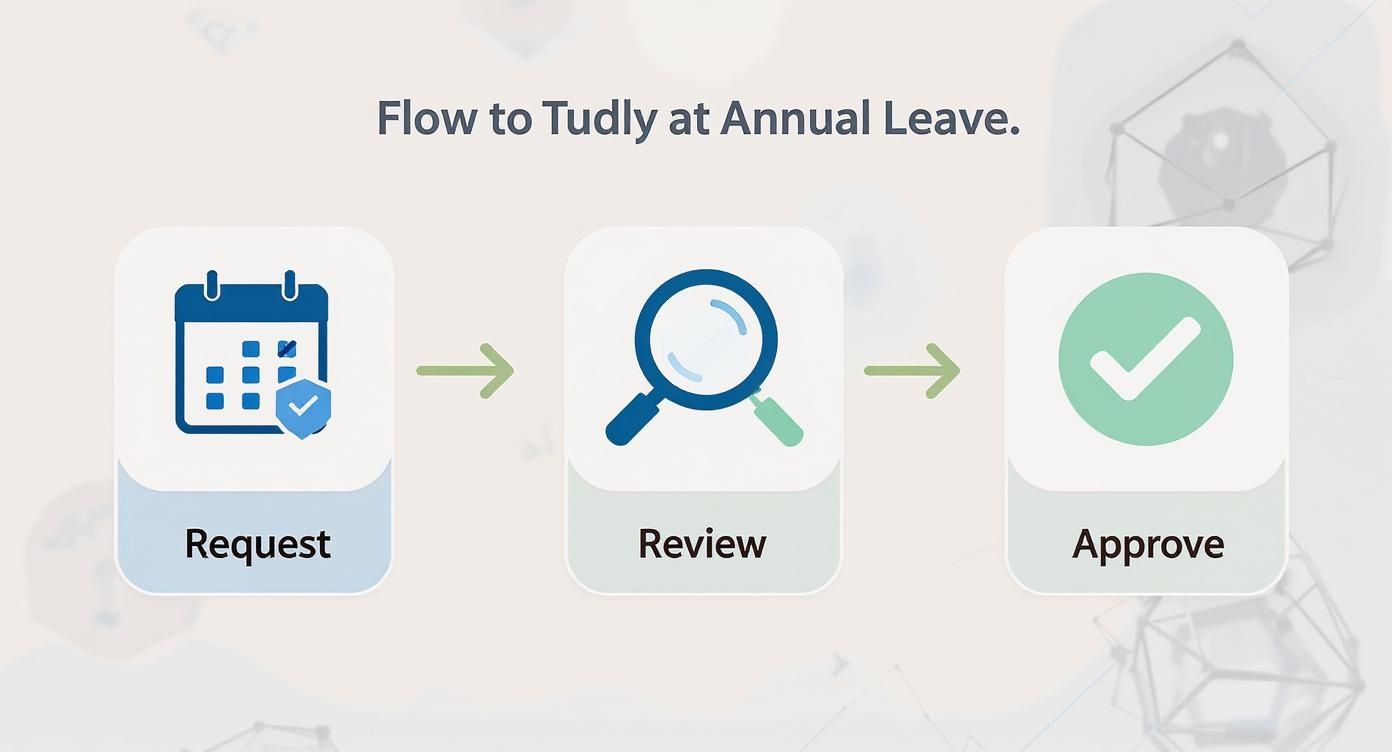
As you can see, a good leave management system depends on clear communication and actions from both sides at every stage.
Understanding Leave Accrual
If you're new to a company, you'll often hear the term 'accrual'. This just means you earn your holiday entitlement as you go, building it up month by month. Typically, you'll accumulate about 1/12th of your total annual allowance for each month you work.
For instance, a new starter who joins in January will probably have only earned a couple of days of leave by the time March rolls around. This is a common-sense approach that stops someone from using up their entire year's holiday allowance and then leaving the company right after.
Getting your head around these basics—your total entitlement, the company's leave year, and the request-approve cycle—is key. It helps you plan your time off without causing headaches for the business, making the entire process transparent and fair for everyone.
Why Smart Leave Management Is Good for Business
Managing annual leave requests is so much more than just ticking a box in an admin to-do list; it’s a critical part of keeping your business healthy and stable. When you get it wrong, it can create a nasty domino effect. You end up with unexpected staffing gaps that throw projects off course, leave customers frustrated, and pile a huge amount of pressure onto the rest of the team.
Think of it like air traffic control for your workforce. A messy, disorganised system is like letting planes take off whenever they fancy it—chaos is pretty much guaranteed. On the other hand, a proactive, well-managed approach keeps everything running smoothly, preventing clashes and making sure everything stays on schedule.
The True Cost of Poor Leave Management
A reactive approach to leave doesn’t just cause a few operational headaches; it comes with real financial and cultural price tags. When your team can't get the time off they need, or the whole process is a confusing mess, the consequences can be surprisingly severe.
These risks often include:
- Increased Employee Burnout: Staff who are overworked and can't get a proper break are less productive, less engaged, and far more likely to make mistakes. Sooner or later, this leads to higher rates of absenteeism and people leaving, which is incredibly costly to fix.
- Financial Drain: Many companies are legally required to pay out any unused holiday entitlement when an employee moves on. A culture where taking leave is quietly discouraged can lead to a hefty financial liability building up on your balance sheet.
- Legal and Compliance Issues: Failing to manage leave according to UK employment law can land you in serious legal trouble. This could mean not providing the statutory entitlement or having policies that are unintentionally discriminatory, opening the door to disputes and tribunals.
A disorganised or unfair leave system sends a clear message to your team that their well-being isn't a priority. This perception can quietly erode trust and motivation across the entire organisation.
Boosting Morale and Retaining Talent
On the flip side, a transparent and efficient system for handling annual leave requests does more than just prevent problems—it actively builds a stronger, more positive workplace culture. When people feel they can easily ask for and take their well-deserved time off, they feel valued and respected. That trust is the bedrock of a healthy work environment.
Putting effective and fair annual leave processes in place is one of the most direct ways to improve employee morale and overall job satisfaction. It's simple, really: well-rested employees are more creative, more collaborative, and more committed to their work.
A company that actually encourages planned time off sees a whole host of benefits. It allows for much better resource planning, ensuring crucial projects always have the cover they need. What's more, it shows a real commitment to work-life balance, which is a powerful tool for attracting and keeping top talent in a competitive market. Ultimately, smart leave management isn't just about dodging the negatives; it’s about creating a positive cycle that benefits everyone.
How to Create a Fair and Clear Annual leave Policy
A solid annual leave policy is your company’s rulebook for time off. Think of it as the constitution for holidays; it prevents confusion, ensures fairness, and sets out the rights and responsibilities for everyone involved. Without one, you’re basically inviting inconsistency, guesswork, and potential disputes into the annual leave requests process.
Creating this document doesn’t have to be a massive headache. The real goal is to build a foundation that is clear, consistent, and easy for everyone to understand. This helps foster a transparent culture where your team trusts that the process is equitable for all, which is a huge boost for morale.
Core Components of a Strong Policy
Every decent leave policy needs to clearly define a few non-negotiable elements. These are the pillars that hold the entire structure up, making sure everyone knows exactly where they stand when planning their well-deserved time off.
Your policy absolutely must state:
- The Leave Year: Is your holiday year a standard January to December affair? Does it run from April to March? Or is it based on an employee’s specific start date? Spell it out.
- Notice Periods: You need to specify how much advance warning an employee has to give. A common rule of thumb is asking for notice that’s at least twice the length of the leave itself (e.g., two weeks’ notice for a one-week holiday).
- Carry-Over Rules: Be crystal clear about how many unused holiday days, if any, can be carried into the next leave year. Just as important is the deadline for using them up.
A well-defined policy is more than just a guideline; it acts as a binding agreement. When you’re putting it together, it’s smart to consider the legal side of things to make sure it’s robust and enforceable. For instance, understanding breach of contract is useful when setting expectations for both employer and employee obligations.
Handling Peak Times and Public Holidays
Your policy also needs a game plan for managing those inevitable clashes when everyone wants time off at once, like during the summer holidays or over Christmas. A first-come, first-served system is pretty common, but you might also consider a rota system to keep things fair. It's also crucial to outline how public holidays are handled and whether they count as part of the statutory holiday entitlement.
Interestingly, even with these popular holiday periods, it seems UK employees are taking less time off than they used to. Recent data from over 3,000 companies showed the average number of annual leave days taken dropped from 38 in 2020 to just 34 in 2023. That’s a decrease of nearly 12%. This trend makes having a policy that actively encourages people to take their breaks even more critical.
Ultimately, a clear document stops confusion in its tracks and shows your business is committed to fairness and employee well-being. For a great head start, check out our detailed guide on creating a UK employee leave policy template for success.
Best Practices for Requesting and Approving Leave

A smooth process for annual leave requests isn't just about forms and calendars; it’s built on a respectful partnership between employees and managers. For everyone involved, a bit of forward planning and clear communication can turn a potentially tricky conversation into a simple, positive experience.
The real goal here is to strike a healthy balance between getting that much-needed personal time and keeping the business running smoothly. When everyone plays their part and follows a few straightforward practices, the whole system just works better, creating a culture of mutual trust.
How Employees Can Submit Professional Requests
As an employee, the way you ask for time off says a lot. When you submit your annual leave requests thoughtfully, it shows professionalism and respect for your colleagues. It also makes it much easier for your manager to say "yes" without any hassle.
For a smoother process, just follow these simple steps:
- Give Plenty of Notice: Honestly, this is the single most helpful thing you can do. The more warning you give, the more time your manager has to arrange cover and shift priorities with minimal disruption.
- Check the Team Calendar: Before you even hit 'submit', have a quick glance at the shared calendar. If half the team is already booked off for that week, your absence might create a real staffing crunch.
- Prep a Quick Handover: If you’re planning a longer break, jot down a few bullet points on where your key projects are at. This little bit of effort gives your manager the confidence that things won't grind to a halt while you're away.
By thinking ahead, you're not just asking for a holiday; you're actively helping your team manage without you. This kind of proactive approach is always appreciated and reflects brilliantly on you.
How Managers Can Handle Approvals Fairly
For managers, approving leave is a delicate balancing act. You need to support your team's well-being while making sure the work gets done. Your best tools for navigating this? Transparency and consistency.
Always start by responding to annual leave requests promptly. Leaving someone hanging just creates needless stress and uncertainty. Even if the answer has to be "no," a quick and clear explanation is always better than silence.
It's also interesting to see how UK employees are using their leave. Recent data shows that just over 50% of people in the UK took a full week off in the past year. Plus, the most popular day for requesting leave in 2024 was 27th December, which really highlights the need for fair systems during those peak holiday rushes.
When you're faced with clashing requests for the same dates, always fall back on your official company policy. A first-come, first-served approach is often the fairest and easiest to defend. To make the whole thing even easier, standardise how requests are made. You can find some excellent holiday request form templates that help capture all the necessary information right from the start.
Solving Common Annual Leave Challenges
Even in the most well-oiled businesses, leave management can hit a few bumps in the road. The system for handling annual leave requests often gets strained by predictable patterns and unexpected curveballs, leading to friction in your operations and frustrated team members. The trick is to get ahead of these issues, creating a process that’s smooth, fair, and efficient for everyone.
Rather than just putting out fires as they pop up, a resilient system sees these common challenges coming and has clear solutions ready to go. This approach can transform leave management from a constant source of stress into a stable, predictable part of your business.
Managing Peak Holiday Rushes
Let’s be honest, the most common headache is the absolute flood of requests for popular times like summer holidays and the Christmas break. When it feels like the entire company wants the same week off, keeping things fair can seem impossible. This problem usually stems from a reactive, first-come, first-served system that rewards the fastest planners but can leave others feeling left out.
To get a handle on this, you could try implementing a few things:
- A Holiday Rota System: For critical departments where you can’t have everyone off at once, a rotating schedule is a great solution. It ensures that key staff members aren't all out of the office during the same peak period two years in a row.
- Clear Deadlines: Set a firm date by which all requests for major holiday periods must be submitted. This simple step allows managers to see the full picture, reviewing all requests at once to make fair decisions based on what the business needs.
- Blackout Periods: If certain times of the year are all-hands-on-deck for your business (think end-of-quarter reporting or a major product launch), define these as blackout periods where leave is restricted. This just needs to be communicated clearly and written into your leave policy.
Tackling Last-Minute Requests and Employee Burnout
On the flip side, you have two other tricky issues: the sudden, last-minute leave request and the employee who never seems to take a break. An unexpected request can throw a wrench in the works, while someone consistently not using their leave is a massive red flag for burnout and a poor work-life balance. Often, the root cause is a workplace culture that subtly discourages people from taking the time off they're entitled to.
This isn't just a feeling; a huge number of UK workers don't use their full holiday allowance. Around 65% of employees leave some of their days untaken each year, and a staggering 17% leave five or more days unused—that's a whole week of paid rest down the drain. You can dive deeper into the data on annual leave trends in the UK to see the full scale of the problem.
So, how can managers handle these situations? For urgent requests, it’s about balancing compassion with business needs. For the holiday hoarders, it's time for a proactive chat. A simple check-in can uncover hidden workload pressures or anxieties that are stopping them from switching off.
By building a system that anticipates these common scenarios, you can handle annual leave requests smoothly and keep your entire team—and your business—running effectively.
How Modern Software Can Simplify Leave Requests
Trying to juggle annual leave requests with messy spreadsheets and a tangled web of email chains? It’s a classic recipe for administrative headaches, not to mention the operational gaps it creates. It’s a reactive, time-consuming process that just ends up frustrating managers and employees alike. Frankly, that kind of manual chaos just isn't sustainable.
Moving from that disorganised approach to a modern software solution is a complete game-changer. Imagine replacing all that endless back-and-forth with a single, central hub. A place where employees can instantly see team availability and fire off a request in seconds, even from their mobile phones.
Centralised Control and Visibility
The biggest shift you'll feel is having one source of truth. An automated system gives you an instant, accurate overview of who is in and who is out, completely eliminating the guesswork. It handles all the heavy lifting—automatically tracking leave balances, calculating accruals, and flagging potential clashes before they ever become a problem.
This clear visual dashboard helps managers make much smarter staffing decisions on the fly.
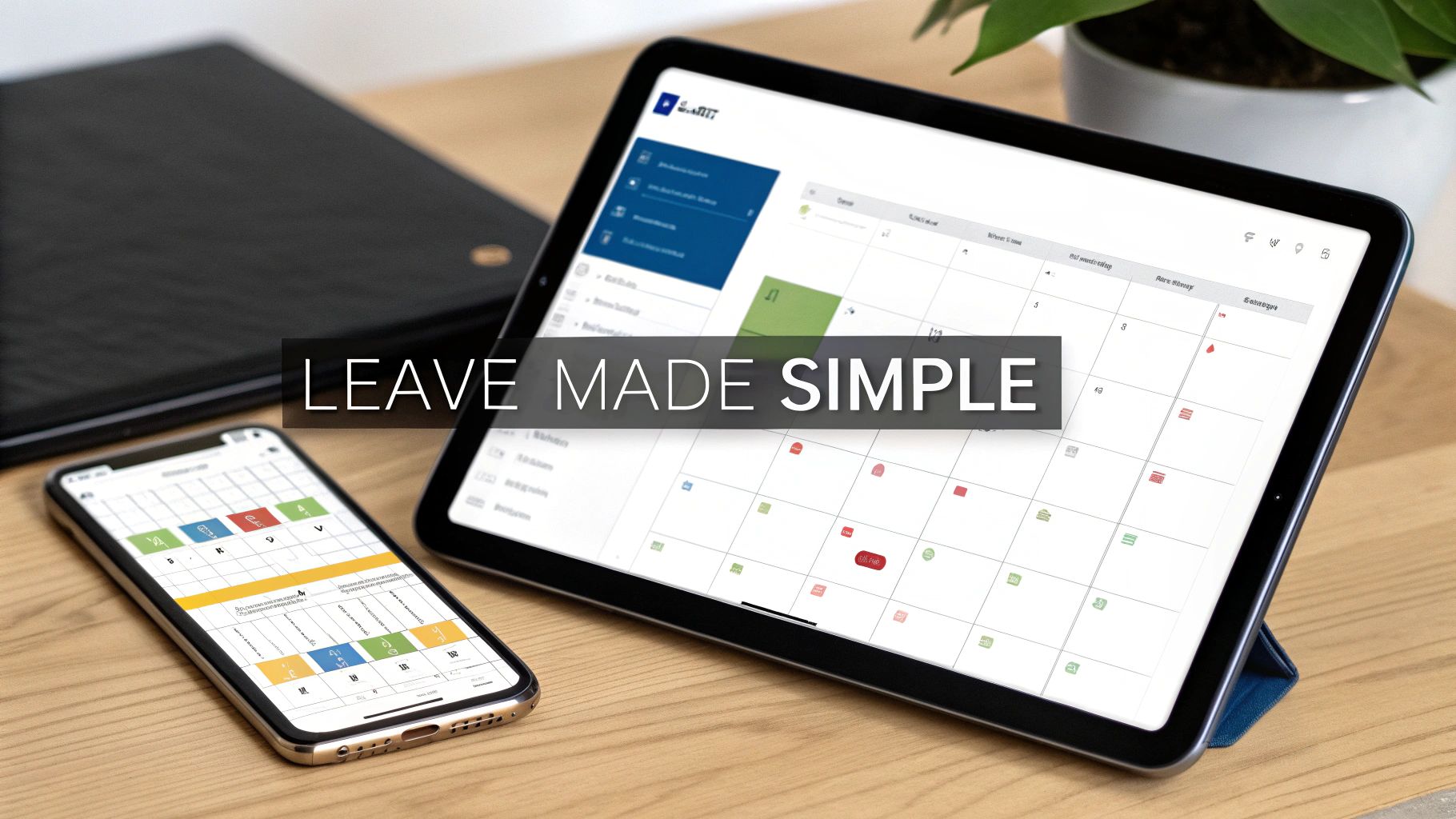
As you can see, everything from pending requests to the entire team calendar is available at a glance. It turns a ridiculously complex task into a simple one.
Smarter Decisions with Better Data
But these systems do more than just manage requests; they give you genuinely valuable insights. Managers can pull up reports on leave patterns, helping them anticipate those peak holiday seasons and plan resources far more effectively. It’s this data-driven approach that really supports solid workforce planning and ensures the business can keep running smoothly, no matter what.
By automating the administrative side of leave, you free up a significant amount of time for managers. They can then focus on what truly matters: supporting their teams and driving the business forward. This efficiency boost is felt right across the entire organisation.
This is where a dedicated employee leave management software becomes invaluable. It doesn’t just tweak the process—it transforms it, making everything transparent, fair, and incredibly efficient for everyone involved.
Common Questions About Annual Leave Requests
Trying to get your head around the ins and outs of annual leave requests can sometimes feel like a bit of a minefield. There are rules and unwritten expectations for everyone involved, and getting clear answers helps keep things fair and transparent.
Let’s tackle some of the most common questions that pop up. Nailing these key points is a huge step towards running a smooth, compliant leave system in your organisation.
Can a Manager Refuse an Annual Leave Request?
In short, yes. An employer can turn down a leave request, but they can’t just do it on a whim. There needs to be a solid business reason behind the decision. Maybe it's your busiest time of year, or perhaps a major project deadline is looming and they need all hands on deck. The one thing they absolutely cannot do is make the decision on discriminatory grounds.
A good manager won't just say "no" and walk away. They'll explain their reasoning clearly and, if possible, work with you to find an alternative date that works for everyone. It’s all about open communication.
It's crucial to remember this: while your employer has a say in when you take your holiday, they can't stop you from taking your statutory entitlement altogether. The right to paid annual leave is baked into UK law.
How Much Notice Is Required?
The general rule of thumb is to give notice that's double the length of the holiday you want to take. So, if you're planning a week away, you should really be putting your request in at least two weeks beforehand.
However, this is just a guideline. Your company’s official annual leave policy is the definitive source of truth here. It should spell out the exact notice periods required, which takes all the guesswork out of the process and sets a clear standard for the whole team. When in doubt, always check the policy first.


