
Dependency leave is your right to take time off to handle an emergency involving someone who relies on you. Think of it as a crucial safety net for those sudden, stressful family situations that crop up and demand your immediate attention. It’s for crises, not for things you can plan for.
What Is Dependency Leave Really For?
Imagine you have a family first-aid kit. You hope you never need it, but you’re relieved it’s there for the immediate crisis when an accident happens. That’s a perfect way to think about dependency leave; it’s your workplace’s first-aid kit for family emergencies.
This type of leave is a statutory right, which means it’s guaranteed by law for all employees from their very first day on the job. The whole point is to give you a reasonable amount of unpaid time off to deal with the immediate fallout of an unexpected event and make any necessary longer-term arrangements.
Demystifying 'Dependant' and 'Emergency'
The whole concept of dependency leave boils down to two key ideas: who counts as a dependant, and what actually qualifies as an emergency.
A dependant isn’t just your child. It could be your spouse, parent, or even someone who lives with you and relies on you for their care. The situation itself must also be genuinely unexpected. We're talking about things like:
- Your child has an accident at school and needs to be picked up.
- Your usual childcare arrangements suddenly fall through without warning.
- An elderly parent has a fall and needs you to take them for urgent medical attention.
The purpose of this leave is to handle the initial crisis. For instance, if your childminder calls in sick, the leave covers the time you need to find alternative care for that day, not the whole week they might be off.
To give you a clearer picture, here's a quick summary of what statutory dependency leave in the UK involves.
Dependency Leave at a Glance
| Feature | Description |
|---|---|
| Payment Status | Unpaid. This is a key difference from other leave types like sick or annual leave. |
| Eligibility | All employees are eligible from day one of their employment, regardless of tenure. |
| Reason for Leave | Must be for a genuine, unforeseen emergency involving a dependant. |
| Duration | A "reasonable" amount of time to deal with the immediate crisis. Usually 1-2 days. |
| Dependants Covered | Includes spouse, partner, child, parent, or someone living in the same household. |
This table shows how dependency leave is designed as a short-term, emergency-only measure.
While dependency leave is a vital support mechanism, it’s interesting to see how it fits into the broader picture of caregiving in the UK. For example, the uptake of Shared Parental Leave (SPL) remains quite low, with only around 5% of eligible parents taking it in 2023. This suggests a continued reliance on more traditional leave structures and really highlights the distinct, emergency-focused role that dependency leave plays. You can discover more insights about UK parental leave trends from the government's evidence review.
It’s important to distinguish this from other types of absence. You can explore a full breakdown of the different types of employee leave to understand how each one works.
Who Actually Counts as a Dependant?
To get to grips with dependency leave, we need to nail down two key questions. First, who legally counts as a dependant? And second, what's considered a genuine emergency? The answers are often much broader than most people think.
The term dependant isn't just about your own children. The legal definition covers anyone who reasonably relies on you for help. This means the scope is wider and more inclusive, reflecting how modern families are structured.
So, a dependant could be your spouse, civil partner, child, or parent. It also includes someone living in your household as part of the family, like an elderly relative you care for or your partner's child. What it doesn't include are tenants or boarders, even if they share your address. The relationship has to be built on a degree of reliance.
Defining a Genuine Emergency
Just as the definition of a dependant is specific, what counts as an emergency also has clear boundaries. The situation must pop up unexpectedly and demand your immediate action.
Think of it like this: a pre-planned hospital appointment for your parent wouldn't qualify. You've had time to prepare for that. But if that same parent has a sudden fall and needs rushing to A&E, that's precisely the kind of unforeseen crisis dependency leave is for.
Here are a few clear-cut examples of what counts as an emergency:
- Sudden illness or injury: Your dependant falls ill or gets hurt, and they need you there.
- Breakdown in care arrangements: The childminder calls in sick at the last minute, or the care home has to close for the day because of an unexpected issue like a burst pipe.
- Dealing with an incident involving a child: You get a call from your child's school because they've been in an accident or involved in a serious incident.
- Arranging care for a dependant: This can include making urgent arrangements after a death or dealing with the immediate aftermath when a family member passes away.
The core idea is that the event was unforeseen and your presence is essential to sort out the immediate problem. You couldn't have reasonably planned for it ahead of time.
This simple decision tree helps visualise when the leave applies, based on whether the situation involves a dependant and is a true emergency.
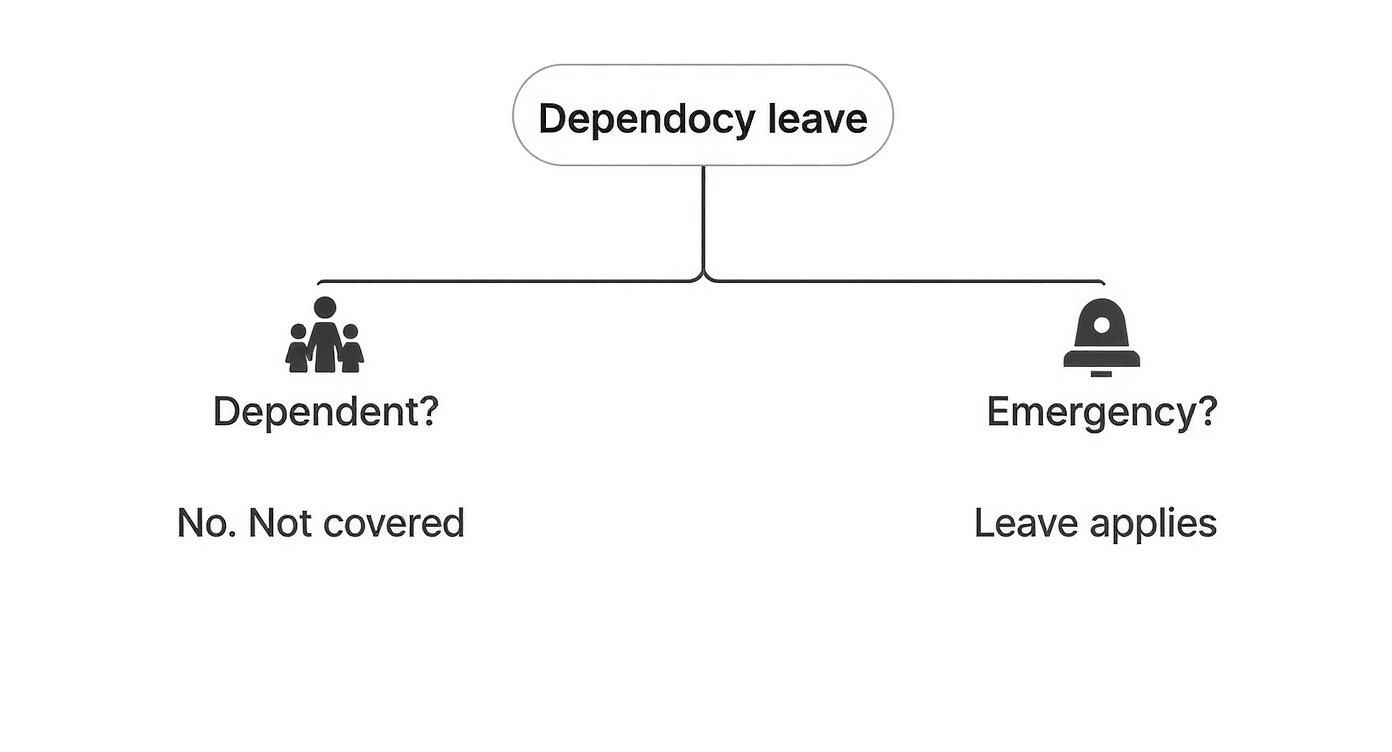
As the flowchart shows, you need to tick both boxes—having a dependant and facing a genuine emergency—for your right to this type of leave to kick in.
Understanding Your Rights and Responsibilities

When an emergency strikes at home, the last thing you should be worrying about is your job security. The good news is that the right to take dependency leave is what’s known as a ‘day one’ right.
What does that mean for you? It means you’re protected from the very first day you start a new job. There’s no minimum service period to qualify, so every employee has the support they need to handle an unexpected family crisis right away.
All you need to do is let your employer know what’s happened as soon as you reasonably can. Don't worry about putting it in writing immediately; a quick phone call is absolutely fine.
How Much Time Off Is Reasonable?
This is the big question everyone asks. The law is a bit flexible here, stating you can take a "reasonable" amount of time off. In practice, this usually translates to one or two days.
Think of this time as a short-term fix. It’s there to help you deal with the immediate crisis and sort out what needs to happen next. For example, it covers taking your child to the hospital after a fall, but it wouldn't cover the entire week you might need to stay home while they recover.
For those longer-term situations, you’d be looking at other options like annual leave or parental leave. And for employees with ongoing caring duties, it's also worth knowing how a fitness for work assessment can help clarify their capacity to handle their job responsibilities.
Your right is to a reasonable amount of time to deal with the unforeseen event. It's designed as a short-term solution, allowing you to stabilise the situation before exploring other options like annual leave or parental leave if more time is needed.
Is Dependency Leave Paid?
Here’s a crucial point: by law, employers do not have to pay you for time off for dependants. Legally, statutory dependency leave is unpaid. But that’s just the baseline.
Many companies recognise the strain this can cause and choose to offer more supportive policies. It's always worth checking your employment contract or the company handbook. Some fantastic organisations offer a set number of paid dependency or compassionate leave days each year as a staff benefit.
Knowing your company's specific policy is a vital part of complying with employment laws and understanding exactly what you're entitled to. The financial pressure of unpaid time off is a real worry for many, and it's an ongoing conversation in the UK about how to better support families during tough times.
Putting Dependency Leave into Practice: Real-World Scenarios

Knowing the rules of dependency leave is one thing, but figuring out what to do in the middle of a real-life crisis is something else entirely. Emergencies rarely follow a script, so let's walk through some common situations to see how this right actually works on the ground.
These examples highlight what a reasonable response looks like—for both the employee and the employer—helping you feel more confident when stressful situations pop up.
Scenario 1: The Childminder Calls in Sick
It's 7:30 AM, and you’re just about to head out the door when your phone buzzes. It’s a text from your childminder: they’re unwell and can't look after your toddler today. This is a classic, sudden breakdown in your care arrangements.
What should you do?
The first thing to do is call your line manager as soon as you can. You don't need a long, complicated story; just be direct.
For instance, you could say: "Hi, just letting you know I need to take dependency leave today. My childminder has just called in sick, and I have to find alternative care for my daughter."
What happens next?
This leave gives you the breathing room—usually the rest of that day—to sort out the immediate issue. It’s your chance to call a family member, find an emergency nursery spot, or make another plan. It’s important to remember that the leave isn't meant to cover the entire week if your childminder is off for longer; it's for dealing with that initial, unexpected crisis.
The key is showing that you’re using the time to actively make arrangements. An employer should be understanding here, as this is precisely what dependency leave is for.
Scenario 2: An Elderly Parent Is Rushed to Hospital
You get an urgent phone call. Your elderly mother has had a fall and is on her way to the hospital. She lives by herself, and you need to get there to talk with the doctors and make sure she's okay.
What should you do?
Just like the first scenario, you need to notify your employer straight away. Explain what’s happened as clearly and calmly as possible.
You might say something like: "I've just been told my mother was hospitalised after a fall. I need to take dependency leave for the rest of the day to get to the hospital and manage things there."
What actions are reasonable?
This is a clear-cut emergency involving a dependant. You’d be expected to use the time off to:
- Get to the hospital to be with your parent.
- Speak with the medical team about their condition and what happens next.
- Start making any necessary arrangements for their care once they're ready to be discharged.
Dependency leave would typically cover a day or two to get through these first critical steps. If your parent needs more long-term care after that, you’d then need to talk to your manager about using annual leave or exploring other options. By handling the communication professionally, you're not only exercising your rights but also maintaining a good relationship at work.
How to Build a Fair and Supportive Leave Policy
Crafting a dependency leave policy that’s both legally sound and genuinely supportive is a real hallmark of a great employer. It’s about moving beyond the bare minimum legal tick-boxes and creating a culture where your team feels valued and secure when a family emergency hits.
Think of it this way: a well-thought-out policy isn't just about rules. It’s a powerful tool for attracting and keeping great people. When your staff know you’ve got their back during a crisis, it builds incredible loyalty and cuts down on the kind of stress that leads to burnout. A clear, fair policy is really a cornerstone of a positive workplace.
Key Elements of a Strong Policy
To sidestep any confusion and keep things fair, your policy needs to be crystal clear. Vague guidelines just add more stress when an employee is already dealing with an emergency.
Start with the essentials:
- Clear Definitions: Spell out exactly who counts as a dependant and what qualifies as an emergency. Giving concrete examples here is a game-changer – it stops any guesswork and helps managers apply the policy consistently.
- Reporting Procedures: Map out the exact steps an employee needs to take. Who do they call? How quickly do they need to let you know? What information do they need to provide?
- Distinction from Other Leave: Clearly explain how dependency leave is different from other types of time off, like annual leave, sick leave, or the new Carer's Leave.
The goal is to create a process that's predictable and transparent. An employee juggling a family crisis shouldn't have to guess what's expected of them; the policy should lay it all out plainly.
Going Beyond the Statutory Minimum
The single biggest way to make your policy truly supportive is to think about offering paid dependency leave. While the statutory right is for unpaid time off, more and more businesses are realising the competitive edge that comes with paying their people during these tough times.
Providing even a few days of paid leave a year can make a world of difference to an employee’s financial and emotional well-being. It sends a powerful message: you care about them as a person, not just a cog in the machine. This kind of support is fast becoming a key differentiator in the job market, helping businesses stand out as employers of choice. For a bit more inspiration, our UK employee leave policy template is a fantastic starting point for structuring a complete document.
On top of that, forward-thinking companies are expanding their family-friendly benefits even further. It’s not uncommon now to see things like specific surrogacy leave policies for employees included as part of a wider leave framework. By building a policy that's clear, compassionate, and goes beyond the legal baseline, you’re not just being nice – you’re building a resilient, loyal, and engaged team.
Your Common Dependency Leave Questions Answered
So you understand the theory behind dependency leave, but what happens when a real-life emergency throws a spanner in the works? It’s natural for tricky questions to pop up. This section cuts through the noise and gives you direct answers to the most common queries, so you can feel confident when the unexpected happens.
Can My Employer Just Say No to My Request?
In short, no—not if your reason is genuine. An employer can't legally refuse your request if it's a true emergency involving a dependant. You have a statutory right to this time off.
That said, they can ask a few questions if they have a strong reason to suspect it isn't a real emergency. But flat-out refusing a valid request, or penalising you for taking it, could land them in hot water at an employment tribunal. As always, honesty and clear communication are your best friends here.
Is There a Limit on How Much Dependency Leave I Can Take?
There’s no official cap on how many times you can take dependency leave in a year. The law gets that emergencies are, by their very nature, unpredictable. You can't schedule a crisis.
The key thing to remember isn't the frequency, but the reason. Each time you take dependency leave, it must be for a separate, genuine, and unforeseen emergency. If you find yourself needing time off regularly for the same ongoing issue, it might be time to look at other options like annual leave or the new Carer’s Leave.
What Information Do I Have to Give My Employer?
You need to tell your employer why you're absent and roughly how long you expect to be away. This should be done as soon as you reasonably can. Crucially, you do not have to provide exhaustive personal details or any kind of written proof, like a doctor's note.
A quick phone call is usually all that’s needed. For example, simply saying, "My child has had an accident at school, and I need to leave immediately to get to the hospital" is perfectly sufficient.


