
Getting sick is stressful enough without having to worry about your job or your pay. The good news is that in the UK, you have rights that provide a safety net, making sure you get paid time off to get back on your feet. The cornerstone of this system is Statutory Sick Pay (SSP) – the legal minimum your employer must provide if you qualify.
Your Fundamental Sick Leave Rights in the UK
Trying to figure out your rights when you're feeling under the weather can feel like a mammoth task, but the core ideas are actually quite straightforward. The system is designed to give a baseline of support to every eligible employee in the country.
Think of Statutory Sick Pay as the foundational layer of protection guaranteed by UK law. It’s the absolute minimum your boss has to pay you when you're too ill to work. Many companies, however, build on top of this foundation with their own, more generous sick pay schemes.
Statutory vs Company Sick Pay
It's really important to get your head around the difference between what the law demands and what your specific employer offers. This distinction is what determines how much you'll be paid and for how long you can be off.
- Statutory Sick Pay (SSP): This is the government-mandated minimum. It comes with specific eligibility rules, a set weekly payment rate, and a cap on how long it can be paid. Every single employer has to follow the SSP regulations.
- Company (or Contractual) Sick Pay: This is an extra perk offered by your employer, and you’ll find the details in your employment contract. It's often much better than SSP, sometimes offering your full salary for a certain number of weeks or months.
Your first port of call should always be your employment contract. That document will spell out your company’s specific policy, which must be at least as good as the statutory minimum. It can never be worse.
The Core Conditions for Eligibility
To qualify for SSP, a few key conditions have to be met. Broadly speaking, you need to be classed as an employee, have actually done some work for your employer, and earn an average of at least the Lower Earnings Limit. You also must have been ill for at least four days in a row, and this includes any non-working days like weekends.
Understanding these basic rights is the first step towards managing any period of absence with confidence. It ensures you know what to expect financially and legally, reducing stress during a difficult time.
This knowledge gives you the power to focus on what matters most: your recovery. While sick leave covers illness, it's also handy to know how other types of time off are handled. For more details, you can explore our guide on how to manage your request for holiday. Properly managing all absences creates clarity for both you and your employer, helping build a supportive and well-organised workplace.
How Statutory Sick Pay Actually Works
Getting your head around sick pay is crucial for managing your finances when you’re not well enough to work. Let’s break it down. Statutory Sick Pay (SSP) isn't your full wage; it's a safety net, a fixed weekly amount set by the government to give you a basic income while you recover. Your employer pays this to you in the same way they pay your normal salary.
The current rate for SSP is a standard weekly figure, but it’s really important to remember this is just the legal minimum. Lots of companies offer their own, more generous sick pay schemes. Always dig out your employment contract to see what you're actually entitled to—you might be pleasantly surprised.
What Are Waiting Days?
This is where things can get a bit confusing. One of the quirks of SSP is the concept of "waiting days." Simply put, you don't get paid SSP for the first three days you're off sick. These have to be days you would normally have worked. Payment only kicks in from the fourth consecutive qualifying day.
Let's walk through an example. Imagine you work Monday to Friday and you wake up ill on a Monday morning.
- Monday (Day 1): First waiting day. No SSP.
- Tuesday (Day 2): Second waiting day. No SSP.
- Wednesday (Day 3): Third waiting day. No SSP.
- Thursday (Day 4): Your SSP payments would start from this day onwards.
This three-day rule is exactly why you won't get any SSP for a quick illness, like a 48-hour bug. To trigger the payment, your absence needs to last for at least four days in a row, and that includes any non-working days in the middle.
There's a clear path to follow when claiming sick pay, from the moment you report your absence to getting paid. This visual flow gives you a quick overview of the essential steps.
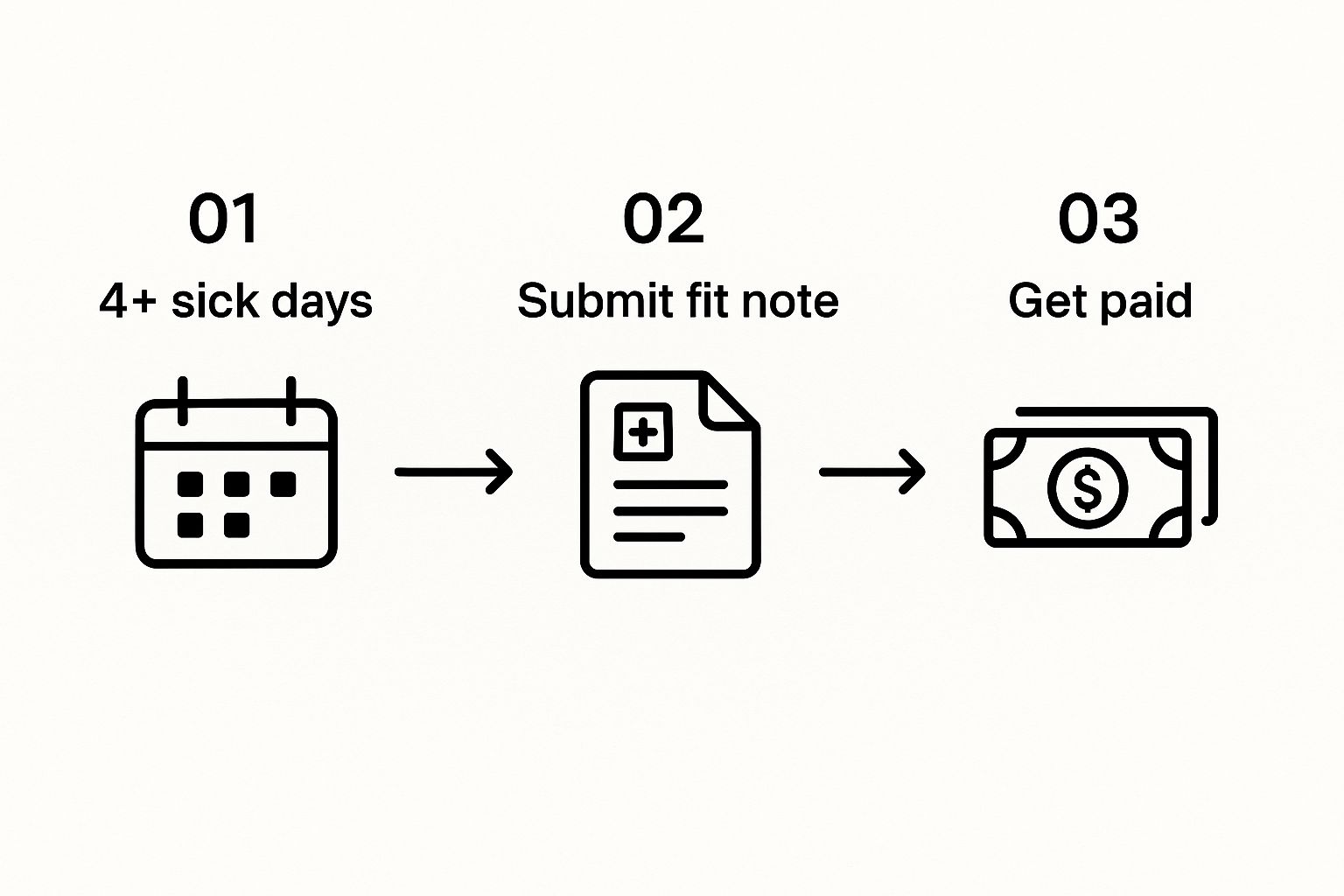
As you can see, it all hinges on being off for that minimum period and providing the right paperwork, like a fit note from your doctor, before the statutory payments can be made.
Understanding Linked Periods of Sickness
The rules can feel a bit more complex if you're dealing with a recurring health problem or a long-term condition. This is where "linked periods of sickness" come into play. If you have separate bouts of sickness that each last four days or more, and they are eight weeks (56 days) or less apart, the government considers them linked.
So, why does this matter? It’s a huge benefit. When periods of sickness are linked, you don't have to go through the three waiting days all over again for the second absence. Your SSP starts right from the first day you’re off, which can make a real difference.
This linking rule is also connected to the maximum time you can claim SSP. You can receive SSP for a total of 28 weeks for a single illness or a series of linked ones. Once you hit that 28-week limit, your SSP payments will stop, even if you’re still unable to return to work.
The whole idea of linked periods is to make sure people with recurring health conditions aren't constantly penalised by the three-day wait. It's a recognition that some illnesses aren't just a one-off event.
The cost of sickness to UK businesses is staggering and continues to climb. Recent research shows that absenteeism is now costing the UK economy £103 billion a year, a massive jump of £30 billion since 2018. It’s a clear sign of the growing pressure employee illness is putting on business performance. On average, UK employees were absent for 7.8 days per year, up significantly from the pre-pandemic figure of 5.8 days. The public sector has been hit particularly hard, with an average of 10.6 days absent per employee. You can dig deeper into the true cost of absenteeism in the UK and its economic impact.
How To Properly Report Your Sickness
Calling in sick can feel a bit awkward, but getting the procedure right is crucial. It’s not just about being polite; it’s about protecting your sick leave UK rights and keeping things professional with your employer. Clear and timely communication is the bedrock of the whole process, ensuring everything is handled correctly and you get the support you need.
Your first port of call should always be your company’s own sickness reporting policy. You’ll usually find this tucked away in your staff handbook or employment contract. It will tell you exactly who to contact, by what time, and what details you need to share.
The First Seven Days: Self-Certification
For shorter bouts of illness, things are pretty straightforward. If you’re off for up to seven calendar days in a row (and yes, that includes weekends and any other non-working days), you can ‘self-certify’. This simply means you declare yourself unfit for work without needing to see a doctor.
Think of it as a trust-based system for those brief, unplanned absences. When you get back, your employer will likely ask you to fill out a simple form, often an SC2 form, to log the dates and reason for your absence. This just keeps the records straight for both you and the company.
When you make that initial call, the key is to be clear and concise. You absolutely do not need to give a blow-by-blow account of your symptoms. Something simple and professional works best:
"Hi [Manager's Name], I'm calling to let you know I won't be able to come into work today as I'm unwell. I will keep you updated on my condition and expect to be back as soon as I'm able."
This approach ticks all the boxes. It's professional, gives them the necessary info, and sets the right expectation for future contact without oversharing personal medical details.
When You Need A Fit Note
If your illness stretches beyond that first week, the rules change a bit. From the eighth day of your absence, you'll need to get a fit note (which is officially called a 'Statement of Fitness for Work') from a healthcare professional like your GP.
This document serves a few vital purposes:
- It provides official medical evidence that you’re unable to work, which is essential for your Statutory Sick Pay (SSP) claim.
- It can suggest workplace adjustments to help you get back sooner, such as a phased return, altered hours, or different duties.
- It protects everyone involved by ensuring your absence is properly documented and managed in line with medical advice.
Keeping In Touch During Your Absence
It’s perfectly reasonable for your manager to check in with you from time to time while you're off, particularly if it's a longer-term absence. These calls are usually just to see how you're doing and to get a rough idea of when you might be back, which helps them plan work cover. This is all a standard part of managing sickness absence.
However, these conversations must always feel reasonable and supportive, not like pressure or harassment. Your boss shouldn't be calling multiple times a day or demanding a minute-by-minute update on your recovery. The focus should always be on your wellbeing and planning for a smooth return to work when you’re ready.
Protecting Your Job While on Sick Leave
Being off sick is stressful enough without having to worry about your job security. It’s a common fear, but thankfully, UK law offers some solid protections to make sure you're treated fairly while you’re unwell. It’s not just about your role; it’s about safeguarding your wider employment benefits too. Knowing your rights here can bring some much-needed peace of mind.
One of the first questions people ask is about their holiday time. Do you lose it if you’re off sick for a while? The good news is, no. Your statutory holiday entitlement continues to build up, or accrue, exactly as it would if you were at your desk.
This means you won’t be penalised for being ill by missing out on paid leave. You can take any holiday you’ve accrued once you’re back on your feet. In some situations, if your sickness meant you couldn't take it, you might even be able to carry it over into the next leave year.
Dismissal and Sickness Absence
Can you be sacked for being sick? It's a tough question, but a really important one. While it is technically possible for an employer to dismiss someone on long-term sick leave, they absolutely must follow a strict and fair procedure to the letter. If they act hastily or don’t look at all the alternatives, the dismissal would likely be considered unfair.
A fair process isn't just a tick-box exercise. It involves several crucial steps from the employer:
- Thorough Investigation: They need to get a full picture of your health situation. This usually means talking to you and, with your permission, getting a medical report from your GP.
- Exploring Alternatives: Dismissal has to be the absolute last resort. Before even thinking about it, they must have looked at other options, like tweaking your duties or finding a different role for you in the company.
- Regular Consultation: You have to be kept in the loop. Your input and medical evidence are central to any fair decision-making process.
Basically, they can't just get rid of you because you're ill. They need to prove they've done everything reasonably possible to help you get back to work before dismissal is even on the table.
Your job is protected by fair process. An employer must prove they have supported you and explored every possible adjustment before considering dismissal due to long-term illness. This ensures decisions are based on capability, not just absence.
The Equality Act and Reasonable Adjustments
The protections get even stronger if your illness qualifies as a disability under the Equality Act 2010. A disability is defined as a physical or mental impairment that has a ‘substantial’ and ‘long-term’ negative effect on your ability to do normal daily activities. Many chronic health conditions fit this description.
If your condition is classed as a disability, your employer has a legal duty to make "reasonable adjustments" to help you at work. This is a powerful concept designed to level the playing field and remove any barriers you might face because of your condition.
What counts as a "reasonable adjustment" can be anything, really. It all depends on the situation, but some common examples include:
- Altering your working hours or letting you come back gradually after a long absence.
- Providing specialist equipment, like an ergonomic chair or different computer software.
- Changing your place of work or allowing more flexibility to work from home.
- Reallocating minor duties that have become difficult for you to manage.
This isn't a one-off thing; it's an ongoing duty. For companies, having good policies and systems in place for sick absence management isn't just about ticking legal boxes. It’s about creating a supportive atmosphere that helps retain brilliant employees by showing genuine care when they need it most. An employer who fails to make reasonable adjustments is breaking the law, and that could give you strong grounds for a discrimination claim.
Understanding Why People Take Sick Leave
To really get to grips with sick leave UK, it helps to understand why people are calling in sick in the first place. This isn't just about HR policies or ticking boxes; it’s a direct reflection of the nation's health. Looking at the bigger picture helps put individual absences into context and shows just how vital it is to build supportive, understanding workplaces.
The reasons people are unable to work are incredibly varied, ranging from a quick 24-hour bug to much longer-term health challenges. But when we look at the national data, we start to see clear patterns that affect millions of employees—and their employers—every single year.
The Most Common Reasons for Absence
While many absences are for short, unavoidable illnesses, recent trends show that more complex issues are playing a bigger role. The UK’s sickness absence rate, which is the official measure of working hours lost to illness, gives us some fantastic insight here.
According to the Office for National Statistics (ONS), the rate actually fell from 2.3% in 2023 to 2.0% in 2024. That's a definite improvement, but it’s still just a fraction above the pre-pandemic rate of 1.9% from 2019. This tells us we're not quite back to 'normal' yet.
So, what’s keeping people at home? The data reveals a few key culprits.
Top Reasons for Employee Absence in the UK
The latest statistics give us a clear breakdown of the main health challenges affecting the UK workforce. While minor bugs are the top reason, other long-term issues are significant contributors to overall absence rates.
| Reason for Absence | Percentage of Total Absences |
|---|---|
| Minor illnesses | 30% |
| Musculoskeletal issues | 15.5% |
| Mental health conditions | 9.8% |
| Respiratory problems | 7.3% |
This breakdown from the latest sickness absence rate statistics shows that while common colds and flu lead the pack, problems related to physical strain and mental wellbeing are major drivers of sick leave.
The statistics paint a clear picture: employee health is multi-faceted. It's not just about physical sickness but also about the immense impact of mental and musculoskeletal health on the workforce.
The Growing Importance of Mental Health
The data makes one thing crystal clear: mental health is a major factor in workplace absence. Conditions like stress, anxiety, and depression are no longer topics to be swept under the carpet; they are genuine health issues that demand time and proper support for recovery.
In a way, the rising percentage of absences linked to mental health is a positive sign. It suggests people are feeling more able to report the true reason for their leave, which is a huge step forward. But it also sends a strong signal to employers: it’s time to be more proactive in creating a mentally healthy workplace. In the most serious cases, understanding suicidal thoughts from a counsellor's perspective really highlights the gravity of what some employees might be facing. This broader awareness is key to breaking down the stigma.
Physical and Musculoskeletal Problems
Beyond the usual coughs and colds, musculoskeletal issues are a stubborn and persistent problem. This is a broad category, covering everything from back pain and neck strain to more serious joint conditions. Often, these problems are directly linked to the nature of someone's job, whether it's years of heavy lifting or long hours hunched over a desk.
These conditions can creep up gradually, which makes them tricky to manage without taking proper time off for treatment and recovery. This category really drives home the importance of good workplace ergonomics and proactive health initiatives to prevent these issues from becoming long-term problems. By recognising these trends, both employees and employers can navigate the complexities of sick leave with a bit more clarity and empathy.
A Look from the Employer's Side

While your health always comes first, seeing things from your employer’s perspective can really help smooth out conversations and manage expectations. For businesses, handling sick leave in the UK is more than just ticking legal boxes; it’s about creating a workplace that’s productive, fair, and genuinely supportive for the whole team.
At its core, an employer's main job is to set up a clear and consistent system for managing absences. This is usually all laid out in the company sickness policy, a document that should be easy for every single employee to find and read.
What Makes a Good Sickness Policy?
A solid sickness policy isn't there to catch you out. Think of it as a clear roadmap for both staff and managers, so everyone is on the same page about their rights and responsibilities when someone is unwell.
A fair and effective policy will always cover these key points:
- Clear Reporting Procedures: It should spell out exactly who to contact, how (e.g., a phone call is often preferred over a text), and by what time on your first day of sickness.
- Certification Requirements: It will clarify when you can self-certify your absence and at what point a doctor's fit note is needed (which is typically after seven days).
- Support and Communication: A good policy also explains how the company will keep in touch and what support is on offer to help you get back on your feet.
This level of detail takes all the guesswork out of the process. It helps ensure everyone is treated the same, which goes a long way in preventing misunderstandings and building trust.
The goal of a sickness policy is not punitive; it's about creating a transparent, supportive process that balances the needs of the employee with the operational needs of the business.
Let's be clear: sickness absence is a massive challenge for UK businesses. Official figures for 2024 show that around 33.7 million working days were lost in Great Britain due to work-related illness or injury. And while the first Monday in February was once dubbed ‘National Sickie Day’, a closer look at the data shows that absence peaks are much more varied, often tied to things like the winter flu season or mental health pressures. Smart employers are now using this data to spot patterns and roll out targeted health initiatives. You can discover more about how businesses are analysing sick day trends to support their teams.
The Purpose of Return to Work Interviews
The phrase "return to work interview" can sound a bit formal, even intimidating, but its true purpose is almost always positive. It’s simply a supportive, informal chat with your manager on your first day back in the office.
This brief meeting is a great chance to:
- Welcome you back to the team properly.
- Check that you’re fully recovered and feeling ready to be at work.
- Discuss any adjustments or support you might need to ease back into your tasks.
- Give you a quick update on anything important you missed while you were away.
Try to see it less as an interrogation and more as a helpful check-in. It gives your manager a chance to understand any underlying reasons for absence and offer support before a small problem becomes a bigger one. This proactive approach is exactly why so many companies are investing in employee wellbeing programmes—because a healthy, supported team is the bedrock of any successful business.
Your UK Sick Leave Questions Answered
Navigating the rules around sick leave in the UK can feel like a maze, often leaving you with very specific "what if" scenarios. We get it. To help cut through the confusion, we’ve put together some of the most common questions we hear and answered them in plain English.
Think of this as your quick-reference guide to give you a bit more clarity and confidence on your rights and responsibilities.
Can I Be Dismissed for Being on Long-Term Sick Leave?
This is a big worry for many, and the short answer is: yes, it's possible, but it’s not straightforward for the employer. Your boss can't just decide to let you go because you're unwell. They have to follow a very strict, fair, and supportive process first. Dismissal should always be the absolute final option on the table.
Before it ever gets to that point, your employer is legally required to look at all reasonable alternatives. That means considering adjustments to your role, searching for other suitable jobs within the company, and keeping an open line of communication with you the entire time. A dismissal could easily be ruled unfair if they haven't properly reviewed medical evidence or made a real effort to support your return to work.
And if your sickness is linked to a disability, you have even stronger protections under the Equality Act 2010.
What Is the Difference Between Statutory and Contractual Sick Pay?
This is one of the most common mix-ups, but the difference is actually quite simple when you break it down.
- Statutory Sick Pay (SSP): This is the legal minimum safety net that almost every eligible employee in the UK is entitled to. It’s a set rate, paid for a limited time, and it's not optional for employers—they have to follow these government rules.
- Contractual Sick Pay: This is a more generous, company-specific perk that you’ll find detailed in your employment contract. It might mean you get your full pay for a few weeks or even months while you're off sick.
A company's sick pay scheme can be better than SSP, but it can never be worse. The first place to look is always your employment contract to see what your specific company offers.
Think of it like this: SSP is the foundation guaranteed by law, while contractual sick pay is an extra layer of support your employer chooses to build on top.
Do I Get Paid for Bank Holidays If I Am on Sick Leave?
It all comes down to your employment contract. If a bank holiday falls during a period of sick leave, you’ll typically receive your usual sick pay for that day—whether that’s SSP or contractual pay—not your normal day's wage.
But here’s the important bit: you don't lose the day off. You will still accrue the bank holiday as leave. This means you can take that day off later on, once you're back at work. Your contract should spell out the exact policy, so it's always the best place to check for the fine print.
What Should I Do If My Employer Refuses to Pay SSP?
If you're pretty sure you’re eligible for Statutory Sick Pay but your employer is refusing to pay it, the first step is to have a calm chat with them. It could just be a simple misunderstanding about the dates you were off or your eligibility.
Still no luck? You don't have to accept it. You can escalate the issue by contacting HMRC's Statutory Payment Dispute Team. They have the final say and can make a legally binding decision. Before you pick up the phone, get your ducks in a row—have all your employment details and key dates of your absence ready to go so you can state your case clearly.


