
A return to work meeting is simply a structured, supportive chat between a manager and an employee who’s coming back after some time away. It’s a crucial tool for making sure their return is a smooth one, whether they’ve been off for sickness, parental leave, or something else. The whole point is to reconnect, figure out what support they might need, and get on the same page about what to expect.
Why These Meetings Are So Important

It’s tempting to see a return to work meeting as just another bit of admin on a never-ending to-do list. But in reality, it's one of the best tools a manager has for building a supportive, resilient team. These conversations are so much more than a box-ticking exercise; they're a critical moment that sets the tone for an employee’s entire reintegration into the workplace.
A well-handled meeting shows genuine care and empathy. It tells the returning team member that they were missed and that their well-being matters. This simple human connection can do wonders for morale, build loyalty, and strengthen a positive company culture where people feel valued for more than just their output.
Spotting Issues Before They Escalate
One of the biggest wins from these meetings is the chance for early intervention. During the conversation, you can proactively pick up on potential challenges the employee might be facing. Are they still recovering? Do they have new responsibilities at home? Are they feeling anxious about catching up on their workload?
Catching these concerns early means you can put support in place—like a phased return or other reasonable adjustments—before they snowball into bigger problems like burnout or presenteeism. This proactive approach not only helps the individual but also minimises the disruption that repeated or prolonged absences can cause. You can learn more about the wider effects of staff leave in our guide on how https://www.leavewizard.com/employee-absence-how-does-it-impact-your-business/.
A Foundation for a Successful Return
Ultimately, a structured meeting makes sure everyone is on the same page. It’s your chance to give them essential updates on projects, team changes, or new company policies they missed while they were away. That clarity helps the employee feel back in the loop and ready to contribute from day one.
A great return to work meeting bridges the gap between the employee's time away and their successful reintegration. It transforms an administrative process into a powerful gesture of support, trust, and clear communication.
The UK workplace is becoming more formalised. Recent data shows 70% of companies now have official return-to-office policies, which highlights the clear need for structured processes to manage how employees transition back. A thoughtful return to work meeting helps align individual needs with these company-wide policies, encouraging a collaborative, rather than confrontational, approach to coming back.
Plus, understanding the basics of why health and safety is important in the workplace provides some crucial context. These meetings are a direct application of that principle, making sure an employee’s return is both physically and psychologically safe. Skipping this step doesn’t just put employee well-being at risk; it can erode trust and damage team cohesion, making it an essential practice for any modern manager.
How to Prepare for a Successful Conversation
A great return to work meeting starts long before anyone sits down at the table. If you want it to be a genuine, supportive conversation rather than just ticking a box, you need to lay the groundwork first. Proper preparation is what turns a procedural formality into a positive experience for the returning employee.
Your first practical step is to get all the paperwork in order. This means reviewing the employee's absence record, any fit notes from their GP, and reports from occupational health, if applicable.
Having a handle on the context of the absence, how long it lasted, and any professional recommendations is fundamental. This isn’t about building a case against them; it's about being informed enough to offer the right kind of support from the get-go.
Next, give some serious thought to the timing and setting. The best time for this chat is on the employee’s first day back, ideally within the first couple of hours. This lets you welcome them properly and tackle any immediate worries before they dive back into their workload. As for where to hold it, a private, comfortable space is a must. A neutral meeting room often works better than your own office, as it helps create a more open and confidential atmosphere.
Gather Your Thoughts and Set an Agenda
Once you're up to speed on the background, sketch out a simple agenda. This doesn't have to be a stuffy, formal document. Just a few bullet points shared with the employee beforehand can make a world of difference. It shows you respect their time and helps them come prepared, not feeling like they've been ambushed.
A good, simple agenda might look something like this:
- A warm welcome back and a quick, general catch-up.
- Giving the employee a chance to share how they're feeling about returning.
- A brief update on any important team or company changes that happened while they were away.
- A chat about their role and any adjustments or support they might need.
- An opportunity for both of you to ask questions.
Sharing this structure ahead of time helps manage expectations and frames the meeting as a two-way street. Your communication skills are crucial here, and having a plan helps you guide the conversation effectively. For more tips on this, check out our guide on how to improve workplace communication.
To help you get organised, here's a quick checklist of what you should be doing before the meeting.
Pre-Meeting Preparation Checklist
| Action Item | Purpose | Key Consideration |
|---|---|---|
| Review Absence Records | Understand the history and duration of the absence. | Note any patterns or previous discussions. |
| Read Medical Notes | Get familiar with any professional recommendations or limitations. | Focus on what support is needed, not the medical details. |
| Schedule the Meeting | Arrange a time on their first day back. | Choose a private, neutral, and comfortable location. |
| Draft a Simple Agenda | Outline key talking points for a structured conversation. | Keep it brief and focused on support. |
| Share Agenda with Employee | Give the employee time to prepare and feel involved. | Send it via email a day or two in advance. |
| Prepare Open-Ended Questions | Plan questions that encourage dialogue, not just yes/no answers. | Think "How can we help?" not "Are you ready to work?" |
| Adopt a Supportive Mindset | Centre your approach on empathy and problem-solving. | Remind yourself the goal is successful reintegration. |
Taking a few moments to run through these points ensures you walk into that room ready to have a constructive and supportive discussion.
Adopt a Supportive Mindset
Honestly, the most important part of your prep is getting your own mindset right. Walk into that meeting with empathy, openness, and a genuine desire to help. This conversation is your opportunity to rebuild that connection and show the employee they're still a valued part of the team.
Think carefully about the questions you'll ask. Ditch the closed questions that only get a "yes" or "no." Instead, plan open-ended prompts that get them talking. Try things like, "What can we do to make your first week back as smooth as possible?" or "How are you feeling about getting back into your projects?"
Your primary goal in preparing for a return to work meeting is to create an environment of psychological safety. When an employee feels heard and supported from the moment they walk back in, their reintegration is far more likely to be successful and sustainable.
This supportive approach is more critical now than ever. Inflexible policies are a real problem for UK businesses. Research from the CIPD shows that over a million workers left their jobs last year due to a lack of flexibility. On top of that, 53% of employees reported feeling pressured to spend more time in the workplace.
These numbers highlight why a return to work meeting needs to be a collaborative tool, not a disciplinary one. By preparing thoroughly, you can address concerns proactively and find solutions that work for everyone, which is key to holding onto your valuable talent.
Crafting a Productive Meeting Agenda
Right, you’ve done the prep work. Now it's time to think about the conversation itself. The agenda for your return to work meeting is your roadmap to making sure the discussion is productive, supportive, and crystal clear. It’s what turns a potentially awkward chat into a structured, positive catch-up that helps both the employee and the business.
Going in without a plan often leads to a vague, rambling meeting. You can easily miss crucial points, and the conversation might drift, leaving everyone feeling like it was a bit of a waste of time. The goal here isn't to follow a rigid script, but to have a clear framework that feels natural while making sure you cover all the important bases.
This is about moving the conversation through logical stages, from a warm welcome right through to a concrete plan for the next few weeks. We're going to ditch the generic questions that only get one-word answers and focus on prompts that open up a real dialogue.
This simple infographic breaks down the three key stages of getting ready for a successful meeting.
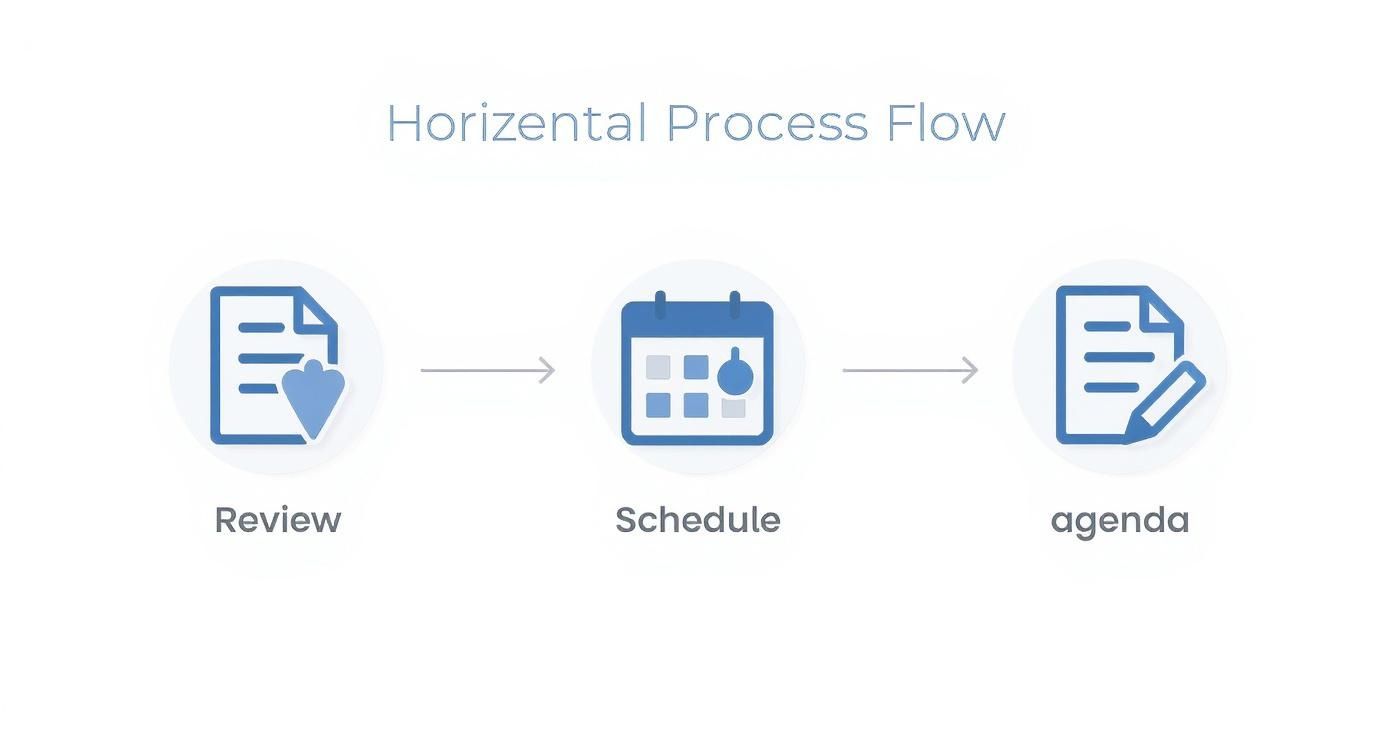
As you can see, reviewing the paperwork, scheduling the meeting thoughtfully, and then creating a solid agenda are the building blocks for a meaningful conversation.
Start with a Genuine Welcome
The first couple of minutes set the tone for everything else. Start by genuinely welcoming your team member back. A simple, "we've missed having you around" can make a world of difference. It’s a human touch that can instantly put someone at ease and make them feel valued.
Instead of a flat, robotic "How are you?", try something a bit more open. Something like, "It's really great to have you back. How are you feeling about being in today?" This small tweak invites a more honest response and shows you’re actually interested in their well-being, not just ticking a box.
Discuss the Absence Sensitively
Next, you'll need to touch on their time away, but this has to be handled carefully and with respect. The point isn't to pry into their personal medical history; it's to understand the context and confirm they're fit to be back.
You can frame this part of the conversation gently. For instance:
- "We’ve got your fit note saying you're ready to come back, which is great. I just wanted to check in and see if there’s anything we need to be aware of to support you."
- "The reason for your absence was noted as [brief, non-specific reason]. Is there anything from that time that might affect your work now you're back with us?"
This keeps the focus squarely on workplace support, not their private health details. It's a necessary step for compliance, but it can absolutely be handled with empathy.
The key is to shift the focus from the 'reason for absence' to the 'plan for a successful return'. It’s a subtle but powerful change in perspective that centres the conversation on support and forward momentum.
Maintaining this supportive tone is everything. Remember, you’re not conducting an investigation; you’re helping someone get settled back in.
Confirm Fitness for Work and Discuss Adjustments
This is probably the most important part of the meeting. Here, you formally acknowledge that the employee is fit to resume their duties, based on their GP's fit note or other medical evidence. This is also where you open the door to discussing any changes they might need.
Ask direct but supportive questions. For example: "Does your GP recommend any temporary changes to your duties or hours?" or "What can we do to make your first few weeks back more manageable for you?"
This is your chance to work together to identify and agree on any reasonable adjustments. This could be anything from:
- A Phased Return: Gradually increasing hours or days over a few weeks.
- Modified Duties: Temporarily taking high-pressure or physically demanding tasks off their plate.
- Changes to the Work Environment: Arranging for an ergonomic chair or moving their desk to a quieter spot.
- Flexible Hours: Allowing different start and finish times to help with medical appointments.
Agreeing on these adjustments collaboratively empowers the employee and shows the company is genuinely committed to their well-being. It makes a sustainable return to work far more likely.
Provide Key Company and Team Updates
Being away from work, even for a short while, can leave you feeling completely out of the loop. A vital part of the agenda is to bring the employee up to speed on what they’ve missed. This helps them feel reconnected and ready to hit the ground running.
Keep this section brief and relevant to their role. You could cover:
- Project Progress: Key updates on the main projects they're involved with.
- Team Changes: Any new starters, people who have left, or shifts in team responsibilities.
- Process Updates: Any new software, workflows, or company policies that have been rolled out.
This simple act of sharing information is incredibly valuable. It stops the employee from feeling overwhelmed or isolated on their first day back and shows you’ve thought about what they need to know.
Outline a Clear Plan for the First Week
Finally, every good meeting should end with clear, actionable next steps. Don't leave things vague. Work together to map out a realistic plan for their first few days or week back at work.
This plan should confirm their immediate priorities and who they need to talk to for specific project handovers. Wrap up by setting a date for a brief, informal check-in in a week or so. This follow-up shows your support is ongoing and gives you both a dedicated time to review how the adjustments are working out. It locks in the meeting's purpose and paves the way for a smooth, successful return.
Navigating Reasonable Adjustments and Phased Returns
This part of the meeting is where supportive words turn into concrete actions. While discussing reasonable adjustments and phased returns is a legal necessity under UK employment law, it’s really about putting a practical plan in place to help your employee return successfully and stay well.
These discussions aren’t just for long-term sickness, either. Simple adjustments can be vital after any significant absence, whether it’s parental leave or a period of intense stress. The goal is always to work with the employee to find a supportive path forward, not to impose a one-size-fits-all solution.
Understanding Reasonable Adjustments
So, what are "reasonable adjustments"? The term simply means making changes to an employee's role or their work environment to help them overcome disadvantages linked to a physical or mental health condition. Under the Equality Act 2010, you have a legal duty to make these changes.
What’s considered ‘reasonable’ depends on your business—its size, resources, and how practical the change is. If you're running a small business, this might sound daunting, but you'd be surprised how often the most effective adjustments are simple and low-cost.
Here are a few real-world examples you might talk through:
- Altering Work Hours: This could mean changing start and finish times to avoid a stressful commute or to fit in medical appointments.
- Modifying Duties: Temporarily removing physically demanding tasks for someone recovering from an operation is a common one. Another might be reducing high-pressure client calls for an employee coming back from burnout.
- Providing Specialist Equipment: This could be anything from an ergonomic chair and keyboard to specialised software for an employee with a visual impairment.
- Changing the Workspace: It could be as simple as moving a desk to a quieter corner of the office or to a ground-floor location for someone with mobility issues.
- Allowing More Breaks: Building short, regular breaks into the day can be a game-changer for managing fatigue or chronic pain.
The key is to have an open conversation. The best thing you can do is ask the employee what they think would help. They’ll have the best insight into what will make a tangible difference.
Structuring a Phased Return to Work
A phased return is probably one of the most common—and most effective—reasonable adjustments out there. It gives an employee the chance to gradually build back up to their full hours and responsibilities over a set period, which prevents them from feeling overwhelmed right from the get-go.
A good phased return plan needs to be clear, structured, and have an end date. Don't just agree to "take it easy for a bit." You need a proper, written plan that you both agree on and can follow.
Your plan for a phased return should be a written agreement, not a casual chat. It provides clarity, manages expectations, and gives both parties a shared document to refer back to. This simple step can prevent misunderstandings down the line.
Here’s how to put a solid plan together:
-
Agree on a Timeline: A typical phased return lasts between two and four weeks. The important thing is to agree on a specific end date when the employee is expected to be back to their full contractual hours.
-
Define the Hours and Days: Be specific. For instance, the plan might look something like this:
- Week 1: Three days (e.g., Tues, Weds, Thurs) from 10 am to 3 pm.
- Week 2: Four days a week, from 9 am to 4 pm.
- Week 3: Five days a week, with slightly shortened hours (e.g., 9 am to 4 pm).
- Week 4: Return to full contractual hours.
-
Clarify Pay: Be completely transparent about how the employee will be paid during this period. Will they get full pay, or will it be pro-rated based on the hours they work? Make sure you check your company policy and the employee's contract.
-
Set Regular Check-ins: Schedule brief, informal catch-ups at the end of each week. This gives you both a chance to see how things are going and make minor tweaks to the plan if something isn't working.
These structured conversations are a core part of managing flexible work arrangements and show a real commitment to employee wellbeing. By working together on a clear plan, you create a supportive framework that gives your team member the best possible chance of a successful return.
Documenting and Following Up Effectively
The meeting might feel like the final step, but what happens afterwards is what truly makes a return to work successful. Proper documentation and consistent follow-up are the crucial final pieces of the puzzle. They transform a supportive conversation into a tangible, actionable plan.
This isn't just about creating a paper trail for compliance, though that is important. It's about ensuring clarity, accountability, and providing a continuous thread of support for the returning employee. A well-documented meeting summary serves as a shared point of reference, preventing misunderstandings about what was agreed upon.
Creating a Clear Record of the Meeting
Immediately after the conversation, it’s best to create a concise summary. This document doesn't need to be an exhaustive, word-for-word transcript, but it absolutely must capture the essential outcomes. Speed is key here; writing it while the details are still fresh in your mind ensures nothing important gets missed.
Your summary should always include a few key elements to be effective:
- Employee's Name and Date of Meeting: The basic details for your records.
- Key Discussion Points: A brief overview of what was covered, like confirming fitness for work and discussing recent company updates.
- Agreed-Upon Actions: This is the most critical part. Detail any reasonable adjustments, like a phased return schedule or modified duties. Be specific with dates and details.
- Date for Next Check-in: Note the agreed date for a follow-up chat to show that support is ongoing.
Once you’ve drafted it, share the summary with the employee and ask them to confirm its accuracy. This simple step turns the document into a shared agreement and reinforces the collaborative spirit of the return to work meeting. To keep everything organised, you could utilize collaborative platforms like Microsoft Teams for ongoing communication and to store these documents.
The Role of Technology in Tracking
Manually tracking these meetings, especially in a growing team, can quickly become a mess of spreadsheets and forgotten notes. This is where dedicated systems prove their worth by creating a clear, accessible audit trail for every meeting and any resulting accommodations.
This screenshot shows how a centralised dashboard in a system like LeaveWizard can help you manage and view employee leave at a glance.
Having this data easily accessible allows you to spot patterns and ensure that follow-up actions, like logging phased return hours, are handled consistently and accurately.
Without a clear system, follow-up actions easily fall through the cracks. Using technology to log meeting notes and track adjustments ensures that commitments made in the meeting are actually fulfilled, building trust and demonstrating reliability.
The Importance of the Follow-Up
The follow-up is where you prove that the initial meeting wasn't just a box-ticking exercise. Scheduling a brief, informal check-in for a week or two after the employee’s return is non-negotiable. This doesn't have to be a long, formal meeting; a ten-minute chat over a coffee can be incredibly effective.
This check-in serves two primary purposes. First, it gives you a chance to see how the agreed adjustments are working in practice. You can ask questions like, "How are you finding the adjusted hours?" or "Is there anything about your workload this week that we need to tweak?"
Second, it reinforces the message that you are there to support them. It shows the employee that their well-being is an ongoing priority, not just a one-day event. This simple act of checking in can make a huge difference in their long-term confidence and successful reintegration, turning a good return into a great one.
Common Questions About Return to Work Meetings
Even with the most solid plan, tricky situations can pop up, leaving even seasoned managers and HR pros wondering what to do next. Let's tackle some of the most common, real-world questions that come up when conducting a return to work meeting, so you can handle them with confidence.
What If the Employee Doesn’t Want a Meeting?
It happens. An employee, especially after just a day or two off, might feel a formal meeting is a bit over the top. While it’s good to be sensitive to how they feel, it's also important to gently explain that the meeting is a standard, supportive part of how the company looks after everyone.
Try framing it in a positive light: "I get that it might feel a bit formal, but it's really just a quick, confidential chat to welcome you back and make sure you're all set. It gives us a chance to catch up properly and for you to ask anything you might need." Highlighting its supportive purpose, rather than just ticking a procedural box, usually does the trick.
Can We Discuss the Reason for Absence?
This is a delicate one. You absolutely should not be digging for specific medical details – that's a fast track to breaching privacy and confidentiality. Your focus needs to stay squarely on the employee's fitness for work and what support they might need to do their job.
It’s perfectly fine to refer to the reason on a fit note in general terms, but only as a way to open up the conversation about adjustments.
Your role is to manage their return to work, not to play doctor. Steer the conversation towards the impact on their role and the support required, not the medical condition itself.
For example, you could say, "I see from your fit note that you're recovering from a procedure. With that in mind, are there any temporary changes to your tasks that would help you settle back in?" This keeps the focus practical and work-related.
What Happens If an Employee Gets Upset?
Emotions can run high, particularly if the absence was due to something distressing like a serious illness or a bereavement. If an employee becomes upset, the number one priority is to respond with empathy and basic human compassion.
Here’s a simple game plan:
- Pause the agenda: Forget about the checklist. Offer them a moment to gather themselves.
- Offer support: A simple "Would you like to take a break?" or offering a glass of water can make a huge difference. You can even suggest rescheduling if now isn’t a good time.
- Just listen: If they choose to talk, your job is to listen. Don't jump in with solutions.
- Point them to help: Gently remind them about resources like the company’s Employee Assistance Programme (EAP) or any trained mental health first aiders on staff.
Showing a bit of patience and humanity is always more important than rigidly sticking to your meeting script.
Does an Employee Get Paid for a Phased Return?
This is a really common point of confusion. Legally, you are only required to pay an employee for the hours they actually work. That said, many companies choose to pay full salary during a phased return as a gesture of goodwill and to ease the employee's transition back.
The answer lies in your company's sickness absence policy and the employee's contract. Clarity is absolutely crucial here. Be completely transparent about how pay will work from the very beginning to prevent any nasty surprises or misunderstandings down the line.


