
Effective sickness absence management isn't just an HR box-ticking exercise; it's a core business strategy that directly shapes your company's financial health and overall culture. It means shifting your mindset from simply reacting when someone calls in sick to proactively understanding the root causes and creating a supportive environment that actually encourages attendance.
Why Proactive Absence Management Is a Business Imperative
Too many businesses treat employee sickness as an unavoidable cost, something you just deal with as it happens. But this reactive approach completely misses the true, cascading impact of absence. It’s like trying to fix a leaky bucket by only ever mopping the floor instead of finding and patching the hole.
With every unmanaged absence, you're letting productivity, morale, and resources quietly drain away.
A proactive strategy, on the other hand, flips the script. It moves the focus from just tracking sick days to fostering a culture of well-being and accountability. It’s about digging into the "why" behind an absence and putting supportive measures in place. This approach doesn't just reduce the frequency of sickness; it builds a more resilient, engaged, and productive workforce.
The goal isn't to prevent genuine illness. It's to create an environment where employees feel valued and supported, which naturally discourages non-genuine absences and helps those who are ill return to work successfully.
The True Cost of Unmanaged Absence
The direct cost of sick pay is just the tip of the iceberg. The hidden costs lurking beneath the surface are often far more damaging, creating a ripple effect that can undermine your company’s stability and growth.
Think about these significant hidden impacts:
- Lost Productivity: It's not just one person's tasks that get left behind. Projects get delayed and deadlines are missed. The rest of the team has to pick up the slack, often leading to them feeling overworked and a potential drop in quality.
- Decreased Team Morale: When colleagues are consistently absent, it can easily breed resentment among those left to cover for them. This erodes team cohesion and can quickly sour the work atmosphere.
- Stretched Management Resources: Managers end up spending valuable time rearranging workloads, finding cover, and conducting return-to-work interviews. That’s all time diverted away from their real strategic goals.
The financial toll of sickness is staggering. Recent data shows the cost of employee sickness in the UK hit a massive £103 billion in 2023, a sharp rise from previous years. The average employee was absent for about 7.8 days over the past year—a significant jump from the pre-pandemic figure of 5.8 days. You can find more insights into these rising costs in Verve Healthcare's detailed analysis.
The infographic below really brings this to life, showing how these costs add up like a 'leaky bucket' constantly draining your business.
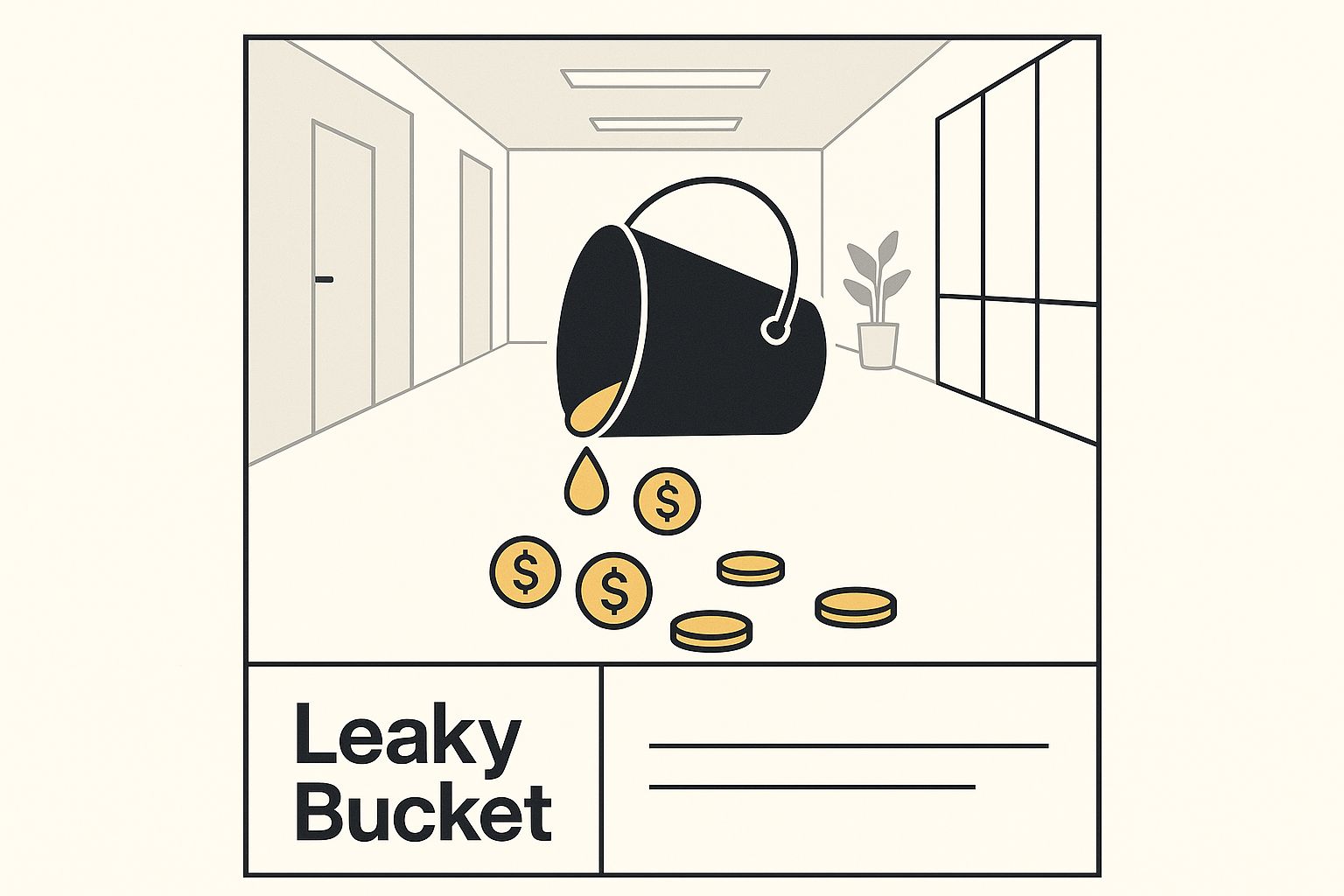
This visual makes it crystal clear: failing to manage absence proactively allows small, consistent losses to snowball into a major financial drain.
Building Your Sickness Absence Management Framework
A clear and consistent policy is the absolute backbone of managing sickness absence well. Think of it as the blueprint for a building; without one, you're just piling up bricks and hoping for the best. A solid framework ensures everyone is treated fairly, provides total clarity for both managers and employees, and crucially, protects your business from a legal standpoint.
This blueprint is built on four essential pillars: Reporting, Recording, Supporting, and Returning. Each pillar holds up the others, creating a structure that’s strong, supportive, and simple for everyone to follow. Getting these right will shift your approach from reactive fire-fighting to proactive, structured management.
The real goal here is to create a system that everyone understands and, just as importantly, trusts. That consistency is your secret weapon for reducing absence rates and fostering a healthier, more positive workplace culture.
Pillar 1: The Reporting Process
The very first step in managing any absence is knowing about it—promptly and properly. A clear reporting procedure cuts through any confusion and sets a professional, supportive tone from the get-go. This isn't about creating red tape; it's about establishing immediate, direct communication.
Your policy must spell out exactly who an employee needs to contact, how they should do it (a direct phone call is almost always best), and by what time on their first day off. Vague instructions like "let someone know if you're sick" are a recipe for chaos and delayed responses.
A robust reporting procedure needs to include:
- Designated Contact: Who gets the call? It should be their direct line manager, no question.
- Method of Contact: A phone call is far better than a text or email. It allows for a brief, personal conversation.
- Timing: Be specific. For instance, "at least one hour before your shift is due to start."
- Information Required: What do they need to share? Simply the reason for their absence and an expected return date, if they know it.
That initial call is a vital first touchpoint. It lets the manager show genuine concern, understand the situation, and immediately start planning for cover, which keeps disruption to a minimum.
Pillar 2: Accurate and Confidential Recording
As soon as an absence is reported, it needs to be recorded accurately and confidentially. This pillar isn't about policing your team; it's about gathering data to spot patterns and offer support where it’s needed most. Think of it as a diagnostic tool for the health of your entire organisation.
Proper recording helps you see trends that might otherwise fly under the radar. You might notice that a particular team has a high rate of short-term absences, or that sickness days seem to spike on Mondays. This kind of insight is gold dust for managing absence effectively.
By meticulously tracking absence data, you move from guesswork to informed action. It allows you to address potential underlying issues—whether it’s workplace stress, a lack of engagement, or a need for better health support—before they become systemic problems.
Good record-keeping is also a legal must-have. You have to handle employee health data in line with GDPR, making sure it’s stored securely and only seen by those with a legitimate need to know.
Pillar 3: Supporting Your Employees
This pillar is arguably the most important one. It's the heart of creating a positive and caring culture. How you support an employee while they're off sick, whether for a short or long spell, says everything about your company's values. The manager's role here is pivotal, shifting from supervisor to a key, supportive point of contact.
For short-term absences, support might be as simple as a quick check-in call to see how they're doing. For long-term absences, it demands a more structured approach. Regular, sensitive contact helps the employee feel connected and valued, not isolated and forgotten. As part of this, employers should offer support for overall well-being, including providing effective strategies for managing work stress.
The latest UK data really drives this point home. By 2024, the sickness absence rate had fallen to 2.0% of working hours, down from 2.3% in 2023. While that’s an improvement, it’s still higher than the pre-pandemic rate of 1.9%. The main reasons? Minor illnesses (30%), musculoskeletal problems (15.5%), and mental health conditions (9.8%), which just goes to show how vital multifaceted support is.

Pillar 4: Mastering the Return
The final pillar is all about bringing the employee back into the fold smoothly and successfully. A well-managed return helps prevent those frustrating recurring absences and ensures the employee feels fully supported as they get back up to speed.
The cornerstone of this whole phase is the return-to-work interview. This isn’t an interrogation. It’s a structured, supportive chat to welcome the employee back, check they’re genuinely fit for work, and discuss any help they might need. It also happens to be your single best tool for discouraging non-genuine absences.
Depending on the reason for the absence and how long they were away, you might also need to think about:
- Phased Returns: Gradually increasing hours over a few weeks to ease the employee back into their full workload.
- Adjusted Duties: Temporarily tweaking their tasks to accommodate recovery, like avoiding heavy lifting after a back injury.
- Workplace Adjustments: Making practical changes, like to their workstation, or providing specialist equipment.
By mastering this final step, you complete the cycle. You reinforce a culture where employee health is a shared priority and absence is managed with fairness, consistency, and genuine compassion.


