
The Bradford Score is a simple HR tool that calculates a score for an employee's absences to flag potentially disruptive patterns. It uses the formula B = S² x D, where 'S' is the number of separate absence instances (or spells) and 'D' is the total number of days an employee was off over a set period. The whole idea behind it is that frequent, short-term absences are often far more damaging to a business than a single, longer spell of sickness.
What Is the Bradford Score and Why Does It Matter?
Imagine you’re running a small team. One of your team members is signed off sick for a full working week. That’s one single absence, or "spell," lasting five days. While it’s not ideal, it's a predictable disruption you can plan around for the week.
Now, picture another scenario. A different team member is absent for one day every Monday for five weeks in a row. The total time off is exactly the same—five days—but the impact on your business is worlds apart. The constant, unpredictable nature of these five separate absences makes planning a nightmare and puts a real strain on the rest of the team.
This is precisely the problem the Bradford Score was designed to highlight. It’s not just about how many days an employee is absent, but how often they're away from work. The formula is deliberately weighted to put a bigger emphasis on the frequency of absences.
The Logic Behind the Formula
The real power of the Bradford Score is in squaring the number of absence spells. This one mathematical step dramatically inflates the score for repeated, separate instances of sickness, even if the total number of days off is quite low. It's a clever way for managers and HR professionals to spot concerning patterns that might otherwise get lost in the data.
The goal isn't to punish employees for being unwell. It's about identifying attendance patterns that could signal underlying issues or cause significant operational disruption. It turns abstract attendance data into a clear, comparable figure.
Developed by researchers at Bradford University back in the 1980s, the Bradford Factor helps quantify the impact of employee absenteeism, usually over a 52-week period. It remains a popular tool for UK businesses trying to bring a fair and consistent approach to absence management.
To give you a clearer picture, here’s a quick breakdown of the formula’s components.
Bradford Score Formula At a Glance
| Component | Symbol | What It Means |
|---|---|---|
| Bradford Factor | B | The final score calculated by the formula. |
| Spells | S | The total number of separate, individual instances of absence. |
| Days | D | The total number of days the employee was absent across all spells. |
The result of this calculation—the Bradford Score or 'B'—gives you a single number to work with.
Ultimately, getting your head around how the Bradford Score works is a key first step in building a more solid strategy for managing leave. It helps you support your team effectively while protecting the continuity of your business. To learn more about this broader topic, check out our comprehensive guide on what is absence management.
Calculating the Bradford Score with Real-World Examples
Getting your head around how the Bradford Score actually works is much easier when you see it in action. The calculation itself is pretty simple, but its real genius lies in how it penalises frequent, short-term absences far more heavily than a single, longer period of sickness.
Let's walk through a couple of practical examples to see what that means.
The formula is S² x D = Bradford Score. In this equation, S is the number of separate absences (often called 'spells'), and D is the total number of days the employee was off. The crucial part is squaring the number of spells—that’s what gives it so much weight in the final score.
Example One: A Single Long-Term Absence
First up, let's look at an employee named Alex. Unfortunately, Alex comes down with a nasty case of the flu and is signed off work for a full week, which is five consecutive working days.
Now, let's plug Alex's situation into the formula:
- Spells (S): 1 (the single bout of flu counts as just one instance)
- Days (D): 5 (the total number of days Alex was away)
- Calculation: 1 x 1 x 5 = 5
Alex’s Bradford Score is only 5. Even though the absence lasted a whole week, because it was one uninterrupted spell, the score stays incredibly low. This reflects a situation that, while not ideal, is generally much less disruptive for a business to plan around.
This visual breaks down how the spells and days combine to create the final score.
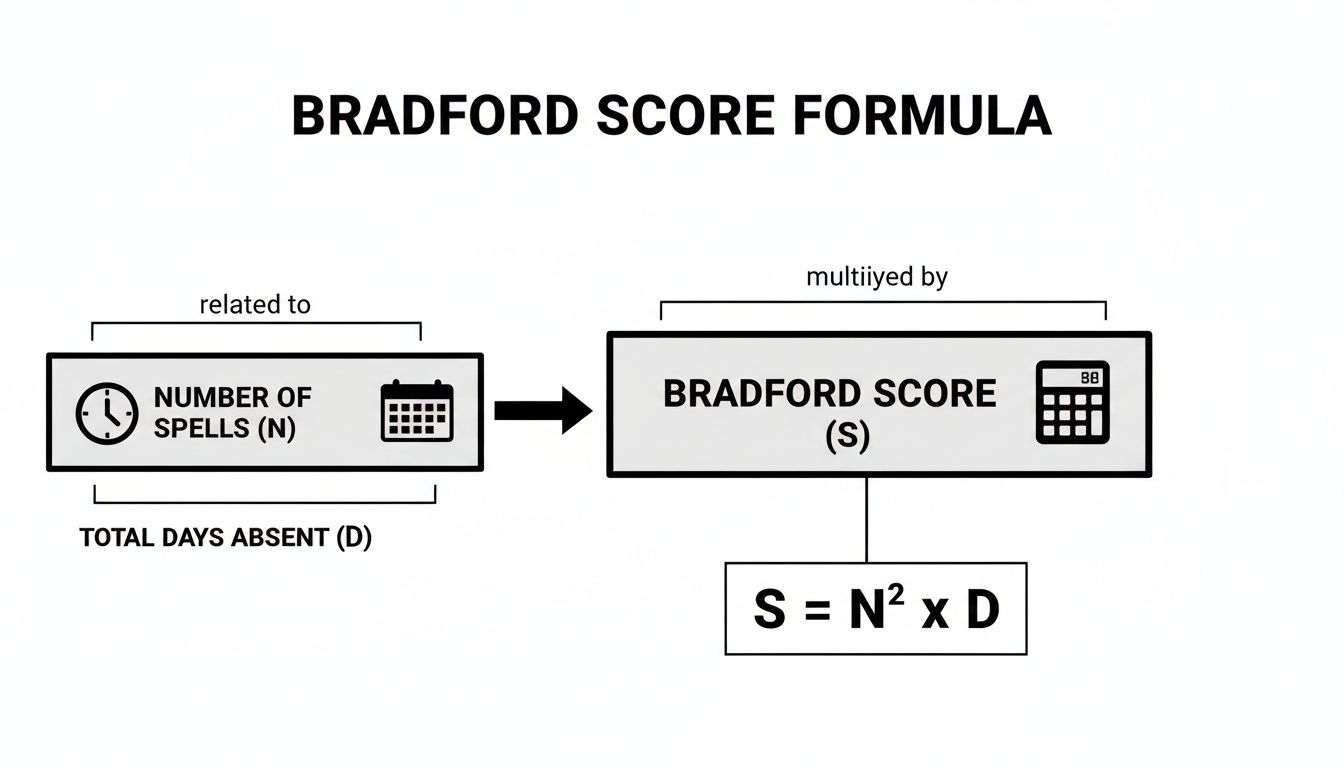
As you can see, squaring the number of spells is the critical step that really magnifies the impact of frequent, one-off absences.
Example Two: Frequent Short-Term Absences
Now, let’s consider another employee, Ben. Over the same period, Ben has also been off for a total of five days. The difference is, his absences were scattered: a single day in January, another in March, one in April, one in June, and a final day in August.
Here’s how Ben’s score gets calculated:
- Spells (S): 5 (each separate day off counts as a brand new spell)
- Days (D): 5 (the total number of days is identical to Alex's)
- Calculation: 5 x 5 x 5 = 125
Ben’s score is a whopping 125. Both employees missed the exact same number of workdays, but Ben's score is a staggering 25 times higher than Alex’s.
The core idea is simple: the formula isn't really designed to measure the total time lost, but the level of disruption caused. Mathematically, squaring the number of spells makes this distinction crystal clear.
This massive contrast shows exactly what the Bradford Factor is designed to do: flag potentially problematic attendance patterns. It's brilliant at distinguishing between a single, manageable absence and a series of unpredictable ones that can wreak havoc on team schedules and productivity.
Interpreting Scores with UK Absence Thresholds
Calculating a Bradford Score is only the first step. The real value comes from knowing what that number actually means for your business and your team. Once you have a score, how does it translate into action? This is where established UK absence thresholds come in, giving you a consistent guide for responding to different levels of absenteeism.
Think of it like a traffic light system for attendance. A low score is green, signalling everything is on track. As the score creeps up, it moves into amber, suggesting you might need to take a closer look. A high score is a clear red light, flagging a serious issue that needs a formal response.
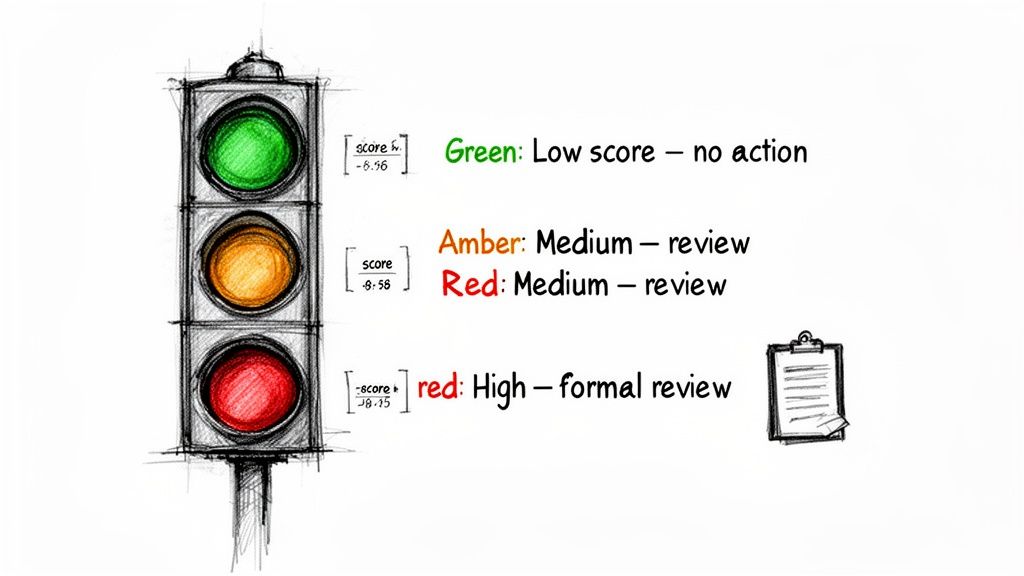
These trigger points provide managers with a clear, data-driven framework. It helps remove guesswork and subjectivity, ensuring every employee is treated fairly and consistently.
Common UK Trigger Points
While every company should set its own specific thresholds within its absence policy, there are widely accepted benchmarks used across the UK. Using a system like this is a smart move for any business, but it's especially critical for small businesses where the annual cost of a single absent employee can be around £3,000.
Here’s a breakdown of the typical trigger points and what actions they might prompt.
The table below summarises the common UK benchmarks for interpreting Bradford Factor scores and the typical HR actions associated with each level.
Bradford Score Trigger Points and Recommended Actions
| Score Range | Typical Interpretation | Recommended Action |
|---|---|---|
| 0 – 50 | No Concern | Standard monitoring is sufficient. No specific action is required. |
| 51 – 124 | Informal Monitoring | An early warning sign. A good time for an informal chat during a return-to-work interview. |
| 125 – 399 | First Formal Warning | Often triggers the first stage of a formal process, such as a verbal or first written warning. |
| 400 – 649 | Final Written Warning | Indicates a significant level of disruption. Typically involves a final written warning. |
| 650+ | Dismissal Review | A critical attendance problem that may lead to a formal review, with dismissal as a potential outcome. |
It's important to view these scores as conversation starters, not automatic penalties.
It is crucial to remember that these thresholds are guidelines, not rigid rules. They should always be used as a trigger for conversation and investigation, not automatic punishment.
The key is to embed these trigger points into your official company absence policy. This creates a transparent system where employees understand the expectations and managers have a clear, fair process to follow. For more detailed strategies, you might find our guide on managing sickness absence effectively helpful.
How to Use the Bradford Score Fairly and Legally
Knowing the Bradford Score formula is one thing, but using it properly—and legally—is a different ball game. The score is a brilliant flag-raiser for potential absence issues, but it never tells the whole story. If you treat it as a blunt disciplinary stick, you’re heading for a world of poor morale and, frankly, serious legal trouble.
A high score should never be an automatic trigger for a formal warning. Think of it more as a quiet nudge, a prompt to have a supportive conversation. This is where return-to-work interviews are worth their weight in gold. They give you a chance to sit down with your employee and understand the why behind their absences before jumping to any conclusions.
This simple shift in perspective turns the score from a punishment into a diagnostic tool. It helps you spot underlying problems you might be able to help with, rather than just penalising the symptoms.
Navigating Protected Characteristics
Here’s where things can get tricky. The biggest risk with the Bradford Score is applying it rigidly across the board, which can easily stray into discrimination. In the UK, the Equality Act 2010 is crystal clear: you cannot treat employees unfairly because of certain protected characteristics.
When you’re looking at absences, you absolutely must make adjustments for situations related to:
- Disabilities: If an employee has a recognised disability that causes them to be off work more often, hitting them with a standard Bradford Score could be discriminatory. You're legally required to make reasonable adjustments.
- Pregnancy-related sickness: Any absence due to a pregnancy-related illness is off-limits. It cannot be held against an employee in any disciplinary action or redundancy decision.
- Serious health conditions: While not always a legally protected characteristic in itself, treating someone with a serious underlying health problem the same as an employee with a string of unrelated sick days is just poor—and risky—management.
Ignoring these nuances isn’t just bad practice; it could land you in front of an employment tribunal. The key is to filter out any legally protected absences before you even think about calculating a score.
The Bradford Score is great at flagging patterns, but it has zero understanding of causes. Always use it to start a human conversation, never to have the final say in a disciplinary process.
Adopting a Fair and Transparent Policy
To make the Bradford Score work for you, your approach has to be consistent, transparent, and written down in your company's absence policy. No exceptions. This ensures every single employee knows how absence is measured and what to expect if their score hits one of your trigger points.
As organisations like ACAS often recommend, a fair process means treating the score as just one piece of the puzzle. Always look at the bigger picture—consider the individual’s overall performance, their work history, and any personal circumstances you’re aware of.
When you combine data with a bit of empathy, you create a system that manages absence effectively while keeping your workplace supportive and, crucially, legally sound.
Using Absence Data to Proactively Manage Your Team
Knowing how the Bradford Score works is one thing, but its real value comes alive when you start looking beyond individual employees. By analysing absence data across your entire organisation, you can shift from simply reacting to problems to proactively managing your team's wellbeing.
Instead of just responding to high scores as they pop up, start looking for the stories your absence data is telling you. Think of your collective Bradford Score reports as a diagnostic tool for your company's overall health. This elevates the score from a simple disciplinary trigger into a strategic instrument for building a better workplace.
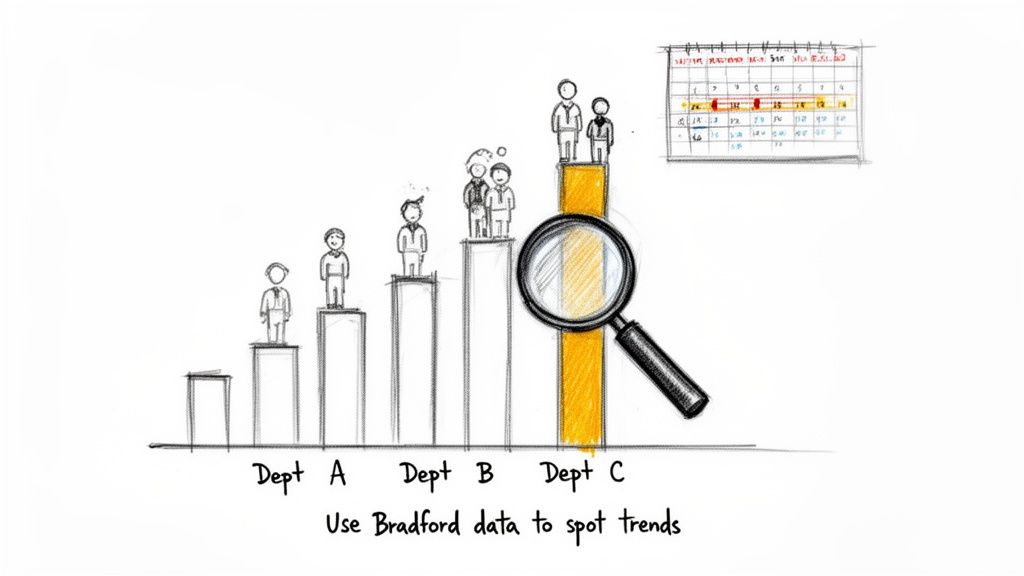
This big-picture view helps you spot wider trends that might otherwise fly under the radar. When you zoom out, you can begin to ask more insightful questions that lead to meaningful, positive change.
Identifying Organisational Trends
Looking at the data in aggregate helps you identify patterns that point to systemic issues rather than just isolated individual problems. This is where you can make changes that have a real, widespread impact on your team and the business.
Consider digging into your data to look for trends like these:
- Departmental Hotspots: Is one particular department showing consistently higher scores than others? This could be a red flag for issues with workload, a specific management style, or low team morale that needs your attention.
- Seasonal Spikes: Do scores tend to climb during certain times of the year? This might line up with your busiest business periods, suggesting employee burnout. Or perhaps it coincides with school holidays, highlighting challenges for working parents.
- Role-Specific Patterns: Are people in certain job roles more prone to frequent, short-term absences? This could highlight a need for better support, more resources, or adjustments to processes for those positions.
These insights are pure gold. For example, discovering a departmental hotspot could lead to targeted management training or a full review of workloads, tackling the root cause of the absences rather than just the symptom.
By turning raw numbers into actionable intelligence, you can build a more resilient and supportive work environment. The data gives you a clear, objective starting point for conversations about improving organisational wellbeing.
Ultimately, this proactive approach fosters a healthier, more productive workplace. It shifts the focus from just tracking attendance to genuinely managing your team and business for the better. To dig deeper into this data-driven mindset, you can learn more about the importance of adopting people analytics in our detailed article.
Frequently Asked Questions About the Bradford Score
Even when you've got your head around the formula, putting the Bradford Score into practice throws up some common questions for managers and HR teams. Getting these details right is key to using the tool fairly and making sure it genuinely supports your team and the business.
Let's clear up some of the most common queries that pop up.
Is It Legal to Use the Bradford Score in the UK?
Yes, it's perfectly legal to use the Bradford Score as part of a wider absence management policy here in the UK. The important thing, however, is how you use it. Its application must be fair and consistent.
Crucially, the score must never be used in a way that discriminates against employees with protected characteristics under the Equality Act 2010. This means you have to make allowances for—and often completely exclude—absences linked to:
- Known disabilities where reasonable adjustments are needed.
- Any pregnancy-related sickness.
- Serious, underlying health conditions.
Applying the score blindly, without considering this vital context, could land you in serious legal trouble.
Should a High Score Automatically Lead to Disciplinary Action?
Absolutely not. Think of a high Bradford Score as a trigger for a conversation, not an automatic penalty. Its real purpose is just to flag a potential pattern that might need a closer look. Nothing more.
A high score is a data point, not a final verdict. The first step should always be a confidential return-to-work interview to understand the reasons behind the absences before any formal action is even considered.
This simple shift in mindset turns the score from a blunt disciplinary instrument into a supportive management aid.
Does the Score Reset Every Year?
This is a common misconception. The Bradford Score is almost always calculated on a ‘rolling’ 52-week basis. It doesn't just reset to zero for everyone on the 1st of January.
Instead, the calculation always looks back over the immediate past 12 months from today's date. This approach gives you a much more accurate and relevant picture of an employee’s recent attendance, rather than being skewed by a fixed calendar year. It ensures the data you're acting on is always current.


