
An employee wellness program isn't just about fancy perks or box-ticking. For a small business, it’s a strategic investment designed to support the health and wellbeing of your staff—the very people who drive your success. Think of it less as an optional extra and more as a core part of your business strategy, creating a supportive environment that boosts morale, cuts down on absence, and lifts productivity.
Why a Wellness Program Is a Smart Business Investment
It’s a common mistake for small businesses to view an employee wellness program as just another expense on the books. But the reality is, neglecting the wellbeing of your team carries a far greater, often hidden, cost. The knock-on effects of burnout, stress, and poor mental health show up directly on your balance sheet through more sick days, sluggish productivity, and a revolving door of staff. It puts you in a constant, reactive cycle of firefighting problems that have already taken root.
A proactive approach completely flips this script. Investing in wellbeing isn't about grand, expensive gestures; it's about building resilience within your team and, by extension, your business.
The True Cost of Neglecting Employee Wellbeing
The financial drain from poor employee health is very real and, frankly, it's growing. Recent UK data paints a worrying picture: sickness absence has climbed to its highest point in a decade, now sitting at an average of 7.8 days per employee each year. This surge is largely driven by mental health struggles, with work-related stress, depression or anxiety now accounting for nearly half of all new or long-standing health conditions.
For a small business, this isn't just a statistic. Losing a key person for even a few days can throw projects into chaos and pile pressure on the rest of the team. When that pattern repeats, the cumulative damage to both output and morale is huge.
The Business Case for Proactive Investment
Shifting your mindset from cost to investment is the first crucial step. A well-designed employee wellness program delivers a clear return by tackling the root causes of absenteeism and disengagement head-on. By giving your team resources to manage stress, stay active, and feel genuinely supported, you cultivate a far more positive and productive work environment.
A proactive wellness program is one of the most effective tools a small business has to build a resilient, engaged, and loyal workforce. It transforms wellbeing from a personal issue into a shared organisational strength.
Beyond just the immediate health benefits, understanding the broader corporate wellness program benefits—like better staff retention and lower burnout rates—really highlights its strategic value. When people feel their employer genuinely cares about them as a person, their loyalty and commitment go through the roof.
This is a massive advantage in the battle to keep your best people, something small businesses often find tough. For more on this, check out our guide on proven strategies to reduce employee turnover. A healthier, happier team isn't just a nice-to-have; it's a powerful competitive edge that strengthens your business from the inside out.
Laying the Groundwork for a Successful Programme
Before a single yoga mat is unrolled or a healthy snack ordered, the best employee wellness programmes start with a solid foundation. Jumping straight into activities without understanding what your team actually needs is like building a house without blueprints – it might look okay at first, but it won’t last. This groundwork is all about listening, planning, and getting the support you need to make your efforts count.
It all begins by setting clear, realistic objectives. What are you genuinely trying to achieve? Maybe you're looking to reduce stress-related absences, boost team morale after a tough quarter, or simply create a more positive place to work. Your goals will be your compass, guiding every decision you make from here on out.
Discovering What Your Team Truly Needs
Guesswork is the enemy of an effective wellness programme. The only way to know what will genuinely help your employees is to ask them. A needs assessment doesn't have to be some massive, formal undertaking, especially in a small business where you have the advantage of knowing your people.
Simple, anonymous surveys are a great place to start. Using free tools, you can ask targeted questions about stress levels, work-life balance, and what wellness activities they'd actually participate in. Another powerful approach is to hold informal team chats or one-to-one meetings. These conversations can uncover insights a survey might miss, like a shared interest in financial literacy workshops or a desire for more flexible hours to help with the school run.
The goal here is to get past your own assumptions. You might think everyone wants a gym membership, but your team might overwhelmingly prefer support for mental health, like subsidised therapy sessions. Listening first ensures your investment actually hits the mark.
This initial feedback is gold. It not only helps shape the focus of your programme but also builds early buy-in from your staff. They can see their opinions are being heard and valued right from the very beginning.
Securing Leadership Buy-In and Setting a Budget
With employee insights in your back pocket, the next job is to get leadership fully on board. For small business owners, this might just mean convincing yourself. For HR managers, though, it involves presenting a clear business case to the decision-makers. The trick is to focus on tangible returns on investment (ROI) that go beyond just feeling good.
Frame the programme in business terms. Show how specific initiatives connect directly to solving real business problems. For instance, offering mental health support can be a direct answer to the rising number of sick days attributed to stress. The link between unmanaged stress, increased employee absence, and rising business costs is a powerful and compelling one.
This flowchart shows the costly domino effect that poor wellbeing can have on the bottom line.
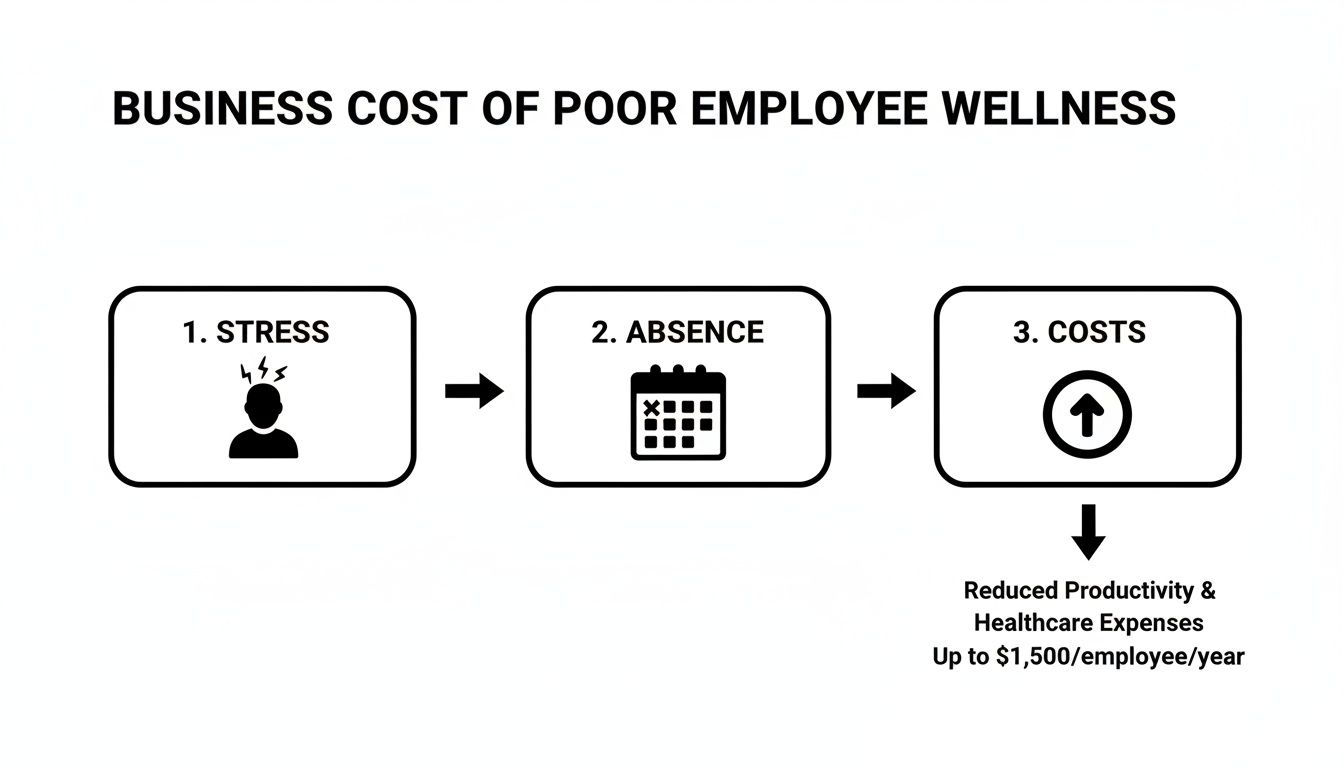
As you can see, unchecked workplace stress leads directly to more absenteeism, which in turn drives up operational costs and hurts everyone's productivity.
Once you have that support, it's time to talk money. A realistic budget doesn't have to be a huge figure; in fact, starting small is often the smartest move. A simple way to structure your budget is to allocate funds across three core pillars:
- Mental Wellbeing: This could cover a team subscription to a mindfulness app, contributions towards counselling sessions, or hosting a practical stress management workshop.
- Physical Wellbeing: Funds here might go towards a team walking challenge with small prizes, providing healthy snacks in the office, or subsidising entry fees for a local charity run.
- Financial Wellbeing: Consider setting aside a portion of the budget to bring in a financial advisor for a group session on practical topics like budgeting or pension planning.
By creating a simple budget plan, you ensure your resources are spread thoughtfully across different areas of wellness, creating a much more balanced and impactful programme. This foundational work—defining objectives, listening to your team, and planning your resources—is the critical first step toward building a programme that not only supports your employees but also strengthens your entire business.
Designing Your Core Wellness Initiatives
Alright, you’ve defined your objectives and worked out the budget. Now for the fun part: designing the actual initiatives that will become the heart of your employees wellness program. For small businesses, the trick is to focus on low-cost, high-impact activities rather than splashing out on expensive perks. A truly great programme is built on a balanced foundation that looks after the whole person, not just one part of their wellbeing.
To pull this off, it's best to group your ideas around four central pillars: mental health, physical wellbeing, financial literacy, and social connection. This structure helps you provide well-rounded support that meets a variety of employee needs, ultimately creating a more resilient and engaged team.
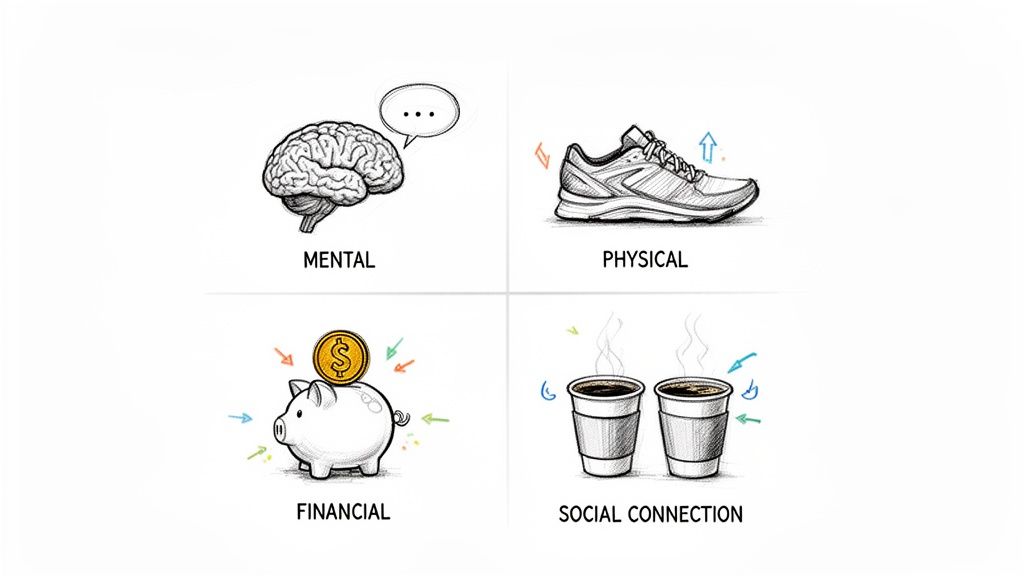
Supporting Mental And Emotional Health
In today's workplace, mental health support isn't just a nice-to-have; it's non-negotiable. The stigma around it can make it tough for employees to ask for help, so your job is to make resources accessible, confidential, and completely normal to use.
An easy first step is to create a resource hub on your company intranet or a shared drive. This can be a simple page with links to reputable charities like Mind, contact details for local support services, and helpful articles on managing stress. It's a no-cost move that gives anyone who is struggling a private first port of call.
Another powerful idea is to subsidise access to professional help. You could team up with a local counselling service to offer a few discounted sessions for your staff. Even a small contribution can significantly lower the barrier for someone who really needs support.
A key goal of any employee wellness program should be to normalise conversations around mental health. Simple actions, like managers openly discussing the importance of taking breaks to de-stress, can create a culture where it's okay not to be okay.
Encouraging Physical Wellbeing
You don't need an on-site gym to improve physical health. The real focus should be on encouraging movement and healthy habits in a way that feels inclusive and fun, not competitive or pressuring.
A great way to do this is with engaging and actionable workplace wellness challenges. A simple team-wide walking challenge, tracked with a shared app, can build fantastic camaraderie. Just offer a small prize, like a team lunch, to keep things interesting.
It's also worth taking a look at your office environment. Could you provide healthy snacks like fruit and nuts instead of just biscuits? Is there a secure place for people to store bikes if they want to cycle to work? These small adjustments make the healthy choice the easy choice. For more practical, low-cost ideas, check out our guide to creative employee wellness program ideas.
Building Financial Literacy
Financial stress is a huge, often invisible, burden that hits an employee's focus and mental health hard. In fact, one study found that 76% of UK employees say money worries negatively affect their performance at work. Tackling this head-on shows you genuinely care about your team's overall stability.
Why not host a few "lunch and learn" sessions with an independent financial advisor? You could cover topics like:
- Practical Budgeting: Simple strategies for managing day-to-day finances.
- Understanding Your Pension: Demystifying pensions and the importance of saving for the future.
- Navigating Debt: Providing resources and advice for managing and reducing debt.
These workshops give your team practical life skills, reduce a massive source of anxiety, and help them feel more in control of their future.
Fostering Social Connection
In small teams, strong social bonds are the glue that holds everything together. This is even more true with the rise of remote and hybrid working, where loneliness and isolation can be a real drag on morale and collaboration. Your wellness programme should actively create chances for people to connect outside of work tasks.
This doesn't have to be complicated or expensive. Think about organising a monthly coffee morning, a quarterly team lunch out of the office, or even an online quiz for hybrid teams. The aim is simply to create a relaxed space for colleagues to connect as people, not just as coworkers.
By thoughtfully building out initiatives across these four pillars, you'll create a programme that's both balanced and meaningful. To give you a clearer picture, here’s a table showing how these ideas can come together in practice.
Sample Wellness Program Initiatives for Small Businesses
This table breaks down some simple, high-impact activities you can organise around the four key wellbeing pillars.
| Wellness Pillar | Low-Cost Initiative Example | Potential Business Impact |
|---|---|---|
| Mental Health | Partner with a local therapist for three subsidised sessions per employee per year. | Reduced stress-related absenteeism and improved employee focus. |
| Physical Wellbeing | Launch a month-long team step challenge with a prize for the winning team. | Increased energy levels, better team morale, and improved physical health. |
| Financial Literacy | Host a webinar with a financial advisor on creating a personal budget. | Reduced employee financial stress, leading to better concentration at work. |
| Social Connection | Organise a quarterly, company-funded social event like bowling or a team meal. | Stronger team bonds, improved collaboration, and a more positive company culture. |
Taking this multi-faceted approach ensures your employees wellness program offers something of value to everyone, reinforcing the message that you're invested in their complete wellbeing.
Integrating Wellness With Absence Management
An effective employees wellness program shouldn't exist in a bubble. Its real power is unlocked when it connects directly with your day-to-day HR operations, especially how you manage employee leave. This is where proactive support meets practical management, turning a simple administrative task into a powerful tool for boosting wellbeing.
Thinking of absence management and wellness as separate functions is a common mistake. In reality, they are two sides of the same coin. Your absence data holds the story of your team's health, and if you know how to read it, you can move from reacting to problems to preventing them altogether.
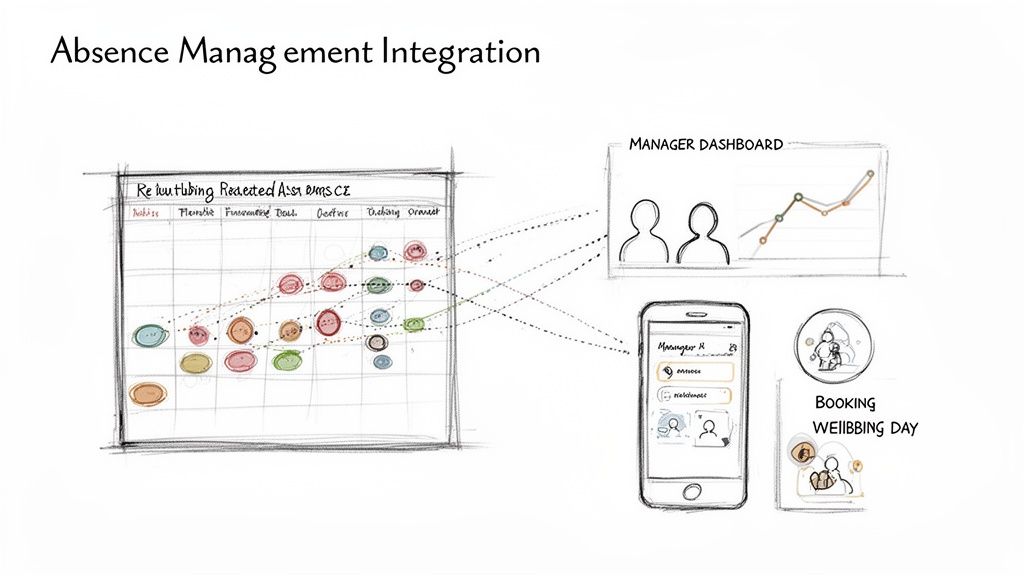
From Reactive Records to Proactive Insights
Traditionally, absence records are just that—records. They tell you who was off and when. But with the right approach, this data can become an early warning system for potential wellbeing issues long before they escalate into long-term sickness.
Modern systems can help you spot patterns that might otherwise go unnoticed. Is a particular employee frequently taking single days off on Mondays? This could be a subtle sign of burnout or disengagement. Has a whole department seen a spike in short-term absences? This might point to a high-pressure project or team dynamic that needs attention.
By viewing absence data through a wellness lens, you can identify employees who might be struggling and offer support before they reach a crisis point. It’s about asking "why" someone is off, not just logging that they are.
This shift in perspective is crucial for small businesses, where the impact of even one person's absence is felt deeply across the entire team.
Making It Easy to Take a Break
A key part of any wellness strategy is making it easy and guilt-free for employees to take the time they need to recharge. Clunky, bureaucratic leave request processes create friction and can discourage people from booking time off, especially for mental health reasons. This is where seamless integration truly shines.
Imagine a system where an employee can use a self-service portal on their phone to book a "wellbeing day" with just a few taps. No awkward conversations, no complicated forms. This simple act of removing friction sends a powerful message that you trust your team and actively support their need to rest and recover.
For managers, the benefits are just as significant. An integrated system gives them real-time visibility into team availability, allowing them to:
- Approve leave requests quickly without worrying about creating staff shortages.
- Plan project timelines with a clear view of who is available and when.
- Encourage team members to use their full holiday allowance to prevent burnout.
This transforms leave management from a purely administrative chore into a cornerstone of a supportive, trust-based company culture. It's also a practical way to manage capacity and ensure business continuity. To learn more about how to structure these systems, you can find valuable insights in our detailed guide on employee absence management.
Building a Culture of Trust and Support
Ultimately, connecting your wellness initiatives with absence management helps build a healthier, more resilient organisation. When employees see that their wellbeing is genuinely prioritised and supported through practical, easy-to-use systems, their trust and loyalty grow stronger.
It demonstrates that your commitment to their health isn't just a poster on the wall; it’s built into the very fabric of how your business operates. This practical, integrated approach is one of the most effective ways to ensure your employees wellness program delivers lasting value for both your people and your bottom line.
Launching Your Programme for Maximum Engagement
How you launch your employee wellness programme is just as important as the initiatives themselves. A brilliant plan can fall completely flat without a thoughtful rollout that builds genuine excitement and buy-in. Your goal isn't just to announce it; it's to start a conversation and make wellness a visible, breathing part of your company culture from day one.
Think about it: a single, dry email signals that the programme is just another box-ticking exercise. But a strong launch shows your team you're genuinely invested in their wellbeing. It’s your first and best chance to build momentum and get people involved right from the start.
Building a Communication Plan That Resonates
Good communication is more than just pushing out information; it’s about connecting with your team on a human level. You need to clearly explain what the programme is, why you're introducing it, and, most importantly, what’s in it for them.
Your plan needs to hit multiple channels, especially if you have a mix of office-based and remote workers. Combining a few different methods is usually the most effective way to get the message across.
- Launch Email: Draft an engaging email that outlines the new initiatives. Keep it snappy, use bullet points to highlight the key benefits, and include a clear call to action, like a link to a new wellness hub on your intranet.
- Team Meeting Announcement: Carve out some time in an all-hands meeting to talk through the programme. This adds a personal touch and gives employees a chance to ask questions in real-time, making them feel part of the process from the get-go.
- Manager Talking Points: Arm your managers with a simple script or a few key talking points. This ensures the message stays consistent and empowers them to champion the programme within their own teams.
Your launch isn't a one-and-done event. It's the start of an ongoing dialogue about health and wellbeing in your workplace. The real aim is to make wellness a normal, everyday topic of conversation.
The Value of a Pilot Programme
Before you go all-in with a company-wide rollout, consider running a small pilot with a group of volunteers. Honestly, this is one of the smartest moves a small business can make. A pilot acts as a trial run, letting you gather candid feedback and iron out any kinks before the main launch.
For example, you might discover that the booking process for a subsidised therapy session is clunky, or that the time slot for a virtual yoga class just doesn't work for most people. Catching these small problems early prevents them from becoming major frustrations that could kill engagement down the line. Your pilot group will give you invaluable insights on what’s working and what isn’t, ensuring your programme is polished and ready when it reaches everyone.
Keeping the Momentum Going
The launch is just the beginning. To stop your wellness programme from fizzling out after a few weeks, you need to embed it into the company’s regular rhythm. The goal is to make it a continuous, living part of your culture, not just a temporary campaign.
Simple, consistent actions can make all the difference. Celebrate participation by giving shout-outs in team meetings or sharing positive stories. A monthly wellness newsletter can be a great way to highlight upcoming activities, share useful health tips, or feature a quick success story from a colleague. These small, regular touchpoints keep the programme front-of-mind and reinforce its importance, ensuring it delivers long-term value for both your employees and your business.
Measuring Success and Ensuring Long-Term Value
Getting your employee wellness programme off the ground is a fantastic first step, but it’s certainly not the finish line. To justify the investment of both time and money, you need to prove it’s actually making a difference. This means looking beyond surface-level numbers like event attendance and digging into metrics that show a real business impact, securing your programme’s future for the long haul.
Think of it this way: measurement isn’t just about proving ROI to the higher-ups. It’s about genuinely understanding what’s clicking with your team so you can fine-tune your efforts. A programme that lasts is one that evolves based on clear data and honest feedback, creating a powerful cycle of investment, measurement, and improvement.
Identifying Key Performance Indicators
To really gauge the success of your wellness initiatives, you need to track the right Key Performance Indicators (KPIs). These should tie directly back to the goals you set at the very beginning. Forget about vanity metrics like how many people opened a wellness email; let’s focus on the data that tells a real story.
Concentrate on a handful of metrics that truly matter:
- Sickness Absence Rates: Start tracking the average number of sick days per employee before you launch the programme and compare it to the numbers after. A noticeable drop is a powerful sign of better health and less burnout.
- Employee Turnover: Keep a close eye on your staff retention rates. If fewer people are handing in their notice, it’s a strong indicator that morale and job satisfaction are on the up—a massive win for any small business.
- Pulse Surveys and Feedback: Use short, frequent, and anonymous surveys to get a read on employee morale, stress levels, and how they feel about the wellness offerings. Ask direct questions like, "On a scale of 1-10, how supported do you feel by the company's wellness efforts?"
The Importance of Continuous Feedback
Numbers tell you what is happening, but qualitative feedback tells you why. You need to open up simple, easy-to-use channels for your team to share their thoughts. This could be anything from a dedicated email address or an anonymous suggestion box to a quick open-ended question in your pulse surveys.
This feedback is pure gold—it’s your roadmap for making things better. Let's say you notice the lunchtime yoga session is poorly attended. Direct feedback might reveal it clashes with the local school run. Armed with that insight, a simple tweak to the schedule could suddenly triple engagement.
The most successful wellness programmes are not static; they are living initiatives that adapt to the changing needs of the workforce. Actively listening to and acting on employee feedback is the single most effective way to ensure your programme remains relevant and valued.
Navigating Legal and Ethical Considerations
As you start gathering data, it's absolutely crucial to handle your legal and ethical duties with care. Protecting employee privacy is non-negotiable, particularly when you’re dealing with sensitive health information. Make sure every bit of data collection is compliant with General Data Protection Regulation (GDPR) principles.
In practice, this means being completely transparent about what data you're collecting and why. It also means storing it securely and only ever using it in an aggregated, anonymous format to judge how the programme is doing. It's also vital that all benefits are offered fairly, giving equal access to every employee, no matter their role, location, or personal situation.
This careful approach to measurement is more critical than ever, especially with UK workers facing unprecedented levels of stress. Recent surveys show a staggering 76% reporting moderate to high stress levels. This has led to a major spike in mental-health-related absences, costing employers billions each year. An effective, data-backed wellness programme is a direct, strategic response to this crisis. You can discover more insights about these employee wellness statistics to build an even stronger business case.
Frequently Asked Questions
Jumping into an employee wellness programme for the first time naturally brings up a lot of questions. If you’re a small business owner, you’re probably wondering about the cost, how to get your team involved, and the nuts and bolts of getting started. Let’s tackle some of the most common queries with clear, practical answers.
The goal here is to cut through the noise and give you the confidence to build a programme that genuinely supports your team.
How Much Should a Small Business Budget for a Wellness Programme?
This is the big one, but there's no magic number. It's a common myth that you need a huge budget to make a real difference. A fantastic starting point is to set aside a small, fixed amount per employee each year. Even £50 to £150 per person can fund some brilliant initiatives, like a subscription to a mindfulness app or a fun team walking challenge.
The trick is to start small and show the value. Focus on low-cost, high-impact activities first. Once you start seeing the positive effects on morale and a dip in absence rates, you’ll have a much stronger case for increasing the budget down the line.
What If My Employees Don’t Participate?
Low engagement is a valid worry. But more often than not, it’s just a sign that the programme isn’t quite hitting the mark with what your employees actually want or need. The best way to sidestep this is to bring them into the conversation from day one.
Simply asking your team what they would find valuable is the most powerful tool you have. An anonymous survey might reveal that they’d prefer support for mental health or financial literacy workshops over a gym subsidy.
Also, think about any potential barriers. If you’re planning a workshop, is it scheduled at a time that works for everyone? That includes your part-time staff and working parents. Making your activities accessible and genuinely relevant is the key to getting people on board.
Do We Need a Formal Wellness Policy?
You don't need to draft a complex legal document, but creating a simple, one-page wellness policy is a brilliant idea. It shows that the business is serious about its commitment and sets clear expectations for everybody involved.
Your policy can briefly outline things like:
- The programme's goals: A simple statement on what you hope to achieve (e.g., "to support the mental and physical wellbeing of our team").
- Available resources: A list of the initiatives you're offering, like subsidised counselling sessions or team social events.
- Confidentiality: A quick note to reassure staff that their participation in sensitive programmes (like mental health support) is completely confidential.
This simple document helps to formalise your commitment and makes the employees wellness programme an official, respected part of your company culture.


