
Let's be honest, failing to manage time off properly creates more than just a few scheduling headaches. It hits your company's bottom line and can seriously damage your workplace culture. A solid annual leave planner isn't just a bit of admin software; it's a vital tool for managing your workforce, preventing burnout, and actually boosting productivity.
The True Cost of Ineffective Holiday Planning

Too many businesses treat holiday planning as a simple box-ticking exercise. A request comes in, you say yes or no, and you move on. But this short-sighted view completely misses the huge, often hidden, costs of having a disorganised system. When leave management is just an afterthought, the negative consequences domino through the entire organisation.
The most immediate casualty is employee wellbeing. A culture where taking time off is a struggle inevitably leads to burnout. It's a simple equation: overworked employees are less engaged, less creative, and far more likely to make costly mistakes. This directly translates into sinking productivity and a dip in work quality.
The Growing Problem of Unused Leave
This isn't just a theory; it's a real and measurable trend across the UK. A recent study found that UK employees left an average of five days—an entire working week—of their holiday unused in 2024. That’s despite a typical allowance of 22-23 days. What's more shocking is that only 50% of UK workers managed to take a full, uninterrupted week off in the past year.
This "leave liability" has very real financial consequences. When people don't take their holidays, that time often builds up, creating a financial weight that the company has to pay out when an employee eventually leaves. If you want to dig into the numbers, you can explore the real cost of annual leave.
"When your best people are consistently overworked, their performance eventually suffers. A strategic approach to leave isn't about giving people time off; it's about ensuring your team is rested, resilient, and ready to perform at their peak."
From Chaos to Control
The difference between a poorly managed system and a proactive one is stark. The table below shows just how big the gap is between reacting to leave requests and strategically planning for them.
| Area of Impact | Consequence of Poor Planning | Benefit of a Strategic Planner |
|---|---|---|
| Employee Wellbeing | Increased stress, burnout, and higher staff turnover. | Promotes rest, reduces burnout, and improves morale. |
| Productivity | Reduced output, more errors, and disengaged staff. | Consistent productivity and a motivated, focused team. |
| Financial Health | Unexpected costs from leave liability and overtime pay. | Predictable staffing costs and no accrued leave surprises. |
| Operational Stability | Last-minute staff shortages and project delays. | Smooth operations with guaranteed cover for key roles. |
| Team Morale | Resentment over unfair leave allocation and extra workload. | Fair, transparent system that fosters a positive team culture. |
Ultimately, a poor system breeds operational chaos. Last-minute requests, sudden staff shortages during crunch time, and clashes between key people's holidays all stem from a lack of foresight. This reactive firefighting puts immense pressure on managers and the staff left behind, fuelling resentment and hitting team morale hard.
A strategic annual leave planner is what helps you move from constantly reacting to proactively managing. It gives you the visibility to balance the needs of the business with the wellbeing of your employees. By encouraging everyone to book time off well in advance, you not only head off burnout at the pass but also make sure your business stays productive and resilient all year round.
Crafting a Fair and Compliant Leave Policy

Before you even think about choosing an annual leave planner or trying to map out a schedule, we need to talk about the absolute foundation of your entire system: the leave policy itself. Get this wrong, and everything else falls apart.
This document is so much more than just a formality. Think of it as your organisation's promise to your team. It sets clear, fair expectations and stops the kind of small disagreements that can slowly chip away at morale and trust. When your policy is robust, it gets rid of any grey areas.
It proactively answers all the crucial questions, making sure everyone from a senior leader to a new hire knows exactly what they’re entitled to and how to book their time off. This kind of transparency is vital for building a culture where leave is treated as a right, not a perk.
Without this solid base, even the most sophisticated planning software is doomed to fail. You’ll end up making reactive, case-by-case judgements that can easily come across as unfair, which is a fast track to resentment and confusion.
Calculating Entitlements Fairly
Let's start with the basics. In the UK, the statutory minimum holiday entitlement is 5.6 weeks a year. For a full-time employee, that works out to a straightforward 28 days. But where things often get tricky is with part-time staff. Your policy needs to be crystal clear on this.
Their entitlement is always worked out on a pro-rata basis.
- Full-Time Example: Someone working 5 days a week gets the full 28 days. Simple.
- Part-Time Example: An employee working 3 days a week is entitled to 16.8 days (which is 3 ÷ 5 × 28).
It’s so important to be precise here because small rounding errors can lead to big discrepancies and unhappy staff. Your policy should state exactly how you handle these calculations—do you round up or down? What happens with people on variable hours or those who join halfway through the year? Getting this right shows every employee they’re being treated fairly.
A well-defined policy is your first line of defence against workplace disputes. When rules are clear, accessible, and applied consistently, you create an environment of fairness that benefits everyone, from management to the newest team member.
Setting Clear Rules of Engagement
Beyond the numbers, your policy needs to outline the practical rules for actually requesting and taking leave. If you leave this open to interpretation, you’re asking for operational chaos.
Think about the specific demands of your business. A tech startup might have a super flexible approach all year. A retail business, on the other hand, will almost certainly need to enforce blackout periods during hectic times like the Christmas rush or major sales events.
Your policy must spell out the non-negotiables:
- Notice Periods: How much advance warning does someone need to give? A common rule of thumb is requiring notice that is double the length of the requested holiday.
- Approval Process: Who signs off on requests? What’s the expected timeframe for them to get an answer?
- Carry-Over Rules: Can people carry unused days into the next leave year? If so, how many, and is there a deadline for using them?
- Sickness During Leave: What’s the procedure if an employee gets sick while they’re meant to be on holiday?
By putting these rules down in writing, you give your managers the framework they need to make consistent decisions. It also gives employees the confidence to plan their personal time without worrying about last-minute changes. This proactive approach turns your annual leave planner from just a calendar into a truly strategic tool for balancing employee wellbeing with business stability.
Choosing the Right Annual Leave Planner Tool
So, you’ve got a clear and fair annual leave policy hammered out. That’s a massive step forward. The next question is, how do you bring it to life? You need the right tech to make it all work smoothly. The world of leave management tools is surprisingly vast, stretching from a basic shared spreadsheet all the way to a feature-packed annual leave planner.
Honestly, the best choice boils down to your company's size and what you genuinely need.
For a tiny team—say, fewer than five people—a simple spreadsheet can feel like the obvious answer. It’s free, everyone knows how to use one, and for a handful of staff, it might just about do the job. But this approach hits a wall, and it hits it hard, as soon as you start to grow. Can you imagine trying to juggle leave for 50 people on a single spreadsheet? It quickly becomes a waking nightmare of version control issues, constant manual checks for errors, and absolutely zero privacy.
Once your team expands, the need for a proper system isn't just a "nice-to-have"; it's a necessity. A dedicated tool takes all the tedious, repetitive parts of leave management off your plate. The advantages over doing it by hand are huge.
What to Look For in a Planner Tool
When you start comparing different annual leave planners, zero in on the features that will actually add value to your business. The goal here is to find a system that makes life easier for everyone—not just the HR department. You’ll want to weigh up a few key areas.
- Ease of Use: Is it intuitive? If employees and managers need a week of training just to figure it out, they simply won't use it. A clean, straightforward interface for booking and approving leave is a must.
- Team Schedule Visibility: Can managers see at a glance who is off and when? This is critical for preventing understaffing and sorting out holiday clashes before they turn into a real problem.
- Automated Workflows: The best tools handle the fiddly bits automatically. Think calculating pro-rata leave for part-timers or managing the approval chain without anyone needing to chase. This automation all but eliminates human error and frees up so much admin time.
- Reporting Features: A good planner should give you useful insights. You should be able to pull reports on your leave liability, spot holiday patterns, and even identify staff who aren't taking enough breaks for their own wellbeing.
This visual gives a nice summary of the different kinds of time off that an employee might need to keep track of.
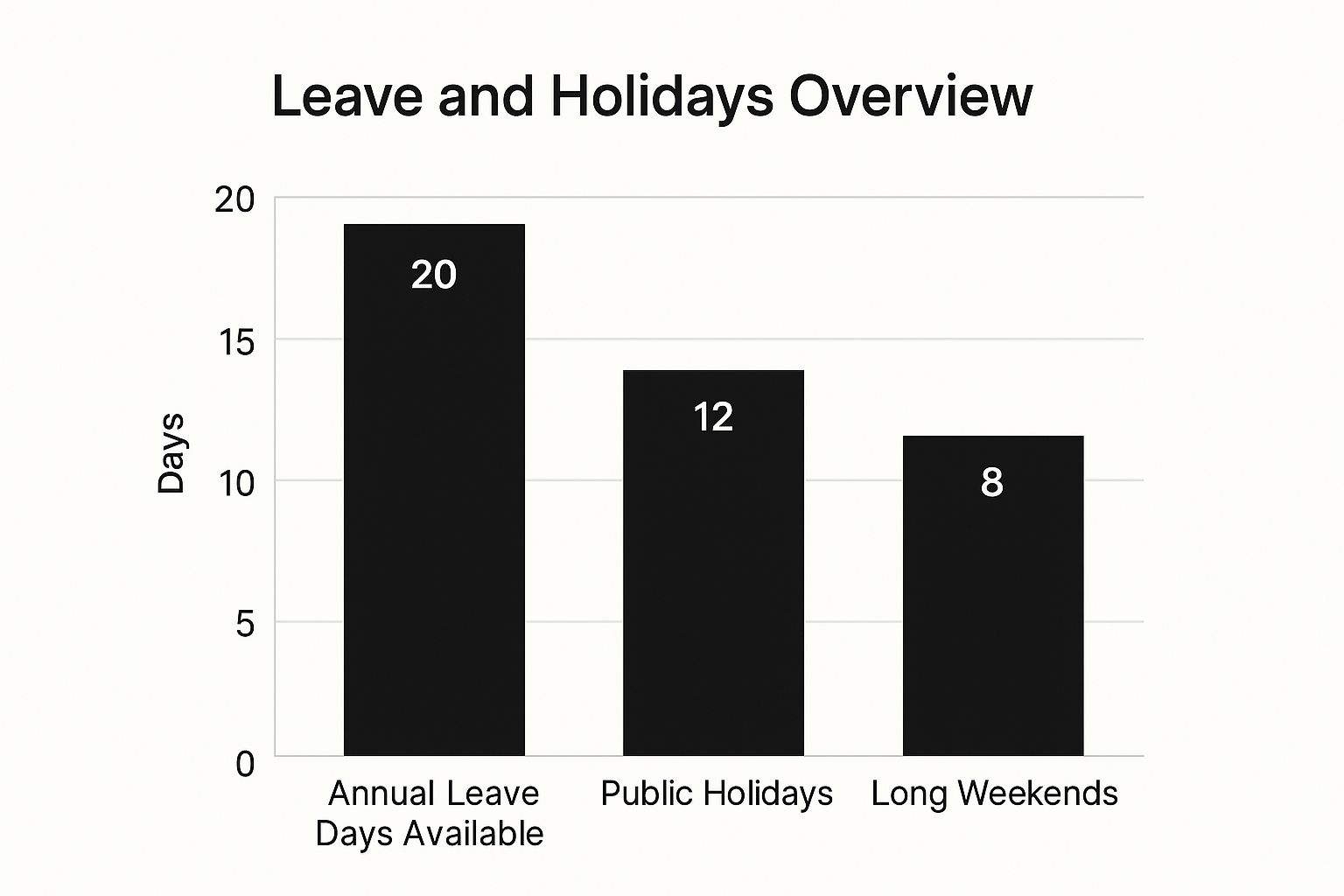
Seeing these balances clearly helps both employees and managers plan more strategically, like figuring out how to combine different leave types for a longer, well-deserved break.
From Spreadsheets to Specialised Software
Making the jump from a simple spreadsheet to a specialised tool like LeaveWizard is a serious operational upgrade. Spreadsheets are static and clunky; dedicated software is dynamic, offering real-time updates that everyone can access from their computer or phone.
The right tool doesn't just track days off; it transforms leave management from a reactive administrative chore into a proactive, strategic function that supports employee wellbeing and ensures operational stability.
For example, a proper software solution can automatically enforce your company policies, like minimum notice periods or holiday blackout dates, which is something a spreadsheet just can't do. It gives you a single, secure, and central place for all leave-related activity, which is essential for fairness and compliance.
Annual Leave Planner Tool Comparison
Choosing a tool can feel overwhelming, so here’s a quick breakdown to help you see which type of solution might be the best fit for your business.
| Tool Type | Best For | Key Advantages | Key Disadvantages |
|---|---|---|---|
| Spreadsheets (e.g., Excel, Google Sheets) | Very small teams (fewer than 5 employees) with simple needs and a tight budget. | Free to use, familiar interface, and easy to set up for basic tracking. | Prone to errors, lacks automation, no privacy, and becomes unmanageable as the team grows. |
| HR Information Systems (HRIS) with Leave Module | Medium to large companies that need an all-in-one HR solution. | Integrates leave with payroll, performance, and other HR functions. Centralised employee data. | Can be expensive and overly complex if you only need leave management. The leave module might lack specialised features. |
| Dedicated Leave Management Software (e.g., LeaveWizard) | Businesses of any size looking for a powerful, focused solution for leave and absence. | Highly automated, excellent visibility, robust reporting, enforces policies automatically, and is easy for everyone to use. | It's a specialised tool, so it doesn't handle other HR functions like payroll or recruitment. |
Ultimately, investing in the right annual leave planner isn't just about buying software. It's an investment in a more organised, efficient, and happier workplace. It pays for itself in saved time and fewer headaches.
Rolling Out Your New Holiday Planning System

You’ve got a fair policy sorted and you’ve chosen the right tool. Now for the make-or-break part: the rollout. Launching a new annual leave planner is less about the tech and more about people. Get the launch right, and you set the tone for how the system will be adopted and valued for years to come.
Your first move should be a clear, positive announcement. You need to explain the why behind the change. Frame it around the benefits for your team—think fairer request handling, a clear view of their remaining leave, and the confidence to plan their time off properly.
Whatever you do, don't just present it as another bit of software they have to learn. Instead, show them it’s a step towards a more organised, less stressful workplace where everyone’s time is genuinely respected. Nailing this initial message is your best bet for getting everyone on board from day one.
Getting Managers and Staff Up to Speed
Good training is the bridge between your new system and its success. Simply sending out a user guide and hoping for the best is a recipe for disaster. It's much better to organise separate, brief sessions for managers and the wider team, because what they need to know is quite different.
For employees, keep it focused on the practical stuff:
- How to check their remaining holiday entitlement.
- The simple steps to submit a new leave request.
- How to see the team calendar to avoid obvious clashes.
For managers, the training needs to be a bit more strategic. They have to understand how to apply the company's leave policy consistently using the tool. This means knowing how to manage approvals, keep an eye on team capacity, and deal with overlapping holiday requests fairly.
The real aim here isn't just to teach people which buttons to press. It’s about giving managers the tools to make fair, consistent decisions and giving employees the confidence that the system is there to help them, not to catch them out.
The Nuts and Bolts of Setup and Data Entry
Once everyone knows what's coming, it’s time to get into the technical setup. This is where you translate your carefully crafted policy into the planner's rules and workflows. You'll start by loading in accurate employee data, like start dates and any specific work patterns.
One of the most critical tasks is getting each person's starting leave entitlement calculated and entered correctly. This is absolutely vital for part-time staff or new starters who have joined part-way through the holiday year. For example, if a new team member joins on 1st July with a 28-day pro-rata entitlement, your system must automatically calculate that they have 14 days left for the rest of the year.
Getting these small details right from the very beginning prevents a mountain of future queries and corrections. It's more than just data entry; it’s about building a foundation of trust in the system. This is a huge step towards moving past "good enough" annual leave management and creating something truly efficient. By automating these calculations, you ensure fairness and accuracy for everyone, immediately showing the value of your new annual leave planner.
Of course! Here is the rewritten section, crafted to sound completely human-written and natural, following the provided style guide and examples.


