
An employee being absent from work is more than just an empty desk. It’s a genuine disruption that can ripple through your team, affecting productivity, morale, and ultimately, your bottom line.
It's easy to think of absence as a simple case of someone calling in sick. But the reality, especially for smaller businesses where every person counts, is a much more complex issue with hidden financial and operational costs.
Unpacking the True Cost of Employee Absence

When an employee is unexpectedly away, the direct cost of sick pay is only the tip of the iceberg. The real damage often lies just beneath the surface, creating waves across your entire operation.
For a small business, where roles are rarely duplicated, one key person's absence can stall projects, delay customer service, and force others to stretch themselves dangerously thin. This isn't just a temporary inconvenience; piling extra work onto the remaining staff can quickly lead to burnout and sinking morale.
Over time, colleagues who constantly have to pick up the slack can start to feel resentful. This can poison team dynamics and drag down everyone's efficiency.
The Financial Drain of Absence
The financial hit goes far beyond payroll. Think about the costs of hiring temporary cover, paying overtime to your existing team, and the potential loss of business if deadlines are missed or your service quality drops. These indirect costs pile up fast, turning what seems like a minor issue into a significant financial drain.
Just how big is the problem? A recent analysis showed that in 2023, the hidden cost of employee sickness in the UK shot up to an astonishing £103 billion. That’s a massive £30 billion increase since 2018.
What’s really alarming is that of that increase, £25 billion came from 'presenteeism'—people showing up to work while ill and being unproductive—while only £5 billion was from actual sick days. The numbers are staggering, and they highlight just how much UK employers are impacted.
The true cost isn't just in who is away, but in the chain reaction their absence triggers. It affects project timelines, team capacity, and ultimately, your ability to serve your customers effectively.
Proactive Management as a Strategic Advantage
Understanding the deep impact of employee well-being is crucial. Factors like widespread workforce burnout are a major contributor to these hidden costs, which is why a proactive absence management strategy is so essential.
This isn’t about punishing illness. It’s about creating a supportive, transparent system that minimises disruption for everyone. By implementing clear policies and using modern tools, you can transform this major business challenge into a manageable process.
This guide will walk you through building a robust framework that supports your employees while protecting your business, turning a persistent problem into a real strategic advantage.
Decoding the Different Types of Employee Absence
To get a real handle on managing employee absence, you first need to understand that not all absences are the same. It’s a common mistake to lump everything into a simple ‘sick’ or ‘well’ bucket. A better way to think about it is like different types of weather; each one needs a different response, from a light drizzle that barely disrupts things to a full-blown storm that requires all hands on deck.
The world of employee absence breaks down into a few key categories. Getting these distinctions right is fundamental because each type has different knock-on effects for everything from payroll and team morale to your legal duties as an employer.
Planned vs Unplanned Absence
The most basic split is between absences you know are coming and those that catch you by surprise.
- Planned Absence: This is the straightforward stuff. Think annual leave, pre-booked appointments, or maternity and paternity leave. Because it's authorised in advance, you have time to arrange cover and shuffle workloads to keep things running smoothly.
- Unplanned Absence: This is what throws a spanner in the works. It’s sudden and comes without warning, usually due to sickness, a family emergency, or compassionate leave. Unplanned leave is far more disruptive because it forces you and your team to react in real-time.
While both result in an empty desk, their impact on your day-to-day operations is worlds apart. A planned holiday can be managed with ease, but a key team member calling in sick can throw an entire project into chaos.
Authorised vs Unauthorised Absence
Building on that, we can also classify absences by whether they’ve been approved or not. This is a critical distinction, especially when it comes to potential disciplinary action.
Authorised absence is any time off that has been approved through your company's proper channels. This covers everything from a booked holiday to a sick day where the employee has followed the correct procedure for letting you know.
Unauthorised absence, on the other hand, is when an employee just doesn't show up for work without permission or a good reason. This is a serious issue that needs careful and immediate handling. The classic example is someone going 'Absent Without Leave' (AWOL)—where they're completely uncontactable and haven't followed any rules to report their absence.
An employee's reason for being off work is important, but so is whether they followed your company policy. A genuine sickness can quickly become a disciplinary issue if the employee fails to notify you correctly.
Short-Term vs Long-Term Sickness
Even sickness absence itself isn't one-size-fits-all. It has two important sub-categories that require completely different management styles.
- Short-Term Sickness: This usually means absences lasting less than four weeks. We're talking about common things like colds, the flu, or stomach bugs. While each instance is brief, a pattern of frequent short-term absences can be hugely disruptive and may point to deeper issues that need addressing.
- Long-Term Sickness: Generally, this is defined as an absence lasting four weeks or more. It often stems from a serious illness, an injury, or mental health conditions. Managing long-term sickness is much more complex and brings in legal duties under the Equality Act 2010, such as the need to consider reasonable adjustments.
Each type of absence requires a tailored response. To help you see the differences at a glance, here’s a quick summary of the most common types you’ll encounter.
A Quick Guide to Absence Types
This table breaks down the key characteristics of each absence type and the first steps you should be thinking about as a manager.
| Absence Type | Typical Duration | Authorisation | Key Management Action |
|---|---|---|---|
| Short-Term Sickness | Up to 4 weeks | Authorised (if reported) | Conduct return-to-work interview; monitor for patterns. |
| Long-Term Sickness | 4+ weeks | Authorised (with fit note) | Maintain contact; consider reasonable adjustments; seek medical advice. |
| Compassionate Leave | A few days | Authorised | Show support; clarify paid/unpaid status per your policy. |
| AWOL (Unauthorised) | Varies | Unauthorised | Attempt contact immediately; follow disciplinary procedure. |
Having this framework in mind makes it much easier to decide on the right course of action, ensuring you support your employees properly while protecting your business.
Navigating Your Legal Duties for Employee Absences
For many business owners, the legal side of employee absence is the most intimidating part. It can feel like a minefield of regulations and potential slip-ups, but getting a grip on your core duties is simpler than you might think. And it's not just about ticking compliance boxes—it’s about building a workplace that’s fair, supportive, and on solid legal ground.
Your first port of call should always be a crystal-clear and consistent absence management policy. Think of this document as your rulebook; it sets out the game plan for both you and your staff. It needs to plainly state how and when an employee should report an absence, what proof they need to provide, and what happens next.
This isn’t just a nice-to-have. An inconsistent or non-existent policy is a recipe for trouble, potentially leading to claims of unfair treatment if you handle one employee's absence differently from another's.
Understanding Statutory Sick Pay
One of your main legal obligations is handling Statutory Sick Pay (SSP). This is the minimum payment you're required to provide to qualifying employees when they're too ill to work.
To be eligible for SSP, an employee must:
- Be classified as an employee and have done some work for you.
- Have been ill for at least 4 consecutive days (this includes weekends and other non-working days).
- Earn an average of at least £123 per week.
- Let you know they're sick within your company’s time limits (or within 7 days if you don’t have a set policy).
SSP acts as a crucial safety net, making sure employees have some income while they recover. It's vital that your payroll is geared up to manage these payments correctly, starting from the fourth qualifying day of sickness.
Long-Term Sickness and the Equality Act
When an absence stretches out, typically for four weeks or more, your legal responsibilities get a bit more complex. This is where the Equality Act 2010 steps in—a critical piece of legislation designed to protect employees from discrimination.
If an employee’s long-term illness qualifies as a disability under the Act, you have a legal duty to make "reasonable adjustments" to help them get back to work.
Under the Equality Act, a disability is a physical or mental impairment that has a ‘substantial’ and ‘long-term’ negative effect on someone's ability to carry out normal day-to-day activities. This can cover everything from chronic fatigue and severe depression to musculoskeletal problems.
Making reasonable adjustments isn't just a suggestion; it’s a legal must-do. These adjustments could look like:
- Allowing a phased return to work, with hours that gradually increase.
- Changing the employee’s duties to take away tasks they can no longer manage.
- Providing specialist equipment to help them do their job.
- Adjusting their work hours or offering more flexible arrangements.
Failing to even consider reasonable adjustments can land you in serious hot water, opening the door to disability discrimination claims at an employment tribunal. For a deeper dive into the specifics, our guide on managing sickness absence lays out more detailed procedures.
Of course, your legal duties don't stop with absence leave. It's also on you to be on top of health and safety rules to prevent work-related injuries and illnesses in the first place. While UK regulations are specific, looking at broader principles from resources like Australian workplace safety standards can offer great insights for creating a safer environment for everyone.
Getting this right is a balancing act. It requires clear policies, consistent action, and a human touch, especially when dealing with long-term illness. By understanding these fundamentals, you not only protect your business but also uphold your duty to treat your team fairly and with respect.
Building Your Absence Management Playbook
Knowing the different types of absence and your legal duties is the foundation. Now, it's time to build a practical process—a playbook—that turns theory into consistent, everyday action. A solid absence management playbook isn’t about being rigid; it’s about creating a clear, fair, and supportive system that everyone in the company understands.
This system makes sure that when an employee is genuinely off work, they get the right support. It also gives you a clear framework for dealing with unauthorised leave, ensuring fairness across your entire team. The goal is to stop firefighting absences as they happen and move to a structured approach that keeps disruption to a minimum.
Step 1: Establish a Clear Notification Process
The very first step in managing any absence is knowing about it quickly and correctly. Vague instructions like "let us know if you're sick" just don't cut it. Your playbook needs to spell out the exact procedure an employee must follow.
This process should give a straight answer to three key questions:
- Who to Contact: Should they phone their direct line manager, an HR person, or a central office number? Pinpoint the primary contact.
- How to Contact: Is a phone call a must, or is a text or email okay? Requiring a call is often best practice because it opens up a direct, two-way conversation.
- When to Contact: Set a clear deadline, like "at least one hour before your scheduled start time."
There's no room for grey areas here. Clarity is key because it gets rid of any guesswork and ensures managers get the info they need to reorganise workloads and cover shifts with as little fuss as possible.
Step 2: Maintain Centralised and Accurate Records
Once an absence is reported, the next vital step is to get it documented. Relying on memory, scribbled notes, or scattered emails is a recipe for inconsistency and potential legal headaches down the line. Every single time an employee is absent from work, it needs to be recorded accurately.
Your records should capture the essential details for each absence:
- The employee's name and department.
- The date the absence was reported and how.
- The first day of the absence.
- The reason given for being off.
- The expected return date, if they know it.
This data is so much more than just admin paperwork. Over time, it becomes a goldmine of information for spotting patterns, understanding absence trends across the business, and making sure you're applying your policies fairly to every single person on the team.
This flowchart shows the essential flow of a legally sound absence process, starting with your policy.
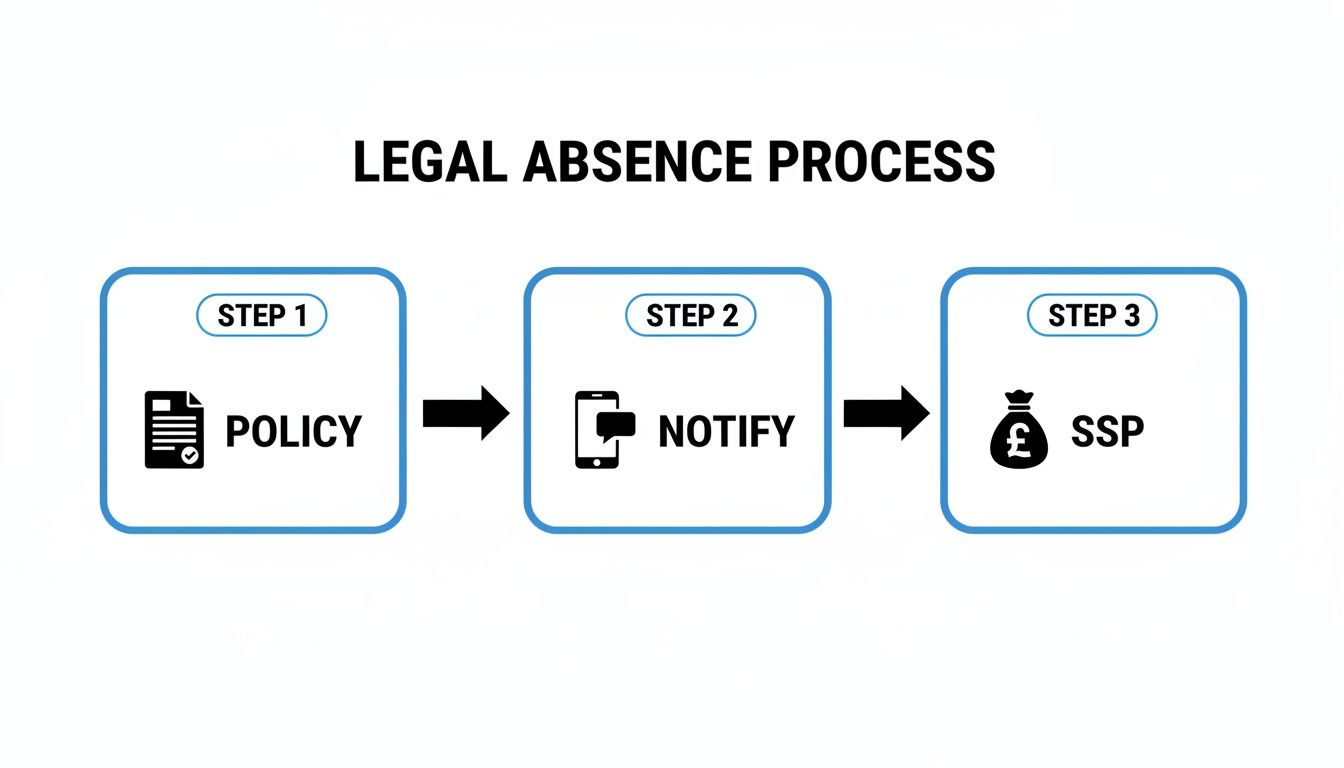
As you can see, a clear policy, a proper notification system, and correct handling of sick pay are the pillars of managing absence the right way.
Step 3: Conduct Supportive Return-to-Work Interviews
One of the most powerful—and often overlooked—tools in your playbook is the return-to-work interview. This is just a short, informal chat with an employee on their first day back after any sick leave.
This is not an interrogation. Its main purpose is to welcome the employee back, check they feel fit enough to be there, and catch them up on anything important they missed. It’s a simple gesture that shows you care about their wellbeing and value their contribution.
A return-to-work interview sends a powerful message: we notice and care when you are away. This simple act of engagement is proven to significantly reduce unnecessary short-term absences.
These conversations are also the perfect, formal opportunity to sort out any necessary paperwork, like a self-certification form for absences up to seven days or collecting a fit note for longer periods.
Step 4: Set Fair Trigger Points
Finally, your playbook needs a system for tackling problematic patterns of absence without coming down hard on people who are genuinely ill. This is where trigger points come in.
A trigger point system uses pre-agreed thresholds to flag when an employee's absence record might need a closer, more formal look. For instance, a trigger could be activated if an employee has three separate absences in a rolling three-month period, or if their total days off go over a certain number.
When a trigger is hit, it prompts a formal conversation to discuss the employee’s attendance. The aim is to understand if there are any underlying issues and to offer support. This approach means you’re managing persistent short-term absence proactively and—most importantly—consistently for everyone.
How to Spot and Address Absence Patterns
Frequent, unplanned absences are rarely just random events. More often, they are like smoke signals, pointing to a deeper issue that needs your attention. Simply managing each day off as it comes is a reactive strategy. To truly get ahead of the problem, you need to learn how to spot and interpret the patterns hiding in your absence data.
Looking beyond the surface of individual absences helps you shift from a day-to-day problem-solver to a proactive manager. It allows you to identify potential problems early, whether they relate to an individual employee's wellbeing or a wider issue within a team. This is all about connecting the dots to see the bigger picture.
Identifying Concerning Absence Trends
The first step is knowing what to look for. Raw data on its own is just a list of dates. The real value comes from organising this information to reveal trends. Modern reporting tools can do this automatically, but even with basic records, you can start to identify common red flags.
Some of the most telling patterns include:
- Friday and Monday Sickness: Frequent absences that consistently fall on either side of the weekend are a classic sign of disengagement or non-genuine sickness.
- Post-Holiday Absence: A pattern of calling in sick immediately after a public holiday or a period of annual leave can suggest similar issues.
- Team-Specific Spikes: If one particular team has a noticeably higher absence rate than others, it could point to management issues, excessive workload, or poor morale within that group.
- High Frequency, Short Duration: An employee who is rarely off for long but takes many single days off could be struggling. This pattern is often tracked using tools that calculate a Bradford Factor score to highlight the disruptive nature of frequent, short absences.
Recognising these trends doesn't automatically mean an employee is being dishonest. It's simply a trigger to look closer and start a supportive conversation.
Understanding the Root Causes
Once you’ve spotted a pattern, the next step is to think about the potential causes. These are often complex and can range from personal difficulties to workplace-related stress. Jumping to conclusions can damage trust, so it’s crucial to approach the situation with an open mind.
Recent data paints a clear picture of the challenges UK workplaces are facing. UK sickness absence rates hit a decade-high of 2.8% in 2023, which works out to an average of 7.8 lost days per employee each year. While minor illnesses drive short-term absences, the reasons for long-term issues are far more serious.
The most common drivers for long-term absence are mental ill-health, musculoskeletal problems, acute medical conditions, and stress. In fact, 79% of UK employers now view mental health as the primary culprit behind long-term sickness.
This really highlights that persistent absence is often a symptom of a significant underlying problem, one that needs a supportive and careful approach rather than a purely disciplinary one.
How to Address Absence Patterns with an Employee
Bringing up absence patterns with an employee can feel awkward, but it's an essential part of management. The key is to frame it as a supportive check-in, not an accusation.
Follow these steps for a constructive discussion:
- Prepare Your Facts: Before the meeting, have the specific dates and patterns ready. Be objective and stick to the recorded data.
- Choose a Private Setting: This is a sensitive conversation. Make sure you have a confidential space where the employee will feel comfortable speaking openly.
- Start with Concern: Begin by expressing concern for their wellbeing. You could say something like, "I've noticed you've been off work a few times recently, and I just wanted to check in and see if everything is okay."
- Present the Pattern Objectively: Share the data without judgement. For example, "I've noticed that four of your last five absences have been on a Friday. Is there anything making it difficult for you to come in at the end of the week?"
- Listen Actively: This is the most important step. Give the employee space to explain their situation. The root cause might be something you were completely unaware of, such as a health issue, caring responsibilities, or workplace stress.
- Collaborate on a Solution: Work together to find a way forward. This could involve offering support through an employee assistance programme, considering flexible working arrangements, or making reasonable adjustments to their role.
By addressing patterns in a supportive, non-confrontational way, you build trust and show your employees that you are there to help, not just to police their attendance.
It's Time to Ditch the Spreadsheets for Something Better
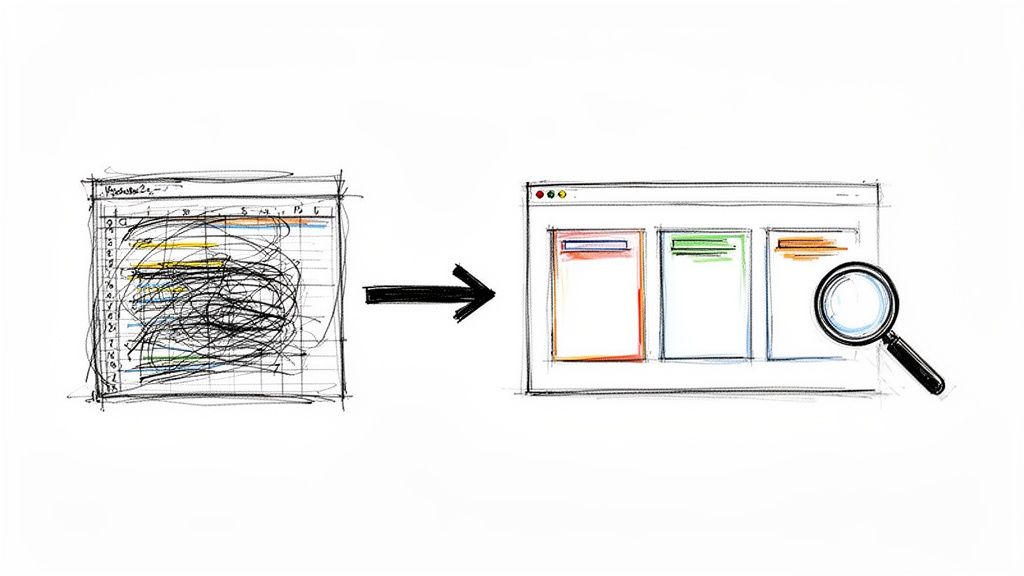
Let me guess. You're still wrestling with a mix of paper forms, endless email chains, and a colour-coded spreadsheet that only one person really understands, just to track who’s off work. It’s a familiar story, but this old-school approach is a huge drain on time and resources, creating administrative headaches you just don't need.
Think about the mess it creates. A manager’s notebook has one version of an employee’s sick days, the HR spreadsheet has another, and a forgotten email holds the official holiday request. Getting a clear picture of who is actually available is almost impossible, let alone spotting those worrying absence patterns before they become a real problem.
This isn’t just an inconvenience; it’s a massive cost to UK businesses. In 2024 alone, an eye-watering 149 million working days were lost to sickness. The data also shows a big gap between sectors: the private sector sat at a 1.8% absence rate, while the public sector was much higher at 2.9%. If you want to dive into the numbers, this breakdown of sickness absence trends paints a very clear picture.
The Power of Dedicated Absence Software
This is where proper absence management software completely changes the game. It swaps the manual chaos for a single, reliable source of truth for everything leave-related. Instead of drowning in admin, you get clarity and control back.
It’s a win for everyone in the company:
- For HR Teams: The admin burden just melts away. Compliance gets simpler with automated tracking, and pulling together accurate reports on absence trends becomes a task of minutes, not hours.
- For Managers: They get an instant, real-time view of their team’s availability. Approving or declining requests is simple, allowing them to plan workloads and arrange cover without any frustrating delays.
- For Employees: They get the power of self-service. Requesting time off, checking how much holiday they have left, and seeing the team calendar is a straightforward process they can manage from anywhere.
Moving away from manual methods isn’t just about buying software. It’s an investment in a more efficient, transparent, and organised culture for your entire workplace.
Key Features That Make a Real Difference
The magic of these systems is in the features designed to make life easier. A central dashboard gives you an at-a-glance overview of your whole team, instantly showing who's in, who's off, and who has leave coming up.
Meanwhile, automated reporting tools turn all that raw data into genuinely useful insights. They help you spot patterns and make smart decisions that support employee wellbeing and cut down on preventable absences. To get a better feel for what you should be looking for, have a look at our guide on modern absence management systems. Upgrading your tools is one of the most important steps you can take to build a more resilient and productive team.
Frequently Asked Questions About Absence Management
When you're managing a team, questions about employee absence are bound to pop up. It can feel like a bit of a minefield. Here are some quick, clear answers to the most common queries we see from managers, helping you handle these key situations with confidence.
What Is the Difference Between a Fit Note and Self Certification?
Think of these two documents as serving different needs depending on how long an employee is unwell.
Self-certification is essentially an employee’s own signed declaration that they were ill. It's a straightforward, internal record that covers them for absences lasting up to seven calendar days.
A fit note (or 'sick note') is a different beast altogether. This is an official medical statement from a healthcare professional, like a GP. You'll need one of these if an employee's absence stretches beyond seven consecutive days. The note will state whether they are 'not fit for work' or 'may be fit for work', often with helpful suggestions for adjustments, giving you a clear medical recommendation to work with.
Can I Dismiss an Employee for Sickness Absence?
This is a very sensitive area, and the short answer is: you have to tread extremely carefully. You can't just fire someone for being ill.
If you're dealing with persistent short-term absences, you must have followed a fair and well-documented disciplinary process first. This usually involves formal warnings and giving the employee a real chance to improve. For long-term sickness, the bar is even higher.
You have to show that you’ve explored every reasonable adjustment and alternative before even thinking about dismissal. Rushing this can easily lead to a successful claim for unfair dismissal or disability discrimination. When in doubt, always get professional legal advice.
What Should I Do When an Employee Is Absent Without Contact?
When an employee doesn't show up and doesn't get in touch, it's often called being 'AWOL' (Absent Without Leave). The first rule is to stick to your company's absence policy like glue.
Here are your immediate first steps:
- Try to Make Contact: Your first job is to try and reach the employee. Use every method you have – phone, text, email, and even their emergency contact if necessary.
- Document Everything: Keep a meticulous record of every single attempt you make to get in touch, noting the dates and times.
If the employee stays off the grid for a period defined in your policy (say, two or three days in a row), it can often be treated as gross misconduct. While this could eventually lead to dismissal, it's absolutely vital you follow your established procedure to the letter. This ensures the entire process is fair, defensible, and by the book.


