
When an employee doesn't show up for their scheduled shift, we call that an absence at work. It sounds simple, but managing it properly is a huge deal for any business. Even small, seemingly minor absences can throw a spanner in the works, hitting productivity, team morale, and the general stability of the company.
Think of your team like a high-performance engine; every single part needs to be there and working correctly to get the best output. When one part is missing, the whole machine starts to feel the strain.
Why Managing Absence at Work Is Critical for Business Health

Getting a handle on employee absence is much more than just a box-ticking HR task; it’s a core part of keeping your organisation healthy and resilient. When someone is off unexpectedly, the ripple effect goes far beyond their empty desk.
Projects can grind to a halt, deadlines get missed, and the rest of the team often has to pick up the slack. That extra workload can quickly lead to stress and burnout across the board.
And the disruption doesn't just stay internal. Your customers feel it too. When the person they rely on isn't available, it can cause delays and frustration, potentially costing you business. That’s why the first step is knowing the difference between planned time off, like holidays, and unplanned absences. This is the foundation of building a proactive management strategy.
The Rising Tide of Absence
Recent trends really drive home how big of an issue this has become for UK businesses. Sickness absence rates are climbing, which is a clear signal that employers need to pay much closer attention to what's happening with their people's wellbeing.
A 2023 survey from the CIPD and Simplyhealth painted a stark picture: the average number of sick days taken by UK employees shot up to 7.8 days per year. That's a huge jump from the pre-pandemic average of 5.8. A major culprit? Stress. Over 76% of organisations reported stress-related absences.
This data tells us that absence isn't just a logistical headache—it's often a symptom of deeper problems in the workplace. Minor illnesses and mental health struggles are common drivers for short-term absence, while more serious medical conditions and mental health issues are often behind long-term leave. If you want to dig deeper, you can explore the complete research on UK sickness absence rates to get the full story.
Taking a proactive approach to managing absence helps you tackle these root causes head-on. It's about creating a supportive environment where employee health is a priority, all while having clear, fair, and consistent procedures in place. This isn't just about staying compliant; it's about building a stronger, more productive organisation that's built to last.
Decoding the Different Types of Employee Absence
Not all absences are created equal, and figuring out the differences is the first real step towards managing them properly. It's helpful to think of employee absence less as a single event and more like a spectrum, stretching from a planned day off all the way to a long-term medical situation. Each type of absence at work needs its own distinct approach.
When you can recognise these categories, you can respond in the right way. That might mean offering support, reshuffling workloads for a day, or looking into a potential conduct issue. This clarity is key to preventing confusion and making sure you treat every situation fairly and consistently.
Planned Versus Unplanned Absence
The most basic split is between the absences you see coming and the ones that catch you by surprise.
-
Planned (Authorised) Absence: This is any time off that’s been requested and approved in advance. Think of things like annual leave, maternity or paternity leave, compassionate leave for a family emergency, or even time off for jury service. These are usually much easier to handle because you can plan ahead, arrange cover, and adjust schedules.
-
Unplanned (Unauthorised) Absence: This is when someone is away without any prior notice, and the most common reason is sudden illness. While it's often perfectly legitimate, this category can also include no-shows, which might become a disciplinary matter. These are far more disruptive because they leave an immediate, unexpected gap in your team.
This image really highlights how unplanned absences can throw a spanner in the works, increasing pressure on the whole team.
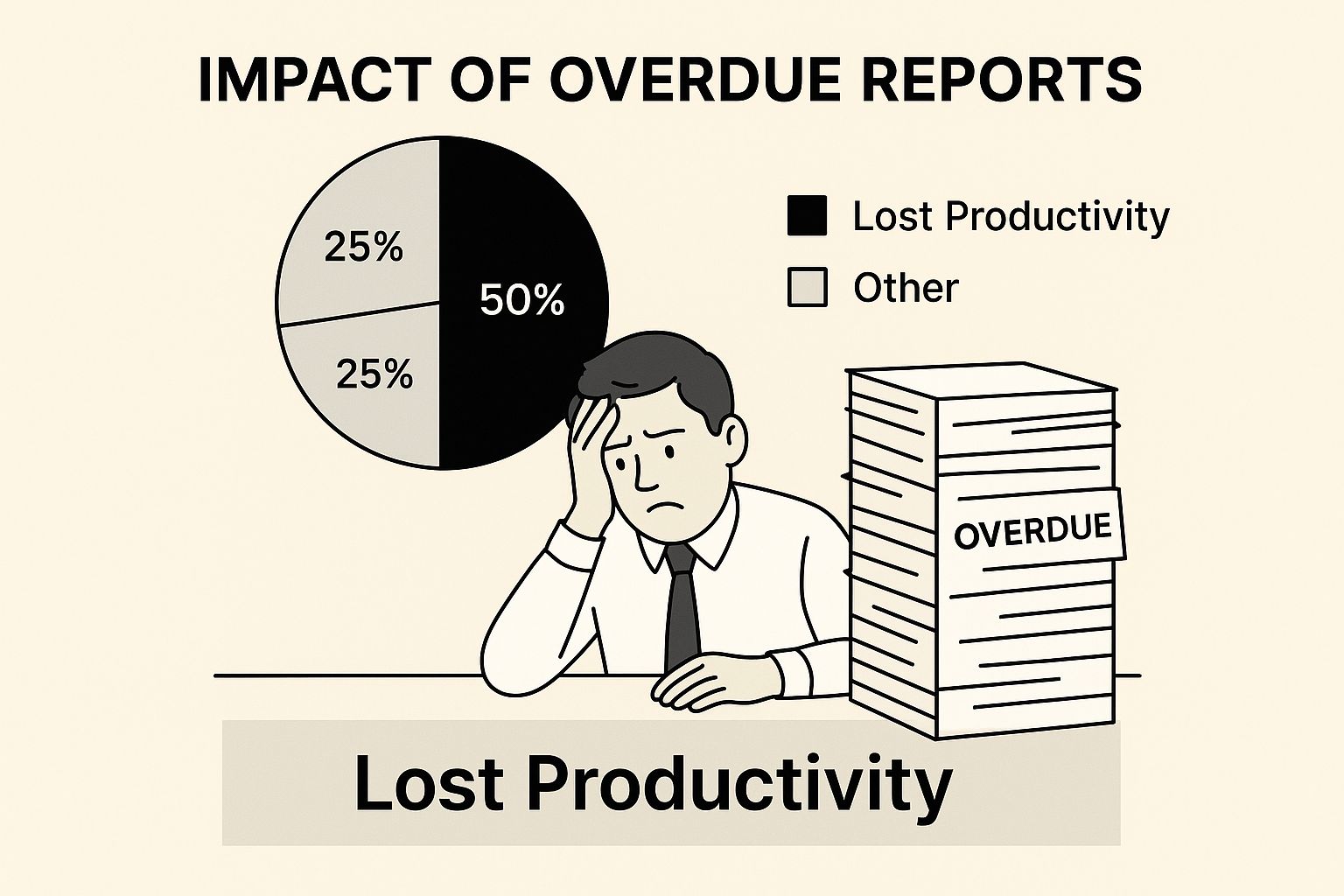
As you can see, the frustration of a mounting workload is a very real consequence when a team member is unexpectedly away. It disrupts the natural flow of work and can really unbalance the team.
Comparison of Employee Absence Types
To make this clearer, let's break down the main categories of absence you're likely to encounter. Seeing them side-by-side helps to show how the cause, duration, and your initial response are all connected.
| Type of Absence | Common Causes | Typical Duration | Initial Management Action |
|---|---|---|---|
| Planned Leave | Annual holidays, maternity/paternity, jury service, appointments. | Varies (hours to months). | Approve request, arrange cover, update schedules. |
| Short-Term Sickness | Minor illnesses (colds, flu), stress, migraines, minor injuries. | 1 day to 4 weeks. | Record absence, maintain contact, conduct return-to-work interview. |
| Long-Term Sickness | Serious illness, surgery recovery, musculoskeletal issues, mental health conditions. | Over 4 weeks. | Maintain supportive contact, occupational health referral, plan for return. |
| Unauthorised Absence | Failure to follow reporting procedures, AWOL (Absent Without Leave). | Varies. | Attempt to make contact, investigate reasons, follow disciplinary procedure. |
This table isn't exhaustive, of course, but it covers the main scenarios. The key is to have clear procedures for each one so that both managers and employees know exactly where they stand.
Short-Term Versus Long-Term Sickness
Beyond just planned or unplanned, sickness itself needs to be broken down by how long it lasts. The typical dividing line that HR professionals use is around the four-week mark.
Short-term sickness is what we see most often. It usually lasts for a few days up to a month and is typically caused by common, minor illnesses like colds, flu, or stress-related issues.
Back in 2023, UK employee absence rates actually hit a ten-year high. Minor illnesses were the biggest cause of these short-term absences, while long-term leave was most often down to mental ill-health and musculoskeletal injuries.
Long-term sickness, on the other hand, is any absence that goes on for more than four weeks. These situations are much more complex. They often involve serious health conditions, recovery from major surgery, or significant mental health challenges. Managing these requires a far more structured and supportive process, including regular, sensitive communication and looking at potential adjustments to the workplace.
Getting these distinctions right is more important than ever, especially with the trends we're seeing. A 2023 survey found an absence rate of 4.0%, which works out to an average of 7.8 days lost per employee per year. You can dig into all the statistics and trends on the official HSE website.
By correctly identifying the type of absence from the get-go, you can apply the right policy and provide the right kind of support. This sets a positive and constructive tone for the employee's eventual return to work.
Uncovering the Root Causes of Absenteeism

High absence rates don't just spring up out of nowhere. Think of absenteeism as the check engine light on your car's dashboard – it's not the problem itself, but a symptom of something bigger happening under the bonnet. If you just switch the light off without finding the cause, you're heading for a breakdown.
To get a real handle on absence at work, we need to dig deeper than the surface-level excuses. The real reasons are often a tangled mix of an individual's wellbeing and the overall health of your workplace culture.
Health and Wellbeing Challenges
Of course, the most straightforward cause of absence is health. This covers everything from physical sickness, like a nasty flu, to the growing challenge of mental health struggles. With the lines between work and home becoming increasingly blurred, it's no surprise that stress and burnout are on the rise.
Burnout is a massive factor here. Recent stats show that a staggering one in three UK adults felt high or extreme levels of stress frequently last year. That kind of pressure cooker environment is a direct route to employees needing time off just to cope.
When workloads spiral or the pressure to deliver never lets up, people hit a wall. Imagine a dedicated team member who consistently stays late to hit impossible deadlines. Eventually, they might call in sick for a week with exhaustion. The official reason is a migraine, but the true culprit is burnout.
Workplace Culture and Management
Beyond personal health, the work environment itself is a huge piece of the puzzle. A toxic or unsupportive culture can push people away and be a powerful driver of absenteeism. If employees feel unappreciated, disengaged, or are just badly managed, they're far more likely to find a reason to stay home.
Let's break down some of the key cultural factors:
- Poor Management: A manager who either micromanages every task or provides zero direction can create an incredibly stressful atmosphere for their team.
- Low Engagement: When people don't feel a connection to their work or the company's mission, their motivation plummets. It's much easier to call in sick when you don't care.
- Workload Imbalance: Piling work onto a few key people while others cruise by is a recipe for resentment and eventual burnout.
- Lack of Flexibility: A rigid, one-size-fits-all approach to work makes it tough for people to manage their lives, leading to more unplanned days off.
For instance, consider a junior employee struggling with stress. They're unlikely to open up to a manager they don't trust or feel supported by. In fact, the number of 18-24-year-olds who'd feel comfortable talking to a manager about stress has plummeted to just 56%.
This breakdown in trust means that instead of asking for help, they're more likely to just pull a "duvet day." This masks the real issue: a culture that lacks psychological safety. Tackling these deep-seated cultural problems is the only way to create a lasting reduction in absenteeism.
How to Measure and Track Absence Effectively
You can't manage what you don't measure. If you want to get a real grip on absence at work, you need to stop guessing and start tracking it with clear, consistent metrics. This isn't about creating a "gotcha" culture or penalising employees; it's about spotting trends, understanding the real-world impact on your business, and figuring out where support might be needed.
Think of your absence data as a diagnostic tool for your organisation’s health. Without it, you’re flying blind. You have no way of knowing if a particular department is struggling under the strain, or if that new wellness policy you introduced is actually having a positive effect. Proper tracking turns vague worries into concrete data you can actually do something with.
Key Metrics for Measuring Absence
So, where do you start? Thankfully, there are several straightforward ways to measure absenteeism. Let's walk through a few of the most common formulas and what they tell you.
| Key Metrics for Measuring Absence |
| :— | :— | :— |
| Metric | Formula | What It Tells You |
| Absence Rate % | (Total Days Lost ÷ Total Possible Working Days) x 100 | This is your go-to metric for a big-picture view. It shows the overall percentage of working time lost to absence in a given period. It's perfect for benchmarking against industry averages or your own past performance. |
| Bradford Factor | (Number of Instances)² x Total Days Absent | This one is clever. It highlights the frequency of absence, giving more weight to lots of short, unplanned absences, which are often far more disruptive than one single long-term absence. |
| Lost Time Rate | (Total Hours Lost ÷ Total Possible Working Hours) x 100 | Similar to the Absence Rate, but this drills down to the hour. It’s useful for tracking short-term absences like late arrivals or early departures, giving you a more granular view of lost productivity. |
| Frequency Rate | Total Number of Absence Instances ÷ Total Number of Employees | This metric gives you a simple average of how many separate absences occurred per employee. It helps you understand if absenteeism is a widespread issue or concentrated among a small group. |
The Absence Rate is the most fundamental of these. It gives you that crucial, high-level overview of time lost.
Let’s put it into practice. Say your team of 10 employees has 220 possible working days in a month, and they collectively take 5 days off sick. The calculation looks like this:
(5 Total Days Lost ÷ 220 Total Possible Working Days) x 100 = 2.27% Absence Rate
That 2.27% figure is gold. You can now compare it month-on-month, quarter-on-quarter, or against the national average to see how you're doing.
Identifying Disruptive Patterns with the Bradford Factor
While the Absence Rate shows you the volume of absence, the Bradford Factor is all about the frequency. This metric is specifically designed to flag the disruptive nature of frequent, short-term absences. Think about it: one person being off for two weeks straight is often easier to plan around than the same person being off for two days every other week with no notice.
The Bradford Factor helps you spot those potentially problematic patterns that a simple absence rate would miss.
It's a powerful tool, and you can learn all about its calculation and how to apply it by reading our complete guide on how to use the Bradford Factor score calculator. The key is to use it as a trigger for a supportive conversation, not a disciplinary one. It helps you talk to employees who might need help before small issues escalate.
Choosing Your Tracking Tools
How you actually go about tracking all this depends on your company's size and complexity. The options range from the very basic to the fully automated.
-
Spreadsheets: For very small teams, a well-organised spreadsheet can be a decent starting point. It’s low-cost and pretty easy to set up for basic tracking. Just be aware that it quickly becomes unwieldy as you grow.
-
HR Software: Once you have more than a handful of employees, dedicated HR software becomes a lifesaver. These systems automate all the calculations, manage leave requests, and generate detailed reports in seconds, freeing up huge amounts of admin time.
Ultimately, the goal is to use data to make informed, proactive decisions. For context, historical figures show that sickness absence has generally averaged around 4 to 5 days lost per worker in the UK over the past two decades. Knowing this provides a useful benchmark to see how your own organisation compares.
You can dive deeper into these numbers by checking out the UK sickness absence trends on the ONS website. By measuring absence effectively, you’re taking the first step towards building a more resilient, supportive, and productive workplace.
Creating a Fair and Effective Absence Management Policy
A clear, consistent absence management policy is the absolute backbone of handling absence at work. Think of it as the rulebook for your organisation; without one, you're just improvising. That improvisation can quickly lead to confusion, unfair treatment, and even legal hot water. A solid policy sets clear expectations for everyone, from senior leadership right through to your newest starters.
But this isn't about being strict for the sake of it. It’s about creating a framework that is both supportive of genuine employee needs and protective of your business operations. When everyone knows the score—how to report an absence, what's needed, what happens on their return—it cuts out the guesswork and builds trust.
Core Components of Your Policy
For a policy to actually work, it needs to be comprehensive and communicated clearly. It should be a practical guide for both employees and their line managers. When you're building or refining your policy, make sure it nails these key areas.
- Reporting Procedures: Be specific. Who should an employee contact? How should they do it (e.g., a phone call, not a text message)? And by what time on the first day of absence?
- Certification Requirements: Detail when a self-certification form is enough and at what point a doctor's fit note is required. In the UK, this is typically after seven calendar days.
- Return-to-Work Interviews: Make these a standard, mandatory step. They're a crucial, supportive tool to welcome an employee back, check on their wellbeing, and talk about any support they might need.
- Disciplinary Triggers: Clearly outline the points at which absence levels might trigger a more formal review process. This ensures your approach is fair and consistent for every single person.
A well-structured policy does more than just manage logistics; it demonstrates a company's commitment to fairness and employee wellbeing. It should balance operational needs with genuine compassion, creating an environment where employees feel supported rather than scrutinised when they are unwell.
Ensuring Fairness and Legal Compliance
Your policy has to be applied fairly to every single person in the organisation. No exceptions. Inconsistency is one of the fastest ways to destroy morale and leave your business wide open to claims of discrimination. When creating a comprehensive absence management policy, it's essential to consider the underlying principles of Contract Formation Business Law to ensure legal compliance and enforceability.
Make a point to regularly review and update the document to reflect any changes in UK employment law. Crucially, make sure your managers receive proper training on how to implement it correctly and with empathy. For a detailed walkthrough, you can learn how to create your perfect absence policy template with our practical guide.
At the end of the day, a great policy is one that is understood, respected, and followed by everyone, every time.
Proactive Strategies for a Healthier Workplace
The best way to manage absence at work? Stop it from happening in the first place.
Honestly, shifting your focus from reacting to absences to proactively building a healthier, more supportive workplace is the most effective long-term strategy you can have. This isn't about damage control; it's about addressing the root causes of absenteeism and creating a culture where people feel valued, supported, and genuinely engaged.
Investing in prevention isn’t just a nice-to-have that might reduce sick days. It’s a direct investment in productivity, morale, and retention. When people feel their wellbeing is a real priority—not just a buzzword—they’re naturally more present and focused. This all starts with creating an environment where health, both mental and physical, is something you can talk about openly and see supported by leadership.
Fostering a Culture of Wellbeing
A positive workplace culture is your first line of defence against absence. A great starting point is training your managers to spot the early warning signs of stress and burnout. With burnout being such a huge driver of absence these days, giving your leaders the skills to actually support their teams is non-negotiable.
You don't need a massive budget to make a real difference. Simple but powerful initiatives can have a huge impact:
- Wellness Programmes: This could be anything from gym memberships to mindfulness apps. The goal is to offer resources that support both physical and mental health.
- Flexible Working: Allowing adaptable start times or hybrid options can be a game-changer. It helps people manage that tricky work-life balance, which directly cuts down on stress.
- Manager Training: Teach managers how to have supportive, human conversations about wellbeing and workload. It’s a skill that pays dividends.
Creating a truly healthy workplace involves more than just wellness perks. To build a truly healthy workplace and minimize absence, a foundational step is understanding occupational hygiene, which focuses on controlling environmental stressors that could lead to illness.
Empowering Employees Through Support
At the end of the day, a proactive approach empowers your team to take ownership of their health.
When you encourage open conversations, you start to remove the stigma around mental health. This makes it so much easier for someone to ask for help before they hit a crisis point. A culture of trust, where an employee feels safe enough to discuss challenges with their line manager, is simply invaluable.
Putting these proactive measures in place creates a positive feedback loop. A healthier, more engaged workforce naturally leads to lower absence rates. For more ideas on this, check out our detailed guide on effective employee wellbeing strategies to help you build a thriving and resilient team.
Common Questions About Absence at Work
Digging into the world of employee absence can feel like navigating a maze. It throws up all sorts of tricky questions for managers and HR teams. Getting your head around the common issues is the first step to handling every situation fairly, consistently, and without falling foul of the law.
Think of this section as your straightforward guide to the most frequent queries about managing absence at work here in the UK. From decoding specific metrics to tackling sensitive long-term leave, a solid grasp of the basics is your best tool for building a supportive, yet robust, approach.
What Is the Bradford Factor and Should We Use It?
You’ve probably heard of the Bradford Factor. It’s a simple formula people use to flag potentially disruptive absence patterns. What it does is give a heavier weighting to frequent, short-term absences over a single, longer period of sick leave.
The formula looks like this: (S x S) x D = Bradford Factor Score
- S stands for the number of separate times someone has been off (spells of absence).
- D is the total number of days they were absent over a set period, usually a year.
Now, while it can be handy for spotting patterns that might otherwise fly under the radar, you have to use it with a huge dose of caution. The score tells you nothing about the why. It doesn't see the context behind an absence, which means it can unfairly penalise employees with disabilities or chronic health conditions—people protected under UK law.
The Bradford Factor should never be the only reason you take disciplinary action. It’s best used as an early warning signal. Think of it as a trigger for a supportive conversation to understand what’s really going on, not as a blunt instrument for punishment.
Can We Dismiss an Employee for Being Off Sick?
Yes, in the UK it is legally possible to dismiss an employee because of sickness absence. But—and this is a big but—the process is incredibly complex and must be handled with the utmost care. Any dismissal has to be fair, and it should always, always be the absolute last resort.
For persistent short-term absences, you'd need to have followed a fair and thorough disciplinary procedure, complete with verbal and written warnings. When it comes to long-term sickness, a capability dismissal might be an option, but only if the employee is genuinely unable to return to their role in the foreseeable future and there are no reasonable adjustments you can make to help them come back.
In every single case, you must act reasonably. That means gathering all the relevant medical evidence (with the employee's consent), exploring every possible alternative, and documenting every single step meticulously. Skip a step, and you could find yourself facing a successful claim for unfair dismissal.


