
Work stress leave isn’t a separate legal category in the UK, but it’s an absolutely valid—and crucial—reason to take sick leave. When your job starts taking a toll on your mental health, you need time to recover. Think of it as hitting the pause button to deal with chronic workplace pressure before it spirals into full-blown burnout. Recognising you need this time is a powerful, proactive step toward looking after your long-term wellbeing.
Understanding Work Stress Leave and Why It Matters
Imagine your mental resilience is like a car battery. Your daily tasks drain it a bit, but a good night's sleep usually tops it right back up. But what happens with chronic work stress? The constant pressure, the unrealistic deadlines, the toxic environment—that's like leaving your headlights on all night. It drains the battery completely, leaving you unable to function. Work stress leave is the equivalent of putting that battery on a proper charger to get it back to full strength, instead of just trying to jump-start it every single morning.
This isn’t about dodging your responsibilities; it’s about preventing a much bigger breakdown down the line. Pushing through exhaustion and anxiety is a band-aid solution with serious long-term consequences. Ignoring those warning signs often leads to burnout, a state of emotional, physical, and mental exhaustion that can take months, sometimes even years, to recover from.
The True Cost of Ignoring Workplace Stress
So many employees feel they just have to keep going, even when they’re completely overwhelmed. This is often called 'presenteeism', and it doesn’t just harm the individual. It hits the business hard through tanking productivity and engagement. The silence that often surrounds mental health at work makes people feel they can't possibly ask for the time off they desperately need.
Here in the UK, workplace stress is one of the biggest reasons for employee absence. A recent report from Mental Health UK revealed that 21% of workers felt high pressure was affecting their performance but didn't take any time off. While 8% took short-term sick leave for stress, a further 8% took either long-term or unpaid leave, pointing to far more serious situations. This shows a worrying trend of people pushing through until they can’t anymore, which only increases the risk of burnout. You can dive into the full findings in the Mental Health UK Burnout Report.
Taking work stress leave is not a sign of weakness; it is an act of self-preservation. It is recognising that your mental and physical health are prerequisites for professional success and personal happiness.
Reframing Stress Leave as a Strategic Recovery
When you start to see time off for stress as a strategic tool for recovery, the whole conversation changes. It helps both the employee and the employer by tackling problems before they get out of hand. For an employee, this period is a chance for:
- Mental Decompression: Stepping away from the source of the stress to properly rest and get some perspective back.
- Professional Support: Getting help from a GP, therapist, or counsellor to build coping strategies.
- Personal Re-evaluation: Taking a look at work-life balance and figuring out what the specific triggers are.
For a manager or employer, actively supporting an employee's need for stress leave helps build a culture of trust and psychological safety. It shows a real commitment to wellbeing, which is directly tied to better staff retention, higher morale, and consistent productivity. At the end of the day, a healthy workforce is the bedrock of any resilient and successful organisation.
Recognising the Signs You Might Need Stress Leave
Knowing when normal work pressure tips over into something more damaging can be tricky. It's a bit like a slowly rising tide – at first, you barely notice the change, but before you know it, you're in deep water. Spotting the signs is the absolute first step toward getting back on solid ground and thinking about a stress leave.
It's rare for these symptoms to show up one by one. They usually create a domino effect. Poor sleep leads to irritability, which messes with your focus at work, and suddenly you're stuck in a vicious cycle. The trick is to see these signs not as personal failings, but as interconnected signals that your mind and body have had enough.
This infographic really captures that feeling of being completely overwhelmed at work, which is often the final straw.
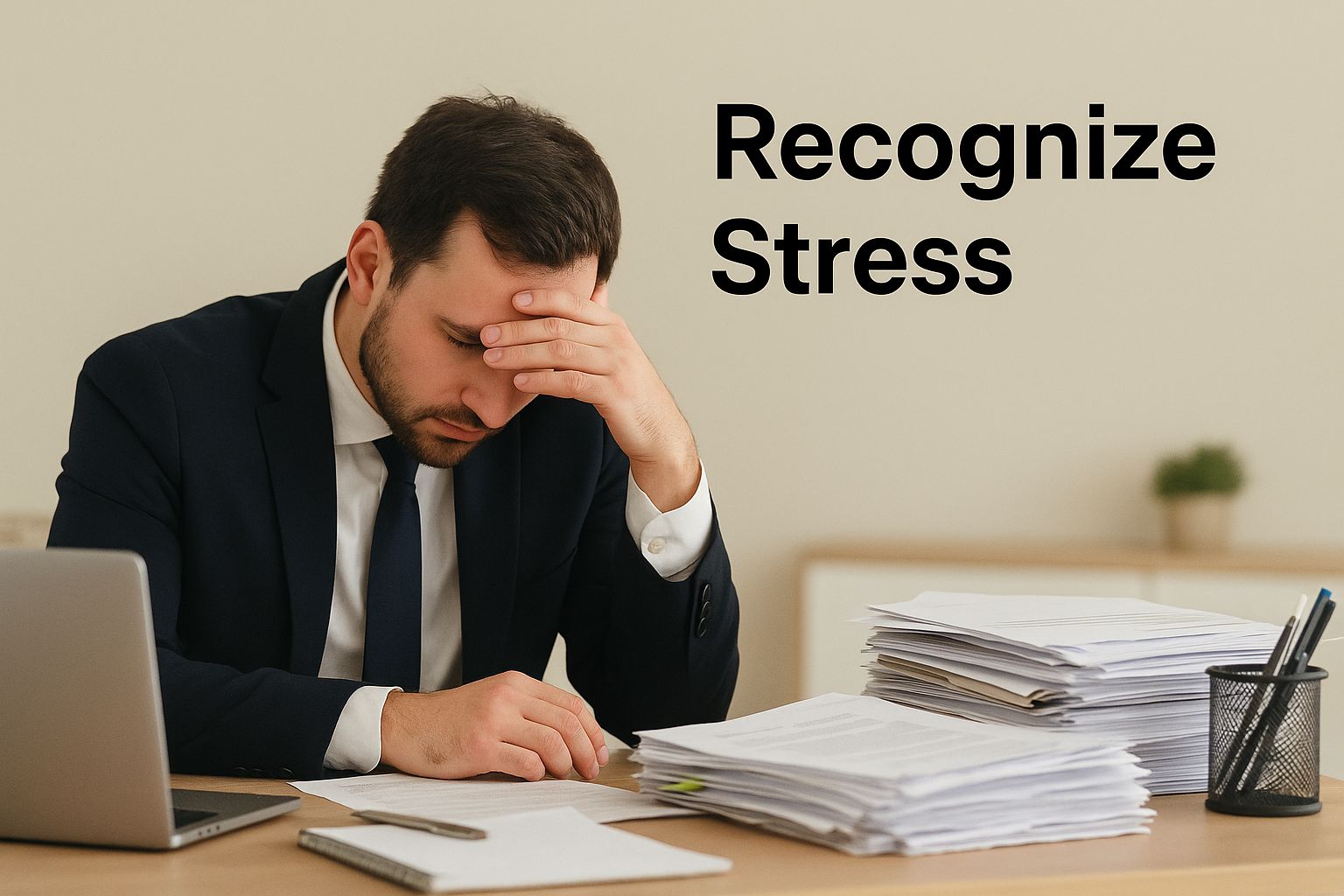
The image of someone slumped over their desk says it all. It’s a powerful visual reminder that just "pushing through" isn't the answer. Sometimes, the most productive thing you can do for your long-term health is to step away.
The Emotional Warning Signs
Your emotions are often the first casualty when chronic stress takes hold. You might feel a shift in your mood that you just can't shake, going from your usual self to someone who feels constantly on edge or down.
These changes can start small but tend to grow over time. Keep an eye out if you're experiencing:
- Persistent Irritability or Anger: Do you find yourself snapping at colleagues or family over small things that wouldn’t normally faze you?
- Feelings of Dread: That sinking feeling on a Sunday evening or just the thought of the workday ahead. It’s a classic sign.
- Loss of Motivation: Are you struggling to find any enthusiasm for tasks you once enjoyed? Feeling completely disengaged is a major red flag.
- Increased Anxiety: A constant state of worry or nervousness that feels completely out of proportion to what's actually happening.
Physical Symptoms You Cannot Ignore
Stress isn't just in your head; it’s a full-body experience that can seriously impact your physical health. Your body keeps the score, and it will send up flares when it's under too much pressure. Ignoring them can lead to much bigger problems down the line.
Think of these signs as your body's built-in alarm system. They're urgent notifications telling you that the system is overloaded. Common physical indicators include:
- Chronic Fatigue: Feeling bone-tired even after a full night's sleep, like your energy reserves are completely empty.
- Frequent Headaches: A noticeable uptick in tension headaches or migraines, especially during or after a long day at work.
- Digestive Issues: Suddenly dealing with stomach cramps, acid reflux, or other gut problems without any clear medical reason.
- Muscle Tension: That constant ache in your neck, shoulders, and back from being tensed up all the time.
"Your wellbeing is a non-negotiable asset. Recognising that you are struggling is not a weakness; it is the first step towards reclaiming your health and finding a sustainable way to work and live."
Behavioural Changes That Signal a Problem
Often, the clearest proof of overwhelming stress is in our actions. These shifts in behaviour can hurt your performance at work and strain your relationships at home.
Have you noticed your daily routines changing, or the way you interact with others? These could be huge red flags. If you're spotting these severe symptoms, looking into strategies for overcoming chronic stress, fatigue, and depression can provide some crucial insights for recovery.
Ask yourself if any of these have become your new normal:
- Social Withdrawal: Are you actively avoiding colleagues, cancelling plans with friends, and pulling away from your support system?
- Decreased Productivity: Finding it impossible to concentrate, making silly mistakes, or missing deadlines even though you're working longer hours. This is "presenteeism," and it's a hallmark of burnout.
- Changes in Eating or Sleeping Habits: Maybe you're overeating for comfort, or you've lost your appetite completely. Insomnia or sleeping excessively to escape are also common.
- Increased Reliance on Unhealthy Coping Mechanisms: Are you turning to that extra glass of wine, more caffeine, or other stimulants just to get through the day or switch off at night?
Noticing these patterns can feel unsettling, but it's also empowering. This is the data you need to make an informed decision about your health. Below is a quick summary table to help you spot these signs in a work context.
Key Symptoms of Work-Related Stress and Burnout
This table breaks down the common indicators of stress and burnout to help you identify what you might be experiencing in your day-to-day work life.
| Symptom Category | Common Signs and Indicators | Example in a Work Context |
|---|---|---|
| Emotional | Feeling cynical, detached, irritable, anxious, or overwhelmed. | Snapping at a team member over a minor issue or feeling a sense of dread before meetings. |
| Physical | Chronic fatigue, headaches, muscle pain, digestive issues. | Constantly feeling exhausted despite sleeping, or getting tension headaches by mid-afternoon. |
| Behavioural | Procrastination, social withdrawal, poor performance, absenteeism. | Avoiding collaborative projects, missing deadlines, or calling in sick more frequently. |
Recognising these symptoms in yourself is the most important step. It's the moment you stop just coping and start taking proactive steps to protect your wellbeing.
Understanding Your Legal Rights for Stress Leave
Trying to figure out your legal rights when you're completely overwhelmed can feel like navigating a maze blindfolded. The first thing to know is that while "work stress leave" isn't a specific legal category in the UK, your right to take time off for stress is absolutely protected under standard sick leave rules.
Think of it like this: your employer's sick leave policy is a big umbrella. It doesn't matter if you need cover from the rain because of a physical illness like the flu, or a mental health condition like severe stress or anxiety—you’re still protected. You have the right to take that time off to get back on your feet.
Your Entitlement to Sick Pay
When you do take time off for stress, one of the first worries is usually about money. In the UK, your pay is covered by a two-tier system, and getting your head around both is key for your peace of mind.
The first level is Statutory Sick Pay (SSP). This is the legal minimum your employer has to pay you, provided you're eligible. To qualify, you generally need to be classed as an employee, have been off sick for four or more days in a row (including weekends), and earn over a certain amount.
On top of that, many companies offer a more generous scheme, often called company or contractual sick pay. The details for this will be in your employment contract, and it usually provides your full or partial salary for a set number of weeks or months. This is always your first port of call, as it offers much better financial security than the statutory minimum.
The Role of a Doctor's Fit Note
For short-term absences—typically anything up to seven calendar days—you can usually "self-certify." This just means you follow your company’s process for reporting sickness, and you won’t need a note from your doctor.
However, if you're off for longer than seven days, you'll need to give your employer a fit note (which you might remember as a sick note) from your GP or another healthcare professional. This note will state whether you are "not fit for work" or "may be fit for work" with certain changes. It’s the official confirmation that your absence is medically justified, which is crucial for getting both SSP and any company sick pay.
A fit note is more than just a piece of paper; it’s a medical professional's validation of your need for recovery. It provides a clear, official basis for your work stress leave and opens the door to discussions about a supported return to work.
Protections Under the Equality Act 2010
This is where your rights get even stronger. If work-related stress escalates into a long-term mental health condition, such as depression or severe anxiety, it may be considered a disability under the Equality Act 2010.
For a condition to qualify, it must have a 'substantial' and 'long-term' negative effect on your ability to do normal daily activities. 'Long-term' typically means it has lasted, or is expected to last, for at least 12 months. This legal protection is a really big deal. For a deeper dive into sick leave policies, you can explore our complete guide on sick leave in the UK.
If your condition fits this definition, your employer has a legal duty to make reasonable adjustments to support you. It could be seen as unlawful discrimination if an employer dismisses someone for a disability-related absence without looking into these adjustments first. When work stress manifests as mental health conditions like depression, it's vital to understand whether depression is legally considered a disability in Ontario, as this impacts your rights to leave and benefits.
So, what do "reasonable adjustments" look like in practice? Here are a few examples:
- A Phased Return: Easing back into your role by gradually increasing your hours and responsibilities over a few weeks.
- Modified Duties: Temporarily taking tasks that are major sources of stress off your plate.
- Flexible Working: Adjusting your start and finish times to avoid a stressful commute or to fit in appointments.
- A Change of Workspace: Moving to a quieter part of the office if noise is a trigger.
Knowing these rights gives you the confidence to take the steps you need for your health, safe in the knowledge that the law is on your side.
How to Talk to Your Manager About Taking Leave
The thought of telling your manager you need time off for stress can feel like the biggest hurdle of all. It’s a conversation that’s often loaded with worries—about being judged, about it affecting your career, or simply not being taken seriously. But if you go in with a clear plan, you can turn a source of anxiety into a constructive, professional chat.
Think of this conversation less like a personal confession and more like a project update. You're not there to detail every single feeling. Instead, you're professionally reporting on a key factor—your health—that's impacting your ability to do your job well. Framing it this way helps keep everything focused and solution-oriented.
This conversation seems to be particularly tough for younger workers. Research has flagged a significant generational divide, with a staggering 35% of UK employees aged 18-24 needing time off for poor mental health caused by stress. That same group also reported feeling less able to speak openly with their managers, pointing to a communication gap that really needs closing. You can see more on this in the insights from The Burnout Report.
Preparing for the Conversation
Walking into this meeting cold is a recipe for a much harder time. Just taking a moment to gather your thoughts and decide what you want to achieve gives you a solid foundation and a real confidence boost. Preparation is about finding clarity, not picking a fight.
Your goal is to get your needs across while keeping the tone professional and collaborative. Here’s how you can get ready:
- Schedule a Private Meeting: Don't try to squeeze this in at the end of another meeting or in a busy hallway. Book a specific, private time slot with your manager.
- Outline Your Key Points: You don’t need a full script, but jotting down a few bullet points will keep you on track if you get nervous. Focus on the what, not the deep-dive why.
- Consult Your Doctor: If you've already seen your GP, have their advice clear in your mind. Knowing a medical professional backs your need for leave adds real weight to your request.
What to Say and How to Say It
When the meeting kicks off, the trick is to be direct, professional, and to the point. You don’t owe your employer a full rundown of your personal life or a detailed medical history. The focus should stay squarely on the impact on your work and the need for a solution.
Start by clearly stating why you're there. Something like, "Thanks for meeting with me. I need to discuss a health matter that's affecting my work and talk about taking some time off to address it," sets a professional tone right away.
"I've been advised by my doctor to take some time off to recover. I want to work with you to ensure a smooth handover of my responsibilities before my leave begins."
This approach immediately frames you as a responsible team player who is thinking about the business, not just yourself. It shifts the dynamic from a problem (you being away) to a collaborative solution (a plan for your absence).
Here’s a simple structure you could follow:
- State the Situation: Clearly say you need to take sick leave for health reasons.
- Explain the Impact (Briefly): Mention how it's affected your work. For example, "Recently, my ability to focus and meet deadlines has been impacted."
- Propose the Solution: State that you need to take a period of leave, as your GP has advised, to recover.
- Discuss Logistics: Talk about a potential start date, the expected duration (if you know it), and how you can help prepare for a handover.
After the Conversation
Once you've had the initial chat, the next step is usually to make it official. This typically means following your company's formal procedure for requesting sick leave.
This might involve submitting a formal letter or email. Having a clear, written record is just good practice for both you and your employer. For a helping hand on structuring this, our article on how to write a leave letter offers practical templates and tips to make it all straightforward. Following up in writing ensures there are no crossed wires and that your request is officially logged—a crucial part of taking your work stress leave.
How Employers Can Create a Supportive Policy

Moving from a reactive stance on employee health to a proactive, supportive one is one of the most powerful changes any organisation can make. A well-thought-out work stress leave policy isn't about ticking a legal box. Think of it as a core part of building a psychologically safe workplace. It sends a clear message to your team that their wellbeing matters, building trust long before burnout ever becomes a risk.
This means creating clear, compassionate procedures that take the mystery out of asking for help. It’s about more than just managing absence; it’s about creating an environment where people feel safe enough to be honest about how they're doing. This isn’t just good ethics—it's smart business.
The Business Case for a Proactive Approach
Ignoring the root causes of workplace stress comes with a hefty price tag. In the UK, poor mental health is the number one reason for workplace absence, leading to 16.4 million lost working days every year. The financial hit is staggering, costing UK employers an estimated £56 billion annually—a figure that’s shot up by 25% since 2019.
These costs come from absenteeism (£6 billion), staff turnover (£22 billion), and the often-unseen drain of presenteeism (£28 billion), where employees are physically at work but too unwell to be productive. You can dig into more data on the cost of poor workplace mental health.
A supportive policy tackles these problems head-on. By creating a clear path for employees to take necessary work stress leave, you reduce the chances of long-term absence and stop presenteeism from hurting productivity. It becomes a strategic investment in your most valuable asset: your people.
Core Components of an Effective Policy
A solid policy offers clarity and reassurance right when employees need it most. It should be easy to find and written in simple, straightforward language, without the corporate jargon that just adds to the confusion.
The best policies are built on a few key pillars:
- Absolute Confidentiality: You must assure employees that any conversations or records about their health will be handled with total discretion. This is the bedrock of building the trust they need to come forward.
- Clear Reporting Procedures: Outline the exact steps an employee needs to take. Who do they talk to? What forms are needed, and by when? No guesswork.
- Defined Support Systems: Make it clear what resources are available. Do you have an Employee Assistance Programme (EAP), mental health first aiders, or other company-backed wellbeing schemes? List them out.
By defining these elements, you remove the anxiety and ambiguity from the process. If you need a hand with the fundamentals, our guide on creating a comprehensive policy on sickness absence is a great place to start.
Training Managers to Be the First Line of Support
A policy is only as good as the managers who bring it to life. They are the guardians of your company culture and usually the first person an employee will turn to when they're struggling.
Managers who are equipped with empathy and practical knowledge can transform a difficult conversation into a supportive and constructive experience. Their response sets the tone for the employee's entire journey toward recovery.
Training should be focused on building three key skills:
- Recognising the Signs: Teach managers how to spot the early warning signs of stress and burnout in their team. This could be changes in behaviour, a dip in performance, or increased irritability.
- Initiating Sensitive Conversations: Give them the tools and language to check in with employees in a way that feels supportive, not intrusive. A simple "How are you doing?" can go a long way.
- Navigating the Policy: Make sure they know the company’s procedures for work stress leave, reasonable adjustments, and return-to-work plans inside out.
When managers feel confident handling these situations, they become powerful advocates for employee wellbeing. This fosters a culture where asking for help is seen as a sign of strength, which leads directly to lower absenteeism, higher retention, and a more resilient, productive team. A great policy, backed by well-trained leaders, is the foundation of a thriving organisation.
Common Questions About Work Stress Leave
When you're dealing with stress, the last thing you need is more uncertainty. Questions about your rights, what you should say, and what happens next can feel overwhelming. So, let’s clear the air.
Think of this as your no-nonsense guide to the most pressing questions about taking time off for stress. We’ll tackle the tough topics head-on, giving you the clarity and confidence to focus on what really matters: getting better.
Can I Be Dismissed for Taking Time Off for Stress?
This is usually the biggest worry, but let's be clear: no. In the UK, it is unlawful for an employer to sack you just for taking legitimate time off sick, and that absolutely includes leave for stress. Your job is protected while you're on approved sick leave.
Things get even more serious if your stress leads to a longer-term condition like depression or an anxiety disorder. In that case, you could be protected under the Equality Act 2010. If your condition is considered a disability, your employer has a legal duty to make reasonable adjustments and can't discriminate against you. Any dismissal related to a long-term absence would have to follow a very fair and thorough process, which means exploring all possible support options first. Sacking someone without doing that could easily be deemed unfair dismissal.
Do I Have to Tell My Employer the Reason Is Stress?
You are not legally required to share the nitty-gritty details of your illness with your employer. Your privacy is protected. All you technically need to do is follow your company’s usual sickness reporting procedure, simply stating that you’re unwell and can't work.
However, being open about it can sometimes work in your favour. If you have a good relationship with your manager, letting them know the issue is stress-related can help them understand what’s going on. This kind of honesty can open the door to getting the right support and making your eventual return to work much smoother. Your doctor's fit note might also use a general term like 'work-related stress', which gives your absence medical backing without you having to reveal personal details.
"You are in control of how much information you share about your health. The legal requirement is to report your absence as per policy; the decision to share more is a personal one, often based on the level of trust and psychological safety in your workplace."
What Are Reasonable Adjustments My Employer Can Make?
"Reasonable adjustments" are simply practical changes an employer must consider making to help an employee with a disability (which, remember, can include long-term mental health conditions) get back to work and stay there. The whole point is to remove or at least reduce any disadvantages you face because of your condition.
When it comes to stress, these adjustments are often surprisingly simple but can make a huge difference. It’s not about lowering standards, but about creating a work environment where you can recover and thrive.
Common examples include:
- A Phased Return to Work: Instead of jumping back in at the deep end, you can gradually build up your hours and duties over a few weeks.
- Modified Duties: Temporarily shifting tasks that are major stress triggers to colleagues, letting you focus on other responsibilities.
- Flexible Working Hours: Adjusting your start and finish times to miss the stressful rush-hour commute or to fit in appointments.
- Changes to Your Workload: Working with your manager to make sure your plate isn’t overflowing and that your tasks are realistic as you recover.
How Can I Prepare for My Return to Work?
A good return from work stress leave doesn’t just happen on your first day back. It’s a planned, collaborative process that should start before you even step back into the workplace. It's about easing back in, not being thrown in.
The first step is a conversation with your manager to map out a return-to-work plan. This is your chance to talk about what you need to feel supported. The plan should ideally cover a phased return, regular but informal catch-ups, and any of the reasonable adjustments you’ve agreed on. It’s also a great opportunity to look at what caused the stress in the first place and figure out how to stop it from happening again, setting you up for a healthier, more sustainable future at the company.


