
Understanding Return to Work Meetings in Modern UK Workplaces
Return to work meetings are vital for helping employees successfully reintegrate after a period of absence, whether it's a short-term sick leave or an extended time away. These structured conversations provide an opportunity to discuss employee well-being, any required adjustments, and ensure a smooth transition back into the daily routine. A well-planned return to work meeting can significantly improve both employee morale and productivity.
Why Return to Work Meetings Matter in the UK
Return to work meetings are increasingly important in today's UK workplace. The post-pandemic shift in work culture has greatly influenced this change. Different sectors are adopting varied approaches to work location. For instance, the finance sector is largely encouraging a full return to the office, while tech companies are frequently embracing hybrid models.
70% of UK companies have now implemented return to office (RTO) policies, and 93% of business leaders see value in some in-office time. However, employee responses are mixed. While 44% accept full-time office mandates, 41% are considering other employment options. This difference in perspectives highlights the need for individualized support and clear communication during the return-to-work process. Find more detailed statistics here.
Return to work meetings also offer a valuable platform to address any concerns or challenges that may have emerged during an employee's absence. These might include changes in team structure or necessary adjustments for health reasons. This proactive approach helps create a supportive work environment and minimizes potential disruptions. Understanding your workplace rights is also crucial. For example, this article about Bereavement Policy Limitations provides helpful information.
Moving Beyond the Tick-Box Exercise
Too often, organizations treat return to work meetings as a mere formality—a tick-box exercise. However, when conducted thoughtfully, these meetings become invaluable opportunities. They can strengthen workplace relationships, build trust, and ensure long-term employee engagement. This means shifting the focus from simply reviewing company policies to genuinely understanding each employee's individual needs and circumstances. How to master return to work interviews offers valuable guidance on this topic.
This shift requires moving away from standardized questionnaires toward more open and empathetic discussions. Asking open-ended questions about an employee's experience during their absence, for example, can provide important insights into their well-being and any potential challenges they might face upon their return. This information can then be used to create more effective support strategies and foster a more positive transition back to work. Ultimately, this focus on individual needs can have a significant positive impact on employee morale and long-term retention.
Planning Return to Work Meetings That Actually Work
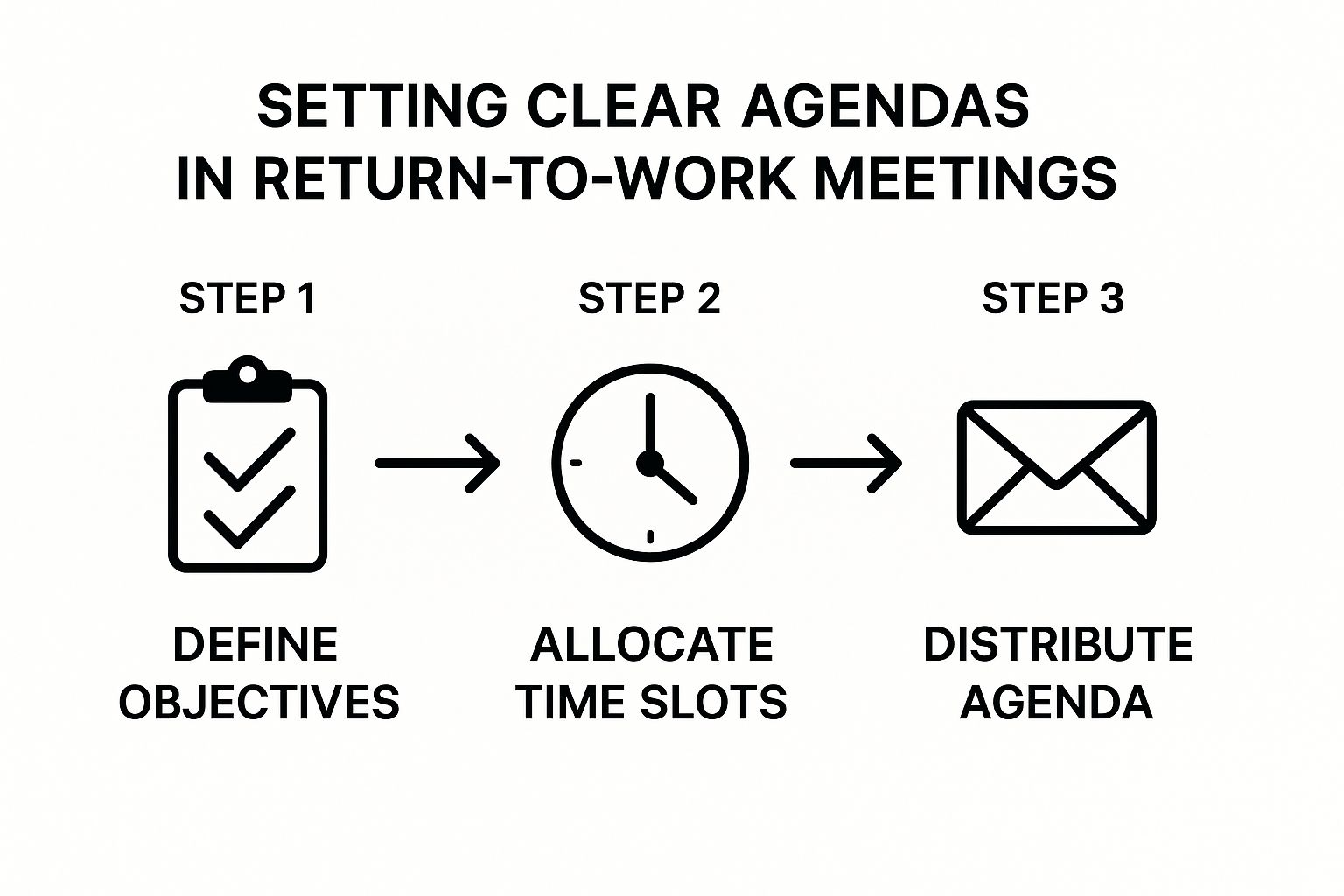
The infographic above highlights a straightforward three-step process for crafting effective meeting agendas. First, define clear objectives. Then, allocate specific time slots for each discussion point. Finally, distribute the agenda beforehand. These steps ensure your return-to-work meetings are focused and productive, allowing attendees to come prepared and contribute meaningfully.
Preparing for Different Return-to-Work Scenarios
Return-to-work meetings shouldn't follow a one-size-fits-all model. Preparation should vary based on individual circumstances. A short absence due to a minor illness requires a different approach than an extended leave for a serious health issue. Similarly, transitioning to a hybrid work model presents unique challenges compared to a full office return.
When planning, consider the specific needs of each employee. For example, someone returning after bereavement requires more sensitivity and support than someone returning from annual leave. This nuanced approach allows for a more personalized and effective reintegration.
To further illustrate this point, let's take a look at a checklist for various return-to-work scenarios. This table outlines the necessary preparation steps for a range of situations, emphasizing the importance of a tailored approach.
Return to Work Meeting Planning Checklist: A comprehensive comparison of preparation steps for different types of return to work scenarios
| Preparation Step | Short-term Absence | Extended Leave | Hybrid Transition | Full Office Return |
|---|---|---|---|---|
| Initial Contact | Informal check-in | Formal meeting request | Formal meeting request | Informal check-in |
| Documentation | Minimal (if any) | Medical certificates, return-to-work plan | Updated work agreements | None |
| Agenda Focus | Catching up on work updates | Discussing adjustments, support needs | Reviewing hybrid work arrangements | Team reintegration, project updates |
| Meeting Tone | Casual, supportive | Formal, empathetic | Collaborative, informative | Upbeat, welcoming |
| Follow-up | Brief email summary | Scheduled follow-up meetings | Regular check-ins | Team integration activities |
This checklist provides a helpful starting point for planning these important conversations. By considering these different elements, you can create a more supportive and effective return-to-work experience for everyone.
Setting Clear Agendas for Productive Conversations
A well-defined agenda is crucial for any productive meeting, especially return-to-work discussions. Begin by identifying key objectives. Are you focusing on the employee's well-being, reviewing work updates, or planning future projects? This clarity ensures everyone is aligned from the start.
After establishing objectives, allocate specific times for each topic, preventing lengthy, unfocused meetings. For instance, allot sufficient time to discuss necessary workplace adjustments or support. Finally, distribute the agenda in advance, allowing employees to prepare and gather relevant information. This also demonstrates respect for their time and fosters collaboration.
Gathering Essential Documentation and Information
While having relevant information is crucial, avoid overwhelming employees with unnecessary paperwork. Focus on gathering only essential documents, such as medical certificates for extended absences or performance reviews for context on future goals.
For short-term absences, excessive documentation can be counterproductive, creating unnecessary anxiety. Prioritize open communication and a supportive atmosphere, enabling a frank and productive discussion. Check if company policies or procedures changed during the employee's absence and provide this information beforehand, facilitating a smooth transition back to work.
Setting Realistic Expectations and Goals
The return-to-work meeting offers a perfect opportunity to set clear expectations for both the employee and the employer. These should be realistic and achievable, considering the employee’s individual situation.
A phased return with gradually increasing responsibilities might be appropriate for someone returning from long-term leave. For an employee returning from a short-term absence, a quicker return to full duties might be feasible. Discussing and agreeing upon these expectations during the meeting ensures alignment and promotes shared goals. Open communication and realistic expectations contribute to a positive and productive return-to-work experience.
Conducting Conversations That Build Trust and Solutions
The real power of return-to-work meetings lies in creating genuine conversations. These discussions should go beyond a basic script to tackle real employee concerns and build solutions collaboratively. This requires managers to foster an environment of open communication where employees feel truly heard and understood, smoothing the transition back to the workplace.
Starting the Conversation: Breaking the Ice
The way you start the conversation sets the stage for the entire meeting. Begin by asking open-ended, welcoming questions that encourage employees to share their thoughts and feelings about returning to work. For instance, instead of a simple "Are you feeling better?", try "How are you feeling about returning to work?". This slight change invites a more honest and detailed response.
It's also crucial to acknowledge any anxieties an employee might have. Returning to work after an absence can be stressful. Showing empathy and understanding builds trust and encourages open communication, creating a safe space for concerns to be addressed and a foundation for a productive discussion.
Active Listening and Follow-Up Questions
Active listening is paramount to understanding an employee's perspective. This means paying close attention to both their words and body language. Ask clarifying questions to ensure a thorough understanding of their concerns. For example, if an employee mentions feeling overwhelmed, a good follow-up question would be "What specifically is making you feel overwhelmed?". This demonstrates genuine interest and encourages further dialogue.
Thoughtful follow-up questions can also uncover underlying issues, delving deeper than initial responses to reveal the root causes of any concerns. This allows managers to develop more targeted and effective solutions. Considering that 85% of UK workers spend at least three hours a week in meetings, optimizing these discussions, especially return-to-work meetings, is crucial for productivity. Explore this topic further.
Handling Sensitive Topics With Empathy
Return-to-work meetings often involve sensitive topics like mental health, caring responsibilities, or workplace anxiety. Navigating these conversations requires empathy and respect. Acknowledge the employee's feelings and validate their experiences. A simple statement like "It sounds like you've been through a lot" can be incredibly reassuring.
However, it's essential to maintain professional boundaries. While empathy is key, avoid offering unsolicited advice or personal opinions. Focus instead on providing practical support and resources, such as directing employees to the company's Employee Assistance Programme or other relevant support services. This approach respects individual privacy while ensuring access to necessary help.
Guiding Conversations Toward Positive Outcomes
The ultimate goal of a return-to-work meeting is to create a plan for a successful transition. This means steering the conversation towards practical solutions, working together to develop a plan that addresses the employee's concerns while meeting business needs. This might include adjusted schedules, phased returns, or other reasonable accommodations.
Clearly outlining expectations is also vital. Both the employee and the manager should agree on achievable goals and timelines. This clarity prevents misunderstandings and ensures everyone is on the same page. By focusing on solutions and clear expectations, return-to-work meetings can become powerful tools for supporting employees and building a positive work environment.
Addressing Employee Concerns With Practical Solutions
Today's employees return to work with a new set of expectations and often legitimate concerns. Addressing these concerns effectively is crucial for a successful return-to-work process. This involves understanding the issues commonly raised in return-to-work meetings and developing practical strategies to address them. This approach fosters a supportive work environment and ensures a smooth transition back to the workplace.
Navigating Flexible Working Arrangements
One common concern revolves around flexible working. Many employees now prioritize flexibility, seeking options like hybrid work or compressed hours. Return-to-work meetings provide an ideal opportunity to discuss these arrangements openly. Employers can outline their flexible work policies and explore how they can accommodate individual needs.
This might involve considering phased returns, where employees gradually increase their hours or days in the office. Alternatively, adjusted schedules could allow for different start and finish times, accommodating personal commitments. By demonstrating a willingness to be flexible, employers can significantly boost employee morale and engagement.
Addressing Commuting Challenges
Another key concern, particularly in the UK, is the cost and time associated with commuting. Return-to-work meetings allow employers to understand the impact of these challenges on their employees. This can lead to exploring solutions like cycle-to-work schemes, offering season ticket loans, or even considering remote work options for certain roles.
Addressing commuting concerns demonstrates a genuine commitment to employee well-being. It can also result in reduced stress and increased productivity, as employees feel more supported and less burdened by their commute. This is particularly relevant as the UK workforce adapts to changing work patterns.
Responding to Health and Safety Worries
The pandemic heightened health and safety awareness, and many employees still have valid concerns. Return-to-work meetings offer a safe space to discuss these worries openly. Employers can detail their health and safety protocols, reassure employees about measures taken, and address individual concerns.
This might involve explaining enhanced cleaning procedures, discussing ventilation systems, or outlining social distancing guidelines. Offering reasonable accommodations for employees with specific health concerns is also essential. Transparency and open communication are key to alleviating anxieties and creating a sense of security in the workplace. You might be interested in: How to master managing absenteeism.
Finding Win-Win Solutions
Ultimately, the goal is to find solutions that benefit both the employee and the business. This requires a collaborative approach, where both parties are willing to compromise and find common ground. The statistical landscape of return-to-work meetings in the UK is further complicated by employee preferences and company policies. Approximately 74% of knowledge workers prefer hybrid arrangements, yet the return-to-office trend persists. Despite this, only 7% of companies now allow fully remote work, a decrease from 21% the previous year. Learn more about hybrid work data.
By addressing concerns proactively and offering practical solutions, employers can create a more positive and productive work environment. This benefits everyone involved, contributing to greater employee satisfaction, improved team cohesion, and stronger business performance.
Navigating Legal Requirements Without The Complexity

Employment law can feel overwhelming. However, understanding its practical implications for return-to-work meetings is achievable. Collaborating with HR professionals and employment solicitors can simplify these legal considerations into clear, actionable steps. This ensures your return-to-work meetings benefit both your organization and your employees.
Essential Documentation for Legal Protection
Not all documents offer the same level of legal protection. Some documents are absolutely crucial for return-to-work meetings. These include signed return-to-work plans, especially for extended health-related absences, and records of agreed-upon reasonable adjustments.
For shorter absences, detailed meeting minutes often provide sufficient documentation. These minutes demonstrate a proactive approach to employee well-being. They also serve as a valuable reference for any future discussions. Thorough record-keeping protects both the employee and the employer.
Equality Legislation in Return to Work Meetings
UK equality legislation plays a vital role in return-to-work meetings. The Equality Act 2010 safeguards employees against discrimination based on protected characteristics. It's crucial that decisions made in these meetings regarding work arrangements, support, and adjustments comply with these legal principles.
Offering different return-to-work options based on age or gender would be discriminatory. Consistency and fairness are paramount. For more information, read our article on How to Master Leave and Absence in the Modern Workplace.
Handling Reasonable Adjustments Confidently
Understanding and implementing reasonable adjustments is critical. These modifications to working practices or the workplace itself help employees with disabilities perform their roles effectively. A clear understanding of these adjustments is key to building a supportive work environment.
While requests for reasonable adjustments can happen at any time, return-to-work meetings offer a perfect opportunity to discuss them thoroughly. These adjustments might include adapted equipment, modified working hours, or additional support. A positive and proactive approach to these requests fosters a more inclusive atmosphere.
Common Legal Pitfalls and Best Practices
Even with the best intentions, employers can sometimes make mistakes. A common error is failing to document agreed-upon adjustments or applying return-to-work procedures inconsistently. This can create legal risks for the organization.
Following best practices, such as keeping thorough minutes of return-to-work meetings, securely storing all related documents, and consistently applying company policies, safeguards both the employee and the employer. This meticulous approach protects everyone involved.
When to Seek Professional Legal Counsel
While internal processes can handle many return-to-work scenarios, some situations call for professional legal advice. If an employee alleges discrimination, or a complex health issue requires significant workplace adjustments, consulting an employment solicitor is strongly advised.
If there are any questions about legal obligations under the Equality Act 2010 or other relevant legislation, speaking with a legal professional is a sensible step. This proactive approach can prevent legal disputes and protect the interests of all parties. Solicitors provide clarity and guidance on complex legal matters, promoting compliance and fairness.
Creating Lasting Success Through Strategic Follow-Up
The return to work meeting isn't the finish line; it's the starting point. The real work begins after the meeting, ensuring a smooth and successful transition back into the workplace. This requires a strategic follow-up that maintains momentum and provides ongoing support.
Building a Robust Follow-Up System
Effective follow-up isn't about constant check-ins, but about structured support. Create a follow-up system that includes regular check-ins, performance reviews tailored to the employee's return, and open communication channels. This provides employees with the resources and reassurance they need without feeling micromanaged.
Ensure your return to work meetings comply with data protection regulations. For detailed information, review our Privacy Policy.
A simple weekly email asking "How is the transition going?" can open the door for employees to share any challenges they're facing. Scheduling short follow-up meetings a few weeks after the initial return provides a more formal opportunity to discuss progress and make adjustments.
Realistic Review Schedules: Tracking Real Progress
Review schedules should focus on genuine progress, not just attendance. While tracking attendance is important, true success lies in how well the employee reintegrates and performs their role. This requires shifting from simply monitoring presence to evaluating work quality, team collaboration, and overall well-being.
To provide structure to your support and review process, consider using a phased approach as outlined in the table below. This approach helps ensure consistent communication and support while allowing for adjustments as needed.
Return to Work Support Timeline
The following table outlines a structured approach to post-meeting support activities and review schedules.
| Timeline | Support Activity | Key Stakeholders | Success Metrics | Review Points |
|---|---|---|---|---|
| Week 1 | Initial check-in, provide resources | Manager, HR | Employee comfort level, initial task completion | End of week check-in |
| Week 2-4 | Regular check-ins, monitor workload | Manager, Team Lead | Work quality, team integration | Bi-weekly meetings |
| Month 1-3 | Performance review, adjust support as needed | Manager, HR | Performance goals, overall well-being | Monthly review meeting |
| Ongoing | Open communication, continued support | Manager, Mentor | Long-term performance, career development | Regular performance reviews |
This phased approach gradually reduces the intensity of support as the employee settles back into their role. This demonstrates a commitment to long-term success.
Adapting and Adjusting: The Key to Long-Term Success
Initial plans don’t always work perfectly. This is where the ability to adapt and adjust becomes critical. Regular communication helps identify early warning signs, such as decreased productivity or withdrawal from team activities. These signs indicate a need for intervention and adjustments to the support plan.
This might involve revisiting flexible work arrangements, providing additional training, or connecting the employee with internal support networks. Being flexible and responsive to individual needs ensures the return to work process is a success.
Celebrating Successes and Reinforcing Positive Outcomes
Celebrating successes, no matter how small, reinforces positive outcomes. Acknowledging achievements boosts morale and encourages continued progress. This could be a simple "well done" from a manager, recognition in a team meeting, or even a small celebratory gesture.
By focusing on both support and celebration, you transform the return to work process into a positive experience that benefits both the employee and the organization. This fosters a supportive work environment and strengthens the employer-employee relationship.
Key Takeaways
Your return-to-work meetings can be a powerful tool for supporting your employees and boosting your business. By implementing the strategies discussed, you can transform potentially awkward encounters into valuable opportunities for connection and growth. These key takeaways distill the most important aspects of successful return-to-work meetings into actionable steps.
Prioritize Preparation and Planning
Successful return-to-work meetings require careful preparation. This includes understanding the specific context of the employee's absence. Was it a short-term illness, an extended leave, or a transition to hybrid work? Each scenario demands a tailored approach. This preparation allows you to create a meeting agenda that addresses relevant concerns and sets clear objectives.
Consider gathering essential documents beforehand, such as medical certificates or performance reviews. However, avoid overwhelming the employee with unnecessary paperwork. Focus on information that directly relates to their return. This shows respect for their time and helps maintain a positive and focused discussion.
Foster Open Communication and Empathy
The true power of these meetings lies in creating a safe and supportive environment where employees feel comfortable sharing their thoughts and feelings. Start the conversation with open-ended questions like, "How are you feeling about returning to work?" This encourages a more honest and detailed response than simply asking, "Are you feeling better?"
Active listening is crucial. Pay attention to both verbal and nonverbal cues, and ask follow-up questions to demonstrate genuine interest. This approach helps gain a deeper understanding of the employee’s perspective and uncover any underlying concerns that might not be immediately apparent. Empathy is key, particularly when discussing sensitive topics such as mental health or caring responsibilities.
Focus on Solutions and Actionable Steps
Once you've understood the employee's situation, shift the focus to finding solutions and creating a plan for a successful transition back to work. This might involve exploring flexible work arrangements, addressing commuting challenges, or offering reasonable accommodations. Be proactive in exploring options that benefit both the employee and the business.
Collaboratively set realistic expectations and goals, ensuring both parties are on the same page. This might involve a phased return to work, adjusted schedules, or modified responsibilities. Clear communication and agreed-upon expectations are essential for a smooth transition.
The Importance of Strategic Follow-Up
The conversation doesn't end when the meeting concludes. Consistent and structured follow-up is essential for ensuring long-term success. Implement a system that includes regular check-ins, performance reviews, and open communication channels. This provides ongoing support without being intrusive.
Regular reviews should focus on genuine progress, not just attendance. Assess work quality, team integration, and overall well-being. Be flexible and willing to adapt the support plan as needed. Finally, remember to celebrate successes, no matter how small. Acknowledging achievements reinforces positive outcomes and boosts employee morale.
By focusing on these key takeaways – preparation, communication, solutions, and follow-up – you can transform your return-to-work meetings into a valuable asset for both your employees and your organization.
Ready to streamline your employee management processes and create a more supportive work environment? Learn more about LeaveWizard and discover how it can help you simplify leave management, automate calculations, and empower your employees.


