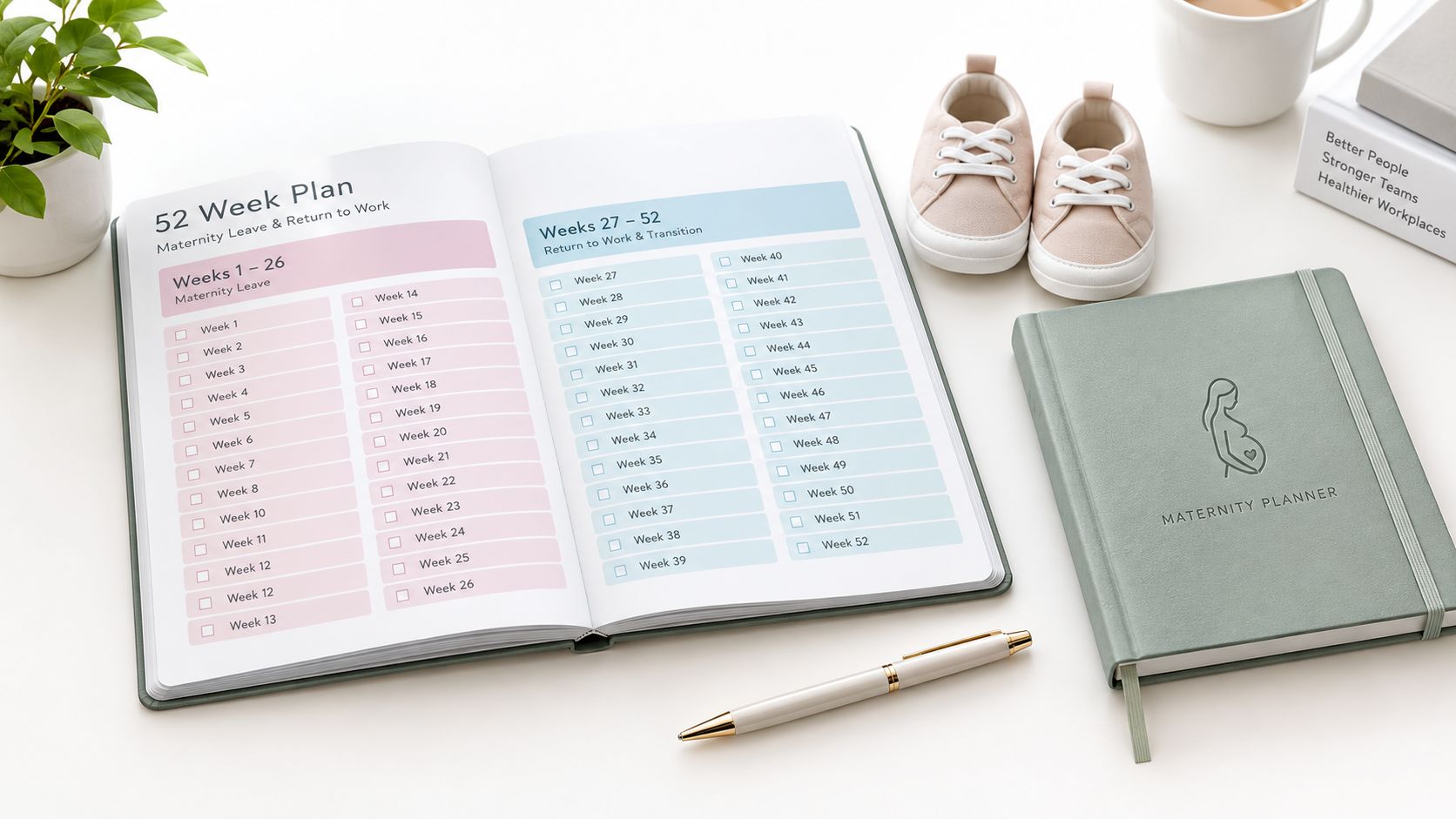
Turning leave planning into a daily firefight is easy. One employee emails a holiday request, another updates the spreadsheet, a manager changes the rota, and someone still ends up approving leave without seeing the full coverage picture. Missed approvals, conflicting records and last-minute staffing gaps follow quickly.
A good staff leave planner gives employees a clear way to request time off and gives managers a live view of availability, absence and cover. For small and mid-size organisations, the right choice isn't necessarily the biggest HR platform. It's the tool that matches your policies, workforce patterns, approval process and payroll workflow without creating unnecessary administration.
This guide compares the 10 best staff leave planner tools for growing organisations. It focuses on practical fit, including spreadsheet replacement, UK holiday rules, sickness visibility, shift planning, integrations, pricing transparency and implementation effort. For wider context on building resilient HR processes, see Underdog.io's HR management insights.
Table of Contents
- 1. LeaveWizard
- 2. Timetastic
- 3. edays
- 4. BrightHR
- 5. Breathe
- 6. Sage HR
- 7. CharlieHR
- 8. Factorial
- 9. Personio
- 10. BambooHR
- Top 10 Staff Leave Planners Comparison
- Next Steps to Streamline Your Leave Planning
1. LeaveWizard
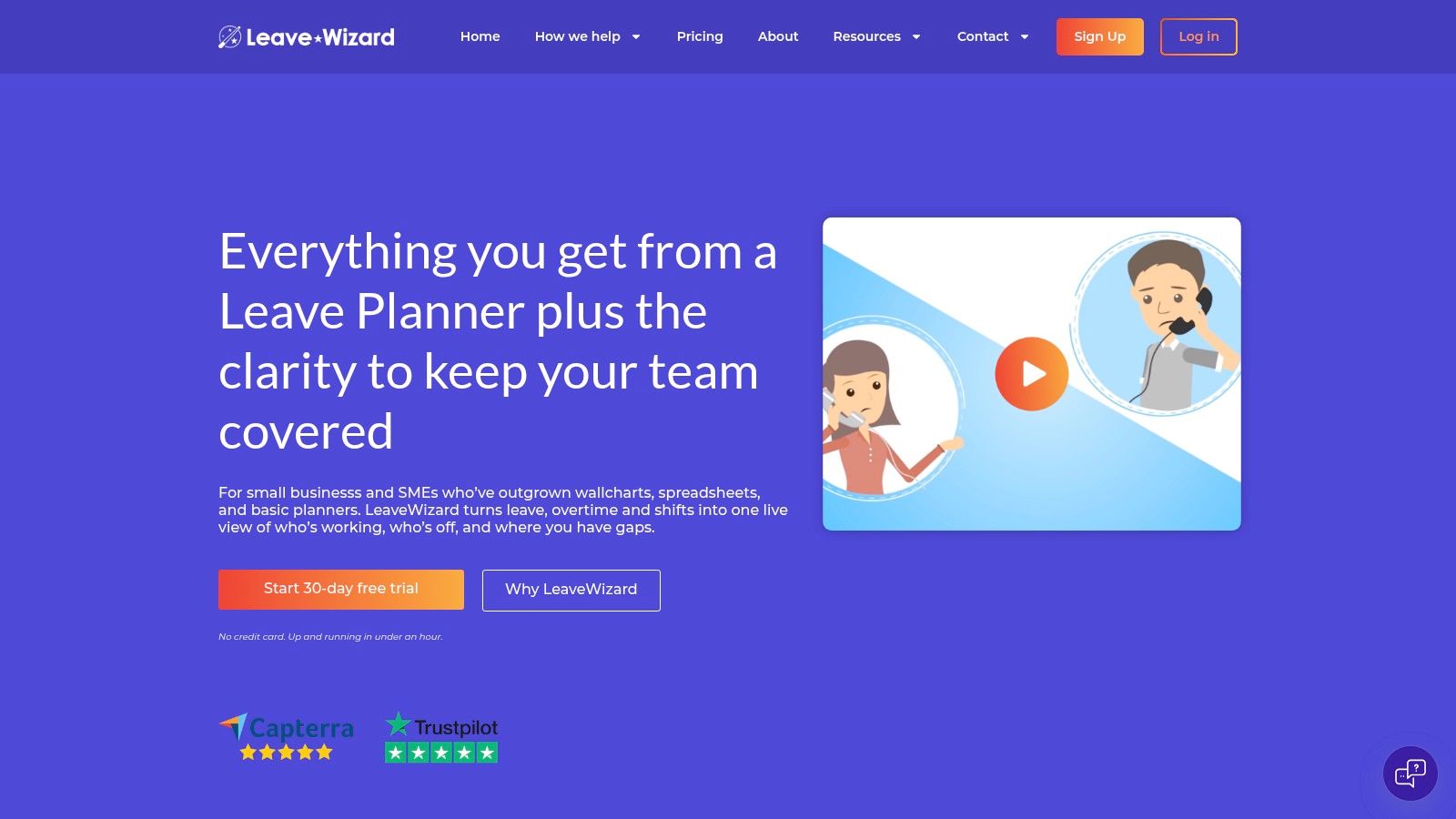
LeaveWizard suits a small or mid-size organisation that needs dedicated leave and absence management without taking on a full HR suite. It combines holiday requests, sickness, overtime, shift patterns and team availability in one live system. Managers can check who is working, who is away and where cover may become difficult before approving leave.
The platform automates leave calculations, accruals and carryovers across multiple leave types. Bookings as short as 15 minutes support appointments, partial-day absences and flexible working patterns. Employees submit requests through web or mobile self-service, while managers receive notifications and approve them through a central workflow.
Why LeaveWizard stands out
LeaveWizard is built for quick adoption. The vendor promotes setup in under an hour without an IT team and provides a 30-day free trial with no credit card. That makes it suitable for organisations replacing spreadsheets quickly. The administrator still needs to configure policies carefully and verify imported balances before relying on the system.
Its live calendars and reports give operations and finance teams a clearer view of staffing. Managers can identify clashes before approval, while reports assist with payroll preparation, absence reviews and workforce planning. Calendar integrations and mobile access also reduce email requests and manual balance checks.
Practical rule: Keep holiday visibility broad enough for scheduling, but restrict sickness details to the people who need them.
LeaveWizard sits between a basic holiday calendar and a full HRIS. It provides detailed leave logic and reporting for SMBs while keeping the interface approachable. The vendor highlights 6,000+ customers worldwide, alongside customer feedback about time savings and reliability. Pricing isn't published publicly, so procurement teams must use the trial or contact sales before completing a budget comparison.
Organisations reviewing their current process can use this comparison of spreadsheets and leave management software for SMEs to assess the operational differences between manual tracking and dedicated software.
Best for: Small and mid-size organisations that need automated leave calculations, live availability, mobile self-service and absence reporting without adopting a full HRIS.
Trade-offs: Pricing requires a sales conversation. Organisations that also need payroll, recruitment or enterprise HR functionality may need additional software.
2. Timetastic
Timetastic is a good fit when the priority is a fast, uncomplicated shared leave calendar. Its core experience centres on the familiar “who's off” view, employee requests and manager approvals, which makes it approachable for small businesses moving away from a spreadsheet.
Accruals, carryover rules, booking limits and multiple leave types give administrators more control than a simple calendar. Slack and Microsoft Teams integrations can keep requests closer to the tools employees already use, while calendar synchronisation helps managers coordinate personal and work schedules.
A simple planner with an operational extension
Timetastic's optional Rota & Time Clock adds rotas, geoclocked time and payroll-ready timesheets. That extension makes the product more relevant to frontline teams than a leave-only tool, especially where managers need to compare planned leave with scheduled work.
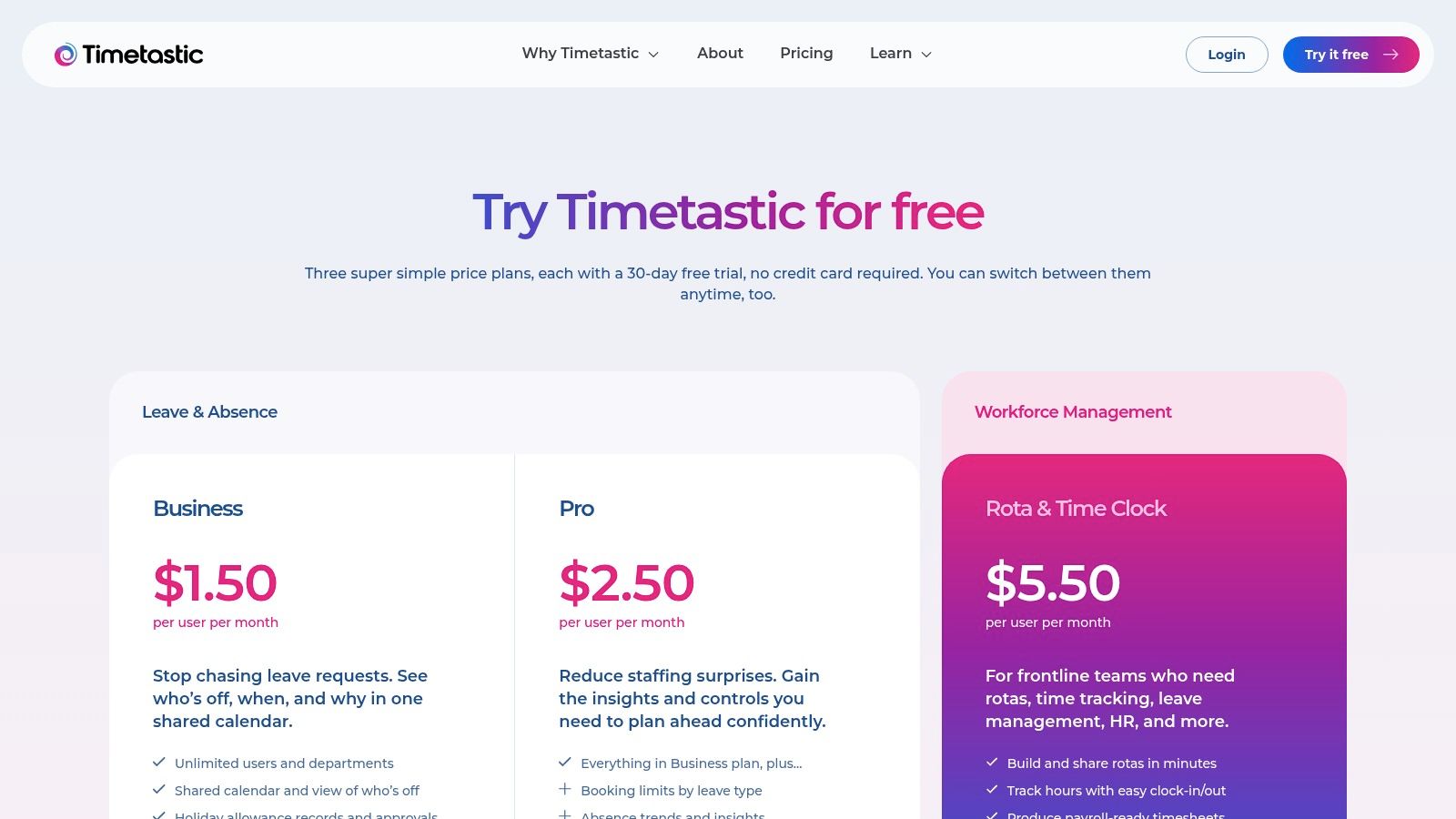
Mobile apps support employee requests and manager approvals away from a desk. The interface is intentionally uncluttered, which helps non-HR administrators roll it out without a lengthy training programme. The vendor also offers a 30-day free trial and month-to-month terms, useful for organisations that want to test adoption before committing to a longer contract.
The limitation is scope. Timetastic's core leave tier won't replace a broader HR platform if you need extensive employee records, complex reporting or integrated workforce processes. Its pricing page may display USD depending on how it's viewed, so UK buyers should confirm the billing currency and commercial terms before approval.
Administrators should also document approval rules before launch. A clear leave management policy guide can help define notice periods, blackout dates, manager responsibilities and sickness reporting expectations.
Best for: Small teams that want a visual calendar, straightforward approvals and optional rota or time-clock functionality.
Trade-offs: It's deliberately focused, so advanced HR administration may require another platform.
3. edays
edays suits organisations that treat absence management as a core operational discipline rather than solely a holiday-booking task. Its platform covers leave, sickness, time and attendance, scheduling and broader HR processes, making it a stronger candidate for businesses with complex working patterns or multiple countries.
The absence tools support custom leave types, hour- or day-based tracking, accruals and shared team calendars. Sickness workflows include Bradford Factor calculations and return-to-work processes, giving HR teams a structured way to record absence events and follow up consistently.
Strong depth for sickness and workforce operations
Time and Attendance adds clock-in and clock-out records, timesheets, time off in lieu and project time. Scheduling tools support rotas and fatigue rules, while global templates and public holiday imports help administrators manage teams operating under different calendars. Multi-language support across 25 languages is useful for distributed workforces and international employee groups.
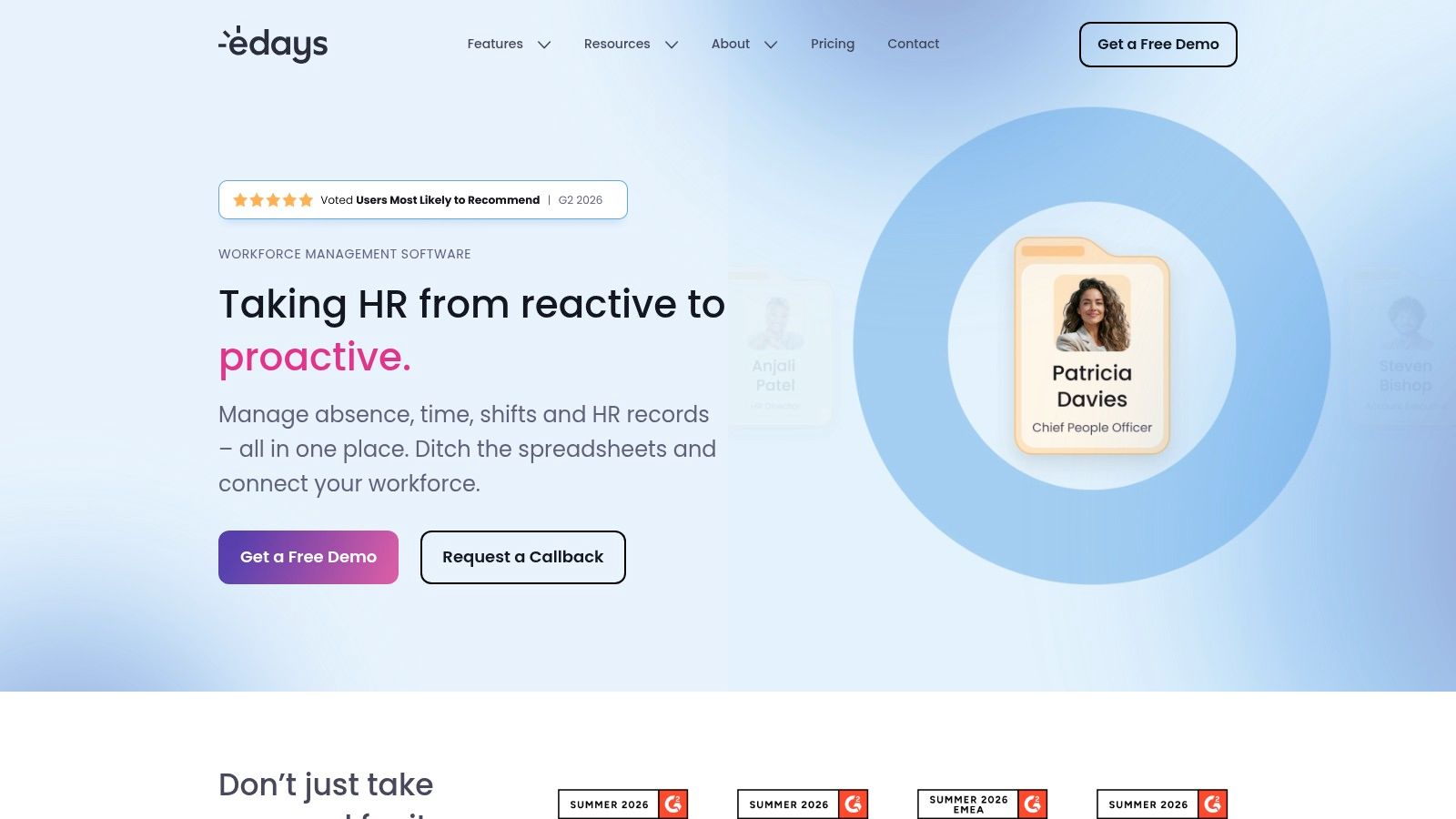
This depth brings a corresponding implementation burden. edays uses annual contracts, doesn't offer a free trial and provides pricing by quotation. The final cost depends on modules, headcount and countries, so buyers should arrive at a demonstration with a defined requirements list rather than evaluating only the holiday calendar.
UK organisations should also verify how their internal policies map to the platform. Government guidance explains how to calculate annual leave across different working arrangements, and the administrator should test representative full-time, part-time and variable-hours scenarios before launch.
Best for: UK and international organisations needing structured sickness workflows, scheduling and multi-country absence rules.
Trade-offs: Annual contracts, quote-based pricing and broader configuration make it less suitable for a business seeking a very lightweight planner.
4. BrightHR
BrightHR combines annual leave planning with wider UK-focused HR and rota management. It's a sensible option for small businesses that want employees to request holiday through a familiar web or mobile planner while managers handle rotas, open shifts and attendance issues in the same environment.
The holiday planner supports entitlement calculations, approvals and visibility across the team. Managers can use the mobile app to approve leave, manage rotas and access documents, which helps businesses with supervisors who aren't regularly at a desk. The Blip app adds a geofenced time clock for organisations that need location-aware clocking.
Useful support for UK managers
BrightHR's practical advantage is the surrounding guidance. How-to resources, templates, learning content and a 24/7 advice line can reduce the friction of rolling out new processes, particularly where the person administering leave isn't a dedicated HR specialist.
The rota functionality matters in retail, hospitality, care and other shift-led settings. Managers can compare approved leave with open shifts and address cover earlier, rather than discovering a gap after the rota has been published.
The downside is that BrightHR can feel broader than necessary if all you need is a shared holiday calendar. Feature breadth may introduce more menus, configuration choices and commercial questions than a focused leave planner. Pricing can also vary by sales channel, so buyers should check included modules, renewal conditions and whether rota or time-clock features are optional.
Best for: UK SMBs that need holiday planning alongside rotas, time clocks and accessible HR guidance.
Trade-offs: It may be more suite-like than required for leave-only use, and the commercial package needs careful review.
5. Breathe
Breathe is built for UK SMEs that want a straightforward holiday planner connected to central employee records. Its calendar and work-pattern features help administrators manage different schedules, while absence tracking gives managers a clearer record than a collection of email messages and local spreadsheets.
Calendar synchronisation supports coordination with existing work tools. Rotas and time tracking are available as modules, so organisations can start with core leave administration and expand if operational needs become more demanding. The open API and Xero integration are useful for businesses that want to connect HR data with finance or payroll workflows.
A practical spreadsheet replacement
Breathe's UK-hosted data centre and UK-based support may appeal to organisations that want a clearly local operating model. It's designed and priced for UK SMEs, with transparent entry pricing and plan bands covering smaller businesses through 200 employees.
The modular approach is both an advantage and a limitation. A business can avoid paying for every possible HR function at the outset, but advanced workforce scheduling may require add-ons. Breathe doesn't provide native payroll, so payroll processing remains dependent on an integration or another provider such as Xero.
Choose the starting configuration, not the full brochure. Ask which features your administrators will use every week, then price the modules needed for that workflow.
Before migrating, clean the spreadsheet rather than transferring every historical inconsistency. Confirm employee names, working patterns, leave-year dates, current balances and approval ownership, then test the results with managers.
Best for: UK SMEs seeking an approachable HR platform with holiday planning, absence tracking and optional integrations.
Trade-offs: Payroll isn't native, and more advanced rota or time-tracking requirements can increase the module footprint.
6. Sage HR
Sage HR is a modular choice for organisations already using Sage products or planning to build a broader HR environment. Leave Management sits alongside Core HR, with requests, approvals and shared calendars providing the central holiday-planning experience.
Businesses can add Performance, Timesheets, Shift Scheduling and Expenses as their processes develop. Mobile apps help employees and managers handle requests away from a desktop, while Sage Payroll connectivity can reduce duplication for organisations already committed to the Sage ecosystem.
Good alignment with Sage workflows
The clearest benefit is commercial transparency. Sage publishes UK per-employee and per-module pricing and offers a 30-day free trial, allowing finance teams to model the cost of the chosen configuration rather than relying entirely on a sales estimate.
That modularity requires discipline. If the organisation only needs holidays, a full suite may introduce capabilities that aren't necessary. The recruitment add-on is charged as a flat monthly fee, which may be disproportionate for a small team that hires infrequently. Buyers should also check which modules are included in the proposed package and whether payroll connectivity works with their existing Sage arrangement.
A sensible pilot should include one manager, one employee group with standard working patterns and one group with less regular schedules. Test leave requests, approval routing, balance visibility, calendar display and payroll handoff before adding optional modules.
Best for: Sage customers and growing SMEs that want transparent pricing with room to add HR functionality.
Trade-offs: It's more than a standalone leave planner, and optional modules can make the final setup more complex.
7. CharlieHR
CharlieHR is aimed at startups and small teams that want time off management alongside basic HR administration. Its shared calendars, policies and approvals give managers a simple way to control holiday requests, while documents, onboarding, performance, engagement and perks sit within the wider platform.
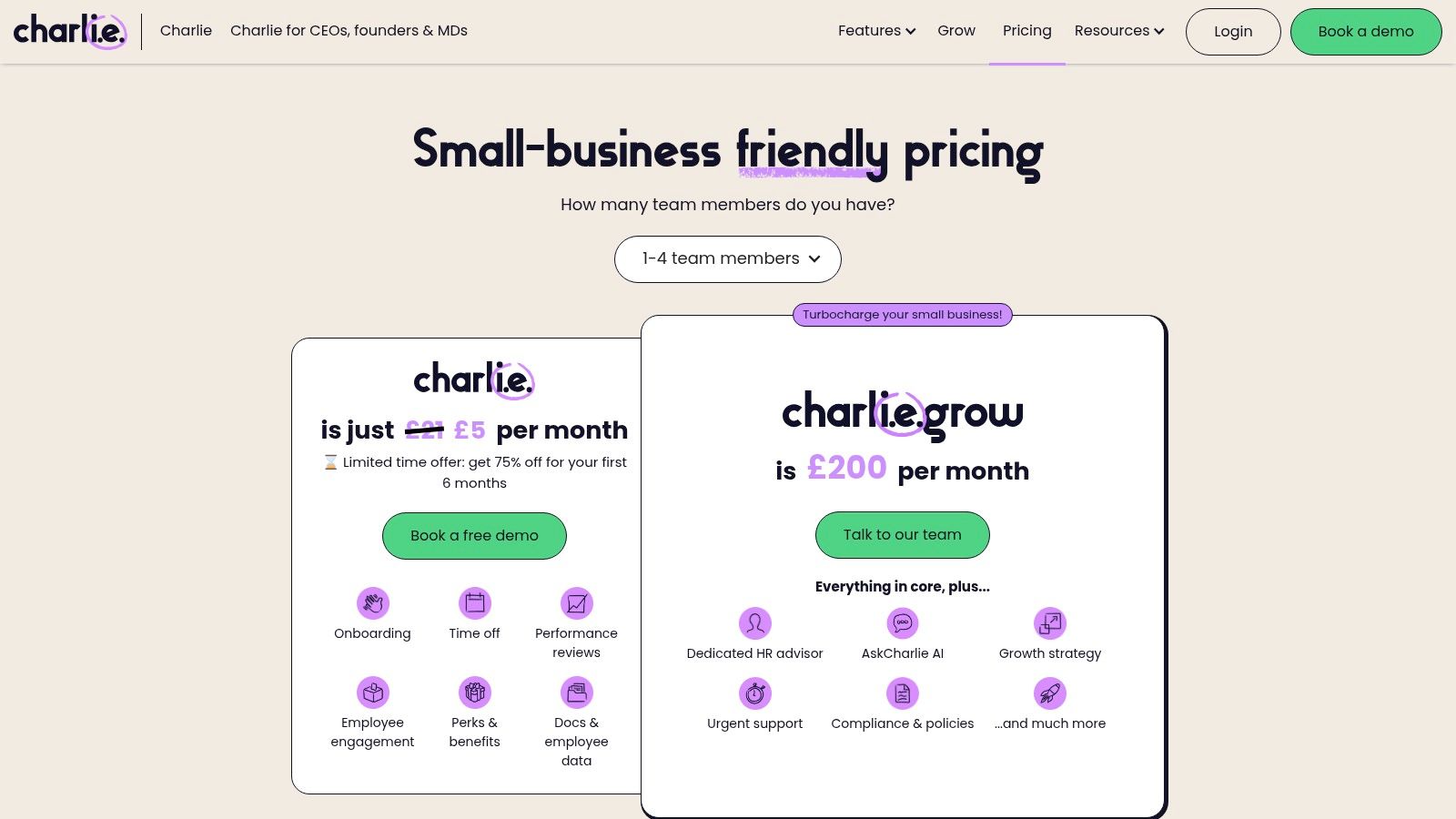
The pricing model uses headcount bands rather than a straightforward per-seat structure. That can make the bill predictable for a small team, especially at the smallest plan band covering 1 to 4 employees, but costs can rise stepwise when the team crosses a boundary.
Best for small, growing teams
CharlieHR offers a 7-day free trial and live chat support, which suits founders or office managers who need quick answers during setup. The platform can extend into recruitment through Charlie Recruit and advisory support through Charlie Grow, although those add-ons aren't included automatically in the standard trial.
This tool works best when the business wants a light HR operating system, not just a holiday calendar. If the requirement is complex shift coverage, detailed time and attendance or advanced sickness analytics, CharlieHR may not provide the operational depth of edays, BrightHR or LeaveWizard.
Set expectations early. Give employees one channel for requests, make managers responsible for timely approvals and decide which absence information should be visible to the wider team. A simple tool still needs clear ownership, otherwise the organisation recreates the same delays that affected the spreadsheet.
Best for: Startups and small teams combining time off with onboarding and core HR records.
Trade-offs: Add-ons are separate, trial access is limited for some services and banded pricing can become less attractive as headcount grows.
8. Factorial
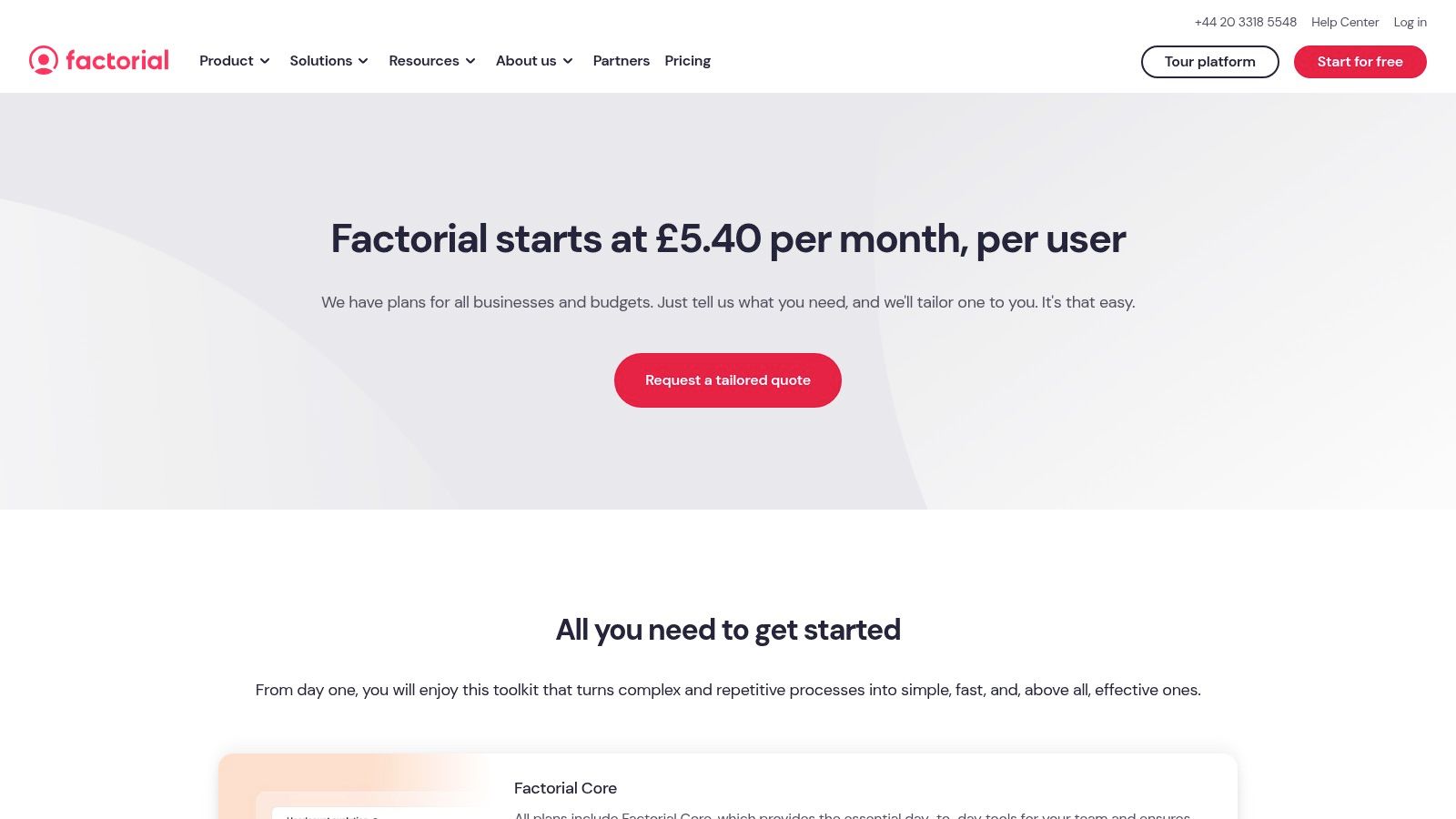
Factorial offers a broad HRIS for SMEs that need more than holiday requests. Time off and absence policies are combined with attendance, rotas, documents, e-signatures, workflows and analytics, giving growing organisations a single environment for several administrative processes.
UK localisation is central to its appeal, while support for multiple country configurations can help a business expand beyond the UK. Xero and Slack integrations, along with a growing marketplace, provide options for connecting HR workflows with existing tools.
Broad capability at the cost of configuration
Factorial makes sense when the leave planner is one part of a wider operational system. A team that needs rotas, attendance records and signed documents may gain more from this breadth than from buying several specialist tools.
However, breadth brings decisions. Sage users should confirm connector coverage rather than assuming that an integration available for Xero will support their accounting setup. The exact module mix and total cost may also require implementation or a quotation, so the advertised entry position shouldn't be treated as the final project budget.
Run a workflow demonstration using real scenarios. Include a standard holiday request, a sickness record, a rota change, a document signature and a payroll or accounting export. That process will reveal whether the product simplifies work or shifts administrative effort into configuration.
Best for: SMEs wanting leave, attendance, rotas and broader HR workflows in one platform.
Trade-offs: The solution may exceed the needs of a leave-only buyer, and integration coverage and final module costs need verification.
9. Personio
Personio is a strong candidate for distributed UK and European teams that need configurable time-off policies, public holidays and non-working days across locations. Its broader platform includes recruitment, performance, documents and analytics, so it can support organisations treating leave planning as part of a wider people operation.
Time-off settings cover custom accruals and multi-country holiday calendars. Documentation around configuration can reduce guesswork for administrators, particularly where teams operate under different local arrangements.
A platform for structured HR teams
Personio is more suitable for a mid-market organisation with defined HR ownership than for a very small business looking for an instant holiday calendar. Pricing is quote-based, and implementation typically takes 4 to 6 weeks, so the organisation needs to plan data preparation, policy decisions, user testing and manager training.
That implementation period can be worthwhile when the company needs consistency across countries or wants to connect leave with a broader HR lifecycle. It's less compelling when the immediate problem is that employees can't see who is off.
Ask for a demonstration of the exact policy logic before signing. Test public holiday treatment, non-working days, accruals, part-time schedules and manager permissions. Also confirm which functions are included in the proposed package, rather than assuming every HR module comes with the time-off feature.
Best for: European SMEs and mid-market organisations managing multi-country leave policies.
Trade-offs: Quote-based pricing and a structured implementation process can be excessive for a simple UK-only requirement.
10. BambooHR
BambooHR is a mature HRIS with a capable Time Off module, a “Who's Out” calendar and mobile approvals. It's a sensible long-term option for organisations that expect leave planning to grow into a fuller HR environment covering onboarding, recruitment, performance and analytics.
Optional Time Tracking adds geolocation clock-in and clock-out and timesheets. APIs and integrations support broader HR workflows, while the wider platform gives People teams a polished employee experience.
Suitable for organisations planning beyond leave
BambooHR's main strength is scalability of process rather than simplicity of scope. An organisation can start with time off and add other functionality as its HR requirements mature. Its third-party ecosystem may also help connect the HR platform to payroll, finance and collaboration tools.
The trade-off is commercial visibility. UK list pricing isn't public, and the vendor asks prospective customers to speak with sales. Some capabilities are add-ons, so costs can rise as the organisation expands functionality. That doesn't make BambooHR a poor choice, but it means the buying team should compare the complete configuration rather than the base platform alone.
Use a requirements document before the sales call. Separate essential leave functions from future HR ambitions, then ask the vendor to price both scenarios. That makes it easier to decide whether a mature HRIS is justified now or whether a dedicated planner will solve the immediate operational problem more efficiently.
Best for: Organisations moving from leave tracking towards a broader HRIS.
Trade-offs: UK pricing isn't public, add-ons affect total cost and the suite can be more than a small team needs for holiday management alone.
Top 10 Staff Leave Planners Comparison
| Product | Core features | UX / Quality | Price / Value | Target audience | Unique selling points |
|---|---|---|---|---|---|
| 🏆 LeaveWizard | Automated accruals, approvals, 15‑min bookings, live calendars & mobile apps | ★★★★★ | 💰 30‑day free trial; contact sales | 👥 SMBs & growing teams | ✨ Fast setup (<1 hr), real‑time visibility, strong social proof |
| Timetastic | Shared “who's off” calendar, accruals, approvals, mobile apps, optional rota/time clock | ★★★★☆ | 💰 Low entry price; month‑to‑month | 👥 Small–mid SMEs, frontline teams | ✨ Simple UX, optional rota & time clock |
| edays (e‑days) | Advanced absence, Bradford Factor, return‑to‑work, T&A, scheduling, multi‑country | ★★★★☆ | 💰 Quote-based; annual contracts | 👥 UK & multi‑country mid-market | ✨ Deep sickness/compliance features |
| BrightHR | Holiday planner, smart rota, Blip geofenced clock, mobile apps, HR resources | ★★★★☆ | 💰 Varies by plan/channel | 👥 UK SMBs with rota needs | ✨ 24/7 HR advice & extensive templates |
| Breathe | Holiday planner, absence tracking, calendar sync, UK‑hosted data, API | ★★★★☆ | 💰 Transparent entry pricing (SME bands) | 👥 UK SMEs (1–250) | ✨ UK‑based support & clear pricing |
| Sage HR | Core HR + leave, optional performance/timesheets/shifts, Sage payroll links | ★★★★☆ | 💰 Published per‑user pricing; 30‑day trial | 👥 SMEs using Sage ecosystem | ✨ Modular pay-as-you-grow with payroll integration |
| CharlieHR | Time off, onboarding, docs, performance, flat fee bands | ★★★☆☆ | 💰 Flat-fee bands; low for 1–4 | 👥 Startups & very small teams | ✨ Predictable pricing bands; fast support |
| Factorial | Time off, rotas, attendance, docs, workflows, integrations | ★★★★☆ | 💰 Competitive per‑employee pricing | 👥 UK SMEs expanding regionally | ✨ Localisations + marketplace integrations |
| Personio | Time off policies, multi‑country calendars, ATS, performance, analytics | ★★★★☆ | 💰 Quote-based; implementation time | 👥 Distributed SMEs & mid‑market | ✨ Strong multi‑country rule handling |
| BambooHR (UK) | Time Off, “Who's Out” calendar, mobile approvals, optional time tracking | ★★★★☆ | 💰 Quote via sales; add-ons possible | 👥 Scaling orgs moving to full HRIS | ✨ Mature UX and broad third‑party ecosystem |
Next Steps to Streamline Your Leave Planning
The best staff leave planner depends on the work your managers need to complete, not the length of a feature list. A small office with predictable working patterns may need only a shared calendar, approvals, accruals and mobile access. A shift-led business may need rotas, time clocks and cover visibility. A distributed organisation may prioritise multi-country calendars, local rules and role-based access.
Start by recording your current process from request to payroll. Identify where employees submit leave, who approves it, how balances are calculated, where sickness is recorded and how managers check coverage. Include finance and operations in this exercise. They often know about spreadsheet corrections, payroll adjustments and rota changes that HR doesn't see.
UK compliance should shape the shortlist. Almost all workers are legally entitled to 5.6 weeks of paid holiday each year, equivalent to 28 days for someone working a standard five-day week, with the same 28-day limit applying to someone working six days a week under the statutory framework set out in UK government holiday entitlement guidance. Your chosen system needs to handle full-time, part-time and variable schedules correctly, including pro-rating and caps.
Holiday pay also needs attention. The government says four weeks of statutory holiday must be paid at a worker's normal rate, while the remaining 1.6 weeks can be paid at basic rate, as explained in the holiday pay and entitlement reforms guidance. Ask whether the platform distinguishes statutory and contractual balances clearly enough for payroll and employee explanations.
Treat absence as an operational workflow
Don't evaluate planners only on annual leave. ONS data reports that sickness absence affected 2.0% of working hours in 2025, with 148.8 million working days lost and an average of 4.4 days lost per worker. Those figures make accurate cover planning and current absence reporting practical requirements, not optional extras. See the ONS sickness absence series for the underlying UK labour-market context.
The policy edge cases deserve a specific test. The UK government's guidance on SSP changes for absences crossing 6 April 2026 explains that changes apply across the UK, remove the Lower Earnings Limit and remove the three-day waiting period, with transitional rules for ongoing absences. If your planner connects to payroll or absence records, ask how administrators handle an absence that began before 6 April 2026 and continues afterwards.
Match the tool to the organisation
LeaveWizard and Timetastic are strong starting points for teams replacing spreadsheets quickly. Breathe, CharlieHR and Sage HR make more sense when basic HR records or ecosystem connections matter. BrightHR and edays are better suited to rota-heavy or sickness-intensive operations. Factorial, Personio and BambooHR are broader HRIS choices for organisations expecting their people processes to expand.
WTW's 2026 survey of 141 UK employers found that 55% reported rising short-term absence over the previous two years, 55% reported rising long-term absence and disability, and 53% couldn't quantify absence costs. The WTW absence management findings reinforce the value of selecting a system that can report absence consistently, rather than storing holiday data separately from operational records.
Use free trials and demonstrations with real employee data structures, but don't skip data protection checks. Confirm permissions, sickness privacy, retention, exports, integrations and support responsibilities. Test the experience on mobile as well as desktop, because employees won't adopt a process that feels slower than sending an email.
Finally, train managers on the decisions the system supports. They need to know when to approve leave, how to check cover, how to record sickness and where to find reports. Employees need clear instructions for requests, cancellations and balance checks. With a defined policy, clean data and accountable ownership, a leave planner can turn absence administration from a recurring burden into a reliable operational control.