A manager's day can disappear into holiday administration. You check an old spreadsheet for balances, search email for an approval, scan Teams messages for a last-minute change, then compare several calendars to see whether approving one request will leave a department short-staffed. By the time you've reached a decision, nobody is certain which record is current.
The best employee holiday tracker depends on the problem your business needs to solve, not on the longest feature list. Team size, leave-rule complexity, regional coverage, wider HR requirements, implementation effort and budget all matter. A simple leave calendar can be the right choice for one SME, while a growing organisation may need absence workflows, payroll connections or multi-country policies.
The ten tools below are ranked by the practical problems they address for UK small and medium-sized businesses. The comparison covers pricing visibility, limitations, spreadsheet migration decisions and suitability for remote, multi-region and budget-conscious teams. It also keeps the legal baseline in view: UK law gives almost all workers 5.6 weeks of paid annual leave, equivalent to 28 days for a standard five-day worker, as explained in the UK government holiday entitlement guidance.
Table of Contents
- 1. LeaveWizard
- 2. Timetastic
- 3. Breathe
- 4. CharlieHR
- 5. BrightHR
- 6. Sage HR
- 7. BambooHR
- 8. Personio
- 9. Factorial HR
- 10. edays
- Top 10 Employee Holiday Tracker Comparison
- Choose the Tracker Your Team Will Actually Use
1. LeaveWizard
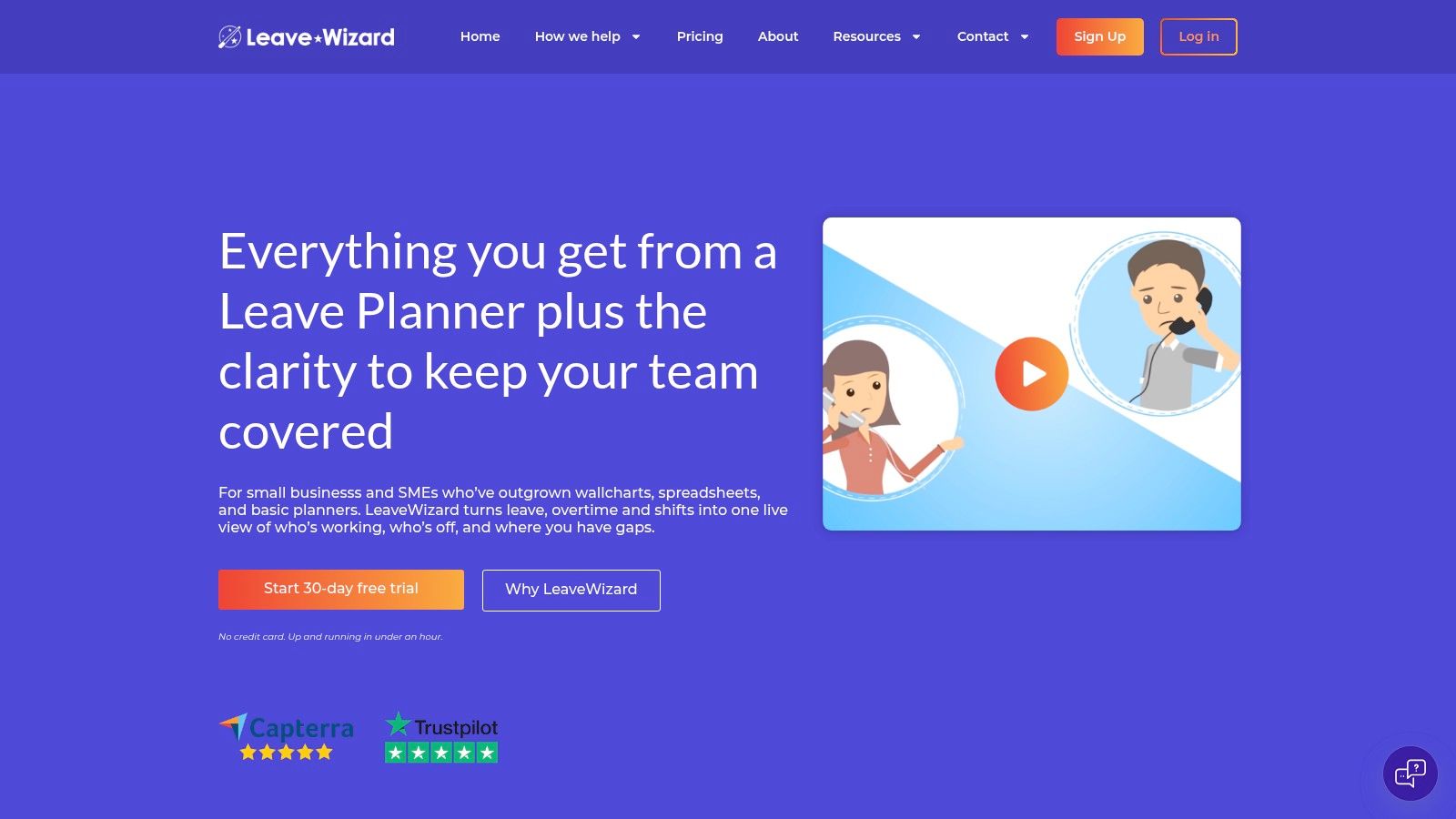
LeaveWizard is the strongest all-round choice for a small business that has outgrown a spreadsheet but doesn't want to buy a full HR suite. It focuses on the daily questions managers need answered: who's off, how much leave remains, which requests are waiting and whether approving another absence creates a coverage problem.
The platform supports automated accruals, allowances and carryovers, multiple leave types, 15-minute bookings, overtime recording and shift patterns. Employees can use smartphone apps or the web portal, while managers get real-time calendars, notifications, calculators and configurable visibility controls. That combination matters for SMEs with mixed working patterns, because the system can support more than a basic annual-leave wall chart.
Why it ranks first
LeaveWizard's main advantage is the middle ground it occupies. It offers more operational control than a manual planner, while keeping the experience lighter than an enterprise HRIS. A team can track annual leave, sickness, overtime and other absence categories without forcing every manager through a large HR transformation project.
The planned setup is also deliberately low friction. LeaveWizard says teams can be running in under an hour, with no IT team required, and offers a 30-day free trial without requiring a credit card. The company states that it serves more than 6,000 customers worldwide, while customer testimonials highlight ease of use, reliability and continued product improvements. Those are useful signals, but buyers should still test their own approval paths and entitlement rules during the trial.
Practical rule: Use the trial to reproduce a real month of requests, including part-time staff, carryovers, sickness and a manager approval conflict.
For spreadsheet migration, export the current employee list and balances, then clean duplicate names, historic leave types and inconsistent date formats before importing anything. LeaveWizard is a good fit for a small professional-services firm, distributed team or growing retailer that needs mobile access and clearer coverage without deep payroll or enterprise HRIS integration.
Pricing isn't published on the website. You'll need to use the trial or contact LeaveWizard for plan details, and organisations requiring advanced enterprise integrations should confirm that its intentionally focused scope meets their needs. Visit LeaveWizard to assess the platform directly.
2. Timetastic
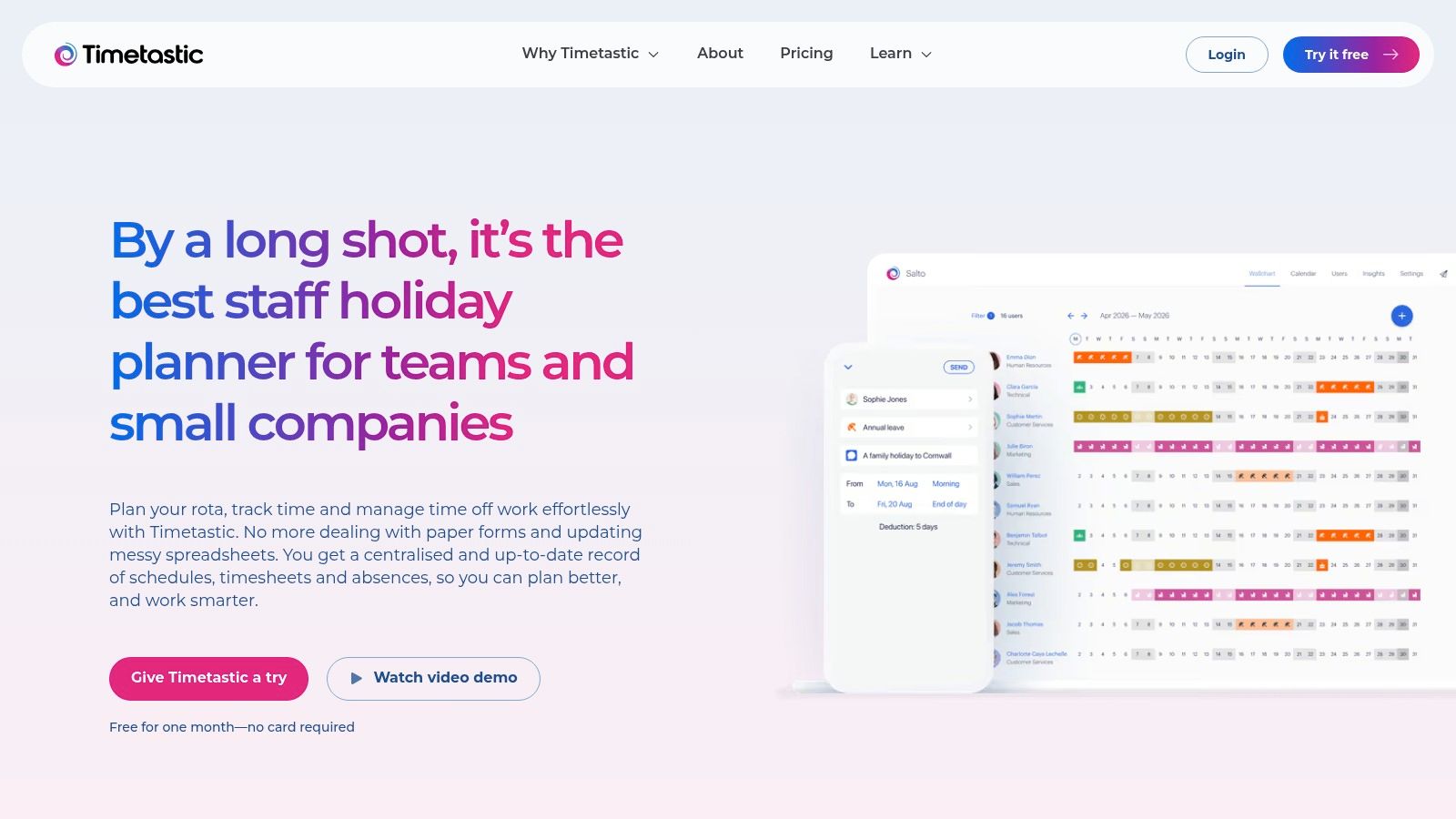
Timetastic is a sensible choice for a UK SME that wants to replace spreadsheets quickly with a clear holiday calendar and uncomplicated approvals. Its shared “Who's off” view gives managers and employees an immediate picture of availability, while integrations with Google, Outlook and iCal help keep leave visible alongside existing calendars.
The platform covers allowances, approvals, accruals and booking limits. Its Pro features add absence insights, and iOS and Android apps support requests away from a desk. An optional rota and time-clock module gives businesses a basic way to connect holiday planning with shift scheduling.
Best for straightforward administration
Timetastic's strength is restraint. A small office, agency, or charity may not need onboarding workflows, performance management, or payroll preparation. It may need employees to request time off, managers to approve it, and everyone to see the result.
Pricing is clearly presented, with month-to-month billing and UK Direct Debit support. Timetastic also advertises discounts for charities, B Corps and the NHS. That transparency makes budgeting easier than with products that require a sales conversation before a buyer can understand the likely cost.
The trade-off is scope. Timetastic is primarily a leave and rota tool, so organisations planning a wider HR system may eventually need another platform. Before migrating, decide whether your spreadsheet is only tracking holidays or also storing absence notes, employee records, overtime and payroll inputs. Move only the data Timetastic is designed to manage, and keep sensitive historic records in an appropriate controlled location.
For a fuller comparison of its workflow and limitations, see this Timetastic review. Then test whether the optional rota module handles your staffing patterns before committing.
3. Breathe
Breathe suits a UK-focused SME that wants holiday and sickness tracking inside a broader, approachable HR environment. Holiday management is central, but administrators can also configure policies, record sickness and use reports to understand absence activity. Optional Rota, Time & Attendance features extend the platform when staffing coordination becomes more important.
A predictable HR foundation
Its per-business pricing tiers, rather than a purely per-employee model, can make costs easier to forecast as headcount changes. UK data-centre hosting, UK support and UK-centric resources will appeal to organisations that want domestic context without assembling several separate tools.
Breathe is particularly useful for a growing office, care provider or consultancy where the person managing leave also maintains employee records and supports basic HR administration. Employees and line managers get a familiar self-service route, reducing the need for requests to arrive through email.
The limitation is that some useful capabilities are add-ons. A buyer comparing headline prices must map the required modules first, including rota, time and attendance, reporting and any wider HR functions. Advanced analytics or talent-acquisition requirements may also push the business towards a larger suite.
For spreadsheet migration, clean the employee master file and separate annual leave from sickness and other absence types before configuration. Don't upload a single mixed “days away” column and expect meaningful reports later. Rebuild each policy deliberately, check manager permissions and agree which absence reasons should be visible to the wider team.
4. CharlieHR
CharlieHR is a strong fit for UK startups and small businesses that want employee self-service without a heavyweight implementation. Its time-off workflow gives employees a clear way to request leave, lets managers approve or reject it, and provides company-wide visibility of planned holidays.
The platform also includes employee reviews, engagement, documents and onboarding in its base offering. That makes it more suitable than a single-purpose tracker when a founder or operations manager is gradually formalising HR processes.
Where bracketed pricing helps
CharlieHR uses pricing brackets rather than a strictly per-seat approach, with no contracts or setup fees advertised in its positioning. That can smooth month-to-month cost changes as a small company hires, although buyers should still confirm the current bracket and included features before signing up. A free trial gives the team an opportunity to test request and approval behaviour.
The product's simplicity is an advantage for a startup with limited HR capacity. Employees won't need extensive training, and administrators can introduce a central process without turning holiday management into a major project. It's also a practical option when documents and onboarding matter almost as much as leave.
The trade-off is feature depth. Businesses needing advanced workforce planning, recruiting workflows or detailed analytics may need add-ons or another platform. Before migrating from a spreadsheet, identify whether it contains information that belongs in employee records, not in the leave tool. Import current balances only after agreeing how starters, leavers, carryover and historical corrections will be handled.
CharlieHR works best when the business wants a friendly UK HR base and a straightforward holiday process, rather than a specialised absence analytics system.
5. BrightHR
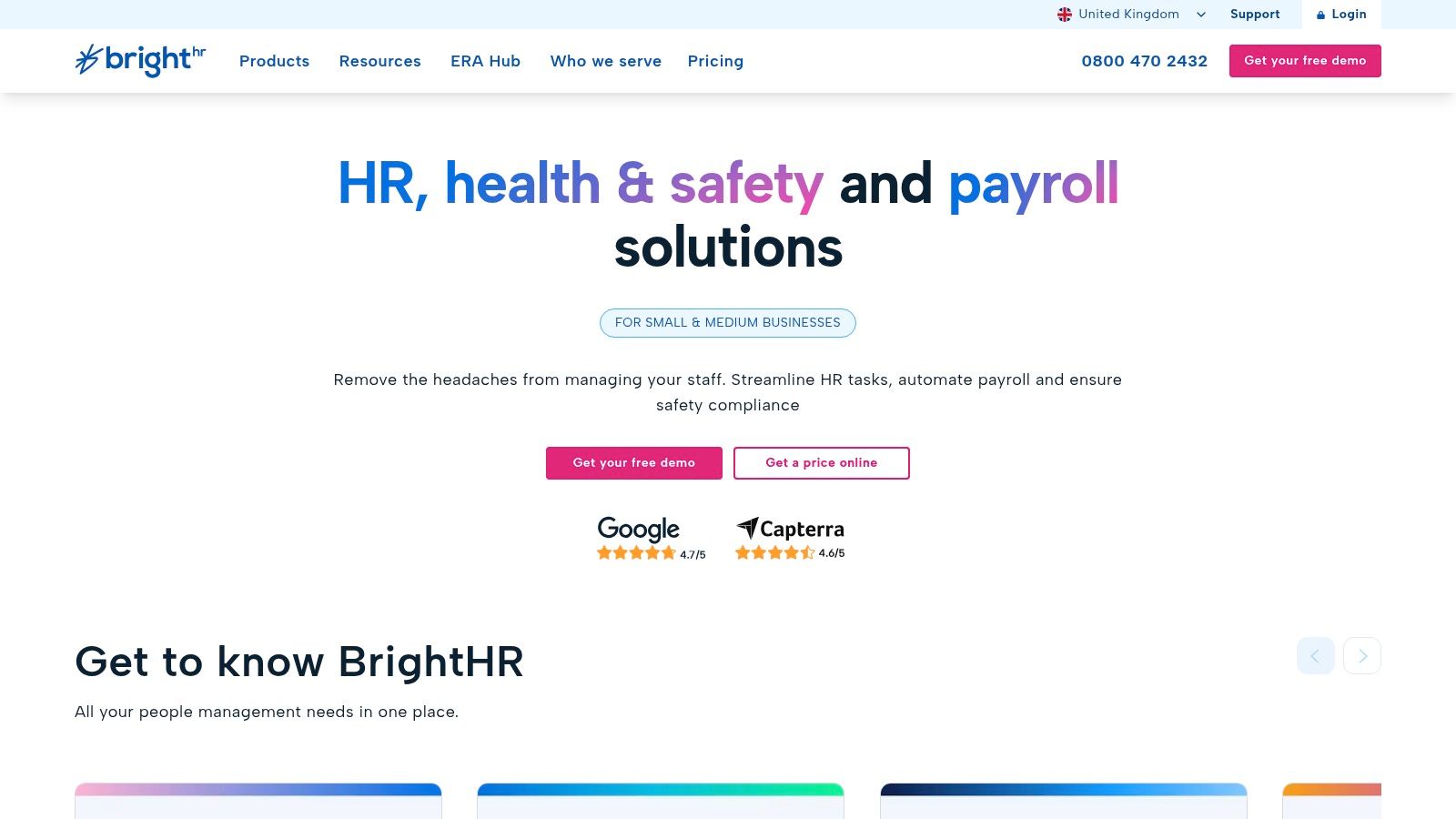
BrightHR is aimed at UK employers that want holiday tracking connected to wider absence, HR documentation and health and safety support. Its leave tools include automatic entitlement calculations, carryover options and sickness workflows, while mobile apps give employees a self-service route for requests and updates.
More than a holiday calendar
The platform's UK orientation is valuable for managers who need practical guidance alongside software. Broader HR and health and safety resources can reduce the number of separate places a small employer consults when handling routine people administration.
BrightHR makes sense for a hospitality business, construction company or office-based SME where absence management, rota planning, policies and safety records sit with the same operational team. It can also suit managers who need employees to submit requests from mobile devices rather than relying on desktop access.
The main caution is proportionality. A micro-team that only needs annual-leave requests may find the wider platform more than it needs. Pricing is typically quote-based, with figures not displayed publicly, so ask for a written breakdown of software, advisory services, support and any additional modules.
Spreadsheet migration should start with policy mapping. Record the rules for annual leave, sickness, carryover, restricted periods and approvals before uploading balances. Then test a normal request, a sickness record and a carryover scenario with different user permissions. This will reveal whether the platform's wider workflow fits the way your managers work, not just the way the product is presented.
6. Sage HR
Sage HR is the natural shortlist option for an SME already committed to the Sage ecosystem, particularly where HR and payroll need to remain closely aligned. Its Leave Management module supports accruals, pro-rata rules and reporting, while the platform can align with Sage 50 Payroll UK workflows.
A modular structure lets a business add functionality as its needs develop. That can prevent an organisation from buying a large HR suite before it has a clear requirement for recruitment, performance or broader employee administration.
The payroll connection is the decision point
For a finance-led business, the attraction isn't just the holiday calendar. It's the possibility of reducing duplicated employee data and keeping leave information closer to payroll processes. That can make Sage HR more compelling than a standalone tracker, even if the interface or setup is less minimal.
The downside is subscription mapping. Public pricing for modules is limited, and capabilities may sit across several packages. Request a quote that lists each required module, integration, support service and implementation responsibility. Don't assume that a familiar brand means every needed workflow is included automatically.
Move from a spreadsheet by reconciling balances against payroll records first. Document whether bank holidays are included in the company allowance, how part-time entitlement is calculated and what happens when someone leaves. Then test the data flow between HR and Sage payroll before making the new system the official record.
Sage HR is best for organisations that value ecosystem alignment over the lightest possible leave-only tool. If payroll is handled elsewhere and your main pain is visibility, a focused tracker may be easier to implement.
7. BambooHR
BambooHR is a polished HRIS choice for a growing organisation that wants time off inside a wider employee-management system. Its PTO features include accruals, forecasting, approvals and “Who's Out” calendars. Employees and managers can use mobile requests and approvals, while iCal feeds, APIs and a broad integration catalogue support a more connected technology stack.
Choose it for the wider HR system
BambooHR works well for a technology company, scaling consultancy or distributed organisation that expects leave tracking to connect with employee records, time tracking and other HR workflows. Its user experience and documentation can help teams standardise processes as they grow.
The trade-off is weight. A business that only needs holiday requests may pay for scope it won't use, and per-employee pricing can become more significant as headcount rises. Setup also deserves attention, because a mature HRIS needs carefully maintained employee data and permissions.
For a deeper look at the wider category, compare the requirements against this guide to employee leave management software. During migration, don't treat the old spreadsheet as a clean database. Remove duplicate employees, classify leave types, verify opening balances and define who can see sensitive absence information before importing.
Run a controlled pilot with one department. Test accruals, future bookings, approvals, cancellations, calendar feeds and reporting. BambooHR is strongest when the business is ready to adopt a broader HR operating model, not when it is merely looking for a prettier spreadsheet.
8. Personio
Personio is a strong candidate for a multi-site UK and European organisation that needs holiday management, attendance and wider HR workflows in one platform. Its policy-based time-off tools calculate balances automatically, while employees can request leave through web and mobile interfaces. Attendance can be recorded through web, mobile and dedicated terminals.
Built for regional complexity
Personio's Europe-first approach makes it useful for businesses with different locations, holiday calendars and policy requirements. A centralised time-off page gives HR teams one place to manage requests and approvals, while the wider platform can extend into recruiting, performance and payroll preparation.
It suits a growing retailer with offices in several countries, a distributed software company or a services group that wants to consolidate HR administration. The main benefit over a lightweight tracker is not just the calendar. It's the ability to connect absence with a broader employee record and regional operating model.
Pricing is quote-based and depends on headcount, selected apps and add-ons. Total cost can therefore vary considerably with the modules chosen. Ask the sales team to separate core leave management from attendance, payroll preparation, recruitment and implementation services.
Migration should be policy-led. Create a country-by-country register of leave types, public holidays, accrual rules and approval owners. Validate each opening balance with local HR or finance before import, then run parallel checks until reports from Personio reconcile with the old records. Don't move a multi-region spreadsheet in one undifferentiated upload.
9. Factorial HR
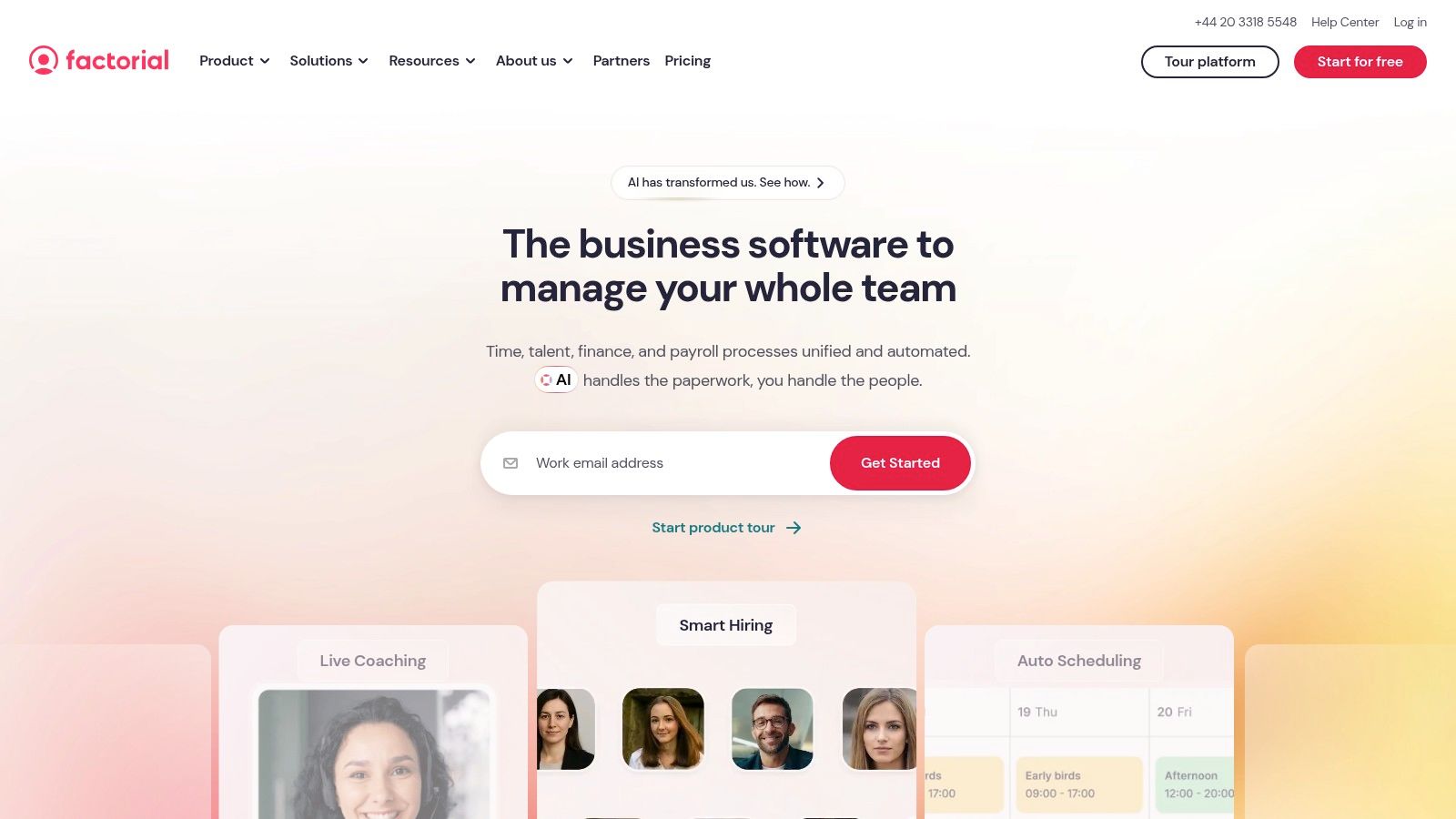
Factorial HR occupies the space between a simple tracker and a full enterprise HR suite. It offers holiday and absence management with calendars, approvals and reporting, alongside broader HR workflows and add-ons such as device and equipment tracking.
Its modern interface and accessible entry-level pricing make it appealing to an expanding SME that wants a credible starting point without committing immediately to the most extensive HR platform. It's also a reasonable fit for a business preparing to operate across countries.
Balance accessibility with configuration
Factorial can support a growing marketing agency, technology business or multi-country services company that wants leave administration to sit alongside other employee processes. The wider feature set gives administrators room to expand, but it also creates a need for disciplined configuration.
Advanced capabilities may require higher tiers or additional modules. UK holiday rules and internal policies must be configured correctly rather than assumed from a general template. That is especially important where staff work different patterns or where carryover rules differ between employee groups.
For spreadsheet migration, create a rules matrix before importing balances. Include employee type, working pattern, leave year, entitlement basis, carryover treatment, bank holiday policy and approval owner. Test the results with representative employees, then compare the system's balances against a manually checked sample.
Factorial is a good choice when you want modern usability and growth potential, but it's less compelling if the business has no intention of using the wider HR functionality. Compare the total package, not just the entry-level price.
10. edays
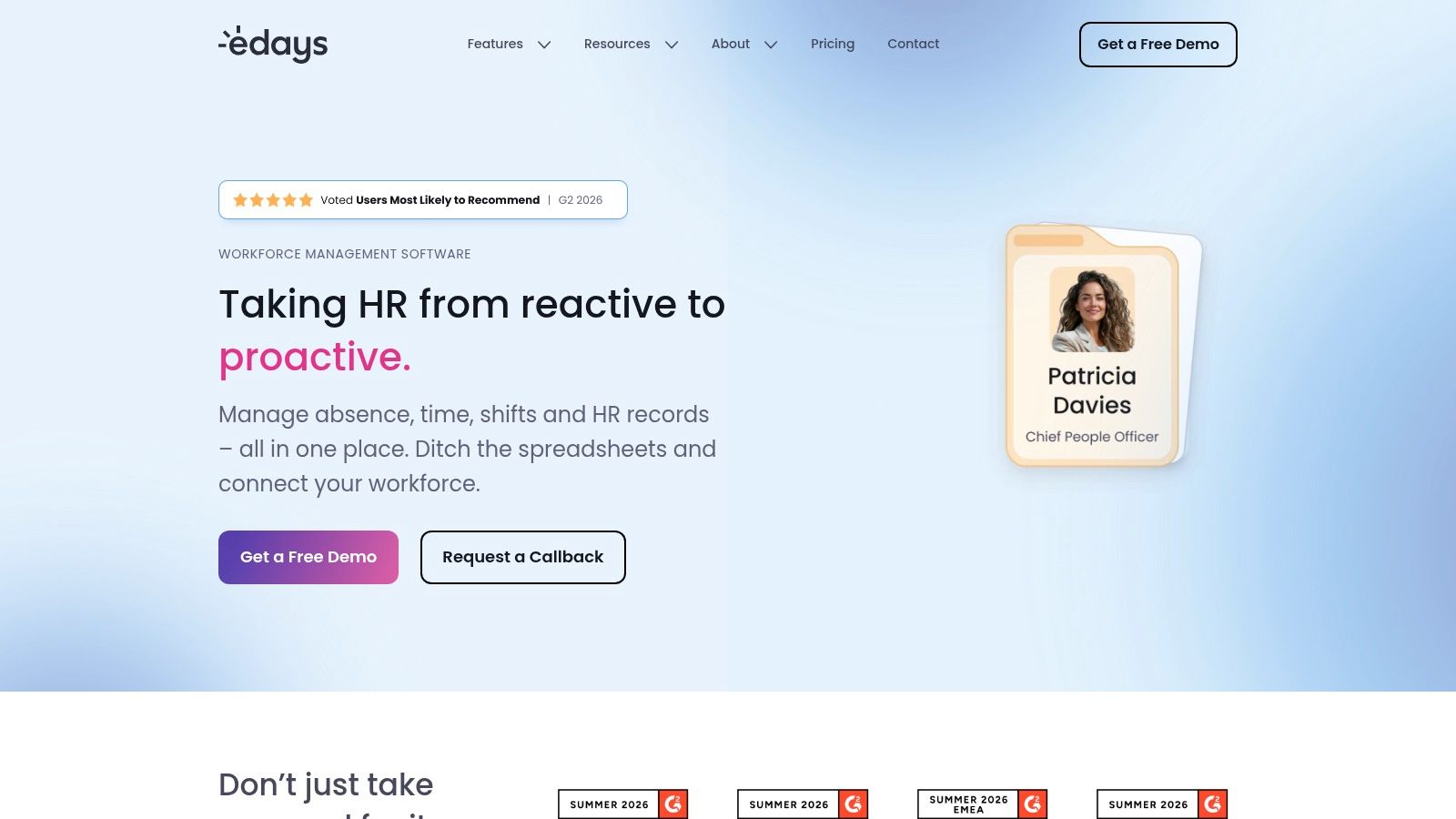
edays is the most absence-focused option in this shortlist for organisations that need more than planned holiday management. It handles annual leave, sickness, parental and unplanned absence through workflows and analytics, with mobile apps for employees and managers. Optional time and attendance and core HR modules extend the platform further.
A serious option for distributed teams
The platform supports more than 25 languages, making it relevant to organisations operating across multiple countries and locations. Its UK roots and enterprise-style absence features can suit an SME or mid-market employer with complex reporting requirements, several sites or a need to understand absence patterns beyond annual leave.
edays is a strong match for a logistics business, manufacturing group or international services organisation where short-notice absence affects staffing and managers need more structured reporting. It can also support a more formal absence process than a lightweight holiday calendar.
Pricing is quote-based and customized to headcount, modules and regions. That flexibility can be useful, but it makes scope control essential. Ask for every module, service, integration, language requirement and contract term in writing before comparing the proposal with simpler tools.
A spreadsheet migration should preserve the audit trail needed for legitimate operational and compliance purposes. Separate planned and unplanned absence, confirm historical data quality, define retention responsibilities and test permissions for sensitive records. Use this guide to the best employee holiday planner as a useful comparison point when deciding whether you need a specialist absence platform or a broader HR suite.
Top 10 Employee Holiday Tracker Comparison
| Product | Core features | UX / Quality (★) | Price / Value (💰) | Target audience (👥) | Unique selling points (✨) |
|---|---|---|---|---|---|
| 🏆 LeaveWizard | Automated accruals, 15‑min bookings, overtime, shift patterns, real‑time calendars, mobile apps | ★★★★★ | 💰 30‑day free trial; contact sales for plans | 👥 Small businesses & growing SMEs | ✨ Quick setup (<1hr), real‑time visibility, 6,000+ customers |
| Timetastic | Shared "Who's off" calendars, allowances, approvals, optional rota/time clock | ★★★★☆ | 💰 Transparent per‑user pricing; month‑to‑month | 👥 SMEs replacing spreadsheets | ✨ Simple UX, clear pricing, UK Direct Debit |
| Breathe (Breathe HR) | Holiday & sickness management, reports, optional rota/time add‑on, UK hosting | ★★★★ | 💰 Flat per‑business tiers (predictable) | 👥 UK SMEs wanting local compliance | ✨ UK data hosting & local support resources |
| CharlieHR | Time‑off workflows, onboarding, reviews, documents included in base | ★★★★ | 💰 Bracketed pricing (not per seat); free trial | 👥 UK startups & small teams | ✨ All‑in‑one base features; smooth scaling costs |
| BrightHR | Entitlement auto‑calc, sickness workflows, mobile self‑service, H&S resources | ★★★★ | 💰 Quote‑based (contact for pricing) | 👥 UK employers needing HR & H&S support | ✨ Bundled advisory + software services |
| Sage HR (formerly CakeHR) | Leave module with accruals/pro‑rata, Sage payroll alignment, modular add‑ons | ★★★★ | 💰 Quote‑based; modular pricing | 👥 SMEs using Sage payroll ecosystem | ✨ Tight payroll integration with Sage products |
| BambooHR | PTO accruals, forecasting calculator, Who's Out, mobile + large integrations | ★★★★★ | 💰 Per‑employee pricing (can scale up cost) | 👥 Orgs wanting mature HRIS & integrations | ✨ Polished UX and extensive API/3rd‑party apps |
| Personio | Policy‑based holiday balances, attendance, centralised time‑off & mobile app | ★★★★ | 💰 Quote‑based; modular (depends on apps) | 👥 Multi‑site UK/EU teams | ✨ Strong EU compliance & multi‑location support |
| Factorial HR | Holiday/absence approvals, calendars, reporting, HR add‑ons | ★★★★ | 💰 Transparent entry‑level pricing | 👥 Growing multi‑country SMEs | ✨ Competitive starter pricing & modern UI |
| edays (e‑days) | End‑to‑end absence, workflows, Bradford Factor analytics, 25+ languages | ★★★★ | 💰 Quote‑based (tailored to headcount/modules) | 👥 SMEs to mid‑market multi‑country orgs | ✨ Enterprise‑grade absence analytics & multi‑region support |
Choose the Tracker Your Team Will Actually Use
The best employee holiday tracker is the one that matches your operating reality and becomes the accepted route for every request. A complex system won't solve much if employees continue sending holiday dates by email and managers keep a private spreadsheet “just in case”. Adoption, clear ownership and reliable balances matter more than a long feature list.
For a small business moving beyond spreadsheets, LeaveWizard is the most balanced starting point. It combines entitlement calculations, multiple leave types, approvals, calendars, mobile access and operational visibility without forcing a full HRIS project. Timetastic is the better fit when the requirement is straightforward leave and rota tracking with clear pricing and minimal training.
CharlieHR and Breathe are sensible UK-focused SMB choices when holiday management needs to sit alongside basic HR administration. CharlieHR suits startups that want simple self-service, documents and onboarding with bracketed pricing. Breathe is more attractive where sickness tracking, UK resources and optional rota or time-and-attendance features matter.
Sage HR belongs on the shortlist for organisations already using Sage Payroll UK. Its value comes from ecosystem alignment and the possibility of connecting HR and payroll processes. Personio and edays are stronger candidates for multi-region complexity, particularly when different locations, languages, attendance processes or absence categories need central management. BambooHR suits a broader growth strategy with integrations and mature HRIS functionality, while Factorial HR offers a modern bridge between basic tracking and a wider HR platform.
A safer spreadsheet migration
Before choosing a subscription, work through the migration in this order:
- Audit leave types and balances: Separate annual leave, sickness, unpaid leave, overtime or TOIL, parental leave and any other categories your business currently mixes together.
- Document approval rules: Record who approves requests, how conflicts are handled, whether restricted periods exist and what notice employees should provide.
- Clean employee data: Standardise names, start dates, working patterns, departments, managers and current balances before importing records.
- Test accruals and carryovers: Check full-year, part-time, irregular-hours and part-year scenarios against your written policy and the applicable UK rules.
- Run both systems briefly: Compare approvals, balances, calendar visibility and reports before switching off the old spreadsheet.
- Communicate the new process: Tell employees where to request leave, how to view balances, who approves requests and which informal channels no longer count as the official record.
UK employers also need to think beyond scheduling. The Employment Rights Act 2025 annual-leave records provisions require adequate annual-leave records to be retained for six years, effective 6 April 2026. Choose a system that can evidence entitlement, requests, approvals, carryover and relevant payment or termination records in a form your business can retrieve and explain.
The statutory baseline is straightforward for a standard five-day worker, but administration becomes harder with mixed schedules. Government guidance confirms that the 5.6-week rule applies across contract types under updated 2024 rules, with special calculations for irregular-hours and part-year workers. For those workers, entitlement can be calculated at 12.07% of hours worked in a pay period, and rolled-up holiday pay is permitted only for those worker types, as set out in the official calculation guidance.
Finally, compare total module costs, configuration effort, support, integrations, data retention and policy fit. A quote that looks affordable can change once you add rotas, attendance, payroll connections or regional features. If your wider team also needs a way to organise recruitment workflows, you can review best job application managers, but keep holiday tracking and applicant management as separate buying decisions unless one platform handles both well.