
A solid back to work interview template gives you a consistent, fair, and supportive framework for welcoming employees back from any absence. It makes sure managers cover all the essential points, from the employee's well-being and readiness to return, to any adjustments that might be needed in the workplace. This structured approach goes way beyond a casual chat, creating a formal record that supports both the individual and the business.
Why a Structured Return to Work Interview Is Essential
Let's be honest—when an employee comes back from leave, the ad-hoc 'how are you?' in the hallway just doesn't cut it. While well-intentioned, these informal check-ins lack the depth and documentation needed to properly manage someone's reintegration. A structured interview, guided by a proven template, turns this process from a box-ticking exercise into a genuinely useful business tool.
This consistent approach is your first line of defence in making sure an employee is actually ready to return to their duties. It creates a dedicated space to flag potential issues—like the need for a phased return or specific workplace adjustments—before they snowball into bigger problems or even lead to another absence.
Moving Beyond Guesswork
Without a formal process, managers are often left to their own devices, which is a recipe for inconsistency. One manager might have a thorough chat, while another might skip it entirely. This creates an unfair and potentially risky environment where some employees get the support they need and others are left to fend for themselves.
A good back to work interview template takes the guesswork out of the equation. It guarantees that every returning employee, regardless of their team or the reason for their absence, receives the same level of care and attention. That sense of fairness is crucial for building trust and morale across the organisation.
A standardised return to work interview isn't about micro-managing absence; it's about showing a consistent commitment to employee well-being and a smooth, supportive transition back into the team.
A Strategic Tool for Business Health
This process does more than just tick a compliance box. It’s a powerful tool for chipping away at overall absenteeism. When employees know a supportive conversation will happen when they get back, it fosters a culture of accountability and care. It also provides invaluable data, helping you spot trends that might point to wider workplace issues, such as stress or workload problems.
In the current economic climate, getting reintegration right is more critical than ever. Recent figures show that UK economic inactivity has surged, with 9.22 million people aged 16-64 not actively in the workforce. This makes retaining and successfully bringing every team member back into the fold a top priority. By using a comprehensive template that covers health, updated skills, and clear expectations, you can significantly boost return rates and keep things running smoothly. You can dig into these employment trends in the latest ONS bulletin.
Ultimately, a structured return to work interview is a proactive investment in your people and your business. It hits several key goals at once:
- It demonstrates a supportive culture that genuinely values employee well-being.
- It protects the business by creating a clear, compliant record of the discussion and any agreed actions.
- It boosts morale by making employees feel heard and valued during what can be a vulnerable time.
- It smoothly reintegrates team members, getting them up to speed and productive much faster.
The Complete Back To Work Interview Template
Let's move from theory to action. For that, you need a solid framework. A good back to work interview template is your guide, making sure you cover all the crucial points in a way that’s supportive, consistent, and legally sound. This isn't just about ticking boxes; it's a structured conversation designed to rebuild connections and ensure a smooth, successful return for your team member.
Think of the process as having four distinct phases, each with a specific goal. You'll start with a warm welcome, move into the practicalities of their return, update them on what’s changed, and finish by planning their future success. This structure transforms what could be an awkward chat into a genuinely positive and productive dialogue.
As you can see below, this thoughtful approach really pays off by boosting morale, smoothing the transition back, and ultimately helping to reduce future absences.
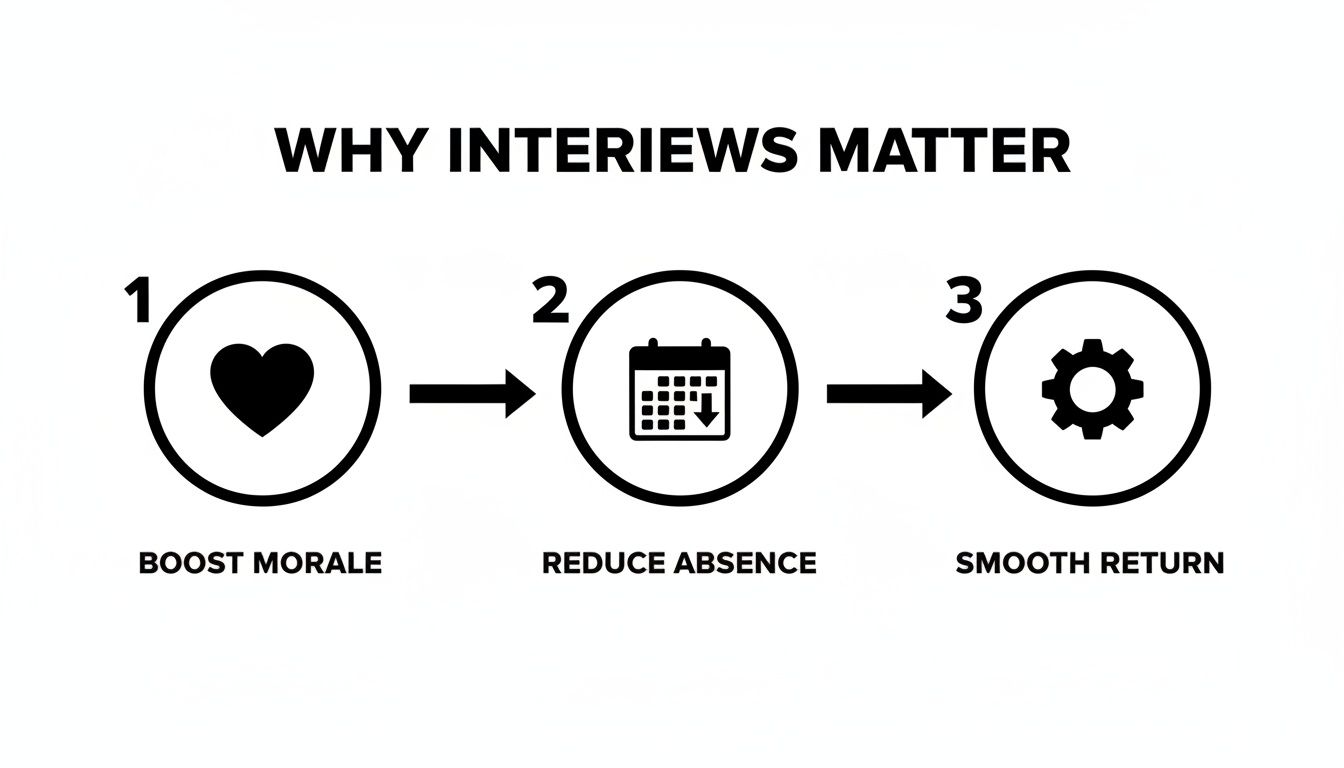
A proper interview process makes employees feel supported from their very first day back, which is a cornerstone of a healthy, stable workforce.
To help you visualise the flow, here’s a quick breakdown of the conversation's key phases.
Key Phases of the Return To Work Interview
| Interview Phase | Objective | Key Focus Areas |
|---|---|---|
| 1. Reconnect | Make the employee feel welcome and valued. | Genuine welcome, explaining the supportive purpose of the meeting. |
| 2. Understand & Support | Assess readiness for work and identify support needs. | Open questions about fitness for work, discussing GP fit note recommendations. |
| 3. Workplace Updates | Bring the employee up to speed on key changes. | Team news, project status, significant company policy or procedural changes. |
| 4. Plan & Agree | Create a clear, forward-looking action plan. | Phased return options, initial workload, scheduling follow-up check-ins. |
Now let’s dive into each of these phases in more detail.
Phase 1: Set A Positive Tone And Reconnect
The first few minutes really set the stage for everything that follows. Your main goal here is simple: make the employee feel welcome and valued, not like they’re under a microscope. It’s all about re-establishing that professional relationship after they've been away.
Start with a genuine welcome back. A simple, "It's great to have you back, we've missed you," can make a world of difference. Then, explain that the purpose of the chat is just to support their return and ensure they have everything they need.
A Few Ways to Kick Things Off:
- "Welcome back! How are you feeling about returning today?"
- "We want to make your return as smooth as possible. This is just an informal chat to see how we can best support you."
- "First off, it’s really good to see you. Let’s just catch up."
Phase 2: Understand The Return And Offer Support
This is where you carefully address the absence and the employee's readiness to get back to their duties. The key word here is carefully. Your focus must always be on their ability to do their job and what support they might need, not on prying into personal medical details.
Stick to open-ended questions about their fitness for work. If they have a fit note from a GP, now is the time to go through its recommendations. The conversation has to remain centred on workplace adjustments and what they can functionally do. For example, instead of asking "What was wrong?", you should ask, "Are there any aspects of your role you're concerned about, or any adjustments we could make that would help?"
A supportive process is more important than ever. With competition fierce for UK job seekers—roughly 2.0 unemployed individuals for every vacancy—and 24% of CVs showing career breaks of over a year, helping people reintegrate is critical for retention.
Phase 3: Share Essential Workplace Updates
Anyone returning from leave, especially a long one, is stepping back into a workplace that might feel different. New projects could be underway, teams may have shifted, or new software might be in use. Bringing them up to speed is absolutely vital for their confidence and ability to hit the ground running.
Before the meeting, jot down a quick summary of key changes. This could include:
- Team News: Any new starters or leavers in their immediate team.
- Project Updates: A quick overview of where things stand on projects they’re involved in.
- Company Changes: Any big updates to policies, procedures, or company direction.
This part of the interview is crucial for preventing someone from feeling isolated or overwhelmed. It shows you've considered their perspective and genuinely want to help them fit back in.
Keep this section brief and focused on what directly impacts their role. You can always schedule deeper dives into specific projects later. For now, it's about providing a clear, manageable overview.
Phase 4: Plan For Future Success And Agree On Next Steps
The final phase is all about looking forward. This is where you work with the employee to create a clear plan for their first few weeks back, agreeing on expectations and any ongoing support. It’s about formalising any adjustments and setting them up for success.
Discuss whether a phased return, temporary changes to their duties, or flexible working arrangements would be beneficial. Whatever you agree on, document it clearly. This creates a shared understanding and gives you both a reference point.
Actionable Next Steps to Agree On:
- Workload Management: Decide on their initial priorities. Will they start with a reduced workload to ease back in?
- Check-in Schedule: Plan a quick follow-up meeting in a week or two. It shows your support is ongoing.
- Formal Documentation: Complete any necessary return to work forms, making sure both you and the employee sign off on the plan. This should align with your company's broader guidelines, which you can read more about in our guide to creating a return to work policy.
This final step turns a simple chat into a concrete action plan, giving the employee clarity and confidence as they step back into their role.
How To Conduct An Effective Interview
Having a fantastic back to work interview template is a solid start, but your delivery is what truly turns it from a checklist into a powerful tool. The way you handle the conversation can make the difference between an employee feeling scrutinised and feeling supported.
Let's walk through how to lead a successful, empathetic, and effective return-to-work discussion.

The whole process kicks off before the employee even walks through the door. A bit of prep work is key to making sure the meeting is productive and stays on track. Your goal here is to move beyond simply firing off questions and instead foster a genuine dialogue.
Preparing The Groundwork
First off, think about where you'll have the chat. The interview should always happen in a private, neutral space where the employee feels comfortable speaking openly. Booking a small meeting room is far better than having the conversation at your desk in a busy open-plan office. Confidentiality is non-negotiable.
Before you meet, take a few minutes to review the employee's absence record. Getting familiar with the duration and any previous patterns will give you the context you need to ask more relevant questions. If they've handed in a GP fit note, read it carefully and jot down any recommended adjustments.
Setting A Supportive Tone From The Start
The first words out of your mouth will set the tone for the entire meeting. Don't just launch straight into the template's questions.
Start with a simple, human connection. A warm, "Welcome back, we're really glad to have you here" immediately frames the meeting as a supportive catch-up, not a disciplinary one.
Be clear about the purpose of the meeting right away. You could say something like, "The reason for this chat is simply to make sure your return is as smooth as possible and to see if there's any support you need from us." This clarity helps dial down any anxiety the employee might be feeling.
A supportive and informal tone doesn't mean the interview is unimportant. It means you are focusing on collaboration and well-being, which is the most effective way to ensure a successful return.
Once you’ve established this positive foundation, you can move into the structured part of the discussion with a much greater chance of an honest and open exchange.
Mastering The Art Of Active Listening
Your role in this interview is more about listening than talking. The template gives you the questions, but the real value comes from how you listen to the answers. Active listening isn't just about hearing the words; it's about paying close attention, showing you understand, and asking good follow-up questions.
Resist the urge to interrupt or jump in with solutions straight away. Let the employee finish their thoughts completely. You can show you're engaged by nodding and using small verbal cues like "I see" or "that makes sense."
Practical Active Listening Techniques:
- Paraphrase and Summarise: Briefly repeat what you've heard to check you've understood. For example, "So, if I'm hearing you correctly, you're a bit concerned about the long hours in the first week back?"
- Ask Open-Ended Questions: Use questions that need more than a simple 'yes' or 'no'. Instead of "Are you ready to come back?", try something like, "How are you feeling about getting back into your usual duties?"
- Notice Non-Verbal Cues: Pay attention to body language. If an employee seems hesitant or uncomfortable when discussing a particular topic, it might be a sign to explore that area more gently.
Navigating Sensitive Topics With Empathy
Conversations about health and well-being can be tricky. It's crucial to stay focused on the employee’s fitness for work, not their medical diagnosis. Your questions should always link back to their role and the workplace.
If an employee seems hesitant to discuss what they need, reassure them about confidentiality. Explain that the information is only being gathered to make sure they have the right support in place.
Here’s a real-world scenario:
An employee returning from stress-related leave seems quiet and withdrawn. Instead of pushing for details about their absence, you could say: "I want to make sure your workload feels manageable as you settle back in. What would be the most helpful way for us to approach your first couple of weeks?"
This question is supportive, work-focused, and gives them a sense of control.
By transforming the interview from a formal procedure into a collaborative discussion, you empower your employee. They feel heard, valued, and genuinely supported, which is the best possible foundation for their successful reintegration into the team.
Adapting The Template For Different Types Of Leave
A one-size-fits-all approach to a back-to-work interview can feel impersonal and, frankly, miss the mark. The reason for an employee's absence completely changes the context of their return, so your conversation has to adapt. A good back to work interview template is a powerful starting point, but its real value comes from tailoring it to the specific situation.
Think about it: a brief, straightforward chat might be perfect for someone returning after a couple of days off with a cold. But for an individual coming back from a significant health issue, parental leave, or another long-term absence, you'll need a much more nuanced and in-depth discussion. The core goal is always the same—to provide support—but the focus of that support will shift dramatically.
Handling Short-Term Sickness Absence
For absences lasting just a few days, the interview can be quick and to the point. Your main goals are simple: confirm the employee is genuinely fit to resume their duties and keep a consistent record of absences across the business.
Your conversation should be light but professional. You're not prying; you're simply fulfilling your duty of care and showing that every absence is noted.
- Key Focus: Confirming fitness for work and documenting the absence.
- Sample Question: "Welcome back. We just wanted to check in and see how you're feeling and confirm you're ready to get back to your duties."
- Keep it Simple: There's usually no need for detailed discussions about adjustments unless the employee raises a concern themselves.
This consistent approach helps discourage casual absenteeism while still showing you care about your team's well-being.
Navigating Returns From Long-Term Leave
When an employee returns after a prolonged period away—perhaps for surgery, a serious illness, or mental health reasons—the interview becomes a cornerstone of their successful reintegration. This conversation needs to be more comprehensive, empathetic, and forward-looking.
The focus shifts heavily towards things like phased returns, reasonable adjustments, and mental well-being support. It's not just about their first day back; it's about setting them up for a sustainable return over the coming weeks and months. This is also where legal considerations become more prominent. For employees returning from protected leaves, like those covered by the Family Medical Leave Act (FMLA) in the US or similar UK legislation, you need to integrate specific legal requirements into your interview process.
For long-term absences, the interview is less of a formality and more of a strategic planning session. The goal is to build a collaborative plan that eases the employee back into their role and minimises the risk of re-absence.
Before you even sit down, make sure to review any GP fit notes or occupational health reports. These documents are your guide to understanding what adjustments might be necessary.
Your discussion should explore:
- Phased Return Options: Talk about a gradual increase in hours or responsibilities to prevent them from feeling overwhelmed.
- Reasonable Adjustments: Discuss specific changes to their workstation, duties, or schedule that could offer support.
- Ongoing Support: Agree on a schedule for regular, informal check-ins during their first month back to catch any issues as they arise.
Supporting New Parents Returning From Leave
Returning from maternity, paternity, or adoption leave is a totally unique transition. The employee isn't unwell, but they are adjusting to a monumental life change. Your interview should acknowledge this and focus squarely on practical support and flexibility.
The conversation should be warm and welcoming, concentrating on how you can support them as a working parent. Key topics will naturally include catching them up on organisational changes and discussing potential flexible working arrangements to help them balance their new responsibilities.
Be ready to talk through what’s changed in the team, fill them in on new projects, and give them a heads-up on any shifts in company strategy that happened while they were away. Providing a clear summary helps them feel connected and less overwhelmed from the get-go. This is a prime opportunity to show your organisation is family-friendly and supportive—a massive factor in retaining talented people after they start a family.
Navigating The Legal And Compliance Landscape
Getting a return-to-work interview wrong can land your business in some seriously hot water. This isn’t just a friendly chat to welcome someone back; it’s a formal process that has to be watertight when it comes to UK employment law, especially the Equality Act 2010 and GDPR. One slip-up could lead to accusations of discrimination or a privacy breach.
The golden rule? Keep every question focused on the employee's fitness to perform their role and what support they might need to do that successfully. You absolutely must not stray into questions about their specific medical diagnosis or personal health history. That's a very bright red line.

Staying Compliant With The Equality Act 2010
Under the Equality Act 2010, you have a legal duty to make "reasonable adjustments" for any employee with a disability. This isn’t just about physical disabilities; it covers mental health conditions too, provided they have a substantial and long-term negative effect on their ability to carry out normal day-to-day activities.
Your back-to-work interview is the perfect time to open up a conversation about what these adjustments might look like.
A reasonable adjustment could be anything from providing specialist equipment, like an ergonomic chair, to offering more flexible working hours. For anyone returning after an absence related to a neurodivergent condition, for instance, it's vital to think about the right kind of support. There’s some excellent guidance out there on understanding reasonable adjustments for neurodivergent employees.
Remember, the whole point is to remove barriers. An adjustment isn’t about giving someone an unfair advantage—it’s about making sure they have the same opportunity to succeed as everyone else.
To stay on the right side of the law, the interview has to be a two-way street about potential support, not an interrogation.
Handling Sensitive Data and GDPR
Let's be clear: any information about an employee's health is classed as 'special category data' under GDPR. It needs the highest level of protection, which means you have to handle it with extreme care.
- Be clear about why you're asking: Explain that you need certain details to ensure their safety at work and to put the right support in place.
- Lock down access: Only the people who absolutely need to know, like the direct line manager and HR, should see the records from this interview.
- Store it securely: Notes from the meeting that contain health information must be kept securely and separately from their main personnel file.
Getting this wrong can lead to hefty fines and can completely shatter the trust you have with your team.
Compliant vs Non-Compliant Questions
Knowing what not to ask is just as important as knowing what you should. A simple misphrasing can cross a legal line.
Here’s a quick guide to keep your conversations on track.
| Topic | Compliant Question (Do Ask) | Non-Compliant Question (Don't Ask) |
|---|---|---|
| Fitness to Work | "Are there any parts of your role you feel you might struggle with?" | "What exactly did the doctor say was wrong with you?" |
| Adjustments | "Your fit note suggests a phased return. What would that ideally look like for you?" | "Are you sure you're well enough to be back?" |
| Support | "Is there any equipment or support we could provide that would help you?" | "Are you still taking medication for your condition?" |
Proper documentation is your final layer of protection. A signed return-to-work form that details what was discussed and what was agreed provides a clear, auditable record if you ever need it. For a deeper dive, take a look at our guide on complying with employment laws.
Common Return To Work Questions Answered
Even with the best back to work interview template in hand, managers often run into tricky situations that feel like they fall outside the script. These grey areas can cause uncertainty, but knowing how to handle them confidently is key to a fair and supportive process.
Below, we’ve tackled some of the most common questions that pop up, providing clear and direct answers to help you navigate any scenario.
What Should I Do If An Employee Refuses An Interview?
First off, try to understand their hesitation without being confrontational. It's best to calmly explain that the interview is a standard, supportive process for everyone returning from absence. Reassure them it's designed purely to ensure their well-being and a smooth transition back into their role. It’s part of the company's duty of care, not a disciplinary meeting.
If they still refuse, here's what to do:
- Document the refusal and the reasons they gave you.
- Refer to your company policy. A persistent refusal without a valid reason might be seen as a failure to follow a reasonable management instruction.
- Consult HR before escalating. Disciplinary action should always be a last resort; the main goal is to resolve the situation and support the employee.
How Much Medical Detail Can I Actually Ask For?
This is a big one. You should never ask for a specific medical diagnosis. The entire conversation must be about the employee's fitness for work and their ability to perform their duties. Pushing for specific health details is a major legal and privacy risk under GDPR.
Instead of asking about their condition, focus on the practical implications for their role.
Your questions should be about workplace support and safety, not the employee's private medical history. The line is drawn at what is necessary to ensure a safe and effective return to the workplace.
For more guidance on keeping the conversation compliant and constructive, check out our detailed list of return to work interview questions.
When Is A Phased Return To Work The Right Call?
A phased return is a fantastic tool following any long-term absence, especially after things like surgery, burnout, or a significant health issue. Think of it as a proactive strategy that eases an employee back into their routine, drastically cutting the risk of a relapse or another absence down the line.
Consider a phased return when:
- An employee is coming back from any form of long-term leave.
- A GP's fit note specifically recommends it.
- The employee themselves expresses anxiety or concern about jumping straight back into their full duties.
This approach, which involves gradually increasing hours or responsibilities, is a smart investment in helping your team member return successfully and sustainably.
How Does LeaveWizard Streamline This Process?
LeaveWizard acts as your central hub, taking the manual work out of absence management. Before the interview even starts, you can instantly pull up the employee's absence history to get the context you need.
After your chat, you can log that the interview was completed and securely attach any documents, like a signed return-to-work form, right in the system. If you agree on a phased return, you can easily schedule and manage the logistics, ensuring pay and leave are calculated correctly. It creates a compliant, easily auditable trail for every stage of the process.


