
An annual leave request is how you formally ask your employer for paid time off. Getting this process right is the first step towards a proper, restorative break—one where you can actually disconnect and recharge.
Why Nailing Your Annual Leave Request Matters
Taking a real break from work isn't a luxury; it's essential for staying productive and feeling your best. But in today's demanding work culture, many people in the UK struggle to use up their full holiday entitlement, which just leads to a cycle of burnout that helps no one.
A well-written annual leave request is your best tool for proactively protecting your downtime. It turns a hopeful wish into a structured, professional plan. By clearly communicating your intentions and planning for your absence, you show respect for your team and for your own need to rest.
The Challenge of Truly Disconnecting
Unfortunately, even when your leave is approved, the pressure to stay connected can be immense. Despite a legal minimum of 28 days of paid annual leave, the reality is often quite different.

A recent survey from NatWest Group paints a telling picture: a staggering 45% of working Brits do not take their full annual leave allowance. Even worse, those who do take a break end up working an average of 2.5 days during a seven-day holiday. This highlights just how hard it is to genuinely switch off.
This guide is designed to help you change that. We’ll walk you through everything, from understanding your company's policy to using modern tools, so you can submit a request that gets a thumbs-up and leads to a stress-free holiday.
Taking your entitled leave isn't just about following the rules; it's a fundamental part of managing your long-term career health and avoiding exhaustion. A proper break allows you to recover mentally and physically, which directly translates to better performance when you return.
When you master this process, you set clear boundaries. To dig deeper into this, you can learn more about the importance of annual leave for your well-being in our detailed article. It’s all about empowering you to take the restorative time you’ve earned, so you can come back to work refreshed, re-energised, and ready to go.
Get to Grips With Your Company's Leave Policy
Before you even start dreaming about your holiday, your first move should always be to get familiar with the rules. Think of your company’s leave policy as the official playbook for booking time off. Knowing how to read it is the secret to getting your annual leave request approved without a hitch.
You can usually find this document tucked away in an employee handbook, posted on the company intranet, or available through your HR portal. It’s not just about how many days you’ve got in the bank; it’s about the specific hoops you need to jump through to actually use them.
What to Look For
Don't just skim it. You need to zero in on the details that will directly affect your request. Pay close attention to these key areas:
- Notice Periods: Most places have a rule of thumb: give notice that’s at least twice the length of the leave you want to take. So, for a week off, you'll likely need to give at least two weeks' notice.
- Blackout Dates: These are no-go zones for leave requests. It could be the mad rush before Christmas if you're in retail, or the end of a financial quarter when it's all hands on deck.
- Carry-Over Rules: Can you carry unused days into the next leave year? Don't assume you can. Many businesses have a "use it or lose it" policy, while others might cap the number of days you can roll over.
Let's put this into a real-world context. Imagine you work in marketing and fancy taking the last two weeks of November off. A quick check of the policy might reveal this is a blackout period because of all the Black Friday prep. Knowing this upfront saves you from submitting a request that’s dead on arrival.
A well-structured policy does more than just lay down the law; it creates a fair and transparent system for everyone. It makes sure the business keeps ticking over smoothly while employees get the restorative breaks they absolutely need.
Getting your head around these elements is the foundation of a solid request. If you want to dig a bit deeper into what makes a good set of rules, you might find our guide on how annual leave policies can boost employee success useful. This knowledge gives you the power to plan strategically, sidestep common mistakes, and seriously boost your chances of getting your preferred dates signed off.
How to Write a Professional Leave Request Email
Once you've got the rules down, it's time to actually write your request. How you ask for time off matters just as much as when you ask. A professional, well-written email sets the right tone from the get-go, showing that you're organised, considerate of your team, and serious about planning your absence properly.
Every annual leave request needs a few core pieces of information to be effective. Think of it as a mini-proposal that gives your manager everything they need to say "yes" without a lot of back-and-forth. The goal is to be clear and concise, leaving no room for confusion.
The Essential Elements of Your Request
A strong request is all about providing clear information upfront. When you give your manager all the details they need, you prevent unnecessary questions and speed up the whole approval process.
To make sure your request is clear and actionable, it's a good idea to include a few key details. The table below breaks down exactly what you need and why it's so important.
Key Information for Your Annual Leave Request
| Element | Why It's Important | Example |
|---|---|---|
| Clear Subject Line | Makes your email easy to find and categorise. | "Annual Leave Request – Jane Smith" |
| Specific Dates | Prevents any confusion about when you'll be away. | "from Monday, 15th August to Friday, 26th August" |
| Total Number of Days | Helps with leave tracking and resource planning. | "which is a total of 10 working days" |
| Handover Plan | Shows you’re proactive and care about the team’s workload. | "I will ensure all my urgent tasks are completed before I leave." |
Getting these basics right from the start makes the entire process smoother for everyone involved.
This simple infographic breaks down the essential thought process before you even start typing your email.
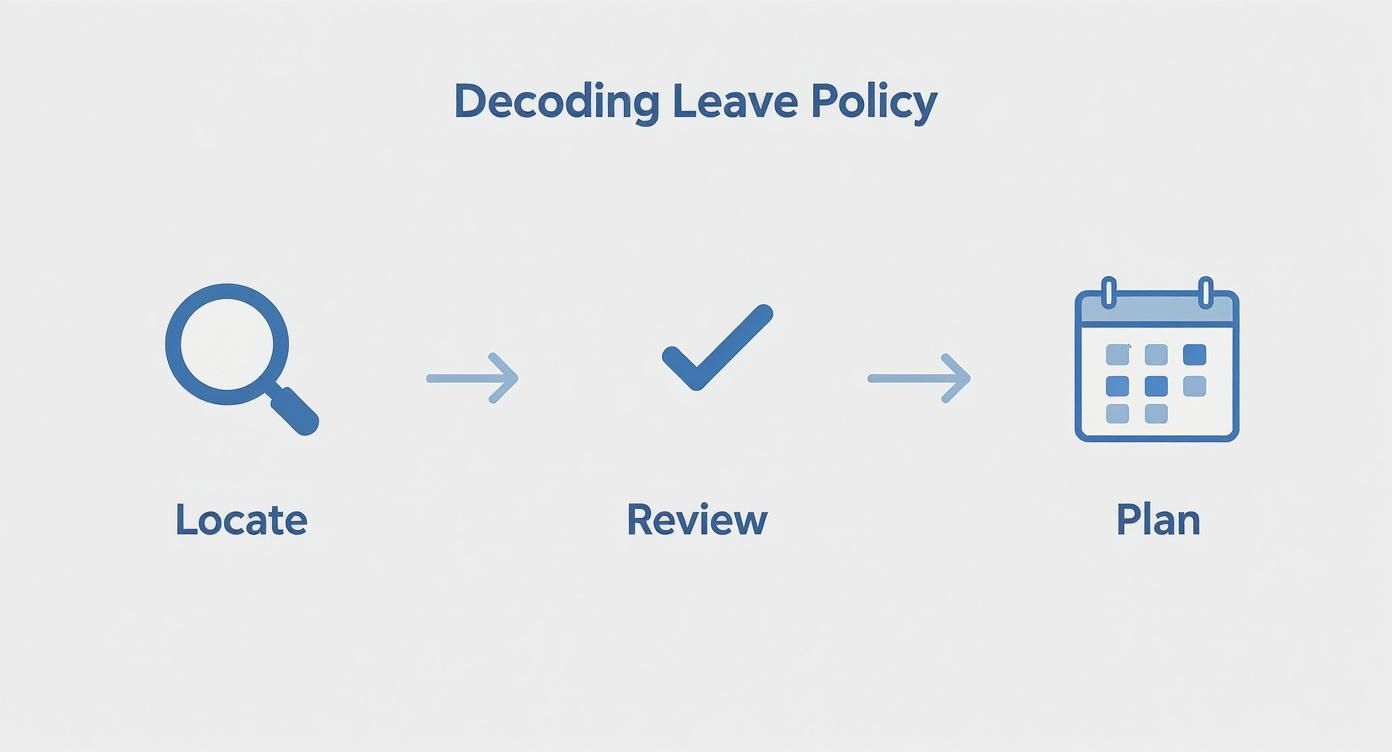
As you can see, the key is to first check your company's policy, review the details, and then plan your request around them. This simple sequence ensures you aren’t asking for dates that are already blocked off or failing to give enough notice.
Crafting the Right Tone
Beyond the hard facts, the tone of your email is vital. You want to sound professional yet approachable. It's crucial to frame your message as a request, not a demand. Phrasing like, "I would like to request annual leave…" always lands better than "I am taking my holiday on these dates."
A thoughtful and considerate request demonstrates respect for your manager's responsibilities and the team's workflow. It positions your time off not as an interruption, but as a planned and manageable event.
For instance, mentioning that you've already checked the team calendar for major deadlines or clashes shows real foresight. It's a small step, but it can make a massive difference, especially when you're asking for time off during popular holiday periods.
For a bit more guidance, have a look at our collection of annual leave request email templates to find the perfect starting point for your own situation.
Preparing for a Stress-Free Handover
Getting your annual leave request approved is a great feeling, but the real secret to a restorative break is a seamless handover. Let’s be honest, without a solid plan, you risk coming back to a mountain of work and missed deadlines. That completely undoes all the good your time off did.
A well-organised handover isn't just about making sure your colleagues can cope; it’s about making sure you can truly switch off.
This process doesn't need to be complicated. It really just starts with creating a simple handover document that outlines the status of your key projects. Think of it as a user manual for your role while you're away. Clearly list ongoing tasks, who key contacts are, and where to find essential files.

This kind of proactive planning is becoming more important as UK workers get better at actually taking their entitled leave. In a really positive shift, the average number of unused holiday days per employee dropped by a massive 71% since 2019, from 18.5 to just 5.3.
As more of us take our well-deserved breaks, smooth handovers become essential for keeping the business running. You can read more about this encouraging trend in annual leave statistics and what it means for the modern workplace.
Your Essential Handover Checklist
To avoid any confusion, your handover plan needs to be clear and actionable. The trick is to focus on providing your colleagues with the information they'll actually need, not every tiny detail of your job.
Here's what I'd recommend including:
- Key Projects and Status: Briefly describe your main projects and where they’re at. Are you waiting for a client's response, or is a task halfway done? Be specific.
- Urgent Tasks and Deadlines: Highlight any non-negotiable deadlines that fall during your holiday. Make it crystal clear who is responsible for each one.
- Important Contacts: List key internal and external contacts for each project. This saves your colleagues from having to dig through old emails to find out who to talk to.
- File Locations: Provide direct links or clear paths to important documents, spreadsheets, or presentations on your shared drive. Don't make them hunt for it.
The goal of a handover isn't to offload all your work onto others. It's about providing clarity and empowering your team to keep things moving forward confidently without you needing to check in.
Finally, before you log off, set up a clear and helpful out-of-office message. State your return date and provide an alternative contact for genuinely urgent matters. This simple step manages expectations for anyone trying to reach you and gives you permission to disconnect completely.
Let's be honest, trying to manage annual leave through a mess of email chains and spreadsheets is a recipe for disaster. It’s an old way of working, and thankfully, it’s on its way out. Modern workplaces are shifting to dedicated software that brings some much-needed order to the whole process, saving a ton of headaches for everyone involved.
These systems pull everything into one place. No more hunting through your inbox to see if a colleague is off; you just glance at a shared team calendar. This kind of visibility is a game-changer for planning. It helps you dodge those accidental overlaps and makes sure you’ve always got enough people on deck, especially during your busiest times.
A Clearer View for Everyone
For employees, these platforms are all about transparency. You can see your remaining leave balance instantly without having to bother HR. When you're ready to book some time off, submitting a request is just a matter of a few clicks. For businesses looking to really overhaul their HR processes, it's worth exploring broader solutions from HR partners like Hubdrive HR.
Here’s a quick look at a typical dashboard, using LeaveWizard as an example.
Everything you need—your personal allowance, pending requests, and key company dates—is right there in front of you.
This self-service style empowers your team and slashes the admin burden. Once you submit a request, it zips over to your manager automatically, who gets a notification to review it. You’ll get an update the second it’s approved or denied, so you’re never left wondering.
A dedicated system transforms leave management from a manual, error-prone chore into a smooth, automated workflow. It creates a fair and transparent process where everyone understands the status of requests and team availability.
This organised approach doesn't just save time. It also gives managers valuable data, making it easier to spot holiday trends and plan resources more effectively all year round.
Common Annual Leave Questions Answered
Even with the best annual leave policy in place, tricky situations and specific questions are bound to pop up. Let's walk through some of the most common queries we see from employees across the UK.
Can My Holiday Request Be Rejected?
One of the biggest concerns is whether a request can be turned down. The short answer is yes, your employer can refuse a leave request, but only if there’s a solid business reason behind it. This could be anything from a critical project deadline to too many other team members already being off.
Crucially, they must give you notice of the rejection that is at least as long as the leave you requested. So, if you asked for a week off, they need to tell you "no" at least a week beforehand.
Interestingly, this seems to be part of a bigger trend. The average UK employee took just 33.9 days of annual leave in 2023. That’s a significant drop from 38 days back in 2020, suggesting that pressures at work are making it tougher for people to actually use their time off. You can dig into more of these trends in this UK annual leave report.
What Happens If I'm Sick on Holiday?
Picture this: you’ve finally made it to the beach, only to come down with a nasty flu. What happens to your precious annual leave days?
Good news. If you fall ill during your scheduled holiday, you can typically claim those days back as sick leave. You’ll need to follow your company’s usual sickness reporting procedure, just as you would if you were working. Once that's done, the days you were unwell can be added back to your annual leave balance to take later on.
How Much Notice Should I Give?
Another key question is about notice periods. While every company is different, a good rule of thumb is to give notice that is at least double the length of the time you want off. For a one-week holiday, that means putting in your request at least two weeks in advance.
That said, always double-check your employee handbook for the official policy. Many companies require much longer notice periods, especially for popular times like the summer holidays or over Christmas, just to keep everything running smoothly.
Getting a handle on these common scenarios means you can manage your time off with a lot more confidence and a lot less guesswork.


