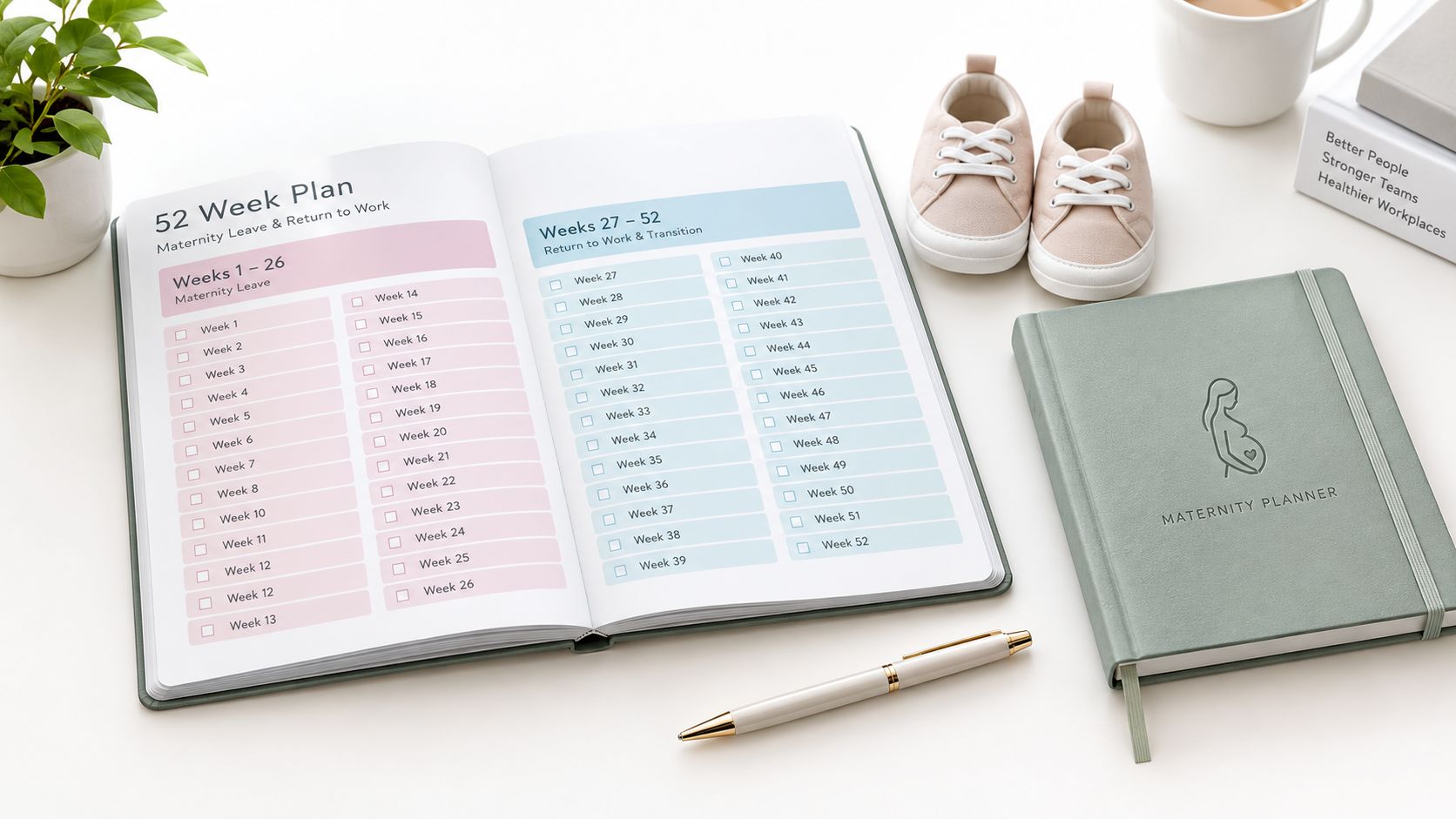
Monday morning starts the same way for a lot of small UK businesses. Outlook is open, the inbox is already full, and there's a contract waiting in almost every thread. For an HR or operations lead in a 45-person team, that can mean new starter agreements, an NDA from a creative agency, a supplier renewal, a parental-leave policy update, and a manager asking whether a contractor's wording is “standard enough” to sign today.
The actual work isn't glamorous. Someone opens each PDF, skims for dates, notice periods, restrictive covenants, data terms, and signature blocks, then forwards it to the right person, updates a tracker, and chases the missing version from a shared drive folder that's somehow been renamed three times. By lunchtime, you've spent half the morning on coordination, not judgement.
That's why AI contract review is getting attention in small businesses. Not because it's trendy, but because the workload is repetitive, time-sensitive, and easy to bottleneck. UK legal adoption has accelerated sharply, and contract review is one of the clearest places where the technology is being pulled into day-to-day work, not left as an abstract innovation story.
The hard part is separating what helps from what just adds another tool to maintain. A small team doesn't need a magical lawyer substitute. It needs a practical way to sort the stack, surface the risky bits, and keep governance tight enough that nobody regrets the rollout later.
Table of Contents
- The Inbox That Started This Article
- What AI Contract Review Does
- Benefits, Limitations, and Compliance Risks
- Where AI Contract Review Helps SMBs Most
- How LegesGPT Can Help
- An Implementation Checklist for Small Teams
- Sample Prompts and Workflows HR Teams Can Use
- Measuring ROI Without a Legal Budget
- Common Misconceptions and Your Next Steps
The Inbox That Started This Article
By the time the first coffee cools, the HR lead in a growing business has usually become the informal contract triage desk. One email is a new starter agreement that needs a quick check before payroll. Another is a supplier renewal with revised payment terms buried in a PDF attachment. A third asks for a non-disclosure agreement to be turned around before a pitch meeting. The work feels administrative right up until someone misses a clause that matters.
That's the point where many teams start looking at AI contract review. The attraction isn't novelty, it's volume. In the UK legal sector, a LexisNexis survey of more than 1,200 UK legal professionals found AI adoption had more than doubled in recent months, and many firms had begun allocating dedicated budgets for generative AI tools, while commentary around that survey notes AI-powered tools can reduce contract review time by more than 60% (The Barrister Group).
For an SMB operator, that matters because the bottleneck isn't just reading. It's the chain of small actions around the read. Open the PDF. Find the latest version. Compare against the template. Copy the clause into the tracker. Send it for approval. Chasing one missing sign-off can take longer than checking the contract itself.
Practical rule: if a contract only needs a first-pass read, a structured summary, and a flag on anything unusual, AI can save real time. If the deal needs judgement, negotiation, or exception handling, the human still owns the decision.
UK in-house teams already have the digital foundations in place for this kind of workflow. Thomson Reuters reported that 76% of surveyed in-house legal teams were already using contract management software, with another 14% planning to procure such solutions within 12 months, and 31% were already using contract AI for analysis, risk assessment, or due diligence, while 24% intended to adopt it soon (Thomson Reuters). That tells you the shift isn't theoretical. The software stack is already there in many departments.
For a small business, the promise is simpler than the vendor demos suggest. AI can cut the time spent on repetitive reading, help standardise first-pass checks, and keep common clauses from slipping through when the inbox is busy. It won't remove the need for judgement, and it shouldn't try to. It can, however, turn a chaotic contract morning into something that's a lot more manageable.
What AI Contract Review Does
At its simplest, AI contract review is software that reads a contract, pulls out key information, flags unusual language, and compares a new draft with a baseline. In practice, that means it can turn a messy inbox of agreements into something a small team can scan quickly, without losing sight of the clauses that need a human decision.
Three jobs the software handles
The first job is retrieval. The system finds the right clause inside a long PDF or Word document, even when the wording is not exact. It looks for patterns in legal text, so it can identify where confidentiality, termination, liability, or IP ownership sit in the document.
The second job is classification. Once the relevant clause is found, the tool sorts it into a category. A standard employment agreement might have sections on notice, probation, leave, restrictive covenants, and governing law. A supplier agreement might flag service levels, indemnities, payment terms, and breach rights. The value is in turning a messy document into a structured view that is easier to check and easier to route to the right person.
The third job is change tracking. The tool compares a new draft against a prior version or a house template and highlights edits. That matters because the risk is often not a brand-new clause, but a small wording change that shifts liability or weakens a protection you thought was already agreed.
Some tools sit inside a contract lifecycle management platform. Others run in a browser, and a few are lightweight extensions that sit on top of existing document workflows. The category matters less than the behaviour. A useful tool should show you what changed, where it changed, and why it thinks the clause deserves attention.
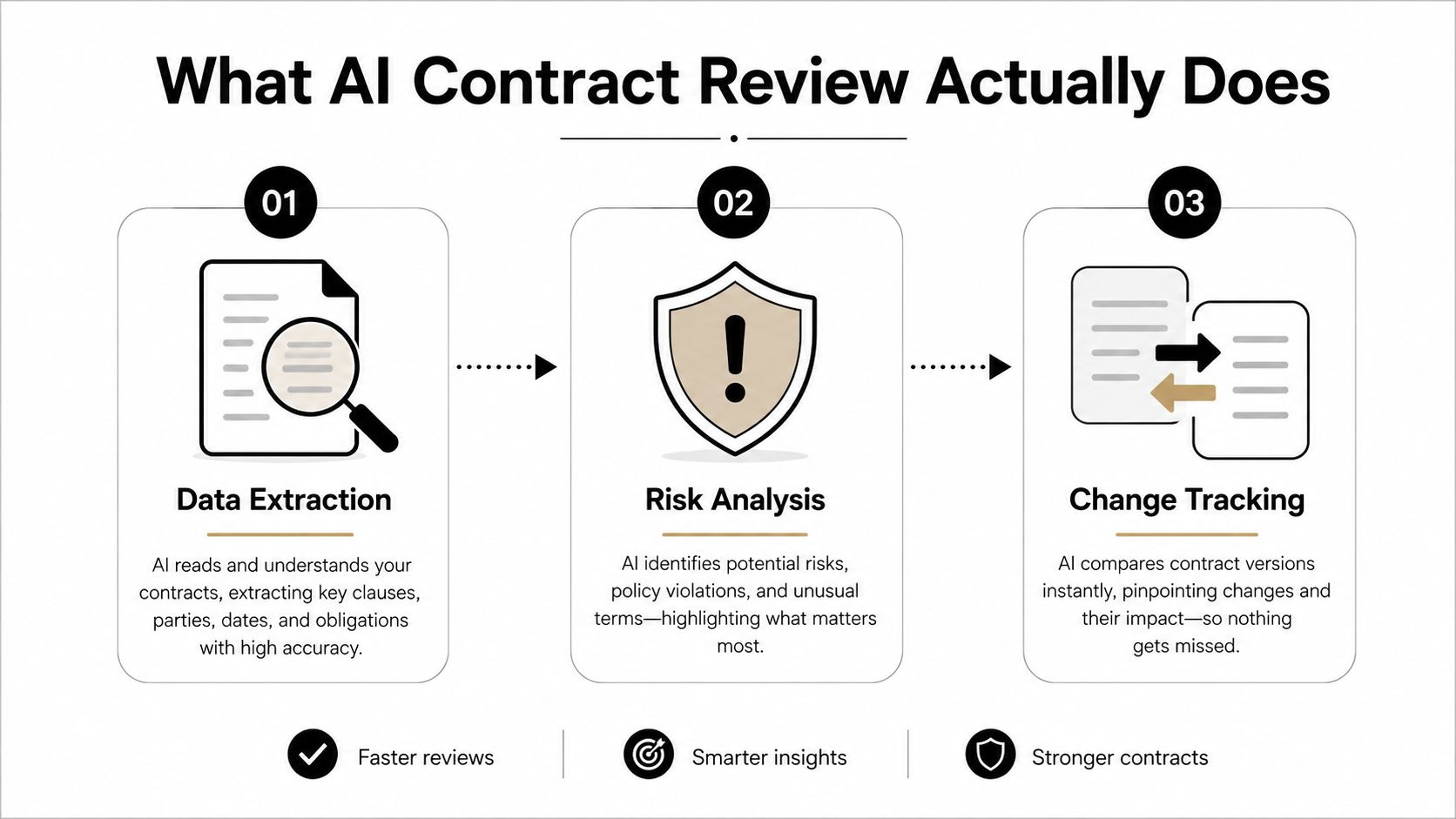
A good system doesn't just say “this looks risky”. It tells you which clause, what changed, and what baseline it is comparing against.
That distinction matters for procurement. A browser tool may be fine for ad hoc summaries, but a team handling employee contracts, supplier terms, and policy updates usually needs a record of the source document, the flagged clause, and the human sign-off. For a small business, that governance burden is part of the decision, because the tool has to fit the review process you can maintain.
A short video walkthrough can help people visualise the workflow before a pilot starts.
Understanding those moving parts is the baseline for judging whether a tool is worth rolling out. If the system cannot reliably find, label, and compare clauses, the rest of the pitch does not matter much.
Benefits, Limitations, and Compliance Risks
The appeal of AI contract review shows up fastest on repeat work. NDAs, standard employment offers, and routine supplier renewals are the kinds of documents where a machine can speed up the first pass, keep wording consistent, and catch the sort of issue a tired reviewer may miss. In-house adoption is clearly moving in that direction, with market commentary from Thomson Reuters pointing to strong procurement interest.
That still leaves real risk to manage.
The three risk areas to control
Confidentiality comes first. Contracts often include employee data, pay terms, supplier pricing, or commercially sensitive wording. If those files go into a third-party service without clear controls, the business can lose sight of where the data sits and who can access it.
Accuracy is the next problem. A tool can miss jurisdiction-specific language, overstate certainty, or misread a clause that looks ordinary but is not. UK legal commentary advises teams to contract for data-use restrictions, transparency, liability allocation, and ongoing compliance updates, including a ban on using client data to train models without consent (Kennedys). The vendor contract matters as much as the feature list.
Oversight is the third issue. A manager cannot just skim a summary and click approve. Human review still matters where the output affects employment terms, supplier exposure, or policy wording. The UK Law Society also warns that using a public generative AI chatbot for contract review is a big risk because the data is not protected in the same way as it is in an enterprise-sanctioned tool with an established risk-assessment and approval process (Law Society).
| AI Contract Review: Benefits vs. Risks for Small Businesses | ||
|---|---|---|
| Dimension | Benefit | Risk to Manage |
| Turnaround | Faster review of repeatable contracts | Do not use speed as a substitute for sign-off |
| Consistency | More uniform clause spotting | Check that the model is not flattening nuance |
| Confidentiality | Centralised workflow | Confirm data handling and retention terms |
| Oversight | Easier first-pass triage | Keep a named human reviewer in the loop |
The governance gap matters too. The ICO says organisations should do due diligence before procuring AI systems, datasets, or coding, and check accuracy, bias, and trade-offs. Its audit framework also calls for in-life contract monitoring or one-off arrangement reviews to ensure partners comply with agreements (ICO). For a small team, that means the purchase is only the start of the work.
The practical limit is simple. AI is strongest where the documents are repetitive and the baseline is known. It is weaker on novel drafting, negotiation tactics, and the commercial judgement that sits behind a final yes or no. Small businesses also have to decide where the tool fits their own compliance routines, which is why a small-business compliance guide can be useful as a starting point.
Where AI Contract Review Helps SMBs Most
For a small team, the question is not whether AI can read a contract. It is which contract families are stable enough to trust a first pass, and which ones still need a person who knows the business context.
The high-confidence wins
NDAs are usually the cleanest place to begin. The clause structure is familiar, the variation is limited, and the main task is spotting wording that drifts from the house position. Employment offer letters and contractor agreements fit the same pattern, especially when the business works from one base template across hires. Standard supplier terms also tend to be a good fit because the same issues keep coming back, such as payment timing, termination rights, confidentiality, and liability caps.
Practical rule: if the document family looks the same every week, AI can handle the repeat checks and the human can focus on exceptions.
The middle ground
Settlement agreements, flexible-working policy updates, and probation extensions need more care. The structure is still familiar, but the business impact is higher and the wording often reflects a live people issue. AI can draft, compare, or flag these documents, but it should not approve them on its own. Use it to surface notice wording, redundancy calculations, restrictive covenants, and any place where the language departs from the standard.
That approach works well in HR operations. It shortens the first review, but it does not remove the need to understand the employee relations context behind the wording.
The full human-review zone
M&A work, bespoke commercial deals, and regulated data-processing agreements need a proper human read. The issue is not only complexity. Clauses often interact, and a line that looks harmless on its own can mean something different once the rest of the deal is read together. AI can still help with extraction and summarising, but final judgement belongs with a person.
| SMB contract types ranked by AI suitability | |||
|---|---|---|---|
| Contract type | Volume / template fit | AI recommendation | Watch for |
| NDAs | High | Use AI | Missing exclusions, survival language, scope creep |
| Employment offer letters | High | Use AI | Start date, notice, probation wording |
| Contractor agreements | High | Use AI | IP assignment, payment terms, termination rights |
| Standard supplier terms | High | Use AI | Liability shifts, auto-renewal, service commitments |
| Settlement agreements | Medium | AI drafts, human approves | Notice periods, confidentiality, post-exit wording |
| Flexible-working updates | Medium | AI drafts, human approves | Policy clashes, edge cases, employee relations impact |
| M&A and bespoke commercial deals | Low | Human review | Context, negotiation leverage, hidden cross-terms |
| Regulated data-processing agreements | Low | Human review | Compliance obligations, accountability, audit rights |
The ROI comes from sorting contracts by repeatability, not by legal title. If your team spends most of its time on repetitive employment and supplier paperwork, AI can clear the inbox faster and make the review trail easier to manage. If the work is mainly bespoke negotiation, the value is narrower and the governance burden is higher. The sensible approach is to let the tool take the first pass where the pattern is stable, then bring in a person before a weak assumption becomes a signed obligation.
How LegesGPT Can Help
LegesGPT is worth considering if you want a chat-first legal assistant that can sit closer to the document work itself. It's designed for everyday legal questions, contract work, and legal research, with answers grounded in a statute corpus covering US federal law, 44 US states, UK legislation including Scotland, Wales, and Northern Ireland, Canadian law, and UAE law, plus live web search where coverage gaps need filling. For a small team dealing with cross-border work or mixed-jurisdiction questions, that scope is more useful than a generic chatbot that improvises.
The most relevant piece for AI contract review is the document workflow. You can upload contracts, agreements, and images, then chat with the document, flag risks, extract key terms, and get summaries. LegesGPT's AI contract review page is a useful place to check how that looks in practice, especially if you're comparing it against other tools and want to see whether the output is useful enough for an HR or operations workflow: LegesGPT's AI contract review.
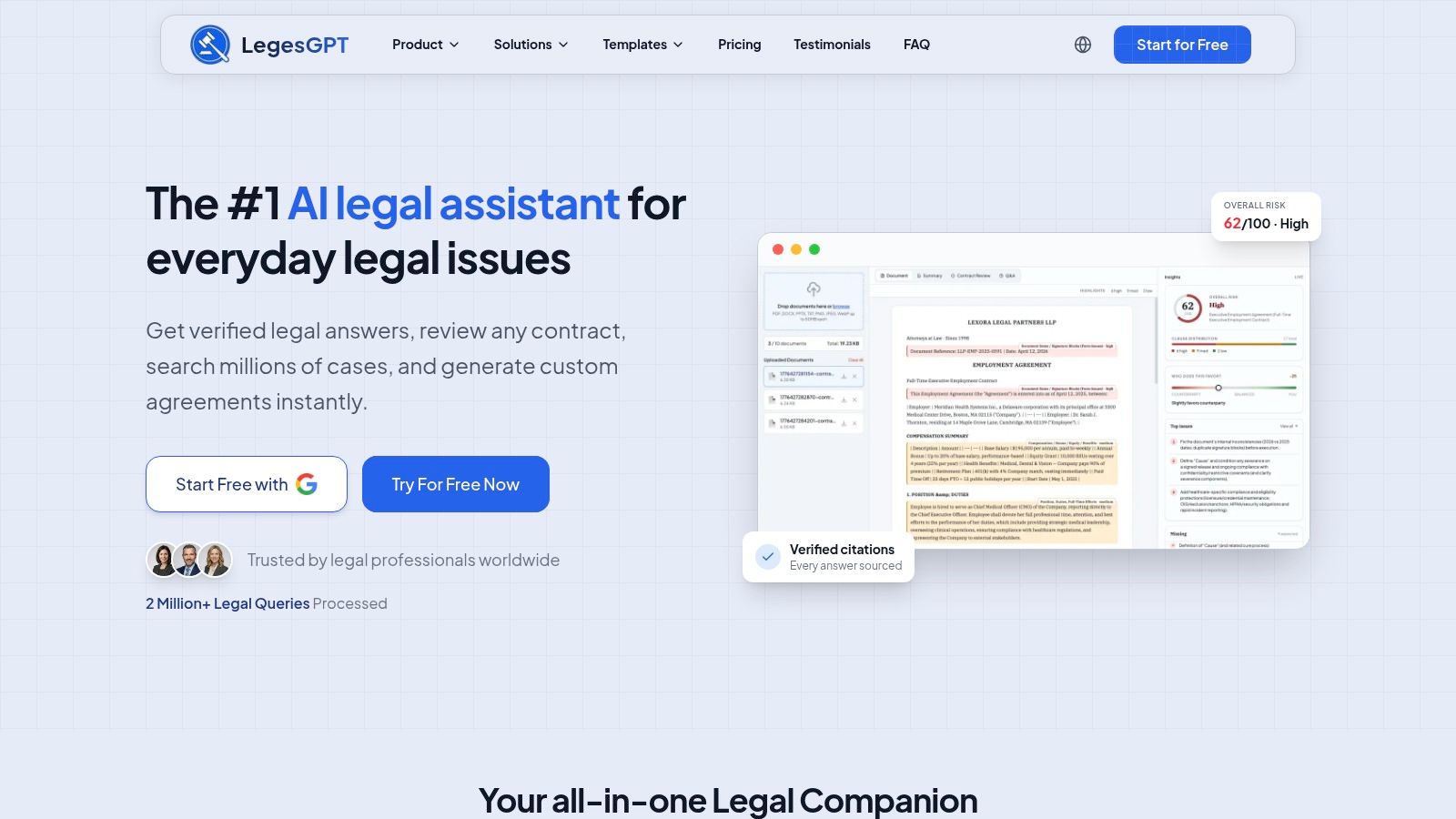
It also matters that the product is built around verified citations to statutes and regulations, with country and US-state selection so the answer reflects the right jurisdiction. That's a practical advantage over tools that can sound confident while citing nothing solid. For teams that need research, drafting, and review in one place, the combination of document upload, cited legal chat, and broader legal research can reduce context switching.
The right choice is usually the one that matches your actual workflow. If you mostly need contract extraction, risk spotting, and plain-language explanations across a mix of legal questions, LegesGPT is a strong fit. If your team already has a contract platform and only needs a narrow review layer, it may be better as a complementary research and review tool rather than a full replacement.
An Implementation Checklist for Small Teams
The cleanest rollout starts with the boring questions. First, ask where the documents are processed, whether employee or customer text is used to train the model, whether sub-processors are disclosed, and what logging exists for review activity. The ICO's guidance makes this kind of due diligence part of the procurement job, not an optional extra (ICO).
The two-week pilot shape
Pick one contract family, one reviewer, and a fixed set of past documents. Then run the AI output in parallel with a human review so you can compare clause extraction, missed issues, and false alarms. That mirrors the practical review model many teams use, where a high-stakes document gets a much heavier human check than a routine one (Helium42).
Your pilot artefacts should be simple and named.
- Security gate note: record where data is stored, how it's deleted, and whether contract text is excluded from training.
- Accuracy sample file: keep a batch of past contracts and mark the clauses the AI found, missed, or misread.
- Workflow map: show how the output moves into HRIS, e-signature, or document storage.
- Go or no-go summary: decide whether the tool earned a wider rollout.
Practical rule: don't approve a tool because the demo was impressive. Approve it because it handled your own documents, in your own workflow, without creating cleanup work.
The integration question is easy to underestimate. If the reviewer has to copy and paste from email into a browser and then into a tracker, the tool hasn't really saved time. It's just moved the typing elsewhere. That's why the workflow should connect cleanly to the document store, the HR system, and the signature process. For a related operational view, LeaveWizard's HR process automation is a useful reference point for how admin steps can be tightened without adding friction.
A good prompt pattern is specific, not vague. Ask the system to list clause types present, extract notice period, probation length, restrictive covenant scope, and governing law, then flag anything missing or unusual against your baseline. After that, have the human verify the exact wording of the clause, not just the summary. A tool can tell you that a notice clause exists. It can't tell you whether it matches the way your team administers leave, absence, or employment exits.
Sample Prompts and Workflows HR Teams Can Use
The easiest prompt starts with a simple instruction: read the attached employment agreement, list the clause types present, and extract the notice period, probation length, restrictive covenant scope, and governing law. Then ask for anything missing or unusual against the house template, with a three-level risk summary. That forces the tool to do structured work instead of producing a vague paragraph that sounds polished but isn't operationally useful.
A practical output should look like a checklist, not a speech. For a 12-page UK employment agreement, you want a result that says which clauses were found, what values were extracted, and which items need human review. The human then checks the exact wording on the notice clause, confirms the statutory leave entitlement maths, and reads any post-termination restriction in full before anyone signs.
| Prompt element | What to ask for | What the human still checks |
|---|---|---|
| Clause mapping | List all clause types present | Whether anything was mislabelled |
| Field extraction | Notice, probation, governing law, restrictions | Exact wording and exceptions |
| Gap detection | Flag missing or unusual clauses | Whether the absence is deliberate |
| Risk summary | Rank issues high, medium, low | Whether the ranking fits the business reality |
A counterparty comparison prompt works well for supplier and contractor paperwork. Upload the draft, compare it with the house template, and ask the model to highlight every deviation in liability, payment terms, termination rights, and confidentiality. That's where teams usually feel the biggest time saving, because the draft review is repetitive and the baseline is already known.

For HR, the win is not a perfect summary. It's fewer missed changes in leave, absence, notice, and exit language, plus a shorter path from first draft to approved document. That only works if the tool is used as a structured assistant and not as an automatic approver.
Measuring ROI Without a Legal Budget
A believable ROI model starts with the documents you already handle and the time each one takes to review. In a small business, that usually means looking at the contracts that land in HR or operations every week, then asking how much of that work AI can clear before a person has to step in.
The clearest gains usually come from the first pass. NDAs and standard employment offers tend to show the biggest time savings because the structure is familiar and the review pattern repeats. The better measure, though, is not just speed. Track whether clause errors in leave and absence policies fall, whether escalations to external counsel reduce, and how often a human has to correct the AI before a document is safe to use.
The metrics worth logging
A spreadsheet is enough.
- Median review time: compare before and after rollout by contract type.
- Clause-level error rate: note where the tool missed or misread an important clause.
- Escalations to external counsel: record when a contract still needed specialist help.
- Employee query turnaround: measure how quickly HR can answer contract questions.
- Verification rate: note what share of AI-drafted outputs still needed human editing.
The verification figure matters because practical ROI depends on how much checking the tool creates. Routine contracts can stay with a lighter review path, while higher-risk files still need a human eye. The question is whether AI removes enough manual reading to justify the setup and governance work.
Practical rule: if the tool only saves time on the first read, but creates a second read to check its mistakes, it is not yet paying for itself.
A workflow fit question is the right way to judge return. A team that mainly handles standard employment and supplier paperwork can usually justify a small pilot quickly. A team that spends most of its time in bespoke negotiations will see a different result. What matters is whether AI reduces avoidable admin, speeds triage, and keeps people focused on the clauses that carry risk.
For a structure you can borrow in your own review meeting, LeaveWizard's ROI guide gives a useful way to frame the measurement conversation.
Common Misconceptions and Your Next Steps
The biggest myth is that AI contract review replaces legal review. It doesn't. It speeds up triage, drafting, and clause spotting, then hands the hard calls back to a human. That distinction matters even more in small businesses, where the same person often handles HR, operations, and compliance pressure at once.
Another common mistake is assuming every vendor trains on your contract data by default. Some do, some don't, and the answer needs to be in writing before you upload a single file. You should also confirm where the data is stored, what happens when the contract ends, and how deletion is handled if you leave the platform.
A third misconception is that location doesn't matter if the vendor is US-based. It does. Contract text may contain employee, supplier, or commercial data that falls under UK expectations for privacy, security, and governance, so you still need to check residency, access controls, and retention terms.
There's also a temptation to think every contract type gets the same value from AI. It doesn't. Repetitive, template-driven documents are the best fit. Novel, high-value, or heavily negotiated agreements still need a person who understands the business context.
Before you speak to a vendor, take this checklist into the meeting.
- Security: confirm data storage, encryption, retention, and deletion.
- Training use: get written confirmation on whether your text trains the model.
- Accuracy: ask how the system handles clause changes, missed clauses, and redlines.
- Integration: check whether it works with your document storage, HR systems, and e-signature flow.
- Exit terms: confirm how your files are returned or deleted if you stop using the tool.
If you're running a small team, the decision usually comes down to one question. Can this tool make routine contract work faster without creating a new compliance headache? If the answer is yes, start with one contract family and one reviewer, then expand only after the pilot proves the process is stable. For HR and operations teams, that's the safest way to get the benefit without losing control.